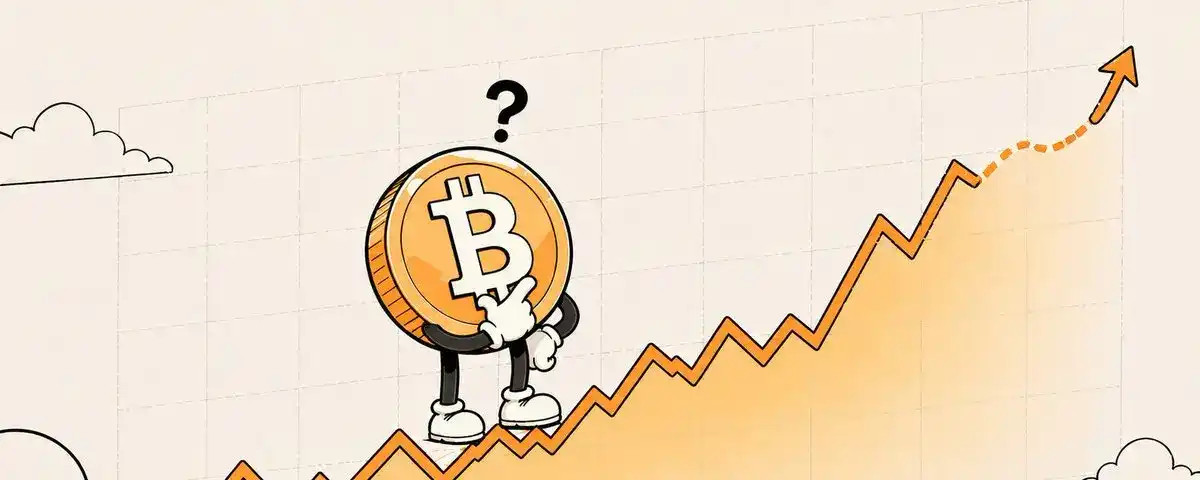
As the blockchain industry enters the high-speed cycle of 2020-2026, its core contradiction remains unchanged: cutting-edge technology is strongly cyclical and highly speculative in its early stages; genuine long-term value creation is still scarce and difficult to quantify, or the concept of value is understood differently. This is highly similar to the early stages of tech stocks in the last century and stands in direct contrast to the investment framework that Munger and Buffett have consistently adhered to for decades. Although both Buffett and Munger have openly opposed BTC—or perhaps it's an unspoken secret—it seems that, on one hand, this is due to their long-standing habits with the Old Money model, and on the other hand, they oppose "high-premium expectations under extreme uncertainty" and "valuation logic unsupported by cash flow." This point holds significant reference value for the long-term healthy development of the blockchain industry, especially for project ecosystems.
Munger and Buffett have repeatedly emphasized:
The value of a company stems from the discounted future free cash flow it can consistently generate, not from market sentiment, narrative stories, or temporary price fluctuations driven by consensus. Although the valuation logic and risk style of the tech industry are completely different from those of traditional sales fields, the essential core remains the same. Mapping this long-term framework to Web3 reveals three critical judgment criteria:
1. Does the public chain/application have genuine long-term demand?
Around 2026, many new projects fell into a misconception: to achieve short-term stimulation and airdrop tasks, they allocated much of their budget to marketing. Coupled with exchanges using platforms like Twitter as one of the listing criteria and the vicious cycle brought by meme coins, even public chain projects adopted market operation strategies that were not conducive to long-term platform development for the sake of short-term TVL. Many projects appeared prosperous before launch but vanished without a trace three months after going live, with almost no real transactions except for bot activity. For long-term value, the focus should not be on short-term incentive-driven TVL or fake prosperity brought by miner rewards, but on core functionalities that users are willing to use even without subsidies.
For example:
- Gas consumption fees in normal usage of Ethereum and mainstream public chains are direct outputs of economic activity.
- Some Rollups are gradually shifting their revenue to real user transactions rather than airdrop farming.
- Some AI × Web3 projects have quantifiable income or clear potential during rapid growth in computing power demand.
- The potential direct replication of real-world economic models in the metaverse.
- Revenue from paid channels in social applications, etc.
These metrics are closer to the "basic output" of value investing. They can also further promote the development momentum and long-term growth logic of blockchain infrastructure projects.
2. Does the project have a compoundable business model or long-term growth network effects?
Many Web3 projects show impressive metrics during bull markets but experience significant declines during bear markets. Projects that can weather bull and bear cycles often possess "compound effects" and long-term development potential.
Typical characteristics include:
- The larger the ecosystem scale, the lower the unit cost (economies of scale).
- The more data, assets, and liquidity are concentrated, the harder it is for competitors to shake (network effects).
- Increasingly high user migration costs (moat).
This aligns with Munger's emphasis on "seeking outstanding companies, not cheap companies": what you need is strong compounding, not simply low valuation. Good companies may be undervalued for a period due to market policies and exchange strategies, but the premise is that they are good projects.
3. Can the token system carry value rather than dilute it?
This involves the essence of Tokenomics:
- Does the token have value closed loops such as "profit distribution," "fee buybacks," and "governance voting"?
- Is the token supply curve reasonable, avoiding long-term dilution?
- Is the token superficially decentralized but actually highly concentrated?
- Does it have quantifiable future cash flow?
Buffett once said, "Bitcoin doesn't produce value," just as he felt gold had no value. However, everyone has a different concept of value, and the value of the same asset varies completely across time cycles and external environments. Storing value in gold is also a form of value, even if it doesn't fit the cash flow growth value targets in the concept of value investing. With the development of the BTC blockchain and other digital currencies, if certain chains or protocols can enable tokens to obtain stable income distribution and equity distribution in the future, their valuation system will significantly approach traditional enterprises or even give rise to new valuation models.
Thus, value investment logic does not排斥 Web3; it排斥空洞的 Tokenomics.
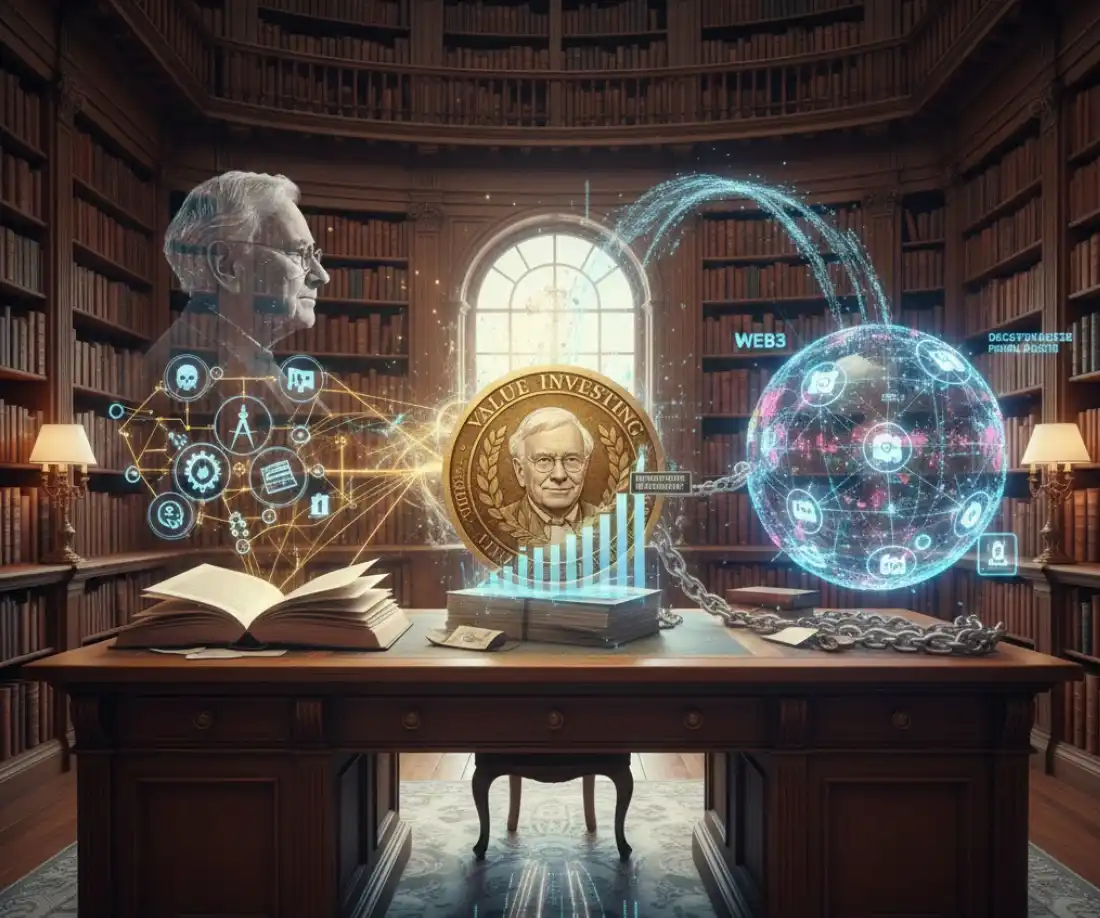
II. The Great Reference Value of Munger's "Inverse Thinking" for Web3
Participants in the Web3 industry often indulge in the堆砌 of technical terms—zero-knowledge proofs, account abstraction, sharding technology—but often overlook the underlying economic laws and human nature. Munger's thinking model emphasizes interdisciplinary integration, advocating for examining systems from multiple perspectives such as psychology, physiology, mathematics, engineering, biology, and physics (Lollapalooza Effect). The lack of this multidimensional perspective is the root cause of Terra (LUNA)'s death spiral, the collapse of the FTX empire, and countless DeFi protocols being hacked. One of Munger's most important and valuable thought models is: avoid areas you don't understand and don't bet outside your circle of competence. Most losses in Web3, aside from不可抗力 factors like market bear trends, actually come from:
1. Information asymmetry, being deliberately led by those with information advantages. 2. Overconfidence, mistaking luck for genius after a few lucky wins. 3. FOMO-driven emotional decisions. 4. Not understanding mechanisms, only looking at short-term charts and news. 5. Lack of awareness of protocol risks, governance risks, and token inflation risks.
Munger's circle of competence framework can be broken down into three long-term judgment indicators for Web3:
1. Do you truly understand how the protocol creates value?
- Architectural logic
- Technical roadmap
- User需求
- Cost structure
- Competitor models
- Token incentives and fee models
If even one point is not understood, it means betting outside the circle of competence.
2. Have you assessed the most致命 systemic risks?
For example, consider the following dimensions:
- Changes in Layer1's unlocking mechanism, significant changes in the core executive team.
- CEX assets are not transparent, with risks of挪用 user assets (e.g., the FTX incident).
- Existence of death spiral mechanisms (e.g., the UST and LUNA anchoring ratio algorithm stablecoin that led to LUNA's collapse).
- DAO governance being hijacked by a few large holders.
- Forced unlocking cycles of staked assets (whether unlocked assets can preserve value if the protocol collapses).
- Token incentive decay leading to ecosystem collapse (whether token value is merely a game of刺激 incentives).
- Long-term infeasibility of the technical roadmap (whether the team's technical skills and vision are sustainable).
Munger emphasizes that "avoiding stupidity is more important than being smart." In our wisdom, it means: preparedness ensures success, unpreparedness spells failure; know yourself and know your enemy, and you will never be defeated. When you can accept the worst-case scenario and make every effort to avoid it, the probability of相对 success is higher. Such a thinking model is even more valuable in the Web3 market, where Alpha is larger, bubbles form more easily, and volatility is more exaggerated.
3. Can it weather bull and bear cycles?
Munger's investment principles clearly state: excellent assets will get better in the long run, while inferior assets will get worse.
The blockchain industry加速验证 this with each cycle:
- Chains with stronger technical foundations have greater long-term growth potential, and the actual results reflect this.
- Chains with空洞 narratives and no strong resources or background have an extremely high probability of归零 in bear markets.
- Applications with genuine user需求 will gradually move towards stable revenue, usage frequency, and smooth experience.
- Meme-like饮鸩止渴 strategies will only make the mainstream market worse, further draining liquidity.
- Fake prosperity driven by incentives will be washed away after listing or FOMO cycles, gradually fading into obscurity.
Long-termism, in fact, provides the relatively fairest "screening mechanism" after weathering several剧烈泡沫 and bull-bear cycles. It反而 allows investors to more easily obtain优质标的 and management teams that have been精选 by the market.