Barclays Backs Crypto Company Ubyx Amid Growing Stablecoin Clearing Race

bitcoinist發佈於 2026-01-08更新於 2026-01-08

文章摘要

Barclays has made its first direct investment in the stablecoin sector by acquiring an equity stake in Ubyx, a startup that provides a clearing and settlement layer for stablecoins. This move reflects a broader trend of traditional banks exploring digital currency infrastructure within regulatory boundaries. Ubyx aims to reduce market fragmentation by enabling standardized redemption and settlement of stablecoins across different issuers and blockchains. The investment aligns with Barclays' ongoing initiatives in digital money, including participation in a consortium exploring a G7-backed stablecoin and tokenized deposit pilots. While stablecoins like Tether dominate crypto liquidity, regulators remain cautious about systemic risks. Barclays' backing signals growing institutional interest in compliant stablecoin infrastructure.

Barclays has made its first direct move into the stablecoin sector, taking an equity stake in Ubyx, as global banks quietly position themselves for a future where digital settlement becomes more common.

While the investment is modest in disclosed detail, it signals how traditional lenders are approaching stablecoins not as speculative assets, but as infrastructure that could reshape payments and treasury operations if regulation allows.

Ubyx, founded in 2025, operates a clearing and settlement layer for stablecoins, digital tokens typically pegged one-to-one with fiat currencies such as the U.S. dollar. Its goal is to reduce market fragmentation by allowing stablecoins from different issuers and blockchains to be settled and redeemed in a more standardized manner.
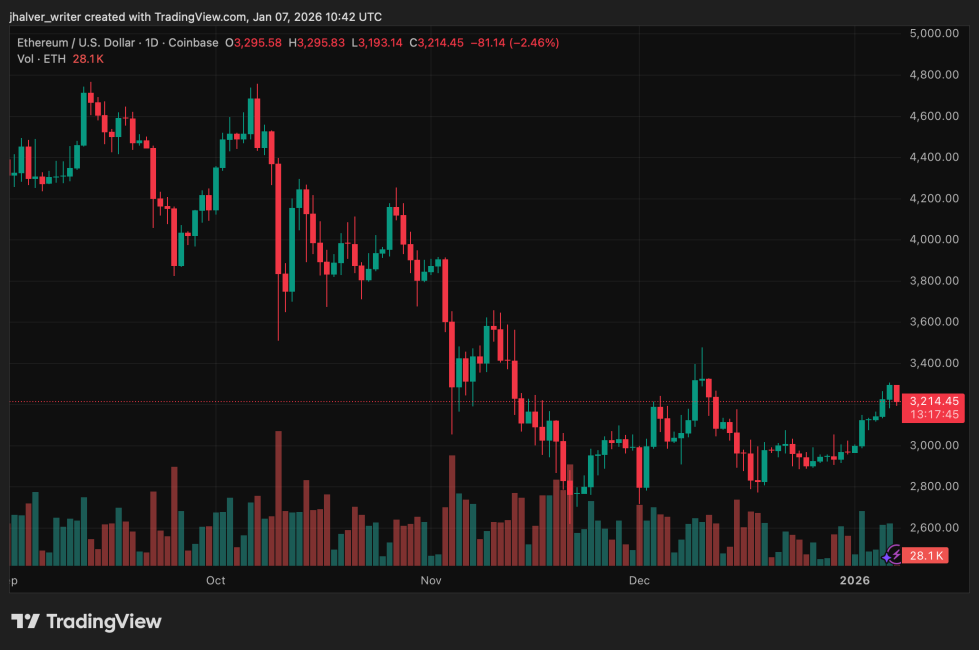
ETH's price moving sideways on the daily chart. Source: ETHUSD on Tradingview

The Case for Regulated Tokenized Cash

Barclays said the investment aligns with its broader work on “new forms of digital money,” emphasizing that any development would sit within existing regulatory boundaries.

The bank did not disclose the size of its stake or Ubyx’s valuation. However, the decision places Barclays among a growing list of large financial institutions seeking exposure to stablecoin rails without directly issuing tokens or operating outside compliance frameworks.

The bank’s interest is not new. In October, Barclays joined a group of global lenders, including Goldman Sachs and UBS, to explore the issuance of a jointly backed stablecoin by G7 currencies.

It has also participated in tokenized deposit pilots and other distributed ledger initiatives, reflecting a cautious but consistent approach to blockchain-based settlement.

Ubyx’s Role in a Crowded Infrastructure Layer

Ubyx positions itself as an intermediary between stablecoin issuers and regulated banks or fintech firms. Its platform supports what it calls universal redemption, allowing businesses to deposit stablecoins from multiple issuers directly into existing accounts at face value.

The startup raised $10 million in seed funding in mid-2025, with backing from Galaxy Ventures, Coinbase Ventures, Founders Fund, and Paxos. Barclays’ entry adds a major UK banking name to that list, blending traditional finance interest with crypto-native capital.

Regulation Support for the Competitive Market

Stablecoins already play a central role in the crypto market’s liquidity, led by Tether, which has approximately $187 billion in circulation.

However, most usage remains inside trading venues. Regulators, including the Bank of England, continue to weigh limits and safeguards to prevent risks such as deposit flight during periods of stress.

That tension defines the current stablecoin race. Banks want faster, programmable settlement. Regulators want control and clear accountability. Infrastructure providers like Ubyx are betting that standardized, compliant clearing can bridge the two worlds, and Barclays’ backing suggests that major lenders are watching closely.

Cover image from ChatGPT, ETHUSD chart from Tradingview

相關問答

QWhat is the significance of Barclays' investment in Ubyx?

ABarclays' investment in Ubyx marks its first direct move into the stablecoin sector and signals how traditional lenders are approaching stablecoins not as speculative assets, but as infrastructure that could reshape payments and treasury operations if regulation allows.

QWhat does Ubyx do in the stablecoin ecosystem?

AUbyx operates a clearing and settlement layer for stablecoins, aiming to reduce market fragmentation by allowing stablecoins from different issuers and blockchains to be settled and redeemed in a more standardized manner.

QWhich other major financial institutions has Barclays collaborated with regarding stablecoins?

AIn October, Barclays joined a group of global lenders, including Goldman Sachs and UBS, to explore the issuance of a jointly backed stablecoin by G7 currencies.

QWho were the initial backers of Ubyx in its seed funding round?

AUbyx raised $10 million in seed funding in mid-2025 with backing from Galaxy Ventures, Coinbase Ventures, Founders Fund, and Paxos.

QWhat is the main tension in the current stablecoin market according to the article?

AThe main tension is between banks, which want faster, programmable settlement, and regulators, who want control and clear accountability to prevent risks such as deposit flight during periods of stress.

你可能也喜歡

Solana 基金会与 Google 合作推出 Pay.sh,能否打通智能体经济中 Web2 与 Web3 的支付链路?

随着AI智能体能力的增强,面向智能体构建支付系统成为必要,但现有方案存在局限:传统支付系统(如信用卡)不适合智能体;新兴链上支付协议(如x402、MPP)则需额外搭建系统,门槛较高。两者未能融合,限制了智能体服务的范围。 为此,Solana基金会与Google Cloud联合推出Pay.sh,定位为“智能体与企业级服务之间的支付网关”,旨在打通智能体调用服务的支付环节。用户可通过信用卡或稳定币为Solana钱包充值,该钱包即可作为智能体的身份和支付代理。智能体无需注册或输入API密钥,即可通过Pay.sh使用Google Cloud、阿里云等服务。 Pay.sh兼容x402和MPP协议:当服务器返回402状态码(需要支付)时,Pay.sh能根据服务类型(一次性付费或持续计费)自动选择合适的支付方式。它支持一次性转账或会话授权凭证,以降低使用成本。同时,Pay.sh确保钱包本地存储,仅在支付时请求用户确认,并过滤服务商返回的指令以防止恶意攻击。 对服务商而言,Pay.sh提供易于集成的网关,只需声明支付参数即可支持复杂场景(如阶梯收费、自动分账)。服务商还可将API发布至Pay Skill Registry,供智能体发现和使用。 Pay.sh的优势在于打通Web2与Web3支付生态,为智能体提供合规身份和支付能力。通过与Google合作,其流量调度和日志合规可在Google Cloud上完成,有助于规范智能体行为。此外,Pay.sh补全了智能体商业协议(如A2A、AP2)的支付环节,促进了价值流动,也为Solana生态带来更多流量。 但Pay.sh仍面临挑战:服务商注册表缺乏准入和去中心化验证机制,可能导致智能体接入冒牌服务;其安全性依赖底层协议,存在外部风险;同时,各国API供应商可能因合规顾虑而限制使用。 总体而言,Pay.sh标志着智能体支付基础设施向Web2与Web3融合迈出关键一步,链上钱包有望成为智能体参与多样化任务的背书,其后续发展值得关注。

marsbit15 分鐘前

Solana 基金会与 Google 合作推出 Pay.sh,能否打通智能体经济中 Web2 与 Web3 的支付链路?

marsbit15 分鐘前

如何用Claude Skills自动化任何工作流(完整教程)

本文是一份全面的Claude Skills实战教程,旨在帮助用户通过构建自定义Skills(技能),将AI深度、稳定地融入日常工作流,实现任务的标准化与自动化。 **核心概念:** Claude Skill并非简单的预设提示词,而是一个包含详细工作流指令的永久性文件(SKILL.md)。它像一个训练有素的“员工”,能确保每次执行相同任务时,流程、标准和输出格式都保持一致,从而获得远超一次性Prompt的稳定高质量结果。 **教程分为四个阶段:** 1. **快速上手(5分钟):** 了解Skills以文件夹形式存放,学会从官方或社区平台查找、安装现有Skill,并应用于真实任务进行初步体验。 2. **从零构建:** 在创建自定义Skill前,需明确回答三个问题:技能的具体用途、至少五个触发短语、完美输出的具体示例。随后编写SKILL.md文件,其结构包括:顶部的YAML元数据(含名称和具体触发描述)和下方用自然语言编写的一步步工作流说明(需包含示例、边界情况及明确标准)。 3. **测试与优化:** 通过“三场景测试”确保Skill达到生产级水平:常规场景(80%常用情况)、边界场景(处理异常或信息缺失)、压力场景(应对最复杂情况)。每次不理想的输出都应触发对SKILL.md的即时优化,通过持续迭代使输出媲美专业人士。 4. **搭建技能库:** 为工作流中各项重复任务构建专属Skill,例如内容创作、数据分析、邮件起草等。一个月可积累十个生产级Skill,三个月可形成覆盖主要工作的完整技能库,从而将AI转化为高效的“团队”,让使用者更专注于策略而非执行。 **文章强调,** 持续构建和优化Skill库能带来显著的时间复利(例如十个技能每年可节省260小时),是从“使用AI”转向“用AI系统工作”的关键。

marsbit43 分鐘前

如何用Claude Skills自动化任何工作流(完整教程)

marsbit43 分鐘前

交易

現貨
合約
活动图片





