Shiba Inu has kicked off a formal, multi-stage voting process to select the project’s first interim “network president” and seat councils for each DAO, a governance overhaul framed by the team as “the true birth of a network state.” In an August 4 post titled ELECTIONS, the project’s lead figure Shytoshi Kusama wrote that “a new lead visionary and councils for each dao will need to be chosen,” calling the moment “the true birth of a network state.”
Shiba Inu To Elect New Leader
Kusama simultaneously reiterated the long-stated goal of removing single-party control over the ecosystem, writing on X that “Shib has always been designed for full decentralization… It’s time to launch a vital aspect to achieve this goal: ELECTIONS.” The message referenced the community entering its fifth “Shib Year.”
Shiba Inu Core developer Kaal Dhairya amplified the decentralization rationale on August 5, arguing that the project’s strength lies in the interplay of its tokens and systems. “Shib was never meant to be controlled or tamed by one individual—it’s the essence of decentralization,” he wrote, calling elections “the first step toward embracing this decentralized vision.”
According to the ELECTIONS blueprint, the interim presidency will be chosen before “Shibizenship” begins and later subjected to ratification no later than four months after Shibizenship is in place, in line with the so-called Hounds Constitution.
The voting architecture is three-phased: an open nomination round that advances the top ten to a live or recorded debate stage; a follow-up ballot a week later to determine the final three; and a concluding vote one week after debates. “The final vote will be final,” the post states.
Candidates must create public profiles, and while anyone can self-nominate, the foundation reserves a veto right; the winner must complete KYC with the foundation and sign an NDA “as you would expect in any state.”
Kusama proposes a token-weighted mechanism across the ecosystem, writing that “1 token = 1 vote” for “any and all of the ecosystem tokens,” a design explicitly intended to align outcomes with holders who “have the most skin” in the project’s success. While emphasizing openness, the document asks the community to “rigorously vet, check and learn about all candidates.”
The role described for the interim president is sweeping. The office holder would coordinate the transfer of power, steward the “Shib Paper” vision, and stand up the first congress—“consisting of the four Dao councils,” the inter-branch DAO envisaged in prior materials. The post underscores the stakes by putting a number on what’s being overseen, citing responsibility to a community of millions and “the financial responsibility of a 7 billion dollar token.”
Governance plumbing also gets a notable tweak. The document proposes shifting the Economic Council under the Shib DAO rather than Treat, freeing Treat “to focus on innovation.” The council would shape how Shib “makes and retains revenue or a treasury system (outside the other daos),” described as “vitally important to the long term success of the project.”
In parallel with the procedural outline, Dhairya’s message sought to keep the Shiba Inu community unified around the broader ecosystem rather than splintering initiatives, inviting exploration of new ideas under the Shib umbrella. “Elections are the first step,” he wrote, urging contributors to “think differently and collaboratively.”
The team says logistical specifics—dates and precise timings for nominations, debates and balloting—will follow, and stresses that its own role shifts with this handover. “Upon the release of this document, our role will shift,” the post notes, adding that the group will continue building alongside Treat DAO and external initiatives aligned with its vision.
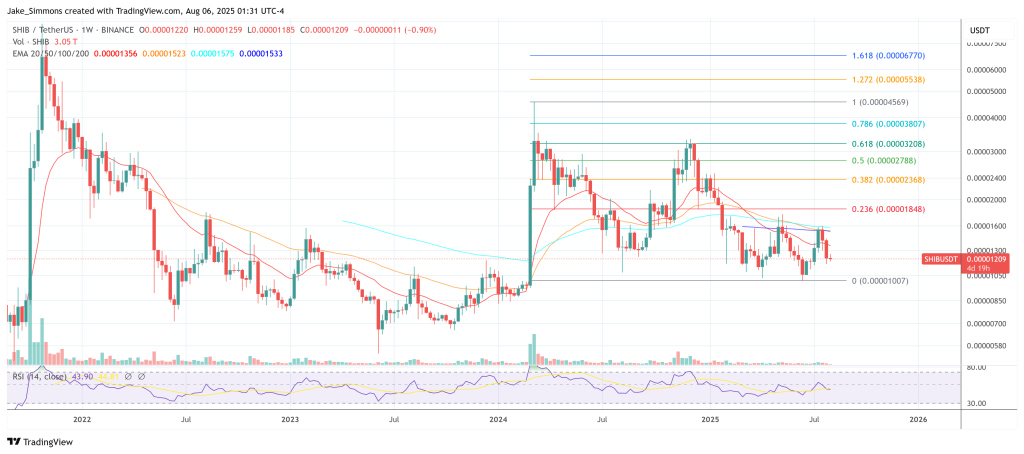
At press time, the Shiba Inu token traded near $0.00001209.

Related Posts