

EleanoreEYpk.verse
2023/09/10 05:29
The 4 Types of Stablecoin Token Assets
The 4 Types of Stablecoin Token Assets
There are four primary types of stablecoins: fiat-collateralized, crypto-collateralized, commodity-collateralized, and algorithmic stablecoins.
Fiat-backed stablecoins are linked to government-issued currencies like the US dollar, British pound, and the eurozone’s euro. For every stablecoin in circulation, there must be an equivalent dollar held in reserve, maintaining a 1:1 ratio. Tether’s USDT is the most popular fiat-backed stablecoin, both in terms of activity and market capitalization.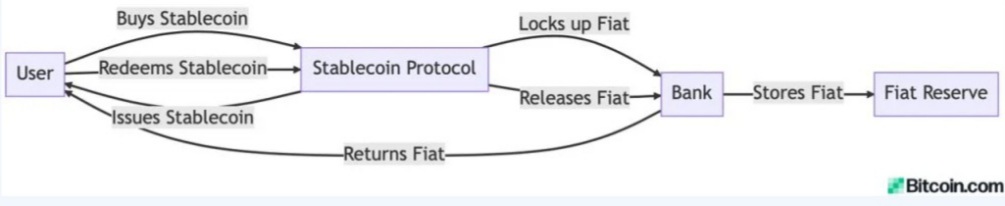
Crypto-collateralized stablecoins utilize other cryptocurrencies as reserves instead of fiat. Makerdao’s DAI stablecoin accepts ether as collateral. Holders deposit ether into smart contracts to support the minting of DAI tokens. Tron’s USDD operates similarly, leveraging TRON (TRX) for USDD backing.
Commodity-backed stablecoins tie their value to real-world assets such as precious metals. Tether Gold uses gold bars stored in vaults to back its XAUT token. This gold collateral provides XAUT with intrinsic value beyond the realm of cryptocurrencies. Other precious metals and commodity-backed stablecoins follow similar pegging methodologies.
Algorithmic stablecoins, on the other hand, lack collateral. They rely on smart contracts and supply adjustments to maintain a consistent price. When demand increases, additional coins are issued, and when demand decreases, coins are repurchased and removed from circulation. Terra’s stablecoin UST was initially an algorithmic stablecoin, but it lost its entire value when the Terra blockchain ecosystem collapsed.
#Share Your HTX Earn Strategies and Earnings#HTX 10th Anniversary#Claim1,200 USDT in the Monthly Creation Challenge
47分享
全部评论0最新最热
暂无记录