Viewpoint: The 10 AM Bitcoin Plunge Isn't Entirely Jane Street's Fault

marsbitXuất bản vào 2026-02-27Cập nhật gần nhất vào 2026-02-27

Tóm tắt

The article refutes the viral conspiracy theory that Jane Street was systematically suppressing Bitcoin prices around 10 AM EST. While the narrative gained traction due to the firm's role as an authorized participant in Bitcoin ETFs and its involvement in a lawsuit related to Terra's collapse, analysts argue the evidence is weak. Key points from the analysis: - Bitcoin's recent weakness is better explained by declining spot demand and macro pressures, not targeted manipulation. - ETF outflows and shifts in options market structure (negative gamma exposure) have increased volatility, making any sharp move appear intentional. - The core issue is structural: ETF era obscures price discovery. Authorized participants use complex hedging (via futures, swaps) that isn't visible to the public, creating a "black box" between ETF flows and actual Bitcoin demand. - The 10 AM window naturally concentrates market activity (rebalancing, hedging), and thin liquidity amplifies moves. Data shows no consistent pattern of systematic selling. The conclusion: While trust in large institutions is low, the real problem isn't Jane Street but the opaque infrastructure of institutional Bitcoin trading, making the market harder for retail investors to decipher.

Deep Tide Digest: As Bitcoin recently rebounded to $70,000, a conspiracy theory linking Jane Street to "suppressing the price at the U.S. stock market open" went viral in the crypto community. This article deconstructs this claim from three dimensions: on-chain data, ETF structure, and options positioning. The conclusion is: the real issue is not Jane Street, but the black box of price discovery in the ETF era—the opacity of institutional hedging is making it increasingly difficult for retail investors to read the market.

Full text below:

As Bitcoin rebounded close to $70,000 in the past 24 hours, a familiar debate reignited in the crypto market: Do Wall Street institutions operating within the spot ETF ecosystem now have too much influence over price discovery?

The target this time is Jane Street—a quantitative trading firm that is both a key ETF intermediary and a defendant in a new lawsuit related to the 2022 collapse of Terraform Labs.

On social media, traders linked Bitcoin's recent rally to a claim: an alleged pattern of sharp intraday drops around the U.S. stock market open suddenly disappeared after the lawsuit became public.

This theory spread quickly because it combines two views that already resonate: distrust of large trading firms and unease about Bitcoin markets increasingly operating through traditional finance channels.

However, evidence supporting a "coordinated Bitcoin suppression" plan remains thin.

What this episode reveals clearly is this: the structure of spot Bitcoin ETFs has made it increasingly difficult for many investors to distinguish between genuine spot demand and market-making, hedging, and arbitrage activities.

In this sense, the Jane Street controversy goes beyond allegations against a single firm. At its core, it's about how Bitcoin's new institutional infrastructure shapes price discovery—whether the market is becoming more efficient or more opaque.

Origin of the Jane Street Bitcoin Rumor

The rumor took shape after Bitcoin rallied significantly for two consecutive trading days. Users on X began asserting that the so-called "10 AM sell program" had vanished.

Notably, the X account Negentropic, run by Glassnode co-founders Jan Happel and Yann Allemann, was a key driver in spreading this theory. They claimed: "The Jane Street lawsuit was made public, and the 10 o'clock Bitcoin smash miraculously disappeared."

This claim gained traction quickly because Jane Street is no unknown entity. It is one of the world's largest trading firms and a known participant in the Bitcoin ETF market, serving as an Authorized Participant (AP) for IBIT (BlackRock's spot Bitcoin ETF).

In practice, this embeds it tightly into the core mechanism that keeps ETF share prices aligned with the value of the underlying holdings.

Simultaneously, legal troubles for the firm further fueled the controversy.

The liquidators of Terraform Labs filed a lawsuit in Manhattan, alleging that Jane Street and other firms profited from material non-public information related to Terraform's liquidity operations during the May 2022 collapse of TerraUSD.

The complaint states that Terraform withdrew $150 million in TerraUSD liquidity from Curve's 3pool, and wallets associated with Jane Street withdrew approximately $85 million just minutes before this news became public.

Jane Street denied any wrongdoing, calling the case a desperate attempt to shift blame for losses caused by Terraform's own actions.

This lawsuit does not prove anything about current Bitcoin trading.

But it explains why traders were quick to link Jane Street to an observable market pattern. In the crypto world, trust is often fragile; an institution accused in one market event often becomes a suspect in the next.

Industry Insiders Refute the Rumor

Against this backdrop, some Bitcoin traders believed this top cryptocurrency had been mechanically sold around the U.S. spot market open for months, liquidating long positions and creating a liquidity vacuum in thin order books.

If this selling disappeared after Jane Street faced new legal pressure, perhaps the firm had been suppressing the market.

Furthermore, the firm's early association with FTX founder Sam Bankman-Fried cast a shadow over its image. Bankman-Fried worked at the trading firm before founding FTX.

This narrative is emotionally compelling but far easier to assert than to prove.

Checkonchain analyst James Check directly refuted the argument, writing that Jane Street did not suppress Bitcoin, and that long-term holders selling spot to the market better explains the price action.
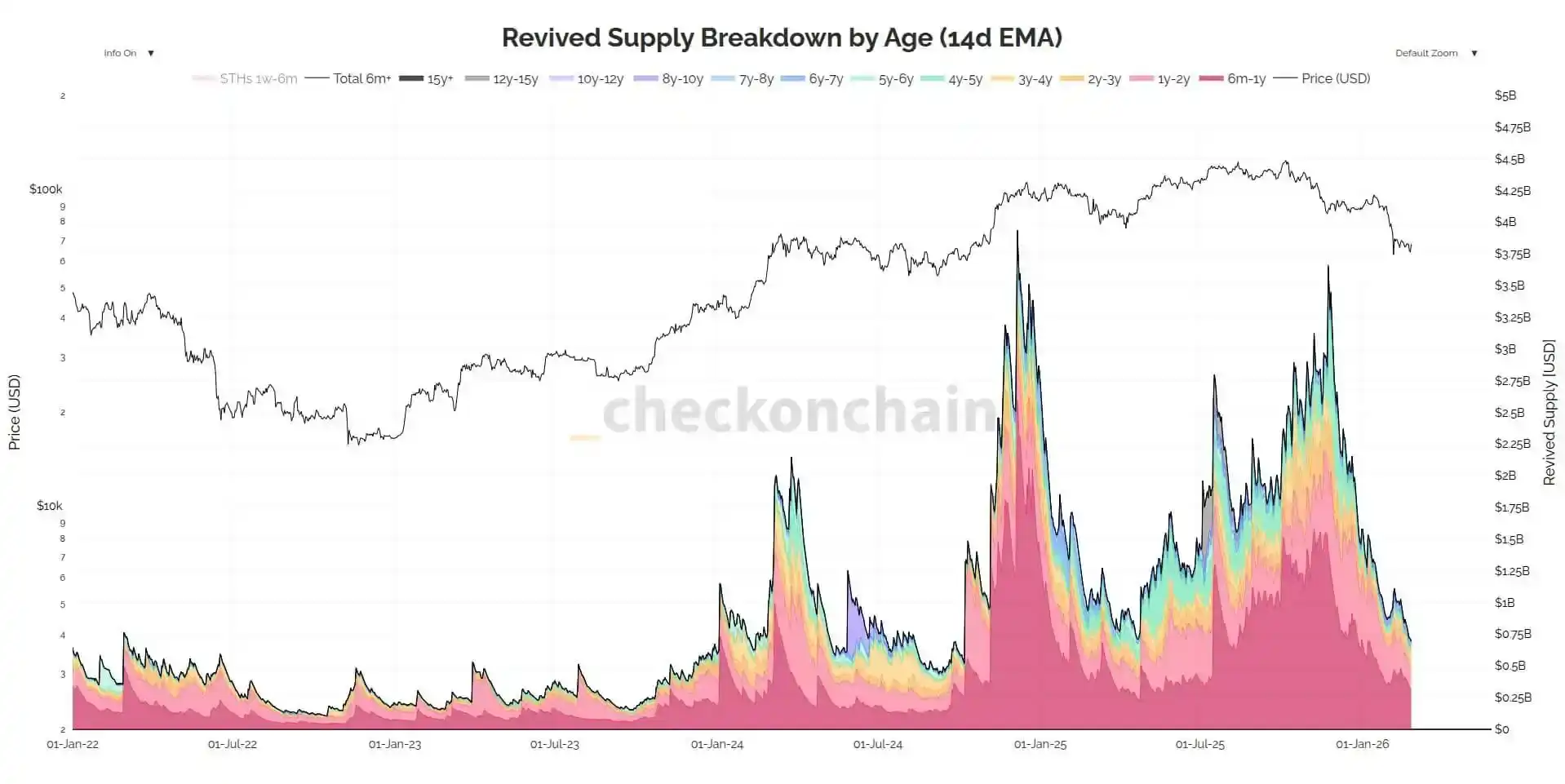
CryptoQuant Head of Research Julio Moreno held a similar view, arguing the theory overlooks a more obvious driver: a sharp contraction in Bitcoin spot demand since early October 2025.

He added that the operational mechanics blamed on Jane Street resemble the delta-neutral position management common to many trading firms.

The value of these rebuttals is that they point to the core weakness of the rumor: Bitcoin was already under pressure from broader macro repricing forces before entering 2026.

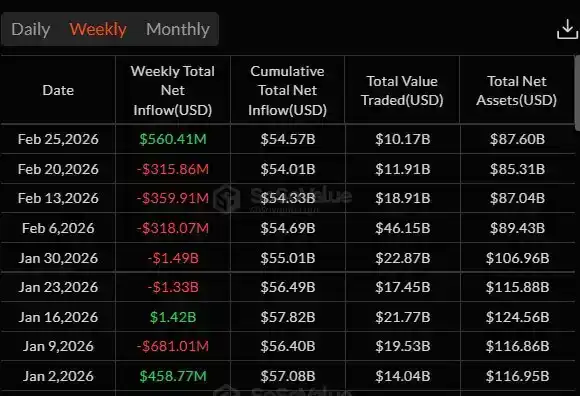
Data from SoSo Value shows institutional investors have cut Bitcoin ETF exposure for five consecutive weeks, with total outflows from spot Bitcoin ETFs reaching approximately $4.5 billion.
Meanwhile, Glassnode data shows that recurring market stress early this month triggered a structural shift in the Bitcoin options market towards a more volatile regime.

The firm noted that the all-history gamma exposure (GEX) heatmap shows negative gamma expanding at and below the current price, while the wall of positive gamma "resistance" above the spot price is receding.

In plain language: the option positions that typically act as shock absorbers are fading, and the market is increasingly in a zone where hedging flows no longer cushion declines but instead amplify them.
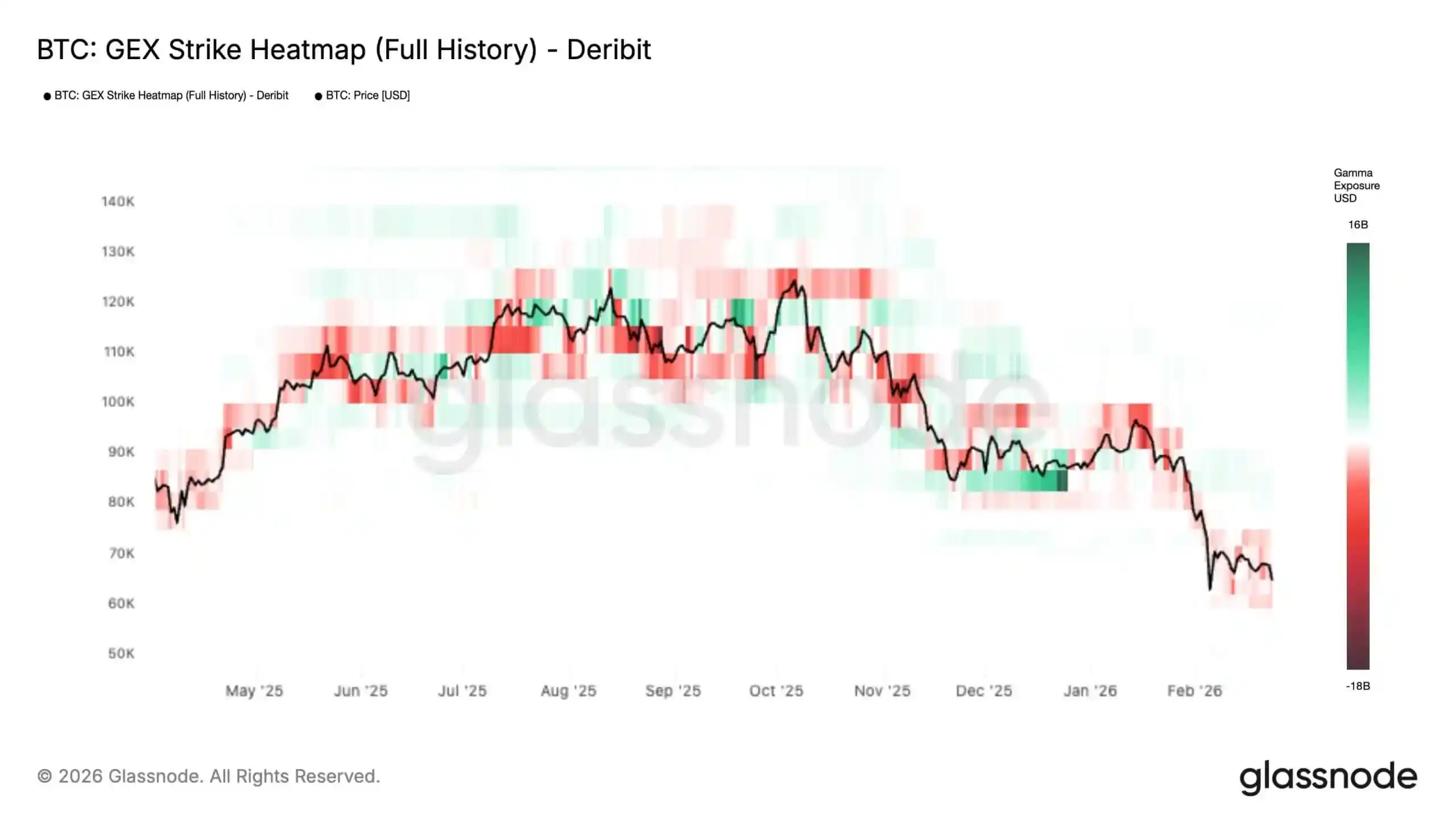
This dynamic is important: when the price is in a short-gamma regime, market makers' delta hedging tends to follow the trend, not sell on declines and buy on rallies.

The result: the market can move faster and further on relatively small catalysts—larger intraday swings and a higher risk of cascading moves through key levels—until Bitcoin hits the next thick "gamma wall," where hedging switches back to a buffering mode.

In other words, traders are in an environment prone to seeing "intent" everywhere. When liquidity is thin and leverage is high, almost any sharp move can look organized.

The ETF Pipeline Is Harder to Read Than It Seems

The deeper issue raised by the Jane Street controversy is structural, not about a specific institution.

As argued by Jeff Park, Chief Investment Officer at ProCap Financial, the real question is not whether one company is "uniquely suppressing" Bitcoin, but whether the ETF market structure gives Authorized Participants discretionary space that is opaque to the public.

This matters because investors often habitually interpret ETF disclosure data as clean directional cues—but that's not the case. A 13F filing might show a large long ETF position, but SEC guidance clearly states short positions are not included, and short options are not netted against long positions.

In practice, the market might see the inventory but not the futures, options, or other hedges wrapped around it.

This opacity is compounded by how trust is built. BlackRock's documentation for IBIT shows the trust can handle share creation and redemption through Authorized Participants and can also trade with designated Bitcoin counterparties.

As of that filing, these counterparties included JSCT, LLC, an affiliate of Jane Street Capital, and an affiliate of Virtu Americas, Virtu Financial Singapore.

The filing also shows the list of Authorized Participants has expanded to include JPMorgan, Citadel Securities, Citigroup, Goldman Sachs, UBS, Macquarie, and others, with more firms gaining access to the ETF creation/redemption mechanism.

Park's point is that this structure distorts outsiders' reading of ETF flows.

Under the old cash model, creating ETF shares required the fund to buy spot Bitcoin. But after the SEC approved in-kind creation and redemption for crypto ETPs in July 2025, Authorized Participants gained greater flexibility in acquiring and delivering the underlying asset.

The SEC said this change would lower product costs and improve efficiency. But it also means APs' exposure can be managed through a wider array of instruments and counterparties, making it harder to judge when ETF activity reflects genuine spot demand versus inventory management, basis trading, or hedge construction.

None of this is evidence of abuse, and Park's argument does not rely on proving Jane Street or any other firm abused power. His sharper point is: Bitcoin's ETF era has inserted a black box between public holding data and the underlying price discovery process.

The start of a trade looks like ordinary market-making, and the end looks like it too. What's difficult to observe is the middle: whether hedging is done via spot, futures, swaps, or some combination, and whether natural arbitrage mechanisms truly transmit genuine spot demand to Bitcoin.

This is why the Jane Street rumor resonated. It is less an accusation against a specific participant and more a signal—revealing how little the market understands about its own operating pipelines.

Why the U.S. Market Open Feels Like a Selling Zone

The "10 AM theory" sounds plausible because, even without deliberate manipulation, the U.S. market open is a genuine window of volatility.

This period concentrates cross-asset rebalancing, equity-related risk adjustments, and derivative hedging operations.

In a market where ETF intermediaries can hedge inventory with futures or other instruments, futures can pull the spot price, not just follow it.

When order books are thin, these moves can look larger and more conspiratorial than they are. Bloomberg reported earlier this month that Bitcoin market depth remains more than 35% below October levels, highlighting how fragile liquidity has become.

Meanwhile, macro analyst Alex Kruger stated that available data does not support the "systematic 10 AM daily sell-off" claim.

He wrote that since January 1st, IBIT's cumulative return in the 10:00-10:30 AM ET window is positive 0.9%, while the 10:00-10:15 AM window is down 1%.
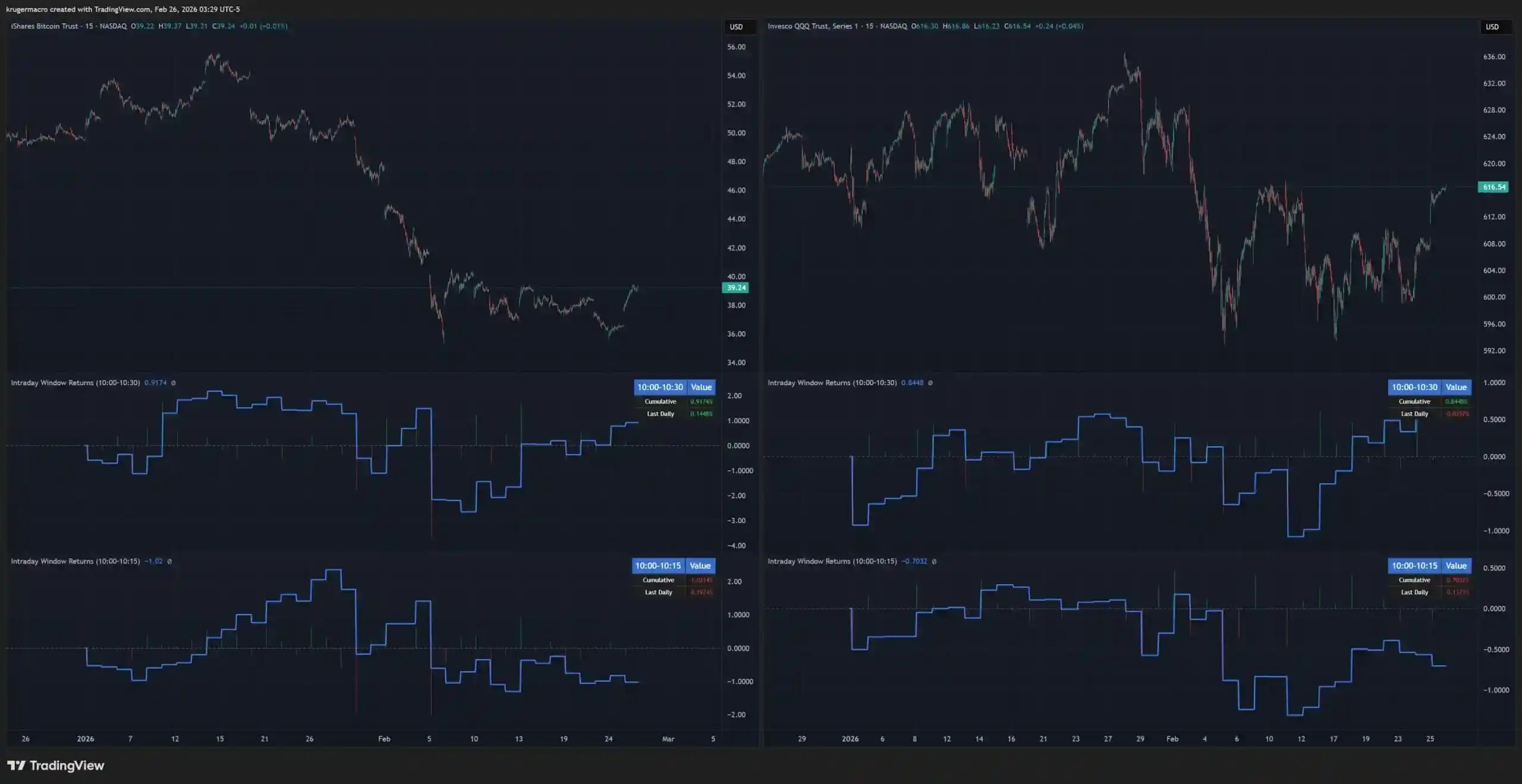
In his view, this is noise, not evidence of a repeatable suppression program.

More importantly, he said, the performance pattern in these two windows highly correlates with the Nasdaq, indicating a broad repricing of risk assets, not a Bitcoin-specific operation.

This interpretation fits the broader market context better than the viral story.

If Bitcoin is traded increasingly as a macro risk asset via ETF wrappers, then pressure at the U.S. open—especially in thin markets—repeatedly creating Bitcoin weakness in the same intraday window should not be surprising.

On-Chain Scarcity is Clear, Price Discovery is Not

Bitcoin's supply is fixed by protocol. No change in ETF market structure can alter that. What has changed is the channel through which an increasing share of demand—and scrutiny—now flows.

The Jane Street controversy reveals the crack between these two realities. On-chain scarcity is transparent; the institutional system layered on top is not.

Investors can see ETF shares outstanding and some disclosed holdings, but they cannot see every potential hedge behind a market maker's book, every internal net exposure, or every cross-market position.

This gap creates room for misunderstanding and distrust.

That Jane Street has faced scrutiny in other markets doesn't help. In July 2025, Indian securities regulators issued an interim order in an alleged index manipulation case involving a Jane Street entity, and Reuters later reported that SEBI barred the firm from the Indian securities market during case review. Jane Street also denied wrongdoing there.

The India case is unrelated to Bitcoin, but it explains why crypto traders were prepared to imagine the worst when Jane Street's name appeared in headlines again.

However, the available facts do not prove Jane Street executed a deliberate Bitcoin suppression plan.

They prove something else: the post-ETF Bitcoin market has become easier to enter, more deeply integrated with institutions, and harder for the average investor to read.


Câu hỏi Liên quan

QWhat was the main conspiracy theory circulating in the crypto community regarding Bitcoin's price action at 10 a.m. ET, and which firm was it linked to?

AThe conspiracy theory claimed that there was a systematic '10 a.m. dump' of Bitcoin occurring around the U.S. stock market open, and it was linked to the trading firm Jane Street.

QAccording to the article, what are the two main reasons the 'Jane Street theory' gained traction so quickly?

AThe theory gained traction because it tapped into two pre-existing sentiments: deep-seated distrust of large trading institutions and unease about Bitcoin's increasing integration with traditional finance channels.

QWhat structural change in Bitcoin ETFs, approved by the SEC in July 2025, made it harder to interpret true spot demand from ETF flow data?

AThe SEC's approval of in-kind creation and redemption for crypto ETPs gave Authorized Participants more flexibility in managing their exposure, making it harder to distinguish true spot demand from inventory management, basis trading, or hedging activities.

QHow did analysts like Alex Kruger and Julio Moreno refute the '10 a.m. dump' theory?

AAlex Kruger showed that cumulative returns in the 10 a.m. window were positive and highly correlated with the Nasdaq, indicating a broader risk-asset repricing. Julio Moreno attributed price action to a sharp drop in spot demand and standard delta-neutral hedging practices common among trading firms.

QWhat is the article's conclusion on the real issue highlighted by the Jane Street controversy, beyond the specific allegations?

AThe real issue is the structural opacity of the Bitcoin ETF market. The new institutional infrastructure has created a 'black box' in price discovery, making it increasingly difficult for ordinary investors to understand how hedging, arbitrage, and market-making activities truly impact the market.

Nội dung Liên quan

Polymarket Bị Kẹt: Bài Kiểm Tra Thực Sự Sau Khi Vượt Qua Giai Đoạn Lưu Lượng Tăng Đột Biến

Polymarket, nền tảng dự đoán thị trường hàng đầu, đang đối mặt với thách thức lớn khi trải nghiệm giao dịch xuống cấp do hạ tầng không theo kịp đà tăng trưởng. Phó chủ tịch kỹ thuật Josh Stevens thừa nhận vấn đề và công bố kế hoạch cải tổ toàn diện, bao gồm: giảm độ trễ dữ liệu, sửa lỗi hủy lệnh, xây dựng lại hệ thống order book (CLOB), nâng cao hiệu suất website, và quan trọng nhất là di chuyển chain (chain migration). Nguyên nhân sâu xa nằm ở việc Polymarket không còn là ứng dụng dự đoán đơn thuần mà đã phát triển thành một nền tảng giao dịch tần suất cao. Polygon, từng là lựa chọn chi phí thấp hoàn hảo, giờ đây trở thành rào cản kỹ thuật. Động thái này ngay lập tức thu hút sự quan tâm của các blockchain khác như Solana, Sui, Algorand... trong khi Polygon nỗ lực giữ chân ứng dụng quan trọng này - nguồn đóng góp phí giao dịch đáng kể cho hệ sinh thái của họ. Bài kiểm tra thực sự của Polymarket không chỉ là chọn chain mới, mà là xây dựng một hệ thống giao dịch đủ mạnh và ổn định để giữ chân người dùng trong giai đoạn tăng trưởng mới, nơi độ tin cậy quan trọng hơn bao giờ hết.

Odaily星球日报04/27 03:21

Polymarket Bị Kẹt: Bài Kiểm Tra Thực Sự Sau Khi Vượt Qua Giai Đoạn Lưu Lượng Tăng Đột Biến

Odaily星球日报04/27 03:21

Điều chỉnh kỳ vọng giảm cho chu kỳ tăng giá tiếp theo của BTC

Tác giả Alex Xu, một nhà đầu tư Bitcoin lâu năm, đã chia sẻ quyết định giảm dần tỷ trọng BTC trong danh mục đầu tư của mình, từ vị thế lớn nhất xuống còn khoảng 30%, và giải thích lý do cho việc điều chỉnh kỳ vọng về đỉnh giá trong chu kỳ bull market tiếp theo. Các lý do chính bao gồm: 1. **Năng lượng tăng trưởng tiềm năng giảm:** Các chu kỳ trước được thúc đẩy bởi việc mở rộng đối tượng đầu tư theo cấp số nhân (từ cá nhân đến tổ chức). Chu kỳ tới cần sự chấp nhận từ các quỹ đầu tư quốc gia hoặc ngân hàng trung ương, điều này khó xảy ra trong 2-3 năm tới. 2. **Chi phí cơ hội cá nhân:** Tìm thấy nhiều cơ hội đầu tư hấp dẫn khác (cổ phiếu công ty) với mức giá hợp lý. 3. **Tác động tiêu cực từ sự thu hẹp của ngành crypto:** Nhiều mô hình Web3 (SocialFi, GameFi...) không thành công, dẫn đến sự thu hẹp của toàn ngành và làm chậm tốc độ tăng trưởng số người nắm giữ BTC. 4. **Áp lực từ nhà mua lớn nhất (MicroStrategy):** Chi phí huy động vốn của MicroStrategy tiếp tục tăng cao (lãi suất 11.5%), có thể làm giảm tốc độ mua vào và gây áp lực bán. 5. **Sự cạnh tranh từ Vàng được token hóa:** Sản phẩm vàng token hóa (tokenized gold) đã thu hẹp khoảng cách về tính dễ chia nhỏ, dễ mang theo và dễ xác minh so với BTC. 6. **Vấn đề ngân sách bảo mật:** Phần thưởng khối giảm sau mỗi lần halving làm trầm trọng thêm vấn đề ngân sách cho bảo mật mạng lưới. Tác giả vẫn giữ một phần BTC đáng kể và sẵn sàng mua lại nếu các lý kiến trên được giải quyết hoặc xuất hiện các yếu tố tích cực mới, với điều kiện giá cả phù hợp.

marsbit04/27 02:46

Điều chỉnh kỳ vọng giảm cho chu kỳ tăng giá tiếp theo của BTC

marsbit04/27 02:46

Giao dịch

Giao ngay
Hợp đồng Tương lai

Bài viết Nổi bật

AGENT S là gì

Agent S: Tương Lai của Tương Tác Tự Động trong Web3 Giới thiệu Trong bối cảnh không ngừng phát triển của Web3 và tiền điện tử, các đổi mới đang liên tục định nghĩa lại cách mà cá nhân tương tác với các nền tảng kỹ thuật số. Một dự án tiên phong như vậy, Agent S, hứa hẹn sẽ cách mạng hóa tương tác giữa con người và máy tính thông qua khung tác nhân mở của nó. Bằng cách mở đường cho các tương tác tự động, Agent S nhằm đơn giản hóa các nhiệm vụ phức tạp, cung cấp các ứng dụng chuyển đổi trong trí tuệ nhân tạo (AI). Cuộc khám phá chi tiết này sẽ đi sâu vào những phức tạp của dự án, các tính năng độc đáo của nó và những tác động đối với lĩnh vực tiền điện tử. Agent S là gì? Agent S đứng vững như một khung tác nhân mở đột phá, được thiết kế đặc biệt để giải quyết ba thách thức cơ bản trong việc tự động hóa các nhiệm vụ máy tính: Thu thập Kiến thức Cụ thể theo Miền: Khung này học một cách thông minh từ nhiều nguồn kiến thức bên ngoài và kinh nghiệm nội bộ. Cách tiếp cận kép này giúp nó xây dựng một kho lưu trữ phong phú về kiến thức cụ thể theo miền, nâng cao hiệu suất của nó trong việc thực hiện nhiệm vụ. Lập Kế Hoạch Qua Các Tầm Nhìn Nhiệm Vụ Dài Hạn: Agent S sử dụng lập kế hoạch phân cấp tăng cường kinh nghiệm, một cách tiếp cận chiến lược giúp phân chia và thực hiện các nhiệm vụ phức tạp một cách hiệu quả. Tính năng này nâng cao đáng kể khả năng quản lý nhiều nhiệm vụ con một cách hiệu quả và hiệu suất. Xử Lý Các Giao Diện Động, Không Đều: Dự án giới thiệu Giao Diện Tác Nhân-Máy Tính (ACI), một giải pháp đổi mới giúp nâng cao tương tác giữa các tác nhân và người dùng. Sử dụng các Mô Hình Ngôn Ngữ Lớn Đa Phương Thức (MLLMs), Agent S có thể điều hướng và thao tác các giao diện người dùng đồ họa đa dạng một cách liền mạch. Thông qua những tính năng tiên phong này, Agent S cung cấp một khung vững chắc giải quyết các phức tạp liên quan đến việc tự động hóa tương tác giữa con người với máy móc, mở ra nhiều ứng dụng trong AI và hơn thế nữa. Ai là Người Tạo ra Agent S? Mặc dù khái niệm về Agent S là hoàn toàn đổi mới, thông tin cụ thể về người sáng lập vẫn còn mơ hồ. Người sáng lập hiện vẫn chưa được biết đến, điều này làm nổi bật giai đoạn sơ khai của dự án hoặc sự lựa chọn chiến lược để giữ kín các thành viên sáng lập. Bất chấp sự ẩn danh, sự chú ý vẫn tập trung vào khả năng và tiềm năng của khung này. Ai là Các Nhà Đầu Tư của Agent S? Vì Agent S còn tương đối mới trong hệ sinh thái mã hóa, thông tin chi tiết về các nhà đầu tư và những người tài trợ tài chính của nó không được ghi chép rõ ràng. Sự thiếu vắng thông tin công khai về các nền tảng đầu tư hoặc tổ chức hỗ trợ dự án dấy lên câu hỏi về cấu trúc tài trợ và lộ trình phát triển của nó. Hiểu biết về sự hỗ trợ là rất quan trọng để đánh giá tính bền vững và tác động tiềm năng của dự án. Agent S Hoạt Động Như Thế Nào? Tại cốt lõi của Agent S là công nghệ tiên tiến cho phép nó hoạt động hiệu quả trong nhiều bối cảnh khác nhau. Mô hình hoạt động của nó được xây dựng xung quanh một số tính năng chính: Tương Tác Giống Như Con Người: Khung này cung cấp lập kế hoạch AI tiên tiến, cố gắng làm cho các tương tác với máy tính trở nên trực quan hơn. Bằng cách bắt chước hành vi của con người trong việc thực hiện nhiệm vụ, nó hứa hẹn nâng cao trải nghiệm người dùng. Ký Ức Tường Thuật: Được sử dụng để tận dụng các trải nghiệm cấp cao, Agent S sử dụng ký ức tường thuật để theo dõi lịch sử nhiệm vụ, từ đó nâng cao quy trình ra quyết định của nó. Ký Ức Tình Huống: Tính năng này cung cấp cho người dùng hướng dẫn từng bước, cho phép khung này cung cấp hỗ trợ theo ngữ cảnh khi các nhiệm vụ diễn ra. Hỗ Trợ OpenACI: Với khả năng chạy cục bộ, Agent S cho phép người dùng duy trì quyền kiểm soát đối với các tương tác và quy trình làm việc của họ, phù hợp với tinh thần phi tập trung của Web3. Tích Hợp Dễ Dàng với Các API Bên Ngoài: Tính linh hoạt và khả năng tương thích với nhiều nền tảng AI khác nhau đảm bảo rằng Agent S có thể hòa nhập liền mạch vào các hệ sinh thái công nghệ hiện có, làm cho nó trở thành lựa chọn hấp dẫn cho các nhà phát triển và tổ chức. Những chức năng này cùng nhau góp phần vào vị trí độc đáo của Agent S trong không gian tiền điện tử, khi nó tự động hóa các nhiệm vụ phức tạp, nhiều bước với sự can thiệp tối thiểu của con người. Khi dự án phát triển, các ứng dụng tiềm năng của nó trong Web3 có thể định nghĩa lại cách mà các tương tác kỹ thuật số diễn ra. Thời Gian Phát Triển của Agent S Sự phát triển và các cột mốc của Agent S có thể được tóm tắt trong một dòng thời gian nêu bật các sự kiện quan trọng của nó: 27 tháng 9, 2024: Khái niệm về Agent S được ra mắt trong một bài nghiên cứu toàn diện mang tên “Một Khung Tác Nhân Mở Sử Dụng Máy Tính Như Một Con Người,” trình bày nền tảng cho dự án. 10 tháng 10, 2024: Bài nghiên cứu được công bố công khai trên arXiv, cung cấp một cái nhìn sâu sắc về khung và đánh giá hiệu suất của nó dựa trên tiêu chuẩn OSWorld. 12 tháng 10, 2024: Một video trình bày được phát hành, cung cấp cái nhìn trực quan về khả năng và tính năng của Agent S, thu hút thêm sự quan tâm từ người dùng và nhà đầu tư tiềm năng. Những dấu mốc trong dòng thời gian không chỉ minh họa sự tiến bộ của Agent S mà còn chỉ ra cam kết của nó đối với sự minh bạch và sự tham gia của cộng đồng. Những Điểm Chính Về Agent S Khi khung Agent S tiếp tục phát triển, một số thuộc tính chính nổi bật, nhấn mạnh tính đổi mới và tiềm năng của nó: Khung Đổi Mới: Được thiết kế để cung cấp cách sử dụng máy tính trực quan giống như tương tác của con người, Agent S mang đến một cách tiếp cận mới cho việc tự động hóa nhiệm vụ. Tương Tác Tự Động: Khả năng tương tác tự động với máy tính thông qua GUI đánh dấu một bước tiến tới các giải pháp tính toán thông minh và hiệu quả hơn. Tự Động Hóa Nhiệm Vụ Phức Tạp: Với phương pháp mạnh mẽ của nó, nó có thể tự động hóa các nhiệm vụ phức tạp, nhiều bước, làm cho các quy trình nhanh hơn và ít sai sót hơn. Cải Tiến Liên Tục: Các cơ chế học tập cho phép Agent S cải thiện từ các trải nghiệm trước đó, liên tục nâng cao hiệu suất và hiệu quả của nó. Tính Linh Hoạt: Khả năng thích ứng của nó trên các môi trường hoạt động khác nhau như OSWorld và WindowsAgentArena đảm bảo rằng nó có thể phục vụ một loạt các ứng dụng rộng rãi. Khi Agent S định vị mình trong bối cảnh Web3 và tiền điện tử, tiềm năng của nó để nâng cao khả năng tương tác và tự động hóa quy trình đánh dấu một bước tiến quan trọng trong công nghệ AI. Thông qua khung đổi mới của mình, Agent S minh họa cho tương lai của các tương tác kỹ thuật số, hứa hẹn một trải nghiệm liền mạch và hiệu quả hơn cho người dùng trên nhiều ngành công nghiệp khác nhau. Kết luận Agent S đại diện cho một bước nhảy vọt táo bạo trong sự kết hợp giữa AI và Web3, với khả năng định nghĩa lại cách chúng ta tương tác với công nghệ. Mặc dù vẫn còn ở giai đoạn đầu, những khả năng cho ứng dụng của nó là rộng lớn và hấp dẫn. Thông qua khung toàn diện của mình giải quyết các thách thức quan trọng, Agent S nhằm đưa các tương tác tự động lên hàng đầu trong trải nghiệm kỹ thuật số. Khi chúng ta tiến sâu hơn vào các lĩnh vực tiền điện tử và phi tập trung, các dự án như Agent S chắc chắn sẽ đóng một vai trò quan trọng trong việc định hình tương lai của công nghệ và sự hợp tác giữa con người với máy tính.

Tổng lượt xem 676Xuất bản vào 2025.01.14Cập nhật vào 2025.01.14

AGENT S là gì

Làm thế nào để Mua S

Chào mừng bạn đến với HTX.com! Chúng tôi đã làm cho mua Sonic (S) trở nên đơn giản và thuận tiện. Làm theo hướng dẫn từng bước của chúng tôi để bắt đầu hành trình tiền kỹ thuật số của bạn.Bước 1: Tạo Tài khoản HTX của BạnSử dụng email hoặc số điện thoại của bạn để đăng ký tài khoản miễn phí trên HTX. Trải nghiệm hành trình đăng ký không rắc rối và mở khóa tất cả tính năng. Nhận Tài khoản của tôiBước 2: Truy cập Mua Crypto và Chọn Phương thức Thanh toán của BạnThẻ Tín dụng/Ghi nợ: Sử dụng Visa hoặc Mastercard của bạn để mua Sonic (S) ngay lập tức.Số dư: Sử dụng tiền từ số dư tài khoản HTX của bạn để giao dịch liền mạch.Bên thứ ba: Chúng tôi đã thêm những phương thức thanh toán phổ biến như Google Pay và Apple Pay để nâng cao sự tiện lợi.P2P: Giao dịch trực tiếp với người dùng khác trên HTX.Thị trường mua bán phi tập trung (OTC): Chúng tôi cung cấp những dịch vụ được thiết kế riêng và tỷ giá hối đoái cạnh tranh cho nhà giao dịch.Bước 3: Lưu trữ Sonic (S) của BạnSau khi mua Sonic (S), lưu trữ trong tài khoản HTX của bạn. Ngoài ra, bạn có thể gửi đi nơi khác qua chuyển khoản blockchain hoặc sử dụng để giao dịch những tiền kỹ thuật số khác.Bước 4: Giao dịch Sonic (S)Giao dịch Sonic (S) dễ dàng trên thị trường giao ngay của HTX. Chỉ cần truy cập vào tài khoản của bạn, chọn cặp giao dịch, thực hiện giao dịch và theo dõi trong thời gian thực. Chúng tôi cung cấp trải nghiệm thân thiện với người dùng cho cả người mới bắt đầu và người giao dịch dày dạn kinh nghiệm.

Tổng lượt xem 1.3kXuất bản vào 2025.01.15Cập nhật vào 2025.03.21

Làm thế nào để Mua S

Thảo luận

Chào mừng đến với Cộng đồng HTX. Tại đây, bạn có thể được thông báo về những phát triển nền tảng mới nhất và có quyền truy cập vào thông tin chuyên sâu về thị trường. Ý kiến ​​của người dùng về giá của S (S) được trình bày dưới đây.

活动图片