Venezuela, Sanctioned and Kicked Out of the Dollar System by the U.S., Turns to USDT

marsbitXuất bản vào 2026-02-22Cập nhật gần nhất vào 2026-02-22

Tóm tắt

Venezuela, heavily sanctioned by the US and cut off from the dollar system, has turned to USDT (Tether) to manage a significant portion of its national revenue, particularly from oil sales. An estimated 80% of the country's oil transactions are now conducted using the stablecoin. This shift was not a voluntary adoption of cryptocurrency but a necessity due to the inability to legally transact in USD. The Venezuelan government, which once banned stablecoins, now facilitates their use for both corporate and retail payments, including salaries and groceries. However, the use of cryptocurrencies like USDT remains limited in large-scale illicit activities, such as drug trafficking, where traditional cash-based and trade-based money laundering methods still dominate. US authorities have not emphasized crypto in recent indictments, suggesting that digital assets may not yet be practical for moving very large sums illicitly. Nonetheless, Venezuela’s embrace of a digital dollar sets a precedent for other nations under sanctions and may paradoxically reinforce the global dominance of the dollar.

Author: Blockworks

Compiled by: Deep Tide TechFlow

Deep Tide Introduction: Venezuela's case is the most powerful real-world footnote for stablecoins—not because they chose crypto, but because they had no other choice. This article demonstrates the complete path of a sovereign nation forced to adopt USDT under sanction pressure, while also revealing the real limitations of stablecoins in large-scale money laundering scenarios.
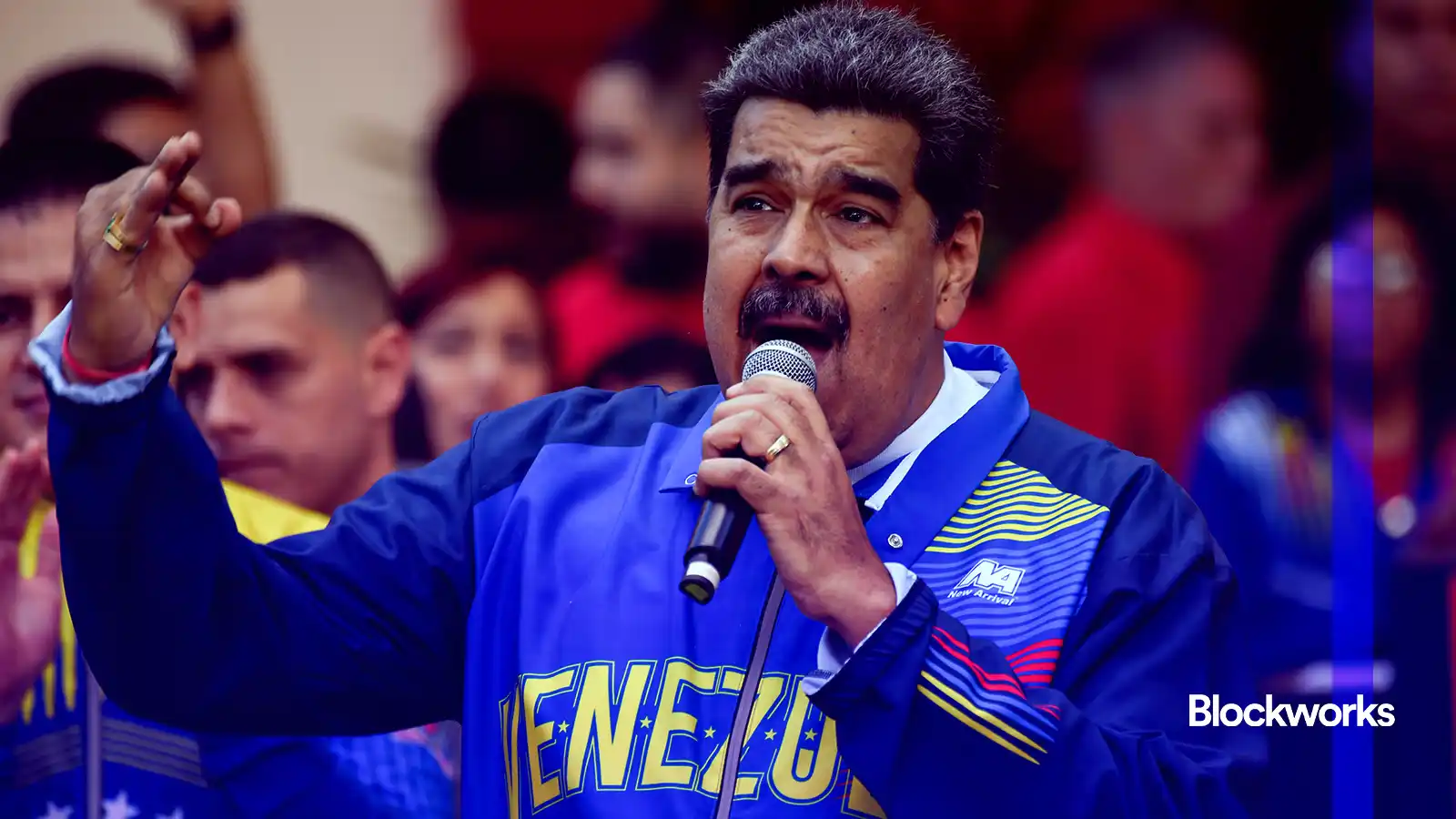
"I don't think it's a bad thing, this so-called 'dollarization' process... Thank God it exists."

— Nicolás Maduro

A recent report by The New York Times stated that Venezuela has become "the first country to manage a large portion of its fiscal revenue using cryptocurrency."

But this was not an active choice.

Approximately half of Venezuela's revenue comes from oil sales denominated in U.S. dollars. As a sanctioned country, Venezuela cannot legally send or receive dollars.

Previously, sanctioned governments typically exchanged oil for dollars—or bartered oil for goods or infrastructure investments—through a network of shell companies and offshore banks.

Now, they have a simpler option: accept stablecoins as payment. Economist Asdrúbal Oliveros estimates that Tether's USDT is the medium of exchange for about 80% of Venezuela's oil sales.

The Venezuelan government once banned the use of stablecoins for transactions, viewing them as a threat to the bolívar. But the devastating impact of U.S. sanctions left it with almost no choice, ultimately forcing it to embrace stablecoins.

Venezuela's current interim president, Delcy Rodriguez, acknowledged the inevitability of crypto-driven dollarization as early as August last year. She told business leaders at the time that "non-traditional management mechanisms" were being implemented to better manage the bolívar exchange rate.

Reuters reported shortly thereafter: "The Venezuelan government has allowed greater use of USDT since June." With state approval, banks now sell USDT obtained from oil sales to local businesses, which use these stablecoins to pay domestic and international suppliers.

They also hope stablecoins will circulate at the retail level: the head of Venezuela's National Supermarket Association recently stated on national television that grocery stores are advancing system upgrades to accept USDT payments.

In other words, the Venezuelan government is encouraging the use of dollars issued by Tether to replace its own currency, the bolívar.

As a result, USDT—which many Venezuelans call "Binance dollars"—is now used in various scenarios, "from buying groceries and paying apartment management fees to issuing salaries and paying suppliers."

So, for a stablecoin enthusiast like me, it was quite disappointing to see that the U.S. government's indictment against Nicolás Maduro didn't even mention cryptocurrency or stablecoins.

The indictment describes illegal fund flows using the old ways: planes returning from Mexico "loaded with drug proceeds"; weapons like grenades bartered for cocaine; protection fees paid by sharing shipments of cocaine; and a $2.5 million cash bribe.

Why no mention of cryptocurrency?

There are two possibilities: 1) The U.S. government has stopped publicly criticizing crypto, and prosecutors know when to skip it; or 2) Crypto and stablecoins are still inadequate for the scale of funding required by Maduro and his associates. The former is more interesting, but the latter is more likely the truth.

"It is difficult for the state to quickly liquidate these [crypto] assets," explained Asdrúbal Oliveros, "because transferring crypto funds requires going through various controls that are currently not being met."

A report by TRM Labs reached a similar conclusion: "Large-scale drug trafficking organizations still heavily rely on physical cash, trade-based money laundering, and the protection of state or quasi-state institutions when moving core proceeds. Cryptocurrency typically plays a secondary or complementary role rather than replacing these mechanisms."

Analysts from the national security think tank Lawfare also agree: "Cryptocurrency-based sanctions evasion remains a drop in the bucket compared to traditional illicit finance channels."

Some are more optimistic about the practicality of stablecoins and crypto in the field of "international payments."

For example, InSight Crime reported that Mexican drug cartels are sustained by an "industrial-scale crypto money laundering pipeline" that funnels black money through digital networks to Chinese chemical suppliers.

They detailed a niche market where stablecoins have found a fit: acting as intermediaries connecting Chinese money brokers who need dollars to sell to clients circumventing China's capital controls, and Mexican drug cartels who need to buy fentanyl precursor chemicals from China.

This isn't the product-market fit crypto enthusiasts hoped for, but in terms of actual behavior, the fit is quite strong. For instance, the DEA stated that its seizures of illicit cash have significantly decreased because criminal groups are "placing cryptocurrency above traditional cash laundering schemes."

Correspondingly, seizures of "virtual currency" have risen significantly: between 2020 and 2024, the DEA seized $2.5 billion in cryptocurrency, compared to only $2.2 billion in cash.

This might explain why Maduro and his associates stick to more traditional payment methods—traceable cryptocurrency and freezable stablecoins are not yet ready for the largest-scale money laundering needs.

Nonetheless, Venezuela's embrace of the digital dollar is setting a precedent. Lawfare concluded: "U.S. adversaries have established a working proof-of-concept, and emerging financial technologies may further consolidate it."

If that's the case, the U.S. dollar itself might be further consolidated as a result.

Being prohibited from using dollars did not push Venezuela to adopt the yuan for oil settlements—instead, it led the government to switch to the digital dollar.

Câu hỏi Liên quan

QWhy has Venezuela turned to using USDT for its oil sales according to the article?

ADue to U.S. sanctions, Venezuela cannot legally send or receive U.S. dollars. Approximately 80% of its oil sales are now conducted using Tether's USDT as a transaction medium, as it provides a simpler alternative to traditional workarounds involving shell companies and offshore banks.

QWhat was the Venezuelan government's initial stance on stablecoins like USDT, and why did it change?

AThe Venezuelan government initially banned stablecoin transactions, viewing them as a threat to the Bolivar. However, the devastating impact of U.S. sanctions left them with almost no choice, forcing them to embrace stablecoins to manage revenue and economic activities.

QHow is USDT being used within Venezuela beyond oil sales, as mentioned in the article?

AUSDT is used for various daily transactions, including buying groceries, paying apartment management fees, disbursing salaries, and settling payments with suppliers. The government is encouraging its use at the retail level, with supermarkets adapting systems to accept USDT payments.

QWhy does the article suggest that cryptocurrencies and stablecoins were not mentioned in the U.S. government's indictment against Nicolás Maduro?

AThe article presents two possibilities: 1) The U.S. government has shifted away from publicly criticizing crypto, and prosecutors omitted it strategically, or 2) Cryptocurrencies and stablecoins are still inadequate for the scale of money laundering required by Maduro and his associates, with traditional methods like cash and trade-based laundering remaining dominant.

QWhat broader implication does the article highlight regarding the use of digital dollars like USDT in sanctioned economies?

AThe article suggests that Venezuela's adoption of USDT sets a precedent, creating a 'working proof-of-concept' for other U.S. adversaries. This could further entrench the use of digital dollars, ironically strengthening the U.S. dollar's role even in economies sanctioned by the U.S., rather than prompting a shift to alternatives like the Chinese yuan.

Nội dung Liên quan

38.000 Ứng Dụng Phơi Bày, 2.000+ Ứng Dụng Rò Rỉ, Lập Trình AI Biến 'Mạng Nội Bộ' Thành Mạng Công Cộng

Theo nghiên cứu của công ty an ninh mạng RedAccess, các công cụ lập trình AI (vibe coding) như Lovable, Replit, Base44 và Netlify đang gây ra rò rỉ dữ liệu nghiêm trọng. Khoảng 38.000 ứng dụng tạo ra từ các nền tảng này có thể truy cập công khai, trong đó ước tính 2.000 ứng dụng đang lộ thông tin nhạy cảm như hồ sơ y tế, dữ liệu tài chính, chiến lược nội bộ của doanh nghiệp, thậm chí cả quyền quản trị hệ thống. Nguyên nhân chính đến từ việc cài đặt mặc định của nhiều nền tảng là công khai (public) và người dùng thiếu nhận thức an ninh. Các "công dân lập trình viên" có thể dễ dàng tạo và triển khai ứng dụng vào môi trường sản xuất mà không trải qua quy trình kiểm tra bảo mật truyền thống. Các lỗ hổng này dễ dàng bị phát hiện qua công cụ tìm kiếm. Dù một số nền tảng phản bác rằng trách nhiệm thuộc về người dùng trong việc cấu hình bảo mật, sự cố này vẫn cho thấy mối nguy hiểm tiềm ẩn khi AI tự động tạo mã mà thiếu hiểu biết sâu về bối cảnh và kiến trúc bảo mật tổng thể, dẫn đến việc hàng loạt dữ liệu nội bộ doanh nghiệp bị biến thành tài sản công khai trên mạng.

marsbit3 phút trước

38.000 Ứng Dụng Phơi Bày, 2.000+ Ứng Dụng Rò Rỉ, Lập Trình AI Biến 'Mạng Nội Bộ' Thành Mạng Công Cộng

marsbit3 phút trước

Thị trường trái phiếu Nhật Bản sẽ 'lên chuỗi' toàn diện

Bài báo thảo luận về việc số hóa trái phiếu chính phủ Nhật Bản (JGBs) bằng công nghệ blockchain, cụ thể là trên mạng Canton Network. JGBs là tài sản thế chấp quan trọng bậc nhất ở châu Á, với giá trị lưu thông hơn 9 nghìn tỷ USD. Tuy nhiên, hệ thống thế chấp truyền thống hoạt động chậm, giới hạn trong giờ hành chính ở Tokyo, gây tắc nghẽn thanh khoản. Việc chuyển JGB lên chuỗi, thông qua một dự án thử nghiệm của JSCC, Mizuho, Nomura và Digital Asset, nhằm mục tiêu cho phép thanh toán nguyên tử (atomic settlement) 24/7, tức thì và xuyên biên giới. Động lực chính là sự cấp thiết khi Mỹ đã tiên phong với trái phiếu kho bạc được token hóa (DTCC, Broadridge, JPMorgan), đe dọa vị thế của JGB nếu không hiện đại hóa. Mạng Canton được lựa chọn vì kiến trúc bảo mật và tuân thủ pháp lý phù hợp, cho phép các bên chỉ xem dữ liệu được ủy quyền. Việc thanh toán thế chấp "xuyên suốt" như vậy có thể ngăn chặn vòng xoáy bán tháo trong khủng hoảng, giảm rủi ro và giải phóng hàng trăm tỷ USD vốn bị đóng băng. Sự hội tụ của các trái phiếu chính phủ lớn (Mỹ, Nhật, châu Âu) trên Canton có thể biến nó thành một cơ sở hạ tầng tài chính toàn cầu mới, giống như SWIFT. Bài báo nhận định đây là một cuộc cách mạng về hiệu quả, nâng cấp cơ sở hạ tầng nhưng vẫn do các định chế tài chính truyền thống nắm giữ.

marsbit1 giờ trước

Thị trường trái phiếu Nhật Bản sẽ 'lên chuỗi' toàn diện

marsbit1 giờ trước

Báo cáo gọi vốn tuần | Có 14 sự kiện gọi vốn công khai, Kalshi hoàn thành vòng tài trợ mới 1 tỷ USD với định giá 22 tỷ USD, Coatue Management dẫn đầu

**Báo cáo Tài chính Tuần: 14 Sự kiện Gọi vốn Công khai, Tổng giá trị hơn 1 tỷ USD** Theo thống kê không đầy đủ của PANews, tuần trước (4-10/5) ghi nhận **14 thỏa thuận đầu tư** trong lĩnh vực blockchain toàn cầu với **tổng vốn huy động được công bố hơn 1 tỷ USD**. Đáng chú ý nhất là vòng gọi vốn 1 tỷ USD của nền tảng thị trường dự đoán **Kalshi**, định giá công ty lên tới 22 tỷ USD, do Coatue Management dẫn đầu. **Phân bổ theo lĩnh vực:** * **DeFi (4 vụ):** OnRe (bảo hiểm tái tục trên chuỗi) huy động 5 triệu USD; Saturn Credit (giao thức tín dụng hỗ trợ Bitcoin) huy động 2 triệu USD; Ekiden (nền tảng giao dịch blockchain) huy động 2 triệu USD; Centrifuge nhận đầu tư chiến lược "7 con số" từ Coinbase. * **Cơ sở hạ tầng & Công cụ (4 vụ):** OpenTrade huy động 17 triệu USD để mở rộng cơ sở hạ tầng cho sản phẩm yield stablecoin; Balcony (nền tảng RWA) huy động 12.7 triệu USD; Antier Solutions huy động 3 triệu USD; Coinbase đầu tư chiến lược vào Kemet Trading. * **Thị trường Dự đoán (3 vụ):** Ngoài Kalshi, Elastics (nền tảng AI) huy động 2 triệu USD; Sportix (cơ sở hạ tầng thể thao AI) huy động 3.2 triệu USD. * **Tài chính Tập trung (CeFi) (1 vụ):** Stockcoin.ai (nền tảng giao dịch AI) hoàn thành vòng seed do Amber Group dẫn đầu. * **Ứng dụng Web3 Khác (2 vụ):** SC Ventures (thuộc Standard Chartered) đầu tư chiến lược vào nhà tạo lập thị trường GSR; Capital B (công ty dự trữ Bitcoin) huy động 1.1 triệu Euro. **Hoạt động của Quỹ Đầu tư:** * **Haun Ventures** (của Katie Haun) đã huy động thành công 1 tỷ USD cho quỹ mới, tập trung vào crypto, AI và tài sản thay thế. * **Multi Investment** (Thụy Sĩ) huy động ~616 triệu USD để tăng cường đầu tư vào fintech, blockchain và Web3. * **Global Millennial Capital** hoàn thành huy động 100 triệu USD cho quỹ tập trung vào cơ hội trước IPO, chú trọng AI và DeFi. Tóm lại, tuần qua chứng kiến dòng vốn mạnh mẽ đổ vào các lĩnh vực then chốt như cơ sở hạ tầng tài chính phi tập trung (RWA, yield), thị trường dự đoán và AI, với sự tham gia của nhiều tổ chức tài chính lớn truyền thống và quỹ đầu tư mạo hiểm.

marsbit1 giờ trước

Báo cáo gọi vốn tuần | Có 14 sự kiện gọi vốn công khai, Kalshi hoàn thành vòng tài trợ mới 1 tỷ USD với định giá 22 tỷ USD, Coatue Management dẫn đầu

marsbit1 giờ trước

Giao dịch

Giao ngay
Hợp đồng Tương lai
活动图片

