Under Political Pressure, Is the Federal Reserve Still Independent?

marsbitXuất bản vào 2026-04-21Cập nhật gần nhất vào 2026-04-21

Tóm tắt

Amidst political pressure from former President Trump and congressional scrutiny, Kevin Warsh, nominated as Federal Reserve chair, argued that public comments from elected officials on interest rates do not fundamentally threaten the Fed’s operational independence. Instead, he emphasized that the real risk to the Fed’s autonomy lies in its failure to control inflation, which could erode public trust. Warsh also cautioned against the Fed overstepping into fiscal or social policy domains beyond its mandate. His remarks come as the Fed faces external pressures, including a Justice Department investigation into a renovation project and persistent inflation above the 2% target, exacerbated by rising energy prices. Warsh stressed that the Fed’s focus on its core mission—price stability—is essential to maintaining its credibility and independence.

Editor's Note: At the confirmation hearing of the Senate Banking Committee, Kevin Warsh systematically articulated his understanding of the Federal Reserve's role and independence for the first time.

This hearing, while seemingly focused on interest rates and inflation, essentially pointed to a more core question: against the backdrop of escalating political pressure, how exactly are the boundaries of central bank independence defined, and can they be consistently maintained?

This discussion occurs within a highly intertwined reality. On one hand, Trump has repeatedly publicly pressured the Fed to cut interest rates and criticized the incumbent Chairman Jerome Powell with strong language; on the other hand, the U.S. Department of Justice's investigation into the Fed headquarters' $2.5 billion renovation project is seen by Powell as an indirect form of pressure. At the congressional level, Republican Senator Thom Tillis directly linked this investigation to personnel appointments, explicitly stating that he would block the nomination from proceeding to a full Senate vote until the investigation is concluded. Monetary policy, regulatory investigations, and political appointments are converging and amplifying at this juncture.

The macroeconomic environment offers no buffer either. Post-pandemic inflation once rose above 7% and currently remains significantly higher than the 2% policy objective; coupled with the Iran conflict driving up energy prices, price pressures may continue to rise in the coming months. With inflation not yet effectively subdued, the divergence over "whether to cut rates" quickly transformed from a technical discussion into a political issue.

In this context, Warsh's statements present a more realistic framework: on one hand, he "cools down" the public interventions from the President and Congress, arguing that expressing views on interest rates itself does not constitute a substantive erosion of independence; on the other hand, he points to the real risk being the Federal Reserve itself—if it fails to fulfill its core duty of controlling inflation, public trust will be weakened, and independence will lose its foundation.

Thus, the meaning of "central bank independence" is undergoing a subtle shift: it is no longer just an abstract principle at the institutional design level, but closer to a results-oriented credibility mechanism. Independence does not exist naturally; rather, it is continuously tested and reshaped under the triple pressures of inflation, politics, and the market.

The following is the original text:
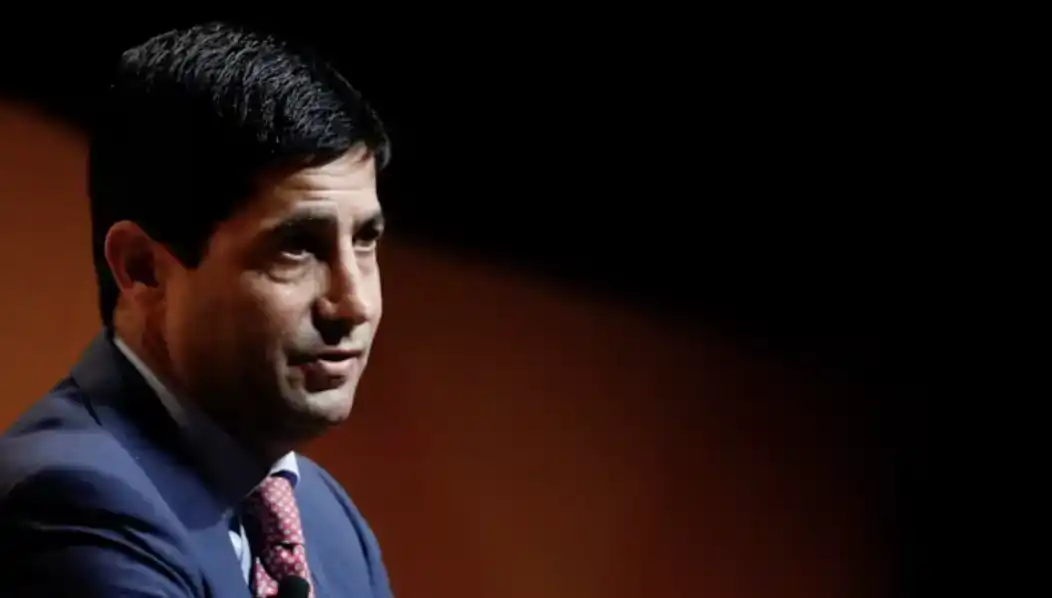
The candidate nominated by Trump for Federal Reserve Chair will tell Congress that the independence of the U.S. interest rate-setting body is "not particularly threatened" when politicians call for the central bank to adjust borrowing costs.

Kevin Warsh will state in his opening remarks to the powerful Senate Banking Committee on Tuesday: "I do not believe the operational independence of monetary policy is particularly threatened when elected officials — whether the president, senators or members of Congress — express their views on interest rates."

According to prepared remarks seen by the Financial Times, he will tell senators that "central bank officials must be strong enough to listen to diverse views from all sides," while also being "humble enough to be open to new ideas and new economic developments."

These comments come as Trump has repeatedly called for the Fed to cut interest rates. The U.S. President has called the incumbent Fed Chair Jerome Powell a "dope" and an "idiot," accusing him of failing to follow orders.

Powell has stated that the current U.S. Department of Justice investigation into a $2.5 billion renovation project at the Fed headquarters is a pretext to pressure the interest-rate setting body into lowering borrowing costs.

Republican Senator Thom Tillis of North Carolina, a member of the banking committee which reviews the Fed chair appointment, said he would block Warsh's nomination from proceeding to a full Senate vote until the investigation into Powell is concluded.

Warsh could succeed Powell as early as May 16th. He will make clear that the Fed's independence in setting interest rates is "vital" and key to controlling inflation.

However, the former Fed governor will also call for the Fed to "stick to its knitting," arguing that the central bank undermines its own independence when it "strays into fiscal and social policy realms for which it has neither mandate nor expertise."

"The Fed should not be a universal agency of the U.S. government, nor serve as the court of appeals for issues that should be debated and decided in other venues," he will say. The 56-year-old candidate will also spend considerable time outlining his qualifications for the role, telling lawmakers he would bring "the experience of an insider and the questioning spirit of an outsider," citing his education at Stanford University, his career on Wall Street, and his previous experience as a Fed governor.

Warsh also pointed out that "independence" is at its highest when conducting monetary policy, but this degree of independence does not apply to other functions the Fed undertakes under its congressional mandate. He told the committee: "In the management of public funds... or in bank regulation and prudential policy... and in matters involving international finance, Fed officials should not be accorded the same special deference."

The Fed plays a major role in bank regulation, but it already works with the U.S. Treasury and other regulators in setting regulatory rules and overseeing risks in the financial system.

Warsh also told senators that when the Fed fails in its duty to control inflation, it is actually undermining its own independence. He argued that this causes the public to "lose confidence in our system of economic governance, and thereby question whether monetary policy independence is as important as advertised."

After the COVID-19 pandemic, inflation rose to multi-decade highs, exceeding 7% in 2022. Inflation remains above the Fed's 2% target, and price pressures are expected to rise further in the coming months due to the Iran war driving up energy prices.

Warsh said: "The mission Congress has given the Fed is to ensure price stability — no excuses, no ambiguity, no arguing or obfuscating." He will also emphasize: "Inflation is a choice, and the Fed must be held accountable for it."


Câu hỏi Liên quan

QWhat is the core issue regarding the Federal Reserve's independence as discussed in the article?

AThe core issue is defining the boundaries of central bank independence and whether it can be sustained amid increasing political pressure, including public criticism from former President Trump, a Justice Department investigation, and congressional actions linking confirmations to ongoing probes.

QHow does Kevin Warsh view public expressions of opinion on interest rates by elected officials?

AKevin Warsh does not see such expressions as a particular threat to the operational independence of monetary policy, stating that Fed officials should be firm enough to listen to diverse views while remaining open to new ideas.

QWhat does the article identify as the real risk to the Federal Reserve's independence?

AThe real risk is the Fed's potential failure to fulfill its core mandate of controlling inflation, which would undermine public trust and erode the foundation of its independence.

QHow has political pressure manifested against the Federal Reserve and Chair Jerome Powell?

APolitical pressure includes public demands for rate cuts and harsh rhetoric from Trump, a Justice Department investigation into a Fed renovation project viewed as indirect pressure, and a senator blocking a nomination pending the investigation's conclusion.

QWhat is the current macroeconomic context affecting the debate over Fed independence?

AInflation remains above the 2% target after peaking over 7% post-pandemic, with energy price increases due to conflict in Iran potentially pushing prices higher, turning the 'whether to cut rates' debate into a political issue.

Nội dung Liên quan

Startup Web3 tại Trung Quốc: Những hướng đi tốt nào? (Phần 5)

Trong loạt bài về cơ hội khởi nghiệp Web3 tại Trung Quốc, phần này tập trung vào việc các nhóm bảo mật/kiểm soát rủi ro và các nhóm ứng dụng/cộng đồng có thể chuyển dịch năng lực sang lĩnh vực AI. **Nhóm bảo mật & kiểm soát rủi ro:** Từ bảo mật trên chuỗi sang kiểm toán hành vi AI Agent. Khi AI Agent phát triển, rủi ro an ninh mở rộng từ tài sản sang hành vi tự động như quyền truy cập, gọi công cụ và thanh toán. Các đội ngũ với kinh nghiệm giám sát chuỗi, kiểm toán có thể chuyển sang cung cấp dịch vụ kiểm tra nhật ký hoạt động Agent, kiểm soát quyền hạn, giám sát truy cập dữ liệu và quản trị an ninh AI cho doanh nghiệp, đặc biệt trong các ngành nhạy cảm như tài chính, y tế. **Nhóm ứng dụng & cộng đồng:** Từ sản phẩm Web3 sang sản phẩm được tăng cường bởi AI. Thay vì chuyển đổi hoàn toàn, các nhóm này nên tích hợp AI vào quy trình sản phẩm và vận hành hiện có để giải quyết vấn đề thực tế. Ví dụ: * Công cụ nghiên cứu đầu tư: Dùng AI để lọc thông tin, tóm tắt tài liệu, giải thích dữ liệu on-chain. * Nền tảng nội dung/cộng đồng: Dùng AI để phân loại câu hỏi, gắn nhãn người dùng, tạo đường dẫn học tập cá nhân hóa. * Công cụ giao dịch/vận hành: Dùng AI để phân tích, nhắc nhở rủi ro, hỗ trợ chiến lược. Chìa khóa là AI phải cải thiện được trải nghiệm người dùng hoặc hiệu quả vận hành, không chỉ là thêm một chatbot. **Các hướng đi nên thận trọng:** 1. Mô hình ngôn ngữ lớn (LLM) phổ thông: Đòi hỏi nguồn lực khổng lồ, cạnh tranh khốc liệt. 2. Nền tảng AI Agent chung chung: Khó tìm nhu cầu thanh toán cụ thể, dễ dừng ở bản demo. 3. Giao dịch AI tự động, tư vấn đầu tư AI: Dễ chạm vào vấn đề quản lý tiền của người dùng, hứa hẹn lợi nhuận và ranh giới pháp lý nhạy cảm. 4. Chỉ "khoác áo" AI cho dự án cũ: Nếu không giải quyết nhu cầu thực hay cải thiện giá trị cốt lõi, sẽ không bền vững. **Tóm lại:** Đối với các nhà khởi nghiệp Web3 Trung Quốc, việc chuyển sang AI không phải là mục tiêu chính. Điều quan trọng là xem xét năng lực hiện có (dữ liệu, danh tính, thanh toán, bảo mật, vận hành) có thể được áp dụng vào các kịch bản AI thực tế nào, với người trả tiền rõ ràng và ranh giới pháp lý tương đối minh bạch. AI là cơ hội để mở rộng năng lực cốt lõi, không phải để thay thế một nền tảng thiếu nhu cầu thực sự.

marsbit1 giờ trước

Startup Web3 tại Trung Quốc: Những hướng đi tốt nào? (Phần 5)

marsbit1 giờ trước

Sự Quan Tâm Tăng Cao Đối Với Little Pepe (LILPEPE) Đẩy Nhanh Đợt Bán Trước Với Hơn 28 Triệu USD Tài Trợ

Dự án tiền điện tử Little Pepe (LILPEPE) đang thu hút sự chú ý đáng kể với đợt mở bán trước (presale) cực kỳ thành công. Tính đến nay, dự án đã huy động được hơn 28 triệu USD, với Giai đoạn 13 đã bán được 98.46%. Đây được coi là một trong những đợt presale meme coin nhanh nhất năm 2025. LILPEPE nổi bật nhờ chiến lược phát hành với vốn hóa thị trường bằng 0, được xây dựng trên mạng Lớp 2 tương thích Ethereum và có cơ sở hạ tầng rõ ràng. Dự án áp dụng mô hình không thuế giao dịch, tích hợp cơ chế staking, bảo vệ chống bot sniper và hướng tới quản trị cộng đồng DAO. Dự án đã được kiểm toán bởi CertiK. Cộng đồng của LILPEPE rất sôi động, thể hiện qua các chương trình giveaway với tổng giải thưởng lớn, thu hút hàng trăm nghìn lượt tham gia. Sức hút của dự án còn được phản ánh qua lượng tìm kiếm trực tuyến vượt trội so với các meme coin khác như PEPE, DOGE hay SHIB. Giá token tại Giai đoạn 13 là 0.0022 USD và sẽ được niêm yết ở mức 0.0030 USD, mang lại cơ hội tăng giá cho các nhà đầu tư. Đợt presale có tổng cộng 19 giai đoạn và đang tiến gần đến lúc kết thúc.

TheNewsCrypto1 giờ trước

Sự Quan Tâm Tăng Cao Đối Với Little Pepe (LILPEPE) Đẩy Nhanh Đợt Bán Trước Với Hơn 28 Triệu USD Tài Trợ

TheNewsCrypto1 giờ trước

Giao dịch

Giao ngay
Hợp đồng Tương lai
活动图片




