The Person Who 'Killed' PayPal Wants to Buy It

比推Xuất bản vào 2026-02-24Cập nhật gần nhất vào 2026-02-24

Tóm tắt

A potential acquisition that could reshape the global payments landscape is under discussion, as Stripe—valued at $159 billion—is reportedly considering acquiring all or parts of PayPal, which has a market cap of just $43 billion. The news drove PayPal’s stock up nearly 7%. PayPal has faced significant challenges: its stock fell 46% over the past year amid rising competition from Apple Pay, Google Pay, and agile rivals like Adyen and Stripe. Despite its vast user network of 438 million active accounts and strong presence in cross-border transactions, PayPal has struggled to keep pace with shifting user behaviors and the rise of embedded and social payments. However, PayPal retains valuable assets, including Braintree (processing around $700 billion annually), Venmo (with 100 million monthly active users), and a deeply entrenched global payments infrastructure. A key underlying motive for the deal is stablecoins. PayPal launched its own stablecoin, PYUSD, adopting a centralized approach to digital currency. In contrast, Stripe has pursued an infrastructure-focused strategy, acquiring stablecoin infrastructure firm Bridge and launching “Open Issuance”—a platform that enables businesses to issue their own stablecoins. Stripe is also developing Tempo, a Layer-1 blockchain aimed at challenging traditional settlement networks like SWIFT. A combined Stripe-PayPal entity could create a powerful Web3 payment ecosystem, integrating PYUSD with Tempo’s fast, low-cost transactions and...

A transaction that could rewrite the global payment industry landscape is quietly brewing.

On February 24, Bloomberg reported: Private payment giant Stripe, led by the Collison brothers, is considering acquiring all or part of the business of the veteran payment pioneer PayPal. On the day the news broke, PayPal's stock price surged nearly 7%.

One is a private unicorn valued at $159 billion, the other is a former king with a market cap of only $43 billion but a vast user network. Behind this potential deal lies not just a shift in market share, but a deeper game about the future form of payments—especially crypto/stablecoin payments.

PayPal's Dilemma and Trump Cards

To understand why this potential deal has caused such a stir, first look at two sets of numbers.

Over the past 12 months, PayPal's stock price has fallen nearly 46%, with its market capitalization hovering around $40 billion. Meanwhile, the yet-to-be-publicly-listed Stripe recently valued itself at $159 billion in an employee stock buyback—the former is less than a third of the latter.
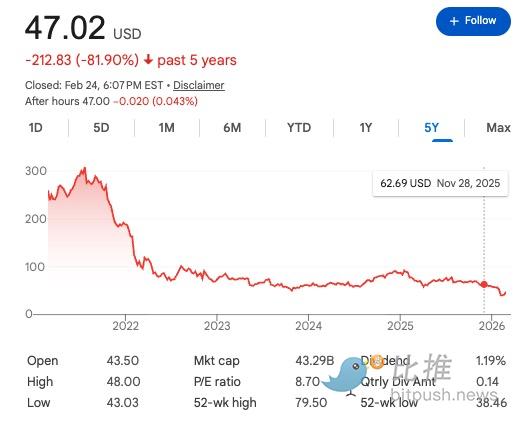
Behind this inversion is PayPal's business being squeezed from multiple dimensions.

The competitive landscape has long been turned upside down. Apple Pay and Google Pay have locked down the consumer entry point via mobile operating systems, while new forces like Adyen and Stripe are constantly encroaching on the territory with their technical flexibility on the business side. PayPal, which once made its name as a "third-party guarantor," is gradually losing the scarcity of being a connector in an era of increasingly diversified payment entry points.
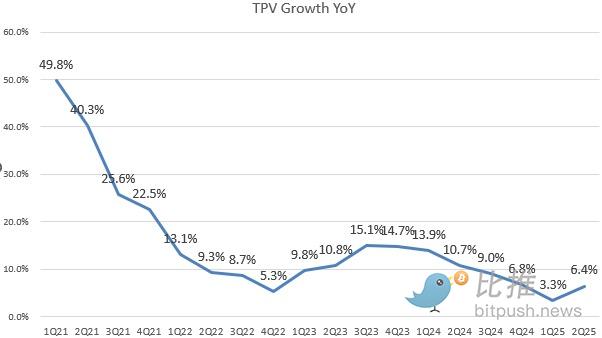
User habits are also quietly evolving. With the explosion of social payments and embedded finance, people prefer to complete transactions at the moment of consumption rather than jumping to a heavy third-party page. Whether it's Stripe's one-click payment or Apple Pay's biometrics, they seem more convenient than that blue icon interface that requires remembering a password. Although PayPal holds the social ace Venmo, it has always struggled to convert it into a commercial engine.

The most fundamental pain point is the loss of market confidence in its growth potential. In the old world of fiat payments, PayPal's imagination has nearly reached its ceiling; in its foray into crypto, it launched the stablecoin PYUSD but was criticized for being "compliant but lacking endogenous transaction demand," failing to penetrate the DeFi ecosystem or create unique value in its own B2B cross-border scenarios.

However, despite its beleaguered fundamentals, PayPal still holds several "chips" that tech giants covet.
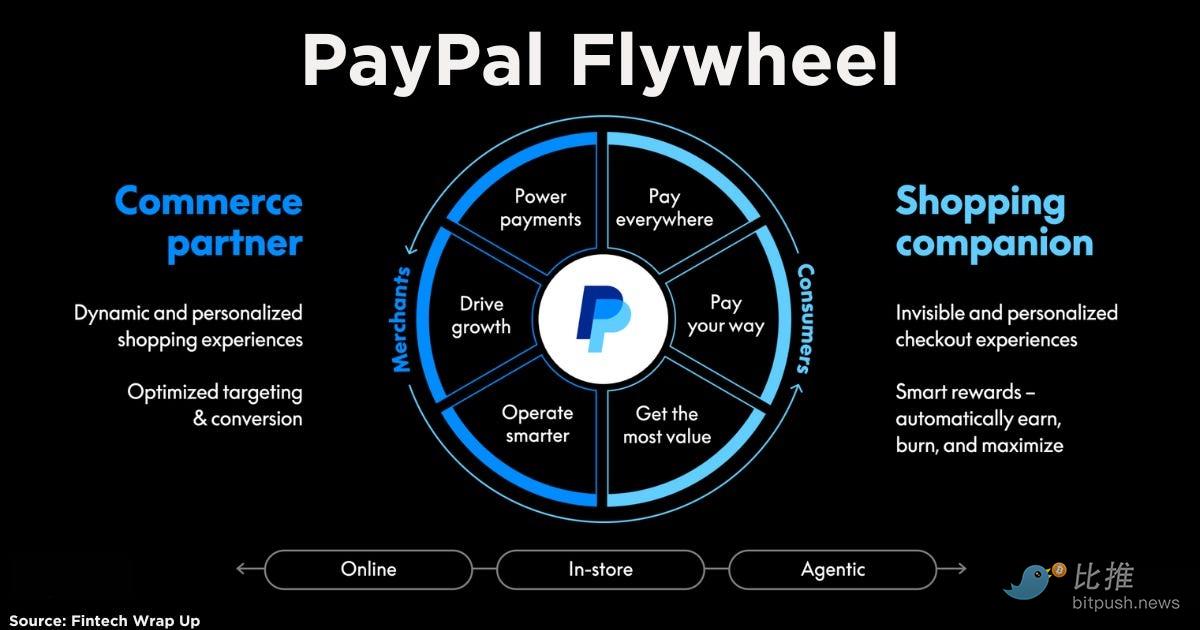
First is Braintree, processing about $700 billion in payments annually, valued by Bernstein at $10 to $15 billion. If acquired, Stripe's total payment volume would jump to $2.1 trillion, widening the gap in competition with rivals like Adyen.

Second is Venmo, a P2P app with over 100 million monthly active users, valued at about $5 billion. For Stripe, which has long "stayed behind the scenes," this is a valuable consumer touchpoint: a form of "last-mile visibility."

Third is a global network沉淀 (precipitated) over nearly three decades: clearing infrastructure deeply embedded in cross-border trade across more than 200 countries, and 438 million active accounts with real card bindings and credit history. Although it appears old, it is the most stable bridge to the global commercial periphery. PayPal recently launched the PayPal World plan, potentially reaching over 2 billion users through partnerships with Tenpay, UPI, etc. This "interoperability" connecting Eastern and Western payment systems is precisely the strategic entry ticket that is difficult for any competitor to replicate.

Nearly three decades of accumulation have not been in vain. It's just a pity that the one who best knows how to use this ticket may no longer be PayPal itself.

Stablecoins Become the Hidden Main Line

However, a word repeatedly mentioned by Wall Street analysts reveals the deeper ambition of this deal: stablecoins.

"A combined Stripe and PayPal could become a significant player in the stablecoin space, as stablecoins are increasingly becoming a more critical part of global commerce," Mizuho analyst Dan Dolev said bluntly.

Looking at the actions of both companies over the past two years, it's not hard to see that cryptocurrency—especially stablecoins—has become a future they are both betting on. But their strategic paths are截然不同 (distinctly different).

PayPal has chosen a path of "controlling the network with a coin," its underlying logic继承 (inheriting) and延续 (continuing) the centralized thinking of the SWIFT era. PayPal crafted PYUSD as a carefully designed "digital dollar." When ordinary consumers see PYUSD in their PayPal wallet, they don't need to understand whether it's a digital currency or fiat, nor whether the underlying settlement is blockchain or the traditional banking system. The familiar UI interface makes the digital currency just another foreign currency type. PayPal aims to extend the advantages of its payment network to the on-chain world, thereby building a closed-loop ecosystem centered on PYUSD. In April this year, it even launched a "PYUSD Hold Rewards Program," offering users a 3.7% annualized yield, hoping to drive growth in cross-border payment business through stablecoin transaction volume.
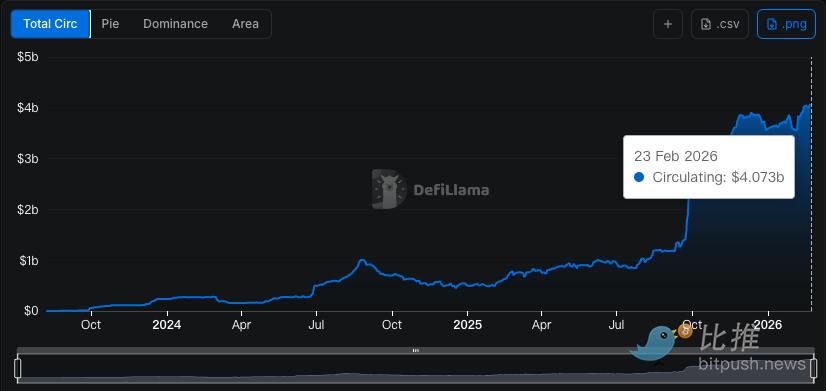
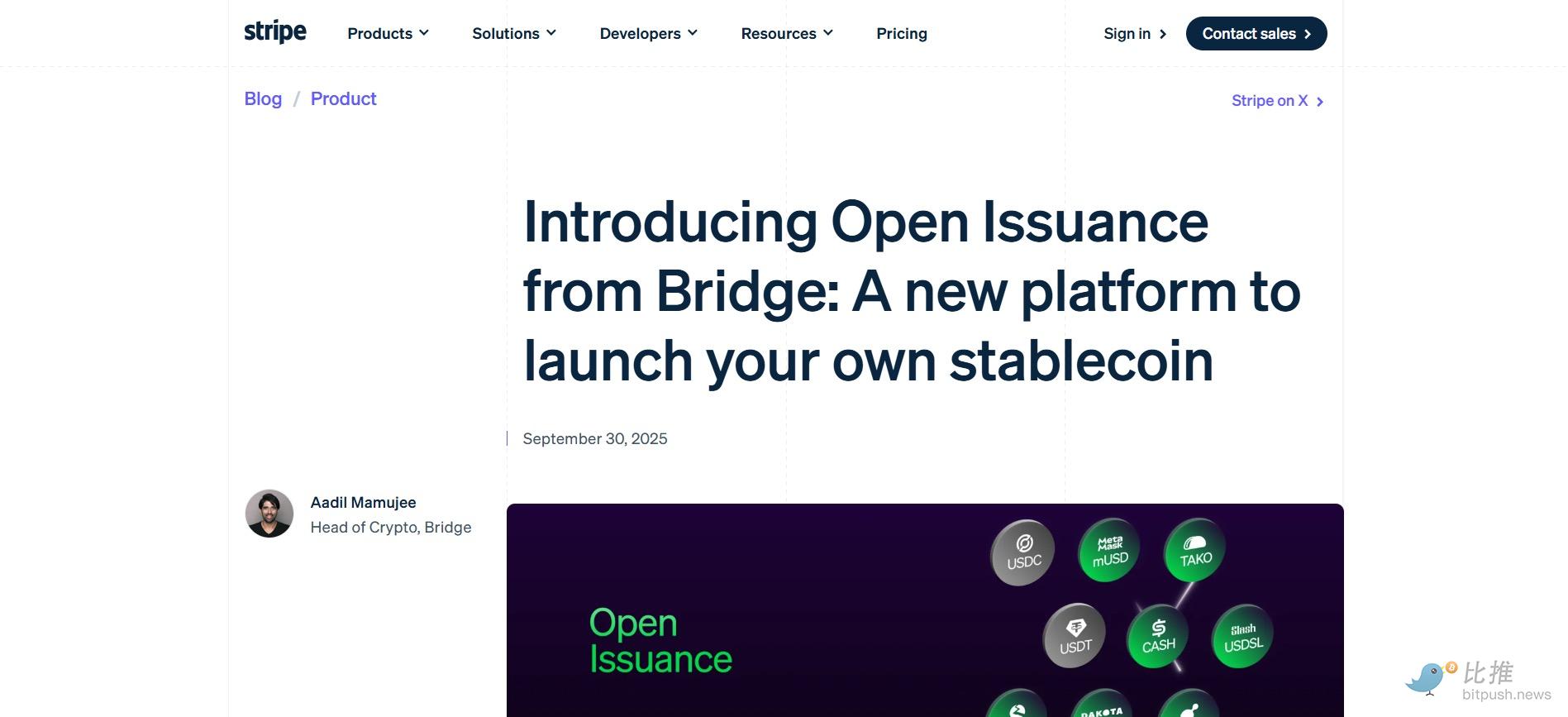
Stripe's layout is more systematic. In 2024, it acquired stablecoin infrastructure company Bridge for $1.1 billion, its largest acquisition to date. But the true ambition only became fully apparent with the launch of its "Open Issuance" platform—it is not fully betting on issuing its own stablecoin but is striving to become the "arsenal" in the stablecoin payment field, empowering other enterprises to issue, manage, and use stablecoins by building powerful infrastructure and developer tools.

The core of "Open Issuance" is that every enterprise can issue its own stablecoin through Stripe and enjoy reserve interest income. This "issuance as a service" model cleverly shifts value capture: while other traditional stablecoin issuers are still calculating basis point spreads, Stripe abandons reliance on reserve interest and instead builds a new profit model based on service fees. It shifts the value focus from "issuance" to "distribution."
The most critical piece is Tempo. Stripe is building this Layer 1 public chain focused on payments in partnership with Paradigm, targeting traditional clearing networks like SWIFT. Overlaying these two strategic maps, the logic behind Stripe's potential acquisition of PayPal becomes clearer: Stripe has the future-facing on-chain payment infrastructure (Tempo, Open Issuance), while PayPal has a ready-made user network (400 million accounts) and a market-tested stablecoin product (PYUSD).

If PYUSD is connected to the Tempo chain, leveraging its sub-second confirmation and low-cost features, and then reaching hundreds of millions of consumers through Venmo, a "Web3 payment closed loop"游离 (operating) outside the traditional banking clearing system would become a reality for the first time. This is not just complementary at the product level but a dimensional reduction strike on the existing global financial infrastructure.

An even more imaginative scenario is AI Agent payments. Unlike the traditional banking system, an AI Agent can have its own crypto wallet address, through which it can receive, store, and send funds. This makes automatic清算 (clearing) between AIs very convenient and efficient, especially suitable for micro-payment scenarios that are small in amount and have transaction context. The x402 payment protocol launched by Stripe this year is paving the way for this future—allowing developers to conduct automatic machine-to-machine settlements via the Base chain using USDC, expanding the payment scenario from "person-to-person" to "machine-to-machine." And PayPal's 400 million accounts are恰好 (precisely) the ideal "withdrawal exit" for these AI Agents.

Regulatory and Integration Challenges

Of course, the final落地 (landing) of this deal still faces huge uncertainties. Insiders emphasized that discussions are still in the early stages, and whether an agreement can be reached is still unknown.

Regulation is the sword of Damocles hanging overhead. The combination of two payment giants (combined TPV nearly $3.7 trillion) will inevitably attract high attention from antitrust agencies. Raymond James analysts believe potential acquirers could include large tech companies like Alphabet, Meta, Microsoft, Amazon, and Apple, but the feasibility of a deal is questionable given the limited financial information available for the private company Stripe.

Furthermore, the difficulty of cultural integration should not be underestimated. Stripe is known for its geek culture and developer-friendly approach, with co-founder John Collison recently stating the company is "in no rush to go public"; while PayPal is a publicly listed company with 400 million C-end users. How to reconcile these two截然不同 (distinctly different) genes will be a challenge the Collison brothers must face.

Even so, the rumor itself is symbolic enough. It marks that the global payment industry is undergoing a profound revaluation: the scale of the old era is no longer a moat, and the infrastructure capability面向未来 (facing the future) is becoming the key weight determining discourse power.

For Stripe, if the acquisition of PayPal succeeds, it will be an intergenerational "snake swallowing an elephant"; if it fails, at least the market has seen its ambition: it not only wants to become the payment base of the internet but also wants to become the rule-maker of the next generation of the financial world.

Author: Coconut Shell


Twitter:https://twitter.com/BitpushNewsCN

Bitpush TG Discussion Group:https://t.me/BitPushCommunity

Bitpush TG Subscription: https://t.me/bitpush

Original link:https://www.bitpush.news/articles/7614231

Câu hỏi Liên quan

QWhat is the potential impact of Stripe's rumored acquisition of PayPal on the global payments industry?

AThe acquisition could reshape the global payments landscape by combining Stripe's modern infrastructure and focus on crypto/stablecoin payments with PayPal's vast user network and cross-border capabilities, potentially creating a dominant force in both traditional and next-generation financial systems.

QWhy is PayPal's market valuation significantly lower than Stripe's despite its larger user base?

APayPal's valuation is lower due to declining investor confidence in its growth potential, increased competition from Apple Pay, Google Pay, and Adyen, and its struggle to adapt to evolving user habits and emerging technologies like embedded finance and crypto payments.

QWhat strategic assets does PayPal possess that make it attractive for acquisition?

APayPal holds valuable assets including Braintree (processing $700B annually), Venmo (100M monthly active users), a global network spanning 200+ countries, 438M active accounts, and deep cross-border payment infrastructure through initiatives like PayPal World.

QHow do Stripe and PayPal differ in their approaches to stablecoin and cryptocurrency integration?

APayPal adopts a 'coin-controlled network' approach with its PYUSD stablecoin, focusing on a centralized ecosystem, while Stripe pursues an infrastructure strategy with its 'Open Issuance' platform and Tempo blockchain, enabling businesses to issue stablecoins and capture value through service fees rather than reserve interest.

QWhat are the major challenges facing a potential acquisition of PayPal by Stripe?

AKey challenges include regulatory antitrust scrutiny due to the combined $3.7T total payment volume, cultural integration between Stripe's developer-focused private company ethos and PayPal's public consumer-facing structure, and the uncertainty of deal feasibility given Stripe's private financial status.

Nội dung Liên quan

Phí Hàng Ngày Trên XRP Ledger Giảm Xuống Dưới 400 USD Khi Câu Hỏi Về Hoạt Động Mạng Lại Xuất Hiện

Mạng lưới XRP Ledger (XRPL) lại một lần nữa được đưa vào tầm ngắm khi dữ liệu phí hàng ngày được báo cáo giảm xuống dưới 400 USD, theo số liệu từ DefiLlama. Mức phí thấp vốn là một thiết kế và điểm mạnh của XRPL, nhằm đảm bảo giao dịch rẻ và dễ tiếp cận. Tuy nhiên, doanh thu phí cũng có thể được xem như một chỉ báo về mức độ hoạt động, nhu cầu thực tế và quy mô sử dụng có trả phí trên mạng. Việc phí đốt hàng tuần chỉ khoảng 3.100 USD làm nổi bật sự tương phản với các blockchain như Ethereum hay Bitcoin. Trong khi những người ủng hộ coi phí thấp là dấu hiệu của hiệu quả, thì một số ý kiến có thể đặt câu hỏi liệu mức phí thấp như vậy có phản ánh đủ nhu cầu giao dịch giá trị cao hay không, nhất là trong bối cảnh XRP thường được gắn với câu chuyện về thanh toán và ứng dụng doanh nghiệp. Điều quan trọng là không suy diễn quá mức từ một ngày phí thấp. Nó không có nghĩa mạng lưới thất bại hay ngừng hoạt động, mà chỉ cung cấp một dữ liệu để phân tích thêm. Bối cảnh này cũng tạo nên sự so sánh thú vị với các nỗ lực mở rộng của Ripple vào RLUSD, thanh toán AI và hạ tầng thanh toán doanh nghiệp. Cần theo dõi xem liệu con số phí có phục hồi không, số lượng giao dịch có kể một câu chuyện khác không, và các công cụ khám phá chuỗi khối XRPL như Bithomp có xác nhận xu hướng này hay không. Các câu chuyện crypto mạnh mẽ ngày càng đến từ dữ liệu on-chain, bản cập nhật giao thức và thông báo chính thức, hơn là chỉ từ bình luận. Do đó, báo cáo này nên được xem như một phần của bức tranh tổng thể về môi trường vận hành crypto, dựa trên nguồn đã xác minh và để ngỏ cho các dữ liệu tiếp theo.

bitcoinist50 phút trước

Phí Hàng Ngày Trên XRP Ledger Giảm Xuống Dưới 400 USD Khi Câu Hỏi Về Hoạt Động Mạng Lại Xuất Hiện

bitcoinist50 phút trước

Ripple Ra Mắt XRPL AI Starter Kit Cho Các Thanh Toán Đại Lý XRP Và RLUSD

Ripple đã ra mắt Bộ công cụ khởi động AI XRPL, một bộ công cụ dành cho nhà phát triển được thiết kế để giúp các tác nhân phần mềm thực hiện thanh toán bằng XRP và Ripple USD (RLUSD). Đây được mô tả là Giai đoạn 1 trong nỗ lực mở rộng hơn vào lĩnh vực thanh toán tự động trên XRP Ledger. Bộ công cụ này tích hợp hỗ trợ cho tiêu chuẩn thanh toán x402 và bao gồm Máy chủ MCP Tài liệu XRPL, cho phép kết nối các hệ thống AI như Claude và Cursor trực tiếp với tài liệu kỹ thuật của XRPL. Động thái này mang đến cho XRP một câu chuyện mới tập trung vào tính hữu ích, trong bối cảnh các nhà phát triển và công ty thanh toán đang khám phá cách các tác nhân tự trị có thể thanh toán cho API, dịch vụ, dữ liệu và các giao dịch máy với máy khác. Ripple không chỉ nói về chủ đề AI mà đang cố gắng kết nối các tác nhân AI với hạ tầng thanh toán sử dụng XRP và RLUSD, nhắm đến các giao dịch cần tốc độ xử lý nhanh, phí thấp và ổn định. Đối với thị trường, đây là một bản cập nhật sản phẩm cụ thể từ nguồn chính thức. Các bước tiếp theo cần theo dõi bao gồm cập nhật tài liệu kỹ thuật, ví dụ mã nguồn, hoạt động trên mạng thử nghiệm và phản hồi từ các nhà phát triển.

bitcoinist3 giờ trước

Ripple Ra Mắt XRPL AI Starter Kit Cho Các Thanh Toán Đại Lý XRP Và RLUSD

bitcoinist3 giờ trước

Bitcoin sẽ lên 400.000 USD? Nhà phân tích sử dụng biểu đồ chồng lấp với Vàng để đưa ra dự báo táo bạo cho năm 2026

Phân tích viên Vivek Sen cho rằng Bitcoin (BTC) có thể đạt 400.000 USD vào năm 2026 dựa trên việc so sánh biểu đồ hiện tại của BTC với cấu trúc phá vỡ đỉnh trong lịch sử của vàng. Tuyên bố này xuất phát từ một phân tích chồng lớp biểu đồ trực quan, không phải từ một mô hình định giá chính thức. So sánh với vàng được đưa ra vì Bitcoin thường được coi là tài sản lưu trữ giá trị kỹ thuật số, và các quỹ ETF Bitcoin đã củng cố thêm nhận định này. Tuy nhiên, bài viết chỉ ra rằng đây không phải là một dự báo chắc chắn. Bitcoin và vàng có quy mô thị trường, tính thanh khoản, mức độ biến động và nhóm nhà đầu tư khác biệt. Giá Bitcoin còn chịu ảnh hưởng mạnh bởi các luồng ETF, vị thế phái sinh và đòn bẩy trong thị trường tiền mã hóa. Để kịch bản 400.000 USD có thể xảy ra, thị trường cần có dòng tiền thể chế ổn định, điều kiện vĩ mô hỗ trợ nhu cầu với tài sản cứng, và một môi trường crypto tăng trưởng rộng rãi. Mục tiêu này chủ yếu nên được xem như một kịch bản lạc quan từ một nhà phân tích mạng xã hội, chứ không phải là dự báo có trọng số xác suất. Nó nhấn mạnh rằng so sánh với vàng cung cấp một khuôn khổ tăng giá, nhưng cần được xác nhận bởi hành động giá và dòng tiền thực tế trên thị trường.

bitcoinist7 giờ trước

Bitcoin sẽ lên 400.000 USD? Nhà phân tích sử dụng biểu đồ chồng lấp với Vàng để đưa ra dự báo táo bạo cho năm 2026

bitcoinist7 giờ trước

Đồng Hồ Halving Bitcoin Chỉ Ra Giai Đoạn Đáy, Nhưng Tín Hiệu Chu Kỳ Cần Thận Trọng

Crypto Rover, một nhà phân tích và người có ảnh hưởng trong không gian tiền điện tử, đã chia sẻ biểu đồ chu kỳ halving của Bitcoin, cho rằng BTC hiện đang ở trong "giai đoạn đáy" điển hình trước khi bước vào một pha tăng giá mạnh. Bài đăng dựa trên so sánh mô hình và nhịp điệu với các chu kỳ trước đó, gợi ý rằng thị trường có thể đang lặp lại lịch sử. Tuy nhiên, tuyên bố này cần được tiếp cận một cách thận trọng. Bài viết được xếp vào dạng bình luận của nhà giao dịch và có tính đầu cơ cao, không phải là tín hiệu xác nhận. Tác giả được đánh dấu là nguồn có rủi ro cao, thường có xu hướng quảng bá lạc quan. Biểu đồ không cung cấp mô hình thống kê, xác nhận on-chain hay mức giá vô hiệu hóa rõ ràng. Hơn nữa, phân tích chu kỳ halving trở nên kém tin cậy hơn khi Bitcoin trưởng thành. Các chu kỳ trước diễn ra trong một thị trường nhỏ, ít thanh khoản hơn, trong khi thị trường hiện tại chịu ảnh hưởng bởi các quỹ ETF spot, dòng tiền phái sinh lớn và các điều kiện vĩ mô. Bài báo kết luận rằng lập luận về "đồng hồ halving" chỉ cung cấp một khuôn khổ tham khảo về thời gian cho phe tăng giá, chứ không phải là tín hiệu giao dịch chắc chắn. Tín hiệu thị trường thực sự sẽ phụ thuộc vào việc Bitcoin có thể giữ vùng hỗ trợ then chốt, hình thành các đáy cao hơn và được hỗ trợ bởi thanh khoản cũng như cấu trúc thị trường rộng hơn. Một sự phục hồi mạnh mẽ sẽ củng cố lập luận này, trong khi một đợt giảm sâu sẽ biến nó thành một dự đoán sai lầm khác.

bitcoinist9 giờ trước

Đồng Hồ Halving Bitcoin Chỉ Ra Giai Đoạn Đáy, Nhưng Tín Hiệu Chu Kỳ Cần Thận Trọng

bitcoinist9 giờ trước

Giao dịch

Giao ngay
Hợp đồng Tương lai
活动图片





