Running for Three Years Only to Get a 'Witch Verdict'! Big Players Unite to Defend Rights, Backpack Rushes to 'Put Out the Fire'

marsbitXuất bản vào 2026-03-24Cập nhật gần nhất vào 2026-03-24

Tóm tắt

After three years of anticipation, Backpack Exchange finally conducted its TGE on March 23, but instead of rewards, many users—including long-term supporters and high-volume traders—were labeled as "sybils" and saw their points drastically reduced or zeroed out. The airdrop, which allocated 25% of the total token supply to the community, sparked widespread anger, especially among Chinese users, who reported heavy losses in time, fees, and trading volume. The lack of transparent sybil-detection criteria and retroactive enforcement led to a severe trust crisis. Even key community contributors and influencers were affected, with some losing referral networks due to collective penalties. In response, Backpack opened a manual appeal channel, promising to reinstate 50% of points for users with three or fewer accounts per device and to initiate a token buyback for compensation. Amid the controversy, Backpack is pursuing an IPO narrative, with plans to lock team tokens until after a potential public listing and to allow long-term stakers to convert tokens to equity. However, unclear details and the recent airdrop fallout have left community trust deeply damaged.

Author: Nancy, PANews

Running for three years, only to end up with a "witch verdict."

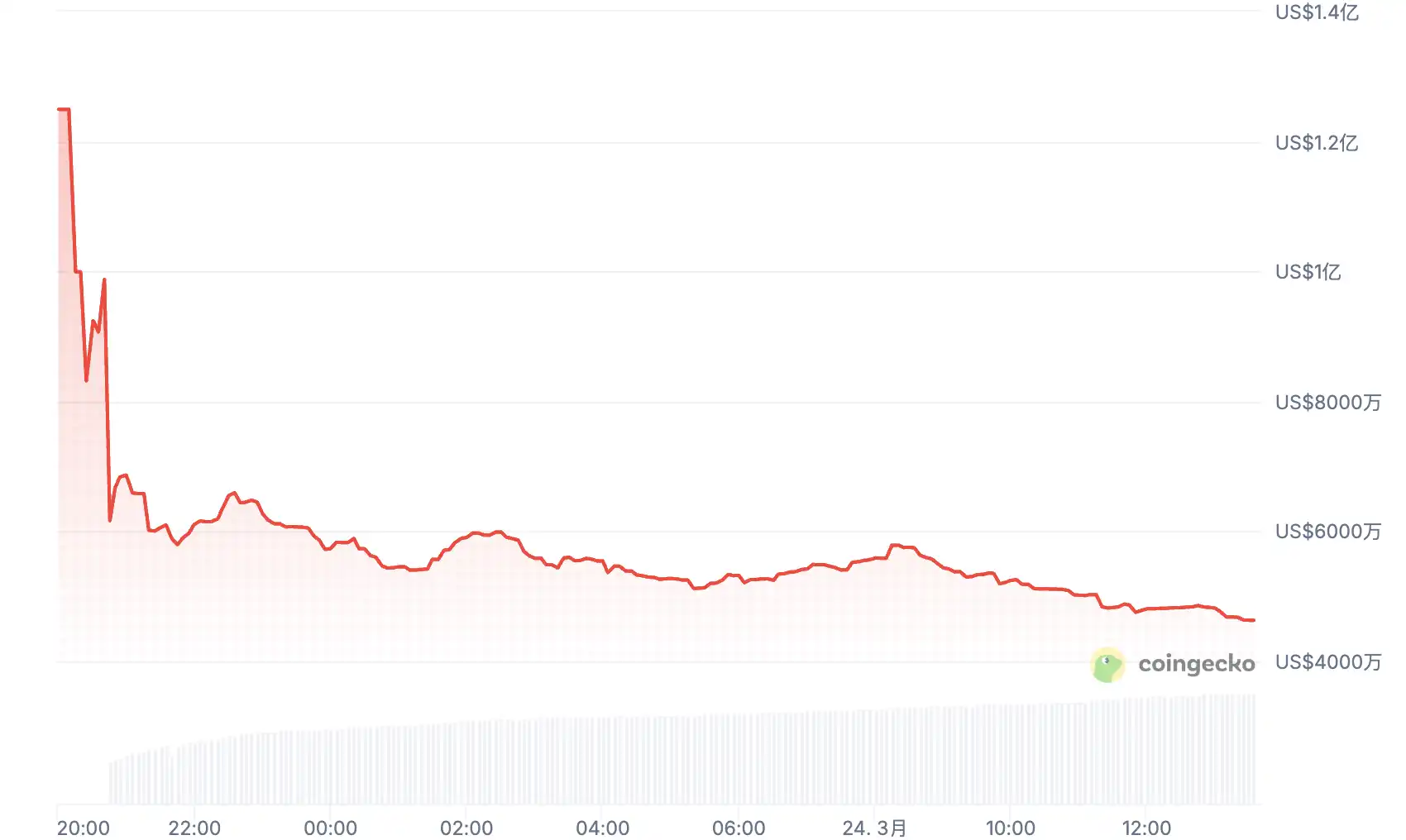
On March 23, the long-awaited trading platform Backpack finally launched its TGE. In the current deep bear market, Backpack did not bring any pleasant surprises. The token price plummeted upon listing, and as of now, the fully diluted market cap is less than $200 million. What shocked the community was the large-scale anti-sybil (anti-farming) actions. Key community members complained in group chats that both small-scale long-term interactive散户 and large players who dominated trading volumes were included in the sybil list. The rules were never disclosed, yet the judgment was unilaterally enforced. Backpack faced a severe trust crisis and had to urgently open an appeal channel on March 24.

"In a bull market, you're farming others' airdrops; in a bear market, you're farming the project's airdrops." Someone hit the nail on the head regarding the core issue. With consecutive airdrops from Opinion and Backpack leaving many farming communities empty-handed, it indirectly signaled the end of the airdrop farming track. Some veteran farmers even announced their retirement.

KOLs Also Fell Victim to Anti-Sybil Measures, Chinese Community Hit Hardest

The promise of a "pure community distribution" ultimately turned into a large-scale anti-sybil event.

Yesterday, Backpack finally opened the BP token claim channel. According to the previously announced rules, 25% of the total token supply (approximately 250 million BP) in this TGE would be allocated entirely to the community, with 24% going to points holders and 1% to Mad Lads NFT holders. The official emphasized that aside from this portion, which fully belonged to the community, no team or investor shares were involved in the initial circulation.
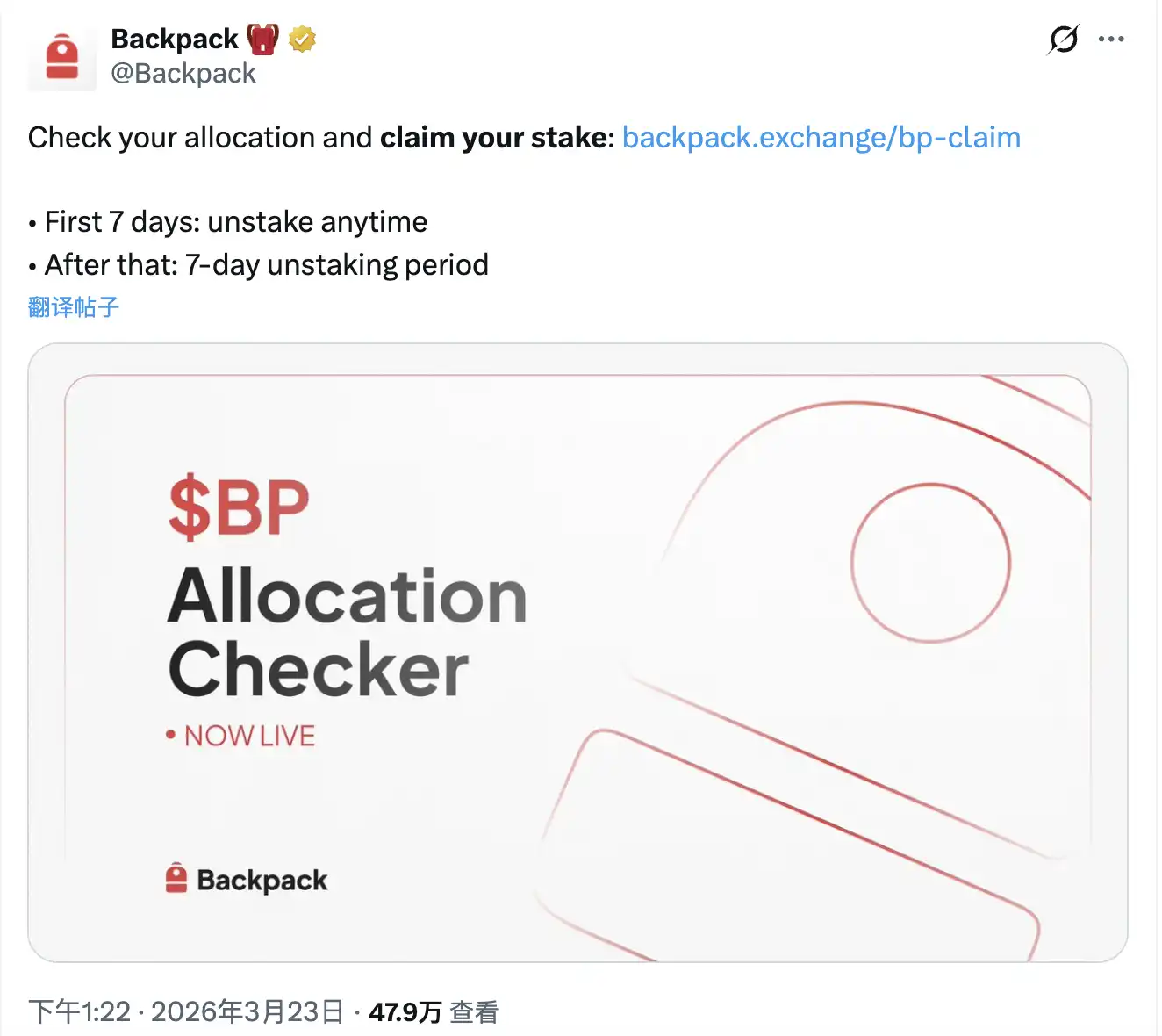
However, when the claim channel opened, it dealt a heavy blow to community users. A large number of users found their points drastically reduced or even reset to zero, ultimately receiving only a symbolic participation reward or nothing at all. What made users even more dissatisfied was that those affected were not marginal accounts but core participants, including long-term active single-wallet users, high-point farmers, and Mad Lads NFT holders.

Anger quickly spread throughout the community, especially among Chinese users, who became the hardest hit in this sybil cleanup. Complaints from major players and KOLs flooded the community: "$4 billion trading volume, 100% sybil rate," "Over $1.5 billion trading volume, 800+ hours spent, over $300,000 in fees, but airdrop halved," "330,000 points exchanged for 2,000 tokens," "Number one in global trading volume, 170,000 points only got 20,000 tokens"... Behind these numbers were real financial investments and time costs, but in the final distribution, they were uniformly classified as sybils and directly disqualified.

What amplified the dissatisfaction was not just the disparity in rewards but the negation of their contributions. Among these users, some had long maintained communication with the project team, some consistently produced content to endorse the project, and others actively participated in community growth and ecosystem expansion. However, these efforts were not factored into any weighting considerations and were instead erased.

Even more controversial was the collective punishment approach. Some community leaders responsible for growth, who recruited new users and expanded the ecosystem, were not only cleaned up but also saw their invited genuine users affected. This punishment mechanism turned the growth logic originally reliant on social裂变 into a source of risk.

Moreover, the rapid decline of the BP token after listing further magnified the overall losses and exacerbated the negative market sentiment.
All controversies pointed to the lack of transparency in Backpack's rules.

Backpack's sybil判定 criteria were never publicly disclosed. Instead, the risk control mechanisms were continuously upgraded during the process. Just before the TGE, Backpack not only required all accounts participating in the points activity to complete KYC but also conducted a large-scale review under the pretext of "purifying the environment and rewarding real users." Ultimately, over 50 million points were identified as coming from non-genuine behavior and were uniformly reclaimed for redistribution. However, for users, what constituted non-genuine behavior, the basis for judgment, and the boundaries were never clearly explained.

Returning Points and Launching Token Buybacks: Can Trust Be Restored?

Under public pressure, Backpack rushed to "put out the fire."

Backpack team member Claire tweeted in response that the Backpack Chinese team had激烈 discussed with the European and American teams overnight. The Chinese team did not want to see the interests of previously supportive users affected and had in-depth communication with the负责人 in charge of anti-sybil execution.

As an experienced compliance professional, Claire stated that in the logic of the anti-sybil team, "one person, one account" was an absolute bottom line. Under this standard, compared to other regions, more Chinese-speaking users were indeed affected, which was naturally due to different user habits. European and American users' strict adherence to rules and sensitivity to KYC information made multi-account behavior itself beyond their认知范围. In subsequent handling, Backpack founder Armani and the core team planned to immediately open an appeal channel, establish clear rules, and protect user interests to the greatest extent.

Subsequently, Backpack's Chinese account announced the opening of a manual appeal channel, allowing users to submit materials for review. It also announced adherence to the "3-account rule": if the number of accounts operated on the same device was three or fewer and were judged as sybils, upon verification through manual appeal, 50% or more of the points would be returned. Additionally, the Backpack team planned to launch a special program in the coming days to conduct token buybacks on the secondary market for定向 compensation to these eligible users.

However, for those users who had invested wholeheartedly, these remedies might compensate for some losses, but once trust is broken, it is difficult to rebuild easily.

Locking Tokens for a Year in Exchange for Equity? Backpack Bets on the IPO Narrative

From past scripts, most crypto projects often experience high openings followed by declines after token issuance, inevitably fading into obscurity. Against the backdrop of the crypto bear market, Backpack chose to bet on the IPO narrative before officially issuing tokens to boost market confidence.

In February this year, Backpack CEO Armani Ferrante stated that the company followed a core principle in its token economic model: preventing insiders from dumping on retail investors. Before the product achieves "escape velocity," no founder, executive, employee, or venture capitalist should obtain wealth through tokens. For Backpack, the answer to "escape velocity" was clear: the company planned to conduct an IPO in the United States.

This means token value capture will be re-anchored and closely tied to the company's overall valuation. On this note, according to a recent Axios report, informed sources said Backpack is negotiating a new round of financing, discussing raising $50 million in a new round at a pre-money valuation of $1 billion.

Regarding token unlocking, Backpack also showed "sincerity." Aside from 37.5% of the tokens being unlocked gradually according to key milestones before the IPO, Backpack will lock the remaining 37.5% in the company treasury until at least one year after the IPO, with team members holding only company equity.

Additionally, Backpack announced it would allocate 20% of equity, offering users who stake BP tokens for at least one year the opportunity to exchange tokens for company equity at a fixed ratio. Not long ago, Backpack also launched an on-chain IPO new share allocation function, allowing users to directly obtain IPO shares through the platform, and opened a waitlist registration.

However, specific details of the token-to-equity exchange remain undisclosed, including the form of exchange, scope of rights, and timeline. This has also raised community concerns, viewing it as a potential new round of PUA—locking users in before slowly fulfilling promises, using equity exchange to buy more survival time for the project.

Armani Ferrante also revealed that the上市 could happen soon, or not so soon, or might not happen at all. But no matter what, he and the team would go all out.


Câu hỏi Liên quan

QWhat was the main controversy surrounding Backpack's TGE and airdrop distribution?

AThe main controversy was the large-scale 'anti-sybil' action where many users, including long-term small traders and high-volume whales, had their points drastically reduced or zeroed out, receiving minimal or no airdrop rewards. This was due to undisclosed sybil detection criteria, causing a severe trust crisis.

QHow did the Backpack team respond to the community backlash and trust crisis?

AThe Backpack team opened an appeal channel for manual review. They announced the '3-account rule', promising to return at least 50% of points to users who operated 3 or fewer accounts on one device after verification. They also planned a token buyback program for secondary market compensation.

QWhat unique strategy is Backpack employing to try to stand out in the crypto bear market?

ABackpack is betting on an IPO narrative. It plans to conduct an IPO in the US, anchoring token value to the company's overall valuation. Team members hold only company equity, and a portion of tokens are locked until after the IPO. They also offered users the opportunity to exchange staked BP tokens for company equity.

QWhy were Chinese community users particularly affected by the 'anti-sybil' measures?

AAccording to a Backpack team member, the sybil detection team's logic had an absolute底线 (bottom line) of 'one person, one account'. Compared to users in other regions, more Chinese-speaking users were affected due to different natural user habits, implying a higher prevalence of multi-account usage in that community.

QWhat concerns did the community have regarding Backpack's plan to offer equity for staked tokens?

AThe community was concerned about the lack of disclosed details for the token-to-equity exchange, including the form of exchange, scope of rights, and timeline. Some worried it was a new form of 'PUA' to lock up user tokens and buy the project more survival time with promises of future equity.

Nội dung Liên quan

Chainlink CCIP Tham Gia Các Chương Trình Thử Nghiệm Tài Sản Kỹ Thuật Số của Ngân Hàng Trung Ương

Chainlink CCIP đang được sử dụng trong các dự án thí nghiệm tiền tệ kỹ thuật số của ngân hàng trung ương (CBDC), đánh dấu một bước tiến trong việc áp dụng cơ sở hạ tầng blockchain bởi các tổ chức được quản lý. Các thử nghiệm liên quan đến sáng kiến Drex của Brazil, mạng lưới Ensemble của Hồng Kông và chương trình e-HKD+ với sự tham gia của A$DC từ ANZ Bank. Mặc dù đây chỉ là các thí nghiệm chứ không phải hệ thống thương mại đầy đủ, chúng có ý nghĩa quan trọng vì tập trung vào khả năng tương tác – yếu tố then chốt cho tương lai của các hệ thống thanh toán số hóa, tài sản mã hóa và giao dịch xuyên biên giới. CCIP được định vị như một giao thức nhắn tin và thanh toán xuyên chuỗi, đáp ứng các yêu cầu khắt khe về bảo mật và tuân thủ trong môi trường ngân hàng. Sự tham gia này củng cố định hướng của Chainlink trong việc phục vụ thị trường tổ chức, vượt ra ngoài chức năng oracle cơ bản. Tuy nhiên, cần lưu ý rằng thí nghiệm không đảm bảo việc áp dụng thương mại lâu dài. Thành công thực tế sẽ phụ thuộc vào hiệu quả kỹ thuật, phê duyệt quy định và tạo ra giá trị kinh tế rõ ràng. Dù vậy, sự hiện diện của CCIP trong các dự án này cho thấy token hóa và cơ sở hạ tầng tài chính có thể lập trình đang trở thành chủ đề nghiêm túc được các tổ chức lớn quan tâm.

bitcoinist7 phút trước

Chainlink CCIP Tham Gia Các Chương Trình Thử Nghiệm Tài Sản Kỹ Thuật Số của Ngân Hàng Trung Ương

bitcoinist7 phút trước

Các Bản Sửa Đổi XRP Ledger Tiến Gần Đến Hạn Chót Biểu Quyết của Validator

XRP Ledger (XRPL) đang bước vào giai đoạn quan trọng khi cửa sổ bỏ phiếu của các trình xác thực (validator) cho các sửa đổi giao thức được đề xuất sắp đóng lại. Quá trình này nhấn mạnh cách thức nâng cấp mạng lưới được thực hiện thông qua cơ chế quản trị. Các sửa đổi không tự động kích hoạt khi nhà phát triển phát hành mã. Thay vào đó, chúng cần nhận được sự ủng hộ của ít nhất 80% trình xác thực và duy trì mức ủng hộ này trong một khoảng thời gian nhất định trước khi chính thức có hiệu lực. Ngưỡng 80% này đảm bảo sự đồng thuận rộng rãi, thúc đẩy các bản nâng cấp ổn định và tránh những thay đổi vội vàng hoặc gây tranh cãi. Việc bỏ phiếu của trình xác thực là yếu tố then chốt, vì các quyết định của họ định hình các tính năng tương lai của mạng lưới, ảnh hưởng đến thanh toán, phát hành tài sản và chức năng sàn giao dịch phi tập trung (DEX). Tuy nhiên, việc đạt ngưỡng bỏ phiếu không đảm bảo kích hoạt ngay lập tức, và thị trường không nên đánh giá quá cao sự kiện này. Tiện ích lâu dài của XRP gắn liền với sự phát triển của XRPL. Các sửa đổi thành công có thể mở rộng khả năng cho nhà phát triển, nhưng tác động thực tế cuối cùng phụ thuộc vào việc áp dụng của nhà phát triển và nhu cầu của người dùng. Giai đoạn hiện tại là một cột mốc quản trị quan trọng, cho thấy liệu cộng đồng trình xác thực có sẵn sàng đưa các thay đổi giao thức tiếp theo vào hoạt động hay không.

bitcoinist21 phút trước

Các Bản Sửa Đổi XRP Ledger Tiến Gần Đến Hạn Chót Biểu Quyết của Validator

bitcoinist21 phút trước

Vốn Hóa Thị Trường Stablecoin trên Solana Đạt 15 Tỷ USD Khi Thanh Khoản Mạng Lưới Tăng Sâu

Vốn hóa thị trường stablecoin trên Solana đã đạt mốc 15 tỷ USD, theo dữ liệu từ DeFiLlama, đánh dấu một cột mốc thanh khoản quan trọng khi hoạt động stablecoin lan rộng khắp hệ sinh thái. Con số này phản ánh giá trị stablecoin tích lũy trên Solana và cho thấy một nền tảng sâu hơn cho giao dịch, thanh toán, DeFi và quyết toán on-chain. Sự tăng trưởng này giúp tách biệt tăng trưởng thanh khoản thực sự với hoạt động đầu cơ thuần túy, củng cố vị thế của Solana như một môi trường quyết toán nghiêm túc. Stablecoin đóng vai trò là vốn lưu động của tài chính on-chain, hỗ trợ giao dịch, các thị trường cho vay và thanh toán. Phí thấp và tốc độ cao của Solana trở nên hấp dẫn hơn khi có một cơ sở thanh khoản stablecoin lớn. Hệ sinh thái stablecoin của Solana cũng đang đa dạng hóa bên cạnh USDC và USDT, tạo ra nhiều lựa chọn tích hợp hơn. Tuy nhiên, thách thức là biến nguồn cung này thành hoạt động sử dụng tích cực trong giao dịch, cho vay và dòng thanh toán. Mốc 15 tỷ USD củng cố lợi thế cạnh tranh của Solana, hỗ trợ mạnh mẽ các ứng dụng DeFi và thanh toán, đồng thời xây dựng nền tảng thanh khoản cần thiết cho các hoạt động tài chính quy mô lớn.

bitcoinist36 phút trước

Vốn Hóa Thị Trường Stablecoin trên Solana Đạt 15 Tỷ USD Khi Thanh Khoản Mạng Lưới Tăng Sâu

bitcoinist36 phút trước

Các nhà đầu tư XRP có lời trở lại, nhưng cầu Spot đã biến mất: Liệu $1.10 có giữ được?

Cấu trúc thị trường gần đây của XRP đang gửi đi những tín hiệu trái chiều khi hoạt động dịch chuyển khỏi giao dịch Spot sang thị trường phái sinh. Giá củng cố trong khoảng $1.086 và $1.113 bất chấp khối lượng giao dịch giảm dần, cho thấy chưa bên mua hay bên bán nắm lợi thế quyết định. Điều đáng chú ý là Mở Interest (OI) cho XRP lại tăng khoảng 5.9% lên 423.8 triệu XRP, và tỷ lệ đòn bẩy ước tính tăng lên 0.162. Sự phân kỳ này quan trọng vì phái sinh có thể duy trì vị thế mà không cần thêm vốn mới vào thị trường. Trong khi dòng tiền vào/ra thị trường Spot sụp đổ ~99%, các nhà giao dịch sử dụng đòn bẩy ngày càng trở thành lực lượng chi phối chính trong việc định giá XRP, giải thích cho sự củng cố giá. Tuy nhiên, nếu nhu cầu Spot không quay trở lại để xác nhận các vị thế này, mức đòn bẩy ngày càng tăng khiến XRP dễ bị tổn thương trước một đợt thanh lý mạnh nếu tâm lý đột ngột thay đổi. Về khía cạnh tích cực, các nhà nắm giữ ngắn hạn (STH) của XRP cuối cùng đã quay trở lại trạng thái có lãi khi chỉ số MVRV 30 ngày vượt lên mức trung tính, đạt 1.03. Sự cải thiện này tương đồng với xu hướng phục hồi tâm lý nhà đầu tư trên các tài sản vốn hóa lớn khác như Bitcoin, Ethereum. Tuy nhiên, sự thay đổi về khả năng sinh lời này cũng làm thay đổi cấu trúc động lực trên thị trường. Khi ngày càng nhiều người nắm giữ ngắn hạn thoát khỏi các khoản lỗ tiềm ẩn, áp lực giữ tài sản thường nhường chỗ cho xu hướng muốn chốt lời. Mặc dù altcoin này vẫn nằm dưới vùng bán lịch sử, hành động giá ngày càng khó duy trì do thiếu nhu cầu mới và khả năng xuất hiện áp lực chốt lời. Tóm lại, trong khi các nhà nắm giữ XRP đã có lãi trở lại, đợt tăng giá chủ yếu được thúc đẩy bởi đòn bẩy trên thị trường phái sinh hơn là nhu cầu Spot thực tế. Mức hỗ trợ $1.10 đang gặp rủi ro khi áp lực chốt lời gia tăng và những nghi ngờ về tính bền vững của xu hướng hiện tại ngày càng lớn.

ambcrypto1 giờ trước

Các nhà đầu tư XRP có lời trở lại, nhưng cầu Spot đã biến mất: Liệu $1.10 có giữ được?

ambcrypto1 giờ trước

Giao dịch

Giao ngay
活动图片