Kevin Warsh: Inflation is a 'Choice', I View Bitcoin as an Important Asset

marsbitXuất bản vào 2026-01-30Cập nhật gần nhất vào 2026-01-30

Tóm tắt

Kevin Warsh, former Federal Reserve Governor during the 2008 financial crisis, argues that inflation is a deliberate "choice" made by policymakers, not an unavoidable phenomenon. In a discussion with Peter Robinson, Warsh criticizes the Fed for failing its core mandate of ensuring price stability, blaming recent high inflation on the central bank's actions rather than external factors like supply chains or geopolitical events. He emphasizes that the Fed possesses the tools to control inflation but has instead enabled excessive government spending and expanded its role beyond its original purpose. Reflecting on his time at the Fed, Warsh supported the aggressive liquidity measures during the 2008 crisis as necessary to restore market function but opposed later rounds of quantitative easing (QE), which he believed created a "free lunch" mentality and blurred the lines between monetary and fiscal policy. He expresses concern over the Fed’s bloated balance sheet, now around $7 trillion, and argues that reducing it would help lower inflation and interest rates. Warsh also discusses Bitcoin, which he views not as a threat to the dollar but as an important asset that holds policymakers accountable. He believes the U.S. can overcome its fiscal challenges through higher economic growth and productivity, particularly driven by AI, and calls for a return to the Fed’s original mission: to act sparingly and only in genuine emergencies.

Compiled by: CoolFish

Source: Hoover Institution

Note: The original video was recorded in May 2025

Host: Welcome to Uncommon Knowledge. I'm Peter Robinson. Kevin Warsh was born in upstate New York, earned his undergraduate degree from Stanford University, and later obtained a law degree from Harvard University. Early in his career, Mr. Warsh worked on Wall Street and in Washington. In 2006, President George W. Bush appointed him to the Federal Reserve Board, where he served until 2011. Notably, Mr. Warsh served as a Federal Reserve Governor during the 2008 financial crisis—the most severe financial storm in over half a century. Today, Mr. Warsh splits his time between New York and Stanford: he works at an investment firm in New York while also serving as a research fellow at the Hoover Institution at Stanford University.

Kevin, welcome back.

Kevin Warsh: It's great to be back. You deliberately omitted the most important thing—I happen to work for the investment firm of Stan Druckenmiller, arguably the greatest investor in history. But I appreciate your attempt to keep it low-key. I just wanted to praise my friend and partner.

Host: Go ahead, we'll have him on the show eventually. Okay, Kevin, first question: The Federal Reserve, established over a century ago, is the only U.S. institution tasked with maintaining the value of the dollar.

Criticism of the Federal Reserve

Host: I want to quote two passages. The late legendary investor Charlie Munger once said: "Destroying the monetary system would have unthinkable consequences." The second quote is from your speech this April at the 'Group of Thirty' bankers' organization. I excerpted a few of your descriptions of the current Fed: institutional drift, failure to fulfill statutory duties, fueling a surge in federal spending, expanded role with poor performance. Kevin Warsh, how dare you criticize this sacred institution—the pillar we rely on daily for the value of our income and spending. What do you think you're doing?

Kevin Warsh: In the central banking system, we are trained to keep criticism to ourselves. Clearly, I haven't done a good enough job. Peter, on the same occasion, I emphasized that this was more of a love letter than a cold critique. Perhaps you didn't take it as a love letter. The current officials probably didn't get it either. I deliberately toned down the more effusive language. I called it a love letter because, as you said, this institution is crucial. I called it a love letter because if this institution can reform itself, it will bring immense benefits to the institution itself and the nation. But it also means it's time to get things back on track.

One more point to add: This is America's third attempt at establishing a central bank. It's the third not because the first two were tremendously successful—quite the opposite, they both failed.

Peter, this isn't like winning a third Super Bowl trophy where you get better with each win. The reason the first two failed was the loss of public trust, the loss of the ability to deliver on promises. This isn't just a history lesson, but think of the Jacksonians back then—they believed the central bank of that era was focused only on the special interests of the East Coast, ignoring the people in the heartland.

This is similar to my concerns today. This central bank has been around for a hundred years. If it can reform itself, it will likely see another glorious hundred years. Otherwise, I am deeply concerned.

Host: I'm a layman, and you are a seasoned central banker and investor. I have a few basic questions to clarify, but let me set the stage first.

The Fed, established in 1913, has the power to set interest rates and adjust the money supply to achieve price stability. Nobel laureate Milton Friedman said in 1994 that no institution has such high public stature with such poor performance as the Fed. Friedman pointed out that the Fed presided over a doubling of prices after WWII and funded the inflation of the 70s. He believed the Fed did more harm than good and advocated for its abolition. Kevin, why do we need the Fed?

Kevin Warsh: Friedman was my teacher and had a huge influence on generations of students. I've studied his correspondence with Fed Chairs like Paul Volcker and Alan Greenspan in the Hoover Institution archives.

What's most amazing in Friedman's letters is his constant re-examination of his own prior assumptions. During the tenures of Volcker and Greenspan, he expressed relief at certain policy shifts. I don't think he felt the Fed was a terrible institution; he believed they had good periods and bad periods, both missteps and achievements. I can only speculate what he would say if he saw the great inflation of the past six years. He would certainly have issued warnings, and the Fed likely wouldn't have listened.

Inflation is a "Choice"

Peter Robinson: Friedman asserted: "Inflation is always and everywhere a monetary phenomenon." Since inflation stems from money, and the Fed controls the money supply, the ultimate responsibility for inflation must lie with the Fed. When Carter appointed Volcker, we were experiencing the worst inflation since the Civil War. And when Paul Volcker left office, inflation was down to around 2%. So Milton Friedman argued the Fed is always responsible?

Kevin Warsh:Yes, inflation is a choice. Congress revised the law in the 70s, making this one institution responsible for prices. Yet what have we heard during the great inflation of the past five or six years? Blame Putin, blame Ukraine, blame the pandemic and supply chains.

Milton would have been hopping mad hearing that. Those factors can cause price changes, but that's not inflation; that's just a one-time fluctuation in the price of a certain category of goods. True inflation is when such price movements create a self-reinforcing cycle. That is, high prices beget even higher prices. This means inflation ultimately permeates every family's dinner table, every boardroom, because decision-makers cannot anticipate future price levels.

This isn't about Putin; it's about the Fed. We love to shift blame, saying 'it's not my fault, it's someone else's fault.' The central bank can absolutely push the price level to any height, the inflation rate to any target. We might not agree with the methods, but the idea of blaming others seems to me contrary to a sound understanding of economic history.

Host: In the following discussion, we need to repeatedly emphasize that inflation is the result of a deliberate choice, and maintaining dollar stability is equally a controllable choice. Volcker achieved it in our lifetime. This is not just talk—we experienced inflation, and the Fed ultimately controlled it.

Kevin Warsh:They did control inflation. But then... I suspect this is just the cyclical rhetoric economists use; they became complacent about controlling inflation. After the so-called 'Great Moderation' period—a time of price stability lasting more than a generation—I think some in the profession mistakenly thought it was easy, even concluding that inflation was completely under control since we had all become so skilled at it. We perhaps all became somewhat complacent about this science, but economics is not that simple. It was the crises of 2008 and 2020 that made me realize we had let our guard down.

Host: You've mentioned this concept several times; let's define it. The so-called 'Great Moderation' began in the mid-80s when Volcker's Fed, with President Reagan's support, brought inflation down to very low single digits. Inflation then stayed in that range for a long time, the economy expanded continuously, with only two quarters of recession in the next quarter-century until the 2008 crisis. Is my understanding correct? Is this the period you refer to as the 'Great Moderation'?
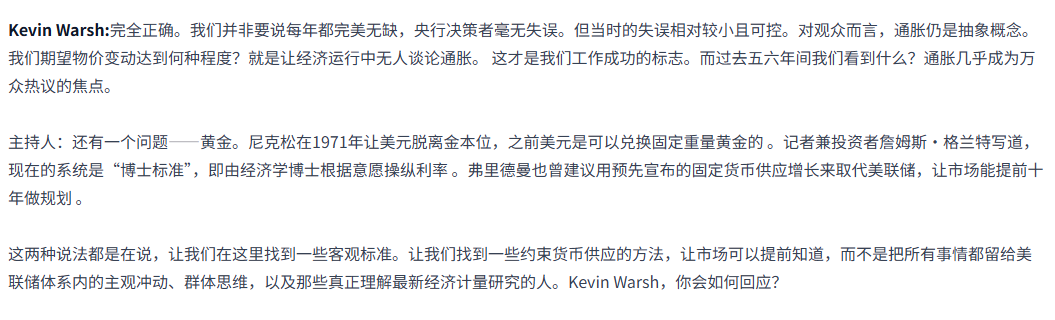
Kevin Warsh: I don't believe there is a 'status quo' to return to; the gold standard is a thing of the past. We must deal with the problems at hand. Between 'letting the machine run' and 'leaving it to the whims of central bankers,' there should be a third choice.

A central banker needs to resist impulses. Economics is not a perfect understanding; otherwise, we would be physicists or mathematicians. Our understanding of how the economy works is far from perfect. If we truly discern its laws, we could design precise economic models, but the reality is the economic system is ever-changing and incredibly dynamic. Precisely because of this, I dare not claim there exists a flawless economic law.

The 2008 Financial Crisis

Host: You were in office during the 2008 financial crisis when unemployment reached 10%. The Fed responded by injecting massive liquidity into the system, doubling its balance sheet from $1 trillion to $2 trillion. You strongly supported this decision. Why?

Kevin Warsh: Friedman believed the core of monetary policy and inflation was money, but in modern academia this is almost considered heresy; they lean more Keynesian, barely mentioning the word 'money' in discussions. In fact, if you review Fed meeting minutes, you'll find the word 'money' appears very infrequently in FOMC internal discussions. You have to search a long time to find it.

Back when I was 19 or 20, sitting around a round table (a bit larger than this one) with several classmates, I asked Friedman a question—probably wanting to show off my knowledge of some area, though I only had a superficial understanding. He replied: 'Kevin, in economics, the only thing we can truly understand is the basic principles. Everything else is made up.' At the time I thought: 'Peter, is this old guy losing it? Maybe he's past his prime.' It wasn't until the financial crisis hit that I realized he was right. No one could predict it because all real knowledge is in Economics 101.

At least in Economics 101—before elite departments were captured by schools of economic thought—we said money is related to monetary policy. I still believe that to this day.

Host: By the way, as we speak now, it's been nearly twenty years since that financial crisis broke out. What did it feel like back then?

Kevin Warsh: I was 35, it was the calm before the storm. Bernanke was a very strong field commander; we were like fighting in the trenches. He was always open to the few people who could sit around the table and debate the situation fiercely, and even more tolerant of heterodox views. But looking back at the darkest days of the crisis—our response might only be considered passable. We could have acted sooner and done more; we made many mistakes, but we also had successes.

The real economy deteriorated faster than historical experience suggested, financial market stock prices plummeted 60% to 70%. Perhaps most frightening was the Treasury auction. At least in the initial stages, market participants were absent, bid-ask spreads kept widening. We feared the U.S. economic system was on the brink of a cliff.

Host: From my memory, injecting liquidity into the system, pumping money into the market, was an emergency measure aimed at keeping the exchanges running, ensuring market function. The theory was: keeping the markets operating, keeping them open and functional, providing people with enough money to buy and sell, was the most effective and direct response at the time. I thought the market itself would gradually resolve the crisis. Is that the justification?

Kevin Warsh: Central banks were born to deal with panics. The panics of old (what we now call deep recessions or financial crises) are essentially states of market failure. When the quotes from buyers and sellers have a spread, the central bank needs to step in with sufficient funds (there's that word again) to restore market function. Its job is not to set prices, but to ensure buyers and sellers can transact.

Our job was to provide liquidity, to be the backstop (the last line of defense). That was an 'extreme mandate' for an emergency. But we had a promise: once the crisis was over, we would exit the game. We would return to being a rather boring central bank, appearing only on page B12 of the newspaper—a six-paragraph brief saying the Fed met today and decided to raise or lower rates by a quarter point. But from that moment until now, the central bank has consistently occupied the front-page headlines. I think the role it plays has exceeded what the Founding Fathers anticipated, and beyond what the central bank's founders could have envisioned.

Host: Let's trace the journey from 2008 to today: QE1 happened in 2008. We just discussed the Fed's balance sheet expanding from under a trillion to over two trillion. QE2 was implemented in 2010, the Fed's balance sheet rose to nearly three trillion. QE3 started in 2012, the Fed's balance sheet expanded to $4 trillion. QE4 was launched during the 2020 COVID lockdowns, which needs a bit of discussion as it was an emergency. By the end of 2022, the balance sheet had reached $9 trillion. Since then, the Fed has reduced it to $7 trillion. As you said, the Fed's balance sheet is now nearly an order of magnitude larger than when you joined in 2006.

Kevin Warsh: Printing money heavily during peacetime changed everything. It almost signaled to other members of Congress: we can do this, so can you. Let's go back to the nature of quantitative easing. QE1—by the way, when we tried to package it as 'credit easing,' that only worked for a week, it was the term we preferred. But the term QE came uninvited.

The situation was roughly this: Secretary Paulson planned to issue bonds on Monday, Tuesday, should we buy them on Thursday, Friday? I don't want to divulge secrets from the meeting room, but I remember someone saying bluntly: 'This is like a Ponzi scheme.' What else could save us from the global financial crisis? Many explanations were given. The Bank of Japan had done a similar small-scale operation about a decade earlier, but on a much smaller scale. We weren't sure how it would work either, but it turned out it did. At the time, it was indeed a radical move. Now open an economics textbook, even an introductory one, and this is considered standard operating procedure. Back then, it was a huge gamble. But we were in an era of gambling, so we went all in.

QE1 was radical, but we thought we should stop after the crisis. I resigned in early 2011 because I opposed QE2. My colleagues, including Chairman Bernanke whom I mentioned—I have immense respect for his abilities as a strategist—he and his Fed colleagues decided to continue quantitative easing. The Fed at the time thought it was a 'free lunch.' Look around: asset prices rising, markets flush with liquidity, economy doing well. My god, if we withdraw the policy, who knows what will happen. In a sense, they violated the consensus reached back then. Could we really predict the consequences in all scenarios?

Host: Herbert Stein once said, if something cannot go on forever, it will stop. The problem is—we are essentially running a Ponzi scheme. The Fed and the Treasury issue bonds, the Fed buys them directly. This is almost like directly starting the printing press. Yet the global market is still buying U.S. Treasuries. In other words, why hasn't the international market punished the U.S. yet?

Kevin Warsh: I'd rather hold America's cards than those of any other country in the world. I think we are on the cusp of a productivity explosion, U.S. economic growth is crucial, it can化解 these debt risks better than any other means. If we can grow one percentage point more than the budget office forecasts, it would bring in $4.5 trillion in revenue. This is the perfect solution to the debt crisis.

Quiet the Printing Press, Get Lower Rates

Host: Debt interest now exceeds defense spending. How should the Fed reduce its $7 trillion balance sheet?

Kevin Warsh: Two policy tools: interest rates and the balance sheet. If we quiet the printing press a bit, we can have lower interest rates. Many central bank practitioners insist: the balance sheet has nothing to do with monetary policy. But if the balance sheet expansion was related to monetary policy, then its contraction should also be related. We must face the nature of these two tools. I believe real economic growth is the key to achieving fiscal revenue, fair distribution, efficiency gains, and economic growth. Because balance sheet expansion caused inflation to rise, we must reduce its size.

We cannot do it overnight. I hope the Treasury and the Fed can reach a consensus, like the agreement they reached in 1951. Who is responsible for what? Who manages interest rates? The Fed. Who manages the fiscal account? The Treasury. Currently, the lines of responsibility are blurred. When a president takes office, his Treasury Secretary should act as the head of the fiscal authority, not vaguely transfer responsibilities to the Fed—this only introduces political factors into the Fed, which I believe interferes with its normal operation.

In my view, we should shrink the central bank's balance sheet and, barring a crisis, have the Fed exit these markets. Doing so would effectively suppress inflation.
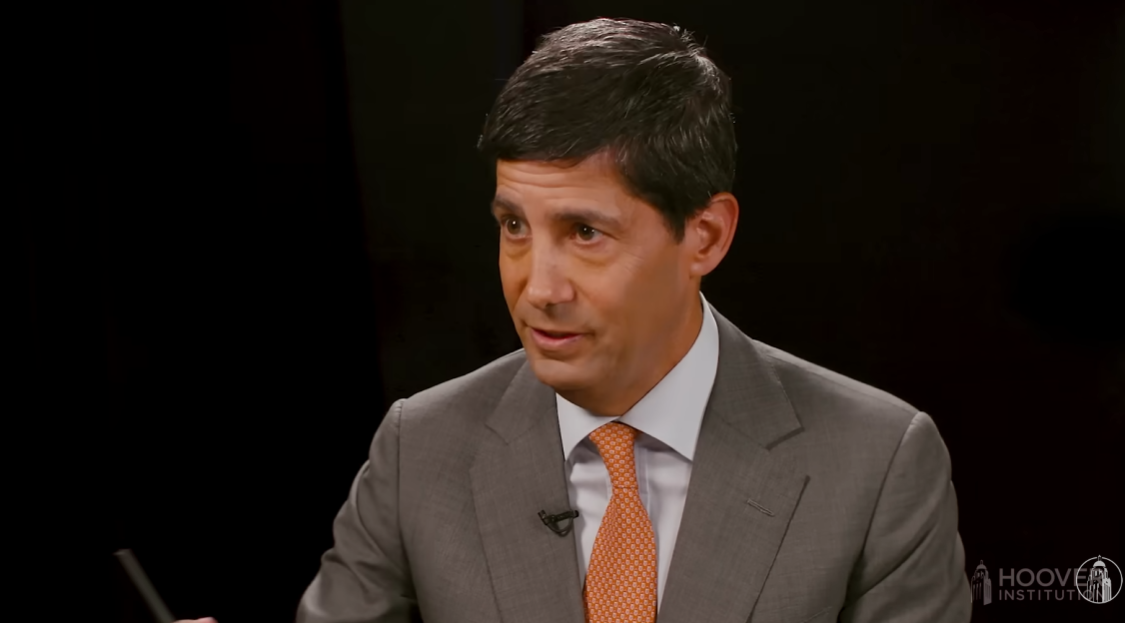
Host: The financial crisis changed the world格局, the COVID lockdowns intensified the turmoil. Over a decade of fiscal irresponsibility and market-distorting loose monetary policy has been fermenting. Now even financial experts like James Grant and Ray Dalio question the entire monetary system, young entrepreneurs flock to Bitcoin because they no longer trust the dollar. Kevin, something fundamental has ended and is irrecoverable. How do you view this opinion?

Kevin Warsh: This view is wrong; I am not one to give up easily. We are on the eve of a productivity explosion, AI will bring huge changes. The overall implementation of public policy doesn't need to be perfect. You, I, and our colleagues might be able to conceive perfect trade policy, regulatory policy, or tax policy. But perfection is not a necessary condition. We just need to make policies slightly better than the status quo, return monetary and fiscal policy to a reasonable track, and the U.S. economy will flourish.

This is not a return to Reaganism. We need new economic policies in a new world to inspire the American spirit, promote individual freedom and liberation. The key is to restore the original functions of institutions like the Fed—these important institutions should mostly stand aside, intervening only in emergencies.

Host: So the Fed doesn't need a revolution, just some kind of 'fix' and adjustment?

Kevin Warsh: Exactly. Like restoring a great golf course: be true to the original architectural idea, but not bound by its literal interpretation. When you mentioned Bitcoin, I seemed to detect a somewhat condescending attitude—as if saying people buying things like Bitcoin are ridiculous.

Host: But didn't Charlie Munger criticize Bitcoin two or three years before he died? He called it evil, partly because it would shake the Fed's ability to manage the economy.

Kevin Warsh: It could bring market discipline, or it could signal to the world that certain mechanisms urgently need repair.

Bitcoin Doesn't Bother Me; It's Not a Dollar Substitute

Host: Doesn't Bitcoin make you nervous?

Kevin Warsh: Bitcoin doesn't make me uneasy. I just mentioned Marc Andreessen—it was he who showed me that whitepaper. It was the original whitepaper. How I wish I had understood Bitcoin and the disruptive nature of this new technology as clearly as he did back then. Bitcoin doesn't bother me. I see it as an important asset that can help policymakers discern right from wrong in decision-making. It is not a substitute for the dollar. I think it can often be an excellent supervisor of policymaking.

To elaborate more broadly on what Charlie Munger and others might have intended, a plethora of securities under various names are emerging. Many—even the vast majority—are trading at prices severely disconnected from their true value. So how did Charlie and his dear friend Warren discuss this? Innovators, imitators, and the incompetent coexist. The innovators truly driving new technology forward do exist. What I try to convey to entrepreneurs and bankers is: the core technology Marc was展示 (or trying to展示) in the whitepaper is essentially just software—just the trendiest software, it gives us unprecedented capabilities. Can software be used for good and evil? Of course, like all software has two sides. Therefore, I don't make such assertions.

If there's one last point, it's that these technologies are developing here. I don't just mean the Stanford campus, but also top engineers across the U.S. and globally, they come from China, Europe, and all over the world. Even now, they still come to the U.S., trying to build these things. I believe building it here gives us more opportunities.


Câu hỏi Liên quan

QAccording to Kevin Warsh, what is the fundamental cause of inflation and who is ultimately responsible for it?

AKevin Warsh states that inflation is a choice. He argues that the ultimate responsibility for inflation lies with the Federal Reserve, as it controls the money supply. He criticizes the tendency to blame external factors like Putin, Ukraine, or supply chains, asserting that these cause one-time price changes, not the self-reinforcing cycle of inflation.

QWhy did Kevin Warsh resign from the Federal Reserve in 2011?

AKevin Warsh resigned from the Federal Reserve in 2011 because he opposed QE2 (the second round of quantitative easing). He believed that the aggressive monetary policy, which was initially a crisis measure (QE1), should have been withdrawn after the crisis ended, and he disagreed with his colleagues' decision to continue with further easing.

QHow does Kevin Warsh view the relationship between the Federal Reserve's balance sheet and interest rates?

AKevin Warsh believes the two primary policy tools are interest rates and the balance sheet. He argues that if the Fed lets the 'printing press be a little quieter' (i.e., shrinks its balance sheet), it can have lower interest rates. He contends that an expanding balance sheet contributes to inflation and that shrinking it is necessary to bring inflation down.

QWhat is Kevin Warsh's perspective on Bitcoin and its role in the financial system?

AKevin Warsh does not view Bitcoin as a threat or a replacement for the US dollar. He sees it as an important asset that can serve as a 'canary in the coal mine' and a good disciplinarian for policymakers, helping to signal when their decisions are right or wrong. He acknowledges the disruptive technology behind it but does not make moral judgments about it.

QWhat solution does Kevin Warsh propose for addressing the US national debt crisis?

AKevin Warsh proposes that stronger US economic growth is the key to solving the debt crisis. He states that if the economy grows just one percentage point more than the budget office predicts, it would generate $4.5 trillion in additional revenue, which he calls the 'antidote' to the debt problem.

Nội dung Liên quan

Polymarket Bị Kẹt: Bài Kiểm Tra Thực Sự Sau Khi Vượt Qua Giai Đoạn Lưu Lượng Tăng Đột Biến

Polymarket, nền tảng dự đoán thị trường hàng đầu, đang đối mặt với thách thức lớn khi trải nghiệm giao dịch xuống cấp do hạ tầng không theo kịp đà tăng trưởng. Phó chủ tịch kỹ thuật Josh Stevens thừa nhận vấn đề và công bố kế hoạch cải tổ toàn diện, bao gồm: giảm độ trễ dữ liệu, sửa lỗi hủy lệnh, xây dựng lại hệ thống order book (CLOB), nâng cao hiệu suất website, và quan trọng nhất là di chuyển chain (chain migration). Nguyên nhân sâu xa nằm ở việc Polymarket không còn là ứng dụng dự đoán đơn thuần mà đã phát triển thành một nền tảng giao dịch tần suất cao. Polygon, từng là lựa chọn chi phí thấp hoàn hảo, giờ đây trở thành rào cản kỹ thuật. Động thái này ngay lập tức thu hút sự quan tâm của các blockchain khác như Solana, Sui, Algorand... trong khi Polygon nỗ lực giữ chân ứng dụng quan trọng này - nguồn đóng góp phí giao dịch đáng kể cho hệ sinh thái của họ. Bài kiểm tra thực sự của Polymarket không chỉ là chọn chain mới, mà là xây dựng một hệ thống giao dịch đủ mạnh và ổn định để giữ chân người dùng trong giai đoạn tăng trưởng mới, nơi độ tin cậy quan trọng hơn bao giờ hết.

Odaily星球日报04/27 03:21

Polymarket Bị Kẹt: Bài Kiểm Tra Thực Sự Sau Khi Vượt Qua Giai Đoạn Lưu Lượng Tăng Đột Biến

Odaily星球日报04/27 03:21

Điều chỉnh kỳ vọng giảm cho chu kỳ tăng giá tiếp theo của BTC

Tác giả Alex Xu, một nhà đầu tư Bitcoin lâu năm, đã chia sẻ quyết định giảm dần tỷ trọng BTC trong danh mục đầu tư của mình, từ vị thế lớn nhất xuống còn khoảng 30%, và giải thích lý do cho việc điều chỉnh kỳ vọng về đỉnh giá trong chu kỳ bull market tiếp theo. Các lý do chính bao gồm: 1. **Năng lượng tăng trưởng tiềm năng giảm:** Các chu kỳ trước được thúc đẩy bởi việc mở rộng đối tượng đầu tư theo cấp số nhân (từ cá nhân đến tổ chức). Chu kỳ tới cần sự chấp nhận từ các quỹ đầu tư quốc gia hoặc ngân hàng trung ương, điều này khó xảy ra trong 2-3 năm tới. 2. **Chi phí cơ hội cá nhân:** Tìm thấy nhiều cơ hội đầu tư hấp dẫn khác (cổ phiếu công ty) với mức giá hợp lý. 3. **Tác động tiêu cực từ sự thu hẹp của ngành crypto:** Nhiều mô hình Web3 (SocialFi, GameFi...) không thành công, dẫn đến sự thu hẹp của toàn ngành và làm chậm tốc độ tăng trưởng số người nắm giữ BTC. 4. **Áp lực từ nhà mua lớn nhất (MicroStrategy):** Chi phí huy động vốn của MicroStrategy tiếp tục tăng cao (lãi suất 11.5%), có thể làm giảm tốc độ mua vào và gây áp lực bán. 5. **Sự cạnh tranh từ Vàng được token hóa:** Sản phẩm vàng token hóa (tokenized gold) đã thu hẹp khoảng cách về tính dễ chia nhỏ, dễ mang theo và dễ xác minh so với BTC. 6. **Vấn đề ngân sách bảo mật:** Phần thưởng khối giảm sau mỗi lần halving làm trầm trọng thêm vấn đề ngân sách cho bảo mật mạng lưới. Tác giả vẫn giữ một phần BTC đáng kể và sẵn sàng mua lại nếu các lý kiến trên được giải quyết hoặc xuất hiện các yếu tố tích cực mới, với điều kiện giá cả phù hợp.

marsbit04/27 02:46

Điều chỉnh kỳ vọng giảm cho chu kỳ tăng giá tiếp theo của BTC

marsbit04/27 02:46

Giao dịch

Giao ngay
Hợp đồng Tương lai

Bài viết Nổi bật

BITCOIN là gì

Hiểu về HarryPotterObamaSonic10Inu (ERC-20) và Vị Trí của Nó trong Không Gian Crypto Trong những năm gần đây, thị trường tiền điện tử đã chứng kiến sự gia tăng mạnh mẽ về sự phổ biến của các đồng meme, thu hút sự quan tâm không chỉ của các nhà giao dịch mà còn của những người tìm kiếm sự gắn kết cộng đồng và giá trị giải trí. Trong số các token độc đáo này là HarryPotterObamaSonic10Inu (ERC-20), một dự án thú vị kết hợp các tham chiếu văn hóa vào cấu trúc tiền điện tử. Bài viết này đi sâu vào các khía cạnh chính của HarryPotterObamaSonic10Inu, khám phá cơ chế, tinh thần hướng tới cộng đồng và sự tương tác của nó với bối cảnh crypto rộng lớn hơn. HarryPotterObamaSonic10Inu (ERC-20) là gì? Như tên gọi của nó, HarryPotterObamaSonic10Inu là một đồng meme được xây dựng trên blockchain Ethereum, được phân loại theo tiêu chuẩn ERC-20. Khác với các tiền điện tử truyền thống có thể nhấn mạnh vào công dụng thực tiễn hoặc tiềm năng đầu tư, token này phát triển dựa trên giá trị giải trí và sức mạnh của cộng đồng. Dự án nhằm mục đích tạo ra một môi trường nơi người dùng gắn bó có thể tập hợp lại, chia sẻ ý tưởng và tham gia vào các hoạt động được truyền cảm hứng từ các hiện tượng văn hóa đa dạng. Một đặc điểm nổi bật của HarryPotterObamaSonic10Inu là không có thuế trên các giao dịch. Yếu tố hấp dẫn này nhằm khuyến khích việc giao dịch và sự tham gia của cộng đồng, không có các khoản phí bổ sung có thể răn đe các nhà giao dịch quy mô nhỏ. Tổng cung của đồng tiền này được đặt ở mức một tỷ token, một con số đánh dấu ý định duy trì sự lưu thông đáng kể trong cộng đồng. Người sáng lập HarryPotterObamaSonic10Inu (ERC-20) Nguồn gốc của HarryPotterObamaSonic10Inu phần nào bị bao trùm trong sự bí ẩn; các thông tin cụ thể về người sáng lập vẫn chưa được biết đến. Sự phát triển của token này thiếu một đội ngũ xác định hoặc một kế hoạch rõ ràng, điều này không phải là hiếm trong lĩnh vực đồng meme. Thay vào đó, dự án đã xuất hiện một cách tự nhiên, với tiến trình phụ thuộc nặng nề vào sự nhiệt tình và tham gia của cộng đồng. Nhà đầu tư của HarryPotterObamaSonic10Inu (ERC-20) Về các khoản đầu tư và hỗ trợ bên ngoài, HarryPotterObamaSonic10Inu cũng vẫn mơ hồ. Token này không liệt kê bất kỳ quỹ đầu tư nào nổi tiếng hoặc sự hỗ trợ tổ chức đáng kể. Thay vào đó, nguồn sống của dự án là cộng đồng cơ sở, điều này định hình sự phát triển và tính bền vững thông qua hành động tập thể và sự tham gia trong không gian crypto. HarryPotterObamaSonic10Inu (ERC-20) hoạt động như thế nào? Với tư cách là một đồng meme, HarryPotterObamaSonic10Inu chủ yếu hoạt động bên ngoài các khuôn khổ truyền thống thường chi phối giá trị tài sản. Có một số khía cạnh đặc biệt định nghĩa cách thức hoạt động của dự án: Giao dịch không thuế: Với không có phí thuế cho các giao dịch, người dùng có thể tự do mua và bán token mà không lo ngại về các khoản chi phí ẩn. Gắn kết cộng đồng: Dự án phát triển dựa trên sự tương tác trong cộng đồng, tận dụng các nền tảng mạng xã hội để tạo ra sự chú ý và thúc đẩy sự tham gia. Các cuộc thảo luận, chia sẻ nội dung và tương tác là những yếu tố quan trọng giúp mở rộng tầm với và tạo sự trung thành giữa các người ủng hộ. Không có tính hữu dụng thực tiễn: Cần lưu ý rằng HarryPotterObamaSonic10Inu không cung cấp giá trị hữu hình nào trong hệ sinh thái tài chính. Thay vào đó, nó được phân loại chủ yếu là một token dành cho giải trí và các hoạt động cộng đồng. Tham chiếu văn hóa: Token này khôn ngoan tích hợp các yếu tố từ văn hóa đại chúng để thu hút sự quan tâm, kết nối với những người yêu thích meme và những người theo dõi crypto. HarryPotterObamaSonic10Inu là một ví dụ về cách mà các đồng meme hoạt động khác biệt so với các dự án tiền điện tử truyền thống hơn, gia nhập thị trường như những cấu trúc xã hội sáng tạo thay vì các tài sản hữu ích. Lịch sử HarryPotterObamaSonic10Inu (ERC-20) Lịch sử của HarryPotterObamaSonic10Inu nổi bật với một số cột mốc đáng chú ý: Sự ra đời: Token này xuất hiện từ một meme lan truyền, thu hút trí tưởng tượng của nhiều người đam mê crypto. Ngày tạo ra cụ thể không có sẵn, điều này nhấn mạnh sự gia tăng tự nhiên của nó. Niêm yết trên các sàn giao dịch: HarryPotterObamaSonic10Inu đã xuất hiện trên nhiều sàn giao dịch khác nhau, tạo điều kiện thuận lợi cho việc truy cập và giao dịch của cộng đồng. Các sáng kiến gắn kết cộng đồng: Các hoạt động liên tục nhằm nâng cao sự tương tác trong cộng đồng, bao gồm các cuộc thi, chiến dịch truyền thông xã hội và tạo nội dung từ người hâm mộ và những người ủng hộ. Kế hoạch mở rộng tương lai: Lộ trình của dự án bao gồm việc ra mắt bộ sưu tập NFT, hàng hóa và một trang thương mại điện tử liên quan đến các chủ đề văn hóa của nó, thu hút thêm sự gắn bó của cộng đồng và cố gắng thêm nhiều khía cạnh cho hệ sinh thái của nó. Các điểm chính về HarryPotterObamaSonic10Inu (ERC-20) Tính chất hướng tới cộng đồng: Dự án ưu tiên sự tham gia và sáng tạo của tập thể, đảm bảo rằng sự tham gia của người dùng là trung tâm trong sự phát triển của nó. Phân loại đồng meme: Nó đại diện cho biểu tượng của tiền điện tử dựa trên giải trí, khác biệt so với các phương tiện đầu tư truyền thống. Không có mối liên hệ trực tiếp với Bitcoin: Dù có sự tương đồng trong tên ký hiệu, HarryPotterObamaSonic10Inu là một thực thể độc lập và không có mối quan hệ nào với Bitcoin hay các tiền điện tử đã được thành lập khác. Tập trung vào sự hợp tác: HarryPotterObamaSonic10Inu được thiết kế để tạo ra một không gian cho sự hợp tác và chia sẻ văn hóa giữa các nhà giữ, cung cấp một con đường cho sự sáng tạo và sự gắn kết trong cộng đồng. Triển vọng tương lai: Tham vọng mở rộng vượt ra ngoài ý tưởng ban đầu vào NFT và hàng hóa vạch ra một con đường cho dự án để có khả năng gia nhập các phương diện chính thống hơn trong văn hóa kỹ thuật số. Khi các đồng meme tiếp tục thu hút trí tưởng tượng của cộng đồng tiền điện tử, HarryPotterObamaSonic10Inu (ERC-20) nổi bật nhờ vào mối liên hệ văn hóa và cách tiếp cận tập trung vào cộng đồng của nó. Trong khi nó có thể không phù hợp với khuôn mẫu điển hình của một token dựa trên tiện ích, bản chất của nó nằm trong niềm vui và tình bạn được duy trì giữa các người ủng hộ, làm nổi bật bản chất đang tiến hóa của tiền điện tử trong một thời đại ngày càng số hóa. Khi dự án tiếp tục phát triển, sẽ rất quan trọng để theo dõi cách mà động lực cộng đồng ảnh hưởng đến hướng đi của nó trong bối cảnh công nghệ blockchain đang thay đổi.

Tổng lượt xem 1.3kXuất bản vào 2024.04.01Cập nhật vào 2024.12.03

BITCOIN là gì

Làm thế nào để Mua BTC

Chào mừng bạn đến với HTX.com! Chúng tôi đã làm cho mua Bitcoin (BTC) trở nên đơn giản và thuận tiện. Làm theo hướng dẫn từng bước của chúng tôi để bắt đầu hành trình tiền kỹ thuật số của bạn.Bước 1: Tạo Tài khoản HTX của BạnSử dụng email hoặc số điện thoại của bạn để đăng ký tài khoản miễn phí trên HTX. Trải nghiệm hành trình đăng ký không rắc rối và mở khóa tất cả tính năng. Nhận Tài khoản của tôiBước 2: Truy cập Mua Crypto và Chọn Phương thức Thanh toán của BạnThẻ Tín dụng/Ghi nợ: Sử dụng Visa hoặc Mastercard của bạn để mua Bitcoin (BTC) ngay lập tức.Số dư: Sử dụng tiền từ số dư tài khoản HTX của bạn để giao dịch liền mạch.Bên thứ ba: Chúng tôi đã thêm những phương thức thanh toán phổ biến như Google Pay và Apple Pay để nâng cao sự tiện lợi.P2P: Giao dịch trực tiếp với người dùng khác trên HTX.Thị trường mua bán phi tập trung (OTC): Chúng tôi cung cấp những dịch vụ được thiết kế riêng và tỷ giá hối đoái cạnh tranh cho nhà giao dịch.Bước 3: Lưu trữ Bitcoin (BTC) của BạnSau khi mua Bitcoin (BTC), lưu trữ trong tài khoản HTX của bạn. Ngoài ra, bạn có thể gửi đi nơi khác qua chuyển khoản blockchain hoặc sử dụng để giao dịch những tiền kỹ thuật số khác.Bước 4: Giao dịch Bitcoin (BTC)Giao dịch Bitcoin (BTC) dễ dàng trên thị trường giao ngay của HTX. Chỉ cần truy cập vào tài khoản của bạn, chọn cặp giao dịch, thực hiện giao dịch và theo dõi trong thời gian thực. Chúng tôi cung cấp trải nghiệm thân thiện với người dùng cho cả người mới bắt đầu và người giao dịch dày dạn kinh nghiệm.

Tổng lượt xem 3.9kXuất bản vào 2024.12.12Cập nhật vào 2025.03.21

Làm thế nào để Mua BTC

$BITCOIN là gì

VÀNG KỸ THUẬT SỐ ($BITCOIN): Phân Tích Toàn Diện Giới thiệu về VÀNG KỸ THUẬT SỐ ($BITCOIN) VÀNG KỸ THUẬT SỐ ($BITCOIN) là một dự án dựa trên blockchain hoạt động trên mạng Solana, nhằm kết hợp các đặc điểm của kim loại quý truyền thống với sự đổi mới của công nghệ phi tập trung. Mặc dù nó chia sẻ tên với Bitcoin, thường được gọi là “vàng kỹ thuật số” do được coi là một kho lưu trữ giá trị, VÀNG KỸ THUẬT SỐ là một token riêng biệt được thiết kế để tạo ra một hệ sinh thái độc đáo trong bối cảnh Web3. Mục tiêu của nó là định vị mình như một tài sản kỹ thuật số thay thế khả thi, mặc dù các chi tiết về ứng dụng và chức năng của nó vẫn đang được phát triển. VÀNG KỸ THUẬT SỐ ($BITCOIN) là gì? VÀNG KỸ THUẬT SỐ ($BITCOIN) là một token tiền điện tử được thiết kế rõ ràng để sử dụng trên blockchain Solana. Trái ngược với Bitcoin, vốn cung cấp một vai trò lưu trữ giá trị được công nhận rộng rãi, token này có vẻ tập trung vào các ứng dụng và đặc điểm rộng hơn. Những khía cạnh đáng chú ý bao gồm: Hạ tầng Blockchain: Token được xây dựng trên blockchain Solana, nổi tiếng với khả năng xử lý các giao dịch nhanh và chi phí thấp. Động lực Cung cấp: VÀNG KỸ THUẬT SỐ có tổng cung tối đa được giới hạn ở 100 triệu triệu token (100P $BITCOIN), mặc dù các chi tiết về nguồn cung lưu hành hiện tại chưa được công bố. Tiện ích: Mặc dù các chức năng chính xác chưa được nêu rõ, có những dấu hiệu cho thấy token có thể được sử dụng cho nhiều ứng dụng khác nhau, có thể liên quan đến các ứng dụng phi tập trung (dApps) hoặc các chiến lược token hóa tài sản. Ai là Người sáng tạo VÀNG KỸ THUẬT SỐ ($BITCOIN)? Hiện tại, danh tính của những người sáng tạo và đội ngũ phát triển đứng sau VÀNG KỸ THUẬT SỐ ($BITCOIN) vẫn không rõ. Tình huống này là điển hình trong nhiều dự án đổi mới trong không gian blockchain, đặc biệt là những dự án liên quan đến tài chính phi tập trung và hiện tượng đồng meme. Mặc dù sự ẩn danh như vậy có thể thúc đẩy một văn hóa cộng đồng, nhưng nó cũng làm gia tăng mối quan ngại về quản trị và trách nhiệm. Ai là Nhà đầu tư của VÀNG KỸ THUẬT SỐ ($BITCOIN)? Thông tin hiện có cho thấy VÀNG KỸ THUẬT SỐ ($BITCOIN) không có bất kỳ nhà đầu tư tổ chức nào hoặc các khoản đầu tư vốn mạo hiểm nổi bật. Dự án dường như hoạt động theo mô hình ngang hàng tập trung vào sự hỗ trợ và chấp nhận của cộng đồng hơn là các con đường tài trợ truyền thống. Hoạt động và tính thanh khoản của nó chủ yếu nằm trên các sàn giao dịch phi tập trung (DEXs), chẳng hạn như PumpSwap, thay vì các nền tảng giao dịch tập trung đã được thiết lập, càng làm nổi bật cách tiếp cận từ cơ sở của nó. Cách VÀNG KỸ THUẬT SỐ ($BITCOIN) Hoạt động Cơ chế hoạt động của VÀNG KỸ THUẬT SỐ ($BITCOIN) có thể được giải thích dựa trên thiết kế blockchain và các thuộc tính mạng lưới của nó: Cơ chế Đồng thuận: Bằng cách tận dụng bằng chứng lịch sử (PoH) độc đáo của Solana kết hợp với mô hình bằng chứng cổ phần (PoS), dự án đảm bảo xác thực giao dịch hiệu quả, góp phần vào hiệu suất cao của mạng lưới. Tokenomics: Mặc dù các cơ chế giảm phát cụ thể chưa được mô tả chi tiết, tổng cung token tối đa khổng lồ cho thấy rằng nó có thể phục vụ cho các giao dịch vi mô hoặc các trường hợp sử dụng ngách vẫn chưa được xác định. Tính tương tác: Có tiềm năng tích hợp với hệ sinh thái rộng lớn hơn của Solana, bao gồm nhiều nền tảng tài chính phi tập trung (DeFi). Tuy nhiên, các chi tiết về các tích hợp cụ thể vẫn chưa được xác định. Thời gian của các sự kiện quan trọng Dưới đây là một thời gian biểu nổi bật các cột mốc quan trọng liên quan đến VÀNG KỸ THUẬT SỐ ($BITCOIN): 2023: Việc triển khai ban đầu của token diễn ra trên blockchain Solana, được đánh dấu bằng địa chỉ hợp đồng của nó. 2024: VÀNG KỸ THUẬT SỐ trở nên nổi bật khi nó có sẵn để giao dịch trên các sàn giao dịch phi tập trung như PumpSwap, cho phép người dùng giao dịch nó với SOL. 2025: Dự án chứng kiến hoạt động giao dịch không thường xuyên và sự quan tâm tiềm năng từ các hoạt động do cộng đồng dẫn dắt, mặc dù chưa có các quan hệ đối tác đáng chú ý hoặc tiến bộ kỹ thuật nào được ghi nhận cho đến nay. Phân tích quan trọng Điểm mạnh Khả năng mở rộng: Hạ tầng Solana hỗ trợ khối lượng giao dịch cao, điều này có thể nâng cao tiện ích của $BITCOIN trong nhiều kịch bản giao dịch khác nhau. Khả năng tiếp cận: Giá giao dịch tiềm năng thấp cho mỗi token có thể thu hút các nhà đầu tư bán lẻ, tạo điều kiện cho sự tham gia rộng rãi hơn nhờ cơ hội sở hữu phân đoạn. Rủi ro Thiếu minh bạch: Việc thiếu các nhà đầu tư, nhà phát triển hoặc quy trình kiểm toán công khai có thể tạo ra sự hoài nghi về tính bền vững và độ tin cậy của dự án. Biến động thị trường: Hoạt động giao dịch phụ thuộc nhiều vào hành vi đầu cơ, điều này có thể dẫn đến sự biến động giá đáng kể và sự không chắc chắn cho các nhà đầu tư. Kết luận VÀNG KỸ THUẬT SỐ ($BITCOIN) nổi lên như một dự án thú vị nhưng mơ hồ trong hệ sinh thái Solana đang phát triển nhanh chóng. Mặc dù nó cố gắng tận dụng câu chuyện “vàng kỹ thuật số”, sự khác biệt của nó so với vai trò đã được thiết lập của Bitcoin như một kho lưu trữ giá trị nhấn mạnh sự cần thiết phải phân biệt rõ hơn về tiện ích và cấu trúc quản trị của nó. Sự chấp nhận và áp dụng trong tương lai có thể sẽ phụ thuộc vào việc giải quyết tình trạng không minh bạch hiện tại và xác định rõ hơn các chiến lược hoạt động và kinh tế của nó. Lưu ý: Báo cáo này bao gồm thông tin tổng hợp có sẵn tính đến tháng 10 năm 2023, và có thể đã có những phát triển xảy ra ngoài khoảng thời gian nghiên cứu.

Tổng lượt xem 86Xuất bản vào 2025.05.13Cập nhật vào 2025.05.13

$BITCOIN là gì

Thảo luận

Chào mừng đến với Cộng đồng HTX. Tại đây, bạn có thể được thông báo về những phát triển nền tảng mới nhất và có quyền truy cập vào thông tin chuyên sâu về thị trường. Ý kiến ​​của người dùng về giá của BTC (BTC) được trình bày dưới đây.

活动图片