In-Depth Analysis of Web∣♦️Kvoucher ⟩: Not to Disrupt the Market, But to 'Falsify' the Present

marsbitXuất bản vào 2026-01-28Cập nhật gần nhất vào 2026-01-28

Tóm tắt

A new project, Web∣♦️Kvoucher ⟩, challenges conventional crypto narratives by focusing on verification and real-value distribution rather than disruption or speculative tokenomics. It deliberately avoids common features like governance rights, ecosystem utility, and speculative promises. Instead, it retains only one core financial right: a claim to distributed revenue—not profit—ensuring transparency and real-time disclosure of earnings. The project positions its rigid, unchangeable rules as a strength, building trust through self-imposed constraints rather than flexibility. It appeals to those seeking long-term certainty over hype. Compliance is treated as a foundational feature, not an afterthought, with regulatory frameworks like Reg D/S integrated from the start to ensure clarity and reduce regulatory risk. Ultimately, Web∣♦️Kvoucher ⟩ serves as a critique of the crypto industry’s tendency toward valuation based on narrative rather than utility. It proposes a more transparent, accountable, and sustainable model for blockchain-based value distribution—aiming to prove that trust and verification can become core assets in a speculative market.

When a new project emerges, we habitually ask: 'What is it going to disrupt? What innovations does its token economic model bring? Is its narrative grand enough?'

However, the emergence of Web∣♦️Kvoucher ⟩ seems like a direct and enduring rebellion against this set of industry 'standard questions.' It does not depict a future vision of a decentralized utopia, nor is the core of its economic model about incentives and game theory; rather, it is an almost 'tedious' automated accounting process.

Upon in-depth analysis, we believe the true intention of this project might not be to grab a share of the market but to conduct a more fundamental and longer-lasting 'action of distributing the social value of blockchain': in a field普遍 reliant on trust and expectations, it attempts to build a value distribution system primarily dependent on verification.

Action One: Stripping Away 'Vague Equity Bundling' to Construct Independent, Effective Value

The design of mainstream tokens is essentially a symbolic bundle of vague rights: it may include governance voting rights, staking reward rights, ecosystem usage rights, community identity rights, and speculative rights to potential future value. This 'bundling' creates vast narrative space but also leads to unclear responsibilities and混淆 sources of value.

What Web∣♦️Kvoucher ⟩ does is perform an 'extreme minimalist surgical procedure' to construct independent, effective value:

1. Strip away vague governance rights: Holders have no power to decide the direction of ecosystem development. Ask yourself, which valuable project is the result of public decision-making?

2. Strip away vague usage rights: It is not itself a 'key' to access ecosystem services. Many tokens are used for access and consumption within their own ecosystems; in fact, this kind of closed-loop usage is an inefficient, non-open form of self-creation.

3. Strip away speculative narratives: Its value is not directly tied to the project's future blueprint. Instead, it is directly and effectively bound to the scale of the product and its users.

Ultimately, it retains only one of the oldest, most fundamental financial rights: the right to distribution of realized revenue. This distribution right is locked to revenue, not profit, isolating financial elements, expenses, costs, and a host of other black boxes. This forces the market (if it exists) to price it based on one single data point: how much real revenue the ecosystem generates, and whether that revenue is sustainable. This means everything is disclosed in real-time, rather than waiting for quarterly or annual financial reports, achieving thorough isolation from a pile of potential black boxes.

Action Two: Using 'Constraints' as a Selling Point, Directly Addressing Market Certainty

Throughout its whitepaper, the project emphasizes its 'immutability,' 'compressed room for human discretion,' and 'rules above the team.' This essentially turns what is traditionally viewed as a drawback in business—'inflexibility'—into the core selling point for market certainty: credibility.

This challenges a basic marketing logic: people usually pay for 'more possibilities.' The narrative of Web∣♦️Kvoucher ⟩ is: 'We have abandoned the 'possibility' of arbitrarily changing the rules in exchange for your 'trust' in our long-term, sustainable rules.'

In the crypto world, which崇尚 'code is law' but also suffers from teams arbitrarily altering contracts, this契约 of 'exchanging trust for strong self-constraints' precisely hits the pain points of some seasoned participants. Its target users might not be retail investors chasing hundred-fold returns, but rather institutions or high-net-worth individuals suffering from 'promise fatigue,' seeking long-term, certain structures.

Action Three: Compliance as a 'Pre-Filter,' Not a 'Post-Hoc Remedy'

Most projects first pursue user and capital growth, treating compliance as a 'cost' they不得不 face after reaching a certain stage. This project, however, uses the Reg D/S framework as a prerequisite for issuance, meaning it主动 chose a niche, high-threshold, heavily regulated track from its birth.

This choice has a dual meaning:

1. Strategic Level: It主动 draws a clear line with 'mass-market hype.' It is not merely a blockchain-technologically encrypted asset but positions itself as a serious private financial arrangement.

2. Signaling Level: It sends a clear signal to regulators: 'Even though we are a crypto asset, even though we assert we are not a security, we deeply understand and主动 adhere to the boundaries of securities regulations.' This is a preemptive compliance communication strategy. Its ambition lies not only in the present but also in building a new, open, sustainable form of asset in the crypto world.

This path significantly reduces the risk of regulatory 'surprise attacks,' and it envisions that in a long-term chaotic market, 'legal clarity' itself will gradually become a scarce and valuable product attribute.

Conclusion: Its Significance Transcends the Scale of Commercial Success or Failure; It Truly Points to a Fundamental Future for the Industry

The key to Web∣♦️Kvoucher ⟩'s business model lies in its roadmap, from a stablecoin super financial intelligent agent, to a super personal intelligent agent, a super public intelligent agent, and finally to a super industry intelligent agent. This short, medium, and long-term combined Web∣♦️K⟩ ecosystem could potentially contain sufficiently庞大 and stable real revenue. This is a daunting technological challenge, a商业 challenge, largely unrelated to blockchain technology itself.

However, its current value far exceeds its commercial success or failure. It acts like a mirror, reflecting several core issues prevalent in the current industry:

· The Nihilization of Value Assessment: To what extent do asset prices detach from actual utility?

· The Blurring of Rights Definition: What exactly do the tokens we hold represent?

· The Fragility of Trust Construction: Beyond more narratives and celebrity endorsements, can we rely on more solid mechanisms?

Regardless of this project's ultimate fate, it has郑重地 proposed a solution: perhaps we can build things that are less attuned to the兴奋点 of the masses but are more solid and verifiable.

In this sense, Web∣♦️Kvoucher ⟩ is not merely a financial product; it is more like a proposal on how the industry should mature. The market's response to this proposal will tell us whether this industry, in its pursuit of 'getting rich quick,' has also left enough room for 'trustworthiness'.


Câu hỏi Liên quan

QWhat is the core financial right that Web∣♦️Kvoucher ⟩ retains, according to the article?

AThe core financial right it retains is the right to distribute realized revenue, forcing the market to price it based solely on how much real, sustainable revenue the ecosystem generates.

QHow does Web∣♦️Kvoucher ⟩ approach compliance, and what is the strategic implication of this choice?

AIt treats compliance as a 'pre-filter' by using the Reg D/S framework as a prerequisite for issuance. This strategically positions it as a serious private financial arrangement from the outset, distancing itself from mass-market hype and reducing regulatory 'surprise risk'.

QWhat traditional marketing logic does the project's narrative of 'constraint as a selling point' challenge?

AIt challenges the traditional marketing logic that 'people pay for more possibilities.' Instead, its narrative is that it abandons the 'possibility' of arbitrarily changing rules to gain trust in its long-term, sustainable rules.

QWhat are the three main things that Web∣♦️Kvoucher ⟩ strips away from mainstream token design?

AIt strips away 1) vague governance rights, 2) vague usage rights (as a key to access ecosystem services), and 3) speculative narratives tied to a future blueprint.

QBeyond commercial success or failure, what fundamental industry issues does the project serve as a mirror to, according to the article's conclusion?

AIt serves as a mirror to the core industry issues of: the nihility of value assessment (how much asset prices detach from actual utility), the blurring of rights definition (what tokens actually represent), and the fragility of trust construction (relying on mechanisms over narratives).

Nội dung Liên quan

Chainlink CCIP Tham Gia Các Chương Trình Thử Nghiệm Tài Sản Kỹ Thuật Số của Ngân Hàng Trung Ương

Chainlink CCIP đang được sử dụng trong các dự án thí nghiệm tiền tệ kỹ thuật số của ngân hàng trung ương (CBDC), đánh dấu một bước tiến trong việc áp dụng cơ sở hạ tầng blockchain bởi các tổ chức được quản lý. Các thử nghiệm liên quan đến sáng kiến Drex của Brazil, mạng lưới Ensemble của Hồng Kông và chương trình e-HKD+ với sự tham gia của A$DC từ ANZ Bank. Mặc dù đây chỉ là các thí nghiệm chứ không phải hệ thống thương mại đầy đủ, chúng có ý nghĩa quan trọng vì tập trung vào khả năng tương tác – yếu tố then chốt cho tương lai của các hệ thống thanh toán số hóa, tài sản mã hóa và giao dịch xuyên biên giới. CCIP được định vị như một giao thức nhắn tin và thanh toán xuyên chuỗi, đáp ứng các yêu cầu khắt khe về bảo mật và tuân thủ trong môi trường ngân hàng. Sự tham gia này củng cố định hướng của Chainlink trong việc phục vụ thị trường tổ chức, vượt ra ngoài chức năng oracle cơ bản. Tuy nhiên, cần lưu ý rằng thí nghiệm không đảm bảo việc áp dụng thương mại lâu dài. Thành công thực tế sẽ phụ thuộc vào hiệu quả kỹ thuật, phê duyệt quy định và tạo ra giá trị kinh tế rõ ràng. Dù vậy, sự hiện diện của CCIP trong các dự án này cho thấy token hóa và cơ sở hạ tầng tài chính có thể lập trình đang trở thành chủ đề nghiêm túc được các tổ chức lớn quan tâm.

bitcoinist8 phút trước

Chainlink CCIP Tham Gia Các Chương Trình Thử Nghiệm Tài Sản Kỹ Thuật Số của Ngân Hàng Trung Ương

bitcoinist8 phút trước

Các Bản Sửa Đổi XRP Ledger Tiến Gần Đến Hạn Chót Biểu Quyết của Validator

XRP Ledger (XRPL) đang bước vào giai đoạn quan trọng khi cửa sổ bỏ phiếu của các trình xác thực (validator) cho các sửa đổi giao thức được đề xuất sắp đóng lại. Quá trình này nhấn mạnh cách thức nâng cấp mạng lưới được thực hiện thông qua cơ chế quản trị. Các sửa đổi không tự động kích hoạt khi nhà phát triển phát hành mã. Thay vào đó, chúng cần nhận được sự ủng hộ của ít nhất 80% trình xác thực và duy trì mức ủng hộ này trong một khoảng thời gian nhất định trước khi chính thức có hiệu lực. Ngưỡng 80% này đảm bảo sự đồng thuận rộng rãi, thúc đẩy các bản nâng cấp ổn định và tránh những thay đổi vội vàng hoặc gây tranh cãi. Việc bỏ phiếu của trình xác thực là yếu tố then chốt, vì các quyết định của họ định hình các tính năng tương lai của mạng lưới, ảnh hưởng đến thanh toán, phát hành tài sản và chức năng sàn giao dịch phi tập trung (DEX). Tuy nhiên, việc đạt ngưỡng bỏ phiếu không đảm bảo kích hoạt ngay lập tức, và thị trường không nên đánh giá quá cao sự kiện này. Tiện ích lâu dài của XRP gắn liền với sự phát triển của XRPL. Các sửa đổi thành công có thể mở rộng khả năng cho nhà phát triển, nhưng tác động thực tế cuối cùng phụ thuộc vào việc áp dụng của nhà phát triển và nhu cầu của người dùng. Giai đoạn hiện tại là một cột mốc quản trị quan trọng, cho thấy liệu cộng đồng trình xác thực có sẵn sàng đưa các thay đổi giao thức tiếp theo vào hoạt động hay không.

bitcoinist22 phút trước

Các Bản Sửa Đổi XRP Ledger Tiến Gần Đến Hạn Chót Biểu Quyết của Validator

bitcoinist22 phút trước

Vốn Hóa Thị Trường Stablecoin trên Solana Đạt 15 Tỷ USD Khi Thanh Khoản Mạng Lưới Tăng Sâu

Vốn hóa thị trường stablecoin trên Solana đã đạt mốc 15 tỷ USD, theo dữ liệu từ DeFiLlama, đánh dấu một cột mốc thanh khoản quan trọng khi hoạt động stablecoin lan rộng khắp hệ sinh thái. Con số này phản ánh giá trị stablecoin tích lũy trên Solana và cho thấy một nền tảng sâu hơn cho giao dịch, thanh toán, DeFi và quyết toán on-chain. Sự tăng trưởng này giúp tách biệt tăng trưởng thanh khoản thực sự với hoạt động đầu cơ thuần túy, củng cố vị thế của Solana như một môi trường quyết toán nghiêm túc. Stablecoin đóng vai trò là vốn lưu động của tài chính on-chain, hỗ trợ giao dịch, các thị trường cho vay và thanh toán. Phí thấp và tốc độ cao của Solana trở nên hấp dẫn hơn khi có một cơ sở thanh khoản stablecoin lớn. Hệ sinh thái stablecoin của Solana cũng đang đa dạng hóa bên cạnh USDC và USDT, tạo ra nhiều lựa chọn tích hợp hơn. Tuy nhiên, thách thức là biến nguồn cung này thành hoạt động sử dụng tích cực trong giao dịch, cho vay và dòng thanh toán. Mốc 15 tỷ USD củng cố lợi thế cạnh tranh của Solana, hỗ trợ mạnh mẽ các ứng dụng DeFi và thanh toán, đồng thời xây dựng nền tảng thanh khoản cần thiết cho các hoạt động tài chính quy mô lớn.

bitcoinist37 phút trước

Vốn Hóa Thị Trường Stablecoin trên Solana Đạt 15 Tỷ USD Khi Thanh Khoản Mạng Lưới Tăng Sâu

bitcoinist37 phút trước

Các nhà đầu tư XRP có lời trở lại, nhưng cầu Spot đã biến mất: Liệu $1.10 có giữ được?

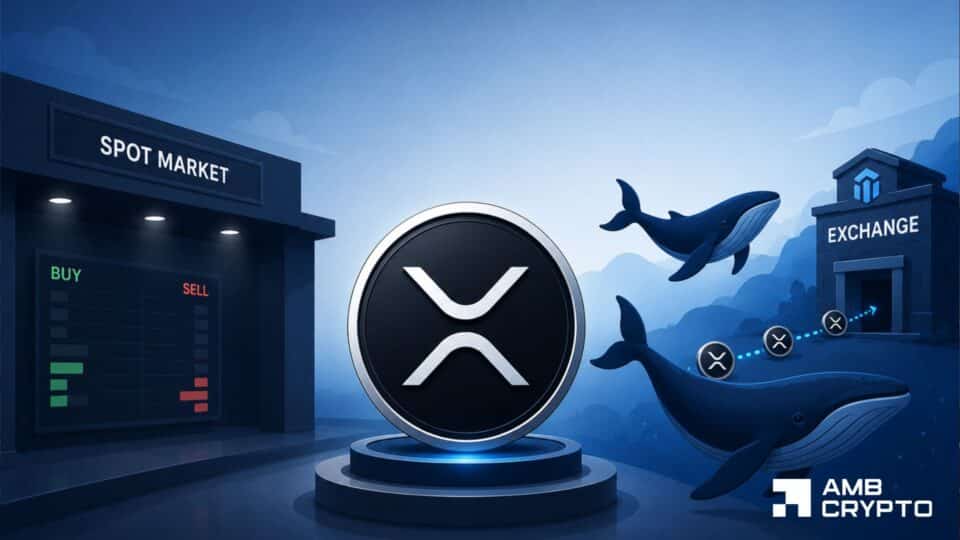
Cấu trúc thị trường gần đây của XRP đang gửi đi những tín hiệu trái chiều khi hoạt động dịch chuyển khỏi giao dịch Spot sang thị trường phái sinh. Giá củng cố trong khoảng $1.086 và $1.113 bất chấp khối lượng giao dịch giảm dần, cho thấy chưa bên mua hay bên bán nắm lợi thế quyết định. Điều đáng chú ý là Mở Interest (OI) cho XRP lại tăng khoảng 5.9% lên 423.8 triệu XRP, và tỷ lệ đòn bẩy ước tính tăng lên 0.162. Sự phân kỳ này quan trọng vì phái sinh có thể duy trì vị thế mà không cần thêm vốn mới vào thị trường. Trong khi dòng tiền vào/ra thị trường Spot sụp đổ ~99%, các nhà giao dịch sử dụng đòn bẩy ngày càng trở thành lực lượng chi phối chính trong việc định giá XRP, giải thích cho sự củng cố giá. Tuy nhiên, nếu nhu cầu Spot không quay trở lại để xác nhận các vị thế này, mức đòn bẩy ngày càng tăng khiến XRP dễ bị tổn thương trước một đợt thanh lý mạnh nếu tâm lý đột ngột thay đổi. Về khía cạnh tích cực, các nhà nắm giữ ngắn hạn (STH) của XRP cuối cùng đã quay trở lại trạng thái có lãi khi chỉ số MVRV 30 ngày vượt lên mức trung tính, đạt 1.03. Sự cải thiện này tương đồng với xu hướng phục hồi tâm lý nhà đầu tư trên các tài sản vốn hóa lớn khác như Bitcoin, Ethereum. Tuy nhiên, sự thay đổi về khả năng sinh lời này cũng làm thay đổi cấu trúc động lực trên thị trường. Khi ngày càng nhiều người nắm giữ ngắn hạn thoát khỏi các khoản lỗ tiềm ẩn, áp lực giữ tài sản thường nhường chỗ cho xu hướng muốn chốt lời. Mặc dù altcoin này vẫn nằm dưới vùng bán lịch sử, hành động giá ngày càng khó duy trì do thiếu nhu cầu mới và khả năng xuất hiện áp lực chốt lời. Tóm lại, trong khi các nhà nắm giữ XRP đã có lãi trở lại, đợt tăng giá chủ yếu được thúc đẩy bởi đòn bẩy trên thị trường phái sinh hơn là nhu cầu Spot thực tế. Mức hỗ trợ $1.10 đang gặp rủi ro khi áp lực chốt lời gia tăng và những nghi ngờ về tính bền vững của xu hướng hiện tại ngày càng lớn.

ambcrypto1 giờ trước

Các nhà đầu tư XRP có lời trở lại, nhưng cầu Spot đã biến mất: Liệu $1.10 có giữ được?

ambcrypto1 giờ trước

Giao dịch

Giao ngay
活动图片