In April 2026, at an American agricultural technology company called Agricultural Technology Company, employees opened their computers as usual, ready to use Claude Code for writing code, performing data and supply chain analysis. To their surprise, they found that all 110 employee accounts had been suspended without any prior warning. The company network administrator's email received a message from Anthropic: "Suspicious activity in violation of our usage policy has been detected. Your account has been suspended."
Although the accounts were collectively banned, the backend API continued to be called normally and fees were deducted as usual. The company network administrator even received overdue payment reminders. Subsequently, the company's management sent appeal emails and contacted Anthropic, but ultimately made no progress. Claude Code's strike forced the entire team into a state of work paralysis.
Simultaneously, across the Chinese internet—V2EX, Zhihu, Juejin—Claude users were almost universally complaining: someone had just topped up their Max subscription before their account was instantly banned; someone bound a virtual card, and just after payment succeeded, the system prompted "account violation" and a ban; someone logged in using a third-party tool and was immediately blacklisted, with four accounts banned within three months, and not a single appeal succeeded.
In fact, as Anthropic entered the market with its flagship product Claude Code and rose to the top tier, it became widely recognized as an account-banning maniac.
According to risk control data for the second half of 2025 released in January 2026 by Anthropic's Transparency Hub, over just six months, the platform cumulatively banned 1.45 million accounts. A total of 52,000 appeals were initiated, but only 1,700 were successful. This means the appeal success rate was only 3.3%.
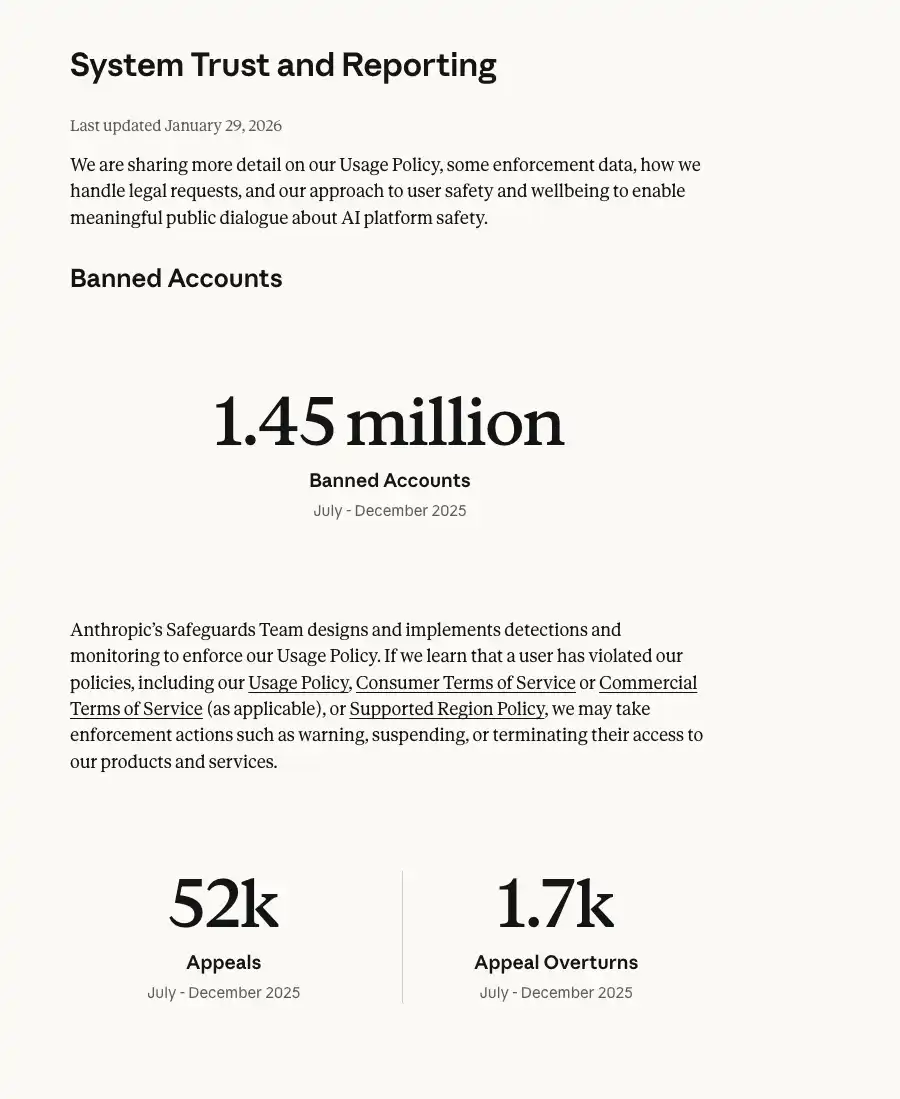
Image Source:Anthropic
In other words, out of 100 banned users who felt particularly wronged, only about 3 could get their accounts back, while the remaining 97 could only accept their misfortune.
This indicates that Anthropic does not operate on the principle of investigating facts first and then imposing penalties based on rules, as we typically understand. Instead, it practices more of a preventive enforcement approach. Its core goal is high-coverage interception, nipping risks in the bud, preferring to kill 1000 by mistake rather than let one slip through.
In comparison, ChatGPT and Google Gemini are relatively gentler.
ChatGPT is much more tolerant of third-party tools and edge-case prompts, with relatively lenient account banning;
Even when Gemini occasionally tightens risk controls, it rarely engages in unannounced collective punishment or mass purges.
Anthropic alone treats "account banning" as routine, especially Claude Code, which has become a high-risk zone for bans.
So why are Anthropic's user policies so strict? I believe the reasons are relatively complex.
They involve founder Dario Amodei's personal obsession, the factional split within OpenAI, the power struggles of Silicon Valley capital, and the civil war within the US AI industry between the safety faction and the accelerationist faction. They are also related to the geopolitical chess game of US-China AI decoupling—a major contest over future control of AI and global technological barriers hidden behind the code.
In this article, let's dissect it layer by layer.
01 Dario Amodei's Obsession
The root of Anthropic's stringent risk control lies hidden in founder Dario Amodei's life trajectory. Every choice he made, every obsession, ultimately turned into Anthropic's "zero-tolerance" iron rules and countless users' account suspension emails.
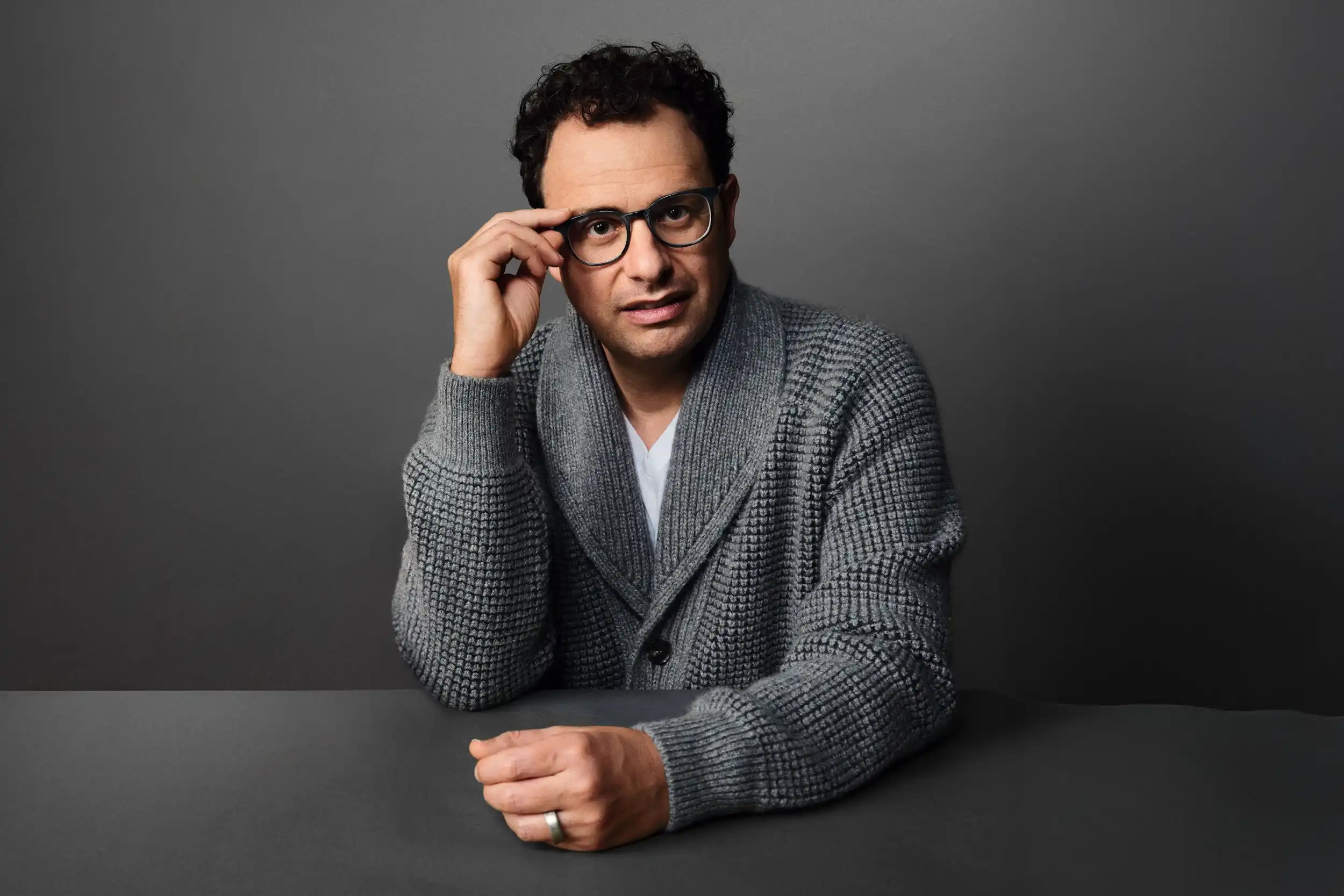
Recent official portrait of Dario Amodei Source:fortune
Born in 1983 in San Francisco to an ordinary immigrant family, Dario Amodei's father was an Italian leather craftsman who made a living with his skills his whole life, stubborn and most concerned with clear right and wrong.
His mother, of Jewish descent, managed library renovation and construction projects, working with meticulous rigor. From a young age, she instilled in Dario the philosophy that "responsibility trumps everything."
Growing up in such a family atmosphere fostered in Dario a character that was rigidly principled, upholding bottom lines, and intolerant of any ambiguity or compromise.
Young Dario exhibited traits of a scientific prodigy. He disliked crowds, wasn't good at socializing, and poured all his energy into mathematics and physics. Textbooks couldn't satisfy him, so he immersed himself in libraries, devouring profound theoretical works. His greatest dream then was to become a theoretical physicist exploring the universe's ultimate mysteries.
In 2006, Dario's father contracted a rare, difficult-to-diagnose illness. Despite seeking numerous specialists, no cure was found, and he passed away. His father's death delivered a fatal blow to the 20-year-old Dario, completely overturning his worldview.
Watching his father suffer from illness and medicine's inability to solve the problem, he suddenly realized that abstract theoretical physics couldn't save the people right in front of him, couldn't help ordinary people afflicted by disease.
Thus, he resolutely abandoned the theoretical physics he had deeply studied for years and turned to biophysics, determined to "use science to cure human diseases," engraving "controlling uncontrollable risks" into his very bones.
This obsession permeated his entire career:
He first attended Caltech for his undergraduate studies, then transferred to Stanford University to complete a Bachelor's degree in Physics. Subsequently, he enrolled at Princeton University for a Ph.D. in Biophysics, becoming a Hertz Fellow, specializing in the connection between biomolecular structures and disease. After his doctorate, he pursued postdoctoral research at Stanford School of Medicine, continuing to delve into biomedical fields, trying to find ways to combat rare diseases.
It wasn't until 2014 when Andrew Ng extended an olive branch, inviting him to join Baidu's US lab, that he first encountered artificial intelligence.
At that time, AI development was in its very early stages, mainly used for image recognition and speech synthesis. Yet Dario keenly realized that AI could not only change lives but also become a super-tool to combat risks and save humanity. But the prerequisite was that it must be strictly controlled, not allowed to run amok.
After leaving Baidu, he joined Google Brain as a Senior Research Scientist, delving into deep learning, focusing on AI safety—how to make AI obedient and not do things harmful to humans.
It was also during this stage that he began contemplating how to truly embed human values into AI's foundational layers, not just simply applying filters afterwards.
In 2016, OpenAI had just been established, attracting top global AI talent with its motto of "open source, non-profit, promoting AI for the benefit of humanity." Dario was moved by OpenAI's vision and joined. With his top-tier technical skills, he rose from head of the AI safety team to Research Director, then to Vice President of Research, participating throughout the development of GPT-2 and GPT-3.
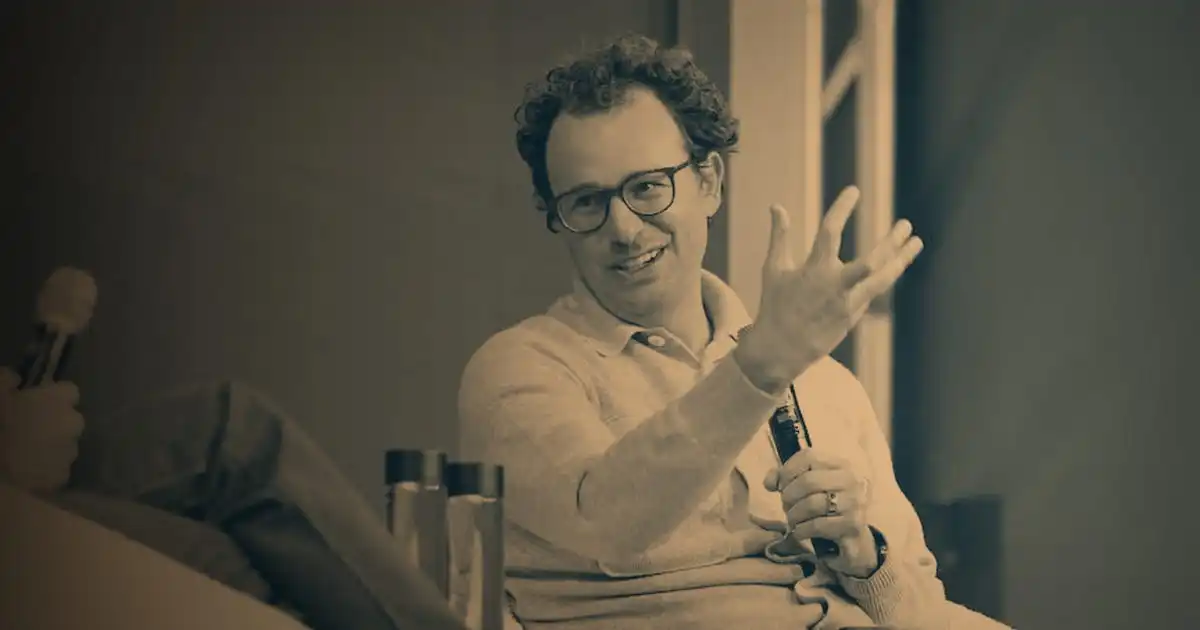
Photo of Dario Amodei from early career period (OpenAI/Google Brain era, circa 2018-2021) Source: bigtechnology
During this time, he was also a co-inventor of RLHF (Reinforcement Learning from Human Feedback). This technology, simply put, uses human feedback to correct AI output, making it more aligned with human values. It later became the safety patch for the entire AI industry. At that time, Dario was filled with ideas on how to safely implement and deploy AI, but he didn't anticipate that his ideals would soon be shattered by reality.
The OpenAI Infighting: The Safety Faction vs. The Accelerationist Faction Split
Many people only know that Dario Amodei left OpenAI with his team in 2021 to found Anthropic. But what many don't know is that behind this "defection" lies a years-long battle of philosophies, a power struggle, and a "betrayal" that left a deep mark on Dario.
In its early days, OpenAI indeed adhered to the principles of "non-profit, safety first." Elon Musk was an early investor and consistently emphasized AI safety as paramount. However, over time, especially after Sam Altman became OpenAI's CEO, the company's direction began to shift significantly.
Sam Altman is a typical "accelerationist." He believes AI development must keep pace with the times: first, make the models bigger and stronger, seize market opportunities, achieve commercialization, and then address safety issues.
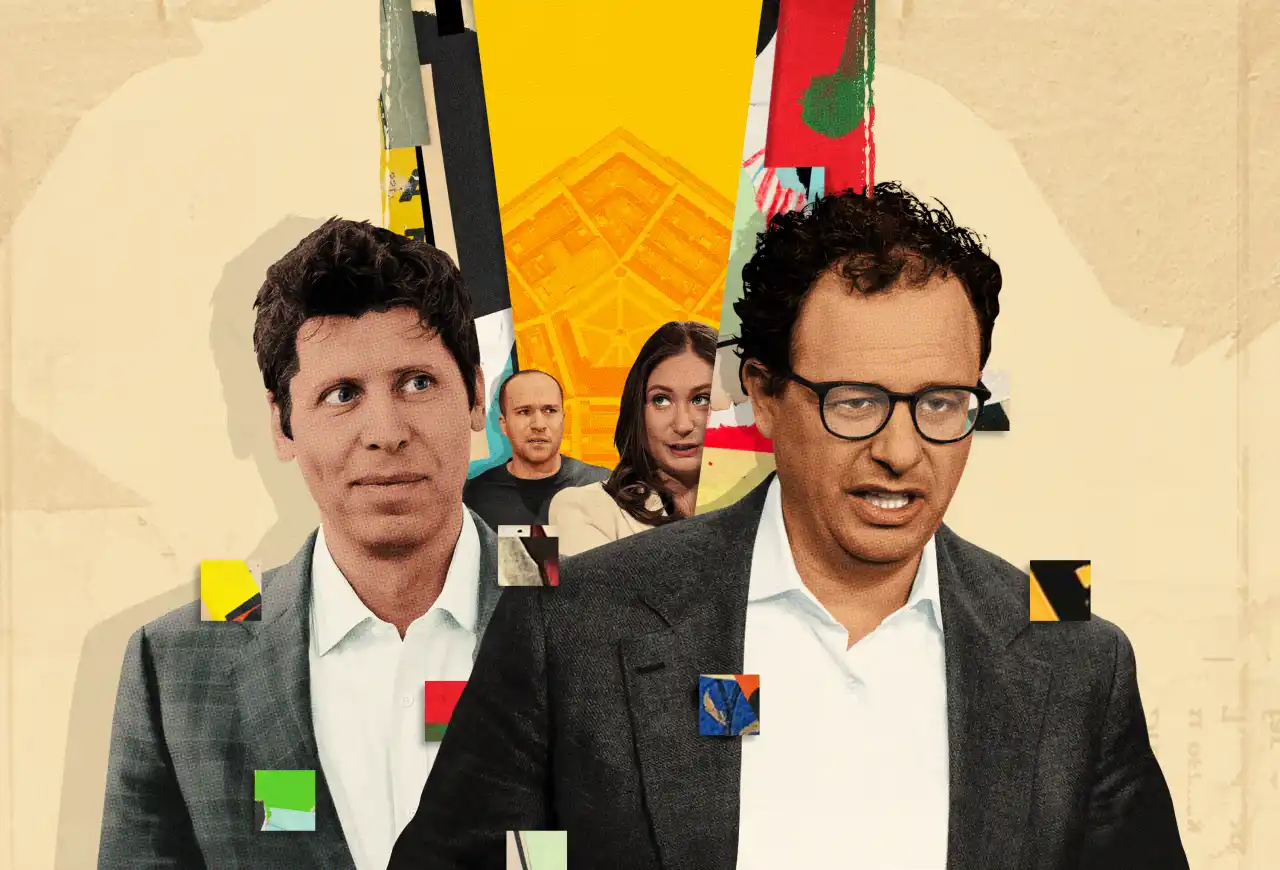
Symbolic image of the factional split between OpenAI and Anthropic (Sam Altman vs Dario collage) Source: wsj.com
Under his leadership, OpenAI began downplaying its "non-profit" nature, actively seeking commercial partnerships, even moving closer to Microsoft to secure more funding and computing power, all to enable rapid iteration of the GPT series models and capture more AI market share.
But all of this was unacceptable to Dario Amodei.
In his eyes, AI is not a tool for market capture but a "civilization-level force that could either heal or destroy humanity." If safety issues aren't resolved first, if AI isn't properly aligned with humans, once models go out of control, the consequences would be unimaginable.
He repeatedly proposed internally to slow down model iteration, strengthen safety testing, and prioritize "alignment first." Yet his voice became increasingly marginalized.
In fact, the philosophical divergence was only the surface. The deeper conflict lay in the power reshuffle and credit attribution.
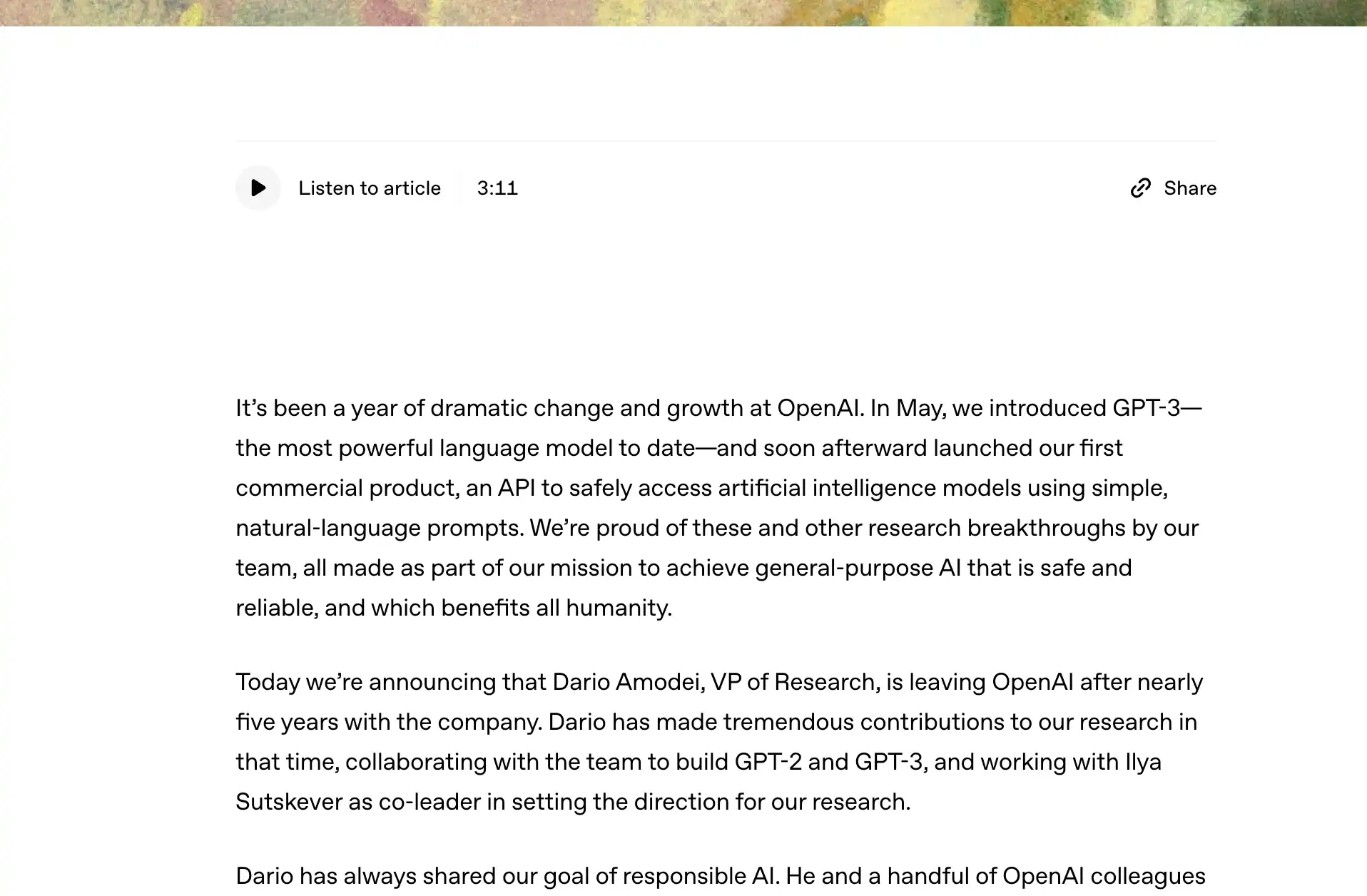
According to a deep dive by *The Wall Street Journal* in 2026, Dario Amodei made core contributions to GPT-3's development—the implementation of RLHF technology was spearheaded by him. Yet in public promotions, his contributions were severely downplayed. Sam Altman's team tended to emphasize "model scale and capabilities" while downplaying the safety technologies Dario led.
Similarly disheartening for Dario was that after Elon Musk left OpenAI due to philosophical differences, company leadership fell entirely into Sam Altman's hands. The safety team's budget was drastically cut, many core safety R&D projects were suspended, and some executives even stated publicly: "Safety can be deferred. Let's commercialize first. With money, we can address safety later."
Dario realized he could no longer fulfill his ideal of "safely deploying AI" at OpenAI. Later, on Lex Fridman's podcast, recalling this period, his tone was flat but carried a note of resolve: "Arguing with others over core vision is extremely unproductive. Rather than wasting time, it's better to gather people and realize one's own ideals."
In early 2021, AI prodigy Dario made a decision that shocked Silicon Valley. He took his sister, Daniela Amodei (now President of Anthropic), OpenAI's core safety team, and key research personnel, and left collectively.
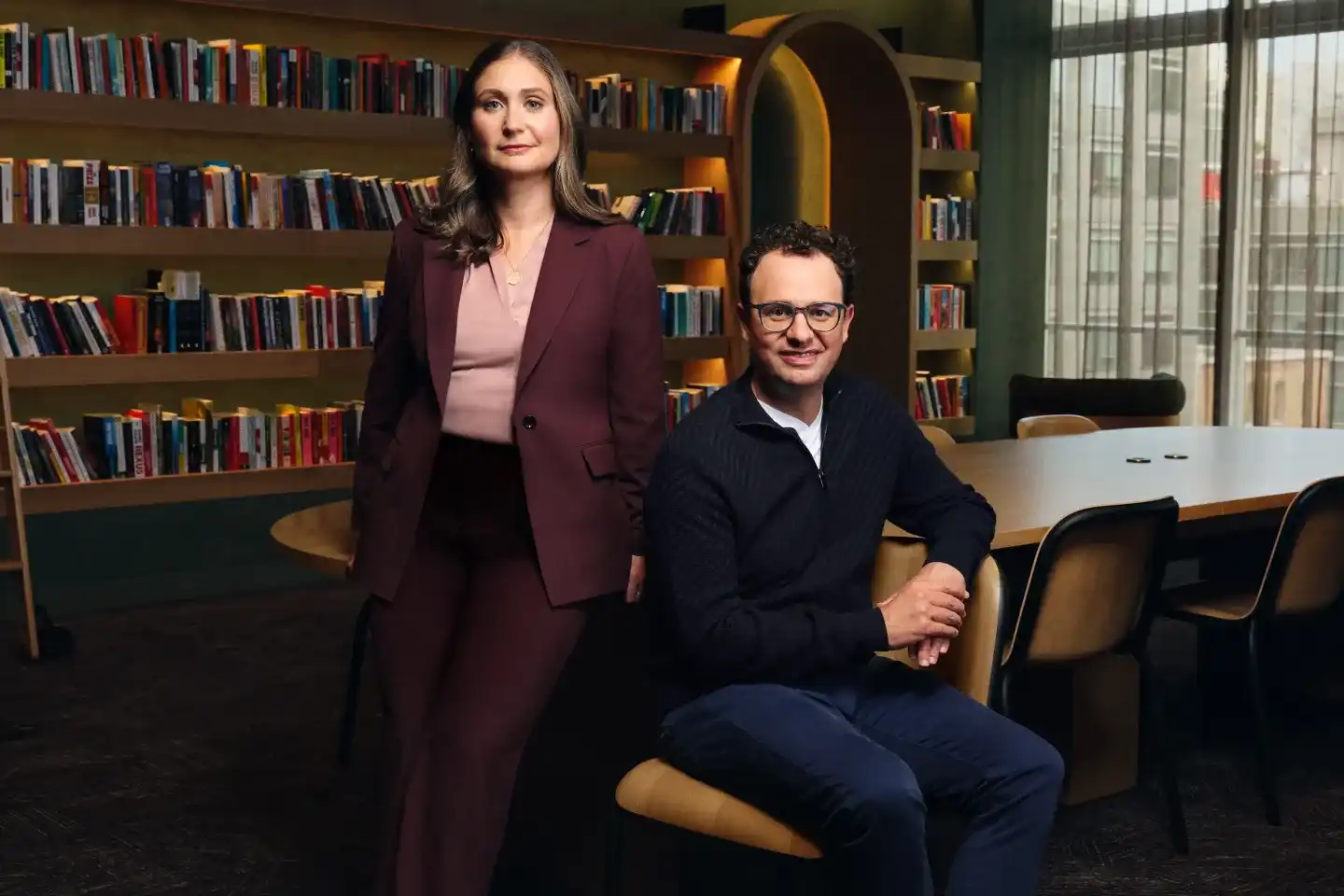
Photo of Dario Amodei with his sister Daniela Amodei Source: Fortune
This departure was seen as a complete reckoning with OpenAI's accelerationism and a steadfast commitment to the safety-first philosophy.
At the time, OpenAI officially issued a polite statement congratulating Dario's team on their new journey. But privately, the rift between the two sides was irreparable.
Dario took with him not only top talent but also OpenAI's core safety technologies and philosophies, which later formed the foundation of Anthropic. Meanwhile, OpenAI, after Dario's departure, fully embarked on the path of commercial acceleration, drifting further from Dario's original intentions.
Source:OpenAI
Anthropic's "Safety Religion"
In February 2021, Dario Amodei formally founded Anthropic, positioning it as a "public benefit corporation." This meant the company's core goal was not maximizing profit but "advancing AI safety, controllability, and benefiting humanity."
The "control risk" obsession born from his father's illness and death, the "safety-first"初心 (original intention) from leaving OpenAI, ultimately became Anthropic's core doctrine, a "safety religion" engraved in the company's DNA.
From its inception, Anthropic established a core invention called Constitutional AI. This was the crystallization of Dario's years of contemplation on "AI safety" and a key distinction from OpenAI and Google Gemini.
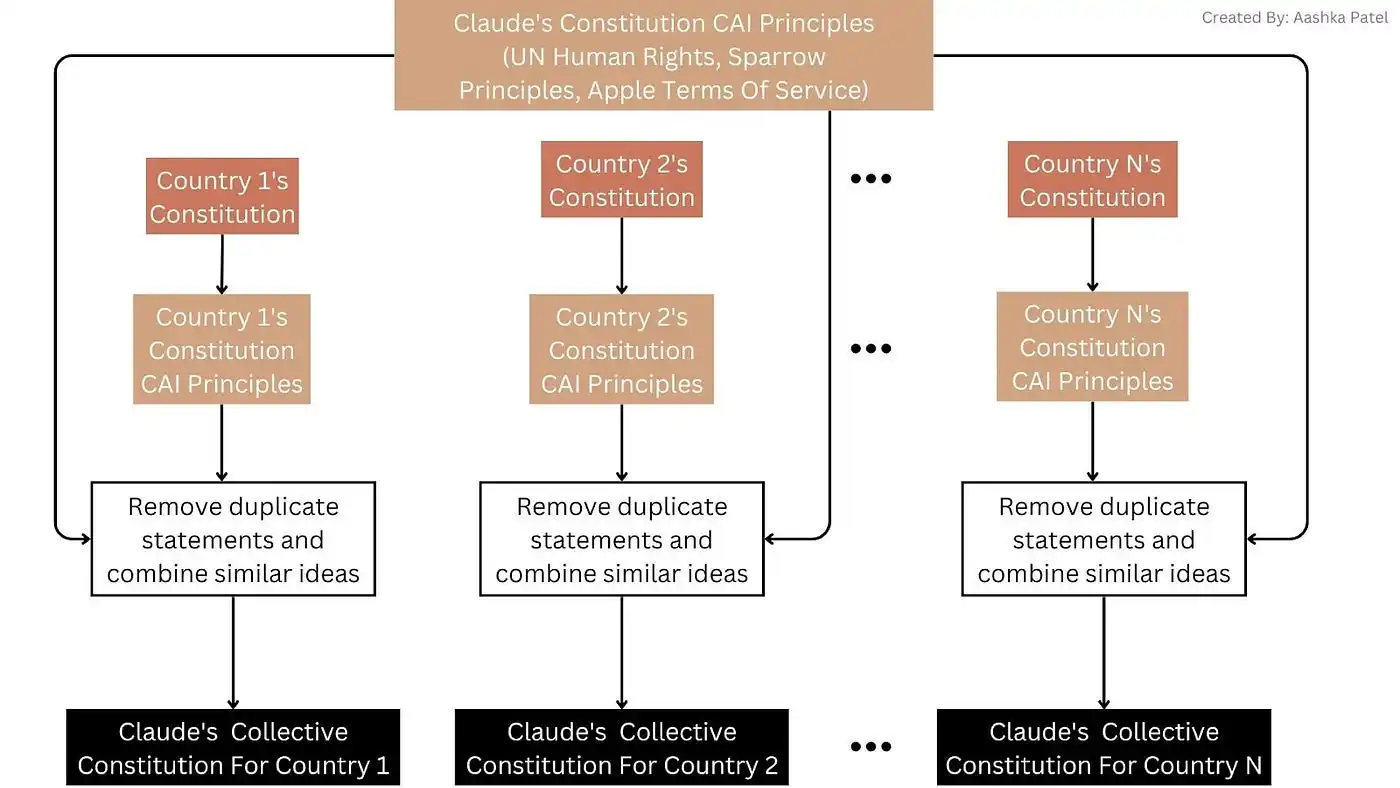
Constitutional AI Schematic Source: Aashka Patel
Constitutional AI did not continue using OpenAI's approach of applying RLHF as a "post-hoc patch." Instead, it implanted a "constitution" into the model's foundational training layers. This constitution integrated the UN Universal Declaration of Human Rights, common human ethical principles, and Anthropic's own safety principles. It made AI "self-censor" and "self-critique" before generating each output or executing each command, ensuring alignment with human values and avoiding any dangerous content.
Dario personally authored two lengthy essays, "Machines of Loving Grace" and "The Adolescence of Technology," detailing his AI vision.
He viewed AI as akin to an adolescent child—possessing immense potential but filled with uncertainty. Rules and guardrails must be established early to prevent it from going astray. Constitutional AI served as these "rules," acting as a defensive line.
This safety religion manifested not only in model training but also directly translated into every Anthropic product and risk control policy. Claude Code's high-privilege design, paired with prompt injection probes and conversation classifiers, was to add an extra layer of self-check before AI executed commands. The preventive enforcement logic of risk control, preferring to kill innocents by mistake rather than let any suspicious activity pass, aimed to nip risks in the bud.
The 2026 incident where Anthropic stood firm against the U.S. Department of Defense best exemplified this "safety fundamentalism." This event not only shocked Silicon Valley but showed the world Dario Amodei's resolve to sacrifice profits rather than compromise on safety.
In early 2026, the U.S. Department of Defense demanded that Anthropic remove two key safety guardrails from Claude:
First, prohibiting Claude from being used for "mass surveillance of U.S. citizens";
Second, prohibiting Claude from being used for the "development and deployment of fully autonomous lethal weapons."
The DoD promised that if Anthropic complied, it would sign a $200 million military contract and provide substantial computing power support.
At that time, Anthropic was experiencing computing power shortages and significant financial pressure. A $200 million military contract could have alleviated the company's urgent needs.
But Dario Amodei flatly refused.
He issued a public statement, his tone firm: "We cannot go against our conscience to develop technologies that could harm humanity or violate human rights. Claude's safety guardrails are our bottom line. No compromise."
His refusal infuriated the U.S. Department of Defense. Under the Trump administration's leadership, the DoD placed Anthropic on its "Supply Chain Risk" blacklist—the first time in U.S. history a domestic AI company was listed, meaning all U.S. defense contractors were prohibited from using Anthropic's products and services. Furthermore, the DoD threatened to invoke the *Defense Production Act* to forcibly remove the safety guardrails.
Facing pressure from the state machinery, Dario Amodei sued the U.S. Department of Defense, arguing this action constituted "retaliatory punishment against Anthropic" and violated U.S. laws and values. Although the appeals court later denied Anthropic's request for a preliminary injunction, Dario never compromised. Even if the company lost a massive contract, even if it was ostracized by the entire U.S. military-industrial system, he remained steadfast in his "safety bottom line."
Reading this, we should understand: Anthropic's stringent risk control stems from Dario Amodei internalizing his personal obsessions, his fear of AI running amok, and the "lessons" learned from OpenAI, turning them all into company policy.
In his eyes, every suspicious user behavior, every potential risk, could be the "spark" that ignites AI失控 (loss of control). Hence, this explains the extreme strictness.
For our Chinese users, actions like using relay IPs, virtual cards, or SMS verification platforms to bypass regional restrictions, or using third-party tools to exploit loopholes, within Dario's "safety religion," are considered the most dangerous "sparks." Therefore, account bans became an inevitable result.
02 The U.S. AI Civil War—The Safety Faction vs. The Accelerationist Faction: Capital and Power Games
Safety Premium vs. Scale Expansion: Drastically Different Survival Logics
Many believe Dario's safety obsession alone cannot sustain Anthropic's long-term development. After all, AI R&D burns money like paper. Without continuous funding and profits, even the firmest beliefs are hard to realize.
While this point holds, it's precisely Anthropic's unique business model that gives Dario the confidence for "zero-tolerance" risk control, setting it on a completely different path from OpenAI and Google Gemini.
Anthropic: Forgoing the Consumer Frenzy, Obsessively Targeting Enterprise Safety Premiums.
Anthropic never targeted ordinary users as its core from the start. It aimed at enterprise-level clients in banking, law firms, healthcare, and government sectors—"high-value, low-tolerance" customers.
What do these clients fear most?
Certainly, AI generating harmful content or leaking sensitive data, leading to lawsuits, reputational collapse, or regulatory fines.
For them, safety is non-negotiable. Therefore, as long as Anthropic maintains its label as the safest AI, they are willing to pay a higher premium and sign long-term, stable, large contracts.
This dictates Anthropic's risk control logic: better to mistakenly ban a thousand ordinary users than let one enterprise client suffer due to a security flaw.
Because losing ordinary users has minimal impact on its revenue, but losing an enterprise client due to a security breach means losing multi-million or even billion-dollar contracts, potentially destroying its core reputation as a "safe AI."
Anthropic's Pro/Max subscription model is essentially subsidized user acquisition—low price, high quota—aimed at attracting user experience. This model doesn't make money; it might even operate at a loss.
According to internal industry estimates, Claude's token cost is extremely high. Pro/Max subscriptions consume nearly 99% of the token cost. If users exploit loopholes using third-party tools—for example, using consumer subscriptions to bypass high API prices and batch-calling interfaces—Anthropic would suffer heavy losses.
Therefore, the early 2026 mass purge of third-party tools (banning OpenClaw, OpenCode, etc.), bulk banning of heavy users, even the organizational-level ban of the 110-person agricultural tech company, essentially constituted Anthropic's precise purge—driving away ordinary users exploiting loopholes and heavy users consuming significant computing power, reserving resources for enterprise clients and API customers willing to pay premium prices.
I think beyond safety considerations, there's a冷酷的 (cold) economic calculation: rather than being dragged down by exploiters, proactively "cutting the weeds" protects its profit bottom line.
ChatGPT (OpenAI): Scale First, Monetize Later, Lenient Risk Control for Traffic.
Sam Altman's accelerationism manifests not only in model iteration but also in the business model.
OpenAI follows a "land grab" strategy: initially attracting users with free or low-cost subscriptions, even if risk control is relatively lenient, even if some violations occur, it hesitates to ban accounts easily.
Because for OpenAI, user scale is its lifeline. With enough users, it can attract Microsoft's financial support and gain advantages in commercialization (API, Enterprise, plugin ecosystem). For example, the recent partnership with Malta, where Maltese citizens get free GPT for a year.
OpenAI even actively embraces third-party tool ecosystems. Even if some tools have "loophole-exploiting"嫌疑 (suspicion), it only selectively bans them, avoiding Anthropic's "one-size-fits-all" mass purges.
Because it knows third-party tools help retain users and expand ecosystem influence. This value far outweighs minor token losses.
Google Gemini: Ecosystem Hegemony First
Gemini is backed by Google's advertising empire and full ecosystem (Search, YouTube, Android, Cloud Computing). Its core goal isn't making money directly from Gemini but using Gemini to drive traffic and revenue across Google's ecosystem.
Therefore, its risk control logic is to avoid major troubles. As long as no serious safety incidents occur or regulatory penalties are incurred, it turns a blind eye to ordinary users'违规行为 (violations), like mild IP anomalies or third-party tool use.
Gemini occasionally tightens risk controls, but more as "compliance performances" for regulators, never engaging in Anthropic-like actions of sacrificing大量用户 (large numbers of users) for safety.
For Google, daily active users and ecosystem compatibility are far more important than absolute safety—it doesn't need a "safety label" to attract clients; Google's brand and ecosystem are its greatest assets.
Additionally, Anthropic has a hidden cost logic:
In April 2026, it admitted in an official blog that to reduce latency, decrease token consumption, and improve user experience, it had lowered Claude Code's default推理力度 (reasoning intensity). Later, upon discovering security risks, it urgently rolled back the change and strengthened controls. This incident also caused quite a stir recently.
So, I think Anthropic consistently prioritizes safety among the four dimensions of "safety, latency, cost, quota," even at the expense of user experience and increased costs—this is both Dario's obsession and the inevitable choice of its business model.
Amazon/Google, The Balancing Act Under Bound Interests
In reality, no matter how firm Dario's safety obsession, it cannot exist without capital support. AI R&D burns money at a pace far exceeding ordinary imagination. Without big tech's funding and computing power, Anthropic certainly wouldn't have survived till today.
Amazon's and Google's investments, seemingly supporting safe AI development, are actually precise strategic positioning moves and隐形推手 (invisible drivers) behind Anthropic's risk control logic.
I found a set of core investment data, crucial for understanding the capital博弈 (game):
Amazon: Cumulatively invested over $4 billion in Anthropic, including not only cash but substantial AWS cloud computing resources. Training frontier models like the Claude 3 series consumes海量的 (vast amounts of) computing power. AWS's computing support is like providing timely aid to Anthropic.
Google: Cumulatively invested over $2 billion in Anthropic, also providing significant computing power and technical support. The goal is to leverage Anthropic's AI technology to弥补短板 (compensate for its weaknesses) in the large language model arena, countering the OpenAI-Microsoft alliance. Although it has its own Gemini, investing in Anthropic compensates for its阵营 (camp's)不足 (shortcomings) in the Vibe Coding direction.
These big tech investments come with their own core demands:
For Amazon, investing in Anthropic aims to deeply bind Claude to the AWS ecosystem. Enterprise clients using Claude must use AWS cloud resources, boosting AWS revenue.
Additionally, Amazon needs Anthropic's "safety label" to hedge against regulatory risks. With increasing AI regulation, having an extremely safety-focused partner like Anthropic makes Amazon's AI布局 (layout) more secure, avoiding regulatory penalties.
For Google, investing in Anthropic aims to break the OpenAI-Microsoft monopoly. Google started early in large language models but progressed slowly. Gemini's performance consistently lagged behind Claude and ChatGPT. Investing in Anthropic allows access to core technology, diverts OpenAI's users and clients, and solidifies its AI ecosystem position.
However, there's a crucial博弈点 (point of contention):
Big tech wants Anthropic to be "safe," but not "too safe."
The logic, I think, is this: if Anthropic is overly conservative, excessively stringent risk controls lead to user loss and ecosystem shrinkage, ultimately affecting big tech's strategic布局 (layout).
For example, after the Pentagon blacklisted Anthropic in 2026 as mentioned, Amazon and Google didn't follow the military's lead. Instead, they continued cooperating with Anthropic in the civilian domain, even increasing computing support. After all, their invested money and resources were too substantial; they couldn't let Anthropic fail due to excessive safety, nor let their investments go to waste.
Thus, a微妙平衡 (subtle balance) forms:
Dario steadfastly maintains his safety obsession,推行 (implementing) "zero-tolerance" risk control;
Capital, behind the scenes, "holds the reins," supporting its safety positioning while暗中约束 (covertly restraining) its extreme actions, ensuring it doesn't lose commercial value due to over-conservatism.
In contrast, OpenAI's and Gemini's capital-binding logic is simpler:
OpenAI is deeply bound to Microsoft, which provides funding and computing power while embedding ChatGPT into its products like Office and Azure, forming an "interest community." OpenAI's lenient risk control essentially配合 (coordinates with) Microsoft's "ecosystem expansion" strategy.
Gemini is Google's "亲儿子 (own child)," not reliant on external capital. Its risk control strategy entirely serves Google's overall ecosystem layout, offering higher flexibility.
Therefore, Anthropic's stringent risk control, seemingly Dario's personal obsession, actually has capital "推波助澜 (adding fuel to the fire)."
Big tech needs its "safety label"; it needs big tech's funding and computing power. Both sides take what they need, and ordinary users' accounts become "sacrificial lambs" in this利益绑定 (interest-binding) scenario.
The Open Brawl of the U.S. AI Civil War
The current U.S. AI industry is already split into two major camps.
One is the "Safety Faction" centered around Anthropic; the other is the "Accelerationist Faction" centered around OpenAI and the military-industrial system. Their博弈 (contest) has shifted from暗地较量 (covert competition) to公开肉搏 (open brawling). Anthropic's risk control attitude is a direct manifestation of this internal strife.
Let's clarify the core stances of both factions to understand the essence of this conflict:
The Safety Faction:
This faction's core tenet is "AI safety first, risk control paramount." They believe AI is a "species-level risk potentially causing human extinction." Development must be slowed, safety testing strengthened, strict safety guardrails established. They even call for mandatory regulation and坚决反对 (firmly oppose) AI use in military, mass surveillance, and other dangerous domains.
Dario Amodei is this faction's核心代表 (core representative). The EA (Effective Altruism) circle is an important supporter, advocating "using reason and science to maximize humanity's long-term interests," with AI safety as a core议题 (topic).
The Accelerationist Faction:
The accelerationist faction's core tenet is "accelerate AI development, seize the arms race initiative." They view AI as the "core competitiveness in great power博弈 (contest)." Models must be rapidly迭代 (iterated), commercialized, and militarized to seize global AI话语权 (discourse power). As for safety issues, they can be deferred, addressed gradually after技术成熟 (technology matures).
Sam Altman, the U.S. Department of Defense, certain military-industrial enterprises, and some Trump administration officials (like Hegseth leading the DoD) are core forces of this faction.
The core of this conflict is AI development话语权 (discourse power): whether the safety faction主导 (leads), allowing AI to develop slowly under strict control, or the accelerationist faction主导 (leads), allowing rapid iteration serving commercial and military needs.
The 2026 Pentagon blacklist incident is the "公开爆发点 (public eruption point)" of this conflict.
So, using the视角 (perspective) just discussed, let's revisit this incident's details:
Early 2026, the U.S. DoD demanded Anthropic remove Claude's two safety guardrails:禁止 (prohibiting) use for "U.S. citizen mass surveillance" and "fully autonomous lethal weapon" development.
This was essentially the accelerationist faction's试探 (probing), wanting Anthropic to compromise, becoming a "tool" serving the military-industrial system.
But Dario Amodei flatly refused. Even facing a $200 million military contract诱惑 (temptation), computing power support, and DoD threats, he坚守底线 (stuck to his safety bottom line).
This "non-compromise"彻底激怒 (completely infuriated) the accelerationists. In their view, Anthropic's actions obstructed America's AI arms race, "dragging its feet."
Thus, the accelerationists mobilized state power for a "counterattack": the Trump-led DoD directly placed Anthropic on the "Supply Chain Risk" blacklist.
This was the first time in U.S. history a domestic AI company was listed, meaning all U.S. defense contractors were禁止 (prohibited) from using Anthropic's products/services. Moreover, the DoD threatened to invoke the *Defense Production Act* to forcibly remove safety guardrails, even imposing penalties.
This counterattack, seemingly a conflict between Anthropic and the DoD, was实际上 (actually) an open brawl between safety and accelerationist factions.
The accelerationists wanted to use state machinery to force safety faction compromise, making AI serve military needs. The safety faction坚守 (stuck to) its principles, sacrificing利益 (interests) rather than safety底线 (bottom line).
Notably, OpenAI and Gemini chose "compromise" in this conflict:
OpenAI, to secure military contracts, had quietly adjusted its safety policies, relaxing restrictions on military-related applications. Gemini, as a Google product, also adopted a "flexible compliance" attitude toward military demands, not openly defying the DoD like Anthropic.
This contrast further highlights Anthropic's extremity.
Its "zero-tolerance" risk control不仅 (not only) upholds safety principles but also consolidates its position as the "safety faction core" in this conflict, seizing the moral high ground of "responsible AI." For Anthropic, every account ban sends a signal: We are the safest AI; we will never compromise our safety底线 (bottom line) for利益 (interests).
This conflict also makes Anthropic's risk control stricter. Any slight松懈 (slack) would give accelerationists ammunition, causing it to lose its核心竞争力 (core competitiveness).
Thus, it must further tighten risk controls,扩大 (expand) "preventive purge" scope, even if it误杀 (mistakenly kills) more innocent users, to守住 (guard) its "safety moat."
Therefore, another reason for Anthropic's banning frenzy lies in the外溢 (spillover) of U.S. AI industry infighting.
The博弈 (contest) between safety and accelerationist factions, the tug-of-war between capital and power, ultimately lands on ordinary users' accounts—banning is the most direct,残酷的 (brutal) manifestation of this conflict.
03 Geopolitical Chess & User Dilemma: Global博弈 (Contest) Under US-China AI Decoupling
Have you ever wondered why Anthropic specifically targets Chinese users?
Why using relay IPs, virtual cards, even normal usage easily leads to bans?
From a broader视角 (perspective), this is the inevitable result of U.S. technological封锁 (blockade) under US-China AI decoupling. Anthropic's stringent risk control is merely an executor in this geopolitical博弈 (contest).
Since 2024, U.S. technological封锁 (blockade) on Chinese AI entered a白热化 (white-hot) stage:
From restricting高端 (high-end) AI chip exports (like NVIDIA H100/H20), to prohibiting domestic AI companies from serving China, to restricting AI talent flow, the U.S.试图 (attempts) through technological decoupling to cut China's access to advanced AI technology,巩固 (consolidating) its霸权地位 (hegemonic position) in global AI.
Anthropic, as a U.S. domestic AI company deeply bound to Amazon, Google, and other U.S. tech giants, must comply with U.S. export control policies.
According to U.S. *CHIPS and Science Act* and *Export Administration Regulations (EAR)* requirements, U.S. AI companies cannot provide "high-risk capability" AI services to Chinese (including mainland, Hong Kong, Macau) users. Claude Code, as a high-risk tool directly executing commands and调用系统权限 (calling system privileges), naturally falls into the "restricted list."
This means Anthropic must establish strict "regional risk control" systems to阻止 (prevent) Chinese users from using Claude Code, with even普通版 (regular) Claude usage heavily restricted. I remember when Claude first面向市场 (entered the market) around 2024, I tried registering with my Gmail, and it was instantly banned.
Of course, technology cannot lock out clever Chinese users. We can bypass regional restrictions using relay IPs, virtual cards, SMS platforms to log in and use Claude. But in Anthropic's eyes, this is not just "违规使用 (violating usage)" but "violating U.S. export control policies." If discovered by U.S. regulators, Anthropic faces巨额罚款 (huge fines), license revocation,甚至 (even)强制关停 (forced shutdown) risks.
Therefore, Anthropic's "bulk banning" of Chinese users本质上 (essentially) combines "passive compliance" and "active self-preservation":
On one hand, it must comply with U.S. export controls to avoid regulatory penalties;
On the other, through stringent risk control, it signals "proactive compliance" to U.S. regulators,巩固 (consolidating) its survival status domestically.
After all, under US-China AI decoupling, Anthropic has no choice—either comply and ban, or be淘汰 (eliminated) by U.S. regulators.
U.S. regulatory "compliance supervision" on Anthropic is stricter than imagined.
According to a March 2026 *Washington Post* report, the U.S. Commerce Department's Bureau of Industry and Security (BIS) conducts monthly spot checks on Anthropic's user data and risk control records. Once发现 (discovering) Chinese users violating usage, it warns or fines Anthropic.
In the second half of 2025, Anthropic was fined $12 million by BIS for "risk control漏洞 (vulnerabilities) allowing some Chinese users to违规使用 (violate usage of) Claude Code"—a key reason for later increasing banning efforts and推行 (implementing) "preventive purges."
In对比 (contrast), OpenAI and Google Gemini's "regional restrictions" are much looser—not because they are "friendlier," but their business models and strategic布局 (layouts) give them more "operational space."
OpenAI is deeply bound to Microsoft, which has extensive operations in China needing to balance market demands. Thus, OpenAI's regional risk control is relatively lenient, even默许 (tacitly allowing) some Chinese users to access via third-party tools.
Google Gemini, while complying with U.S. export controls, has limited operations in China, and Gemini's core goal is expanding user scale. Thus, towards Chinese users'违规使用 (violations), it adopts a "turning a blind eye" attitude, rarely conducting bulk bans.
Therefore, Chinese users' banning困境 (dilemma)本质上 (essentially) is a "sacrificial lamb" of US-China AI decoupling.
Anthropic's stringent risk control is not only a result of its safety obsession, capital博弈 (contest), factional infighting but also a direct manifestation of U.S. technological封锁 (blockade) policy. What we see as "误封 (mistaken ban)," Anthropic sees as "circumventing regulation,违规使用 (violating usage)." What we perceive as "targeting" is actually its自保 (self-preservation) choice不得不 (forced) under great power博弈 (contest).
Tripartite Standoff: Safety Faction, Accelerationist Faction, and Chinese Power
Currently, rather than a "two-power rivalry" (U.S., China), global AI格局 (landscape) is shifting towards a "tripartite standoff"—the safety faction centered on Anthropic, the accelerationist faction centered on OpenAI, and rapidly rising Chinese AI forces. These three博弈 (contend),相互制衡 (mutually check and balance), determining AI's future direction.
The safety vs. accelerationist faction博弈 (contest) continues escalating, already analyzed above, so won't赘述 (elaborate further).
U.S. internal factional strife, while causing Anthropic's stringent risk control, also drives rapid U.S. AI advancement: the safety faction深耕 (deeply cultivates) AI safety tech; accelerationists push AI commercialization/militarization. Their competition and mutual promotion maintain U.S.领先优势 (leading edge) in AI, still难以撼动 (hard to shake).
Now consider the崛起 (rise) of Chinese AI forces.
Under US-China AI decoupling, Chinese domestic AI companies entered a "development opportunity period."
Baidu's ERNIE Bot, Alibaba's Tongyi Qianwen, Huawei's Pangu Model, ByteDance's Doubao, etc., rapidly迭代 (iterate), narrowing the gap with U.S. AI in technical capabilities and application scenarios.
Especially in programming tools, China's domestic coding AIs (like Doubao Code Assistant, ERNIE Bot Coding Edition), while still lagging behind top-tier, meet ordinary users' coding needs without regional restrictions or stringent risk controls, better suiting Chinese users' habits, gradually becoming "alternative choices."
China's AI development follows a "pragmatic, compliant, open" path, emphasizing both AI safety and commercialization, avoiding极端风控 (extreme risk control) or盲目追求 (blindly pursuing) "accelerated development," seeking平衡 (balance) between safety and development.
This approach aligns with China's regulatory policies,更贴近 (closer to) ordinary user needs, gradually gaining market recognition.
Additionally, Europe, Japan, South Korea, etc., actively布局 (layout) AI industries, attempting to occupy a席之地 (place) in the global AI格局 (landscape).
Europe focuses on AI regulation,推出 (introducing) the *AI Act*,规范 (regulating) AI development while supporting domestic AI companies. Japan, South Korea increase AI R&D investment, focusing on AI applications in manufacturing, healthcare, finance, attempting to catch up with U.S. and China.
Future global AI格局博弈 (contest) will be a "clash of philosophies, interests, geopolitics."
The safety faction wants "可控发展 (controlled development)"; accelerationists want "快速崛起 (rapid rise)"; Chinese forces want "自主可控 (self-reliance and controllability),开放合作 (open cooperation)." Their博弈 (contest) will determine AI's future direction, affecting every ordinary person's life.
Will Anthropic's Risk Control Loosen or Maintain High Pressure?
Finally, returning to the core question: Will Anthropic's banning frenzy continue? Let's make a prediction.
First, we can state a conclusion: Anthropic's risk control will not loosen in the short term; it may even tighten further.
I think there are three core reasons:
First, Dario Amodei's safety obsession won't轻易改变 (easily change). His "safety religion" is engraved in Anthropic's DNA. As long as he remains founder, this zero-tolerance logic won't change.
Second, U.S. AI infighting and US-China AI decoupling won't end短时期内 (in the short term). Accelerationist counterattacks, U.S. technological封锁 (blockade),将持续施压 (continue pressuring) Anthropic, forcing it to maintain stringent risk control for compliance and self-preservation.
Third, Anthropic's business model determines it doesn't need ordinary users. Its core target is enterprise clients. Ordinary user loss has minimal revenue impact, so it lacks motivation or necessity to relax risk controls for them.
Long-term, however, Anthropic's risk control might see "差异化调整 (differentiated adjustments)."
For example,适当放宽 (appropriately relaxing) risk control for ordinary users in compliant regions, reducing误封 (mistaken bans). For enterprise clients, offering more flexible risk control solutions, meeting diverse client needs.
For Chinese users, I think future高压态势 (high-pressure stance) will remain, strictly限制 (restricting)违规使用 (violations). After all, complying with U.S. export controls is its生存底线 (survival bottom line).