Canadian Prime Minister's Davos Speech: The Old Order Is Dead, Middle Powers Must Stop 'Living a Lie'

marsbitXuất bản vào 2026-01-21Cập nhật gần nhất vào 2026-01-21

Tóm tắt

Canadian Prime Minister delivered a forceful speech at the World Economic Forum in Davos, declaring that the old U.S.-led, rules-based international order is over. He argued that middle powers like Canada must abandon the illusion that the old rules still function, as powerful nations now weaponize economic interdependence. Instead of living in what he termed a "lie," countries should pursue strategic autonomy through collective action and domestic strength-building. He emphasized that Canada is adopting a "value-based realism" approach—upholding principles while pragmatically engaging globally. This includes diversifying international partnerships, boosting defense spending, cutting taxes, and removing trade barriers. The goal is to form flexible, issue-based coalitions with like-minded nations to reduce vulnerability and increase influence. The Prime Minister concluded that middle powers must cooperate to avoid being marginalized in an era of great power competition, asserting that nostalgia is not a strategy. Canada invites other nations to join this path of honest engagement and shared resilience.

Source: Phoenix News

Canadian Prime Minister Mark Carney delivered a strongly-worded speech at the World Economic Forum in Davos, Switzerland, on Tuesday, making the significant assertion: "The old order will not return." He stated that the long-standing U.S.-led, rules-based international order has ended, and middle powers like Canada must shift their strategies to avoid becoming victims of further coercion by powerful forces.

Carney did not directly name U.S. President Trump but referred to "American hegemony," noting that major powers are using economic integration as a "weapon." He called on middle powers to stop "pretending the rules still work" and to strive for genuine strategic autonomy through collective action.
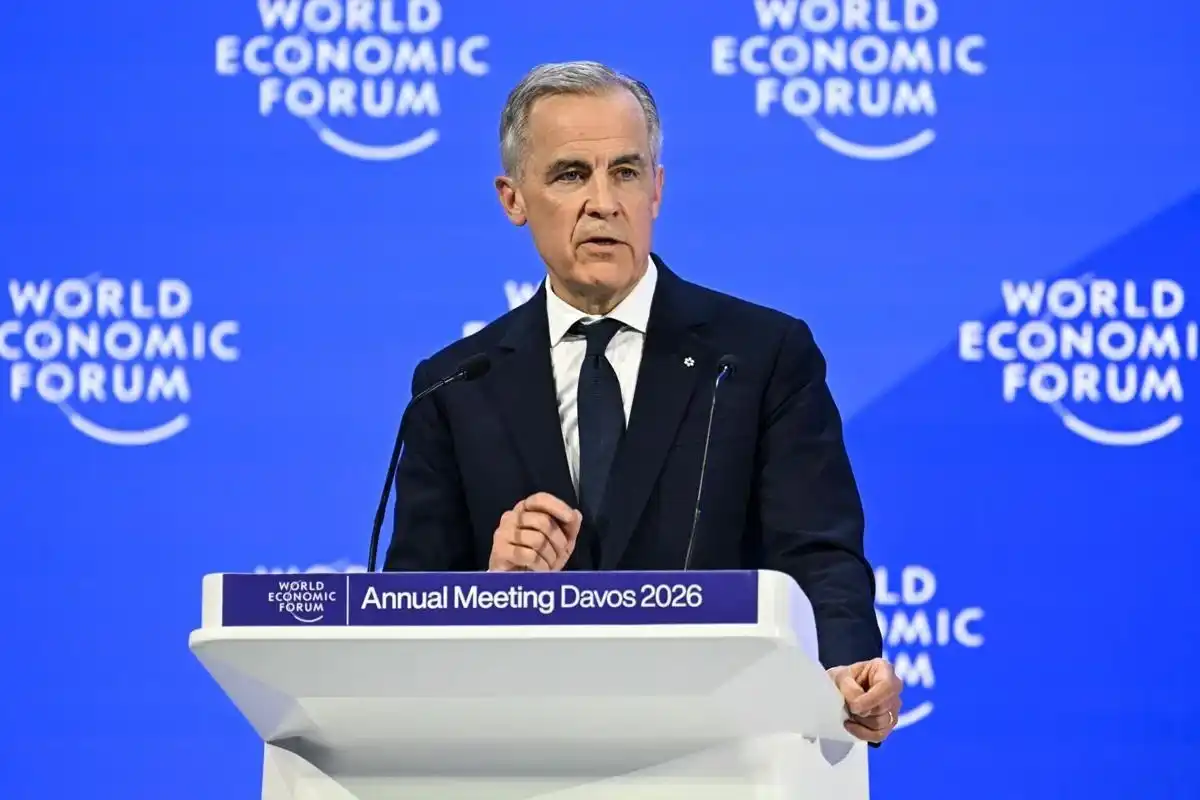
Below is a compilation by Phoenix News "World Affairs" (abridged):

We seem to be reminded daily: we are living in an era of great power competition—the so-called "rules-based order" is fading, the strong can do as they please, and the weak must endure the consequences they have to bear.

Thucydides' adage is presented as an inevitable reality, as if it were the re-emergence of the natural logic of international relations. Faced with this logic, countries often tend to go with the flow, accommodate each other, avoid trouble, and hope that compliance will buy security.

But that is not the case. So, what are our choices?

In 1978, Czech politician Václav Havel wrote an essay about a greengrocer.

Every morning, the shop owner would place a sign in his window with a symbolic slogan. He did not believe in the message. But he still displayed it to avoid trouble, show compliance, and keep the peace. And because every shopkeeper on every street did the same, the system persisted—not just through force, but through ordinary people participating in rituals they privately knew were false.

Havel called this state "living a lie." The system's strength came not from its truthfulness, but from everyone's willingness to pretend it was true. And its fragility lay precisely in this: if even one person stopped performing, if that greengrocer took the sign out of the window, the illusion would begin to crumble.

Friends, it is time for businesses and countries to take these signs down.

For decades, countries like Canada have thrived under what we call the "rules-based international order." We joined these institutions, praised their principles, and benefited from their predictability. Because of this, we were able to pursue value-based foreign policies under their protection.

We also knew that this story of an international rules-based order was, to some extent, a fiction: the most powerful nations would exempt themselves when convenient, trade rules were enforced asymmetrically, and the application of international law depended on the identity of the accused or the victim.

This fiction was once useful. Particularly, American hegemony helped provide public goods—open sea lanes, a stable financial system, collective security, and an institutional framework for dispute resolution.

So, we put the sign in the window. We participated in these rituals and largely avoided pointing out the gap between rhetoric and reality.

But that bargain is no longer working.

Let me be blunt: we are in a rupture, not a transition.

Over the past two decades, successive crises in finance, public health, energy, and geopolitics have exposed the risks of highly global integration. More recently, major powers have begun to turn economic integration into a weapon, using tariffs as leverage, financial infrastructure as a tool of coercion, and supply chains as vulnerabilities to be exploited.

When integration itself becomes the source of your vulnerability, you can no longer live in the lie of "mutual benefit and win-win."

The multilateral institutions on which middle powers rely—the WTO, the UN, the climate conference mechanism, and the entire institutional architecture of collective problem-solving—are under threat. As a result, many countries have reached the same conclusion: they must develop greater strategic autonomy in energy, food, critical minerals, finance, and supply chains. This impulse is understandable.

A country that cannot feed itself, power itself, or defend itself has very limited choices. When the rules no longer protect you, you must protect yourself.

But we must be clear-eyed about where this path leads. A world of fortresses will be poorer, more fragile, and less sustainable.

There is also the fact: if major powers abandon even the pretense of rules and values, pursuing only unconstrained power and interest, then the gains from transactional diplomacy will become increasingly difficult to replicate.

Hegemonic powers cannot constantly monetize relationships. Allies will hedge against uncertainty through diversification, buying "insurance," and increasing options to rebuild sovereignty—a sovereignty once built on rules will increasingly depend on the ability to withstand pressure.

Everyone here understands that this is classic risk management. Risk management has a cost, but the cost of strategic autonomy and sovereignty can be shared. Collective investment in resilience is much cheaper than each building their own fortress. Common standards can reduce fragmentation, and complementarity creates positive-sum effects.

For middle powers like Canada, the question is not whether to adapt to this new reality—we must adapt.

The question is, will we merely build higher walls, or can we be more ambitious?

Canada was among the first to hear this alarm, which prompted us to fundamentally adjust our strategic posture. Canadians understand that our old comfortable assumptions—that geography and alliance membership automatically brought prosperity and security—are no longer valid. Our new path is based on what Finnish President Stubb calls "value-based realism."

In other words, we adhere to principles while acting pragmatically. In principle, we firmly defend fundamental values, sovereignty, territorial integrity, adherence to the prohibition of the use of force unless in accordance with the UN Charter, and respect for human rights.

Pragmatically, we also recognize that progress is often gradual, interests diverge, and not all partners share all our values.

Therefore, we engage with the world broadly and strategically, with clear eyes. We proactively face the world as it is, rather than waiting for the ideal world to arrive.

We are calibrating relationships so their depth reflects our values, while maximizing our influence in today's fluid and risky world through broad engagement.

We no longer rely solely on the strength of our values, but also on the value of strength itself.

We are building that strength at home. Since this government took office, we have cut personal income taxes, capital gains taxes, and taxes on business investment; eliminated all federal-level interprovincial trade barriers; and accelerated investments totaling one trillion dollars in energy, AI, critical minerals, new trade corridors, and other areas. We plan to double defense spending by the end of this decade and are advancing this process with the goal of strengthening domestic industry. At the same time, we are rapidly advancing external diversification.

We have reached a comprehensive strategic partnership with the EU, including joining the European defense procurement mechanism SAFE, and have signed 12 trade and security agreements across four continents in six months.

In the past few days, we have reached new strategic partnerships with China and Qatar, and are negotiating free trade agreements with India, ASEAN, Thailand, the Philippines, and Mercosur.

We are also doing something else: to address global issues, we are promoting "variable geometry," meaning forming different coalitions on different issues based on shared values and interests. On Ukraine, we are one of the core members of the "coalition of the willing" and one of the largest per capita contributors to defense and security.

On Arctic sovereignty, we stand firmly with Greenland and Denmark, fully supporting their unique right to determine Greenland's future.

Our commitment to NATO Article 5 is unwavering, so we are working with NATO allies, including the "Nordic-Baltic Eight," to enhance security on the alliance's northern and western flanks, including Canada's unprecedented investments in over-the-horizon radar, submarines, aircraft, and ground forces—ice-capable troops.

Canada firmly opposes tariffs related to the Greenland issue and calls for targeted dialogue to achieve our shared security and prosperity goals in the Arctic.

In multilateral trade, we are promoting bridges between the CPTPP and the EU to create a new trade bloc covering 1.5 billion people, with critical minerals at its core.

We are building a "buyers' club" based on the G7 to help the world break free from dependence on highly concentrated supplies. In AI, we are working with like-minded democracies to ensure we are not ultimately forced to choose between a hegemonic power and hyper-scale platforms.

This is not naive multilateralism, nor mere reliance on existing institutions, but building viable coalitions with partners who share enough common ground on specific issues. In some cases, this will include the vast majority of the world's countries. The goal is to build a dense network of connections in trade, investment, culture, and other areas to address future challenges and opportunities.

Our view is that middle powers must act together because if we are not at the table, we will be on the menu.

Let me also say that major powers still have the ability to go it alone for now. They have market size, military capability, and leverage, which middle powers lack. But when we negotiate bilaterally only with hegemonic powers, we negotiate from a position of weakness, accepting what we are given, and competing with each other to see who is more compliant.

This is not sovereignty; it is performing sovereignty while accepting subordination.

In a world of great power competition, countries caught in the middle have a choice: compete with each other for favor, or unite to carve out a third path with real influence. We should not let the rise of hard power blind us to the strength of legitimacy, integrity, and rules—which remain powerful if we choose to wield them together.

This brings me back to Havel. What does "living in truth" mean for middle powers?

First, it means facing reality. Stop pretending the "rules-based international order" still works as advertised, and instead be honest: this is a system of intensifying great power competition where the strongest use economic integration to coerce and pursue self-interest.

It means acting consistently, applying the same standards to allies and adversaries. When middle powers criticize economic coercion from one direction but remain silent about another, we are still hanging the sign in the window.

It means building what we claim to believe in, not waiting for the old order to return. It means creating institutions and agreements that actually function as described, reducing the leverage that makes coercion possible.

It means building a strong domestic economy—this should be the top priority of every government.

And international diversification is not just economic prudence; it is the material basis for an honest foreign policy. A country can only take principled stands if it reduces its vulnerability to retaliation.

So, Canada. Canada has what the world needs. We are an energy superpower, with vast reserves of critical minerals, one of the world's most highly educated populations, and our pension funds are among the largest and most sophisticated global investors. In other words, we have capital and talent. We also have a government with significant fiscal capacity and the ability to act decisively, and values that many countries aspire to.

Canada is a well-functioning pluralistic society. Our public space is noisy, diverse, and free. Canadians remain committed to sustainable development. We are a stable and reliable partner in an extremely unstable world, a partner that values and cultivates relationships for the long term.

And one more thing: we understand what is happening and are determined to act accordingly. We understand that this rupture requires not just adaptation, but honesty about the real world.

We are taking the sign out of the window.

We know the old order will not return, and we should not mourn it. Nostalgia is not a strategy. But we believe that from this rupture, a larger, better, stronger, and more just order can be built. This is the task of middle powers—those who stand to lose the most in a fortress world and gain the most from genuine cooperation.

The strong have their power. But we also have our own power: the ability to stop pretending, face reality, build strength at home, and act together collectively.

This is the path Canada has chosen. We walk it openly and confidently, and we welcome any country willing to join us.

Thank you very much.

Câu hỏi Liên quan

QWhat is the main argument made by Canadian Prime Minister Mark Carney in his Davos speech?

ACarney argues that the old US-led, rules-based international order is over, and middle powers like Canada must stop 'living in the lie' that the old rules still function. They need to pursue strategic autonomy through collective action to avoid coercion by powerful nations.

QAccording to the speech, how have powerful nations been using economic integration?

APowerful nations have weaponized economic integration by using tariffs as leverage, financial infrastructure as tools of coercion, and supply chains as vulnerabilities to be exploited for their own interests.

QWhat does Carney suggest is the alternative to building higher walls (fortress world) for middle powers?

ACarney suggests that instead of building isolated fortresses, middle powers should collectively invest in resilience, share the costs of strategic autonomy, establish common standards to reduce fragmentation, and form flexible coalitions based on shared values and interests across different issues.

QWhat specific actions has Canada taken to adapt to the new geopolitical reality as mentioned in the speech?

ACanada has cut taxes, removed interprovincial trade barriers, pursued massive investments in energy and AI, plans to double defense spending, signed numerous trade and security agreements globally (e.g., with EU, China, Qatar), and is negotiating deals with India, ASEAN, and others. It is also building issue-based coalitions.

QWhat does 'living within the truth' mean for middle powers according to Carney's reference to Havel?

A'Living within the truth' means facing reality by no longer pretending the rules-based order works as advertised, applying consistent standards to allies and adversaries, building institutions that function as promised, strengthening domestic economies, and pursuing international diversification to reduce vulnerability to coercion.

Nội dung Liên quan

Polymarket Bị Kẹt: Bài Kiểm Tra Thực Sự Sau Khi Vượt Qua Giai Đoạn Lưu Lượng Tăng Đột Biến

Polymarket, nền tảng dự đoán thị trường hàng đầu, đang đối mặt với thách thức lớn khi trải nghiệm giao dịch xuống cấp do hạ tầng không theo kịp đà tăng trưởng. Phó chủ tịch kỹ thuật Josh Stevens thừa nhận vấn đề và công bố kế hoạch cải tổ toàn diện, bao gồm: giảm độ trễ dữ liệu, sửa lỗi hủy lệnh, xây dựng lại hệ thống order book (CLOB), nâng cao hiệu suất website, và quan trọng nhất là di chuyển chain (chain migration). Nguyên nhân sâu xa nằm ở việc Polymarket không còn là ứng dụng dự đoán đơn thuần mà đã phát triển thành một nền tảng giao dịch tần suất cao. Polygon, từng là lựa chọn chi phí thấp hoàn hảo, giờ đây trở thành rào cản kỹ thuật. Động thái này ngay lập tức thu hút sự quan tâm của các blockchain khác như Solana, Sui, Algorand... trong khi Polygon nỗ lực giữ chân ứng dụng quan trọng này - nguồn đóng góp phí giao dịch đáng kể cho hệ sinh thái của họ. Bài kiểm tra thực sự của Polymarket không chỉ là chọn chain mới, mà là xây dựng một hệ thống giao dịch đủ mạnh và ổn định để giữ chân người dùng trong giai đoạn tăng trưởng mới, nơi độ tin cậy quan trọng hơn bao giờ hết.

Odaily星球日报04/27 03:21

Polymarket Bị Kẹt: Bài Kiểm Tra Thực Sự Sau Khi Vượt Qua Giai Đoạn Lưu Lượng Tăng Đột Biến

Odaily星球日报04/27 03:21

Điều chỉnh kỳ vọng giảm cho chu kỳ tăng giá tiếp theo của BTC

Tác giả Alex Xu, một nhà đầu tư Bitcoin lâu năm, đã chia sẻ quyết định giảm dần tỷ trọng BTC trong danh mục đầu tư của mình, từ vị thế lớn nhất xuống còn khoảng 30%, và giải thích lý do cho việc điều chỉnh kỳ vọng về đỉnh giá trong chu kỳ bull market tiếp theo. Các lý do chính bao gồm: 1. **Năng lượng tăng trưởng tiềm năng giảm:** Các chu kỳ trước được thúc đẩy bởi việc mở rộng đối tượng đầu tư theo cấp số nhân (từ cá nhân đến tổ chức). Chu kỳ tới cần sự chấp nhận từ các quỹ đầu tư quốc gia hoặc ngân hàng trung ương, điều này khó xảy ra trong 2-3 năm tới. 2. **Chi phí cơ hội cá nhân:** Tìm thấy nhiều cơ hội đầu tư hấp dẫn khác (cổ phiếu công ty) với mức giá hợp lý. 3. **Tác động tiêu cực từ sự thu hẹp của ngành crypto:** Nhiều mô hình Web3 (SocialFi, GameFi...) không thành công, dẫn đến sự thu hẹp của toàn ngành và làm chậm tốc độ tăng trưởng số người nắm giữ BTC. 4. **Áp lực từ nhà mua lớn nhất (MicroStrategy):** Chi phí huy động vốn của MicroStrategy tiếp tục tăng cao (lãi suất 11.5%), có thể làm giảm tốc độ mua vào và gây áp lực bán. 5. **Sự cạnh tranh từ Vàng được token hóa:** Sản phẩm vàng token hóa (tokenized gold) đã thu hẹp khoảng cách về tính dễ chia nhỏ, dễ mang theo và dễ xác minh so với BTC. 6. **Vấn đề ngân sách bảo mật:** Phần thưởng khối giảm sau mỗi lần halving làm trầm trọng thêm vấn đề ngân sách cho bảo mật mạng lưới. Tác giả vẫn giữ một phần BTC đáng kể và sẵn sàng mua lại nếu các lý kiến trên được giải quyết hoặc xuất hiện các yếu tố tích cực mới, với điều kiện giá cả phù hợp.

marsbit04/27 02:46

Điều chỉnh kỳ vọng giảm cho chu kỳ tăng giá tiếp theo của BTC

marsbit04/27 02:46

Giao dịch

Giao ngay
Hợp đồng Tương lai

Bài viết Nổi bật

AGENT S là gì

Agent S: Tương Lai của Tương Tác Tự Động trong Web3 Giới thiệu Trong bối cảnh không ngừng phát triển của Web3 và tiền điện tử, các đổi mới đang liên tục định nghĩa lại cách mà cá nhân tương tác với các nền tảng kỹ thuật số. Một dự án tiên phong như vậy, Agent S, hứa hẹn sẽ cách mạng hóa tương tác giữa con người và máy tính thông qua khung tác nhân mở của nó. Bằng cách mở đường cho các tương tác tự động, Agent S nhằm đơn giản hóa các nhiệm vụ phức tạp, cung cấp các ứng dụng chuyển đổi trong trí tuệ nhân tạo (AI). Cuộc khám phá chi tiết này sẽ đi sâu vào những phức tạp của dự án, các tính năng độc đáo của nó và những tác động đối với lĩnh vực tiền điện tử. Agent S là gì? Agent S đứng vững như một khung tác nhân mở đột phá, được thiết kế đặc biệt để giải quyết ba thách thức cơ bản trong việc tự động hóa các nhiệm vụ máy tính: Thu thập Kiến thức Cụ thể theo Miền: Khung này học một cách thông minh từ nhiều nguồn kiến thức bên ngoài và kinh nghiệm nội bộ. Cách tiếp cận kép này giúp nó xây dựng một kho lưu trữ phong phú về kiến thức cụ thể theo miền, nâng cao hiệu suất của nó trong việc thực hiện nhiệm vụ. Lập Kế Hoạch Qua Các Tầm Nhìn Nhiệm Vụ Dài Hạn: Agent S sử dụng lập kế hoạch phân cấp tăng cường kinh nghiệm, một cách tiếp cận chiến lược giúp phân chia và thực hiện các nhiệm vụ phức tạp một cách hiệu quả. Tính năng này nâng cao đáng kể khả năng quản lý nhiều nhiệm vụ con một cách hiệu quả và hiệu suất. Xử Lý Các Giao Diện Động, Không Đều: Dự án giới thiệu Giao Diện Tác Nhân-Máy Tính (ACI), một giải pháp đổi mới giúp nâng cao tương tác giữa các tác nhân và người dùng. Sử dụng các Mô Hình Ngôn Ngữ Lớn Đa Phương Thức (MLLMs), Agent S có thể điều hướng và thao tác các giao diện người dùng đồ họa đa dạng một cách liền mạch. Thông qua những tính năng tiên phong này, Agent S cung cấp một khung vững chắc giải quyết các phức tạp liên quan đến việc tự động hóa tương tác giữa con người với máy móc, mở ra nhiều ứng dụng trong AI và hơn thế nữa. Ai là Người Tạo ra Agent S? Mặc dù khái niệm về Agent S là hoàn toàn đổi mới, thông tin cụ thể về người sáng lập vẫn còn mơ hồ. Người sáng lập hiện vẫn chưa được biết đến, điều này làm nổi bật giai đoạn sơ khai của dự án hoặc sự lựa chọn chiến lược để giữ kín các thành viên sáng lập. Bất chấp sự ẩn danh, sự chú ý vẫn tập trung vào khả năng và tiềm năng của khung này. Ai là Các Nhà Đầu Tư của Agent S? Vì Agent S còn tương đối mới trong hệ sinh thái mã hóa, thông tin chi tiết về các nhà đầu tư và những người tài trợ tài chính của nó không được ghi chép rõ ràng. Sự thiếu vắng thông tin công khai về các nền tảng đầu tư hoặc tổ chức hỗ trợ dự án dấy lên câu hỏi về cấu trúc tài trợ và lộ trình phát triển của nó. Hiểu biết về sự hỗ trợ là rất quan trọng để đánh giá tính bền vững và tác động tiềm năng của dự án. Agent S Hoạt Động Như Thế Nào? Tại cốt lõi của Agent S là công nghệ tiên tiến cho phép nó hoạt động hiệu quả trong nhiều bối cảnh khác nhau. Mô hình hoạt động của nó được xây dựng xung quanh một số tính năng chính: Tương Tác Giống Như Con Người: Khung này cung cấp lập kế hoạch AI tiên tiến, cố gắng làm cho các tương tác với máy tính trở nên trực quan hơn. Bằng cách bắt chước hành vi của con người trong việc thực hiện nhiệm vụ, nó hứa hẹn nâng cao trải nghiệm người dùng. Ký Ức Tường Thuật: Được sử dụng để tận dụng các trải nghiệm cấp cao, Agent S sử dụng ký ức tường thuật để theo dõi lịch sử nhiệm vụ, từ đó nâng cao quy trình ra quyết định của nó. Ký Ức Tình Huống: Tính năng này cung cấp cho người dùng hướng dẫn từng bước, cho phép khung này cung cấp hỗ trợ theo ngữ cảnh khi các nhiệm vụ diễn ra. Hỗ Trợ OpenACI: Với khả năng chạy cục bộ, Agent S cho phép người dùng duy trì quyền kiểm soát đối với các tương tác và quy trình làm việc của họ, phù hợp với tinh thần phi tập trung của Web3. Tích Hợp Dễ Dàng với Các API Bên Ngoài: Tính linh hoạt và khả năng tương thích với nhiều nền tảng AI khác nhau đảm bảo rằng Agent S có thể hòa nhập liền mạch vào các hệ sinh thái công nghệ hiện có, làm cho nó trở thành lựa chọn hấp dẫn cho các nhà phát triển và tổ chức. Những chức năng này cùng nhau góp phần vào vị trí độc đáo của Agent S trong không gian tiền điện tử, khi nó tự động hóa các nhiệm vụ phức tạp, nhiều bước với sự can thiệp tối thiểu của con người. Khi dự án phát triển, các ứng dụng tiềm năng của nó trong Web3 có thể định nghĩa lại cách mà các tương tác kỹ thuật số diễn ra. Thời Gian Phát Triển của Agent S Sự phát triển và các cột mốc của Agent S có thể được tóm tắt trong một dòng thời gian nêu bật các sự kiện quan trọng của nó: 27 tháng 9, 2024: Khái niệm về Agent S được ra mắt trong một bài nghiên cứu toàn diện mang tên “Một Khung Tác Nhân Mở Sử Dụng Máy Tính Như Một Con Người,” trình bày nền tảng cho dự án. 10 tháng 10, 2024: Bài nghiên cứu được công bố công khai trên arXiv, cung cấp một cái nhìn sâu sắc về khung và đánh giá hiệu suất của nó dựa trên tiêu chuẩn OSWorld. 12 tháng 10, 2024: Một video trình bày được phát hành, cung cấp cái nhìn trực quan về khả năng và tính năng của Agent S, thu hút thêm sự quan tâm từ người dùng và nhà đầu tư tiềm năng. Những dấu mốc trong dòng thời gian không chỉ minh họa sự tiến bộ của Agent S mà còn chỉ ra cam kết của nó đối với sự minh bạch và sự tham gia của cộng đồng. Những Điểm Chính Về Agent S Khi khung Agent S tiếp tục phát triển, một số thuộc tính chính nổi bật, nhấn mạnh tính đổi mới và tiềm năng của nó: Khung Đổi Mới: Được thiết kế để cung cấp cách sử dụng máy tính trực quan giống như tương tác của con người, Agent S mang đến một cách tiếp cận mới cho việc tự động hóa nhiệm vụ. Tương Tác Tự Động: Khả năng tương tác tự động với máy tính thông qua GUI đánh dấu một bước tiến tới các giải pháp tính toán thông minh và hiệu quả hơn. Tự Động Hóa Nhiệm Vụ Phức Tạp: Với phương pháp mạnh mẽ của nó, nó có thể tự động hóa các nhiệm vụ phức tạp, nhiều bước, làm cho các quy trình nhanh hơn và ít sai sót hơn. Cải Tiến Liên Tục: Các cơ chế học tập cho phép Agent S cải thiện từ các trải nghiệm trước đó, liên tục nâng cao hiệu suất và hiệu quả của nó. Tính Linh Hoạt: Khả năng thích ứng của nó trên các môi trường hoạt động khác nhau như OSWorld và WindowsAgentArena đảm bảo rằng nó có thể phục vụ một loạt các ứng dụng rộng rãi. Khi Agent S định vị mình trong bối cảnh Web3 và tiền điện tử, tiềm năng của nó để nâng cao khả năng tương tác và tự động hóa quy trình đánh dấu một bước tiến quan trọng trong công nghệ AI. Thông qua khung đổi mới của mình, Agent S minh họa cho tương lai của các tương tác kỹ thuật số, hứa hẹn một trải nghiệm liền mạch và hiệu quả hơn cho người dùng trên nhiều ngành công nghiệp khác nhau. Kết luận Agent S đại diện cho một bước nhảy vọt táo bạo trong sự kết hợp giữa AI và Web3, với khả năng định nghĩa lại cách chúng ta tương tác với công nghệ. Mặc dù vẫn còn ở giai đoạn đầu, những khả năng cho ứng dụng của nó là rộng lớn và hấp dẫn. Thông qua khung toàn diện của mình giải quyết các thách thức quan trọng, Agent S nhằm đưa các tương tác tự động lên hàng đầu trong trải nghiệm kỹ thuật số. Khi chúng ta tiến sâu hơn vào các lĩnh vực tiền điện tử và phi tập trung, các dự án như Agent S chắc chắn sẽ đóng một vai trò quan trọng trong việc định hình tương lai của công nghệ và sự hợp tác giữa con người với máy tính.

Tổng lượt xem 676Xuất bản vào 2025.01.14Cập nhật vào 2025.01.14

AGENT S là gì

Làm thế nào để Mua S

Chào mừng bạn đến với HTX.com! Chúng tôi đã làm cho mua Sonic (S) trở nên đơn giản và thuận tiện. Làm theo hướng dẫn từng bước của chúng tôi để bắt đầu hành trình tiền kỹ thuật số của bạn.Bước 1: Tạo Tài khoản HTX của BạnSử dụng email hoặc số điện thoại của bạn để đăng ký tài khoản miễn phí trên HTX. Trải nghiệm hành trình đăng ký không rắc rối và mở khóa tất cả tính năng. Nhận Tài khoản của tôiBước 2: Truy cập Mua Crypto và Chọn Phương thức Thanh toán của BạnThẻ Tín dụng/Ghi nợ: Sử dụng Visa hoặc Mastercard của bạn để mua Sonic (S) ngay lập tức.Số dư: Sử dụng tiền từ số dư tài khoản HTX của bạn để giao dịch liền mạch.Bên thứ ba: Chúng tôi đã thêm những phương thức thanh toán phổ biến như Google Pay và Apple Pay để nâng cao sự tiện lợi.P2P: Giao dịch trực tiếp với người dùng khác trên HTX.Thị trường mua bán phi tập trung (OTC): Chúng tôi cung cấp những dịch vụ được thiết kế riêng và tỷ giá hối đoái cạnh tranh cho nhà giao dịch.Bước 3: Lưu trữ Sonic (S) của BạnSau khi mua Sonic (S), lưu trữ trong tài khoản HTX của bạn. Ngoài ra, bạn có thể gửi đi nơi khác qua chuyển khoản blockchain hoặc sử dụng để giao dịch những tiền kỹ thuật số khác.Bước 4: Giao dịch Sonic (S)Giao dịch Sonic (S) dễ dàng trên thị trường giao ngay của HTX. Chỉ cần truy cập vào tài khoản của bạn, chọn cặp giao dịch, thực hiện giao dịch và theo dõi trong thời gian thực. Chúng tôi cung cấp trải nghiệm thân thiện với người dùng cho cả người mới bắt đầu và người giao dịch dày dạn kinh nghiệm.

Tổng lượt xem 1.3kXuất bản vào 2025.01.15Cập nhật vào 2025.03.21

Làm thế nào để Mua S

Thảo luận

Chào mừng đến với Cộng đồng HTX. Tại đây, bạn có thể được thông báo về những phát triển nền tảng mới nhất và có quyền truy cập vào thông tin chuyên sâu về thị trường. Ý kiến ​​của người dùng về giá của S (S) được trình bày dưới đây.

活动图片