Businesses are turning to stablecoins as B2B volumes explode – Details

ambcryptoXuất bản vào 2026-01-29Cập nhật gần nhất vào 2026-01-29

Tóm tắt

Stablecoins are becoming the preferred payment method for businesses, with B2B transactions driving the most significant growth. Improved regulations have accelerated adoption, as stablecoins address key pain points in traditional B2B payments—slow processing, high costs, and operational complexity. Recent data shows B2B stablecoin payments are expanding much faster than card-linked spending, P2P transfers, and B2C use cases. They enable faster cross-border settlements, reduce intermediaries, and cut transaction times from days to minutes. Key developments include Circle’s EURC, which grew nearly 300% year-on-year to around $400 million market cap by January 2026, supported by favorable EU regulations. Meanwhile, USDC on Ethereum reached a record $4.5 trillion in quarterly transfer volume in Q4 2025, up 400% YoY. New entrants like USD1, issued by Trump-backed World Liberty Financial, are also gaining market share rapidly. The stablecoin category is scaling faster than expected, with B2B leading the expansion.

Stablecoins are the go-to payment mode for businesses, and the numbers are starting to show it. With EURC posting mammoth growth and new players like USD1 gaining ground, is the category moving faster than expected?

B2B is where stablecoin payments are scaling the fastest

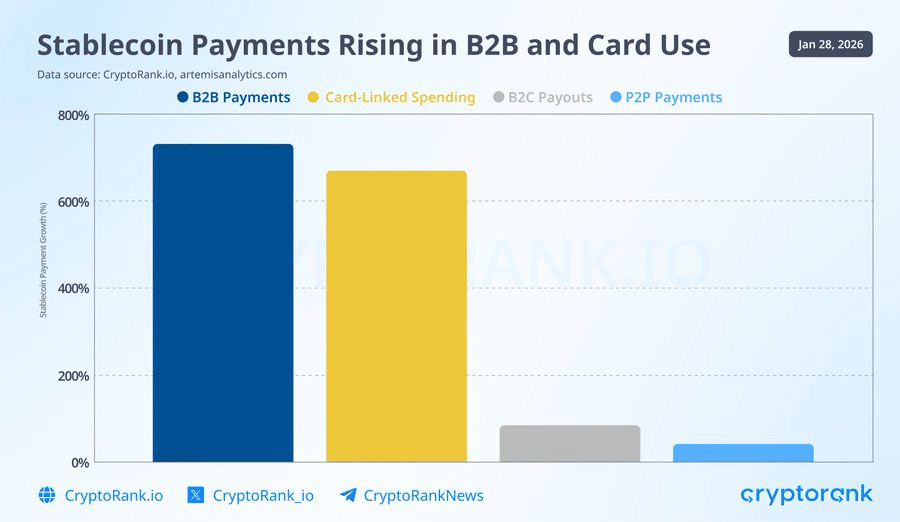
With improved regulations in the last year, stablecoin usage surged. This is especially true with B2B transactions, where traditional payments are slow, costly, and operationally heavy.

Source: X

Recent data showed B2B stablecoin payments growing far faster than other use cases, outpacing card-linked spending, P2P transfers, and B2C payouts by a wide margin.

The appeal is that stablecoins simplify cross-border and multi-currency settlements while cutting out intermediaries. They also reduce settlement times from days to minutes.

While consumer-facing use cases continue to grow steadily, B2B payments is the sphere where stablecoins are clearly gaining traction.

Numbers are stacking up!

Source: X

In recent days, it’s been made clear that the stablecoin category is actively scaling.

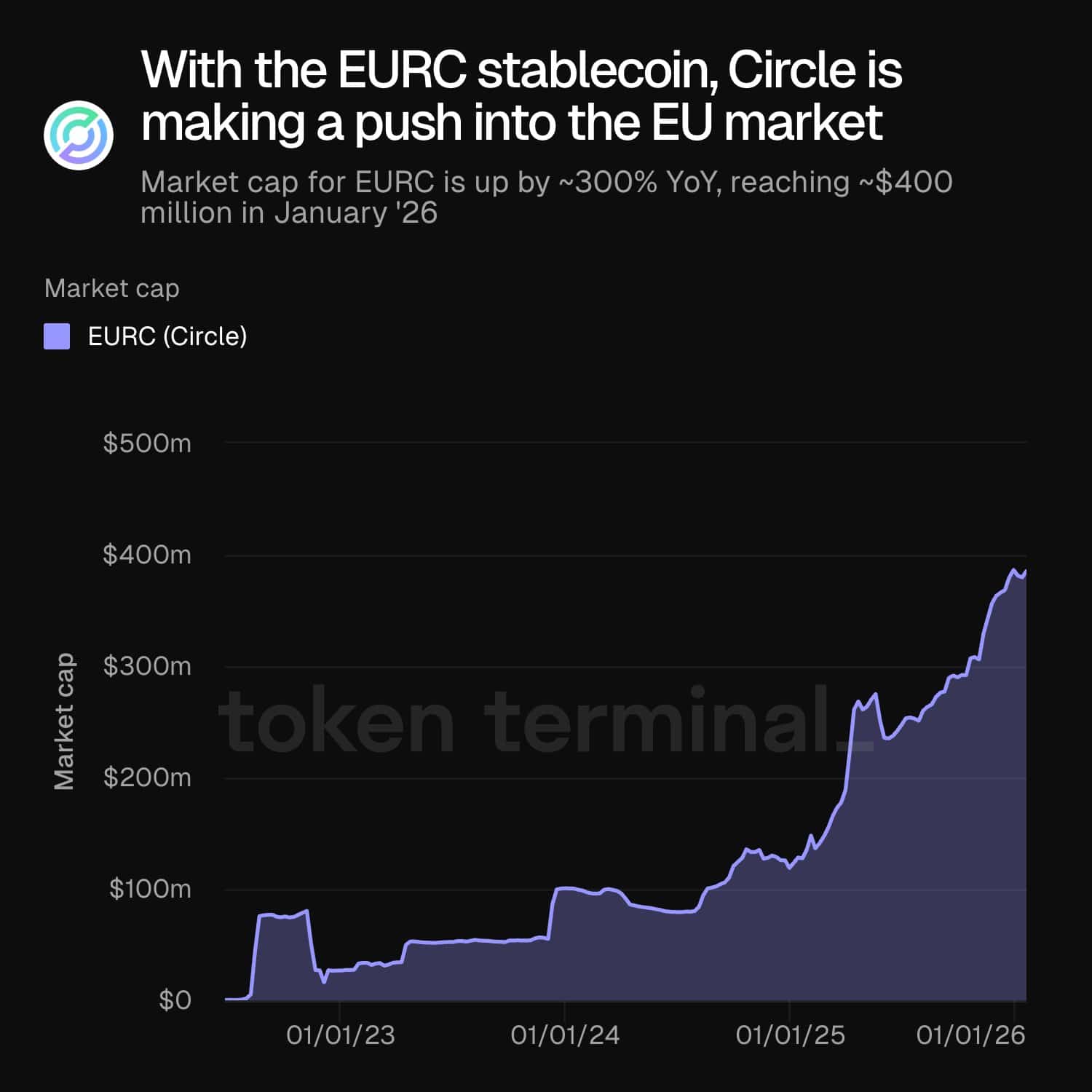
The latest in the category is that Circle’s euro-backed EURC’s market cap has jumped roughly 300% year-on-year (YoY), reaching close to $400 million by January 2026.

There’s a huge push into the EU market with improved legalities that work in favor of growth.

Source: X

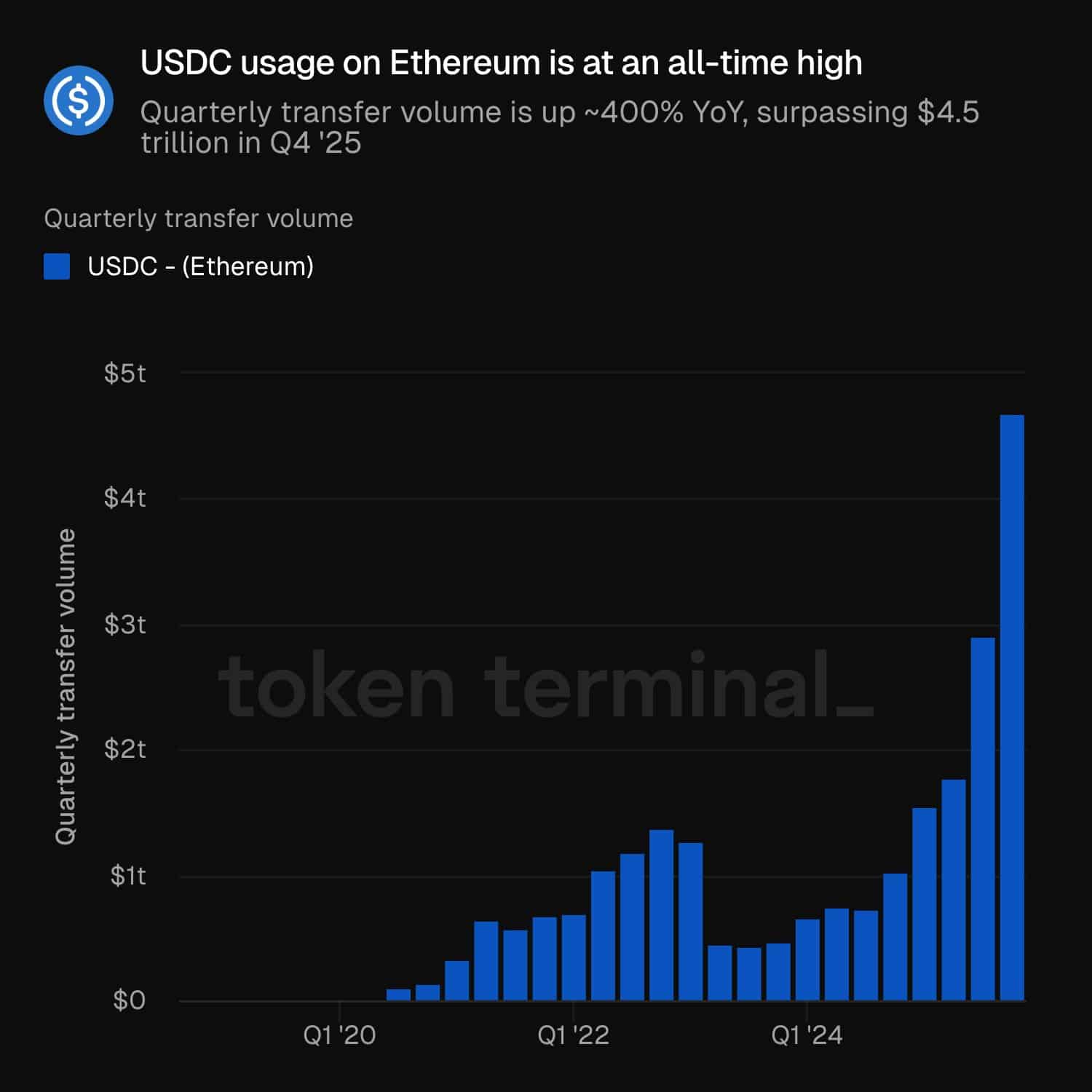
On the other hand, dollar-based stablecoins are dominating in volume. USDC usage on Ethereum is at an all time high, with quarterly transfer volumes up nearly 400% YoY, surpassing $4.5 trillion in Q4 2025.

The real payment and settlement use cases have increased drastically in the days since.

Source: X

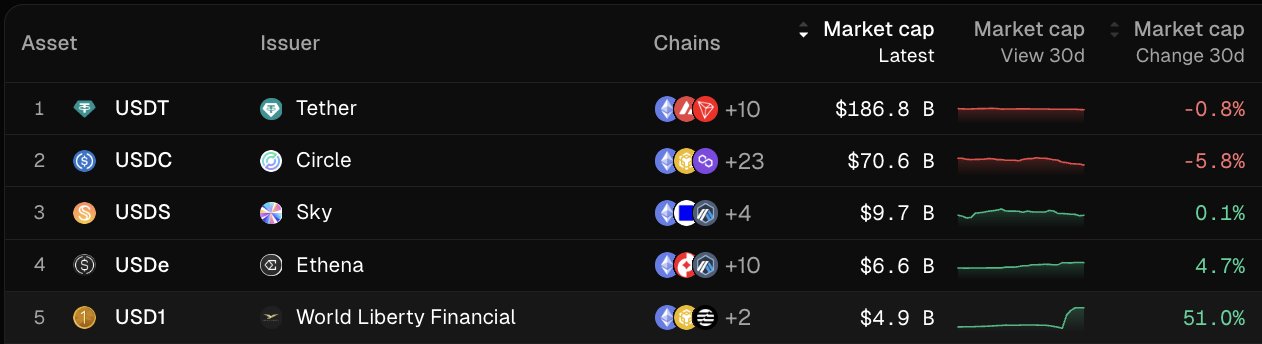
Newer entrants are moving fast as well. USD1, issued by Trump-backed World Liberty Financial (WLFi), is already closing in on the top tier of stablecoins by market cap.

The coin is projected to be in the top 3 by market cap soon, at the current pace.


Final Thoughts

  • B2B payments are the fastest-growing stablecoin use case.
  • With EURC up 300% YoY and USDC moving $4.5T in a quarter, stablecoins are growing.
Next: SEC and CFTC signal execution phase for crypto regulation at harmonization meeting
Share
  • Share
  • Tweet

Câu hỏi Liên quan

QWhat is the fastest-growing use case for stablecoins according to the article?

AB2B payments are the fastest-growing stablecoin use case.

QWhich euro-backed stablecoin saw a 300% year-on-year growth in market cap?

ACircle's euro-backed EURC stablecoin saw its market cap jump roughly 300% year-on-year.

QWhat are the key advantages of using stablecoins for B2B transactions mentioned in the text?

AStablecoins simplify cross-border and multi-currency settlements, cut out intermediaries, and reduce settlement times from days to minutes.

QHow much did USDC's quarterly transfer volume on Ethereum increase year-on-year?

AUSDC's quarterly transfer volumes on Ethereum were up nearly 400% year-on-year, surpassing $4.5 trillion in Q4 2025.

QWhich new stablecoin issued by Trump-backed World Liberty Financial is rapidly gaining market share?

AUSD1, issued by Trump-backed World Liberty Financial (WLFi), is rapidly gaining market share and is projected to be in the top 3 stablecoins by market cap soon.

Nội dung Liên quan

Polymarket Bị Kẹt: Bài Kiểm Tra Thực Sự Sau Khi Vượt Qua Giai Đoạn Lưu Lượng Tăng Đột Biến

Polymarket, nền tảng dự đoán thị trường hàng đầu, đang đối mặt với thách thức lớn khi trải nghiệm giao dịch xuống cấp do hạ tầng không theo kịp đà tăng trưởng. Phó chủ tịch kỹ thuật Josh Stevens thừa nhận vấn đề và công bố kế hoạch cải tổ toàn diện, bao gồm: giảm độ trễ dữ liệu, sửa lỗi hủy lệnh, xây dựng lại hệ thống order book (CLOB), nâng cao hiệu suất website, và quan trọng nhất là di chuyển chain (chain migration). Nguyên nhân sâu xa nằm ở việc Polymarket không còn là ứng dụng dự đoán đơn thuần mà đã phát triển thành một nền tảng giao dịch tần suất cao. Polygon, từng là lựa chọn chi phí thấp hoàn hảo, giờ đây trở thành rào cản kỹ thuật. Động thái này ngay lập tức thu hút sự quan tâm của các blockchain khác như Solana, Sui, Algorand... trong khi Polygon nỗ lực giữ chân ứng dụng quan trọng này - nguồn đóng góp phí giao dịch đáng kể cho hệ sinh thái của họ. Bài kiểm tra thực sự của Polymarket không chỉ là chọn chain mới, mà là xây dựng một hệ thống giao dịch đủ mạnh và ổn định để giữ chân người dùng trong giai đoạn tăng trưởng mới, nơi độ tin cậy quan trọng hơn bao giờ hết.

Odaily星球日报04/27 03:21

Polymarket Bị Kẹt: Bài Kiểm Tra Thực Sự Sau Khi Vượt Qua Giai Đoạn Lưu Lượng Tăng Đột Biến

Odaily星球日报04/27 03:21

Điều chỉnh kỳ vọng giảm cho chu kỳ tăng giá tiếp theo của BTC

Tác giả Alex Xu, một nhà đầu tư Bitcoin lâu năm, đã chia sẻ quyết định giảm dần tỷ trọng BTC trong danh mục đầu tư của mình, từ vị thế lớn nhất xuống còn khoảng 30%, và giải thích lý do cho việc điều chỉnh kỳ vọng về đỉnh giá trong chu kỳ bull market tiếp theo. Các lý do chính bao gồm: 1. **Năng lượng tăng trưởng tiềm năng giảm:** Các chu kỳ trước được thúc đẩy bởi việc mở rộng đối tượng đầu tư theo cấp số nhân (từ cá nhân đến tổ chức). Chu kỳ tới cần sự chấp nhận từ các quỹ đầu tư quốc gia hoặc ngân hàng trung ương, điều này khó xảy ra trong 2-3 năm tới. 2. **Chi phí cơ hội cá nhân:** Tìm thấy nhiều cơ hội đầu tư hấp dẫn khác (cổ phiếu công ty) với mức giá hợp lý. 3. **Tác động tiêu cực từ sự thu hẹp của ngành crypto:** Nhiều mô hình Web3 (SocialFi, GameFi...) không thành công, dẫn đến sự thu hẹp của toàn ngành và làm chậm tốc độ tăng trưởng số người nắm giữ BTC. 4. **Áp lực từ nhà mua lớn nhất (MicroStrategy):** Chi phí huy động vốn của MicroStrategy tiếp tục tăng cao (lãi suất 11.5%), có thể làm giảm tốc độ mua vào và gây áp lực bán. 5. **Sự cạnh tranh từ Vàng được token hóa:** Sản phẩm vàng token hóa (tokenized gold) đã thu hẹp khoảng cách về tính dễ chia nhỏ, dễ mang theo và dễ xác minh so với BTC. 6. **Vấn đề ngân sách bảo mật:** Phần thưởng khối giảm sau mỗi lần halving làm trầm trọng thêm vấn đề ngân sách cho bảo mật mạng lưới. Tác giả vẫn giữ một phần BTC đáng kể và sẵn sàng mua lại nếu các lý kiến trên được giải quyết hoặc xuất hiện các yếu tố tích cực mới, với điều kiện giá cả phù hợp.

marsbit04/27 02:46

Điều chỉnh kỳ vọng giảm cho chu kỳ tăng giá tiếp theo của BTC

marsbit04/27 02:46

Giao dịch

Giao ngay
Hợp đồng Tương lai
活动图片