5 Bottles of Water Equal a Day's Wage, No Creases Allowed on US Dollars: What's Causing Myanmar's Financial Anomalies?

比推Xuất bản vào 2026-02-26Cập nhật gần nhất vào 2026-02-26

Tóm tắt

The article "War-Torn Myanmar: The Dignity of the Dollar, Trapped Youth, and the Underground Financial Market" details the severe economic and social conditions in Myanmar based on a two-week field study in 2026. Key observations include a massive black market exchange rate disparity (official 1:300 vs. black market 1:550 for USD to Myanmar Kyat), extreme wage gaps (e.g., servers earning as little as ¥300 monthly vs. ¥8000 in Shanghai), and rampant inflation where prices have surged 5x in a decade while wages only doubled. Basic goods like water are unaffordable for many; five bottles cost a day's wage. The financial system is fragile, with USD notes requiring perfect condition for acceptance, while the local currency is treated with far less care. Child labor is widespread, with children as young as nine working long hours for meager pay. Young adults are effectively trapped, as the government restricts passport issuance for those aged 18-60, making legal emigration nearly impossible. Illegal routes, such as human trafficking or dangerous border crossings, are often the only alternatives. The report concludes that ordinary citizens, burdened by survival and the constant threat of conscription, have no capacity to pursue happiness, encapsulating a life of relentless hardship.

Author: Joe Zhou, Foresight News

Original Title: Myanmar Under War: The Dignity of the US Dollar, Trapped Youth, and the Underground Financial Market


During the 2026 Spring Festival holiday, I traveled to Myanmar for a two-week field research trip.

Passing through Yangon, Bagan, and Mandalay, I attempted to uncover the true economic, financial, and social survival conditions of this country under the shadow of war. As the first record halfway through the journey, this article will showcase the real Myanmar I witnessed.

Just in the first week in Yangon, the overwhelming density of information far exceeded my imagination:

A 9-year-old child who dropped out of school to work as a waiter, middle-aged men who could be forcibly conscripted at any moment, young people unable to obtain passports to leave the country, and foreigners who come here to "buy wives" taking advantage of the economic disparity...

In Yangon, under warlord control, bars and KTVs still maintain the illusion of a vibrant nightlife; while in many other cities across Myanmar, once the 7 p.m. curfew hits, the streets instantly fall silent, as if becoming a dead city, devoid of any human presence.

This is a vast, folded system. War and corruption grow in the cracks, and soaring prices are pushing ordinary people's lives to the edge.

The Folded Myanmar

To understand this撕裂 (tear/rift), one must first see the three layers of "folding" present in this country.

There are two Myanmars: one is the Myanmar under the internet filter, the other is the Myanmar in reality; one is the Myanmar whitewashed in official data sheets, the other is the Myanmar struggling in the black market.

The first fold is the profound exchange rate裂痕 (crack/fissure). Upon landing in Myanmar, I exchanged 2500 Chinese Yuan for 1.38 million Myanmar Kyat at a Chinese restaurant. The official rate boasts 1:300, while the real trading price on the black market has plummeted to 1:550.
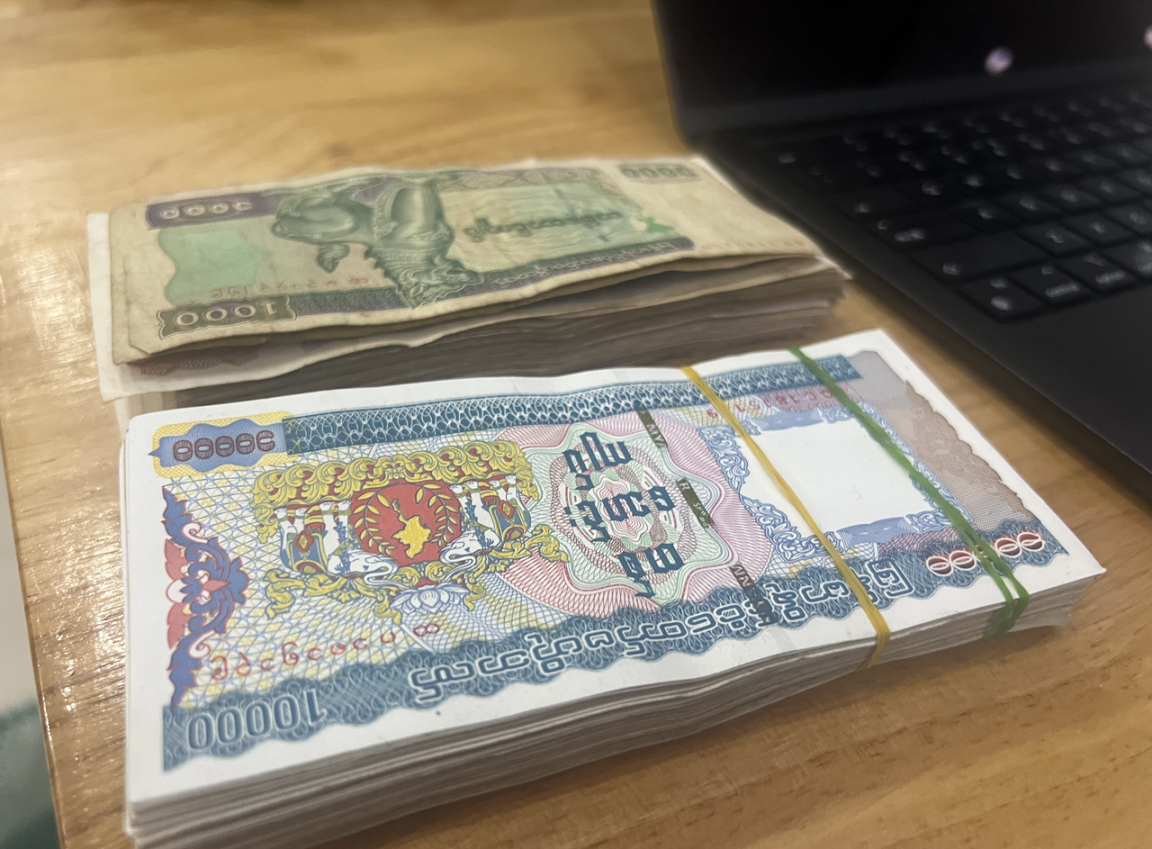
1.38 million Myanmar Kyat exchanged by the author

The national exchange rate is nominal, the black market rate reflects the people's reality.

The second fold is the cliff-like disparity in wages. A waiter doing the same job earns around 18,000 Chinese Yuan per month in Hong Kong, 8,000 in Shanghai, while in Bagan, Myanmar, this number plummets to a suffocating 300 Yuan.

Even within Myanmar, the urban-rural gap remains huge. An overseas Chinese long settled in a town told me that a waiter's monthly salary in a big city can reach 500 to 800 Yuan—this implies that even the highest-paid low-wage earners in Myanmar receive only about one-tenth of what their counterparts in Shanghai earn.

The third fold is the demonized internet labels versus the simple and honest reality. On the Chinese internet, Myanmar is simplistically and crudely reduced to synonyms for "kidney harvesting" and telecom fraud. But when you actually walk the streets of Yangon, Bagan, and Mandalay, you find that most people here still maintain extreme simplicity and peacefulness. Northern Myanmar is indeed dangerous, filled with war and grey industries, but essentially, those crimes have nothing to do with the vast majority of ordinary Myanmar people—in this grand geopolitical and interest meat grinder, they are equally the most helpless victims.

The "Dignity" of the US Dollar

This underlying economic裂痕 (crack/fissure) and sense of insecurity is most absurdly manifested in the currency.

Myanmar's underground financial market operates on an iron rule: US dollars must not be folded; any bill with marks or damage is rejected.

The economic常识 (common sense) that "a trampled $10 bill still has value" completely失效 (fails/loses effect) here. Even the slightest crease can cause the bill to be mercilessly refused by vendors. Every Myanmar person I've seen handling US dollars acts like a merchant examining an expensive antique with a magnifying glass; they hold their breath, carefully scrutinizing every inch of the bill's edges, every hidden line.

In stark contrast is the treatment of the local currency—the Myanmar Kyat can be crumpled into a ball, stuffed into a pocket, even thrown into water for a wash, taken out and still spent; but the US dollar must remain perfectly crisp. In the local subconscious, a damaged US dollar is equivalent to gold of inferior quality, subject to a 10% to 20% discount penalty.

This近乎病态的 (almost pathological) "fastidiousness" is precisely a concrete manifestation of the extreme fragility of this country's financial system. Long-term sanctions and complete financial isolation have driven the official and black-market exchange rates to an extreme撕裂 (tear/rift). In this country that has lost all sense of security, the dignity of a green piece of paper is infinitely elevated; the respect it commands甚至远远超越 (even far surpasses) that of a sweating, struggling living person.

5 Bottles of Water Equal an Adult's Daily Wage

The collapse of monetary信用 (credit/trust) directly translates into runaway inflation. With the war持续多年 (lasting many years), Myanmar's prices have become disordered.

In the memory of local Kosla, over the past decade, the price of most goods in Myanmar has soared about 5 times, while people's wages have only艰难地爬升了 (painfully climbed) 2 times. The specific numbers are冰冷 (chillingly cold): In 2019, a JJ bus ticket (JJ Express is one of Myanmar's most famous long-distance bus companies) cost only 11,000 Kyat; by 2026, the ticket price had risen to 50,000 Kyat; a bottle of mineral water, sold almost exclusively to foreigners, increased from 200 Kyat then to 800-1000 Kyat now.

Prices have quadrupled or quintupled, but labor has become increasingly cheap. In Bagan, ten years ago, the daily wage for an ordinary adult waiter was 2500 Kyat; now it is 5000 Kyat (less than 10 Chinese Yuan). Kosla confirmed this is almost the universal daily wage for most restaurant waiters in Bagan. A service industry老板 (boss/owner) in Yangon, Veraswami, also revealed a残酷的底线 (cruel baseline) to me: the monthly salary of an ordinary Myanmar person is typically only 200 to 300 Chinese Yuan.
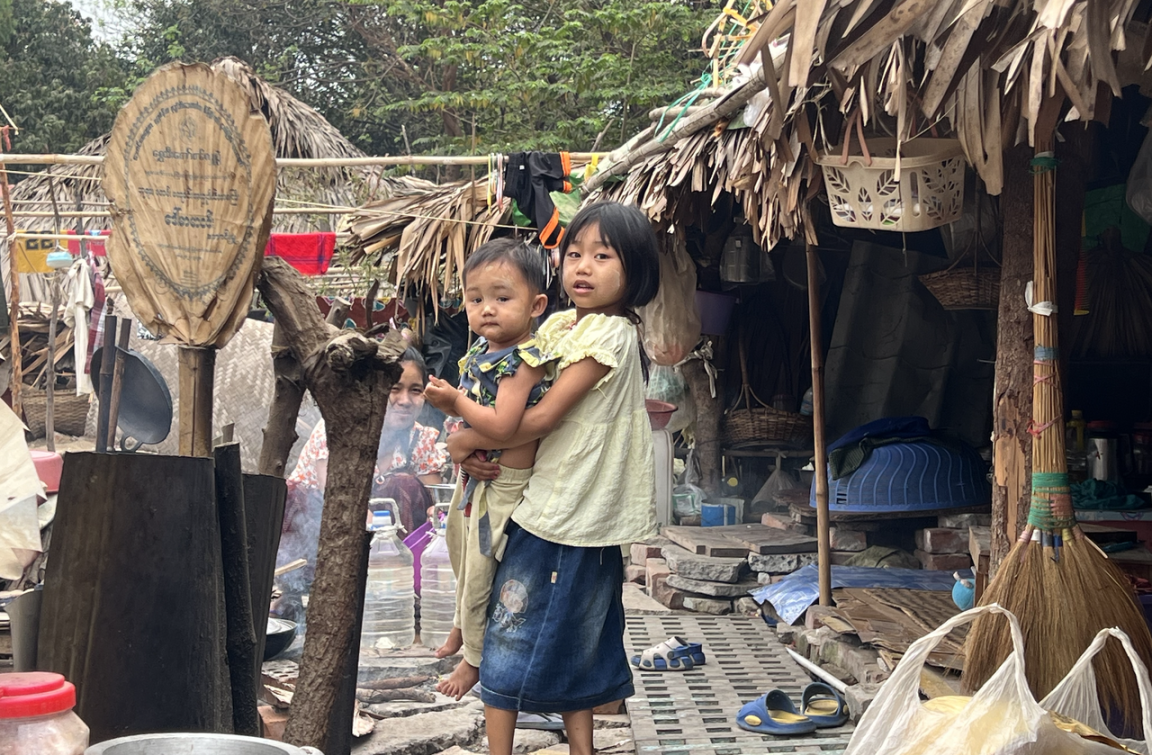
Only heavy manual labor and working in big cities can buy a little more breathing room. Near the famous pagoda in Mandalay, a construction worker laboring under the scorching sun told me his daily wage is 30,000 Kyat (less than 60 Chinese Yuan).

The income of ordinary people is firmly pinned in place. In Myanmar, locals generally cannot afford to drink bottled water. Because just 5 bottles of the most ordinary mineral water can instantly drain the entire day's wages earned through hard work by an adult.

Myanmar Children, Already Reduced to the "Working Class"

When the meager wages of adults are squeezed dry by inflation, the heavy pressure of survival inevitably falls on the next generation.

In Bagan, Kosla calmly recalled his childhood to me. To survive, he started working in a restaurant at the age of 9. Toiling from 8 a.m. to 5 p.m., he earned a daily wage of 500 Kyat. It wasn't until he was 16 that this wage艰难地爬升到了 (painfully climbed to) 2500 Kyat.

This is not just Kosla's personal时代眼泪 (tears of the times), but the至今触目惊心的 (still shocking today)底色 (underlying tone/reality) of this country.

Traveling from Yangon and Bagan to the largest northern city, Mandalay, "prematurely matured childhoods" are the most common sight on the streets.

In the middle of Yangon's traffic-congested roads, boys under 15 hold their four or five-year-old brothers, begging by knocking on car windows amidst exhaust fumes and danger;

In Bagan, children under 10 do odd jobs in restaurant kitchens, underage waiters熟练地 (skillfully) serve dishes and water, and beside those ancient pagodas, groups of teenagers can only earn meager change by taking photos for tourists; outside temples in Mandalay, children around 10 years old are busy helping their parents with incense and offerings.

Time seems to stand still here. More than a decade has passed, whether in remote villages or core cities, the situation seems unchanged. In this country, childhood is a luxury. Young children are thrown early into the cruel game of survival, still the heaviest and unsolvable daily reality of Myanmar.

Myanmar Youth, A Generation Unable to Redeem Themselves

And when these prematurely matured children grow up, what awaits them is another inescapable cage. For ordinary Myanmar youth, leaving is an exorbitantly expensive redemption.
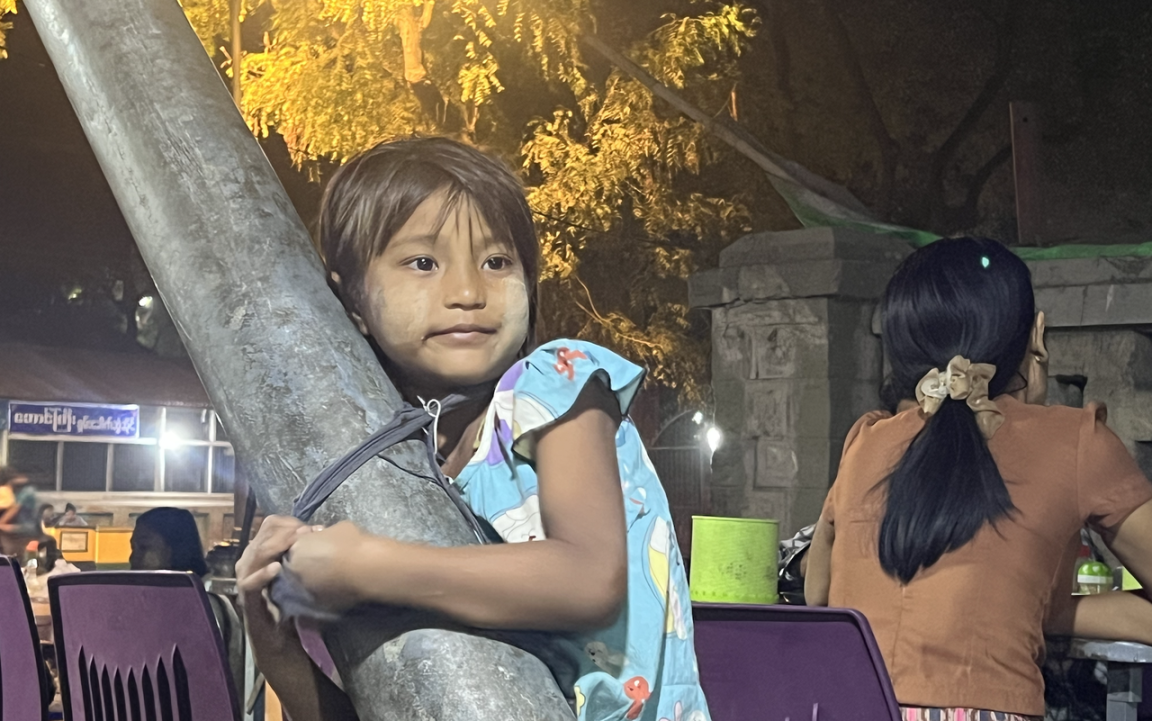
First are the economic shackles. Meager wages are like stagnant water; merely coping with soaring living costs exhausts all their strength, making "saving money to go abroad" a distant, unattainable luxury.

And the iron fist of power directly severs the legal escape route for this generation. "If you are over 80 years old, you can leave Myanmar freely; but if you are between 18 and 60 years old, the country will absolutely not let you go." A老板 (boss/owner) in Yangon, Veraswami, told me this cruel unwritten rule. The government strictly controls youth出境 (exiting the country), making passports meaningless.

When normal channels are completely blocked,畸形 (deformed/malformed) "ways out" begin to滋生 (breed/grow) in the shadows.

"Now many people specifically come to Myanmar to 'buy wives'." Boss Veraswami shared a recent incident he handled with a bitter smile: To help the Myanmar wife of a foreign man leave the country smoothly, he疏通 (greased the wheels), paid various facilitation fees totaling 3000 Chinese Yuan. For a foreigner, 3000 Yuan might be just an ordinary plane ticket; but for the底层 (bottom/underclass) Myanmar people, it is the entire life's earnings of an ordinary person working diligently for 15 months without eating or drinking.

Even risking their lives to work illegally, the reality is equally绝望 (hopeless). A Myanmar monk无奈地 (helplessly) told me that many young people try to偷渡 (sneak across the border) to Thailand by water. But as border hostilities spread, Thailand not only does not welcome Myanmar refugees but has also begun strictly investigating and cracking down on the employment of Myanmar illegal workers.

Can't leave, can't stay. The national border here is no longer a dotted line on the map, but an abyss cast from absolute power and extreme poverty.

Final Words

The镜头定格 (lens focuses) on a little boy quietly looking out the train window.
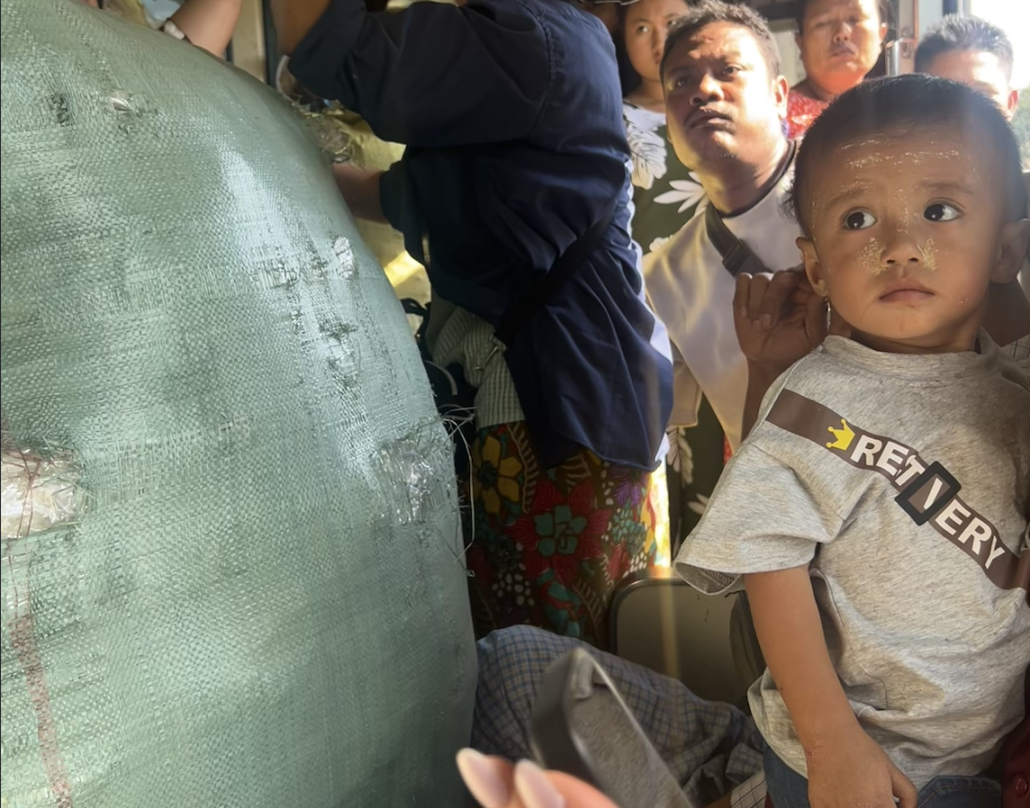
A Myanmar boy on the train

He is an缩影 (epitome) of the millions of ordinary boys in Myanmar. Time will irreversibly push him forward, making him grow into a youth, then a man, eventually, inevitably becoming someone like my guide, Kosla.

I once asked this ordinary Myanmar man: "Are you happy?" Kosla didn't answer immediately. When I追问 (pressed) a second time, he only避重就轻 (evaded the important point) saying: "We are busy with making a living every day, we simply have no time to think about happiness."

Until much later, on the dusty roadside, he answered this question for the third time, and most completely:

"I might die tomorrow. They could grab me to become a soldier at any time, to go fight on the other side of the river. After 7 p.m., if a man is on the street in Bagan, he will likely be thrown in jail, then sent to the battlefield for no reason. I've been working since I was 9 years old, but the speed of wage increases can never catch up with inflation."

"A lifetime. No happiness." He said.


Twitter:https://twitter.com/BitpushNewsCN

Bitpush TG Discussion Group:https://t.me/BitPushCommunity

Bitpush TG Subscription: https://t.me/bitpush

Original article link:https://www.bitpush.news/articles/7614847

Câu hỏi Liên quan

QWhat are the three main 'folds' or divisions that characterize the economic and social situation in Myanmar as described in the article?

AThe three main 'folds' are: 1) The deep chasm between the official exchange rate and the black market exchange rate. 2) The extreme wage disparity between Myanmar and other countries, as well as within the country itself. 3) The contrast between the demonized online perception of Myanmar (as a place for scams and organ harvesting) and the reality of a mostly simple and peaceful populace who are victims of the conflict.

QWhy is the physical condition of US dollar bills so important in Myanmar's underground financial market?

AUS dollar bills must be in perfect, crisp condition with no folds, creases, or marks. Even a slight imperfection can lead to the bill being rejected or severely discounted by 10-20%. This 'pathological fastidiousness' is a manifestation of the country's extremely fragile financial system. The dignity and perceived value of the physical US currency are disproportionately high due to a complete loss of financial security and the extreme disparity between official and black-market exchange rates.

QHow does the price of basic goods, like water, compare to the average daily wage for a worker in places like Bagan?

AThe price of basic goods has skyrocketed due to inflation. A bottle of water, which is primarily bought by foreigners, costs between 800 to 1000 kyat. Meanwhile, the average daily wage for a service worker in Bagan is only about 5,000 kyat (less than 10 RMB). This means that just 5 bottles of water can cost the equivalent of an adult's entire daily wage.

QWhat challenges do young Myanmar citizens face if they try to leave the country?

AYoung Myanmar citizens face immense challenges in leaving the country. Economically, their meager wages make saving money for travel impossible. Politically, the government tightly controls出境 (exit), with a reported unwritten rule that those between 18 and 60 years old are not allowed to leave legally, making passports effectively useless. This has led to the growth of illicit 'ways out,' such as foreign men 'buying' Myanmar wives or dangerous attempts to sneak across the border to Thailand, which is now cracking down on undocumented Myanmar workers.

QWhat was the poignant response from the guide, Kosla, when asked if he was happy?

AWhen asked if he was happy, Kosla initially avoided the question, stating that people are too busy making a living to think about happiness. Later, he gave a full answer, explaining his perpetual fear of being forcibly conscripted to fight at any moment, the danger of being imprisoned for being on the street after curfew, and the fact that his wages have never kept pace with inflation since he started working at age 9. His concluding statement was: 'A lifetime. No happiness.'

Nội dung Liên quan

Polymarket Bị Kẹt: Bài Kiểm Tra Thực Sự Sau Khi Vượt Qua Giai Đoạn Lưu Lượng Tăng Đột Biến

Polymarket, nền tảng dự đoán thị trường hàng đầu, đang đối mặt với thách thức lớn khi trải nghiệm giao dịch xuống cấp do hạ tầng không theo kịp đà tăng trưởng. Phó chủ tịch kỹ thuật Josh Stevens thừa nhận vấn đề và công bố kế hoạch cải tổ toàn diện, bao gồm: giảm độ trễ dữ liệu, sửa lỗi hủy lệnh, xây dựng lại hệ thống order book (CLOB), nâng cao hiệu suất website, và quan trọng nhất là di chuyển chain (chain migration). Nguyên nhân sâu xa nằm ở việc Polymarket không còn là ứng dụng dự đoán đơn thuần mà đã phát triển thành một nền tảng giao dịch tần suất cao. Polygon, từng là lựa chọn chi phí thấp hoàn hảo, giờ đây trở thành rào cản kỹ thuật. Động thái này ngay lập tức thu hút sự quan tâm của các blockchain khác như Solana, Sui, Algorand... trong khi Polygon nỗ lực giữ chân ứng dụng quan trọng này - nguồn đóng góp phí giao dịch đáng kể cho hệ sinh thái của họ. Bài kiểm tra thực sự của Polymarket không chỉ là chọn chain mới, mà là xây dựng một hệ thống giao dịch đủ mạnh và ổn định để giữ chân người dùng trong giai đoạn tăng trưởng mới, nơi độ tin cậy quan trọng hơn bao giờ hết.

Odaily星球日报04/27 03:21

Polymarket Bị Kẹt: Bài Kiểm Tra Thực Sự Sau Khi Vượt Qua Giai Đoạn Lưu Lượng Tăng Đột Biến

Odaily星球日报04/27 03:21

Điều chỉnh kỳ vọng giảm cho chu kỳ tăng giá tiếp theo của BTC

Tác giả Alex Xu, một nhà đầu tư Bitcoin lâu năm, đã chia sẻ quyết định giảm dần tỷ trọng BTC trong danh mục đầu tư của mình, từ vị thế lớn nhất xuống còn khoảng 30%, và giải thích lý do cho việc điều chỉnh kỳ vọng về đỉnh giá trong chu kỳ bull market tiếp theo. Các lý do chính bao gồm: 1. **Năng lượng tăng trưởng tiềm năng giảm:** Các chu kỳ trước được thúc đẩy bởi việc mở rộng đối tượng đầu tư theo cấp số nhân (từ cá nhân đến tổ chức). Chu kỳ tới cần sự chấp nhận từ các quỹ đầu tư quốc gia hoặc ngân hàng trung ương, điều này khó xảy ra trong 2-3 năm tới. 2. **Chi phí cơ hội cá nhân:** Tìm thấy nhiều cơ hội đầu tư hấp dẫn khác (cổ phiếu công ty) với mức giá hợp lý. 3. **Tác động tiêu cực từ sự thu hẹp của ngành crypto:** Nhiều mô hình Web3 (SocialFi, GameFi...) không thành công, dẫn đến sự thu hẹp của toàn ngành và làm chậm tốc độ tăng trưởng số người nắm giữ BTC. 4. **Áp lực từ nhà mua lớn nhất (MicroStrategy):** Chi phí huy động vốn của MicroStrategy tiếp tục tăng cao (lãi suất 11.5%), có thể làm giảm tốc độ mua vào và gây áp lực bán. 5. **Sự cạnh tranh từ Vàng được token hóa:** Sản phẩm vàng token hóa (tokenized gold) đã thu hẹp khoảng cách về tính dễ chia nhỏ, dễ mang theo và dễ xác minh so với BTC. 6. **Vấn đề ngân sách bảo mật:** Phần thưởng khối giảm sau mỗi lần halving làm trầm trọng thêm vấn đề ngân sách cho bảo mật mạng lưới. Tác giả vẫn giữ một phần BTC đáng kể và sẵn sàng mua lại nếu các lý kiến trên được giải quyết hoặc xuất hiện các yếu tố tích cực mới, với điều kiện giá cả phù hợp.

marsbit04/27 02:46

Điều chỉnh kỳ vọng giảm cho chu kỳ tăng giá tiếp theo của BTC

marsbit04/27 02:46

Giao dịch

Giao ngay
Hợp đồng Tương lai

Bài viết Nổi bật

AGENT S là gì

Agent S: Tương Lai của Tương Tác Tự Động trong Web3 Giới thiệu Trong bối cảnh không ngừng phát triển của Web3 và tiền điện tử, các đổi mới đang liên tục định nghĩa lại cách mà cá nhân tương tác với các nền tảng kỹ thuật số. Một dự án tiên phong như vậy, Agent S, hứa hẹn sẽ cách mạng hóa tương tác giữa con người và máy tính thông qua khung tác nhân mở của nó. Bằng cách mở đường cho các tương tác tự động, Agent S nhằm đơn giản hóa các nhiệm vụ phức tạp, cung cấp các ứng dụng chuyển đổi trong trí tuệ nhân tạo (AI). Cuộc khám phá chi tiết này sẽ đi sâu vào những phức tạp của dự án, các tính năng độc đáo của nó và những tác động đối với lĩnh vực tiền điện tử. Agent S là gì? Agent S đứng vững như một khung tác nhân mở đột phá, được thiết kế đặc biệt để giải quyết ba thách thức cơ bản trong việc tự động hóa các nhiệm vụ máy tính: Thu thập Kiến thức Cụ thể theo Miền: Khung này học một cách thông minh từ nhiều nguồn kiến thức bên ngoài và kinh nghiệm nội bộ. Cách tiếp cận kép này giúp nó xây dựng một kho lưu trữ phong phú về kiến thức cụ thể theo miền, nâng cao hiệu suất của nó trong việc thực hiện nhiệm vụ. Lập Kế Hoạch Qua Các Tầm Nhìn Nhiệm Vụ Dài Hạn: Agent S sử dụng lập kế hoạch phân cấp tăng cường kinh nghiệm, một cách tiếp cận chiến lược giúp phân chia và thực hiện các nhiệm vụ phức tạp một cách hiệu quả. Tính năng này nâng cao đáng kể khả năng quản lý nhiều nhiệm vụ con một cách hiệu quả và hiệu suất. Xử Lý Các Giao Diện Động, Không Đều: Dự án giới thiệu Giao Diện Tác Nhân-Máy Tính (ACI), một giải pháp đổi mới giúp nâng cao tương tác giữa các tác nhân và người dùng. Sử dụng các Mô Hình Ngôn Ngữ Lớn Đa Phương Thức (MLLMs), Agent S có thể điều hướng và thao tác các giao diện người dùng đồ họa đa dạng một cách liền mạch. Thông qua những tính năng tiên phong này, Agent S cung cấp một khung vững chắc giải quyết các phức tạp liên quan đến việc tự động hóa tương tác giữa con người với máy móc, mở ra nhiều ứng dụng trong AI và hơn thế nữa. Ai là Người Tạo ra Agent S? Mặc dù khái niệm về Agent S là hoàn toàn đổi mới, thông tin cụ thể về người sáng lập vẫn còn mơ hồ. Người sáng lập hiện vẫn chưa được biết đến, điều này làm nổi bật giai đoạn sơ khai của dự án hoặc sự lựa chọn chiến lược để giữ kín các thành viên sáng lập. Bất chấp sự ẩn danh, sự chú ý vẫn tập trung vào khả năng và tiềm năng của khung này. Ai là Các Nhà Đầu Tư của Agent S? Vì Agent S còn tương đối mới trong hệ sinh thái mã hóa, thông tin chi tiết về các nhà đầu tư và những người tài trợ tài chính của nó không được ghi chép rõ ràng. Sự thiếu vắng thông tin công khai về các nền tảng đầu tư hoặc tổ chức hỗ trợ dự án dấy lên câu hỏi về cấu trúc tài trợ và lộ trình phát triển của nó. Hiểu biết về sự hỗ trợ là rất quan trọng để đánh giá tính bền vững và tác động tiềm năng của dự án. Agent S Hoạt Động Như Thế Nào? Tại cốt lõi của Agent S là công nghệ tiên tiến cho phép nó hoạt động hiệu quả trong nhiều bối cảnh khác nhau. Mô hình hoạt động của nó được xây dựng xung quanh một số tính năng chính: Tương Tác Giống Như Con Người: Khung này cung cấp lập kế hoạch AI tiên tiến, cố gắng làm cho các tương tác với máy tính trở nên trực quan hơn. Bằng cách bắt chước hành vi của con người trong việc thực hiện nhiệm vụ, nó hứa hẹn nâng cao trải nghiệm người dùng. Ký Ức Tường Thuật: Được sử dụng để tận dụng các trải nghiệm cấp cao, Agent S sử dụng ký ức tường thuật để theo dõi lịch sử nhiệm vụ, từ đó nâng cao quy trình ra quyết định của nó. Ký Ức Tình Huống: Tính năng này cung cấp cho người dùng hướng dẫn từng bước, cho phép khung này cung cấp hỗ trợ theo ngữ cảnh khi các nhiệm vụ diễn ra. Hỗ Trợ OpenACI: Với khả năng chạy cục bộ, Agent S cho phép người dùng duy trì quyền kiểm soát đối với các tương tác và quy trình làm việc của họ, phù hợp với tinh thần phi tập trung của Web3. Tích Hợp Dễ Dàng với Các API Bên Ngoài: Tính linh hoạt và khả năng tương thích với nhiều nền tảng AI khác nhau đảm bảo rằng Agent S có thể hòa nhập liền mạch vào các hệ sinh thái công nghệ hiện có, làm cho nó trở thành lựa chọn hấp dẫn cho các nhà phát triển và tổ chức. Những chức năng này cùng nhau góp phần vào vị trí độc đáo của Agent S trong không gian tiền điện tử, khi nó tự động hóa các nhiệm vụ phức tạp, nhiều bước với sự can thiệp tối thiểu của con người. Khi dự án phát triển, các ứng dụng tiềm năng của nó trong Web3 có thể định nghĩa lại cách mà các tương tác kỹ thuật số diễn ra. Thời Gian Phát Triển của Agent S Sự phát triển và các cột mốc của Agent S có thể được tóm tắt trong một dòng thời gian nêu bật các sự kiện quan trọng của nó: 27 tháng 9, 2024: Khái niệm về Agent S được ra mắt trong một bài nghiên cứu toàn diện mang tên “Một Khung Tác Nhân Mở Sử Dụng Máy Tính Như Một Con Người,” trình bày nền tảng cho dự án. 10 tháng 10, 2024: Bài nghiên cứu được công bố công khai trên arXiv, cung cấp một cái nhìn sâu sắc về khung và đánh giá hiệu suất của nó dựa trên tiêu chuẩn OSWorld. 12 tháng 10, 2024: Một video trình bày được phát hành, cung cấp cái nhìn trực quan về khả năng và tính năng của Agent S, thu hút thêm sự quan tâm từ người dùng và nhà đầu tư tiềm năng. Những dấu mốc trong dòng thời gian không chỉ minh họa sự tiến bộ của Agent S mà còn chỉ ra cam kết của nó đối với sự minh bạch và sự tham gia của cộng đồng. Những Điểm Chính Về Agent S Khi khung Agent S tiếp tục phát triển, một số thuộc tính chính nổi bật, nhấn mạnh tính đổi mới và tiềm năng của nó: Khung Đổi Mới: Được thiết kế để cung cấp cách sử dụng máy tính trực quan giống như tương tác của con người, Agent S mang đến một cách tiếp cận mới cho việc tự động hóa nhiệm vụ. Tương Tác Tự Động: Khả năng tương tác tự động với máy tính thông qua GUI đánh dấu một bước tiến tới các giải pháp tính toán thông minh và hiệu quả hơn. Tự Động Hóa Nhiệm Vụ Phức Tạp: Với phương pháp mạnh mẽ của nó, nó có thể tự động hóa các nhiệm vụ phức tạp, nhiều bước, làm cho các quy trình nhanh hơn và ít sai sót hơn. Cải Tiến Liên Tục: Các cơ chế học tập cho phép Agent S cải thiện từ các trải nghiệm trước đó, liên tục nâng cao hiệu suất và hiệu quả của nó. Tính Linh Hoạt: Khả năng thích ứng của nó trên các môi trường hoạt động khác nhau như OSWorld và WindowsAgentArena đảm bảo rằng nó có thể phục vụ một loạt các ứng dụng rộng rãi. Khi Agent S định vị mình trong bối cảnh Web3 và tiền điện tử, tiềm năng của nó để nâng cao khả năng tương tác và tự động hóa quy trình đánh dấu một bước tiến quan trọng trong công nghệ AI. Thông qua khung đổi mới của mình, Agent S minh họa cho tương lai của các tương tác kỹ thuật số, hứa hẹn một trải nghiệm liền mạch và hiệu quả hơn cho người dùng trên nhiều ngành công nghiệp khác nhau. Kết luận Agent S đại diện cho một bước nhảy vọt táo bạo trong sự kết hợp giữa AI và Web3, với khả năng định nghĩa lại cách chúng ta tương tác với công nghệ. Mặc dù vẫn còn ở giai đoạn đầu, những khả năng cho ứng dụng của nó là rộng lớn và hấp dẫn. Thông qua khung toàn diện của mình giải quyết các thách thức quan trọng, Agent S nhằm đưa các tương tác tự động lên hàng đầu trong trải nghiệm kỹ thuật số. Khi chúng ta tiến sâu hơn vào các lĩnh vực tiền điện tử và phi tập trung, các dự án như Agent S chắc chắn sẽ đóng một vai trò quan trọng trong việc định hình tương lai của công nghệ và sự hợp tác giữa con người với máy tính.

Tổng lượt xem 677Xuất bản vào 2025.01.14Cập nhật vào 2025.01.14

AGENT S là gì

Làm thế nào để Mua S

Chào mừng bạn đến với HTX.com! Chúng tôi đã làm cho mua Sonic (S) trở nên đơn giản và thuận tiện. Làm theo hướng dẫn từng bước của chúng tôi để bắt đầu hành trình tiền kỹ thuật số của bạn.Bước 1: Tạo Tài khoản HTX của BạnSử dụng email hoặc số điện thoại của bạn để đăng ký tài khoản miễn phí trên HTX. Trải nghiệm hành trình đăng ký không rắc rối và mở khóa tất cả tính năng. Nhận Tài khoản của tôiBước 2: Truy cập Mua Crypto và Chọn Phương thức Thanh toán của BạnThẻ Tín dụng/Ghi nợ: Sử dụng Visa hoặc Mastercard của bạn để mua Sonic (S) ngay lập tức.Số dư: Sử dụng tiền từ số dư tài khoản HTX của bạn để giao dịch liền mạch.Bên thứ ba: Chúng tôi đã thêm những phương thức thanh toán phổ biến như Google Pay và Apple Pay để nâng cao sự tiện lợi.P2P: Giao dịch trực tiếp với người dùng khác trên HTX.Thị trường mua bán phi tập trung (OTC): Chúng tôi cung cấp những dịch vụ được thiết kế riêng và tỷ giá hối đoái cạnh tranh cho nhà giao dịch.Bước 3: Lưu trữ Sonic (S) của BạnSau khi mua Sonic (S), lưu trữ trong tài khoản HTX của bạn. Ngoài ra, bạn có thể gửi đi nơi khác qua chuyển khoản blockchain hoặc sử dụng để giao dịch những tiền kỹ thuật số khác.Bước 4: Giao dịch Sonic (S)Giao dịch Sonic (S) dễ dàng trên thị trường giao ngay của HTX. Chỉ cần truy cập vào tài khoản của bạn, chọn cặp giao dịch, thực hiện giao dịch và theo dõi trong thời gian thực. Chúng tôi cung cấp trải nghiệm thân thiện với người dùng cho cả người mới bắt đầu và người giao dịch dày dạn kinh nghiệm.

Tổng lượt xem 1.3kXuất bản vào 2025.01.15Cập nhật vào 2025.03.21

Làm thế nào để Mua S

Thảo luận

Chào mừng đến với Cộng đồng HTX. Tại đây, bạn có thể được thông báo về những phát triển nền tảng mới nhất và có quyền truy cập vào thông tin chuyên sâu về thị trường. Ý kiến ​​của người dùng về giá của S (S) được trình bày dưới đây.

活动图片