Authors: Charlie Perkin, Zach Pandls, Grayscale
Compiled by: Yuliya, PANews
Editor's Note: With the continuous decline in the cryptocurrency market since the beginning of the year, investors face an important question: Which digital assets are worth investing in at current prices? For digital commodities like Bitcoin, this assessment is not straightforward, but many other crypto assets resemble financial equities and can be valued through cash flow. This report uses Aave, a leading on-chain decentralized lending platform, as a case study to deeply analyze how to accurately calculate the fair value of crypto assets through protocol revenue, token value capture mechanisms, and industry price-to-earnings (P/E) multiples. The following is the fully compiled content:
Key Takeaways
- The crypto market has been in a sustained slump since the start of the year: How should investors judge which digital assets have investment value at current prices? For digital commodities like Bitcoin, this can be challenging, but many other crypto assets are more akin to financial claims and can be fully valued through cash flow.
- This report focuses on Aave: As a leading blockchain-based lending platform, Aave is an established project with transparent financial data, but it has recently faced a turbulent period, including the departure of core contributors and a decline in deposits.
- According to traditional discounted cash flow (DCF) analysis: Grayscale Research believes the AAVE token has investment value at current levels. Despite recent headwinds, we estimate the protocol will still generate approximately $60 million in net earnings in 2026. If we apply the typical P/E multiples of traditional fintech companies, around 20x to 25x, its fair market capitalization should be $1.2 billion to $1.5 billion, corresponding to a token price of approximately $80 to $100 (compared to the current market price of about $75).
- In the base case scenario: If regulatory clarity accelerates the adoption of tokenized assets, we believe the fair value of the AAVE token could rise to about $175 within a year.
- Aave demonstrates a successful model: It proves that success at the protocol level can be explicitly tied to token value capture, thereby supporting the application of traditional valuation frameworks including DCF analysis, price multiples, and comparable company analysis.
- Token value capture mechanisms are crucial in DeFi protocol economics: They enable projects to translate top-level business adoption into token price appreciation while retaining a decentralized governance structure.
- Aave is not a traditional company: It is a DAO. Currently, DAOs still face significant regulatory uncertainty. If the CLARITY Act passes and becomes law in 2026, the AAVE token might be classified as a "network asset" under that framework.
*Note: DCF is one of the most widely used pricing models in corporate finance and investment, essentially discounting all future cash flows a company can generate each year to the present and summing them.
Digital assets have now gained a foothold in mainstream tech and finance circles, but overall, this market is still too young. A quick comparison reveals this: the top 30 cryptocurrencies by market cap are, on average, only about 8 years old; whereas the traditional blue-chip companies in the S&P 500 have an average lifespan of over 100 years. As a 'newborn,' the market is constantly debating 'how to classify, regulate, and value crypto assets.' As the market matures, clarifying these issues will not only lead to more reasonable prices but also attract more external capital.
Grayscale Research believes that as the market evolves, we need a more nuanced approach to valuing digital assets, including frameworks derived from traditional financial analysis. Before investing in any token, the first step is to understand its 'economic fundamentals': What is its purpose? How is it viewed by regulators? What is the competitive landscape? Most crucially, what mechanisms exist for the project to distribute profits to token holders? Only by clarifying these can you know how to measure it.
For crypto assets, it's not enough to just look at whether a project is being used; we must also examine whether its tokenomics and governance architecture can translate 'project earnings' into 'token price appreciation.' Next, we will use the DeFi lending sector and the Aave protocol as examples to analyze how to value protocols using cash flow and fundamentals.
Classifying Crypto Assets
Just as common sense in traditional financial markets has held for centuries—stocks, gold, foreign exchange, and bonds are driven by completely different logics, and you cannot value them all with the same method.
Similarly, not all crypto assets should be valued with the same framework. Although the early crypto market often lumped all tokens together, investors today are increasingly distinguishing between assets with different economic functions, ownership characteristics, and value drivers. Asset classification requires identifying the underlying factors that promote token value growth, such as monetary premium, liquidity premium, utility premium, governance premium, and cash-flow-related premiums.
Chart 1: Structural Differences Between Commodities and Financial Claims
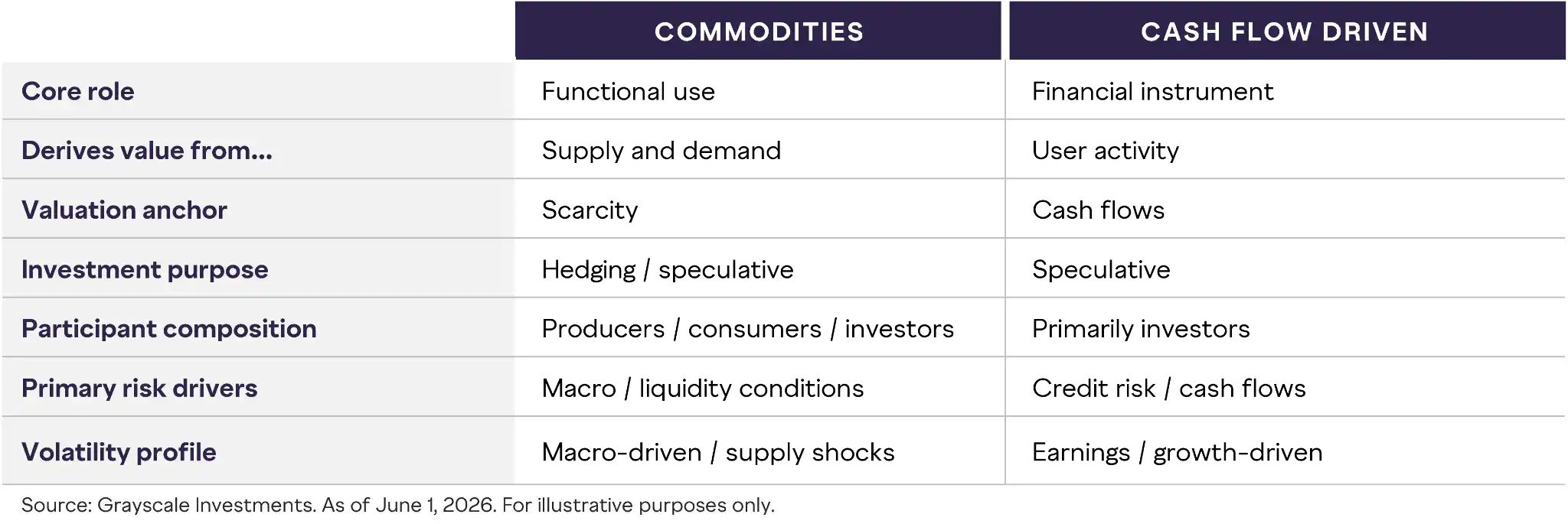
In the classification process, distinguishing between 'commodity-like assets' and 'cash-flow assets' is an important starting point.
- Commodity-like assets (e.g., Bitcoin): These assets do not pay salaries or dividends. Their value relies entirely on 'scarcity' and the 'consensus' that people treat them as a medium of exchange, collateral, or a store of value.
- Cash-flow assets (e.g., DeFi tokens): These assets are tightly bound to the underlying business activities of the project. Their value depends on the fees the project collects, operational expenses, treasury holdings, and most importantly—the mechanisms through which the project returns value to token holders.
Chart 2: Asset Spectrum from Pure Commodity to Financial Claim
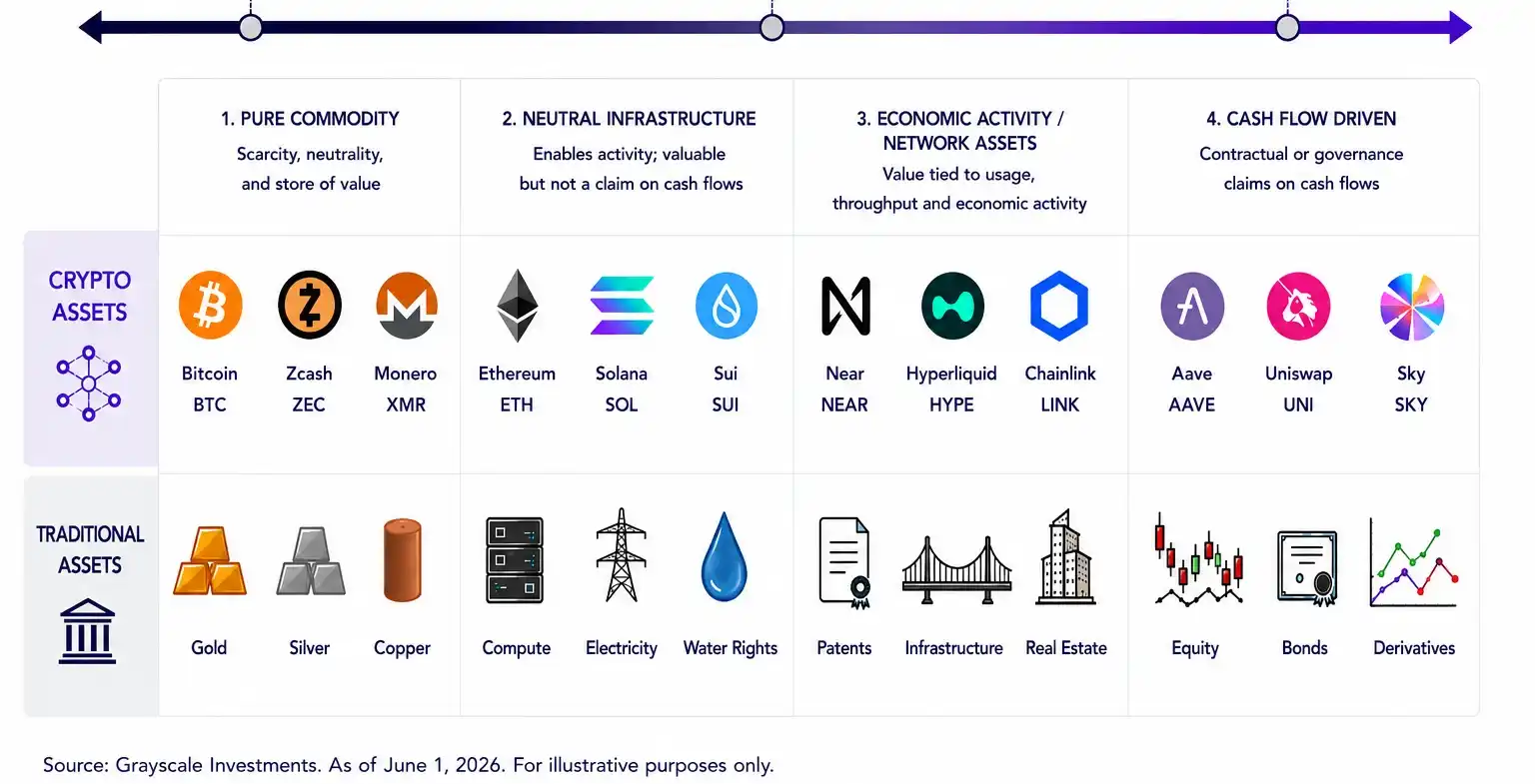
In reality, many tokens fall somewhere between these two extremes. The valuation method suitable for a reserve or settlement asset (like BTC) is fundamentally different from that for a protocol token with recurring revenue, treasury assets, governance rights, and clear value capture mechanisms (like AAVE). Many tokens even possess multiple characteristics simultaneously, requiring investors to assess which economic drivers are most critical at a particular stage of protocol development.
Therefore, when choosing a valuation model, we must look at the 'economic essence' of the asset, not just whether it is a token issued on-chain. As projects mature and markets shift, their attributes will also change.
On this asset continuum, DeFi protocols represent the quintessential 'cash-flow-driven' archetype. Here, their economics are directly linked to token value, allowing them to be valued like traditional equities.
DeFi: The Truly Profitable Sector
If there's any truly functional and profitable application for blockchain, DeFi is certainly one. DeFi protocols facilitate various businesses such as trading, lending, collateral management, liquidity provision, and risk transfer. These activities generate clearly visible revenue from real users, forming financial characteristics increasingly comparable to traditional financial companies, networks, and software platforms.
Since early 2023, DeFi protocols have collectively generated nearly $25 billion in fee revenue, primarily driven by DEXs, liquid staking, lending, and derivatives. This indicates that DeFi has moved beyond a purely speculative experimental phase to supporting sustained financial activity across multiple verticals, although speculative trading remains a significant driver. Many leading DeFi protocols also exhibit highly attractive operating traits, including high gross margins, extremely low capital expenditure requirements, and scalable software-driven business models.
Chart 3: DeFi Protocol Cumulative Fee Generation and Strong Revenue Growth (in Billions of USD)
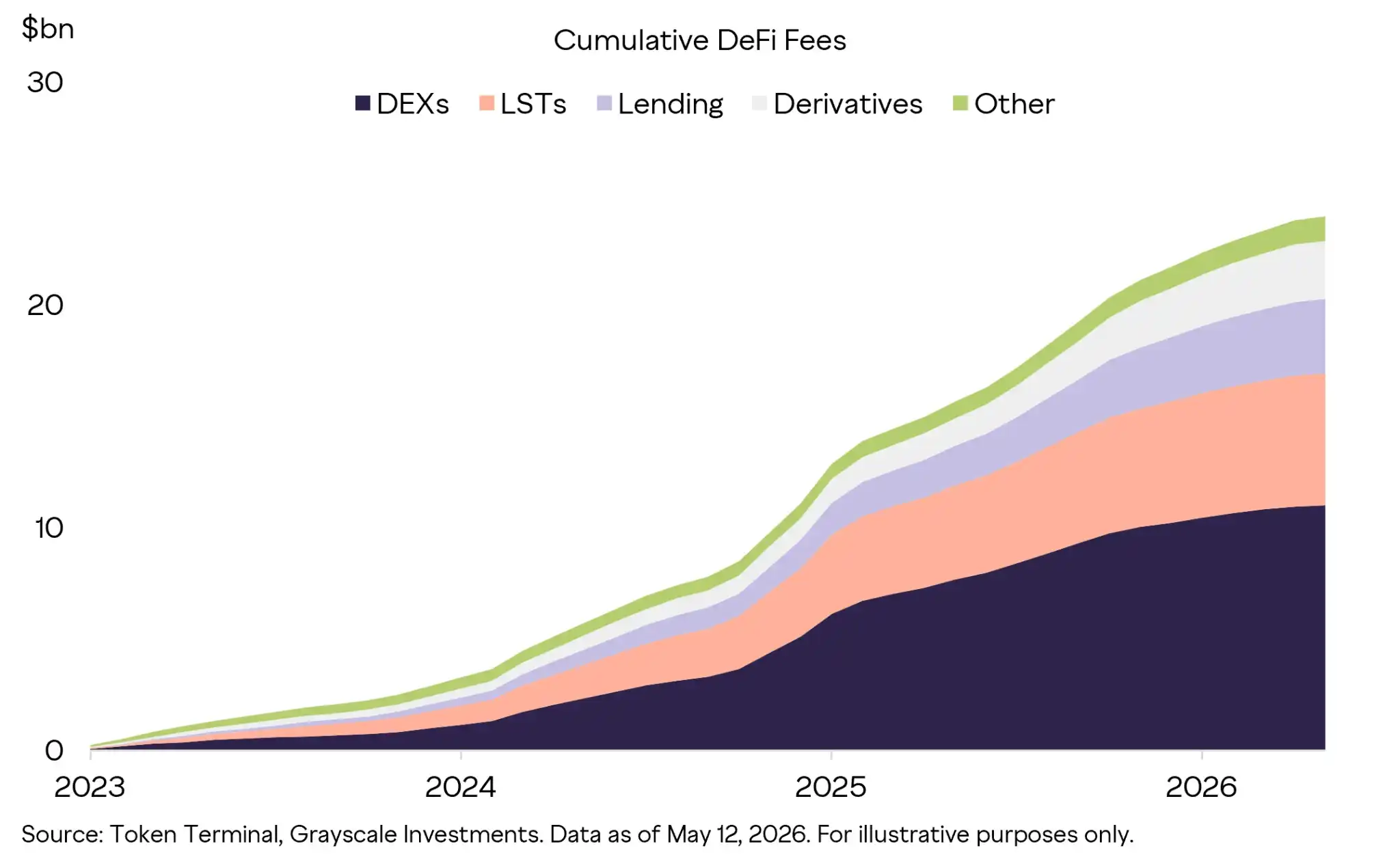
(Data Source: Grayscale Research, based on publicly available on-chain data)
As projects mature and financial data stabilizes, we can fully analyze them like traditional assets. Taking the DeFi lending sector as an example, it's a good example of a sustainable business model generating stable earnings. We can view total user fees as 'gross revenue' and the portion ultimately retained by the lending protocol as 'net income.' Calculating these two figures allows you to understand the earning power of different projects and how that money ultimately flows to investors.
We can even use 'Price-to-Earnings (P/E) ratios' to compare these lending protocols, much like analyzing stocks. Currently, the entire lending sector is experiencing significantly compressed valuation multiples, indicating the market has matured considerably. Meanwhile, major protocols have shown innovation in their business models: Morpho's treasury is growing exponentially; Sky's (formerly MakerDAO) on-chain collateralized stablecoin continues to expand its product-market fit; Maple focuses on institutional clients, capturing high yields. With the trends of stablecoin adoption and RWA tokenization, these lending applications are likely poised for renewed spotlight.
Chart 4: Comparison of Valuation Multiples for Major Protocols in the DeFi Lending Sector
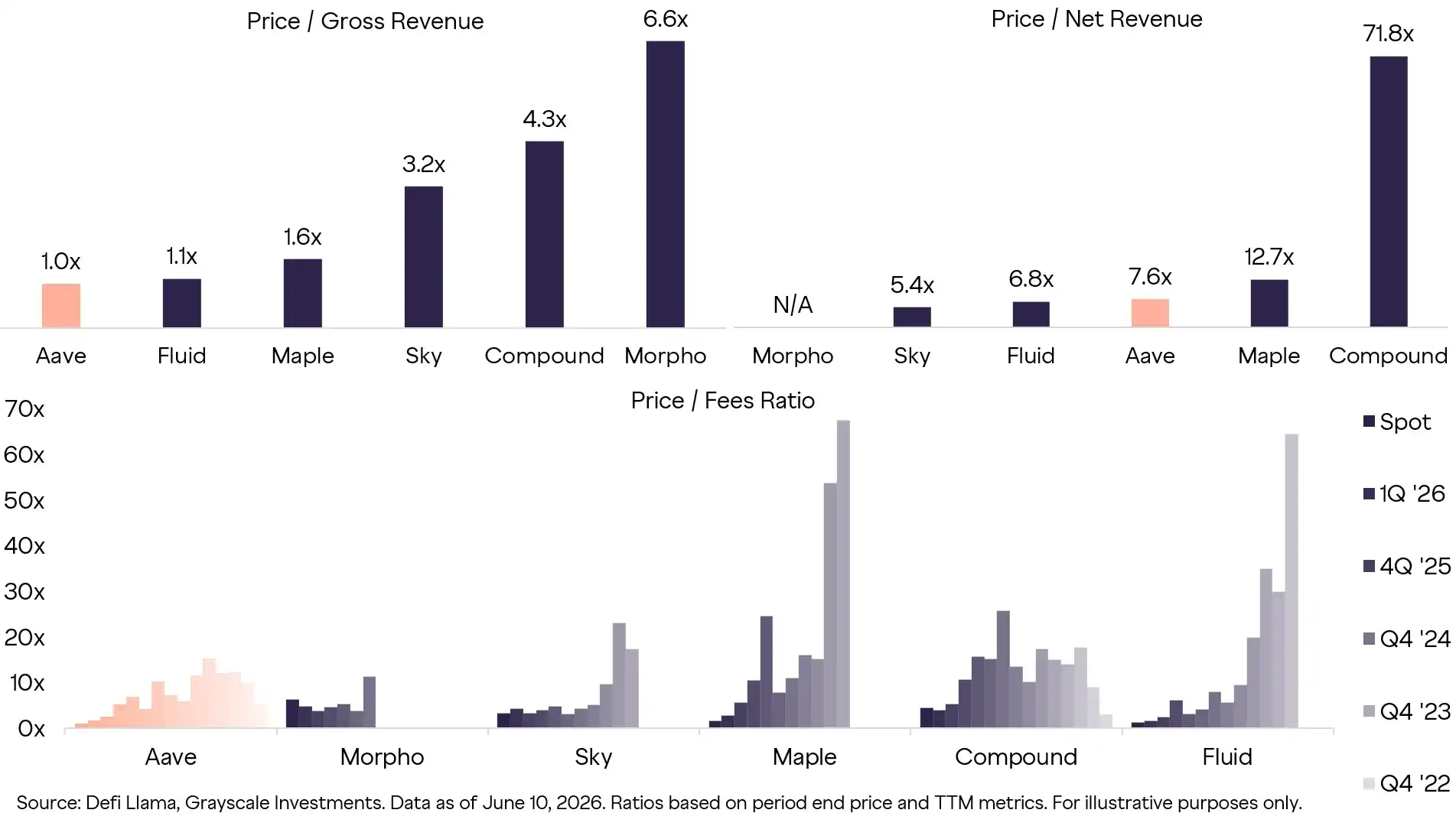
Among its peers, Aave is an excellent case study. While continuously upgrading its business, it has increasingly focused on 'delivering value to AAVE token holders.' Despite facing macroeconomic and ecosystem risks, Aave, with its clear tokenomics, has maintained industry dominance across multiple crypto cycles.
Of course, it is not immune to all risks. For example, the Kelp DAO rsETH security incident in April 2026, although not a direct attack on Aave, triggered a chain reaction of market panic, leading to a temporary decline in protocol activity. Although funds were confirmed safe and the issue was quickly resolved, lasting effects remain. Currently, token buybacks are suspended pending governance review, and Total Value Locked (TVL) has seen a noticeable decrease. However, Aave's efficient decision-making and high transparency displayed during this incident have enhanced, not diminished, its institutional credibility.
Running the Numbers on Aave: What Is It Really Worth?
Based on careful calculations by Grayscale Research (using a DCF model and peer P/E comparisons), we believe AAVE's current fair valuation should be between $80 and $100. Aave not only holds an unshakeable position in the DeFi space but also has stable earnings and a solid treasury foundation. As long as the macro environment (e.g., stablecoin adoption, regulatory policies) cooperates, it has immense upside potential in a bull market.
Aave is a decentralized lending protocol that allows users to deposit crypto assets to earn yield and allows borrowers to take out loans using deposited assets as collateral. Instead of relying on traditional financial intermediaries, Aave uses smart contracts to aggregate liquidity, set loan terms, manage collateral, and automatically liquidate positions falling below the liquidation threshold. In this model, depositors provide the capital base (e.g., USDC, ETH), borrowers create credit demand, and the protocol earns revenue from spreads, fees, and related services. Despite some technical differences, Aave is often described as a 'permissionless bank on-chain.' This makes it one of the clearest parallels in DeFi to traditional financial companies: it facilitates credit creation, generates recurring protocol revenue, and increasingly returns a portion of economic value to AAVE token holders through governance-approved mechanisms.
Chart 5: Aave's Massive Loan Book Drives On-Chain Credit Business
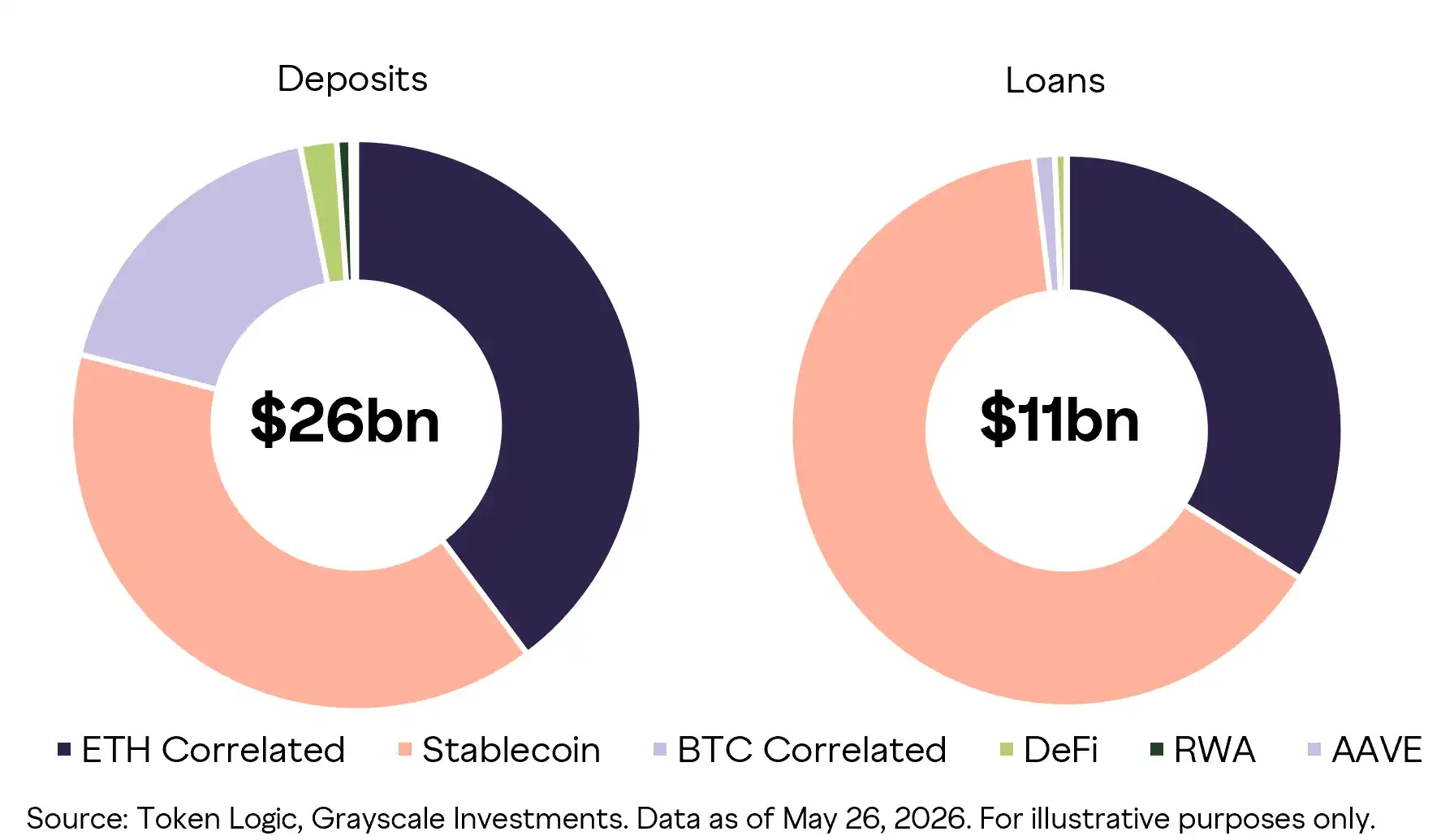
The entire DeFi ecosystem holds over $59 billion in total deposits and $25 billion in outstanding loans, making on-chain credit creation one of its most foundational pillars. Aave is the undisputed market leader, holding a dominant share of total deposits, outstanding loans, and user activity. On its USDC pools, Aave currently pays depositors 3.29% interest and charges borrowers 4.04%, providing a highly competitive alternative even to off-chain traditional rates. With monthly active users stable at nearly 200,000, Aave's central role in DeFi gives it a significant advantage.
Chart 6: Aave's Sustained Utilization and Diverse Asset Treasury
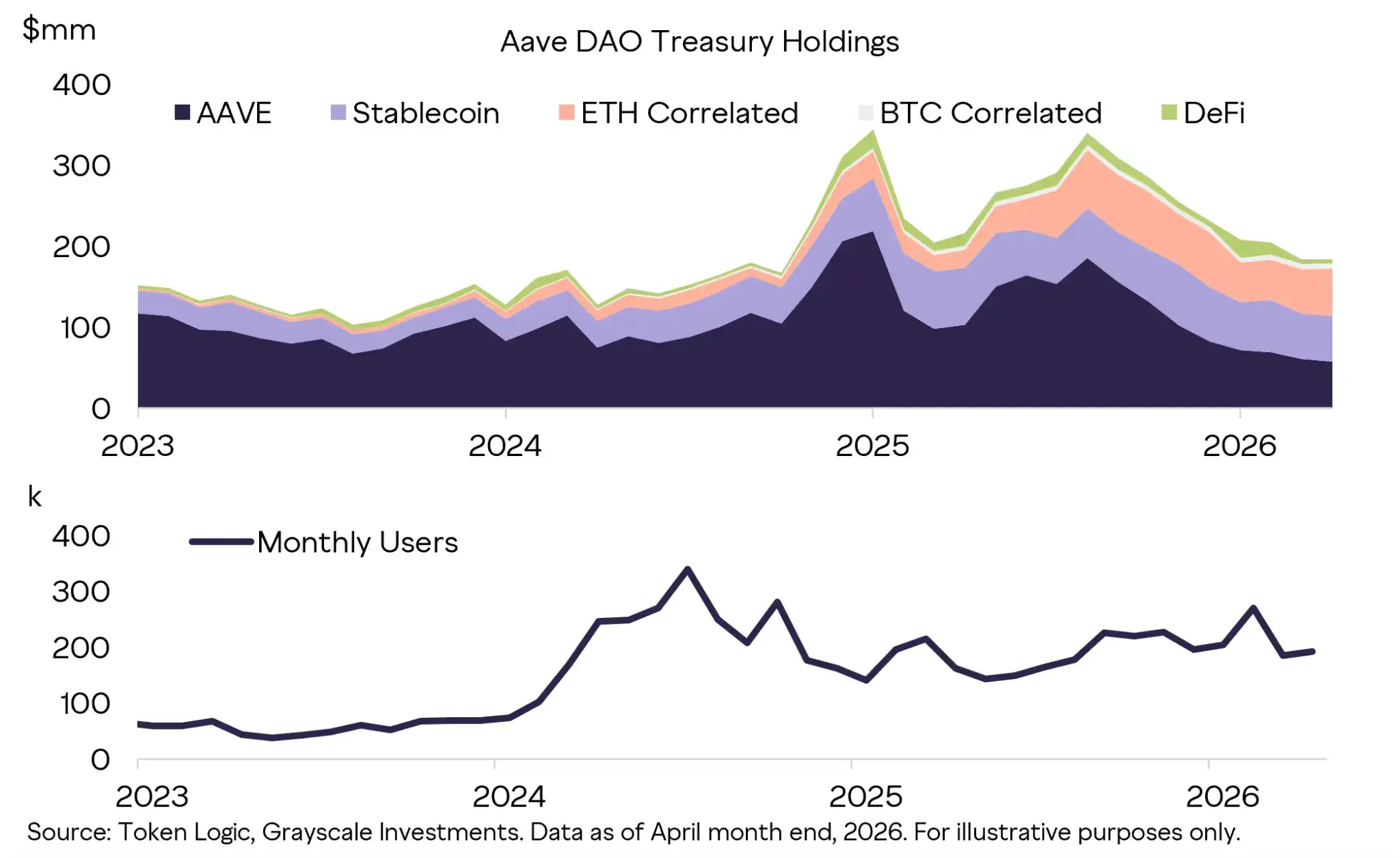
Compared to other competitors, Aave's DAO stands out partly due to its large and diversified balance sheet governed by token holders, providing a solid financial foundation for core growth initiatives. The Aave DAO is the vehicle for governance and operational coordination across the protocol's various functions. Thanks to AAVE token appreciation and accumulated protocol revenue, the DAO treasury's historical peak value exceeded $360 million.
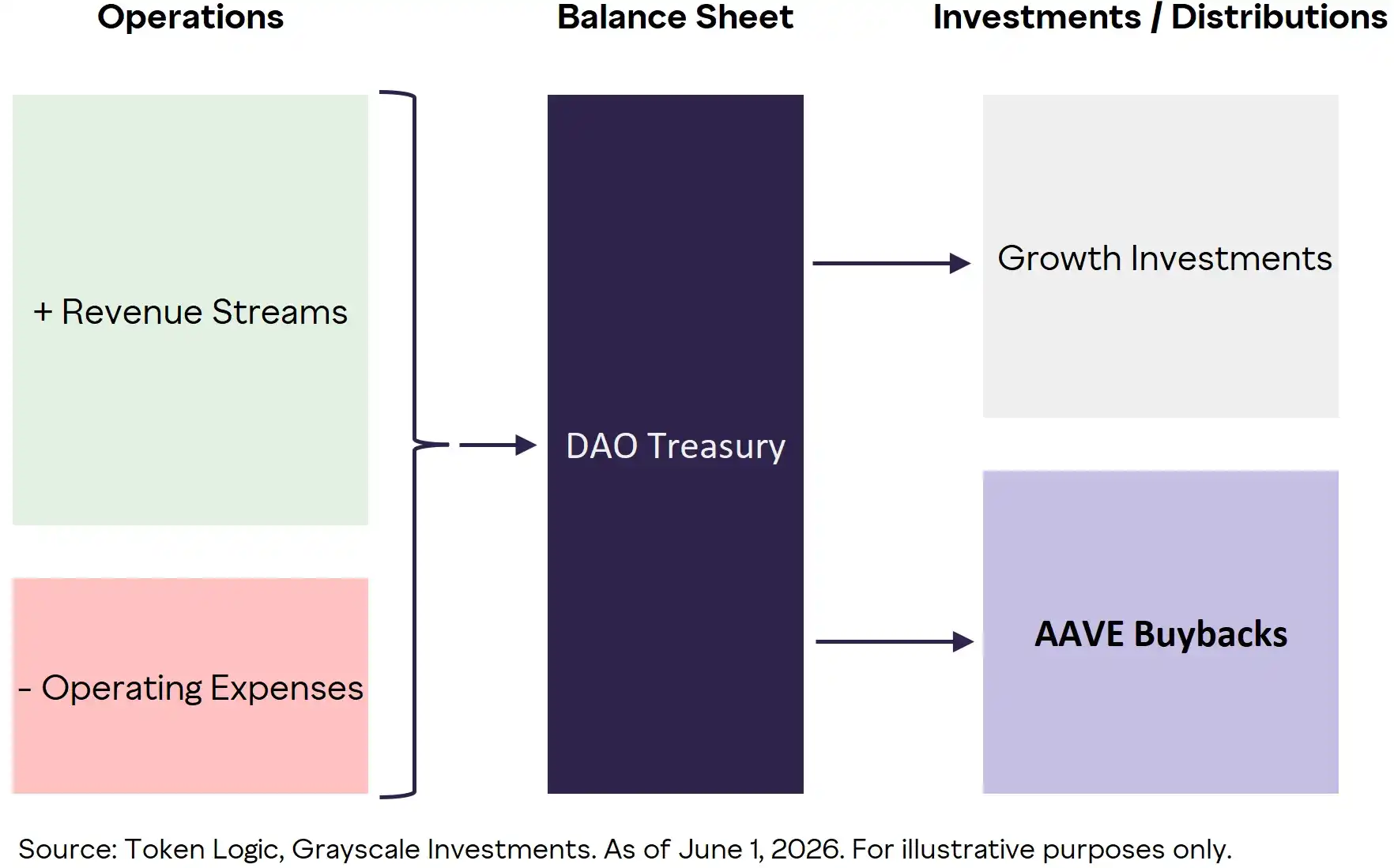
Aave's core revenue drivers include lending activities, treasury yield earnings, and revenue from the native stablecoin GHO. These cash flows all funnel into the DAO treasury, which performs the capital allocation function. Token holders then vote through governance on how to deploy these resources—towards capital expenditure, AAVE token buybacks, or retaining them in the DAO treasury as reserves for future projects.
Chart 7: The Path of Aave's Profits from Protocol to DAO Capital Allocation
As shown below, Aave's revenue grew over 6.6 times from 2023 to 2025.
- Protocol Revenue: Historically about 85% of total revenue, primarily from lending interest rate spreads;
- Treasury Revenue: Interest generated from held assets;
- GHO Revenue: GHO is an over-collateralized stablecoin issued by Aave, currently with a circulating market cap of $283 million. Its generated fees account for about 10% of total revenue;
- Other Revenue: Liquidation fees, flash loan fees, and partnership shares.
Chart 8: Aave Simplified Income Statement (in Millions of USD)
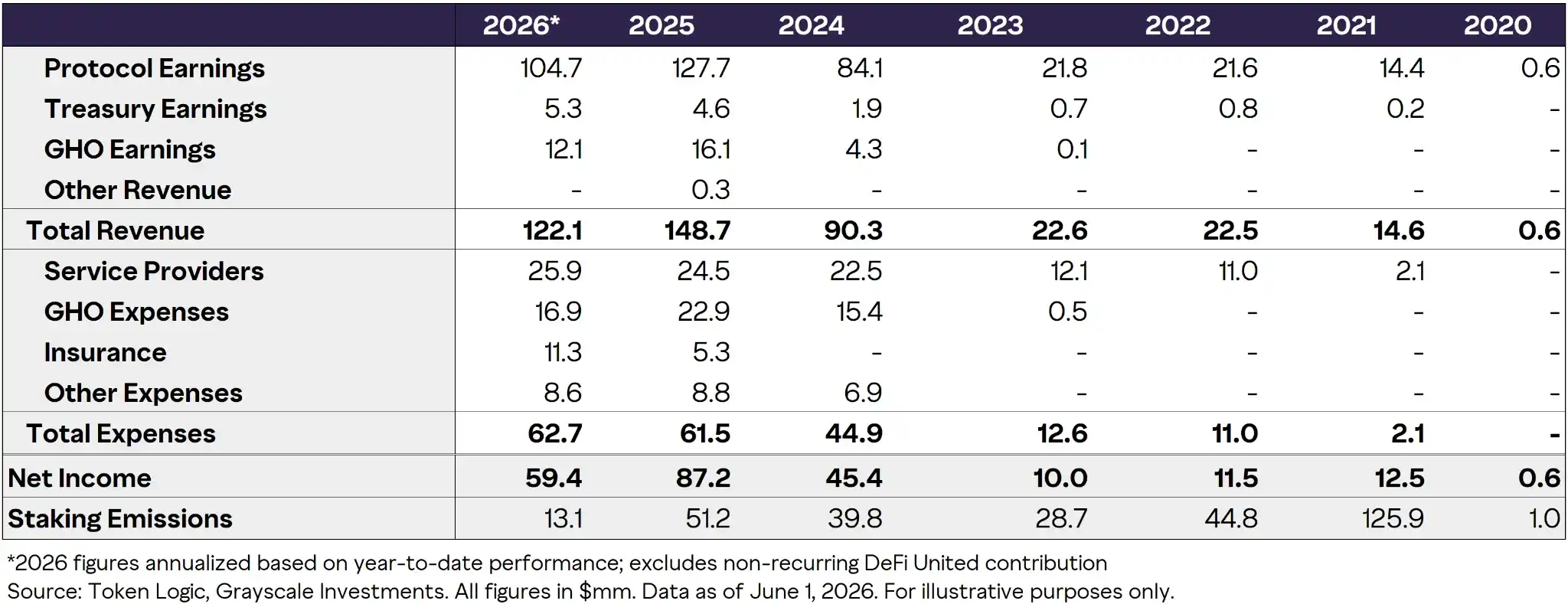
During the same period, the protocol's expenses grew about 4.9 times. In other words, its revenue growth far outpaced its expense growth.
- Service Providers: Refers to various teams working under contract to support and develop the Aave protocol, including developers, risk curators, governance coordinators, and other core contributors.
- GHO Expenses: Primarily include liquidity market-making subsidies and user incentives provided to support the stablecoin's growth.
- Insurance Outflows: Used to support Aave's on-chain risk management system to cover potential bad debts.
- Other Expenses: Include items related to ecosystem partnerships, delegates, and security audits.
Aave's current net profit margin is around 50%. Based on the current spot price of about $75, the market implies that its future earnings over the next decade will only grow at 9% annually, which is extremely conservative. Traditional blue-chip companies in the S&P 500 command growth expectations of over a dozen or even twenty percent. If we assume Aave can sustain 25% annual growth like mainstream fintech companies, its token price should be $227; if the growth rate reaches 35%, the price could target $444.
Chart 9: Implied AAVE Cash Flow and Growth Expectations Derived from the $75 Spot Price
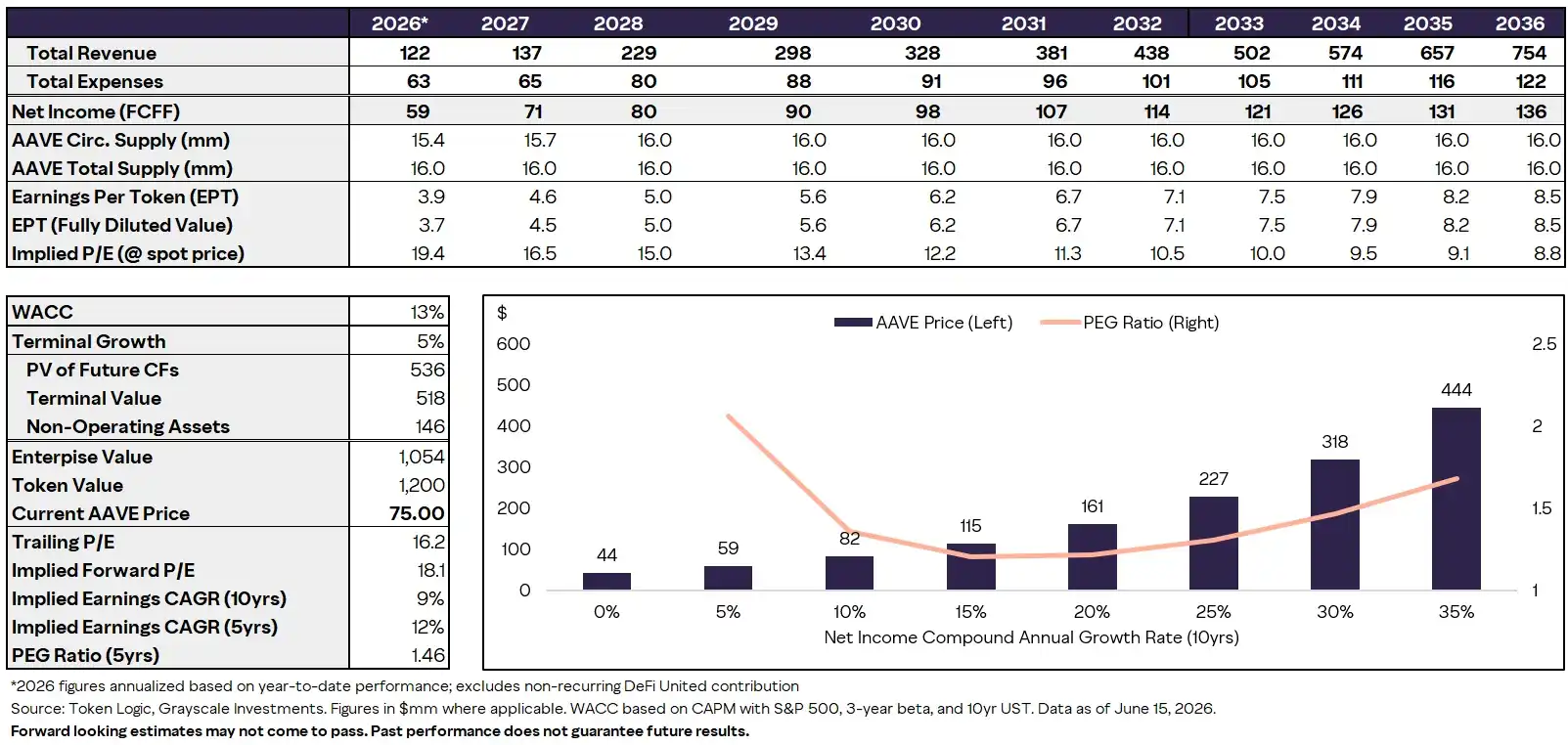
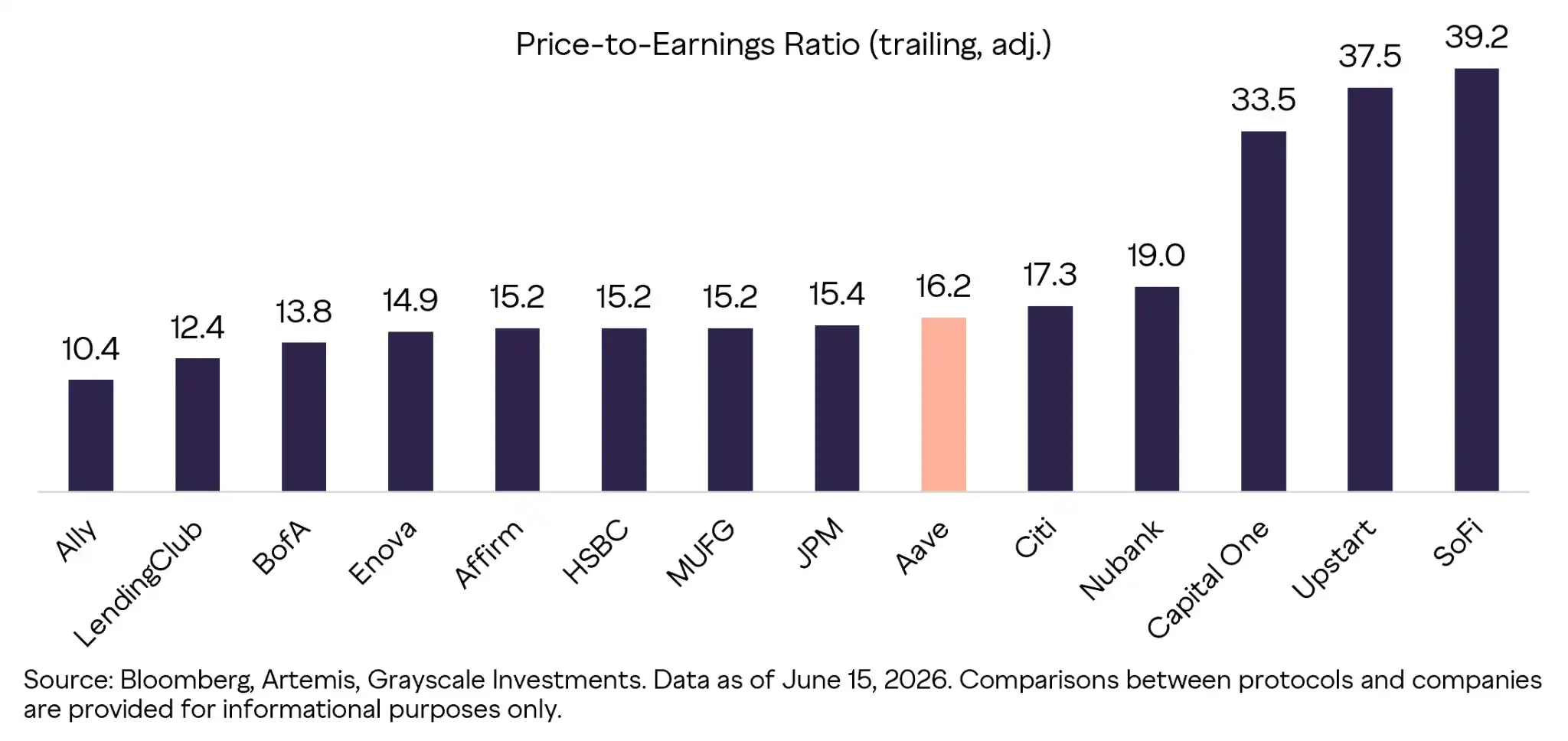
Calculated at the current price of $75, Aave's historical P/E ratio is approximately 16.2x, and its forward P/E ratio is about 18.1x. For comparison, the average P/E ratio of the S&P 500 is around 24x. Aave, this highly profitable and rapidly growing on-chain bank, is currently valued between traditional large banks (~14x) and internet finance companies (~21x). This current valuation 'discount' is largely due to external capital's fears of regulatory complications. Once the path to compliance is cleared, this discount will eventually be eliminated.
Chart 10: Horizontal Comparison of Core Metrics Between Aave and Traditional Finance/Fintech Giants
Aave's revenue is increasingly reliant on stable 'stablecoins' rather than volatile crypto assets, making its foundation exceptionally solid. With the trends of stablecoin adoption and the significant structural tailwinds from RWA tokenization, Aave is well-positioned to achieve loan growth independently of broader market cycles. Additionally, the following product initiatives are the most important catalysts for AAVE token appreciation in the near term:
- Full Promotion of the GHO Stablecoin: GHO is Aave's native over-collateralized stablecoin, minted directly against protocol collateral. By capturing the full lending spread internally instead of sharing it with depositors, GHO represents a significant and continuously growing revenue stream for the protocol.
- Horizon (U.S. Treasury and RWA Institutional Market): Horizon is a dedicated institutional market allowing compliant participants to access DeFi liquidity using tokenized RWAs (like tokenized U.S. Treasuries) as collateral. By connecting traditional capital markets with the Aave protocol, Horizon represents a massive potential source of loan growth.
- Umbrella (Upgraded Security Module): Umbrella is Aave's upgraded security module, providing a more automated and capital-efficient backstop mechanism for protocol deficits. By improving depositor protection while reducing reliance on AAVE token inflationary emissions, Umbrella strengthens the protocol's resilience and improves long-term tokenomics.
- V4 (Next-Generation Architecture Upgrade): V4 is Aave's next-generation protocol architecture, built around a unified 'Hub-and-Spoke' liquidity model that separates shared liquidity from market-specific risk logic. This design improves capital efficiency, reduces liquidity fragmentation, and enables Aave to launch new lending markets, including RWAs and institutional products, without independently bootstrapping liquidity for each.
- Aave Native App: The Aave App is a consumer-friendly interface designed to simplify the lending process for traditional retail users. By removing the technical friction often associated with DeFi, the App aims to significantly expand Aave's potential user base beyond the existing crypto-native audience.
For the upcoming year, we have developed three scenario forecasts for the Aave protocol and AAVE token price, with core assumptions primarily dependent on stablecoin adoption levels, the progress of RWA tokenization, and the degree of traditional institutional participation.
Chart 11: One-Year Bear / Base / Bull Scenario Projections for the Aave Protocol and AAVE Token Price
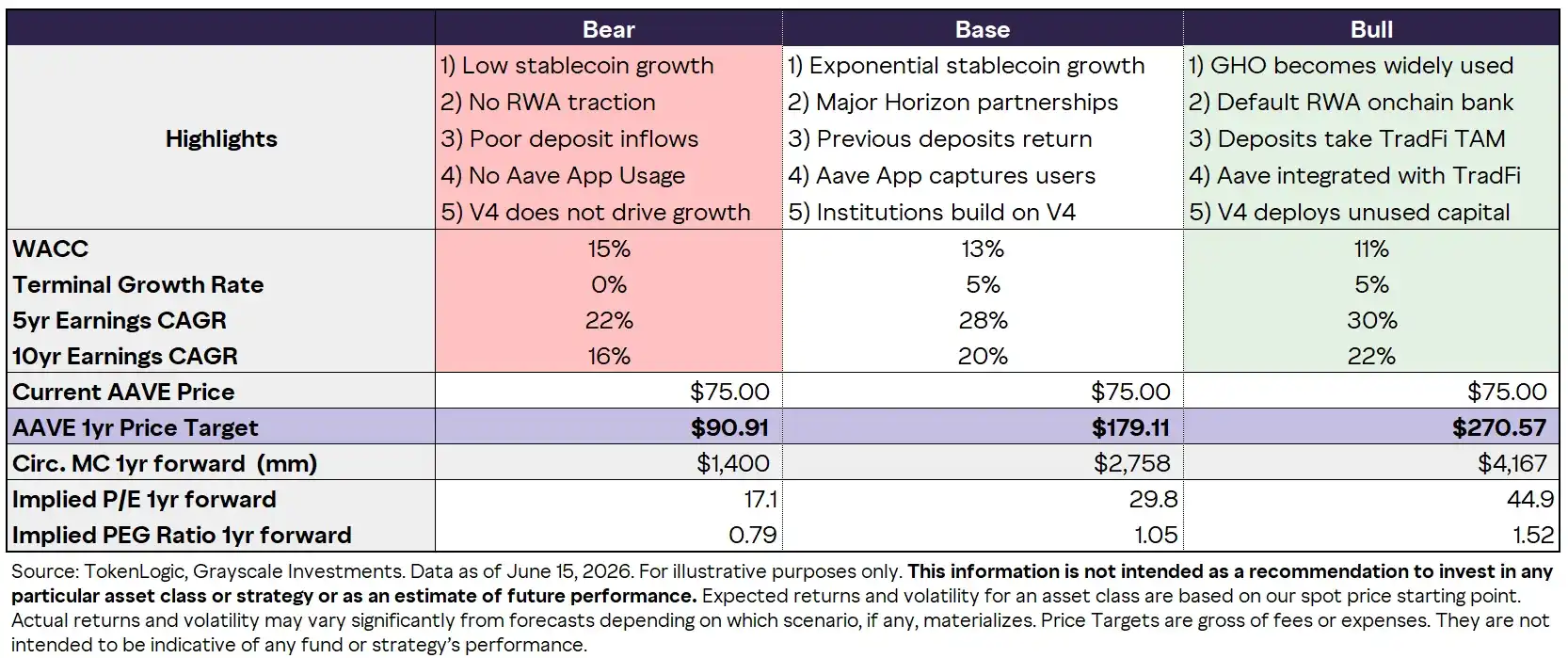
These scenarios provide one-year price targets. The wide target range primarily reflects the high uncertainty in the macro environment regarding stablecoin growth and institutional DeFi adoption. However, with its absolute dominance in the DeFi ecosystem, diversified revenue streams, and a robust treasury, Aave possesses strong downside resilience. This means that at the current price, its risk-reward ratio is very attractive regardless of which scenario unfolds.
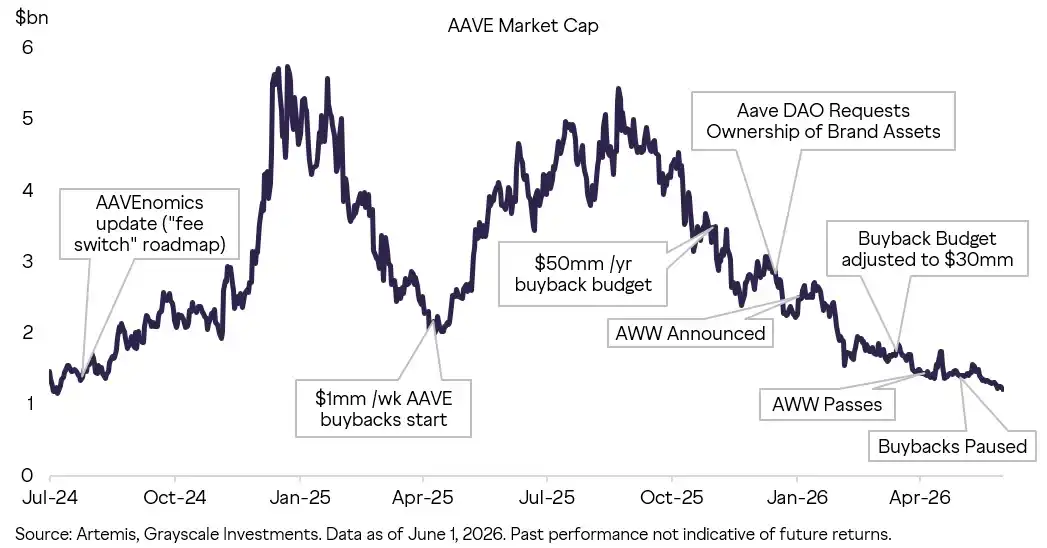
Aave's recent evolution in governance further strengthens the alignment between protocol economic benefits and AAVE token holder value. Previously, Aave's revenue streams primarily supported broad ecosystem needs (including paying service providers, providing various incentives, covering security costs, and supporting growth initiatives), making value capture for token holders relatively indirect.
Recent governance proposals have increasingly leaned towards directing these economic benefits towards the DAO, through specific means such as re-evaluating contracts with service providers, clarifying ownership of protocol-related assets, introducing AAVE buyback-and-burn mechanisms, and aligning capital allocation more explicitly around the token.
This marks a significant transformation in Aave's economic model: shifting from initially funding extensive protocol growth to finding a balance between 'protocol reinvestment' and 'governance-approved, disciplined value return to AAVE holders.' Over the past two years, Aave initiated buybacks (currently paused post-rsETH incident) and implemented the 'Aave Will Win (AWW)' framework to direct value into the DAO.
Although this is a complex and iterative process, aligning protocol and token holder interests is a necessary path for the crypto industry's next stage of growth.
Chart 12: Correlation Between Token Value Capture Evolution and AAVE Historical Price Movement
How Important Are Token 'Value Capture' Mechanisms?
Remember one thing: A project making money does not mean its token is valuable.
In traditional stock markets, investors can typically analyze revenue, profit margins, and free cash flow through shareholder ownership and residual claims.
But in DeFi, there is no uniform standard for how project earnings are handled, nor for the relationship between protocol economics and token holder value: fees can be retained by the protocol, held in the treasury without distribution, used to subsidize liquidity providers, or redistributed to token holders through governance mechanisms. The most common methods for distributing value are: burning, buybacks, rebates, and staking.
Chart 13: Four Mainstream Structures Driving Token Value Capture in DeFi Protocols
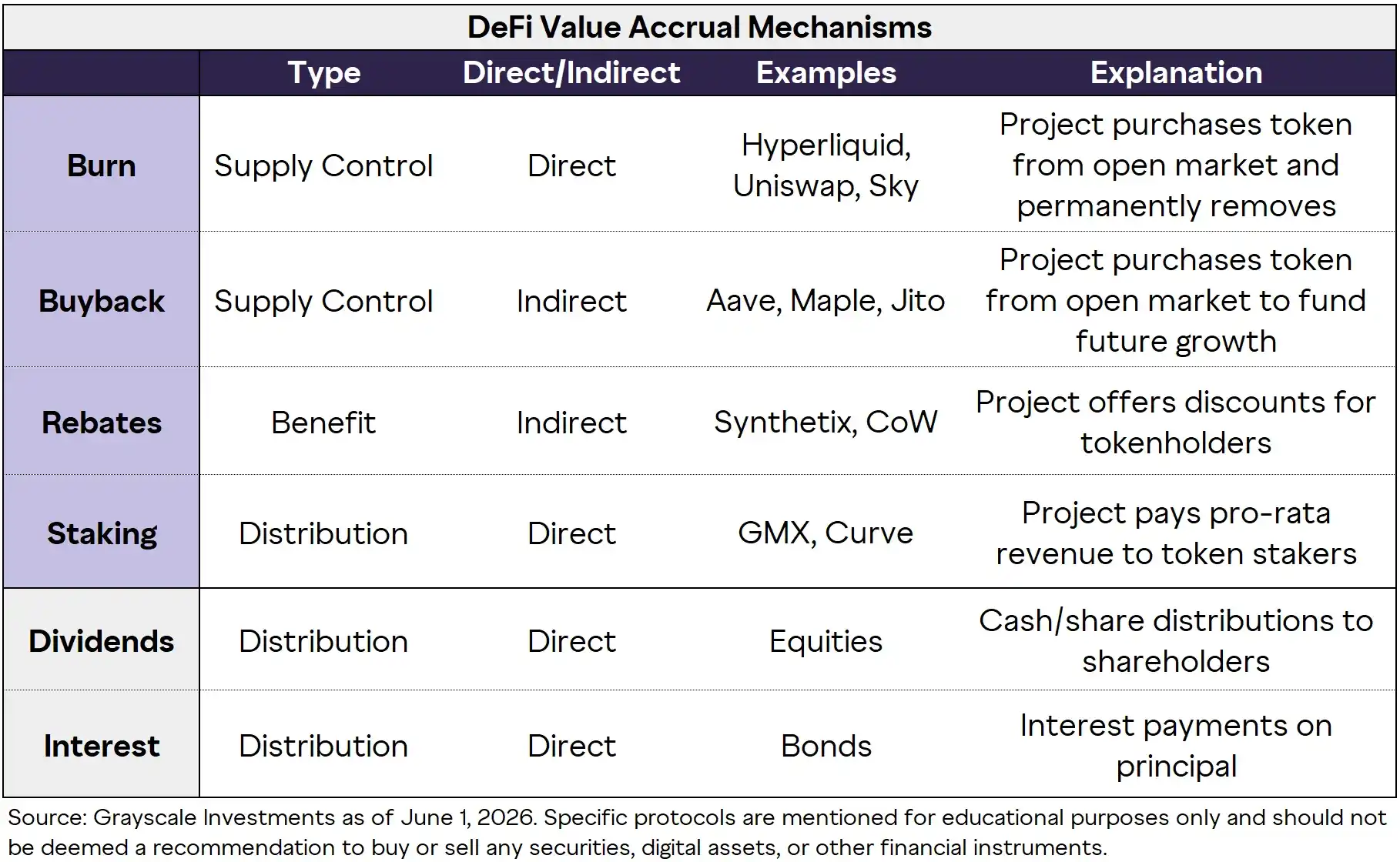
These mechanisms differ significantly in directness, sustainability, and economic impact. Some protocols return value through explicit supply reduction or dividend distribution, while others rely on more indirect utility-based benefits (like discounts or treasury allocations controlled by governance). This leads to one outcome: the proportion of protocol earnings that ultimately reach token holders varies greatly.
Therefore, valuing DeFi is not merely measuring top-line protocol revenue; investors must also rigorously assess the 'conversion rate from protocol economics to token value.' The stronger and more transparent this conversion mechanism, the more suitable it is to apply a cash-flow-oriented valuation framework to the token.
It must be reiterated that not all protocol revenue is economically attributable to token holders unconditionally. Fees generated by DeFi protocols often need to first incentivize supply-side users (e.g., depositors, LPs) and cover operational expenses. Therefore, protocol profit (rather than total fee revenue) may better reflect the cash flow that can ultimately support token holder value growth.
Across the DeFi industry, there is a vast difference in profitability and the willingness to distribute profits back to token holders among different protocols. This disparity can largely be attributed to fundamental differences in the underlying business models across different DeFi sectors.
Chart 14: Differences in Protocol Profit Conversion to Token Holders (Example of Major DeFi Protocols)
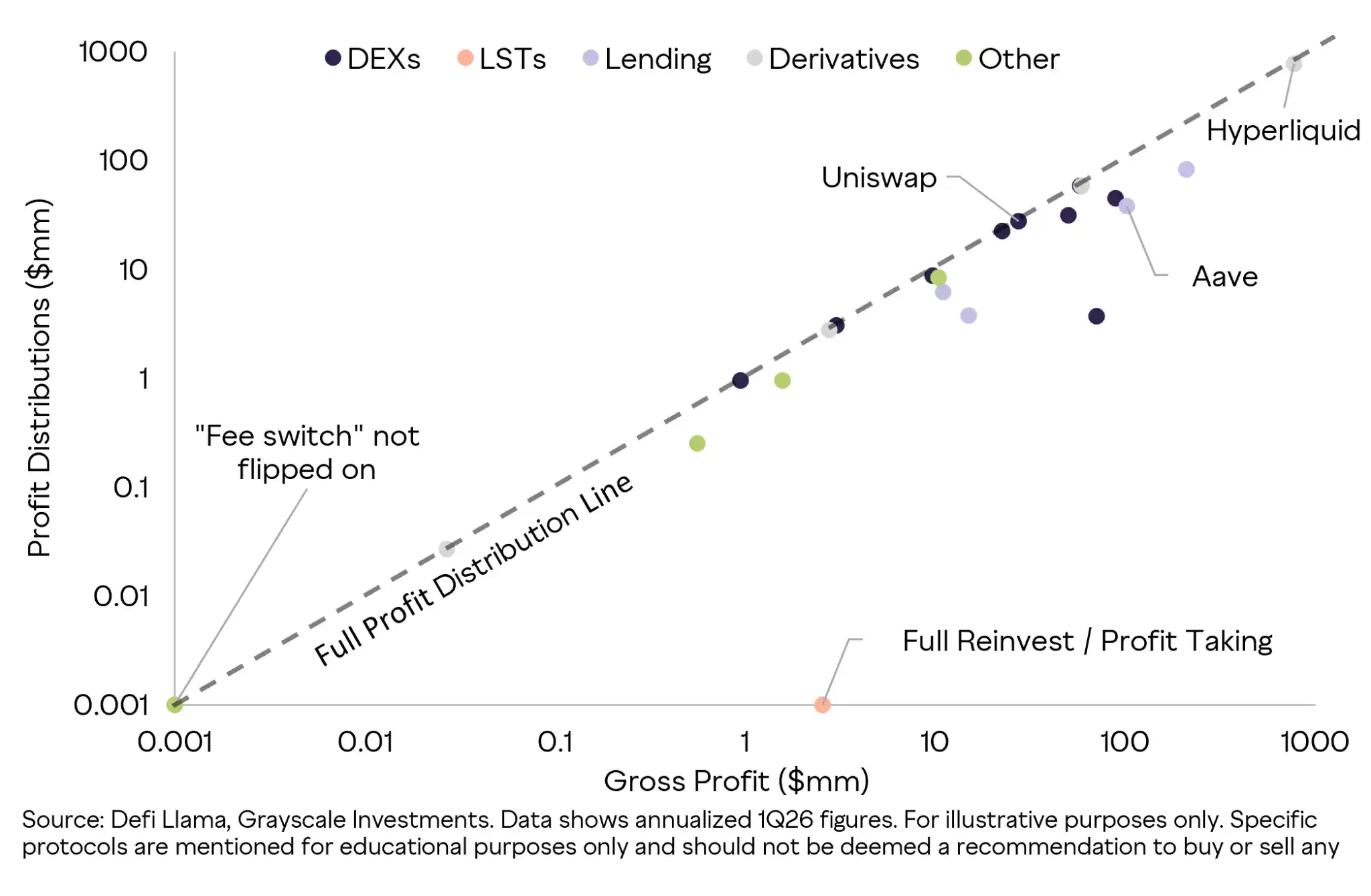
This wide dispersion precisely illustrates why we must not rely solely on a protocol's total revenue to value DeFi tokens. Two projects earning the same amount may deliver drastically different actual returns to token holders due to differences in cost structure, governance decisions, treasury policies, and specific value capture mechanisms.
Of course, a low distribution rate is not necessarily bad—if retained profits are efficiently reinvested into initiatives that enhance the token's long-term value (e.g., improving liquidity, strengthening security, accelerating product development, user subsidies, or ecosystem integration), this is also healthy.
Thus, investors must closely monitor two aspects, similar to reading corporate financial reports: How much profit is returned to token holders today? And are retained profits deployed efficiently? Only projects that can earn significant profits, reinvest reasonably, and have transparent distribution mechanisms deserve high valuations using cash flow models.
DAO's Identity Ambiguity and Regulatory Breakthrough
The crypto space also faces an unavoidable practical issue: whether token holders have legal, enforceable claims to protocol-related assets or cash flows.
In traditional stock markets, shareholders typically have clear governance rights, residual claims on company assets, and potential economic claims on future cash flows. Token holders, however, often rely solely on smart contracts, DAO governance processes, treasury multi-signature controls, and community social consensus. In most cases, holding tokens does not automatically grant proportional claims to protocol assets or legally enforceable claims on future revenue. Yet, a fully decentralized DAO can forcibly align token holder interests with the protocol's direction through entirely transparent token voting.
To address this legal ambiguity, an increasing number of DAOs are adopting 'legal wrappers,' aiming to grant DAOs legal personhood, limit participants' personal liability, and enable off-chain activities like contracting, hiring, treasury management, and holding intellectual property. Common legal structures include Limited Liability Companies (LLCs), offshore foundations, special purpose trusts, and, more recently, the highly anticipated 'Decentralized Unincorporated Non-Profit Association (DUNA).' These structures can significantly improve operational clarity and protect members from unlimited liability, but they do not automatically transform governance tokens into equity-like claim rights. In the vast majority of cases, token holders' economic interests still depend on governance decisions and explicit on-chain value capture mechanisms, not default legal ownership.
Chart 15: Comprehensive Comparison Between DAOs and Traditional Legal Entities
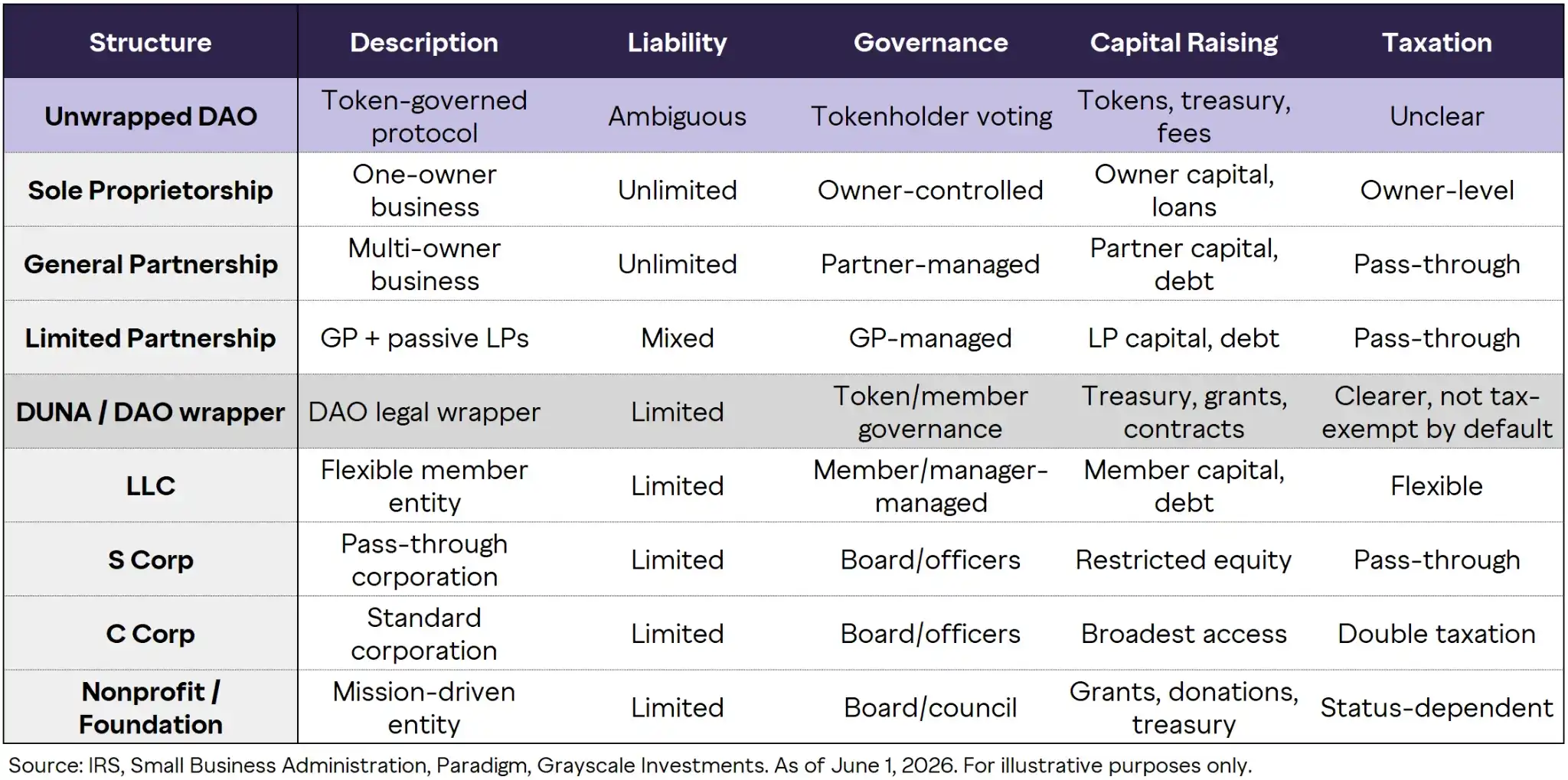
DAO governance can help solve the value capture challenge by granting token holders direct control over protocol economics. In publicly traded stocks, shareholders typically rely on management and boards of directors for capital allocation, often creating potential 'principal-agent' conflicts when management incentives diverge from shareholder returns.
Conversely, protocols governed by DAOs allow token holders to vote directly on business details like treasury management, fee parameters, incentive budgets, buybacks, and burns. While this structure does not eliminate governance risks like low voting participation, high token concentration, or regulatory uncertainty, reliable governance architecture and clear voting rights establish a more direct channel between protocol success and token holder value.
The legal and governance considerations for DAOs are not purely theoretical; they are central to determining how DeFi tokens should be correctly valued. DeFi protocols can generate clear, visible revenue, but token holders do not automatically have a claim to that revenue like shareholders have a claim on a company's residual value. Therefore, the core valuation question shifts from 'Does the protocol make money?' to 'Through what path (if any) do the protocol's earnings flow and accrue to the token?'
Additionally, prediction markets currently suggest a 51% probability that the CLARITY Act, designed specifically to define the legal status of crypto projects, will pass in 2026. The core of this bill is assessing governance centralization and administrator privileges to determine if an entity is sufficiently 'decentralized,' primarily based on factors like governance concentration, protocol upgrade/admin privileges, and associated party influence.
This framework strictly distinguishes 'network assets' from tokens still deeply tied to investment contracts, issuers, and associated controlling persons. Since DAOs are inherently decentralized, the focus is on token holder concentration: who holds the voting power. We believe mature DeFi projects like Aave are likely to meet the criteria for classification as network assets; however, some ambiguity remains.
Moving Beyond Hype, Embracing Fundamentals
As the crypto market matures, valuation frameworks are rapidly catching up to the underlying economic substance. Many leading protocols are now steadfastly implementing economic initiatives that directly convert protocol activity into token value accumulation. For investors skilled in applying rigorous, context-specific valuation frameworks, they stand to capture substantial gains from the pricing misalignments that still prevail.
With regulatory clarity and institutional entry, market leadership is voting with its feet: moving away from purely narrative-driven speculative tokens and flowing towards pragmatic sectors demonstrating genuine adoption, sustainable business models, and observable financial fundamentals.
Chart 16: Crypto Market Performance Returns for Protocols 'Creating Real Value' (Token Performance Since Year Start)
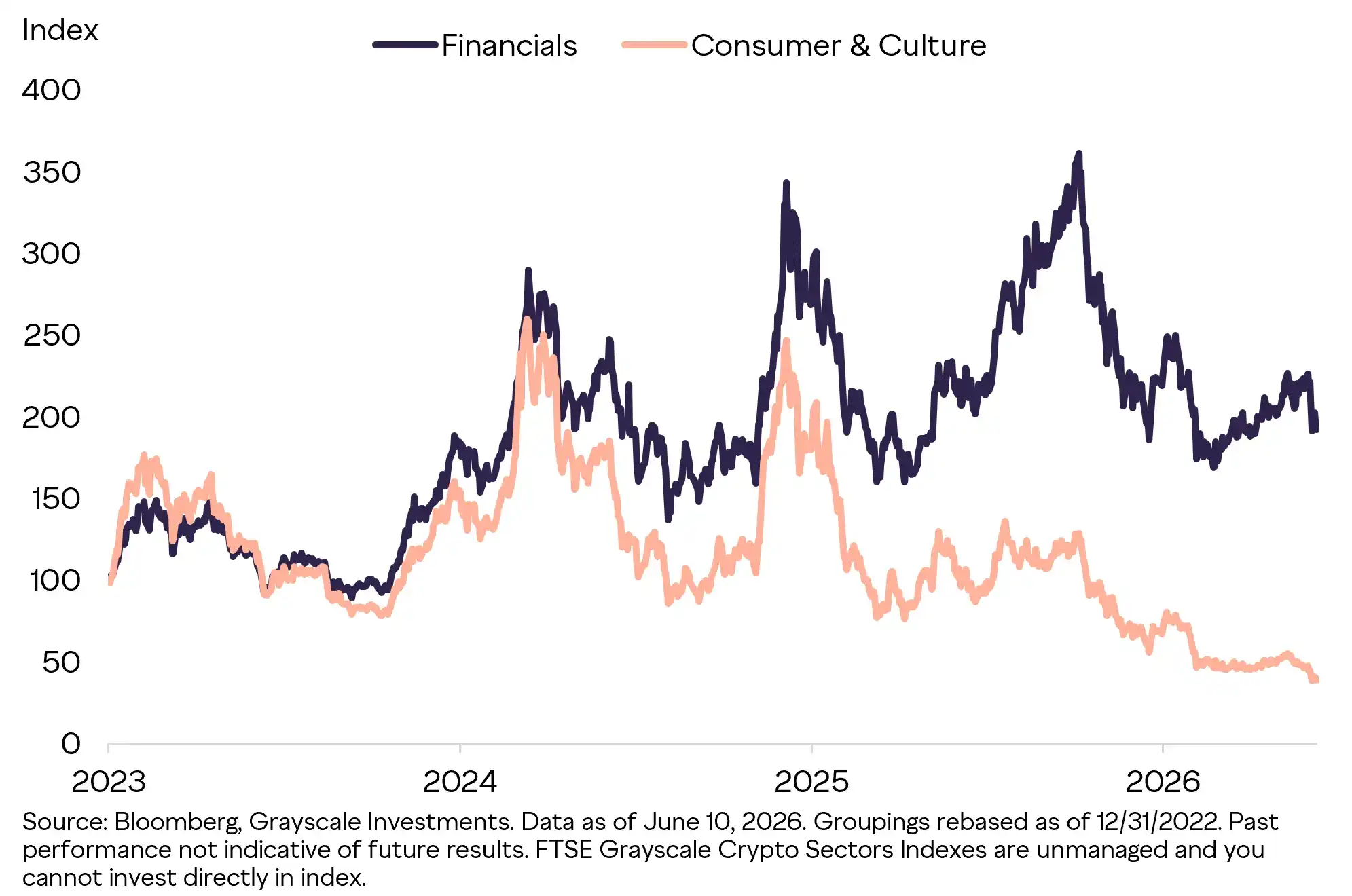
The divergence in crypto market performance this year is no accident. It profoundly reflects a thorough reshuffling and repricing occurring across the entire market—capital is leaving purely speculative projects and firmly flowing towards assets with substantive revenue and disciplined capital allocation.
Aave is the best epitome of this evolution: it translates genuine product-market fit into an exceptionally impressive financial statement, compelling us to re-evaluate it through the lens of traditional financial business analysis.
For investors seeking exposure to the next stage of crypto market development, discard those illusory fantasies. Thoroughly examine projects that are genuinely profitable, like Hyperliquid, Aave, Uniswap, Sky, and Maple, and calculate their worth using price multiples and fundamentals. You will find that golden opportunities for value investors have clearly emerged.