TON Revives the Gram Brand, a Name That Disappeared Six Years Ago Returns

marsbitXuất bản vào 2026-06-10Cập nhật gần nhất vào 2026-06-10

Tóm tắt

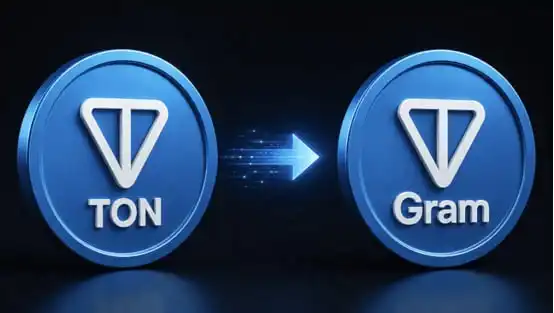
After a community vote with over 81% support, The Open Network (TON) is officially renaming its native token from Toncoin back to Gram (with ticker GRAM), effective June 15. This move reclaims the original name from the project's 2018 inception under Telegram, before regulatory issues forced its halt. The rebrand to Gram is part of the "Make TON Great Again" strategy and is seen as more than a simple logo change. It aims to leverage the historical brand recognition and narrative associated with Telegram’s initial vision of a global blockchain network. Gram evokes the original story of bringing crypto to Telegram's massive user base. This shift comes as TON is experiencing significant growth, driven by Telegram's over 1 billion monthly active users and viral mini-apps like Notcoin. The ecosystem is expanding in wallets, active addresses, and payment use cases. Analysts suggest the name change could strengthen TON's unique identity in a crowded Layer 1 market by deepening its association with Telegram's vast distribution channel. While potentially boosting short-term market attention, the long-term focus remains on Gram's utility within Telegram's evolving ecosystem, particularly for payments, transfers, and mini-app transactions. The ultimate goal is for Gram to become a widely used digital currency within one of the world's largest social platforms.

Author: Winnie, CryptoPulse Labs

On June 9th, the results of the TON Vote community governance were announced. Over 81% of voters supported changing the native token name from Toncoin to Gram, and the token code will also change from TON to GRAM, with the changes scheduled to take effect officially on June 15th.

On the surface, this seems like just a brand upgrade, but for old players who experienced the Telegram token issuance saga, the name "Gram" carries the initial ideals and story of TON.

More importantly, against the backdrop of Telegram's monthly active users exceeding 1 billion, the TON ecosystem re-entering a growth cycle, and the rapid expansion of its on-chain payment and Mini App ecosystem, this renaming may be far more significant than just a logo change.

I. Behind TON's Brand Upgrade: Gram Officially Returns to the Crypto Market

Let's go back to 2018. At that time, Telegram founder Pavel Durov launched the TON (Telegram Open Network) plan, aiming to build a blockchain network covering hundreds of millions of users worldwide.

The project's whitepaper explicitly stated that the name of the network's native currency would be "Gram."
During the fervent ICO era, TON once set a fundraising record of $1.7 billion and was seen as one of the blockchain projects with the greatest potential for mass adoption.

However, in 2020, the U.S. SEC sued Telegram for allegedly conducting an unregistered securities offering. Ultimately, Telegram was forced to halt project development and refund investors.

Many thought TON was over, but the story didn't end there.

Subsequently, the open-source community took over the code and continued development. The project gradually evolved into today's The Open Network. To distinguish it from the original project, the community renamed the token to Toncoin, while keeping the token code as TON.

After several years of development, TON has re-emerged as a mainstream public chain. And now, with the token officially renamed to Gram, this name that had been dormant for years finally returns to the market's view.

An important step in the "Make TON Great Again" plan. Officials stated that this renaming is the fourth step in the "Make TON Great Again (MTGA)" seven-step strategy.

Based on public information, the TON team is driving a comprehensive brand overhaul. This upgrade mainly includes changing Toncoin to Gram, changing the TON code to GRAM, launching a new logo and visual system, synchronizing updates to wallets and ecosystem applications, and gradual adaptation by trading platforms.

It's noteworthy that only the token brand is changing; the blockchain network will maintain the name "The Open Network." In other words, the TON chain remains the TON chain, but the currency on the chain is once again called Gram.

This is similar to the Ethereum network keeping its name while ETH suddenly changes. Therefore, this is not a technical upgrade but a brand strategy adjustment.

In the crypto market, narrative is often more important than technology. For many veteran players, Gram represents TON's original dream. It is the story from 2018 that attempted to bring blockchain to hundreds of millions of global users; it is also a significant symbol of Telegram's challenge to the traditional financial system.

II. From Public Chain Competition to Brand Competition, TON is Seeking Differentiation

If we rewind two years, TON might not have had the conditions to rename, but the situation today is completely different.

Over the past year, Telegram has become one of the fastest-growing Web3 traffic portals globally. Especially after the explosion of hit applications like Notcoin and Hamster Kombat, a large number of users were exposed to on-chain assets for the first time.
The TON ecosystem's user base has rapidly expanded, with continuous growth in wallet numbers, on-chain active addresses, payment scenarios, and developer numbers.

For TON, it is no longer an experimental project; it has begun to become a large-scale ecosystem with a real user base. Against this backdrop, the timing for a brand upgrade has matured. Reviving "Gram" may be about strengthening the Telegram DNA.

In fact, "Toncoin" has always had a problem. Although it is highly aligned with the TON network name, it lacks a sufficiently distinct brand memory point.

Gram is different. This name is deeply tied to Telegram's history. Just mentioning Gram will remind veteran users of a series of keywords: Telegram, Pavel Durov, the $1.7 billion fundraising, the vision for global payments, Web3 super apps, etc. This brand equity is something Toncoin cannot provide.

For TON, re-adopting Gram is equivalent to reactivating brand value that has been dormant for years. This can help TON establish a more unique cognitive label in the fiercely competitive public chain market.

Currently, competition in the Layer1 track is intensifying. Besides Ethereum, new public chains like Solana, Sui, and Aptos are all vying for users and developers.

The technological gap is gradually narrowing, and what can truly create a difference is starting to become brand and traffic.

From this perspective, TON's biggest advantage is not TPS or gas fees, but the Telegram behind it. A global user base exceeding 1 billion is a moat difficult for other public chains to replicate. And the name Gram can further strengthen this association.

In the future, when users mention Gram, they will think not just of a token, but of the entire Telegram ecosystem. This is precisely the effect TON hopes to achieve.

III. From Token Upgrade to Ecosystem Expansion, Can Gram Open Up New Space?

Looking at historical experience, the crypto community often reacts positively to brand upgrades. Whether it's a project name change, token split, or visual upgrade, it can become a focus of short-term capital attention.

The reason is simple: a brand upgrade means a new story. And the market loves stories the most. Gram's return also possesses this attribute.
For a period of time in the future, "Gram's Revival" is likely to become a new communication theme for the TON ecosystem. For the trading market, this narrative has the potential to increase attention and capital inflows.

Of course, a name change alone cannot support prices long-term. What truly determines value remains ecosystem development. The Telegram payment system may be further improved

Compared to short-term price fluctuations, TON's future payment layout is more worthy of attention. From its inception, Gram was positioned as a digital payment currency. Its goal is not merely as an investment asset, but to become a medium of value exchange within the Telegram ecosystem.

Now, with the development of the Telegram Stars system, the expansion of the Mini App ecosystem, and the increase in on-chain payment scenarios, Gram's application space is gradually opening up.

If Telegram further integrates its payment system in the future, Gram may take on an even more central role, which is also one of the long-term logics the market is most concerned about.

Over the past few years, most public chains have been competing for developers. TON seems to have chosen a different path; it attempts to embed blockchain directly into the social platform users are already accustomed to using.

This model is somewhat similar to the development path of WeChat Pay. Users don't need to understand the underlying technology; they just need to complete payments, transfers, tipping, or game operations, with the blockchain hidden in the background.

If this model ultimately proves successful, TON could become the first Web3 network to truly achieve mass adoption by hundreds of millions of users. And Gram would be the core value carrier within this ecosystem.

Therefore, the significance of this renaming may far exceed market imagination. It is not just a brand return, but could be the beginning of TON redefining its own positioning.

Conclusion

For the market, Gram is not just a token name; it represents the dream Telegram once had of building a global digital economic network.

And now, against the backdrop of Telegram's traffic, on-chain payments, the Mini App ecosystem, and the continuous integration of AI applications, this dream may be getting a second chance.

In the coming years, what's truly worth watching may not be that TON changed its name. It is whether Gram can leverage Telegram's vast user network to grow into the crypto industry's first genuinely global internet currency.

Câu hỏi Liên quan

QWhat was the result of the TON Vote community governance on June 9th regarding the native token's name?

AThe result of the TON Vote community governance on June 9th showed that over 81% of voters supported changing the native token name from Toncoin to Gram, with the token code changing from TON to GRAM. This change was planned to take effect officially on June 15th.

QWhat is the historical significance of the name 'Gram' for the TON project?

AThe name 'Gram' holds historical significance as it was the original name for the native currency in the 2018 whitepaper of the TON (Telegram Open Network) project launched by Telegram founder Pavel Durov. It represents the initial vision and story of TON, which was later halted due to a lawsuit from the U.S. SEC in 2020, before being revived by the open-source community.

QAccording to the article, what is the 'Make TON Great Again (MTGA)' plan and where does the token rename fit into it?

AThe 'Make TON Great Again (MTGA)' plan is a seven-step strategic initiative by the TON team. The token rename from Toncoin to Gram is the fourth step in this plan, which is part of a broader brand reshuffling effort that also includes a new logo, visual identity, and updates across wallets, ecosystem applications, and trading platforms.

QHow does the article describe the current competitive advantage of TON compared to other Layer1 blockchains?

AThe article states that TON's biggest competitive advantage is not its TPS or gas fees, but its association with Telegram and its user base of over 1 billion monthly active users. This provides a massive, unique traffic moat that other Layer1 blockchains like Solana, Sui, and Aptos cannot easily replicate. The rebranding to 'Gram' is seen as a way to further strengthen this association.

QWhat potential long-term role does the article suggest for Gram within the Telegram ecosystem?

AThe article suggests that Gram has the potential to become a core medium of value exchange within the Telegram ecosystem, similar to how WeChat Pay functions. As Telegram expands its payment systems (like Telegram Stars), Mini App ecosystem, and on-chain payment scenarios, Gram could evolve into the first truly global internet currency for the crypto industry, facilitated by Telegram's vast user network.

Nội dung Liên quan

Bitcoin Tách Biệt Khỏi Thanh Khoản M2 Toàn Cầu Khi Cung Tiền Đạt Mức Cao Kỷ Lục

Bitcoin đang tách biệt khỏi sự mở rộng kỷ lục của thanh khoản toàn cầu (M2 đạt 135 nghìn tỷ USD), trong khi giá của nó vẫn ở quanh mức 60.000 USD, thấp hơn nhiều so với đỉnh năm 2025. Sự phân kỳ này đặt ra câu hỏi liệu mối quan hệ lịch sử - nơi thanh khoản tăng thường kéo theo Bitcoin tăng - có còn nguyên vẹn hay không. Có hai cách giải thích chính. Lập luận lạc quan cho rằng Bitcoin chỉ đang tụt hậu tạm thời và sẽ bắt kịp khi dòng tiền luân chuyển vào các tài sản rủi ro cao hơn. Trong khi đó, quan điểm thận trọng hơn cho rằng cấu trúc thị trường đã thay đổi: ETF spot, dòng tiền thể chế và sự phổ biến của AI có thể khiến Bitcoin phản ứng khác với thanh khoản, biến nó thành chỉ một trong nhiều yếu tố ảnh hưởng. Đối với nhà giao dịch, sự phân kỳ này tạo ra một khuôn khổ rõ ràng để kiểm chứng. Nếu Bitcoin tăng mạnh trở lại trong bối cảnh M2 vẫn cao, lập luận "tạm tụt hậu" sẽ được củng cố. Nếu nó tiếp tục trì trệ, quan điểm về sự thay đổi chế độ sẽ trở nên thuyết phục hơn. Điều quan trọng là theo dõi dữ liệu giá để xác nhận hướng đi tiếp theo, thay vì chỉ dựa vào một câu chuyện thanh khoản chung chung.

bitcoinist19 phút trước

Bitcoin Tách Biệt Khỏi Thanh Khoản M2 Toàn Cầu Khi Cung Tiền Đạt Mức Cao Kỷ Lục

bitcoinist19 phút trước

Các phe bồ câu trong Fed tập thể chuyển sang diều hâu, buổi ra mắt của Warsh "tiến thoái lưỡng nan"

Bài báo phân tích bối cảnh chính sách khó khăn mà Chủ tịch Cục Dự trữ Liên bang Mỹ (Fed) Kevin Warsh đối mặt trong cuộc họp lãi suất đầu tiên do ông chủ trì. Trước đây được Tổng thống Trump lựa chọn với lập trường thiên hướng giảm lãi suất (dovish), nhưng hiện tại Fed đang chuyển hướng thảo luận về khả năng tăng lãi suất do lạm phát Mỹ tăng cao (vượt 3%), thị trường lao động mạnh và áp lực từ giá dầu. Các quan chức "dovish" như Christopher Waller đã thay đổi lập trường, không loại trừ khả năng tăng lãi suất trong tương lai. Ngay cả những thành viên trung lập như Lisa Cook cũng bắt đầu cởi mở với ý tưởng tăng lãi suất nếu lạm phát không giảm. Trong khi đó, phe "hawkish" (thiên hướng thắt chặt) đã từ lâu phản đối việc giảm lãi suất và nay càng củng cố lập trường, lo ngại rằng lãi suất thực tế đang giảm. Dự kiến, Fed sẽ giữ nguyên lãi suất trong cuộc họp này, nhưng có thể xóa cụm từ "thiên hướng nới lỏng" khỏi thông cáo và điều chỉnh "dot plot" để phản ánh ít kỳ vọng giảm lãi suất hơn, thậm chí có thể có dự báo tăng lãi suất. Bài báo nhấn mạnh tình thế tiến thoái lưỡng nan của Chủ tịch Warsh: ông phải điều hành một Ủy ban mà mình không trực tiếp lựa chọn, sử dụng các công cụ dự báo mà ông từng chỉ trích, và có thể phải dẫn dắt Fed theo hướng đi ngược lại mong muốn của người đã bổ nhiệm ông. Thông điệp chính từ cuộc họp này có thể là bước đi tiếp theo của Fed nhiều khả năng là tăng lãi suất.

marsbit29 phút trước

Các phe bồ câu trong Fed tập thể chuyển sang diều hâu, buổi ra mắt của Warsh "tiến thoái lưỡng nan"

marsbit29 phút trước

Một ngàn tỷ vốn hóa của "Ý Trung Thiên", ai mới là vua của giá trị đáng đồng tiền?

Nhà phân tích "Lý Nhất Ân" đã tìm thấy chìa khóa của mình khi liên tục nhấn mạnh tiềm năng của mô-đun quang và năng lực tính toán. "Dị Trung Thiên" - biệt danh của ba ông lớn ngành mô-đun quang Trung Quốc là Tân Dịch Thịnh, Trung Tế Từ Sáng và Thiên Phu Thông Tín, đã chứng kiến mức tăng trưởng vượt bậc, tổng vốn hóa tăng hơn 1.000 tỷ nhân dân tệ, phản ánh kỳ vọng mạnh mẽ vào tương lai 2-3 năm tới. Bài viết so sánh "tính hiệu quả chi phí" của ba công ty dựa trên ba thước đo: PEG (tỷ lệ P/E động chia cho tốc độ tăng trưởng), chất lượng lợi nhuận và mức chiết khấu/giá trị cộng thêm cho tính chắc chắn. * **Tân Dịch Thịnh:** Có PEG thấp nhất (~0.30) và chất lượng lợi nhuận tốt nhờ lợi thế chi phí. Tuy nhiên, mức định giá thấp phản ánh rủi ro về mức độ phụ thuộc vào một số khách hàng lớn, tỷ lệ doanh thu từ nước ngoài cao và câu chuyện công nghệ dài hạn chưa thực sự thuyết phục so với đối thủ. * **Trung Tế Từ Sáng:** Là công ty có tính chắc chắn cao nhất, dẫn đầu thị phần với NVIDIA và lợi thế về công nghệ thế hệ 1.6T. Tuy nhiên, định giá của họ cao nhất (P/E cao hơn Tân Dịch Thịnh 40%), phản ánh mức phí bảo hiểm cho vị thế dẫn đầu. Rủi ro chính đến từ các yếu tố địa chính trị. * **Thiên Phu Thông Tín:** Hoạt động ở thượng nguồn (cung cấp linh kiện, bộ phận), có biên lợi nhuận cao nhất và được hưởng lợi từ xu hướng chuyển đổi kiến trúc CPO/NPO. Tuy nhiên, mức tăng trưởng ổn định nhưng ít biến động hơn, và định giá rất cao (P/E ~122). Việc không đáp ứng kỳ vọng lợi nhuận quý I/2026 cho thấy sự khác biệt cơ bản trong mô hình kinh doanh so với các nhà sản xuất mô-đun. Bài viết chỉ ra một biến số ẩn quan trọng: phần lớn lợi nhuận thực sự và hào rào cạnh tranh trong ngành nằm ở hai đầu chuỗi giá trị - chip laser và chip chuyển mạch, hiện do các công ty Mỹ như Lumentum và Coherent thống trị. "Dị Trung Thiên" chủ yếu kiếm tiền từ công đoạn lắp ráp. Do đó, tính hiệu quả chi phí lâu dài thực sự phụ thuộc vào việc ngành công nghiệp Trung Quốc có thể thành công trong việc thâm nhập vào thị trường chip laser thượng nguồn hay không, như những nỗ lực của công ty Nguyên Kiệt Khoa Kỹ. Đây là yếu tố then chốt để xác định liệu họ có chỉ kiếm được "đồng tiền vất vả" hay có thể nắm bắt được phần giá trị béo bở hơn.

marsbit37 phút trước

Một ngàn tỷ vốn hóa của "Ý Trung Thiên", ai mới là vua của giá trị đáng đồng tiền?

marsbit37 phút trước

Thị trường tiền điện tử đã chạm đáy chưa? Các tổ chức nhận định như thế nào

**Thị trường tiền mã hóa đã chạm đáy chưa? Các tổ chức lớn có quan điểm khác nhau** Trong hai tuần gần đây, ba tổ chức nghiên cứu uy tín trong ngành tiền mã hóa đã công bố các báo cáo chuyên sâu về cùng một chủ đề: liệu thị trường đã chạm đáy? * **Galaxy Digital**: Bitcoin **chưa** chạm đáy. Dựa trên 13 chỉ số lịch sử, họ ước tính đáy tiềm năng nằm trong khoảng 30.000 - 54.000 USD, với mức trung tính là 40.000 - 46.000 USD. * **NYDIG**: Có **thể** đã chạm đáy, nhưng khả năng không cao. Các chỉ số cho thấy thị trường gần vùng cực đoan của đáy lịch sử, nhưng chưa có sự bán tháo hoảng loạn điển hình. Dòng tiền thể chế có thể đã làm giảm biên độ điều chỉnh. * **Standard Chartered (Ngân hàng Standard Chartered)**: Đáy **đã xuất hiện** ở mức 59.000 USD. Họ lập luận rằng áp lực bán từ ETF đang giảm dần và dự báo Bitcoin có thể chạm 100.000 USD trong năm nay. **Mặc dù có sự khác biệt về dự đoán mức giá chính xác, cả ba báo cáo đều có chung những điểm đồng thuận quan trọng:** 1. **Đáy thị trường sẽ xuất hiện trong năm nay.** 2. **Giá hiện tại gần với mức đáy hơn là đỉnh trước đó.** 3. **Tất cả đều lạc quan về một chu kỳ tăng giá mới của Bitcoin trong tương lai.** Bài viết nhấn mạnh rằng đối với nhà đầu tư dài hạn, sự đồng thuận này có ý nghĩa hơn là sự khác biệt về mức giá dự báo. Dù đáy là 40.000, 50.000 hay 60.000 USD, khoảng cách này là tương đối nhỏ so với tiềm năng tăng lên 100.000 USD hoặc cao hơn trong tương lai. Logic cốt lõi hỗ trợ giá trị dài hạn của Bitcoin – như nợ chính phủ, lạm phát, quá trình số hóa và sự áp dụng ngày càng tăng – vẫn mạnh mẽ, khiến triển vọng hiện tại tích cực hơn so với bất kỳ "mùa đông" tiền mã hóa nào trước đây.

marsbit49 phút trước

Thị trường tiền điện tử đã chạm đáy chưa? Các tổ chức nhận định như thế nào

marsbit49 phút trước

Những “Nỗi Đau Cốt Lõi” và Cách Phá Thế Trong Chuỗi Cung Ứng Quang Học Trong Nước

Trong cuộc đua AI toàn cầu, ngoài chip xử lý, các mô-đun quang học (quang học) đóng vai trò then chốt trong việc kết nối và mở rộng quy mô cụm AI. Mỹ nắm giữ vị thế chi phối trong lĩnh vực chip điện tử then chốt cho các mô-đun quang học tốc độ cao, chủ yếu thông qua hai gã khổng lồ Marvell và Broadcom. Họ kiểm soát thị trường chip DSP (Bộ xử lý tín hiệu số) cao cấp, một thành phần thiết yếu cho các mô-đun 800G/1.6T, với thị phần kết hợp có thể lên tới hơn 90%. Các nhà sản xuất mô-đun quang học hàng đầu của Trung Quốc như Zhongji Innolight và Eoptolink phụ thuộc nhiều vào những chip này để xuất khẩu sang thị trường Bắc Mỹ, tạo ra lỗ hổng tiềm ẩn trong chuỗi cung ứng. Tuy nhiên, mối quan hệ này mang tính phụ thuộc lẫn nhau. Trung Quốc là cơ sở sản xuất mô-đun quang học lớn nhất toàn cầu, đóng góp hơn một nửa doanh thu cho lĩnh vực chip quang của Marvell. Việc cắt đứt nguồn cung hoàn toàn sẽ gây thiệt hại cho chính các công ty Mỹ. Hơn nữa, chuỗi cung ứng chip của họ cũng dựa vào các nhà máy đóng gói, lắp ráp và linh kiện quang học từ Trung Quốc và Đài Loan. So với chip DSP, việc thay thế chip quang học tốc độ cao (như laser EML) có triển vọng hơn. Mặc dù các công ty Nhật-Mỹ như Lumentum hiện thống trị, nhưng thị trường có nhiều nhà cung cấp hơn và tiến độ thay thế nội địa Trung Quốc cũng nhanh hơn, với các sản phẩm 100G/200G EML đang trong giai đoạn thử nghiệm hoặc bắt đầu thương mại hóa. Để giảm thiểu rủi ro và chủ động hơn, ngành công nghiệp Trung Quốc có thể: 1. **Ngắn hạn**: Đa dạng hóa nhà cung cấp chip, ký kết hợp đồng dài hạn và phát triển thị trường nội địa cùng các khu vực khác. 2. **Trung hạn**: Thúc đẩy áp dụng chip DSP và chip quang nội địa trên quy mô lớn cho thị trường trong nước, xây dựng hệ sinh thái khép kín. 3. **Dài hạn**: Tập trung nghiên cứu phát triển để đuổi kịp công nghệ DSP tốc độ cao, đồng thời đầu tư vào các công nghệ mới như Silicon Photonics và CPO (Đóng gói quang học chung) để giảm sự phụ thuộc vào chip rời rạc. Tóm lại, mặc dù tồn tại điểm yếu chiến lược, thị trường nội địa rộng lớn và năng lực sản xuất mạnh mẽ của Trung Quốc tạo ra đệm an toàn. Giải pháp lâu dài nằm ở việc kiên trì đầu tư vào R&D, thúc đẩy thay thế nội địa và nắm bắt công nghệ mới để giành lại quyền chủ động trong chuỗi công nghiệp quang học.

marsbit1 giờ trước

Những “Nỗi Đau Cốt Lõi” và Cách Phá Thế Trong Chuỗi Cung Ứng Quang Học Trong Nước

marsbit1 giờ trước

Giao dịch

Giao ngay
Hợp đồng Tương lai
活动图片