Behind DeepSeek V4's Stunning Debut: Silicon Valley Is 'Building Walls,' China Is 'Paving Roads'

marsbitXuất bản vào 2026-04-26Cập nhật gần nhất vào 2026-04-26

Tóm tắt

China's AI landscape is witnessing a strategic divergence from Silicon Valley’s closed-source competition to a collaborative open-source ecosystem. On April 24, DeepSeek released V4, a top-ranked open-source model on Hugging Face, featuring breakthroughs like million-token context length with minimal KV cache and native support for domestic chips like Huawei’s Ascend. Similarly, Kimi’s K2.6, released days earlier, also adopted open-source principles. Unlike U.S. giants such as OpenAI and Anthropic—locked in revenue disputes and tactical product clashes—Chinese firms embrace shared innovation. DeepSeek and Kimi openly build on each other’s advances, like the MLA architecture and Muon optimizer, avoiding redundant R&D and driving down costs. DeepSeek V4 focused on pushing base model capabilities, while Kimi specialized in Agent-based applications. Although U.S. firms lead in revenue and valuation, China’s open-source models achieve comparable performance at a fraction of the cost (e.g., DeepSeek V3 trained for $5.58M vs. GPT-5’s $500M+). With token usage growing exponentially, China’s collaborative model promises scalable, affordable AI built on domestic hardware, shaping a more accessible path to AGI.

By Alter

On the morning of April 24th, the long-awaited DeepSeek V4 finally made its appearance.

That same day, DeepSeek-V4-Pro immediately topped the Hugging Face open-source model leaderboard, with two "bombshell innovations" being widely praised:

First, a million-token-level ultra-long context, but with a KV cache only 10% that of V3.2, praised by Amazon engineers as a solution to the HBM shortage problem;

Second, its adaptation to domestic chips, having closely collaborated with Huawei during R&D and promptly adapted to domestic chips like Ascend and Cambricon.
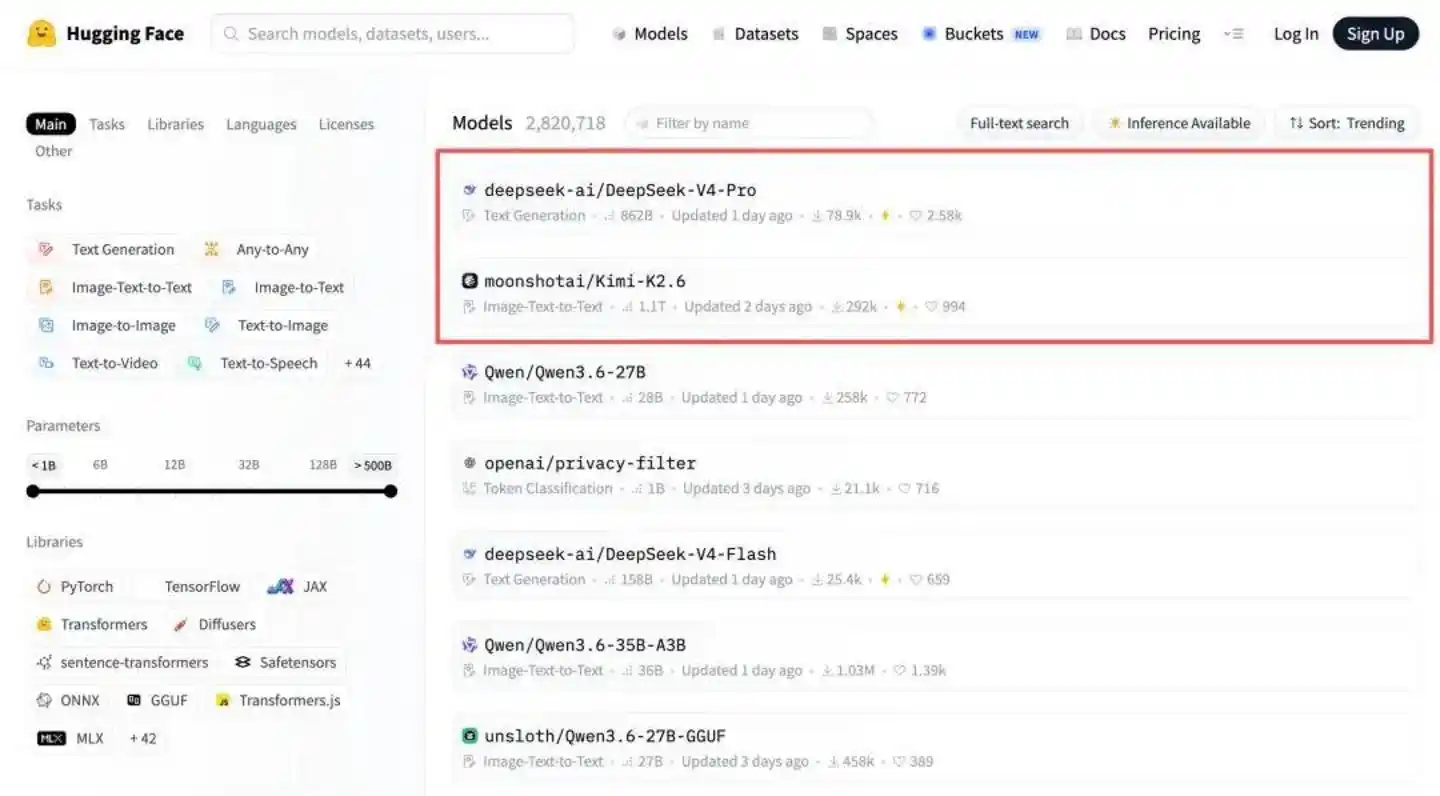
Coincidentally, ranked second on the Hugging Face open-source model leaderboard was Kimi K2.6, which was released and open-sourced late on April 20th.

If this were happening across the Pacific, the "clash" of two trillion-parameter models would inevitably lead to mutual attacks over valuations and commercial territories. Domestically, however, a completely different scene unfolded: there was no drama of exposing each other's secrets, no undercurrents of PR warfare, and even a "swap" at the technical foundation.

Behind this "unusual" situation lies a divergence in AI technology paths between China and the U.S.: Silicon Valley is frantically "erecting high walls," trying to protect vested interests through closed-source models; Chinese large model vendors, however, are choosing to "tear down the walls," moving toward collaborative evolution on the soil of open source.

01 Silicon Valley Trapped in a "Game of Thrones"

Unlike the open-source approach flourishing domestically, Silicon Valley's AI leaders—OpenAI, Anthropic, and Google's Gemini—are all staunch advocates of closed-source models.

As cutting-edge technological innovations are locked away in their respective data centers, under the pressure of computing costs and market expectations, the "Silicon Valley spirit" known for openness and collaboration is gradually fading. Players inevitably find themselves in a zero-sum "game of thrones."

Over the past two years, technical "shadow wars" have evolved into public spats. The most typical tactic is mutual "spotlight stealing": quickly unveiling their own major updates at competitors' key product launch moments to curb the other's momentum has become a routine operation in Silicon Valley.

As early as May 2024, OpenAI and Google simultaneously released new AI products, one claiming GPT-4o was globally leading, the other touting the Gemini family's coverage of the entire ecosystem and path. Eventually, the CEOs of both companies couldn't sit still, publicly mocking each other on social media.

It's not just a "tangle" with Google; the rivalry between OpenAI and Anthropic has also intensified: on April 16th, just after Anthropic released its new model Claude Opus 4.7, OpenAI announced a major update to Codex over two hours later, proclaiming "Codex for (almost) everything." It was clear to everyone that the timing was no coincidence but a carefully planned "snipe" by OpenAI against Anthropic.

Beyond the "cultural fights" in the court of public opinion, "military fights" of mutual "exposure" have also become the norm in Silicon Valley.

Anthropic proudly announced on April 7th that its annualized revenue had reached $30 billion, successfully surpassing OpenAI's $25 billion.

A week later, OpenAI's Chief Revenue Officer stated bluntly in an internal letter to all employees: Anthropic's claimed $30 billion in annualized revenue was seriously inflated because it used the "gross method," fully counting the share given to cloud service providers like Amazon and Google into its total revenue, resulting in an overestimation of about $8 billion.

The practice of undermining competitors in internal letters is uncommon in the tech industry, aiming无非是告诉投资人——Anthropic's growth myth is inflated.

And once hostility breeds, it permeates every decision.

After Anthropic "fell out" with the Pentagon for refusing to delete specific security clauses from a contract, OpenAI announced within hours that it had reached a cooperation agreement with the U.S. Department of Defense.

During the 2026 Super Bowl, Anthropic heavily advertised with a commercial whose content was "Advertising is entering the AI field, but it won't enter Claude." This was essentially a direct challenge to OpenAI, which had just begun testing ad features.......

Why have former "brothers-in-arms" come to such loggerheads?

The root lies in the inherent logic of the closed-source business model: the survival foundation of closed source is building moats, and the prerequisite for building moats is blocking technology diffusion, monopolizing the most advanced productivity. Coupled with incompatible technical routes and opposing product narratives, it naturally forms a Nash equilibrium: whoever "ceases fire" first will see their brand narrative collapse, ultimately sinking deeper into the quagmire of internal consumption.

02 The "Collaborative Evolution" of the Open-Source Camp

Turning the focus back to China, the script unfolds completely differently.

Rewind to over a year ago, the emergence of DeepSeek-R1 slammed the brakes on the狂奔的大模型创业赛 (frantic large model startup race), with the finalist large model "Six Little Tigers" being the first affected. The biggest difference from Silicon Valley is that DeepSeek did not play the role of a "shark" eating all the fish in the pond, but rather acted like a catfish that activated the entire Chinese large model ecosystem, leading everyone to embrace open source.

A direct example is Moonlight (Yue Zhi An Mian - 月之暗面), whose growth trajectory highly overlaps with DeepSeek's: both are startup teams that began in 2023, both maintain extremely small teams with high talent concentration, and both are firm believers in Scaling Law.

In July 2025, Moonlight released the world's first trillion-parameter open-source model, Kimi K2, openly stating in its technical report that it adopted the MLA architecture open-sourced by DeepSeek. For large models, the biggest nightmare of processing ultra-long text is the memory wall. The disruptive nature of the MLA architecture lies in its clever achievement of a staggering over 93% compression rate for KV Cache.

With the "industry standard" contributed by DeepSeek, large model teams like Moonlight no longer needed to reinvent the wheel, quickly reducing inference costs.

The story didn't stop there.

Looking through the DeepSeek V4 technical documentation, it details the model's architecture. One important upgrade was switching the optimizer for most modules from AdamW to Muon, achieving faster convergence speed and better training stability.
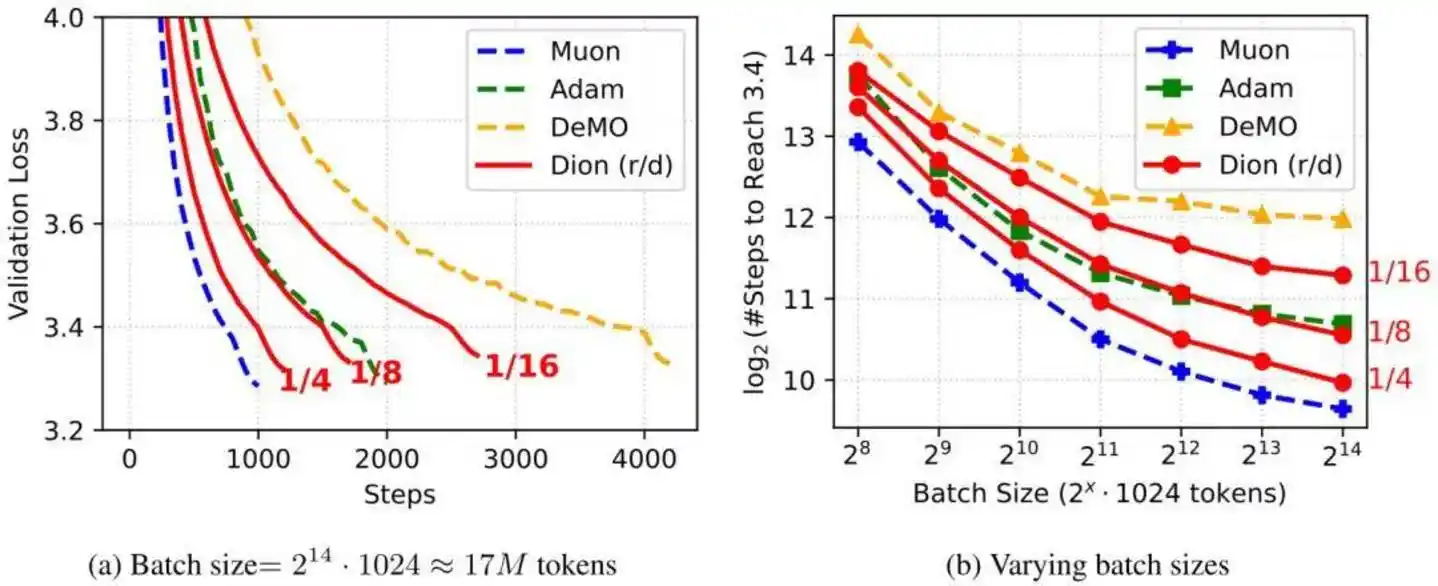
In the Kimi K2.6 technical documentation, the Muon optimizer is also mentioned, achieving a 2x efficiency improvement under the same training volume.

The Muon optimizer, mentioned by both models, was first proposed by independent researcher Keller Jordan in a blog post in late 2024. The Moonlight team, also troubled by AdamW, made key engineering improvements to Muon in early 2025, adding capabilities like Weight Decay and RMS control, and named it MuonClip.

Moonlight率先 validated the stability of the Muon optimizer on Kimi K2, achieving "zero Loss Spike" throughout pre-training. DeepSeek also adopted the validated Muon optimizer when training the V4 large model.

It's important to note that the "collaborative evolution" of open-source large models has not fallen into homogeneity but is moving towards a path of "harmony in diversity."

For example, DeepSeek-V4 focuses on core capabilities攻坚 of the base model, further solidifying the global open-source large model performance ceiling and providing the entire industry with a base foundation rivaling closed-source flagships; Kimi K2.6深耕 Agent engineering and落地, solving the pain points of long-range autonomous execution for large models, and打通关键路径 for large models to enter real production scenarios.

Throughout this process, there were no protracted商业谈判, no tense patent battles. In the open-source camp, technological innovation flows freely like water; whoever does it well, everyone uses it.

Absorbing nutrients from the open-source ecosystem, complementing each other in technical routes. China's large model vendors are demonstrating to the world another possibility beyond Silicon Valley through action.

03 The U.S. Is "Building Walls," China Is "Paving Roads"

While marveling at the collaborative evolution of open source, one must face a商业现实 squarely.

Currently, OpenAI and Anthropic's annualized revenues have both reached the tens of billions of USD, while the revenue of domestic leading large model vendors has just crossed the threshold of annualized $100 million.

OpenAI's valuation in the secondary market is about $880 billion, Anthropic's valuation has soared to around $1 trillion, while the valuations for Kimi and DeepSeek's latest funding rounds are $18 billion and $20 billion respectively.

Some exclaim that Chinese large model vendors are undervalued, while others believe: "The ability to translate technical reputation into real money is a life-and-death test facing Chinese companies." For a time, discussions about the "cost-effectiveness" of open source are rampant.

To see the endgame, one might start from the competition stages of large models:
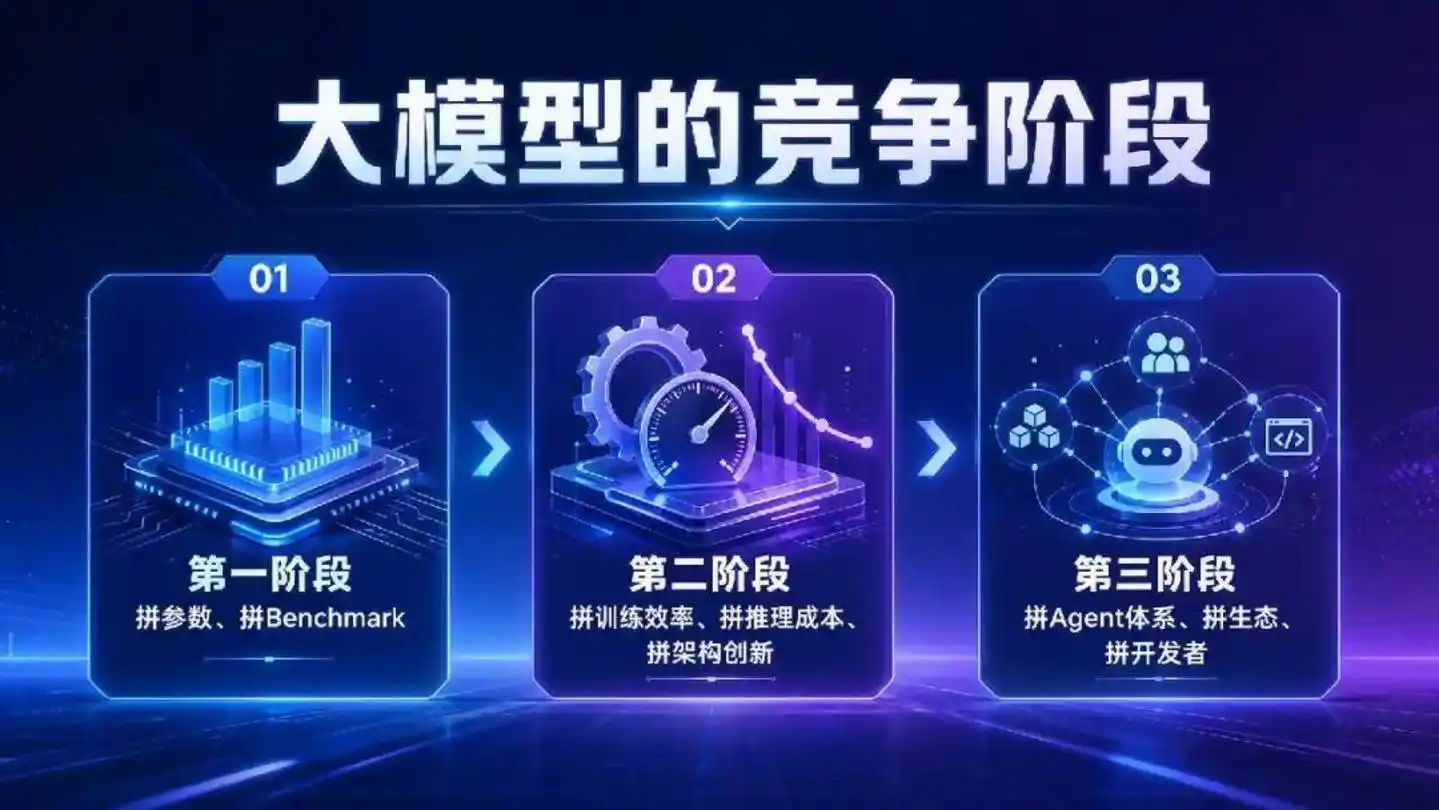
The first stage was "competing on parameters, competing on Benchmark." By the end of April 2026, this stage is basically over, as scores on leaderboards can no longer create substantial gaps.

The second stage is "competing on training efficiency, competing on inference cost, competing on architectural innovation." This is the current segment, also an inevitable result forced by computing cost pressures.

The third stage will be "competing on Agent systems, competing on ecosystem, competing on developers." When Tokens change from free traffic to "fuel" for executing tasks, the prosperity of the ecosystem will determine survival.

What is the ecological niche of domestic open-source large models? We found two sets of直观的对比数据 (intuitive comparative data).

One is training cost.

GPT-5, released in August 2025, had a training cost exceeding $500 million; Kimi K2 Thinking around the same time cost about $4.6 million to train; DeepSeek did not公布 the training cost of the V4 series models, but the V3 model cost only $5.576 million... Domestic large model vendors used resources amounting to less than pocket change for OpenAI to train models of comparable level.

The other is call volume.

After entering 2026, data from the multi-model aggregation platform OpenRouter shows: driven by Agent products represented by OpenClaw, global Token consumption has shown exponential growth. China's "Open-Source Dream Team,"凭借 "好用又便宜"的口碑 (relying on a reputation for being "user-friendly and cheap"), has seen its volume连续多周超越美国 (surpass that of the U.S. for multiple consecutive weeks).

The reason isn't hard to explain.

China's open-source camp has already successfully run a "positive feedback flywheel": Company A open-sources underlying technology, Company B adopts and performs engineering optimizations, then feeds the optimization results and experiences back to the entire ecosystem. If the evolution of closed-source models is linear growth built on massive computing power stacking, what awaits the open-source route is the exponential diffusion brought by the collision of technological innovations.

According to J.P. Morgan's research report, China's AI inference token consumption will achieve a compound annual growth rate (CAGR) of about 330% between 2025 and 2030,激增 (soaring) from 10 trillion tokens in 2025 to 3900 trillion tokens in 2030, a growth scale of 370 times.

This means that 2026 is still in the early stages of the AI explosion, with hundreds of times more growth opportunities in the next 5 years—far from the time for a final verdict.

Precisely because of confidence in long-term opportunities, while Silicon Valley giants are desperately building walls, Chinese large model vendors are choosing to use collaborative positioning to continuously solidify the road to AGI.

04 In Conclusion

In this轰轰烈烈的AI浪潮 (grand AI wave), who will have the last laugh? The answer concerns not only the models but also the autonomous controllability of computing power. If models are compared to "atomic bombs," then domestic computing power, free from external technological blockades, is the "rocket" that sends the atomic bomb into the sky.

It is gratifying that the integration of domestic models and domestic computing power is becoming increasingly close: in the DeepSeek V4 technical documentation, Ascend NPU is listed alongside NVIDIA GPU in the hardware verification list; Moonlight's latest论文 (paper) runs large model inference's prefill and decoding on different chips, opening the door for domestic chips to participate in model inference on a large scale.

In early 2025, DeepSeek R1 secured a seat at the table for domestic large models; by 2026, China's open-source large model camp is continuously creating more定义牌桌规则的硬资本 (hard capital that defines the rules of the table) through collaboration.

Câu hỏi Liên quan

QWhat are the two major innovations of DeepSeek V4 mentioned in the article?

AThe two major innovations are: 1) A million-level ultra-long context with only 10% of the KV cache of V3.2, praised by Amazon engineers for solving HBM shortage issues; 2) Adaptation to domestic chips, with close collaboration with Huawei and immediate support for Ascend and Cambricon chips.

QHow does the AI development approach in Silicon Valley differ from that in China according to the article?

ASilicon Valley AI leaders like OpenAI, Anthropic, and Google Gemini advocate for closed-source models, leading to zero-sum games and internal conflicts. In contrast, Chinese AI companies embrace open-source collaboration, promoting synergistic evolution and shared technological advancements.

QWhat is the significance of the Muon optimizer in the development of DeepSeek V4 and Kimi K2.6?

AThe Muon optimizer, improved by Moonshot AI and adopted by DeepSeek, replaced AdamW in most modules, achieving faster convergence speeds and better training stability. It contributed to a 2x efficiency improvement with the same training volume in Kimi K2.6.

QWhat are the three stages of AI model competition as described in the article?

AThe three stages are: 1) Competing on parameters and benchmark performance; 2) Competing on training efficiency, inference cost, and architectural innovation; 3) Competing on Agent systems, ecosystem, and developer support.

QHow does the article characterize the relationship between Chinese open-source AI models and domestic computing hardware?

AThe article highlights a tight integration, where Chinese AI models like DeepSeek V4 and Kimi K2.6 actively adapt to and validate domestic chips such as Huawei's Ascend and Cambricon, reducing reliance on external technology and enhancing autonomous controllability of computing power.

Nội dung Liên quan

Polymarket Bị Kẹt: Bài Kiểm Tra Thực Sự Sau Khi Vượt Qua Giai Đoạn Lưu Lượng Tăng Đột Biến

Polymarket, nền tảng dự đoán thị trường hàng đầu, đang đối mặt với thách thức lớn khi trải nghiệm giao dịch xuống cấp do hạ tầng không theo kịp đà tăng trưởng. Phó chủ tịch kỹ thuật Josh Stevens thừa nhận vấn đề và công bố kế hoạch cải tổ toàn diện, bao gồm: giảm độ trễ dữ liệu, sửa lỗi hủy lệnh, xây dựng lại hệ thống order book (CLOB), nâng cao hiệu suất website, và quan trọng nhất là di chuyển chain (chain migration). Nguyên nhân sâu xa nằm ở việc Polymarket không còn là ứng dụng dự đoán đơn thuần mà đã phát triển thành một nền tảng giao dịch tần suất cao. Polygon, từng là lựa chọn chi phí thấp hoàn hảo, giờ đây trở thành rào cản kỹ thuật. Động thái này ngay lập tức thu hút sự quan tâm của các blockchain khác như Solana, Sui, Algorand... trong khi Polygon nỗ lực giữ chân ứng dụng quan trọng này - nguồn đóng góp phí giao dịch đáng kể cho hệ sinh thái của họ. Bài kiểm tra thực sự của Polymarket không chỉ là chọn chain mới, mà là xây dựng một hệ thống giao dịch đủ mạnh và ổn định để giữ chân người dùng trong giai đoạn tăng trưởng mới, nơi độ tin cậy quan trọng hơn bao giờ hết.

Odaily星球日报04/27 03:21

Polymarket Bị Kẹt: Bài Kiểm Tra Thực Sự Sau Khi Vượt Qua Giai Đoạn Lưu Lượng Tăng Đột Biến

Odaily星球日报04/27 03:21

Điều chỉnh kỳ vọng giảm cho chu kỳ tăng giá tiếp theo của BTC

Tác giả Alex Xu, một nhà đầu tư Bitcoin lâu năm, đã chia sẻ quyết định giảm dần tỷ trọng BTC trong danh mục đầu tư của mình, từ vị thế lớn nhất xuống còn khoảng 30%, và giải thích lý do cho việc điều chỉnh kỳ vọng về đỉnh giá trong chu kỳ bull market tiếp theo. Các lý do chính bao gồm: 1. **Năng lượng tăng trưởng tiềm năng giảm:** Các chu kỳ trước được thúc đẩy bởi việc mở rộng đối tượng đầu tư theo cấp số nhân (từ cá nhân đến tổ chức). Chu kỳ tới cần sự chấp nhận từ các quỹ đầu tư quốc gia hoặc ngân hàng trung ương, điều này khó xảy ra trong 2-3 năm tới. 2. **Chi phí cơ hội cá nhân:** Tìm thấy nhiều cơ hội đầu tư hấp dẫn khác (cổ phiếu công ty) với mức giá hợp lý. 3. **Tác động tiêu cực từ sự thu hẹp của ngành crypto:** Nhiều mô hình Web3 (SocialFi, GameFi...) không thành công, dẫn đến sự thu hẹp của toàn ngành và làm chậm tốc độ tăng trưởng số người nắm giữ BTC. 4. **Áp lực từ nhà mua lớn nhất (MicroStrategy):** Chi phí huy động vốn của MicroStrategy tiếp tục tăng cao (lãi suất 11.5%), có thể làm giảm tốc độ mua vào và gây áp lực bán. 5. **Sự cạnh tranh từ Vàng được token hóa:** Sản phẩm vàng token hóa (tokenized gold) đã thu hẹp khoảng cách về tính dễ chia nhỏ, dễ mang theo và dễ xác minh so với BTC. 6. **Vấn đề ngân sách bảo mật:** Phần thưởng khối giảm sau mỗi lần halving làm trầm trọng thêm vấn đề ngân sách cho bảo mật mạng lưới. Tác giả vẫn giữ một phần BTC đáng kể và sẵn sàng mua lại nếu các lý kiến trên được giải quyết hoặc xuất hiện các yếu tố tích cực mới, với điều kiện giá cả phù hợp.

marsbit04/27 02:46

Điều chỉnh kỳ vọng giảm cho chu kỳ tăng giá tiếp theo của BTC

marsbit04/27 02:46

Giao dịch

Giao ngay
Hợp đồng Tương lai

Bài viết Nổi bật

AGENT S là gì

Agent S: Tương Lai của Tương Tác Tự Động trong Web3 Giới thiệu Trong bối cảnh không ngừng phát triển của Web3 và tiền điện tử, các đổi mới đang liên tục định nghĩa lại cách mà cá nhân tương tác với các nền tảng kỹ thuật số. Một dự án tiên phong như vậy, Agent S, hứa hẹn sẽ cách mạng hóa tương tác giữa con người và máy tính thông qua khung tác nhân mở của nó. Bằng cách mở đường cho các tương tác tự động, Agent S nhằm đơn giản hóa các nhiệm vụ phức tạp, cung cấp các ứng dụng chuyển đổi trong trí tuệ nhân tạo (AI). Cuộc khám phá chi tiết này sẽ đi sâu vào những phức tạp của dự án, các tính năng độc đáo của nó và những tác động đối với lĩnh vực tiền điện tử. Agent S là gì? Agent S đứng vững như một khung tác nhân mở đột phá, được thiết kế đặc biệt để giải quyết ba thách thức cơ bản trong việc tự động hóa các nhiệm vụ máy tính: Thu thập Kiến thức Cụ thể theo Miền: Khung này học một cách thông minh từ nhiều nguồn kiến thức bên ngoài và kinh nghiệm nội bộ. Cách tiếp cận kép này giúp nó xây dựng một kho lưu trữ phong phú về kiến thức cụ thể theo miền, nâng cao hiệu suất của nó trong việc thực hiện nhiệm vụ. Lập Kế Hoạch Qua Các Tầm Nhìn Nhiệm Vụ Dài Hạn: Agent S sử dụng lập kế hoạch phân cấp tăng cường kinh nghiệm, một cách tiếp cận chiến lược giúp phân chia và thực hiện các nhiệm vụ phức tạp một cách hiệu quả. Tính năng này nâng cao đáng kể khả năng quản lý nhiều nhiệm vụ con một cách hiệu quả và hiệu suất. Xử Lý Các Giao Diện Động, Không Đều: Dự án giới thiệu Giao Diện Tác Nhân-Máy Tính (ACI), một giải pháp đổi mới giúp nâng cao tương tác giữa các tác nhân và người dùng. Sử dụng các Mô Hình Ngôn Ngữ Lớn Đa Phương Thức (MLLMs), Agent S có thể điều hướng và thao tác các giao diện người dùng đồ họa đa dạng một cách liền mạch. Thông qua những tính năng tiên phong này, Agent S cung cấp một khung vững chắc giải quyết các phức tạp liên quan đến việc tự động hóa tương tác giữa con người với máy móc, mở ra nhiều ứng dụng trong AI và hơn thế nữa. Ai là Người Tạo ra Agent S? Mặc dù khái niệm về Agent S là hoàn toàn đổi mới, thông tin cụ thể về người sáng lập vẫn còn mơ hồ. Người sáng lập hiện vẫn chưa được biết đến, điều này làm nổi bật giai đoạn sơ khai của dự án hoặc sự lựa chọn chiến lược để giữ kín các thành viên sáng lập. Bất chấp sự ẩn danh, sự chú ý vẫn tập trung vào khả năng và tiềm năng của khung này. Ai là Các Nhà Đầu Tư của Agent S? Vì Agent S còn tương đối mới trong hệ sinh thái mã hóa, thông tin chi tiết về các nhà đầu tư và những người tài trợ tài chính của nó không được ghi chép rõ ràng. Sự thiếu vắng thông tin công khai về các nền tảng đầu tư hoặc tổ chức hỗ trợ dự án dấy lên câu hỏi về cấu trúc tài trợ và lộ trình phát triển của nó. Hiểu biết về sự hỗ trợ là rất quan trọng để đánh giá tính bền vững và tác động tiềm năng của dự án. Agent S Hoạt Động Như Thế Nào? Tại cốt lõi của Agent S là công nghệ tiên tiến cho phép nó hoạt động hiệu quả trong nhiều bối cảnh khác nhau. Mô hình hoạt động của nó được xây dựng xung quanh một số tính năng chính: Tương Tác Giống Như Con Người: Khung này cung cấp lập kế hoạch AI tiên tiến, cố gắng làm cho các tương tác với máy tính trở nên trực quan hơn. Bằng cách bắt chước hành vi của con người trong việc thực hiện nhiệm vụ, nó hứa hẹn nâng cao trải nghiệm người dùng. Ký Ức Tường Thuật: Được sử dụng để tận dụng các trải nghiệm cấp cao, Agent S sử dụng ký ức tường thuật để theo dõi lịch sử nhiệm vụ, từ đó nâng cao quy trình ra quyết định của nó. Ký Ức Tình Huống: Tính năng này cung cấp cho người dùng hướng dẫn từng bước, cho phép khung này cung cấp hỗ trợ theo ngữ cảnh khi các nhiệm vụ diễn ra. Hỗ Trợ OpenACI: Với khả năng chạy cục bộ, Agent S cho phép người dùng duy trì quyền kiểm soát đối với các tương tác và quy trình làm việc của họ, phù hợp với tinh thần phi tập trung của Web3. Tích Hợp Dễ Dàng với Các API Bên Ngoài: Tính linh hoạt và khả năng tương thích với nhiều nền tảng AI khác nhau đảm bảo rằng Agent S có thể hòa nhập liền mạch vào các hệ sinh thái công nghệ hiện có, làm cho nó trở thành lựa chọn hấp dẫn cho các nhà phát triển và tổ chức. Những chức năng này cùng nhau góp phần vào vị trí độc đáo của Agent S trong không gian tiền điện tử, khi nó tự động hóa các nhiệm vụ phức tạp, nhiều bước với sự can thiệp tối thiểu của con người. Khi dự án phát triển, các ứng dụng tiềm năng của nó trong Web3 có thể định nghĩa lại cách mà các tương tác kỹ thuật số diễn ra. Thời Gian Phát Triển của Agent S Sự phát triển và các cột mốc của Agent S có thể được tóm tắt trong một dòng thời gian nêu bật các sự kiện quan trọng của nó: 27 tháng 9, 2024: Khái niệm về Agent S được ra mắt trong một bài nghiên cứu toàn diện mang tên “Một Khung Tác Nhân Mở Sử Dụng Máy Tính Như Một Con Người,” trình bày nền tảng cho dự án. 10 tháng 10, 2024: Bài nghiên cứu được công bố công khai trên arXiv, cung cấp một cái nhìn sâu sắc về khung và đánh giá hiệu suất của nó dựa trên tiêu chuẩn OSWorld. 12 tháng 10, 2024: Một video trình bày được phát hành, cung cấp cái nhìn trực quan về khả năng và tính năng của Agent S, thu hút thêm sự quan tâm từ người dùng và nhà đầu tư tiềm năng. Những dấu mốc trong dòng thời gian không chỉ minh họa sự tiến bộ của Agent S mà còn chỉ ra cam kết của nó đối với sự minh bạch và sự tham gia của cộng đồng. Những Điểm Chính Về Agent S Khi khung Agent S tiếp tục phát triển, một số thuộc tính chính nổi bật, nhấn mạnh tính đổi mới và tiềm năng của nó: Khung Đổi Mới: Được thiết kế để cung cấp cách sử dụng máy tính trực quan giống như tương tác của con người, Agent S mang đến một cách tiếp cận mới cho việc tự động hóa nhiệm vụ. Tương Tác Tự Động: Khả năng tương tác tự động với máy tính thông qua GUI đánh dấu một bước tiến tới các giải pháp tính toán thông minh và hiệu quả hơn. Tự Động Hóa Nhiệm Vụ Phức Tạp: Với phương pháp mạnh mẽ của nó, nó có thể tự động hóa các nhiệm vụ phức tạp, nhiều bước, làm cho các quy trình nhanh hơn và ít sai sót hơn. Cải Tiến Liên Tục: Các cơ chế học tập cho phép Agent S cải thiện từ các trải nghiệm trước đó, liên tục nâng cao hiệu suất và hiệu quả của nó. Tính Linh Hoạt: Khả năng thích ứng của nó trên các môi trường hoạt động khác nhau như OSWorld và WindowsAgentArena đảm bảo rằng nó có thể phục vụ một loạt các ứng dụng rộng rãi. Khi Agent S định vị mình trong bối cảnh Web3 và tiền điện tử, tiềm năng của nó để nâng cao khả năng tương tác và tự động hóa quy trình đánh dấu một bước tiến quan trọng trong công nghệ AI. Thông qua khung đổi mới của mình, Agent S minh họa cho tương lai của các tương tác kỹ thuật số, hứa hẹn một trải nghiệm liền mạch và hiệu quả hơn cho người dùng trên nhiều ngành công nghiệp khác nhau. Kết luận Agent S đại diện cho một bước nhảy vọt táo bạo trong sự kết hợp giữa AI và Web3, với khả năng định nghĩa lại cách chúng ta tương tác với công nghệ. Mặc dù vẫn còn ở giai đoạn đầu, những khả năng cho ứng dụng của nó là rộng lớn và hấp dẫn. Thông qua khung toàn diện của mình giải quyết các thách thức quan trọng, Agent S nhằm đưa các tương tác tự động lên hàng đầu trong trải nghiệm kỹ thuật số. Khi chúng ta tiến sâu hơn vào các lĩnh vực tiền điện tử và phi tập trung, các dự án như Agent S chắc chắn sẽ đóng một vai trò quan trọng trong việc định hình tương lai của công nghệ và sự hợp tác giữa con người với máy tính.

Tổng lượt xem 676Xuất bản vào 2025.01.14Cập nhật vào 2025.01.14

AGENT S là gì

Làm thế nào để Mua S

Chào mừng bạn đến với HTX.com! Chúng tôi đã làm cho mua Sonic (S) trở nên đơn giản và thuận tiện. Làm theo hướng dẫn từng bước của chúng tôi để bắt đầu hành trình tiền kỹ thuật số của bạn.Bước 1: Tạo Tài khoản HTX của BạnSử dụng email hoặc số điện thoại của bạn để đăng ký tài khoản miễn phí trên HTX. Trải nghiệm hành trình đăng ký không rắc rối và mở khóa tất cả tính năng. Nhận Tài khoản của tôiBước 2: Truy cập Mua Crypto và Chọn Phương thức Thanh toán của BạnThẻ Tín dụng/Ghi nợ: Sử dụng Visa hoặc Mastercard của bạn để mua Sonic (S) ngay lập tức.Số dư: Sử dụng tiền từ số dư tài khoản HTX của bạn để giao dịch liền mạch.Bên thứ ba: Chúng tôi đã thêm những phương thức thanh toán phổ biến như Google Pay và Apple Pay để nâng cao sự tiện lợi.P2P: Giao dịch trực tiếp với người dùng khác trên HTX.Thị trường mua bán phi tập trung (OTC): Chúng tôi cung cấp những dịch vụ được thiết kế riêng và tỷ giá hối đoái cạnh tranh cho nhà giao dịch.Bước 3: Lưu trữ Sonic (S) của BạnSau khi mua Sonic (S), lưu trữ trong tài khoản HTX của bạn. Ngoài ra, bạn có thể gửi đi nơi khác qua chuyển khoản blockchain hoặc sử dụng để giao dịch những tiền kỹ thuật số khác.Bước 4: Giao dịch Sonic (S)Giao dịch Sonic (S) dễ dàng trên thị trường giao ngay của HTX. Chỉ cần truy cập vào tài khoản của bạn, chọn cặp giao dịch, thực hiện giao dịch và theo dõi trong thời gian thực. Chúng tôi cung cấp trải nghiệm thân thiện với người dùng cho cả người mới bắt đầu và người giao dịch dày dạn kinh nghiệm.

Tổng lượt xem 1.3kXuất bản vào 2025.01.15Cập nhật vào 2025.03.21

Làm thế nào để Mua S

Thảo luận

Chào mừng đến với Cộng đồng HTX. Tại đây, bạn có thể được thông báo về những phát triển nền tảng mới nhất và có quyền truy cập vào thông tin chuyên sâu về thị trường. Ý kiến ​​của người dùng về giá của S (S) được trình bày dưới đây.

活动图片