After AAVE Was Hit, What Did Spark Do Right to Attract $1.3 Billion Against the Trend?

marsbitXuất bản vào 2026-04-22Cập nhật gần nhất vào 2026-04-22

Tóm tắt

Amid a $15.1 billion liquidity crisis at Aave triggered by a cross-chain vulnerability involving rsETH, which led to $200 million in bad debt, Spark Protocol emerged as a safe haven, attracting $1.3 billion in inflows. Spark’s TVL surged to $4.74 billion, with ETH deposit rates spiking to 130% due to high demand and scarce liquidity. Spark’s resilience stemmed from its conservative governance and multi-layered risk framework. Unlike Aave, which aggressively listed rsETH to boost capital efficiency, Spark had proactively delisted the asset months earlier, avoiding exposure. The protocol employs strict rate-limited caps, higher interest rate buffers, and a modular isolation architecture to mitigate risks. These measures prevent over-concentration, ensure liquidity during stress, and attract arbitrage capital during high utilization. The shift from Aave to Spark signals a market preference for security over yield, underscoring the importance of disciplined risk management in DeFi.

Author: Jae, PANews

When Aave faced a massive withdrawal of hundreds of billions of dollars, Spark caught the overflowing liquidity.

The on-chain disaster triggered by cross-chain vulnerabilities in Kelp DAO and LayzerZero split the DeFi lending market into two distinct worlds.

The influx of "toxic" asset rsETH into Aave resulted in approximately $200 million in bad debt, causing a complete liquidity drain and a panicked exodus of hundreds of billions in funds.

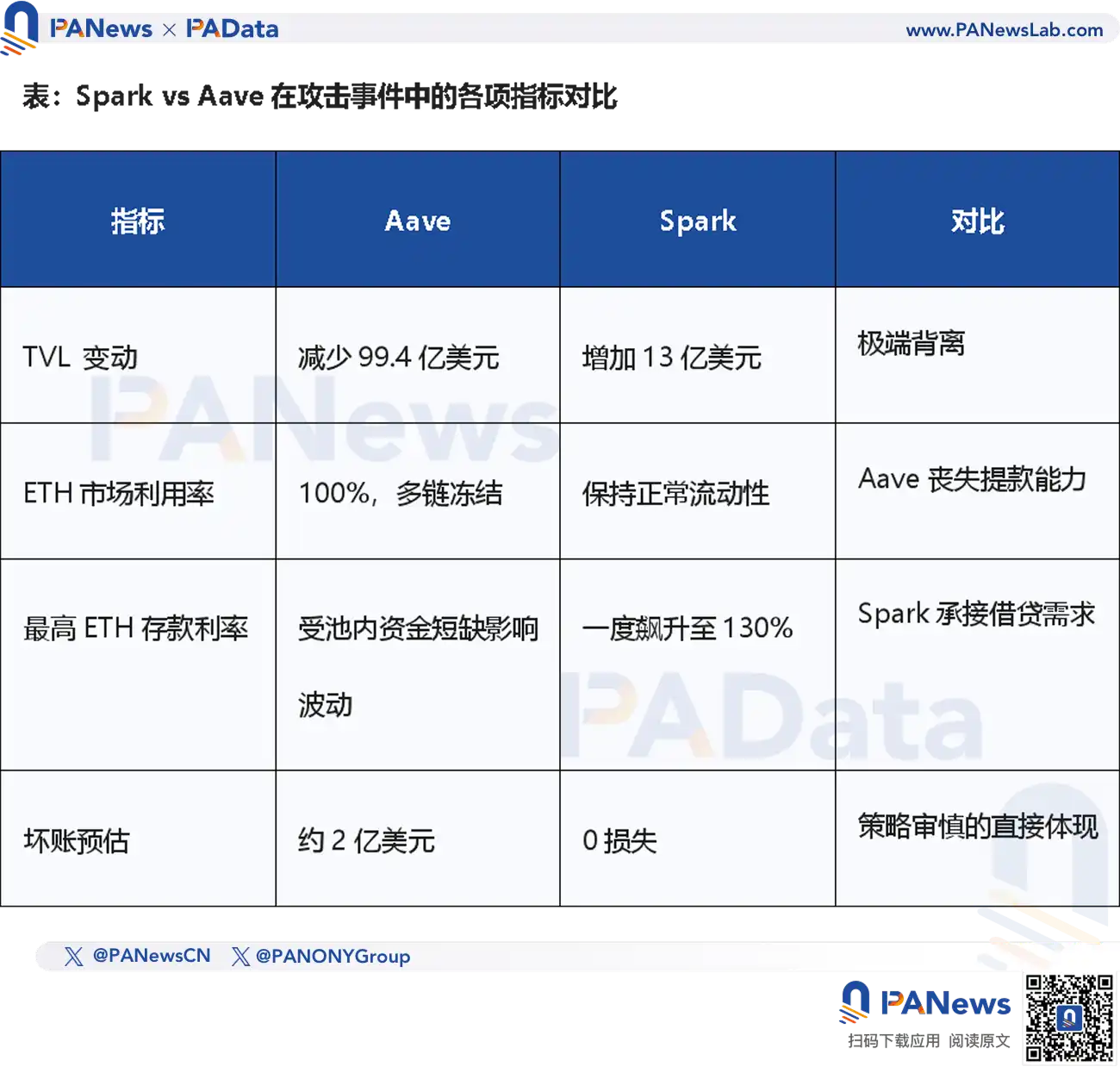
However, amid the widespread fear, another lending protocol giant, Spark, had its moment of glory. Its TVL (Total Value Locked) rapidly increased by $1.3 billion, and the ETH deposit rate once surged to 130%, making it the safe harbor of choice for whales transferring assets.

A black swan event has revalidated the true ruler of the DeFi iron throne.

Aave's Bloodbath of a Bank Run, Spark Seizes the Opportunity to Attract $1.3 Billion

The breach of rsETH's cross-chain bridge effectively pressed the pause button on Aave's entire lending market.

Hackers used fraudulently minted rsETH as collateral on Aave to borrow large amounts of WETH, draining the pool of clean assets and leaving behind a pool of bad debt.

Related reading: KelpDAO Cross-Chain Explosion, AAVE Becomes the "Patsy," Industry Calls for Risk Repricing

Panic spread like a virus: Over the past three and a half days, $151 billion has fled Aave, with total deposits dropping from $485 billion to $307 billion—about one-third of the funds have exited; WETH utilization rates on multiple chains hit 100% directly; depositors couldn't withdraw, and liquidators had no funds to borrow.

The most notable move came from Justin Sun, who quickly withdrew 65,584 ETH from Aave, worth approximately $154 million.

This "withdraw first" behavior created a herd effect in the market. For investors, no annualized yield could offset the panic of being unable to withdraw their principal.

Just as Aave became the hackers' liquidity exit, Spark became the users' escape route.

Spark's TVL反而 increased by $1.3 billion, with its total scale reaching $4.74 billion. This money is a vote of confidence cast by the market with real capital.
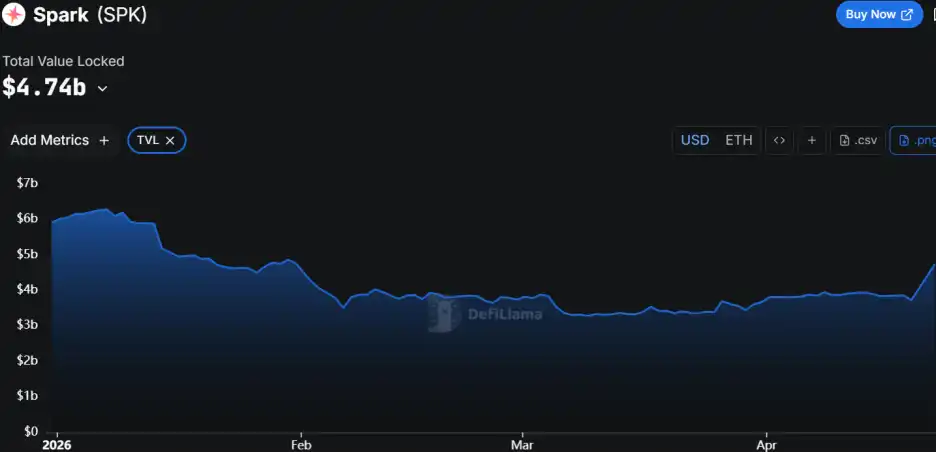
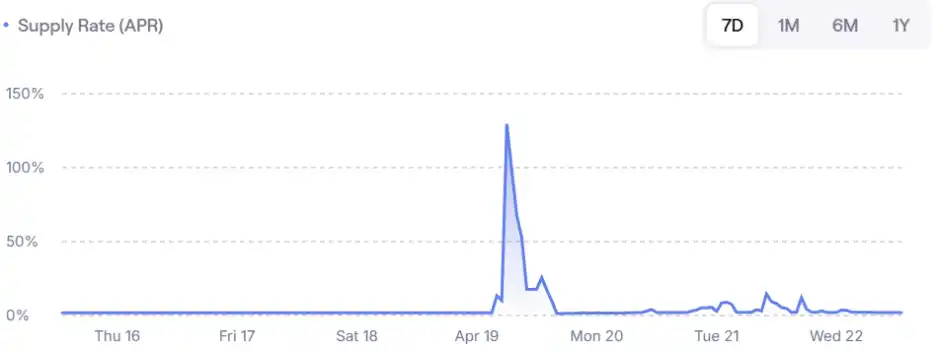
Due to the massive influx of borrowing demand into Spark, coupled with highly scarce liquidity, Spark's ETH deposit rate experienced a spectacular surge, once reaching an annualized level of 130%. This directly reflects the extremely high premium for safe assets.
Spark's ability to meet this demand is thanks to its unique ecosystem structure. Unlike Aave, it is the lending engine of the Sky ecosystem, backed by the vast USDS reserves. As Sky's liquidity outpost, Spark not only relies on external deposits but can also directly obtain stablecoin supplies through Sky's credit lines.

This "central bank-level" liquidity backing allows it to keep withdrawal channels open even during market turmoil.
Abandoning TVL Vanity, Spark Defies Trend to Delist rsETH

Spark avoided the rsETH pitfall due to a counter-trend decision made three months ago.

Same day, different fate. On January 29th, the two major lending platforms took opposite approaches in handling Liquid Restaking Tokens (LRTs).

Aave went full throttle. The protocol officially launched rsETH E-Mode, allowing users to conduct leveraged borrowing with a high collateral ratio (LTV) of 93%. Aave's goal was to attract an anticipated $1 billion inflow of rsETH, restore WETH utilization, and boost TVL and revenue.

Spark prudently retreated. The protocol passed a governance Spell to completely halt new supply of rsETH and gradually remove it from the asset list.

This move by Spark caused strong dissatisfaction among ETH循环杠杆 users, who often use repeated抵押 of stETH or rsETH and similar staking assets to arbitrage interest rate differentials. Spark's delisting forced them to migrate their positions, with most flowing to Aave, which had more lenient policies and lower interest rates.

At the time, the community questioned Spark's team for being "too conservative" or "abandoning growth." No one expected that this step might have saved the entire protocol later.

After the fact, Spark's Strategy Lead, monetsupply.eth, pointed out in a review that the decision to delist rsETH was based on a security-oriented tightening mechanism.

  1. Marginal Cost vs. Marginal Benefit: If the cost of maintaining a certain asset exceeds its risk-adjusted return to the protocol, such assets will be purged;
  2. Risk Exposure: rsETH had extremely low utilization on Spark, almost monopolized by the same wallet address, making risk difficult to disperse;
  3. User Preference Research: The sole whale user of rsETH expressed a willingness to actively migrate to more mature collateral like wstETH or weETH, providing an opportunity for the protocol to smoothly clean up the asset.

It was this decision-making discipline and transparency, which "does not blindly pursue TVL," that allowed Spark to avoid all potential losses that could have been caused by hackers exploiting rsETH.

Multi-Layered Risk Control System: Rate Limits + Interest Rate Buffer + Isolated Architecture

PANews believes that even if rsETH had not been delisted, Spark's architecture would have been sufficient to withstand such risks. Compared to Aave's pursuit of capital efficiency at the expense of safety redundancy, Spark has established a multi-tiered, in-depth defense system.

Spark implements strict deposit and borrowing rate limits (Rate-Limited Caps), meaning the amount of funds that can be deposited and borrowed within a fixed time increases gradually. Even if rsETH were still listed, an attacker could not deposit $290 million in collateral all at once as they did on Aave. This design forcibly limits the maximum risk exposure scale of a single event, hard-capping losses within an acceptable range.

Spark has long maintained relatively high interest rate ceilings. Under stable market conditions, higher borrowing rates, while deterring over-borrowing (if it's expensive to borrow, people borrow less), on the other hand attract more people to deposit (depositors earn more). The result is that the pool always retains liquidity, avoiding a situation where funds are "all borrowed out," preventing people from being unable to withdraw their money. Especially during market crashes, it avoids bank runs due to liquidity枯竭.

When pool utilization rises, Spark's interest rate curve slope becomes steeper than Aave's, which has two significant consequences:

  • Forced Deleveraging: High interest costs force borrowers to actively seek liquidity to repay loans.

  • Attracting Supplementary Liquidity: High deposit APY quickly attracts external arbitrage capital, thus resolving the deadlock of 100% utilization.

Spark's modular isolated architecture offers strong controllability in risk management. When handling high-risk synthetic assets like USDe, Spark has also adopted a prudent approach, isolating them in specific primary risk pools. This ensures that even if a specific asset encounters problems, it will not affect the main lending pools on the platform.
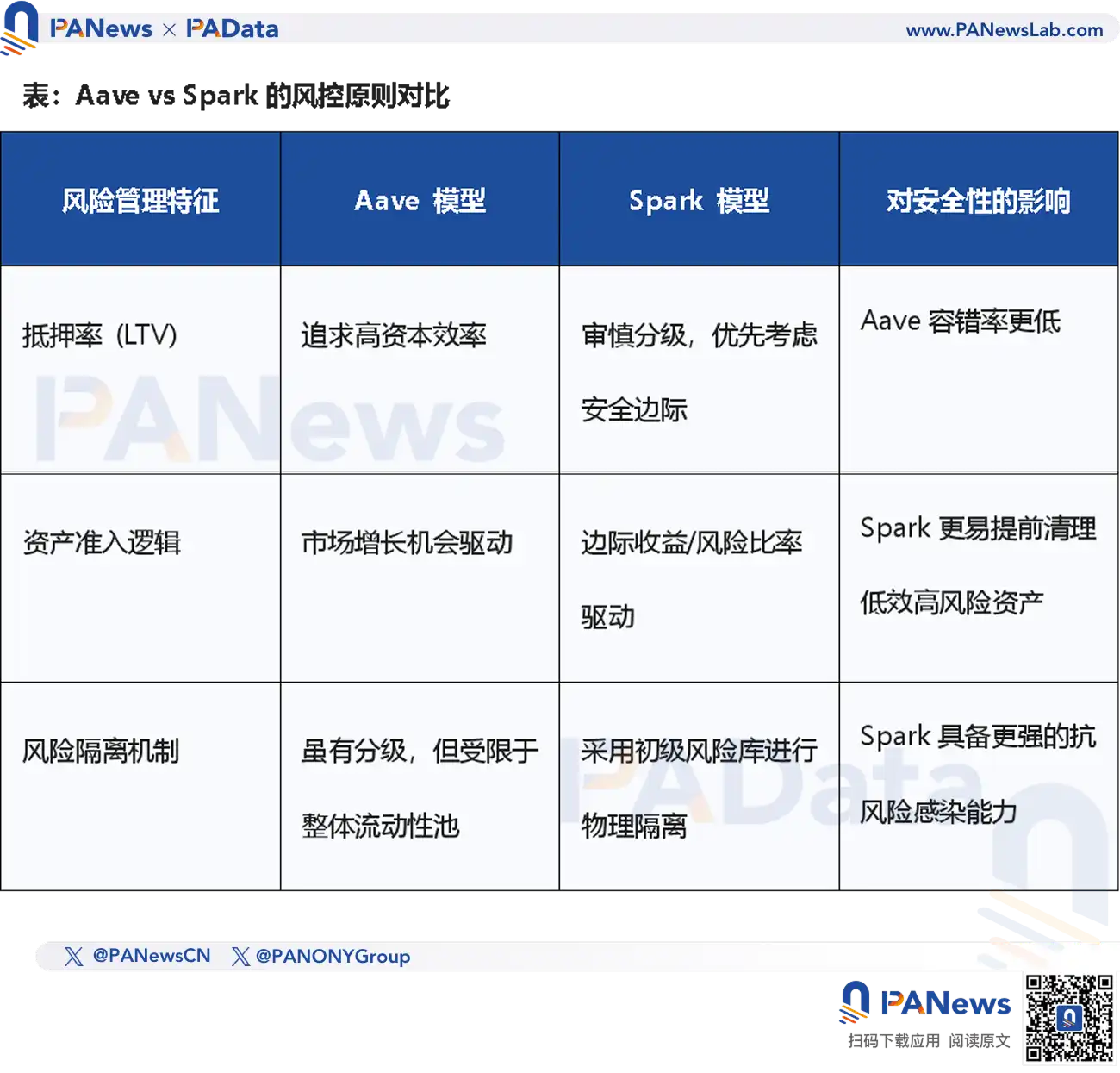
The great liquidity migration from Aave to Spark signifies a shift in risk preference from yield chasing to safety and stability.

Aave's hundred-billion-dollar outflow is a wake-up call for all protocols pursuing high capital efficiency. When safety margins are sacrificed, any minor external关联 risk can evolve into a global crisis for the protocol.

Spark's rise proves that in an uncertain market environment, prudent risk governance decisions and the implementation of a "risk-first" strategy are the moats with greater long-term value.


Câu hỏi Liên quan

QWhat was the main reason behind Spark's significant increase in TVL (Total Value Locked) during the Aave crisis?

ASpark's TVL increased by $1.3 billion because it was perceived as a safe haven for users fleeing the rsETH-related instability on Aave. Its unique ecosystem, backed by the substantial USDS reserves of the Sky ecosystem, provided a reliable liquidity backstop, ensuring withdrawal channels remained open during the market turmoil.

QHow did Spark's decision regarding rsETH months before the incident contribute to its stability?

AThree months prior to the incident, Spark made a proactive governance decision to halt new supplies of rsETH and gradually remove it from its asset list. This risk-averse move, based on a cost-benefit analysis, low utilization, and concentrated risk exposure, prevented Spark protocol from being exposed to the rsETH exploit that caused significant bad debt on Aave.

QWhat are the key risk management features of its protocol that the article highlights as reasons for Spark's resilience?

AThe article highlights Spark's multi-layered risk management system, which includes strict Rate-Limited Caps to restrict large, sudden deposits/borrows, a higher interest rate curve that discourages over-leverage and attracts liquidity during stress, and a modular, isolated architecture that contains problems from risky assets in separate silos to protect the main lending pools.

QWhat specific event triggered the massive withdrawal of funds from Aave and the subsequent liquidity crisis?

AThe specific event was a cross-chain bridge exploit involving Kelp DAO's rsETH. A hacker used fraudulently minted rsETH as collateral on Aave to borrow a large amount of WETH, draining the pool of 'clean' assets and leaving behind approximately $200 million in bad debt, which triggered panic and a bank run.

QWhat does the shift of liquidity from Aave to Spark signify in terms of market risk preference according to the article?

AThe shift signifies a change in market risk preference from pursuing high capital efficiency to prioritizing safety and stability. It served as a warning to protocols that sacrifice security margins for efficiency, demonstrating that prudent risk governance and a 'risk-first' strategy are more valuable long-term moats in an uncertain market environment.

Nội dung Liên quan

Polymarket Bị Kẹt: Bài Kiểm Tra Thực Sự Sau Khi Vượt Qua Giai Đoạn Lưu Lượng Tăng Đột Biến

Polymarket, nền tảng dự đoán thị trường hàng đầu, đang đối mặt với thách thức lớn khi trải nghiệm giao dịch xuống cấp do hạ tầng không theo kịp đà tăng trưởng. Phó chủ tịch kỹ thuật Josh Stevens thừa nhận vấn đề và công bố kế hoạch cải tổ toàn diện, bao gồm: giảm độ trễ dữ liệu, sửa lỗi hủy lệnh, xây dựng lại hệ thống order book (CLOB), nâng cao hiệu suất website, và quan trọng nhất là di chuyển chain (chain migration). Nguyên nhân sâu xa nằm ở việc Polymarket không còn là ứng dụng dự đoán đơn thuần mà đã phát triển thành một nền tảng giao dịch tần suất cao. Polygon, từng là lựa chọn chi phí thấp hoàn hảo, giờ đây trở thành rào cản kỹ thuật. Động thái này ngay lập tức thu hút sự quan tâm của các blockchain khác như Solana, Sui, Algorand... trong khi Polygon nỗ lực giữ chân ứng dụng quan trọng này - nguồn đóng góp phí giao dịch đáng kể cho hệ sinh thái của họ. Bài kiểm tra thực sự của Polymarket không chỉ là chọn chain mới, mà là xây dựng một hệ thống giao dịch đủ mạnh và ổn định để giữ chân người dùng trong giai đoạn tăng trưởng mới, nơi độ tin cậy quan trọng hơn bao giờ hết.

Odaily星球日报2 ngày trước 03:21

Polymarket Bị Kẹt: Bài Kiểm Tra Thực Sự Sau Khi Vượt Qua Giai Đoạn Lưu Lượng Tăng Đột Biến

Odaily星球日报2 ngày trước 03:21

Điều chỉnh kỳ vọng giảm cho chu kỳ tăng giá tiếp theo của BTC

Tác giả Alex Xu, một nhà đầu tư Bitcoin lâu năm, đã chia sẻ quyết định giảm dần tỷ trọng BTC trong danh mục đầu tư của mình, từ vị thế lớn nhất xuống còn khoảng 30%, và giải thích lý do cho việc điều chỉnh kỳ vọng về đỉnh giá trong chu kỳ bull market tiếp theo. Các lý do chính bao gồm: 1. **Năng lượng tăng trưởng tiềm năng giảm:** Các chu kỳ trước được thúc đẩy bởi việc mở rộng đối tượng đầu tư theo cấp số nhân (từ cá nhân đến tổ chức). Chu kỳ tới cần sự chấp nhận từ các quỹ đầu tư quốc gia hoặc ngân hàng trung ương, điều này khó xảy ra trong 2-3 năm tới. 2. **Chi phí cơ hội cá nhân:** Tìm thấy nhiều cơ hội đầu tư hấp dẫn khác (cổ phiếu công ty) với mức giá hợp lý. 3. **Tác động tiêu cực từ sự thu hẹp của ngành crypto:** Nhiều mô hình Web3 (SocialFi, GameFi...) không thành công, dẫn đến sự thu hẹp của toàn ngành và làm chậm tốc độ tăng trưởng số người nắm giữ BTC. 4. **Áp lực từ nhà mua lớn nhất (MicroStrategy):** Chi phí huy động vốn của MicroStrategy tiếp tục tăng cao (lãi suất 11.5%), có thể làm giảm tốc độ mua vào và gây áp lực bán. 5. **Sự cạnh tranh từ Vàng được token hóa:** Sản phẩm vàng token hóa (tokenized gold) đã thu hẹp khoảng cách về tính dễ chia nhỏ, dễ mang theo và dễ xác minh so với BTC. 6. **Vấn đề ngân sách bảo mật:** Phần thưởng khối giảm sau mỗi lần halving làm trầm trọng thêm vấn đề ngân sách cho bảo mật mạng lưới. Tác giả vẫn giữ một phần BTC đáng kể và sẵn sàng mua lại nếu các lý kiến trên được giải quyết hoặc xuất hiện các yếu tố tích cực mới, với điều kiện giá cả phù hợp.

marsbit2 ngày trước 02:46

Điều chỉnh kỳ vọng giảm cho chu kỳ tăng giá tiếp theo của BTC

marsbit2 ngày trước 02:46

Giao dịch

Giao ngay
Hợp đồng Tương lai

Bài viết Nổi bật

Làm thế nào để Mua AAVE

Chào mừng bạn đến với HTX.com! Chúng tôi đã làm cho mua Aave Protocol (AAVE) trở nên đơn giản và thuận tiện. Làm theo hướng dẫn từng bước của chúng tôi để bắt đầu hành trình tiền kỹ thuật số của bạn.Bước 1: Tạo Tài khoản HTX của BạnSử dụng email hoặc số điện thoại của bạn để đăng ký tài khoản miễn phí trên HTX. Trải nghiệm hành trình đăng ký không rắc rối và mở khóa tất cả tính năng. Nhận Tài khoản của tôiBước 2: Truy cập Mua Crypto và Chọn Phương thức Thanh toán của BạnThẻ Tín dụng/Ghi nợ: Sử dụng Visa hoặc Mastercard của bạn để mua Aave Protocol (AAVE) ngay lập tức.Số dư: Sử dụng tiền từ số dư tài khoản HTX của bạn để giao dịch liền mạch.Bên thứ ba: Chúng tôi đã thêm những phương thức thanh toán phổ biến như Google Pay và Apple Pay để nâng cao sự tiện lợi.P2P: Giao dịch trực tiếp với người dùng khác trên HTX.Thị trường mua bán phi tập trung (OTC): Chúng tôi cung cấp những dịch vụ được thiết kế riêng và tỷ giá hối đoái cạnh tranh cho nhà giao dịch.Bước 3: Lưu trữ Aave Protocol (AAVE) của BạnSau khi mua Aave Protocol (AAVE), lưu trữ trong tài khoản HTX của bạn. Ngoài ra, bạn có thể gửi đi nơi khác qua chuyển khoản blockchain hoặc sử dụng để giao dịch những tiền kỹ thuật số khác.Bước 4: Giao dịch Aave Protocol (AAVE)Giao dịch Aave Protocol (AAVE) dễ dàng trên thị trường giao ngay của HTX. Chỉ cần truy cập vào tài khoản của bạn, chọn cặp giao dịch, thực hiện giao dịch và theo dõi trong thời gian thực. Chúng tôi cung cấp trải nghiệm thân thiện với người dùng cho cả người mới bắt đầu và người giao dịch dày dạn kinh nghiệm.

Tổng lượt xem 414Xuất bản vào 2024.12.11Cập nhật vào 2025.03.21

Làm thế nào để Mua AAVE

Thảo luận

Chào mừng đến với Cộng đồng HTX. Tại đây, bạn có thể được thông báo về những phát triển nền tảng mới nhất và có quyền truy cập vào thông tin chuyên sâu về thị trường. Ý kiến ​​của người dùng về giá của AAVE (AAVE) được trình bày dưới đây.

活动图片