US Is Out Of Lenders And Options—Bitcoin Will Fill The Void: Strike CEO

bitcoinistXuất bản vào 2025-05-15Cập nhật gần nhất vào 2025-05-15

Tóm tắt

Strike chief executive Jack Mallers says the post-war monetary model has hit a wall. In an appearance on Natalie Brunell’s...

Trusted Editorial content, reviewed by leading industry experts and seasoned editors. Ad Disclosure

Strike chief executive Jack Mallers says the post-war monetary model has hit a wall. In an appearance on Natalie Brunell’s Coin Stories podcast released, the 30-year-old entrepreneur delivered a granular history lesson, a withering critique of US debt dynamics and, above all, a case for Bitcoin as the asset capable of absorbing the shock when the dollar-centric order finally gives way.

A century-Old Bargain Reaches Its Limit

Mallers began by rewinding to 1944. “After the world wars America was the strongest economy. We had the most gold…” he recalled, noting that Bretton Woods installed the dollar as the world’s reserve currency precisely so Washington could “export our strength” in paper while importing physical goods. That bargain, he argued, morphed into something far more lopsided:

“Effectively we are printing pieces of paper and getting real stuff in return for it. You delegate and outsource manufacturing an iPhone, the food you consume, the energy you burn, and all you’re doing is importing real goods and exporting currency. That’s Triffin’s dilemma in action.”

The numbers back him up. Gross federal debt now stands at roughly $36.2 trillion and is on pace to exceed $37 trillion by fiscal year-end, according to the Concord Coalition’s review of Treasury data. Interest costs alone are running at an annualized $684 billion.

Mallers dwelt on how that debt is funded. In the 1980s and 1990s, he said, surplus nations—“China, Japan, Russia”—were happy to recycle export earnings into Treasuries. No longer. “If your buddy was $36 trillion in debt, would you lend him more money? Probably not,” he quipped. The marginal buyer today, he said, is “our own banking system and hedge funds levered up in the Cayman Islands.”

That view echoes recent market chatter. JPMorgan Chase chief Jamie Dimon has warned that current capital rules discourage banks from holding Treasuries; he urged regulators last month to strip the securities from the supplementary leverage ratio (SLR) so dealers can absorb spikes in supply without blowing through capital buffers. And the Treasury itself plans to begin liquidity-support buy-backs this week, part of a programme unveiled at the May Quarterly Refunding.

Leverage of that scale, Mallers argued, cannot survive turbulence: “Leverage doesn’t do well with volatility, so as soon as markets start to move, they print the money.” Hence his conclusion that the United States is “structurally short volatility.”

Gold As “Parking Lot,” Bitcoin As End-Game

Mallers tied the argument to 2025’s macro headlines. President Trump’s tariff threat on a fresh tranche of Chinese goods jolted bond markets in April; 10-year yields briefly spiked above 4.6 percent before retracing to 4.46 percent. That bout of instability, Mallers said, forced the administration to test “how far can I push before I cascade the deck of cards.” Authorities have since flipped back to easing mode: broad money (M2) has resumed an upward trajectory and policymakers “are providing the liquidity,” he said.

His formula is blunt: “Bitcoin equals technology plus fiat liquidity.” More newly created dollars chasing finite coins is, in Mallers’ view, the simplest and strongest tail-wind the asset has.

Brunell pressed him on the recent bid in bullion, especially among central banks. Mallers was uncompromising: “Gold is the temporary parking lot. Bitcoin carries every monetary property the market demands—fixed supply, scarcity, divisibility, portability, and the ability to self-custody.”

He framed the investment universe at roughly $900 trillion in global assets, half of which humans use as a savings device. “The dollar will increasingly not be used for that; sovereign debt won’t either,” he said, predicting a rotation first toward gold, then decisively into Bitcoin as technology familiarity grows.

Mallers alluded to US President Donald Trump’ Strategic Bitcoin Reserve and floated a path whereby the United States preserves dollar invoicing but anchors value in Bitcoin: “If they come out, devalue the debt enough and build a Bitcoin position that’s $50 trillion over the next ten years—problem solved. All your dollars are backed by Bitcoin. Your hot dog on the corner is still priced in dollars, but the real capital storage, the real wealth, sits in Bitcoin.”

Liquidity And BTC Price Action

Bitcoin’s own price has spent the spring consolidating in the high-$70,000s and is now back above $100,000. Mallers attributed the pause to a market wrong-footed by Trump’s initial “liquidity-negative” stance. Now, he contends, conditions look similar to late-2023, when an M2 rebound coincided with the asset’s march through $40,000, $50,000 and ultimately $70,000. “We’re on the other side of liquidity negative,” he said.

The risk, he acknowledged, is disorderly volatility in Treasuries. Dimon recently warned of a potential “kerfuffle” that could force the Federal Reserve to intervene directly in the secondary market. Should such an episode erupt, Mallers expects policymakers to “print the money”—a catalyst he believes would only accelerate Bitcoin adoption.

Mallers’ thesis is not new, but his latest outing sharpened the edges. The United States, he said, can no longer count on foreign surpluses to finance deficits. Domestic banks and hedge funds can fill the gap only if regulators supply leverage and the Fed supplies dollars. That loop, already creaking under $36 trillion of debt, is inherently inflationary. In Mallers’ words: “The game is rigged—and Bitcoin wins, because math doesn’t lie.”

At press time, BTC traded at $104,112.

Bitcoin price
BTC price, 1-day chart | Source: BTCUSDT on TradingView.com
Featured image from YouTube, chart from TradingView.com
Editorial Process for bitcoinist is centered on delivering thoroughly researched, accurate, and unbiased content. We uphold strict sourcing standards, and each page undergoes diligent review by our team of top technology experts and seasoned editors. This process ensures the integrity, relevance, and value of our content for our readers.

Jake Simmons has been a Bitcoin enthusiast since 2016. Ever since he heard about Bitcoin, he has been studying the topic every day and trying to share his knowledge with others. His goal is to contribute to Bitcoin's financial revolution, which will replace the fiat money system. Besides BTC and crypto, Jake studied Business Informatics at a university. After graduation in 2017, he has been working in the blockchain and crypto sector. You can follow Jake on Twitter at @realJakeSimmons.

Nội dung Liên quan

Cổ phiếu được mã hóa tăng vọt 279%, đạt kỷ lục 3,4 tỷ USD – 2 mạng lưới dẫn đầu

Thị trường cổ phiếu token hóa đã tăng trưởng bùng nổ trong tháng 6, với khối lượng giao dịch hàng tháng đạt kỷ lục 3,4 tỷ USD, tăng 279% so với tháng trước và 1.400% so với cùng kỳ năm ngoái. Sự tăng trưởng này được thúc đẩy bởi đợt IPO token hóa của SpaceX và thị phần thống trị của mạng Solana (SOL) trong lĩnh vực này. Xu hướng này không chỉ dừng lại ở giao dịch. Vốn đổ vào thị trường đang ngày càng được triển khai vào các ứng dụng tài chính phi tập trung (DeFi). Trên mạng Ethereum (ETH), 25% tài sản quỹ token hóa hiện được sử dụng trong DeFi, tăng mạnh so với mức 8% của ba năm trước, cho thấy sự chuyển dịch từ sở hữu đơn thuần sang các hoạt động tạo ra lợi nhuận như cho vay và cung cấp thanh khoản. Nhu cầu từ các tổ chức đang định hình lại bối cảnh token hóa, với sự tập trung vào hiệu quả thanh toán, thanh khoản và khả năng kết hợp vốn. Solana dẫn đầu về khối lượng giao dịch cổ phiếu token hóa nhờ tốc độ và chi phí thấp, trong khi Ethereum là nền tảng chính cho việc triển khai vốn vào DeFi. Hai hệ sinh thái này đang đóng vai trò bổ sung cho nhau. Các chỉ số như Giá trị Phân tán (Distributed Value) tăng 31,59% lên 1,94 tỷ USD và số lượng người nắm giữ tăng lên 409.240 cho thấy sự phát triển vững chắc. Mặc dù số địa chỉ hoạt động giảm, phản ánh sự tham gia ngày càng lớn của các nhà đầu tư tổ chức, nhưng việc mở rộng tích hợp và sự rõ ràng về quy định vẫn là chìa khóa để token hóa phát triển thành một hệ thống tài chính tự cường và bền vững.

ambcrypto10 phút trước

Cổ phiếu được mã hóa tăng vọt 279%, đạt kỷ lục 3,4 tỷ USD – 2 mạng lưới dẫn đầu

ambcrypto10 phút trước

Triển Khai GHO Gốc Trên Arbitrum Của Aave Đẩy Mạnh Thanh Khoản Stablecoin Vào Lớp 2

Aave DAO đã phê duyệt việc triển khai stablecoin GHO bản địa trên mạng Arbitrum. Động thái này nhằm mục đích tăng cường thanh khoản cho stablecoin trong một trong những hệ sinh thái layer-2 sôi động nhất của Ethereum, đồng thời mở rộng tính hữu dụng và phân phối của GHO vượt ra ngoài thị trường ban đầu. Việc triển khai trực tiếp trên Arbitrum có ý nghĩa quan trọng vì stablecoin phát huy giá trị cao nhất tại những nơi người dùng thường xuyên giao dịch, vay mượn và di chuyển vốn. Sự kiện này cũng nhấn mạnh rằng cạnh tranh stablecoin không chỉ diễn ra giữa các tổ chức phát hành, mà còn ở các chiến lược triển khai trên nhiều chuỗi khối. Tài sản nào dễ sử dụng xuyên chuỗi nhất sẽ có cơ hội thành công cao hơn. Đối với thị trường, thông tin này nên được xem xét dưới góc độ thanh khoản và phân phối thay vì một tín hiệu giá cụ thể. Điều quan trọng tiếp theo là theo dõi khả năng triển khai theo sau và các phản ứng từ thị trường, bao gồm các đề xuất quản trị mới, dữ liệu on-chain và hành vi của các tổ chức lớn, để xác định liệu đây có trở thành một xu hướng lâu dài hay chỉ là một cập nhật đơn lẻ.

bitcoinist17 phút trước

Triển Khai GHO Gốc Trên Arbitrum Của Aave Đẩy Mạnh Thanh Khoản Stablecoin Vào Lớp 2

bitcoinist17 phút trước

Solana đứng trước sức ép: Động thái chuyển 10 triệu đô la SOL của Pump.fun châm ngòi tranh luận về Q3 NÀY

Đối với mạng Layer 1 như Solana, hoạt động giá không chỉ dựa trên kỹ thuật. Câu chuyện tăng trưởng của Solana gắn liền với hiệu suất của các ứng dụng trong hệ sinh thái, thúc đẩy nhu cầu mạng và doanh thu. Gần đây, nền tảng Pump.fun một lần nữa thu hút sự chú ý khi bán thêm 122.498 SOL, trị giá 10,08 triệu USD, nâng tổng lượng SOL đã bán lên 4,6 triệu SOL (794,8 triệu USD). Điều này làm dấy lên cuộc tranh luận về việc Pump.fun có đang "rút giá trị" khỏi hệ sinh thái Solana thay vì tái đầu tư. Một mặt, sự phát triển của Pump.fun cho thấy sức mạnh của mạng Solana, với khối lượng giao dịch spot hàng ngày đạt khoảng 725 triệu USD và hơn 517.000 ví tương tác. Tuy nhiên, áp lực bán từ các đợt bán SOL của Pump.fun, cùng với tâm lý thận trọng trên thị trường, đang thử thách các yếu tố cơ bản của Solana. Dù hoạt động mạng mạnh mẽ, SOL vẫn vật lộn để vượt qua mức kháng cự quan trọng quanh 100 USD, với ngưỡng 80 USD hiện là một trở ngại lớn. Câu hỏi then chốt cho quý III là liệu sự tăng trưởng của mạng và hoạt động on-chain có tạo đủ nhu cầu để đẩy SOL vượt qua các mức kháng cự then chốt hay không. Nếu không, sự suy yếu có thể mở rộng ra ngoài khía cạnh kỹ thuật, tạo nên một bối cảnh đầy thách thức hơn.

ambcrypto4 giờ trước

Solana đứng trước sức ép: Động thái chuyển 10 triệu đô la SOL của Pump.fun châm ngòi tranh luận về Q3 NÀY

ambcrypto4 giờ trước

Swift sẵn sàng cho các thử nghiệm thanh toán token hóa thực tế với sổ cái blockchain cùng 17 ngân hàng toàn cầu

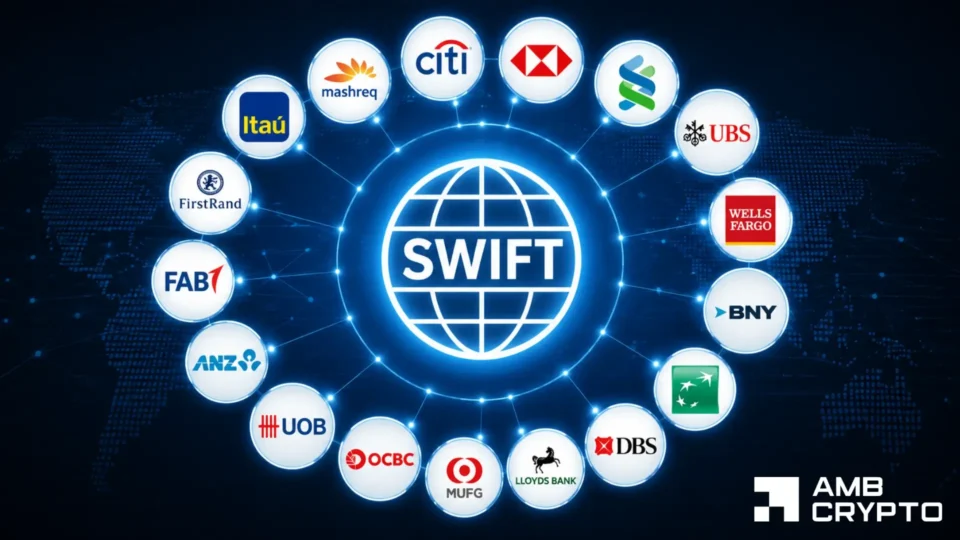
Swift đã chuyển sổ cái dựa trên blockchain từ giai đoạn phát triển sang triển khai thực tế. 17 ngân hàng toàn cầu trên sáu châu lục đang chuẩn bị thí điểm thanh toán xuyên biên giới bằng cách sử dụng tiền gửi được mã hóa (tokenized deposits). Đây là trường hợp sử dụng trực tiếp đầu tiên của Swift cho sổ cái này, cho phép các ngân hàng tham gia cung cấp thanh toán xuyên biên giới 24/7 trong khi vẫn tiếp tục quyết toán giao dịch thông qua cơ sở hạ tầng tài chính hiện có. Sáng kiến này được thiết kế để cải thiện tính linh hoạt thanh toán và quản lý thanh khoản mà không thay đổi các khuôn khổ tuân thủ, quản lý rủi ro và kiểm soát vốn có của hệ thống ngân hàng toàn cầu. Nó đánh dấu xu hướng áp dụng ngày càng tăng của các tổ chức vào công nghệ tài sản kỹ thuật số được quản lý, thay vì các mạng lưới thanh toán blockchain công cộng. Không giống nhiều sáng kiến thanh toán blockchain tập trung vào stablecoin công cộng, nền tảng của Swift được xây dựng xung quanh tiền gửi được mã hóa do ngân hàng phát hành, vẫn nằm trên sổ cái riêng của các ngân hàng tham gia. Sổ cái chung kết nối các hệ thống này, cho phép các tổ chức phối hợp thanh toán xuyên biên giới theo thời gian thực trong khi vẫn dựa trên các đường quyết toán và khuôn khổ quy định hiện có.

ambcrypto4 giờ trước

Swift sẵn sàng cho các thử nghiệm thanh toán token hóa thực tế với sổ cái blockchain cùng 17 ngân hàng toàn cầu

ambcrypto4 giờ trước

Giao dịch

Giao ngay
活动图片