Key Insights
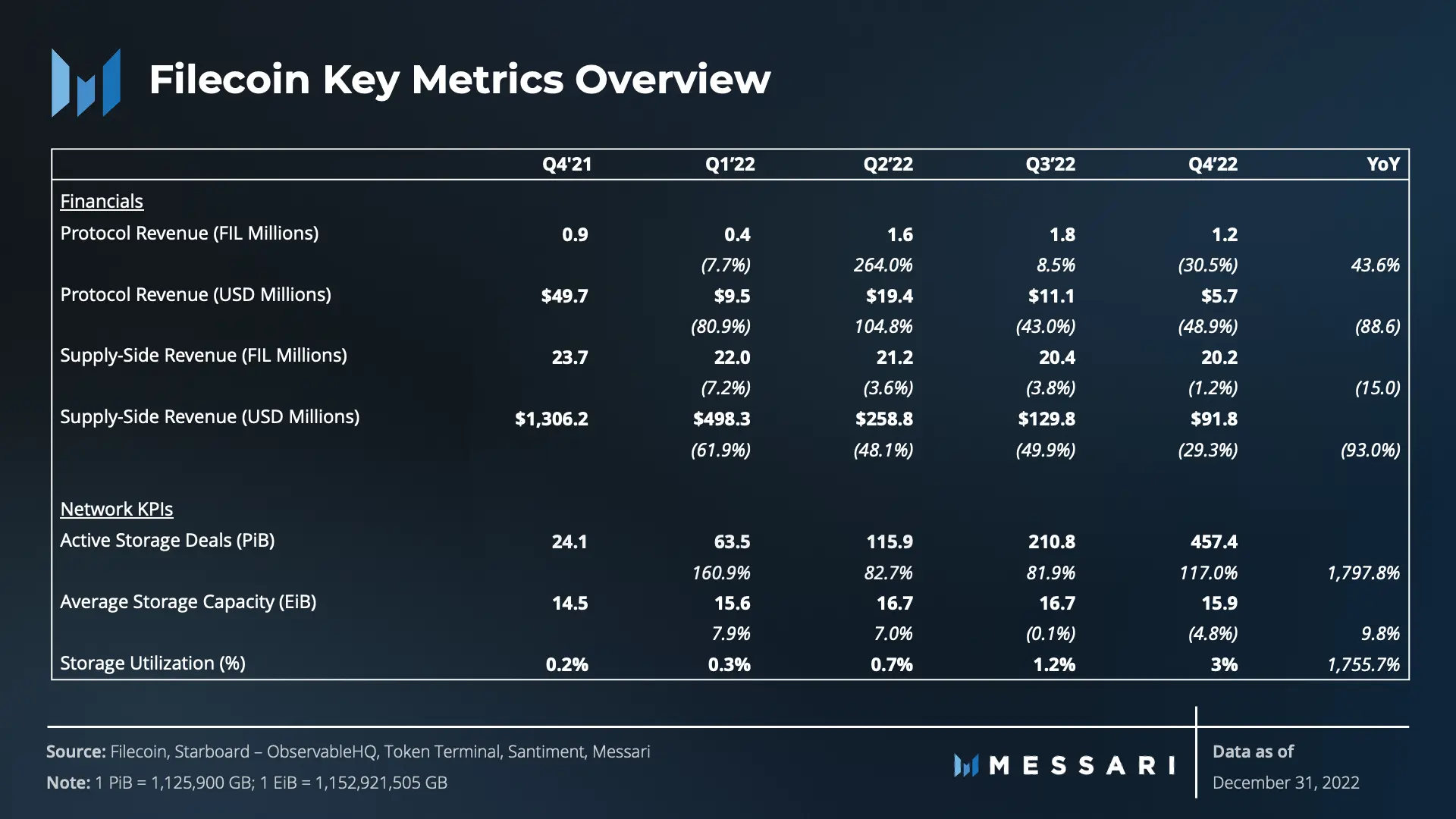
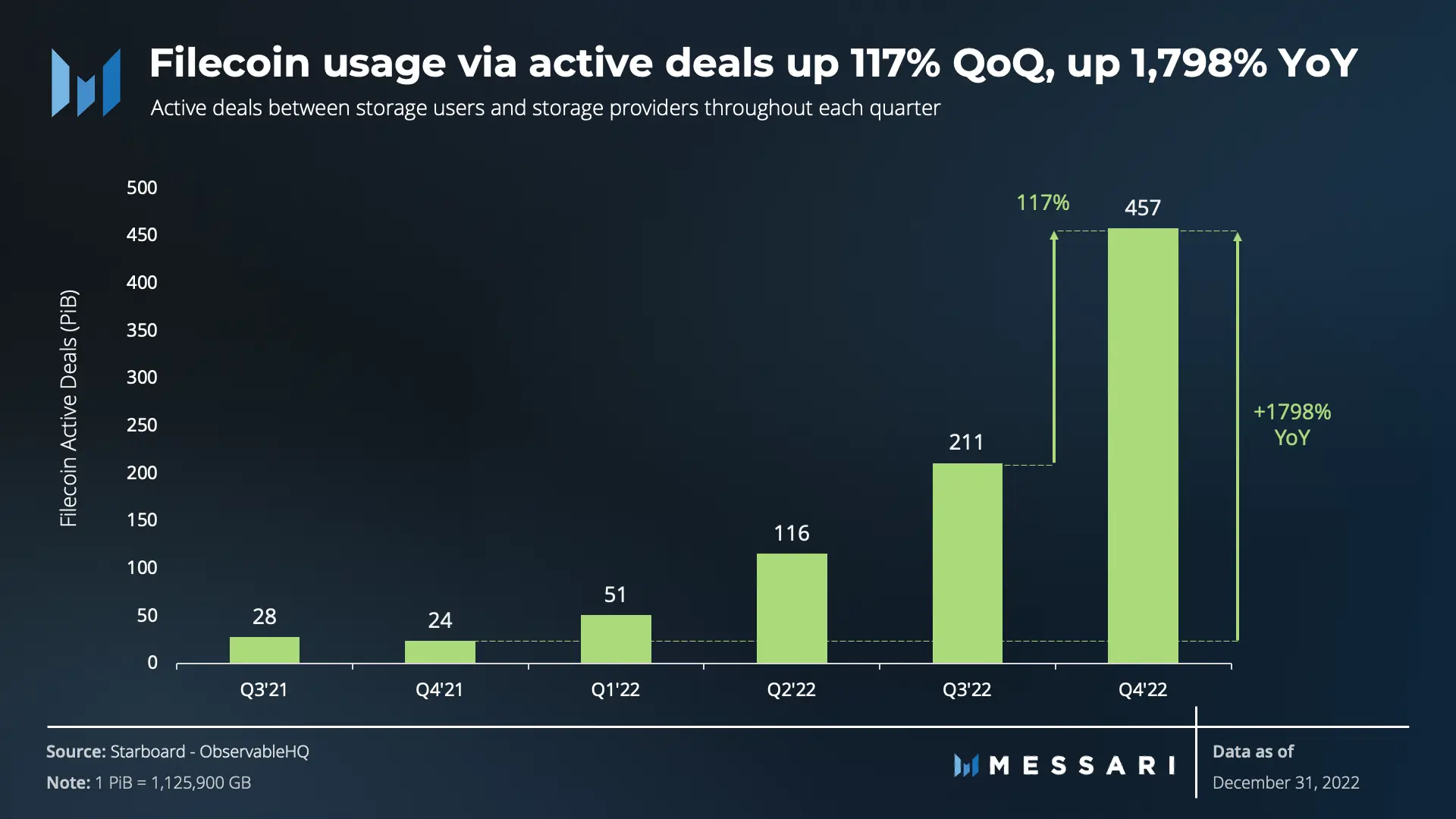
Filecoin’s storage market continued to grow in Q4'22, as active deals grew 117% QoQ and 1,798% YoY.
While storage capacity decreased 5% from its all-time high, utilization grew 18x faster than storage capacity YoY.
FIL fee revenue decreased 31% in Q4'22 (down 49% in USD terms), largely due to a 60% QoQ reduction of base fees despite active storage deals growing 10% QoQ.
FIL reward issuance follows a hybrid exponential decay model and led to a 1% decrease in block rewards disbursed by the network in Q4'22 (down 29% in USD terms).
The number of projects building on Filecoin, IPFS, and Protocol Labs Network grew to over 600 in Q4’22, an increase from nearly 500 in Q3'22.
Primer on Filecoin
Relying on centralized data storage has a major shortcoming: it's hard to systematically verify the integrity of the stored data. As it stands today, the Filecoin network is a peer-to-peer version of Amazon S3. It’s built on top of the InterPlanetary File System (IPFS), which serves as the Filecoin network’s distributed data storage and sharing layer. Filecoin regularly verifies the storage of data and uses storage deals priced based on supply and demand dynamics, instead of a fixed pricing structure.
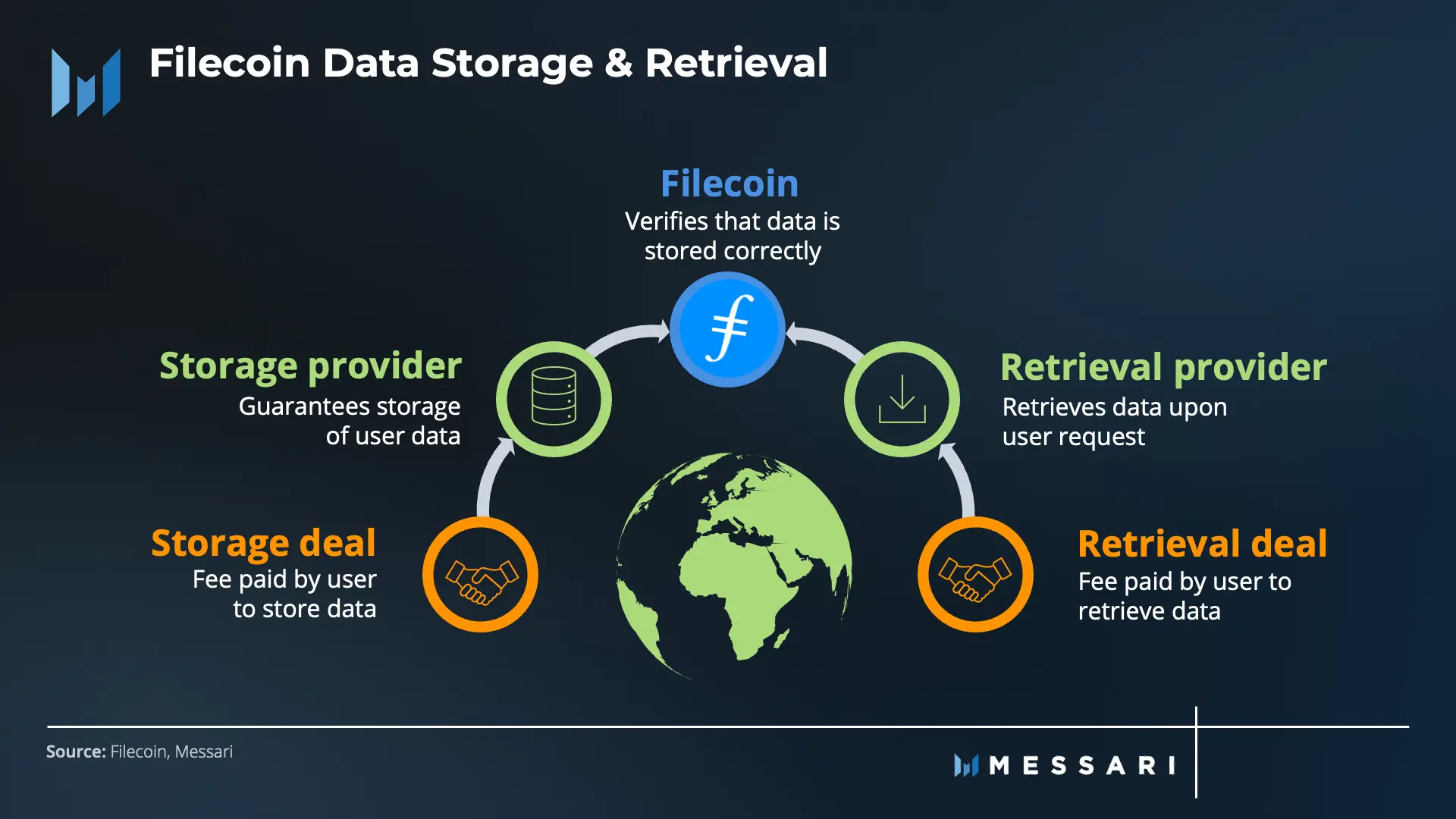
A storage deal is like a contract with a service level agreement (SLA) — users pay fees to storage providers to store data for a specified duration. To keep data safe, Filecoin uses a cryptoeconomic incentive model that regularly verifies the storage with zero-knowledge proofs. To incentivize storage providers to participate in deals, Filecoin rewards them with FIL, the network's native token. Storage providers are also slashed if the data is unretrievable or if the storage fails.
To retrieve data, Filecoin users pay a retrieval provider to fetch the data. Unlike storage deals, which involve transactions on-chain, retrieval deals use payment channels to settle payments off-chain, resulting in faster retrieval.
Key Metrics
Performance Analysis
The Filecoin blockchain is used by both the demand side (i.e., storage users) and the supply side (i.e., storage providers) of the network. Both storage users and storage providers generate revenue for the protocol.
Revenue
Filecoin's revenue framework is similar to Ethereum's because the gas system isbased on EIP-1559. This gas system consists of network fees that are burned to compensate for the resources used.
Protocol Revenue
As per Messari'srevenue analysis, Filecoin's protocol revenue represents the sum of:
Base fees – required by any storage deal or proof; base fees are determined by message congestion.
Batch fees – used for adding storage capacity.
Overestimation fees – required to optimize gas usage.
Penalty fees – collected for storage provider failures.
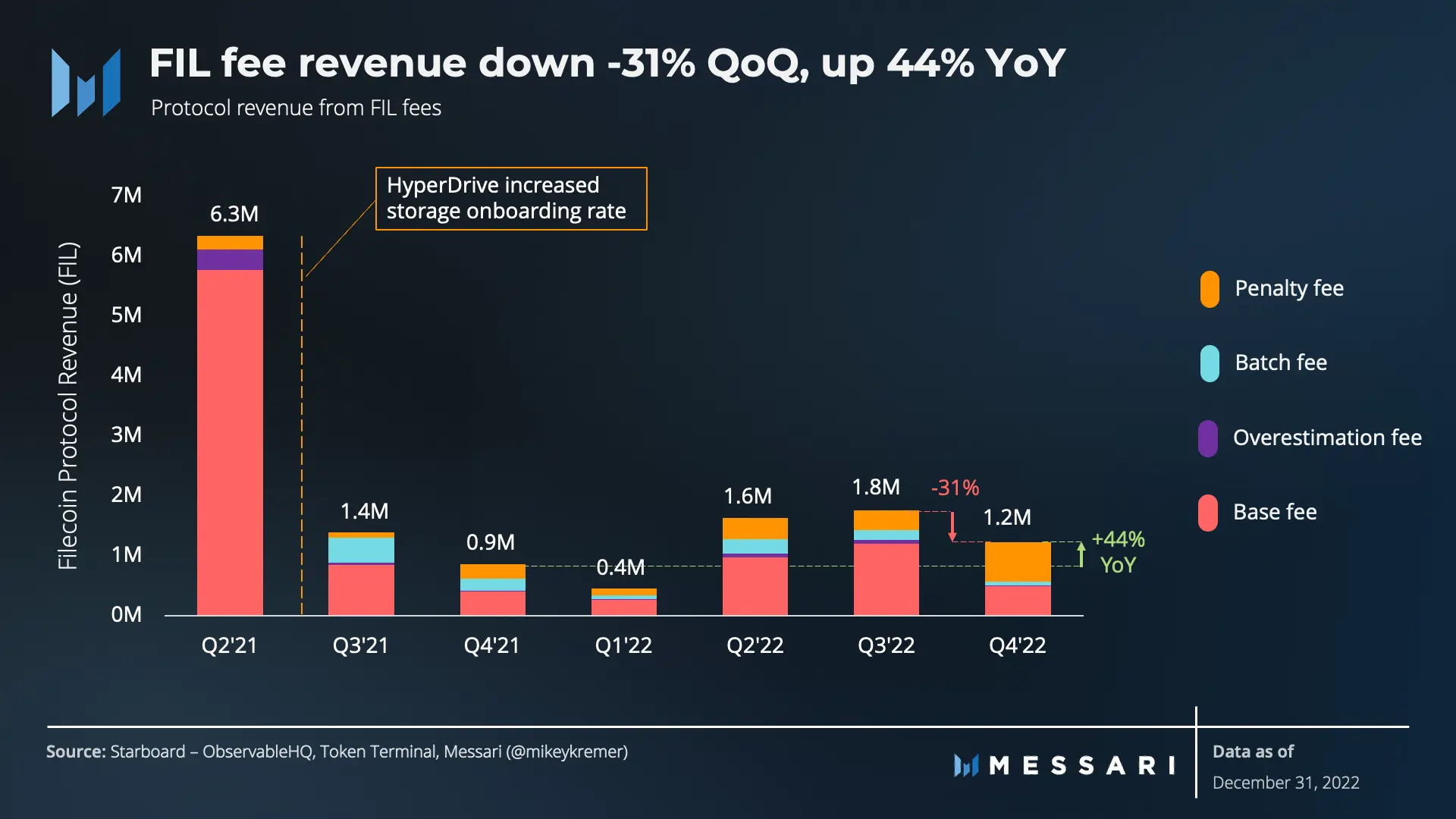
Protocol revenue decreased 31% in Q4'22 to 1.2 million FIL. On a YoY basis, the increase was 44% from nearly 0.9 million FIL in Q4’21. Notably, Q4’22 brought two notable changes in the composition of accrued fees:
Base fees decreased 60% despite active storage deals growing 10% (as per Filecoin Key Metrics Overview table).
Penalty fees increased 100% and reached an all-time high due to an increase in the number of days storage providers' sectors were offline.
Q4'22 continued to see relatively low FIL protocol revenue, compared to pre HyperDrive network upgrade in July 2021. By aggregating storage proofs, HyperDrive led to a 10-25x increase in the storage onboarding rate. While the HyperDrive upgrade benefited network participants – by reducing congestion and freeing up blockspace – it also led to overall lower transaction fees. Hence, the HyperDrive upgrade led to lower protocol revenue over the past four quarters.
The only portion of Filecoin fees that isn't burned by the protocol is the “tip” collected by block miners to speed-up transactions on the supply-side of the network. Therefore, this “tip” counts as supply-side revenue. Filecoin's supply-side revenue consists of token rewards paid to storage providers (accounting for more than 99.97% of supply-side revenue in Q4'22), while “tips” accounted for only a small portion.
Supply-Side Revenue
Supply-side revenue consists of block rewards disbursed by the network to the supply-side participants. The minting mechanism of new FIL tokens relies on both:
an exponential decay model (30% of tokens): block rewards are highest initially to stimulate participation, and decreases exponentially over time.
a baseline model (70% of tokens): block rewards increase with the storage capacity.
The aim of this combination of the two models is to avoid diminishing participation after block reward distribution in the early stages of the network (see exponential decay) and continuously reward additional value created for the network through increased storage capacity (see baseline model).
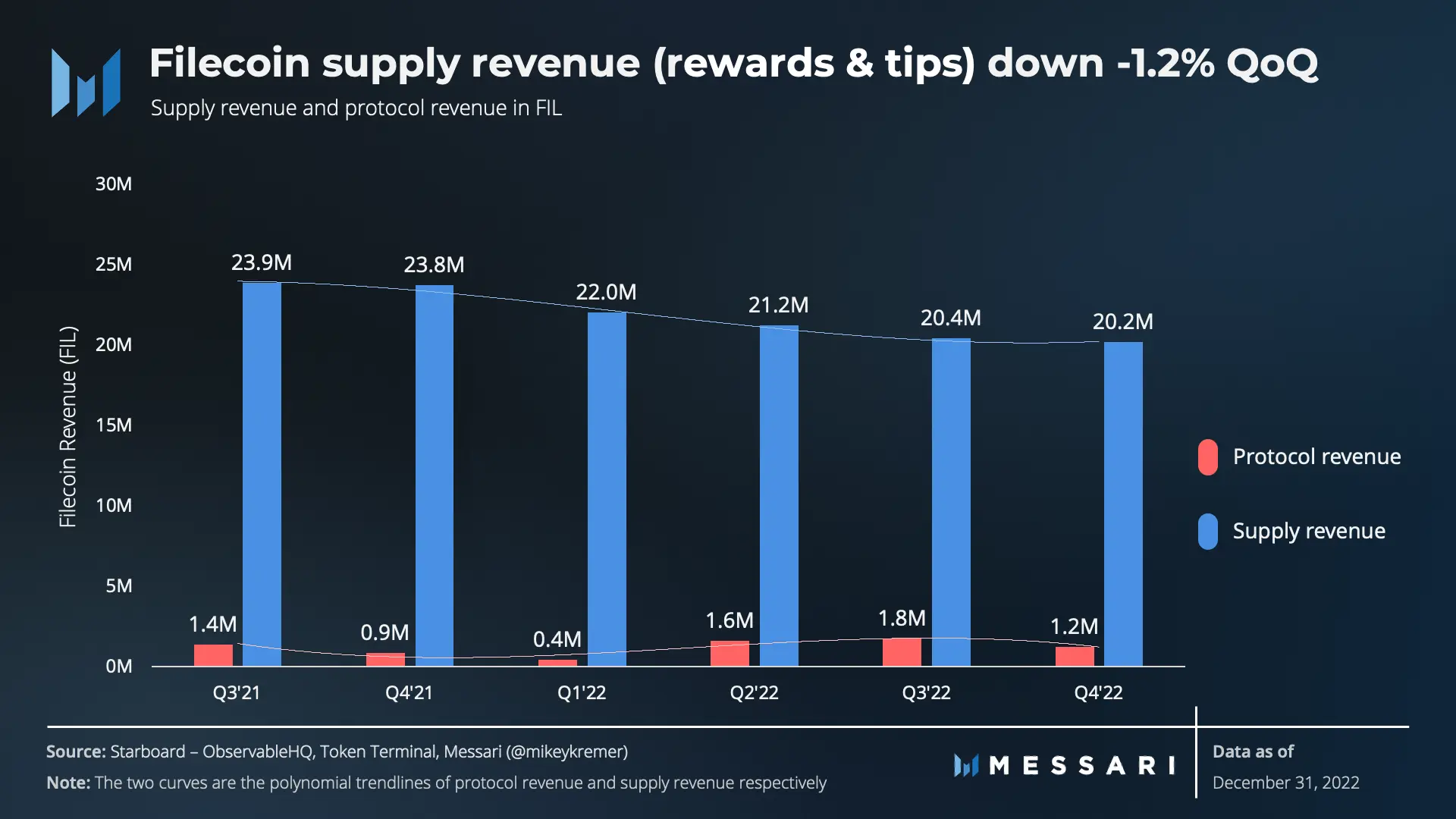
Supply-side revenue decreased 1.2% in Q4’22 to 20.2 million FIL, driven by the overall reduction of reward issuance. While the baseline growth target was met in Q4'22, the overall reduction in minting happened due to exponential decay explained above. Notably, while the growth rate of onboarded storage capacity declined QoQ since Q4'21 (as per Filecoin Key Metrics Overview table), so did the supply-side revenue.
Usage
The amount of data stored in active deals between storage users and storage providers gauges the demand for Filecoin’s services. Demand for Filecoin storage comes from both Web2- and Web3-specific storage deals.
Storage Deals
Near-zero storage fees may have further encouraged increased data storage via deals. Over 231 PiBs were stored on the Filecoin network through active deals by the end of Q4'22 — a 10% increase relative to the previous quarter. This positive growth trend has continued since Q4'21, as Filecoin’s active deals are up 850% YoY.
A breakdown of the active storage deals by their industry use cases reveals the industries that leverage Filecoin most:
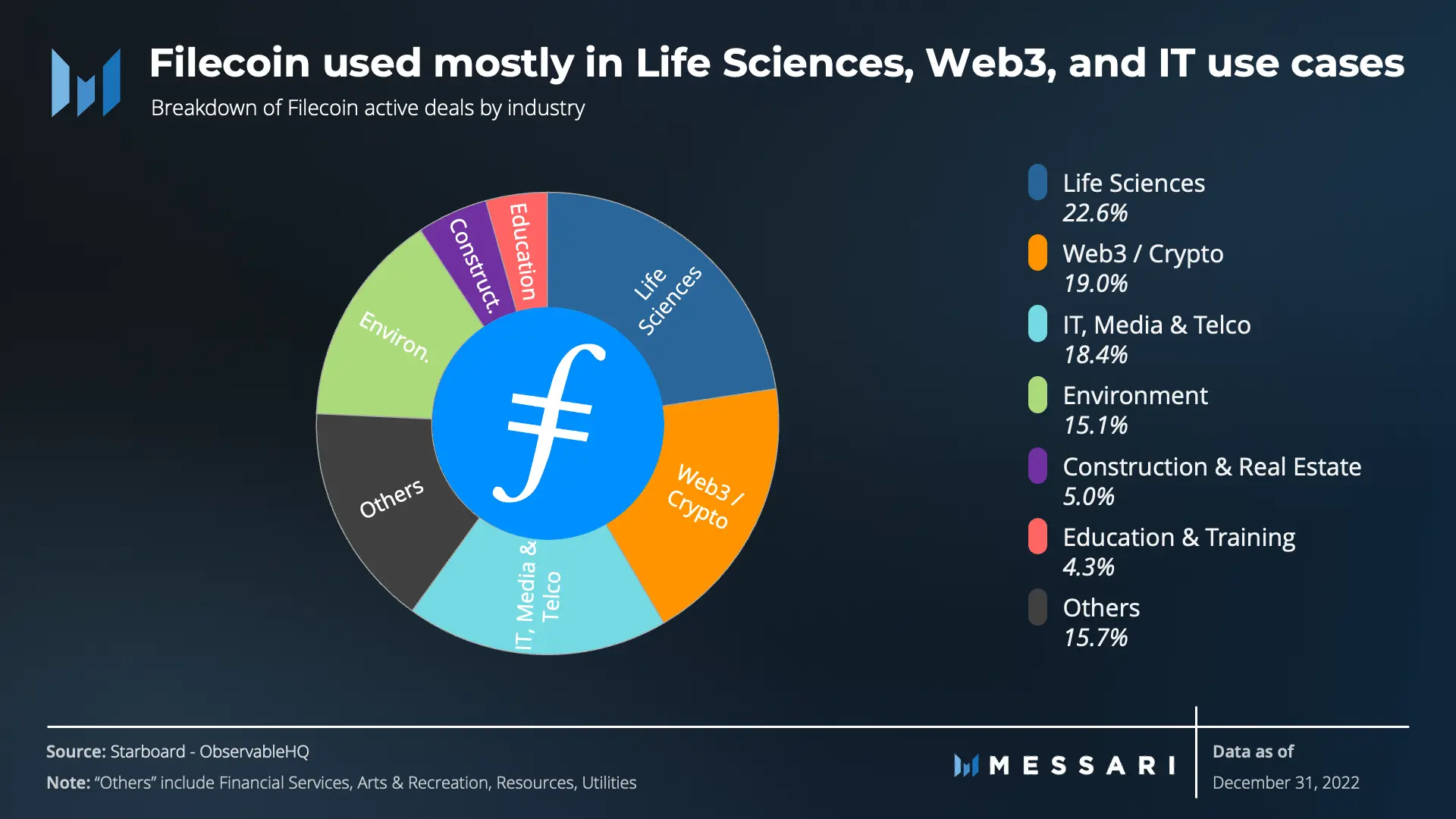
Life Sciences (23%)
Web3 / Crypto (19%)
IT (18%)
To incentivize the onboarding of these storage deals using real data and prevent the gaming of network rewards, the Filecoin Plus (Fil+) program has been introduced. Fil+ offers storage providers increased rewards for participating in verified deals by increasing their probability to win block rewards. This has led storage providers to undercut the fees of competing providers. As a result, in Q4'22, storage was offered at little to no cost.
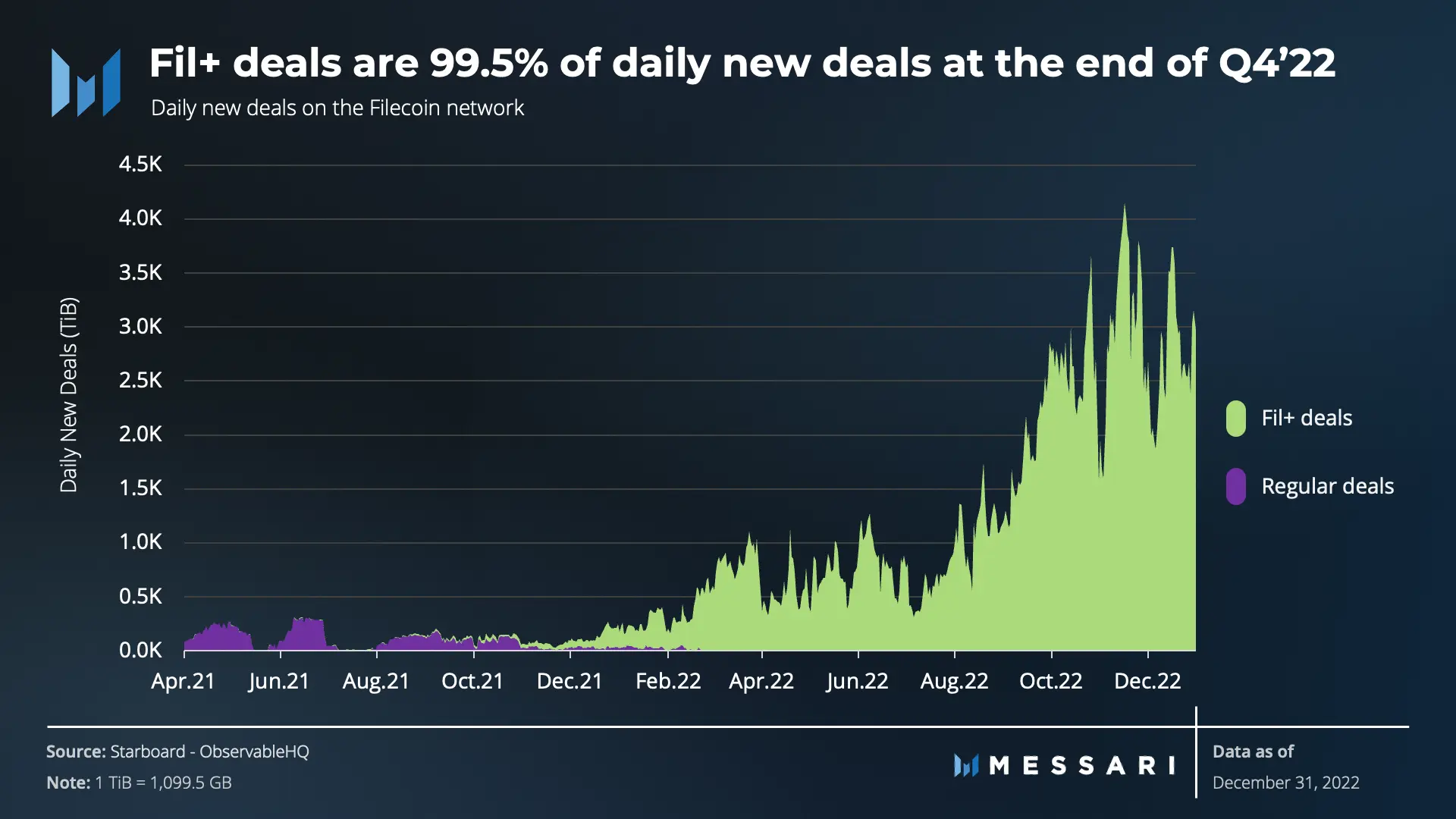
Since Q4'21, a transition has occured from Regular deals (unverified data deals) to predominantly Fil+ deals (verified data deals). This transition corresponded to a sustained upward trend in Fil+ deals, representing 99.5% of all new deals in Q4'22. The flippening of Regular deals by Fil+ deals, coupled with the uptick in new deals, indicates that the Fil+ incentive mechanism and onboarding programs are successfully driving storage utilization.
Clients
As per Messari’s recent guide to decentralized storage networks, Filecoin is primarily geared toward providing cold storage solutions to enterprises and developers. Its competitive pricing and ease of access make it an appealing choice for Web2 clients seeking cost-effective alternatives for storing large amounts of archival data.
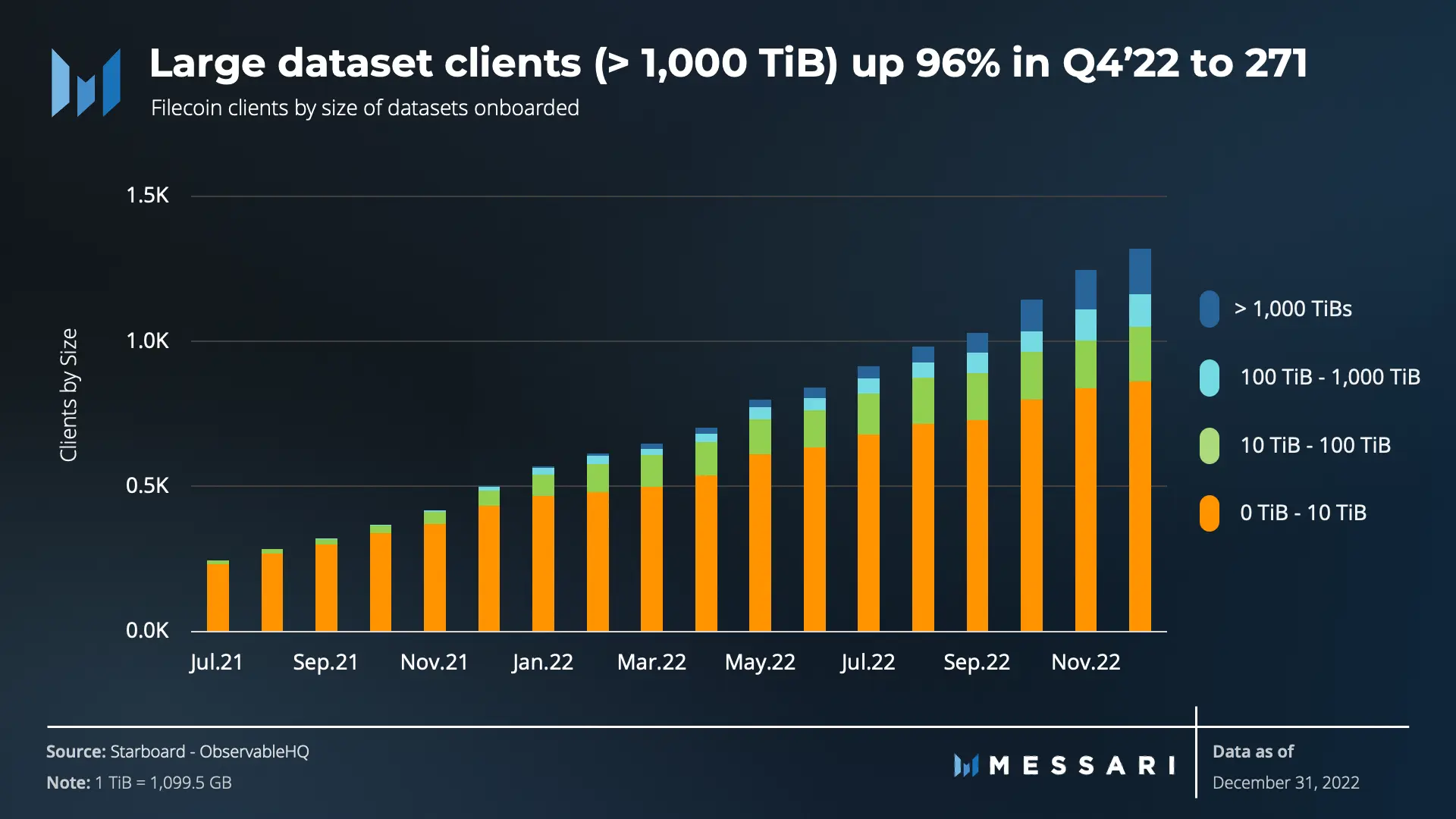
By the end of Q4'22, a total of 1,320 clients have onboarded datasets on Filecoin, out of which 271 clients have onboarded large datasets (e.g., datasets that exceed 1,000 TiB in storage size), up 96% from 138 clients in Q3’22. Filecoin clients range from New York City and the USC Shoah Foundation, to Web3 platforms such as OpenSea. Further notable efforts to onboard data onto the Filecoin network include:
UC Berkeley collaborates with Seal Storage for storing physics research
GenRAIT leverages Estuary to store critical genomics data on Filecoin
Starling Labs research center stores sensitive digital records of human history
Eweison, China's fastest growing host of digital content uses Filecoin for data preservation
Utilization vs. Capacity
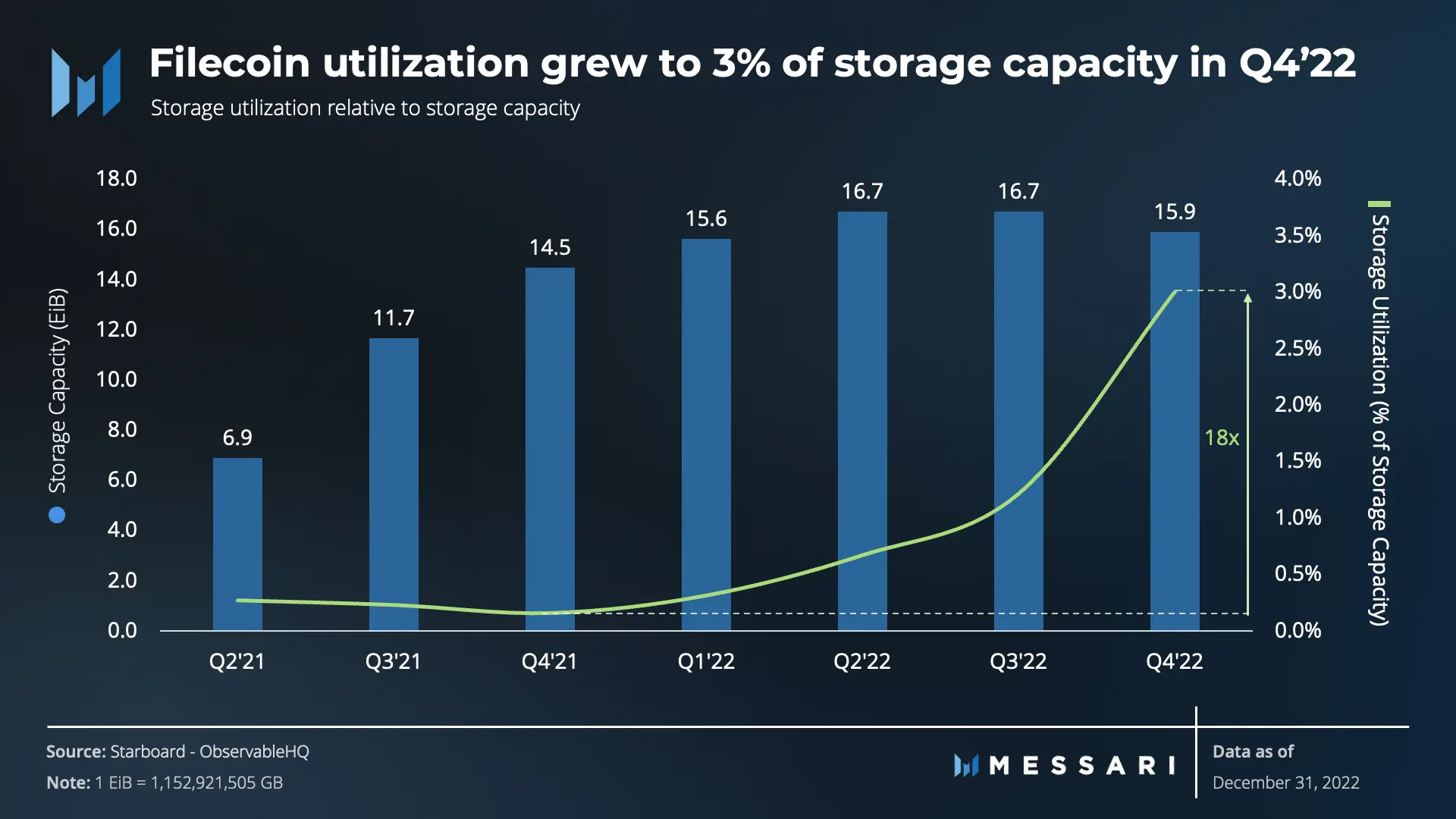
Despite the overall market downturn, Filecoin's committed storage capacity has grown during the past five quarters to 16.7 EiB. This growth is partially attributable to the increase in storage providers. The number of Filecoin storage providers surged by around 300%, reaching a total of 3,030 – corresponding to the peak in network capacity. However, Q4'22 experienced a drop in storage capacity after reaching its all-time high in Q2'22 and plateauing in Q3’22.
Simultaneously, the storage utilization relative to the total available storage capacity has steadily increased over the past quarters to 3% in Q4'22, up from only 0.2% in Q4'21. That is, although from a low starting base, usage grew 18x faster than capacity over the past year.
As the Fil+ program enables acquiring new users and onboarding valuable datasets, it may serve as a base for developing monetizable use cases around data in the future. In essence, Filecoin’s strategy appears to be onboarding data for close to zero costs to monetize on data retrievals or computation over the data in the future.
While the introduction of the Fil+ program has benefitted supply onboarding and demand generation, there is a concerted effort to incubate new businesses and use cases for building on Filecoin.
Retrieval
IPFS gateway requests can serve as a proxy for Filecoin retrieval, since most developer storage tools for Filecoin make data retrieval accessible to the whole IPFS network.
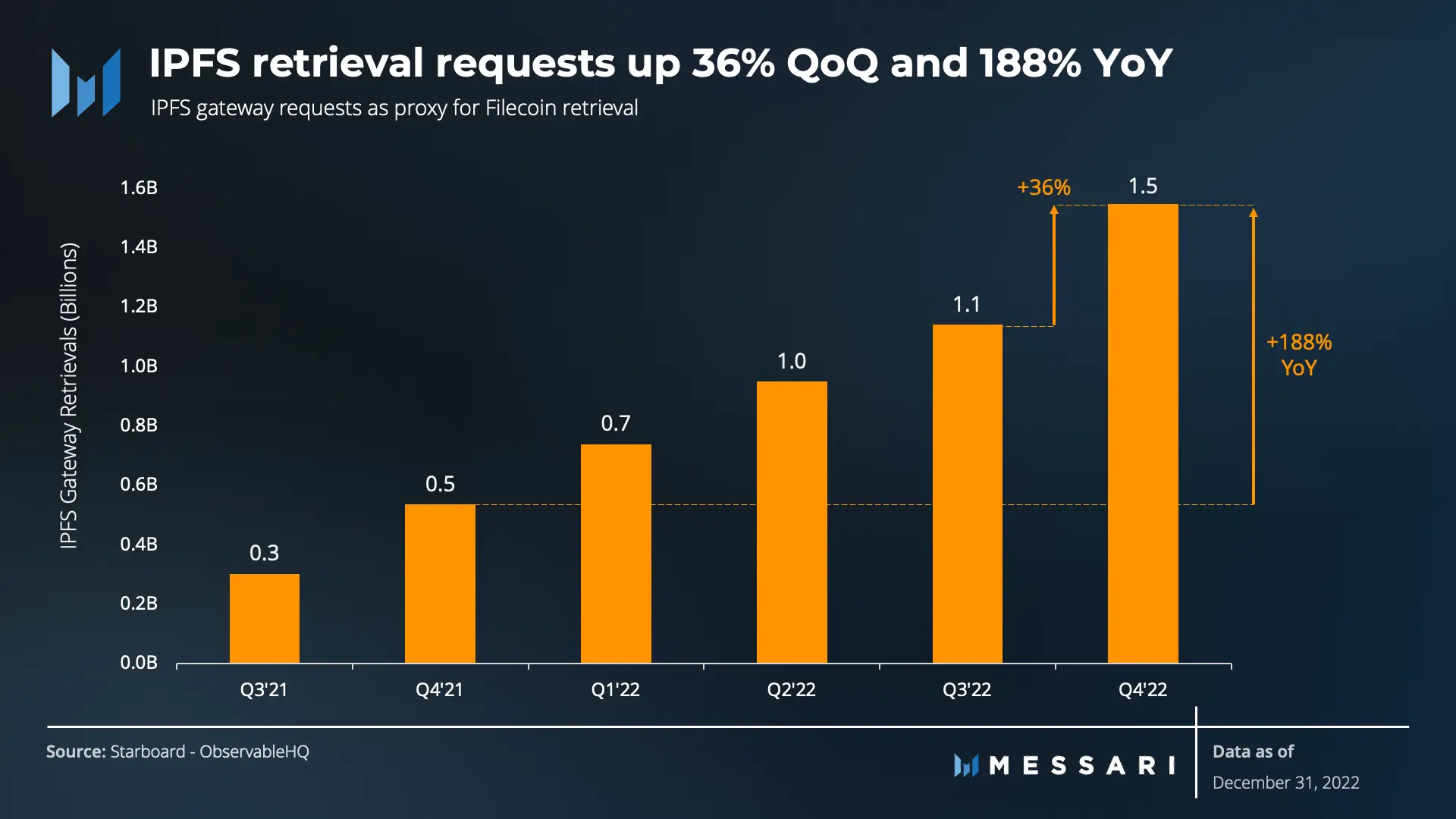
Q4’22 saw a 36% increase in the number of retrieval requests, relative to Q3’22. On a YoY basis, retrieval requests increased 188%. This positive trend is a reasonable proxy for capturing the increase in usage of popular storage developers tools (e.g., NFT.storage and Web3.storage) that rely on IPFS for storage and retrievals. With retrieval markets development ongoing, new metrics will be available for tracking beyond the IPFS gateway.
Ecosystem Overview
The Filecoin ecosystem has been actively developing a funnel of developers and builders through activities such as hackathons, accelerators, grants, mentorship, and growth support. The funnel is designed to help early-stage projects and teams develop enough to receive funding and investments. Funding is provided by Protocol Labs or affiliated entities.
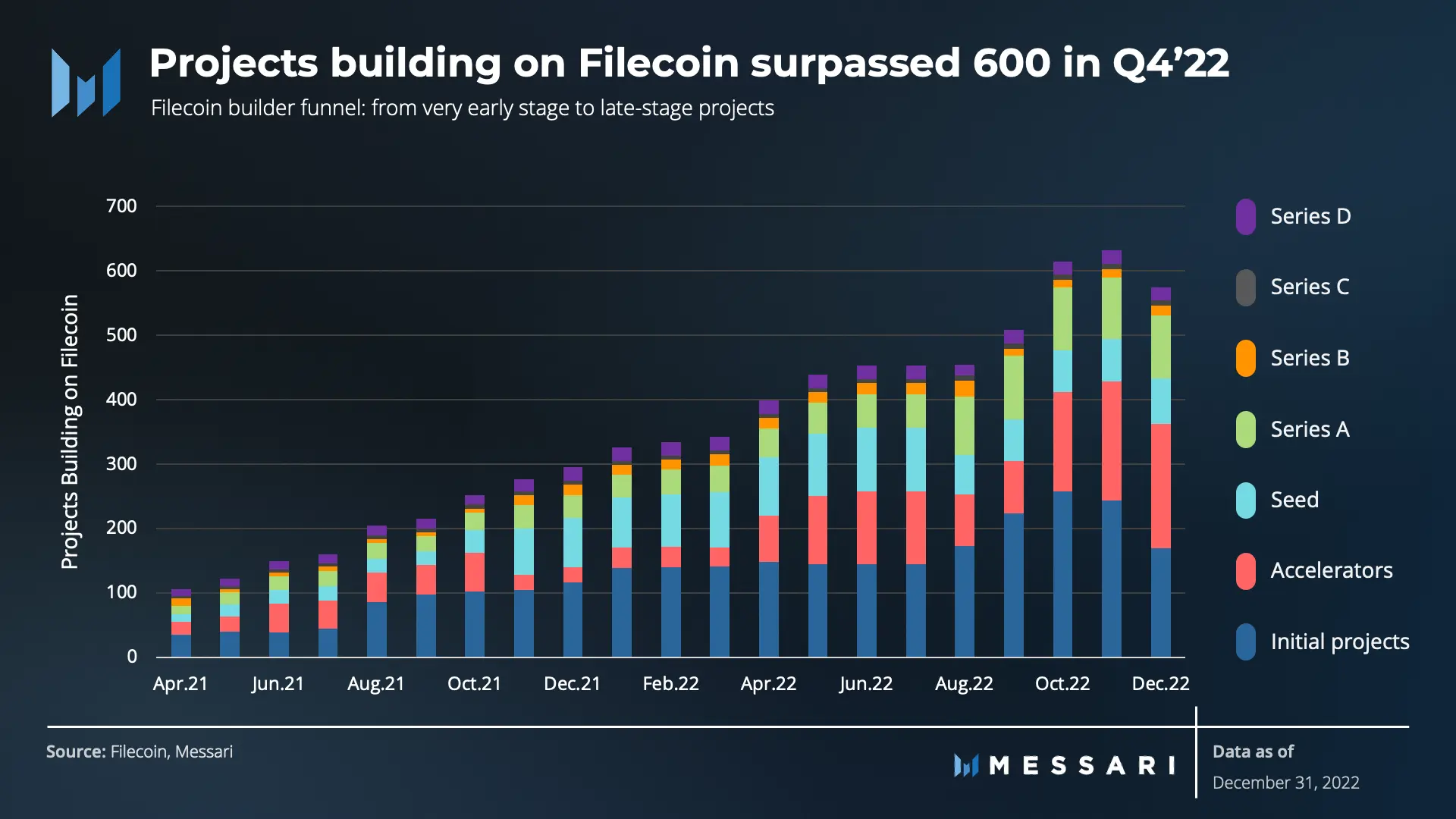
Over 600 known projects are currently being developed on Filecoin, IPFS, and the Protocol Labs Network ecosystem, an increase from nearly 500 in Q3'22. These projects leverage the IPFS, Filecoin, libp2p protocols or services that build on top of these protocols. A significant portion of the growth originated from accelerators, up to 194 in Q4'22 from 82 in Q3’22. In addition, projects like NFT.Storage and Web3.Storage enable other projects to utilize Filecoin/IPFS.
The ecosystem is channeled toward onboarding a large variety of use cases: data infrastructure, to media streaming, to metaverse and gaming. Most applications and protocols that leverage Filecoin offer services focused on data services:
Ocean Protocol: developer tools and platform for data marketplaces
Lighthouse: perpetual data storage service with a one-time payment pricing model
Slate: search engine for handling and sharing personal data
Berty: secure messaging and social media application
Dether: cash on- / off-ramp and diverse financial transactions
Another large category is media and entertainment; examples include:
MoNA: 3D art gallery in the metaverse
NFTwitch: NFT minting platform for Twitch content
Huddle01: decentralized video conferencing
Curio: NFT marketplace for entertainment brands profiting off intellectual property
OPGames: NFT minting from games
Through the introduction of the Filecoin Virtual Machine (FVM), Filecoin aims to allow for external integrations of smart contract applications. The ability to build native applications atop the Filecoin network and externally integrate with them widens the scope of its potential network activity and application ecosystem.
Qualitative Analysis
Product Updates
Saturn
Saturn is a fully decentralized content retrieval and delivery network (CDN) for Filecoin, which aims to accelerate web content delivery. Saturn also seeks to increase Filecoin’s attractiveness to Web3 developers by lowering the costs of running Filecoin nodes and speeding up decentralized data retrieval. Saturn’s longer-term goal is to account for a significant portion of applications retrieving information and thus enabling the coveted “Web3 Killer Apps.”
V17 Update with Shark
Filecoin’s v17Shark Upgrade in November 2022 included improvements to its smart contract programmability for Fil+ deals. This upgrade has been in the works since March 2022 and introduced programmable storage capabilities. The goal is to improve integrations between on-chain smart contracts and off-chain data providers. However, deal onboarding is expected to become more expensive due to increased gas consumption for on-chain verifications.
Enterprise-Grade Partnerships
CME Includes Filecoin in Price Index
CME started publishing FIL reference rates and price benchmarks in October 2022. While this development does not directly translate into the creation of a tradable FIL-backed futures contract, the inclusion of the FIL token may increase Filecoin’s visibility in traditional financial markets. This could further lead to better funding opportunities and partnerships for Filecoin, with enhanced roadmaps and potential collaborations.
Protocol Labs’ Partnership with Ernst & Young and Seagate
Filecoin’s creator, Protocol Labs, closed a partnership with Ernst & Young and Seagate to support enterprise-grade decentralized data storage solutions. If the partnership is successful, and is able to attract institutions to decentralized data storage, Filecoin may play a significant role in the storage and security ofenterprise-level data.
Key Events
ETHBogota & ETHIndia
Filecoin and IPFS sponsored Ethereum-based hackathon ETHBogota in October 2022 and ETHIndia in early December 2022. Filecoin and IPFS collectively offered $20,000 out of the total $350,000+ prize pool offered at ETHIndia. Filecoin and IPFS contributed $20,000 out of the $500,000+ prize pool at ETHBogota.
Sustainable Blockchain Summit
Filecoin Green, the branch of Filecoin that focuses on promoting data transparency in the energy sector, participated in the Sustainable Blockchain Summit in October 2022. Several of Filecoin’s energy experts presented keynote talks, including:
Looking Forward to 2023
Bridging the progress from 2022 to 2023, Filecoin continues to improve its minimal viable product (MVP) for its compute over data product. The first step for integrating the FVM into filecoin for Q1’23 will be integrating EVM compatibility. Other improvements will include L2 capabilities, hierarchical consensus, and Sealing as a Service. Through the FVM incentivized buildernet and testnet, Filecoin hopes to build new and strengthen existing partnerships to better foster product growth within the data infrastructure community.
Closing Summary
Q4'22 marked an uptick in Filecoin usage, as active storage deals grew 10% QoQ. While storage capacity decreased 5% from its all-time high, storage utilization grew 18x faster than storage capacity YoY. While decentralized storage is still in its early days, the Filecoin ecosystem continues to thrive, as over 600 projects are currently being built on Filecoin.
A successful rollout of Filecoin Virtual Machine could enable the next generation of apps beyond storage. Prominent examples include perpetual storage (similar to Arweave), undercollateralized loans to storage providers, and decentralized computing.
Should Filecoin continue to onboard demand, it stands a chance of being a prominent provider of decentralized storage and cloud services for Web3 and traditional apps. Filecoin must continue to prove its reliability as a storage provider and potentially become an enabler of a wide range of data-intensive services.