China Launches Production of Chip Printing Machines: Why Experts Aren't Quick to Applaud

cryptonews.ru2026-07-28 tarihinde yayınlandı2026-07-28 tarihinde güncellendi

Özet

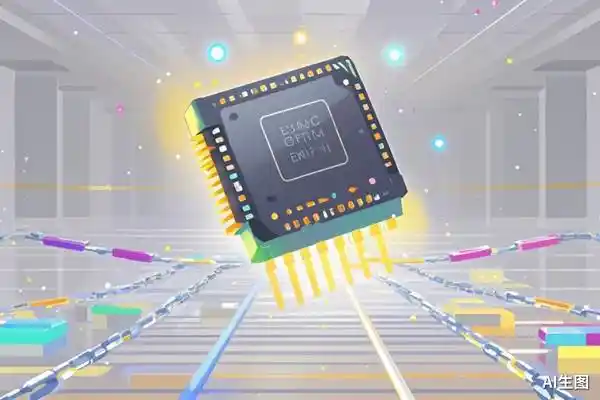
China has reportedly begun production of immersion DUV lithography machines, critical for manufacturing modern semiconductors. According to reports citing anonymous sources, the state-owned Shanghai Aishengna Electronic Technology Group plans to produce a limited number of these machines in 2026 and 2027, with initial deliveries intended for major Chinese chipmakers. However, industry experts and analysts express significant skepticism. They note the new equipment is far from matching the performance, reliability, and commercial viability of systems from the global leader, ASML. Key challenges identified include the difficulty of transitioning from limited production to high-volume manufacturing with consistent precision and yield over thousands of cycles. Analysts also caution that previous announcements of Chinese progress in this field have often failed to meet expectations. While the development is notable, experts suggest a more immediate risk to ASML could come from potential U.S. export restrictions rather than Chinese competition. The market consensus is that ASML's dominance in the lithography equipment segment remains secure for the foreseeable future. The true test for the Chinese machine will be whether it can achieve meaningful, scaled production by 2027 as claimed.

A state-owned company from Shanghai has begun production of immersion DUV lithography machines—equipment critical for the manufacture of modern semiconductors. This was reported on July 27, 2026, by the publication The Information, citing two anonymous sources familiar with the program. According to them, the company plans to produce about five such machines in 2026 and approximately 20 in 2027, with the first shipments intended for Semiconductor Manufacturing International Corp (SMIC), Hua Hong Semiconductor, and ChangXin Memory Technologies (CXMT).

The following day, July 28, Reuters revealed the manufacturer's name: it turned out to be a little-known state-owned entity, Shanghai Aishengna Electronic Technology Group, registered in August 2023 with a capital of 7 billion yuan. Reportedly, the company united development teams from several Chinese firms, including the startup Shanghai Yuliangsheng Technology, which tested a DUV machine prototype back in 2025, as well as specialists from Shanghai Micro Electronics Equipment (SMEE).

Far from ASML's Level

A source familiar with the matter emphasized in a conversation with Reuters: Aishengna's machine will require additional testing and is still far from matching models by the Dutch company ASML—the world leader in lithography equipment manufacturing. Similar skepticism was expressed by JPMorgan Chase analysts, noting that producing a small number of deep ultraviolet (DUV) lithography machines is significantly different from manufacturing equipment suitable for large-scale production. According to them, mass production depends much more heavily on yield rates, alignment accuracy, throughput, and reliability over thousands of wafer processing cycles.

Experts interviewed by the South China Morning Post took a similar position: the publication cited the opinion of Paul Triolo, a partner at DGA-Albright Stonebridge Group, who pointed out that producing machines of such complexity that are commercially viable and can operate 24/7 year-round is an extremely difficult task. William Bavington, an analyst at Jefferies, recalled that previous reports of China's progress in immersion DUV lithography later turned out to be unreliable and suggested waiting for confirmation of the current claims by independent sources. In the opinion of the analysts interviewed, ASML's dominance in the lithography equipment market is not yet under threat.

A More Realistic Risk for ASML—Not China

Experts interviewed by the South China Morning Post added that a more serious threat to ASML might come not from the progress of Chinese developers, but from the possible passage of the MATCH Act in the United States, which could restrict the company's sales and servicing of its equipment abroad.

The fate of the new equipment will depend on whether Aishengna's ability to establish truly mass production of machines, not just single prototypes, is confirmed. For now, market participants agree that ASML's position in this segment remains strong.

AI Opinion

From the perspective of macroeconomic connections, the course of events looks less dramatic than the headlines: in the second quarter, China accounted for only 14% of ASML's net sales, about €6.6 billion, while the company's shares reacted to the news with a decline. The region remains a notable but not decisive source of revenue for the Dutch giant.

A historical pattern suggests caution in assessing timelines. A prototype of a Chinese EUV machine in Shenzhen was already generating ultraviolet radiation back in 2025 but never moved to producing working chips, and the path from a laboratory sample to a mass-produced product in Chinese practice has traditionally stretched over years. Whether Aishengna's machine will be an exception to this rule or another long-term project will only be shown by the actual delivery volume in 2027.


Trend Kriptolar

İlgili Sorular

QWhat specific type of equipment did the Chinese company begin producing, and what is its primary use?

AThe Chinese company began producing immersion DUV (Deep Ultraviolet) lithography machines, which are equipment critically important for manufacturing modern semiconductors.

QWhich Chinese companies are slated to receive the first batch of these domestically produced machines?

AThe first batch of machines is planned to be supplied to Semiconductor Manufacturing International Corp (SMIC), Hua Hong Semiconductor, and ChangXin Memory Technologies (CXMT).

QAccording to analysts and experts cited in the article, what are the main reasons for skepticism regarding China's new lithography machines?

AExperts are skeptical because the machines still require extensive testing, are far from matching the standards of market leader ASML, and face significant challenges in achieving the reliability, precision, and high-volume production throughput necessary for commercial viability.

QWhat potential threat to ASML, mentioned by experts, is considered more serious than the progress of Chinese developers?

AA more serious potential threat to ASML is the possible enactment of the MATCH Act in the United States, which could restrict the company's sales and servicing of its equipment overseas.

QWhat historical precedent does the article mention to caution against over-optimism about China's rapid progress in lithography?

AThe article mentions that a prototype of a Chinese EUV machine in Shenzhen generated ultraviolet light in 2025 but never progressed to producing working chips. It highlights that the path from a lab prototype to a mass-market product has traditionally taken years in China's experience.

İlgili Okumalar

Weekly On-Chain Data Review: Robinhood Chain Explodes, FWA Goes Viral, Mantle Doubles Down on RWA

**Chain Data Weekly Digest: Vault Regulation, Robinhood Memecoin Surge, and FWA's NFT Gamble** * **Vault Managers Face SEC Scrutiny:** SEC Commissioner Hester Peirce warned that some DeFi Vault strategies could trigger investment advisor regulations. This may lead to licensing requirements, potentially sidelining smaller managers while bringing more traditional finance firms on-chain. The industry debates whether Vaults are purely code-driven or resemble discretionary portfolio management. * **Robinhood Chain's Memecoin-Led Boom:** Despite its initial RWA focus, Robinhood Chain has seen explosive early growth driven by memecoin trading and launchpads, which now dominate its DEX volume. The chain facilitates memecoin trading via tokenized stock pairs. It boasts over $800M in on-chain assets, $5B in stablecoin market cap, and strong fee revenue, positioning it as a consumer trading hub. * **FWA Revives NFT Activity with a Gamble:** The Fake World Assets (FWA) protocol, a gachapon-style system on Ethereum where users pay to randomly win deposited NFTs, has rapidly captured 10% of Ethereum's mainnet gas consumption in its first week. It demonstrates how simple, consumer-facing mechanics can reignite NFT engagement, attracting a broad user base. * **CEX Consolidation & DEX Growth:** The closures of BitMEX and BitMart highlight intense central exchange (CEX) competition and consolidation. Meanwhile, the DEX/CEX spot trading volume ratio hit a record high of 24.3% in July, signaling a shift of trading activity and innovation to on-chain venues. * **Mantle's RWA Focus at 3 Years:** Celebrating its third anniversary, Mantle Network is solidifying its role as a "full-stack distribution layer" for tokenized real-world assets (RWA). It ended Q2 with $1.2B in DeFi TVL, $955M in stablecoin market cap, and a growing suite of native RWA trading infrastructure like Fluxion and xChange.

marsbit8 dk önce

Weekly On-Chain Data Review: Robinhood Chain Explodes, FWA Goes Viral, Mantle Doubles Down on RWA

marsbit8 dk önce

From 'Western Learning Ants' to Korean Pension Funds: Why Does Korean Capital Continue to Flow to the US?

Summary: "From 'Western Ants' to National Pension: Why Korean Capital Continues to Flow to the U.S.?" South Korea’s capital is increasingly moving toward U.S. markets, driven by two key investor groups. Individual retail investors, known as "Western Ants," actively trade U.S. stocks overnight, seeking exposure to major tech firms and higher returns often unavailable in Korea’s concentrated domestic market. Simultaneously, the National Pension Service (NPS), managing over $1.16 trillion in assets, is expanding its global investment footprint. Facing demographic pressures and the sheer size of its fund, NPS has steadily increased overseas allocations, with over half its financial assets now invested abroad. A recent memorandum of understanding with six top U.S. venture capital firms (including Sequoia and a16z) marks a strategic extension into Silicon Valley’s private investment ecosystem, aiming to access growth-stage tech opportunities while leveraging external managers’ expertise. While both flows reflect limitations of Korea’s home market, their risk profiles differ sharply: retail investors often pursue speculative, concentrated bets, whereas NPS must ensure long-term, diversified returns for national retirement security. This outward shift also creates macroeconomic tensions, as demand for dollars from both groups pressures the Korean won, prompting coordinated measures between NPS and the central bank to mitigate currency volatility. Ultimately, Korea’s growing financial integration with global markets—especially the U.S.—signals a broader structural shift where citizens’ wealth and pension sustainability are increasingly tied to worldwide economic dynamics.

marsbit18 dk önce

From 'Western Learning Ants' to Korean Pension Funds: Why Does Korean Capital Continue to Flow to the US?

marsbit18 dk önce

This Strategy Earned Hefei One Trillion Yuan

This article analyzes the "Hefei Model" that enabled a municipal state-owned investment to generate paper profits exceeding one trillion yuan through the 2026 IPO of ChangXin Memory Technologies (CXMT). It argues against framing this success as a "lucky gamble," instead presenting it as the result of a deliberate institutional system designed to enable long-term industrial investment. The system comprises three core components. First, a **quantified risk-tolerance mechanism**, including a 40% loss allowance for venture funds and a clear "duty-fulfilled exemption" list, decouples project failure from personal career risk for decision-makers, allowing them to focus on industrial potential rather than personal liability. Second, **strategic investment in critical supply chain gaps**: Hefei doesn't just invest in "good" projects, but targets "missing" links essential for its key industries (appliances, displays, cars). The investment in CXMT aimed to fill the critical DRAM memory chip gap, subsequently attracting over 450 upstream and downstream firms and creating a full semiconductor cluster. Third, **institutional authorization for counter-cyclical investment**: Protected by the risk-tolerance framework, Hefei supported CXMT with increased investment during the 2023 global memory industry downturn, enabling it to scale production and capitalize on the 2025 AI-driven demand surge. The article concludes that the true lesson is not the specific investment but building the institutional infrastructure—quantified risk tolerance, deep industry chain analysis, and counter-cyclical mandates—that makes such long-term, strategic bets possible. It notes the final challenge is perfecting the exit mechanism to complete the investment cycle and transform paper gains into sustainable fiscal returns and reinvestment capacity.

marsbit32 dk önce

This Strategy Earned Hefei One Trillion Yuan

marsbit32 dk önce

İşlemler

Spot

Popüler Makaleler

CHIP Nasıl Satın Alınır

HTX.com’a hoş geldiniz! USD.AI (CHIP) satın alma işlemlerini basit ve kullanışlı bir hâle getirdik. Adım adım açıkladığımız rehberimizi takip ederek kripto yolculuğunuza başlayın. 1. Adım: HTX Hesabınızı OluşturunHTX'te ücretsiz bir hesap açmak için e-posta adresinizi veya telefon numaranızı kullanın. Sorunsuzca kaydolun ve tüm özelliklerin kilidini açın. Hesabımı Aç2. Adım: Kripto Satın Al Bölümüne Gidin ve Ödeme Yönteminizi SeçinKredi/Banka Kartı: Visa veya Mastercard'ınızı kullanarak anında USD.AI (CHIP) satın alın.Bakiye: Sorunsuz bir şekilde işlem yapmak için HTX hesap bakiyenizdeki fonları kullanın.Üçüncü Taraflar: Kullanımı kolaylaştırmak için Google Pay ve Apple Pay gibi popüler ödeme yöntemlerini ekledik.P2P: HTX'teki diğer kullanıcılarla doğrudan işlem yapın.Borsa Dışı (OTC): Yatırımcılar için kişiye özel hizmetler ve rekabetçi döviz kurları sunuyoruz.3. Adım: USD.AI (CHIP) Varlıklarınızı SaklayınUSD.AI (CHIP) satın aldıktan sonra HTX hesabınızda saklayın. Alternatif olarak, blok zinciri transferi yoluyla başka bir yere gönderebilir veya diğer kripto para birimlerini takas etmek için kullanabilirsiniz.4. Adım: USD.AI (CHIP) Varlıklarınızla İşlem YapınHTX'in spot piyasasında USD.AI (CHIP) ile kolayca işlemler yapın.Hesabınıza erişin, işlem çiftinizi seçin, işlemlerinizi gerçekleştirin ve gerçek zamanlı olarak izleyin. Hem yeni başlayanlar hem de deneyimli yatırımcılar için kullanıcı dostu bir deneyim sunuyoruz.

457 Toplam GörüntülenmeYayınlanma 2026.04.21Güncellenme 2026.06.02

CHIP Nasıl Satın Alınır

Tartışmalar

HTX Topluluğuna hoş geldiniz. Burada, en son platform gelişmeleri hakkında bilgi sahibi olabilir ve profesyonel piyasa görüşlerine erişebilirsiniz. Kullanıcıların CHIP (CHIP) fiyatı hakkındaki görüşleri aşağıda sunulmaktadır.

活动图片