The Hundred Platforms War on Robinhood’s Launchpad: Who Will Have the Last Laugh?

marsbitОпубліковано о 2026-07-20Востаннє оновлено о 2026-07-20

Анотація

Following the unexpected shutdown of Noxa, a "war of a hundred platforms" has erupted for the launchpad space on Robinhood. After nearly a week, the landscape is clearer but remains highly competitive. Pons has emerged as the current frontrunner, leading in both daily new token launches and trading volume over the weekend, with an average daily volume of around $45 million. Its market share reached 52.1% based on intraday volume, fueling a rebound in its token's market cap to a new high of approximately $24 million. Key drivers include market bets on filling Noxa's void, strong attention from figures like bonkguy (associated with the Bonk community), and endorsements from influencers. However, other platforms are aggressively competing. Arrow, originally focused on tokenized stock collateralized lending, has pivoted to become a DeFi hub including a launchpad, leveraging its high token concentration and a narrative involving a former Robinhood employee as an advisor. Stonkbroker has gained traction even before its official launch; its NFT collection, utilizing ERC-6551 for enhanced utility, has surged close to 2 ETH. The model creates a flywheel where NFT holders receive dividends from launchpad revenue (in tokenized stocks) but must spend the platform's token to activate these rights. Bankr is taking a different, clever approach by allowing new meme coins to be paired with over 90 tokenized stocks like $TSLA or $AAPL instead of ETH. Its founder even launched $REAL paired w...

After Noxa's unexpected shutdown, Robinhood entered the “Hundred Platforms War” phase on its launchpad. Nearly a week has passed, and while the situation has become somewhat clearer, there is still a lot of uncertainty.

Pons: The Current Frontrunner

Over the past weekend, Pons has taken the lead in both daily new token launches and daily trading volume. Particularly in daily trading volume, Pons has surpassed Noxa for two consecutive days, with an average daily volume of around $45 million over those two days.

Although Noxa is no longer issuing new tokens, early influential projects like $CASHCAT are still contributing significantly to its daily volume data. Pons' lead in daily volume indicates it is currently the preferred choice not only for launching new tokens but also as the primary destination for active liquidity.

Yesterday, based on calculations of market share by intraday trading volume, Pons reached a 52.1% market share.
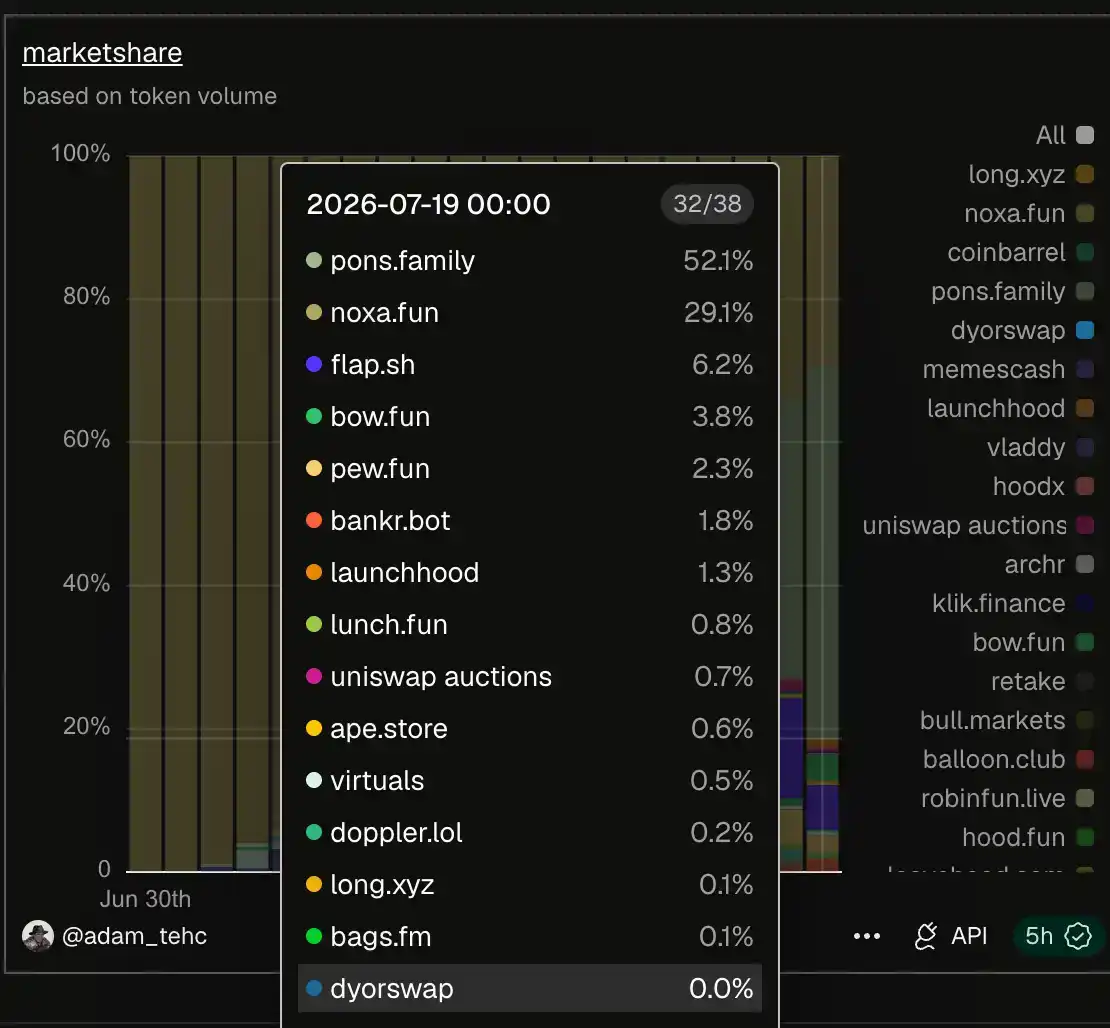
This helped the price of $PONS rebound after once falling to a market cap of approximately $4 million, reaching a new high of around $24 million. We can certainly argue that, based on Pons' revenue since its inception, its annualized estimates, combined with the already burned 20% of tokens, and compared horizontally with $PUMP, the rebound of $PONS from $4 million was to be expected.
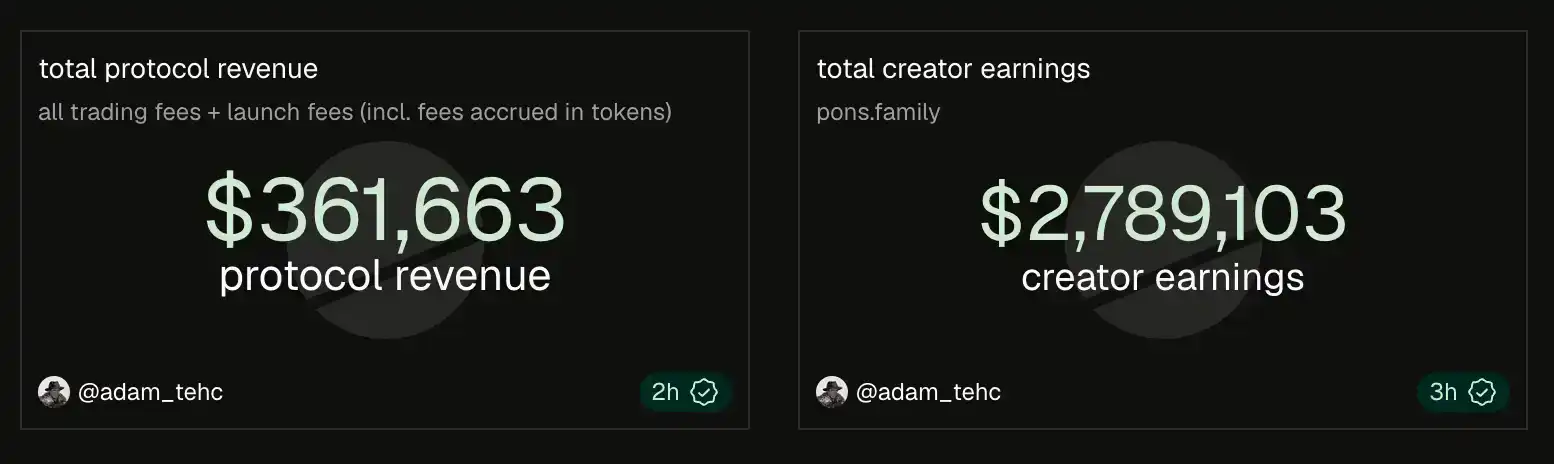
However, the logic can be simplified and clearer. Firstly, the market is betting on the huge vacuum left by Noxa's exit from the launchpad sector, and Pons has the best data. Secondly, there needs to be an attention-grabbing event with room for market imagination. Pons also leads in this regard, as bonkguy openly bought in and even increased his holdings once. Additionally, @cryptogle, an advisor to WLFI, has been actively promoting $PONS, fueling market speculation that Pons is backed by the "Bonk gang."

Finally, Pons' lead does not mean it has achieved final victory, as many other platforms are eager to challenge.

Arrow: High Control, Doing Everything

One reason Arrow's token price previously surged to a market cap of $35 million is its high level of control:
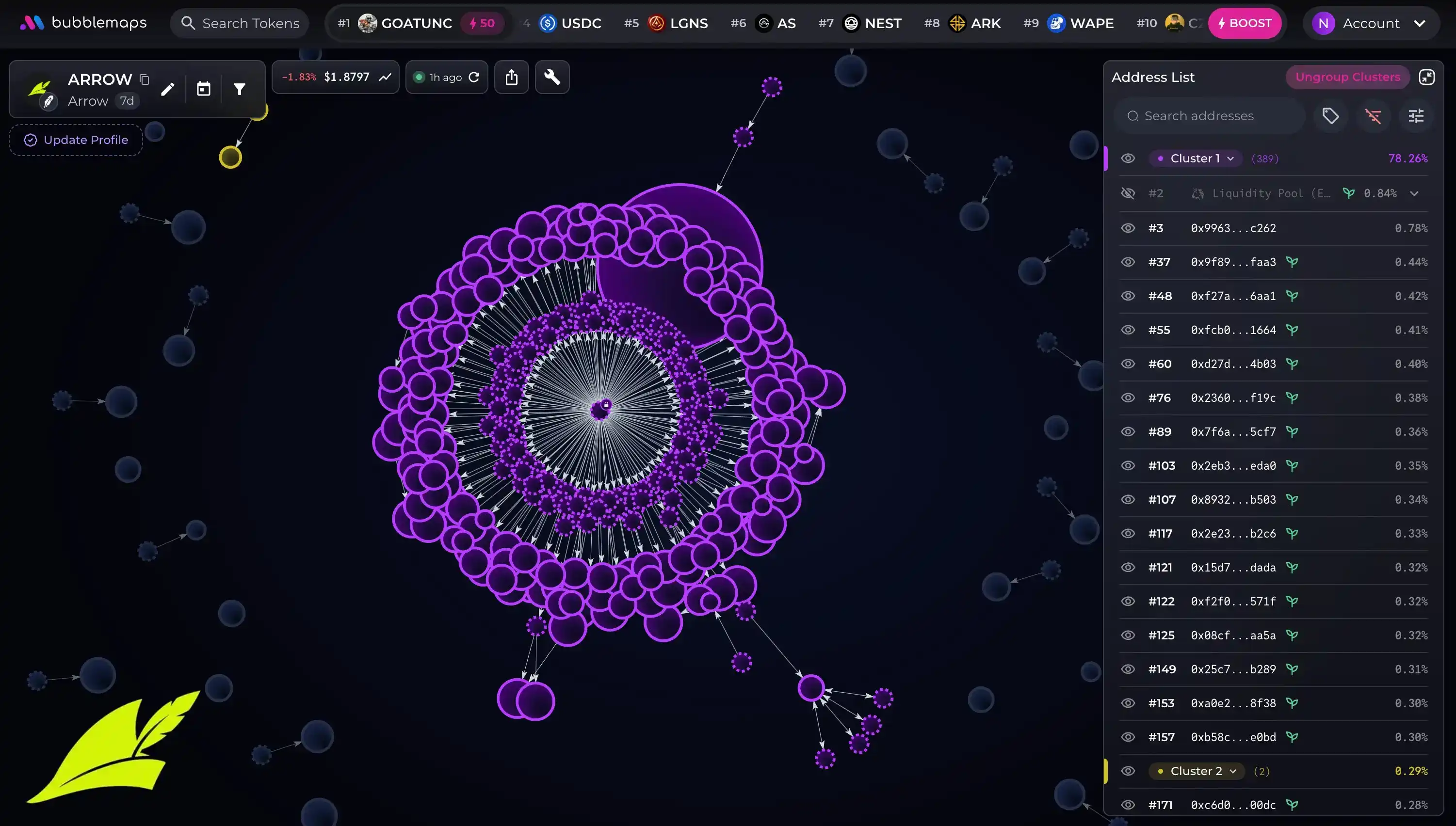
Another reason is that after meme coin $CASHCAT became a leader, people sought opportunities in the RWA narrative, and Arrow happened to be involved in tokenized stock lending and borrowing.

The launchpad business is highly profitable, so Arrow decided to enter this space as well. Its narrative has thus upgraded from tokenized stock lending to a comprehensive DeFi hub on Robinhood. In terms of attention, Pons relies on the Bonk gang, while Arrow's narrative features Ash Manicka, a former Robinhood employee, as the project's strategic advisor.

The platform hasn't officially launched yet, but it's imminent. Keep an eye on it.

Stonkbroker: Platform Not Yet Launched, NFTs Already Soaring

This project planned to launch NFTs before Robinhood's mainnet went live and had already built a launchpad during the testnet phase.

The original idea was to use royalties generated by the project to purchase tokenized stocks on Robinhood and airdrop them to holders. The implementation path involves this NFT series incorporating ERC-6551, where each NFT is also an Ethereum wallet, enabling direct airdrops to NFTs.

The use of ERC-6551, rather than just tracking holder addresses, opens up many possibilities for gameplay. Its platform hasn't officially started, but the NFTs have already been pumped to nearly 2 ETH, and its token surged to a peak market cap exceeding $15 million, making it one of the big winners over the weekend.
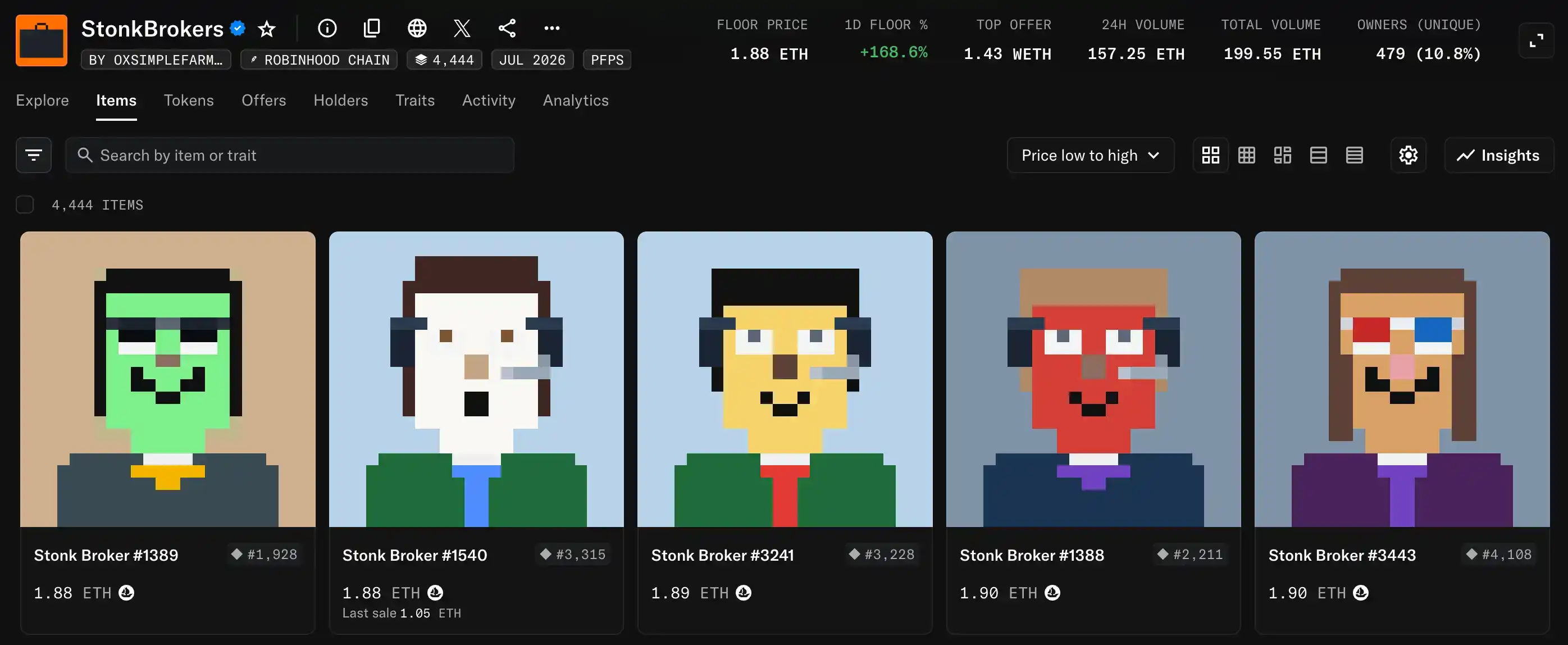
This NFT series has a total supply of 4,444. In the future, 70% of the launchpad's revenue will be used to purchase tokenized stocks on Robinhood and airdropped to NFT holders. However, holders need to spend a portion of $STONKBROKER to activate the NFT for dividend eligibility. The more tokens spent, the greater the multiplier for dividends:
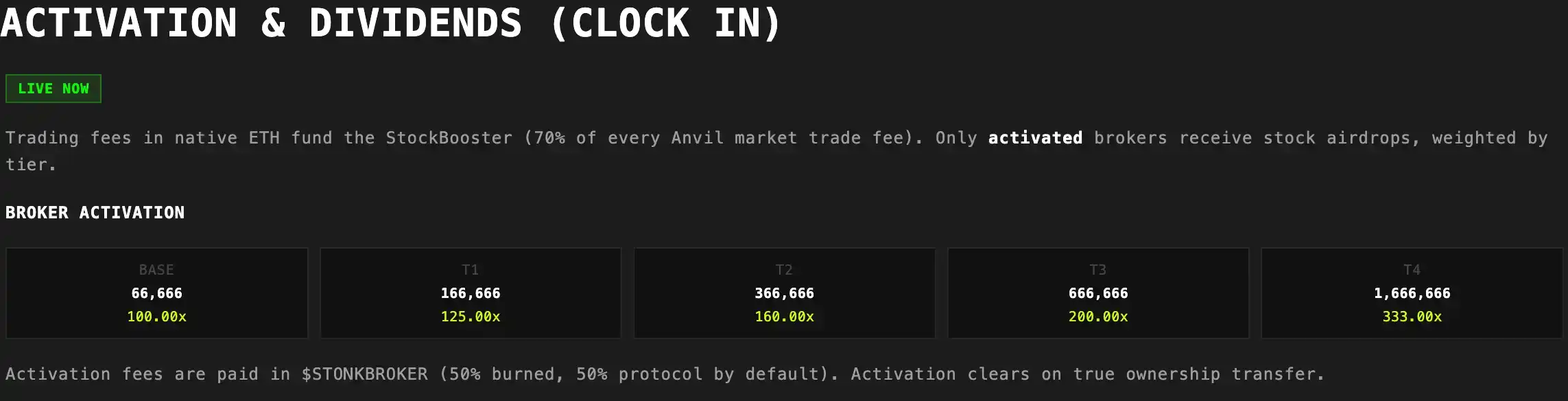
Every time NFT ownership is transferred, the new holder must spend $STONKBROKER to activate dividends again.

This essentially creates a token-NFT flywheel. Holding the image is like being a shareholder of the platform, but you need to spend tokens to acquire dividend rights. The more popular the platform, the higher the dividends for NFTs, and the more expensive the tokens required to activate dividend rights become.

The current situation is that the platform hasn't even launched, but expectations have already been hyped to the max. This is likely due to the novelty of the gameplay and the strong interest from the NFT community. This platform isn't just a launchpad; it will also include a Swap and lending/AMM features tailored to this NFT series.

Bankr: Issuing Meme Coins Paired with Tokenized Stocks

This is indeed a clever approach. Just a few hours ago, Bankr launched a new feature supporting the use of over 90 tokenized stocks like $TSLA, $AAPL, $SPY to form trading pairs with newly launched meme coins, meaning the liquidity pool consists of stocks instead of ETH.
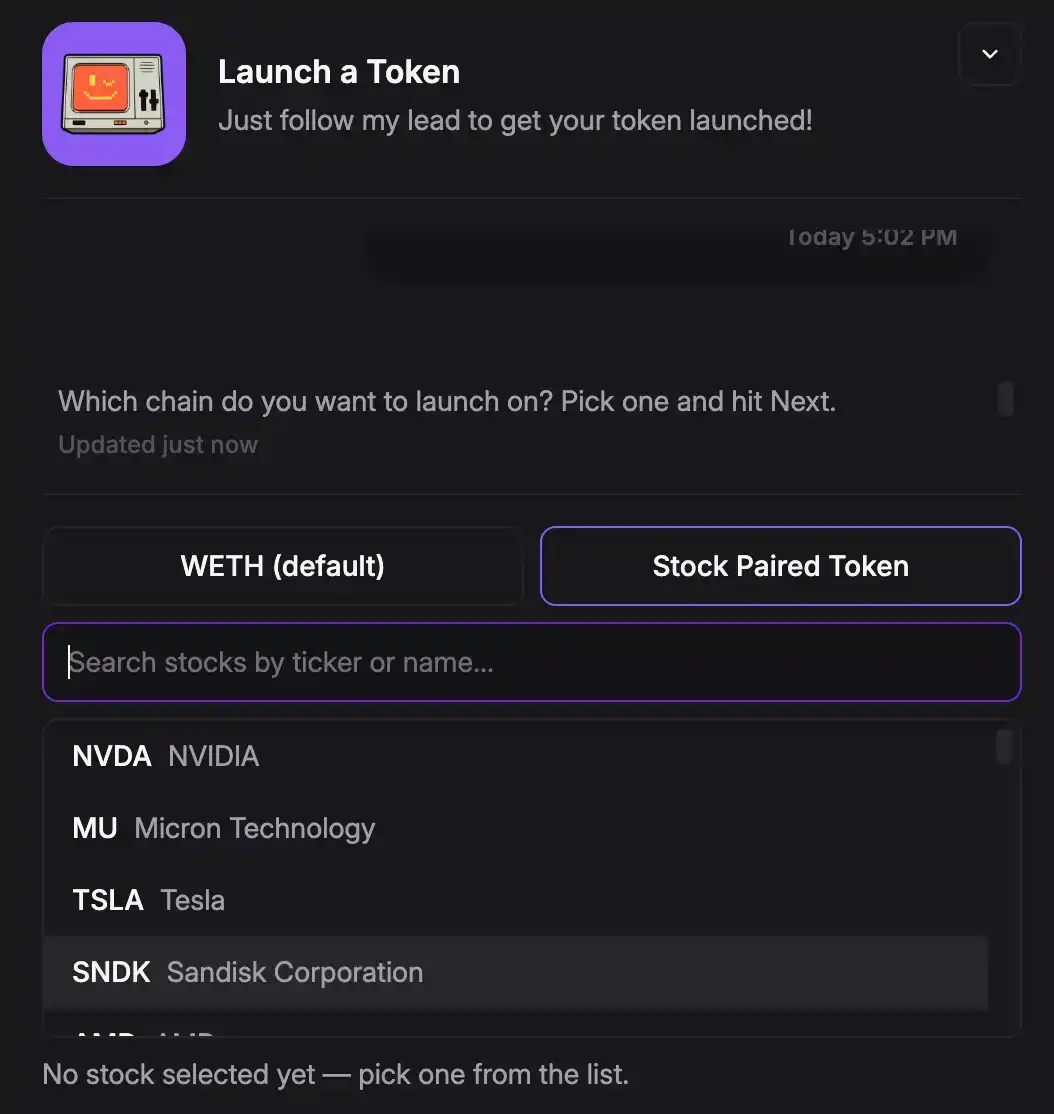
Similar gameplay existed before. For example, about two months ago on HyperEVM, a platform called alt.fun gained popularity for a few days by using contract positions, including stock contracts, to launch meme coins, with its top project reaching a market cap of $9 million.

However, considering Robinhood's CEO has repeatedly emphasized that their chain aims to focus on both RWA and meme coins, this kind of gameplay on this chain seems to have more room for speculation. Moreover, somewhat dramatically, Bankr's founder, @0xDeployer, launched his own token $REAL, paired with Nvidia stock. He even posted on X recruiting a CTO/team for this coin, seeking people who truly know how to operate and promising to provide advice:
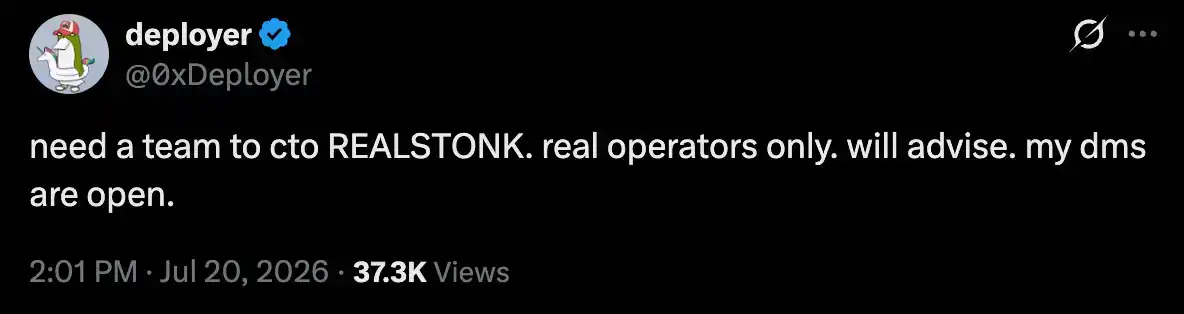
If $REAL takes off, Bankr might use this clever method to overtake competitors in the short term. Meme coins paired with tokenized stocks could potentially become trendy.

Conclusion

The tokens directly related to the platforms mentioned above (excluding $REAL) already have market caps exceeding $10 million. Without a clear winner in this "war," making heavy bets carries relatively high risk. At this stage, the best strategy is to monitor each platform closely. The more fiercely they compete, the more opportunities will likely emerge.

Трендові криптовалюти

Пов'язані питання

QAccording to the article, which platform is currently leading the Robinhood launchpad 'hundred-team battle' in terms of daily transaction volume?

APons is currently leading in terms of daily transaction volume, achieving a 52.1% market share based on intraday trading volume calculations mentioned in the article.

QWhat are the two key reasons mentioned for Pons's recent price recovery and market leadership?

AThe two key reasons are: 1) The market is betting on the massive gap left by Noxa's exit, and Pons has the best data to fill it. 2) Pons has strong attention and narrative driven by bonkguy's public purchase and the speculation that it's backed by the 'Bonk gang'.

QHow does the Stonkbroker project plan to distribute its launchpad's income to its NFT holders?

AStonkbroker plans to use 70% of its launchpad's income to buy tokenized US stocks on Robinhood and airdrop them to the holders of its ERC-6551 NFTs. However, holders must spend some $STONKBROKER tokens to activate their NFT to be eligible for these dividends.

QWhat unique feature does Bankr's launchpad recently introduce for creating meme coin trading pairs?

ABankr recently introduced a feature that allows users to create trading pairs for newly issued meme coins using over 90 types of tokenized US stocks like $TSLA, $AAPL, and $SPY, instead of just ETH.

QWhat is the article's suggested investment strategy regarding the competition among these Robinhood launchpads?

AThe article suggests that the best strategy is to monitor the competing launchpads closely, as the more fiercely they compete, the more opportunities they will create, rather than making heavy bets on any single project before the outcome is clear.

Пов'язані матеріали

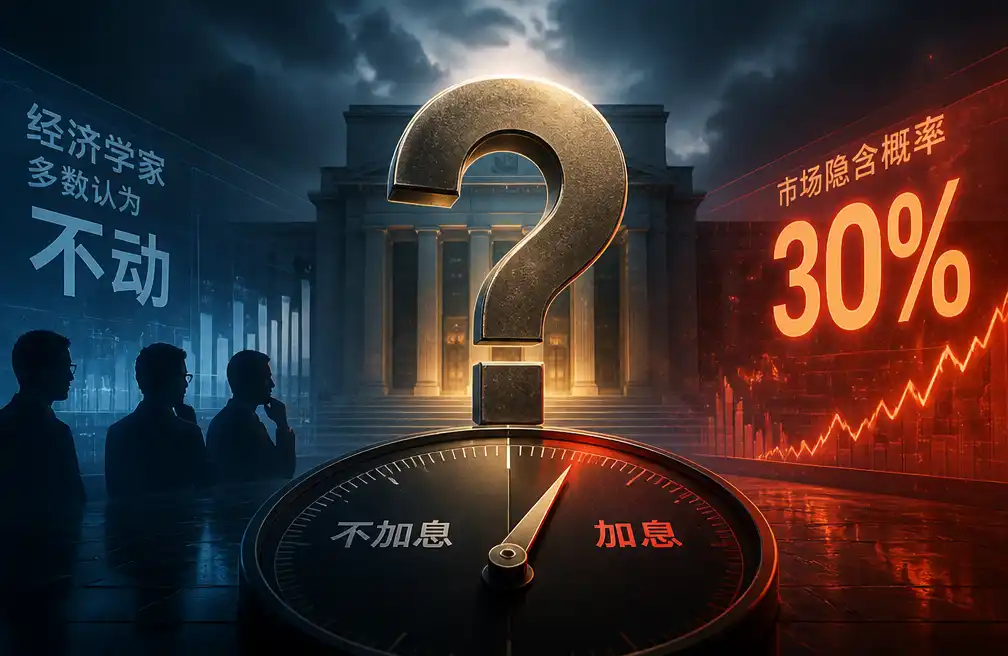
To Hike or Not Tonight: Economists Unanimous on 'No', Markets Price in a 30% Chance

Federal funds futures are repricing ahead of the July FOMC decision, as traders pay a higher premium for the risk of a surprise rate hike or more hawkish signals. This contrasts with economists, where a Reuters survey of 104 analysts unanimously expects rates to remain unchanged at 3.50%-3.75%, with 78 foreseeing no change through year-end. Yet, futures markets have priced in about a 30% probability of a 25-basis-point hike. The core debate, especially under new Fed Chair Kevin Warsh, centers on how the Fed will respond to the oil price shock from Middle East tensions. The market is not necessarily predicting a hike tonight but is hedging against two tail risks: an immediate rate increase, or a hold combined with communication that seriously opens the door for a September hike. This hedging activity has driven up open interest in Fed funds futures. Analysts are divided on how to weight the oil price surge in the Fed's reaction function. Hawkish voices (e.g., BofA) worry that completely dismissing the price pressure could challenge the Fed's inflation credibility in Warsh's first major test. Dovish views (e.g., Citi) argue the shock is primarily supply-driven and that overreacting with rate hikes could unnecessarily hurt growth, unless clear signs of secondary inflation emerge. Warsh's new tenure amplifies policy path uncertainty, as markets lack a stable baseline for his communication style. This environment forces traders to price in a wider range of outcomes, explaining the divergence between unanimous economist forecasts and market hedging. The key focus will be on Warsh's post-meeting commentary. If he downplays the oil shock and stresses anchored long-term expectations, hawkish pricing may recede. If he emphasizes the risk of broader price spillovers and prioritizes returning to 2% inflation, the market will interpret this as reopening the door for a September hike. This would sustain support for the USD, keep pressure on JPY (testing intervention thresholds), and challenge risk assets like stocks and crypto through higher discount rates and weaker sentiment. The baseline remains no action in July, but the communication will determine how far this repricing extends.

marsbit33 хв тому

To Hike or Not Tonight: Economists Unanimous on 'No', Markets Price in a 30% Chance

marsbit33 хв тому

The Semiconductor Industry's Most Obscure Chokepoint Material: It Has Multiplied in Price Unnoticed, and China Just Banned Its Export

"Helium: The Silent Choke Point in Semiconductors" Helium, despite being the universe's second most abundant element, is critically scarce on Earth. It cannot be synthesized artificially and escapes Earth's gravity once released, making it a non-renewable resource. Yet, it is indispensable for advanced semiconductor manufacturing, requiring ultra-high purity (99.9999%) for processes like wafer etching, leak detection, and thermal management in lithography tools, with no viable substitutes. This low-profile resource, whose price has doubled unnoticed, suddenly gained attention when China imposed an export ban on July 10th. The ban is a response to a severe global shortage triggered months earlier. In March, missile attacks damaged the world's largest helium production hub in Qatar's Ras Laffan, halting a third of global supply with repairs expected to take 3-5 years. Concurrently, Russia tightened export controls, and the US sold off its federal helium reserve. Approximately 200 specialized transport containers, each worth ~$1 million, were stranded with perishable cargo. Global spot prices skyrocketed, and chipmakers like TSMC warned of potential impacts. China, which imports over 84% of its helium (primarily from Qatar and Russia), faces a severe squeeze. Despite being helium-poor, China has developed domestic extraction technology over five years, processing byproduct gases from LNG plants to produce ultra-pure helium. Domestic output, while still only covering less than 20% of demand, enabled the recent export ban aimed at securing domestic supply for its own expanding chip industry. The industry now faces "Helium Shortage 5.0." With key global sources constrained for years, this invisible gas—once wasted on party balloons—has become a critical, geopolitically charged bottleneck for chips, healthcare (MRI machines), and beyond, forcing the world to finally treat it as the finite strategic resource it is.

marsbit1 год тому

The Semiconductor Industry's Most Obscure Chokepoint Material: It Has Multiplied in Price Unnoticed, and China Just Banned Its Export

marsbit1 год тому

Early Investor of Unitree Bets on a Brain-Computer Interface Company

"Wabo Technologies, a brain-computer interface (BCI) startup, has secured new funding from Vertex Ventures (under Temasek), Hongtai Fund, Chengdu Future Industry Fund, and Huifengda Capital. Vertex Ventures is known for its early bet on Unitree Robotics. Inspired by the sci-fi film "Avatar," founder Zhang Xingzhi has pursued human-machine interaction for over a decade. He established Wabo in late 2025, coinciding with China's push for BCI as a future industry. Unlike companies focused solely on medical hardware, Wabo positions itself as a model company. Its core mission is to develop a "Human Neural Intent Model" that decodes EEG, EMG, and behavioral signals to understand a user's goals, confirmations, corrections, and stop intentions before physical action, translating them into standardized control signals for machines, robots, or smart devices. The young, full-stack team, backed by academic collaborators from Tianjin University and Fudan University, quickly attracted investors. The company had previously raised a seed round from Ceyuan Capital. Investors were impressed by Wabo's systematic capabilities in data collection, signal processing, and engineering, seeing potential beyond a single hardware product toward a reusable layer of human intent interpretation. Applications span medical rehabilitation, smart homes, embodied AI, and even space exploration, with Wabo partnering with Tianjin University on pioneering "space BCI" research. Wabo plans a dual-headquarters strategy, with Shanghai focusing on high-end R&D and model development, and Chengdu handling hardware, product development, and supply chain. The BCI sector in China is heating up, with over 30 financing deals in early 2026. Zhang believes future competition will center on who can build a sustainable data-model-scenario loop. He predicts industry consolidation within three years, with only companies that master this闭环 surviving. The vision from "Avatar" is inching closer to reality."

marsbit1 год тому

Early Investor of Unitree Bets on a Brain-Computer Interface Company

marsbit1 год тому

Торгівля

Спот

Популярні статті

Як купити WAR

Ласкаво просимо до HTX.com! Ми зробили покупку WAR (WAR) простою та зручною. Дотримуйтесь нашої покрокової інструкції, щоб розпочати свою криптовалютну подорож.Крок 1: Створіть обліковий запис на HTXВикористовуйте свою електронну пошту або номер телефону, щоб зареєструвати обліковий запис на HTX безплатно. Пройдіть безпроблемну реєстрацію й отримайте доступ до всіх функцій.ЗареєструватисьКрок 2: Перейдіть до розділу Купити крипту і виберіть спосіб оплатиКредитна/дебетова картка: використовуйте вашу картку Visa або Mastercard, щоб миттєво купити WAR (WAR).Баланс: використовуйте кошти з балансу вашого рахунку HTX для безперешкодної торгівлі.Треті особи: ми додали популярні способи оплати, такі як Google Pay та Apple Pay, щоб підвищити зручність.P2P: Торгуйте безпосередньо з іншими користувачами на HTX.Позабіржова торгівля (OTC): ми пропонуємо індивідуальні послуги та конкурентні обмінні курси для трейдерів.Крок 3: Зберігайте свої WAR (WAR)Після придбання WAR (WAR) збережіть його у своєму обліковому записі на HTX. Крім того, ви можете відправити його в інше місце за допомогою блокчейн-переказу або використовувати його для торгівлі іншими криптовалютами.Крок 4: Торгівля WAR (WAR)Легко торгуйте WAR (WAR) на спотовому ринку HTX. Просто увійдіть до свого облікового запису, виберіть торгову пару, укладайте угоди та спостерігайте за ними в режимі реального часу. Ми пропонуємо зручний досвід як для початківців, так і для досвідчених трейдерів.

289 переглядів усьогоОпубліковано 2024.12.11Оновлено 2026.06.02

Як купити WAR

Обговорення

Ласкаво просимо до спільноти HTX. Тут ви можете бути в курсі останніх подій розвитку платформи та отримати доступ до професійної ринкової інформації. Нижче представлені думки користувачів щодо ціни WAR (WAR).

活动图片