zcashd shuts down, Zcash enters Ironwood era: Is quantum-resistant privacy the future?

ambcryptoОпубліковано о 2026-07-20Востаннє оновлено о 2026-07-20

Анотація

Zcash has completed its infrastructure transition by retiring the original zcashd software and fully adopting the Rust-based Zebra and Zakura node implementations. This shift, finalizing in July 2024, enhances network maintainability and prepares for the upcoming Ironwood era. Despite a previously disclosed vulnerability in the Orchard shielded pool, user confidence appears resilient. Shielded transaction volume grew 11.1% quarter-over-quarter, and the anonymity set expanded significantly, even as total shielded balances saw a moderate decline. The prompt containment of the Orchard flaw, which did not threaten total ZEC supply, demonstrated effective protocol safeguards. The incoming Ironwood upgrade aims to further strengthen long-term security through formal verification and quantum-resistant features, moving Zcash from reactive fixes to proactive, verifiable security assurances.

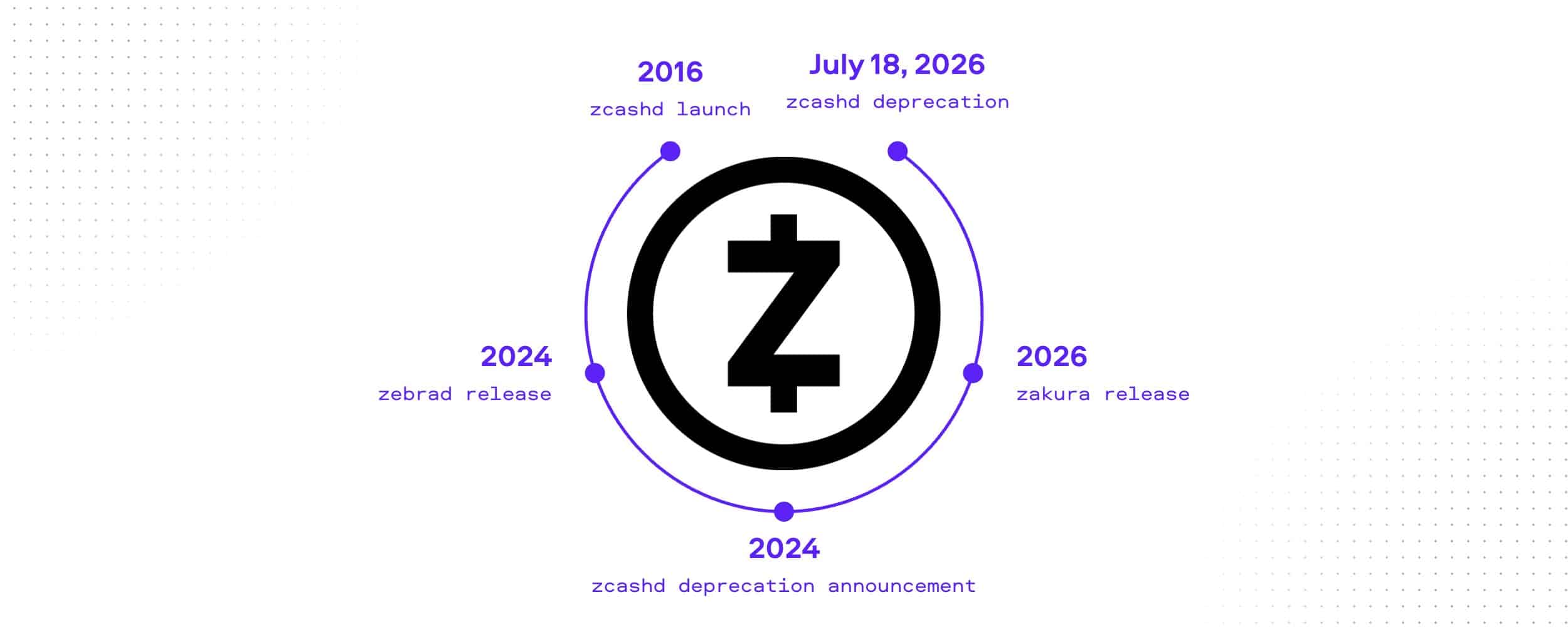
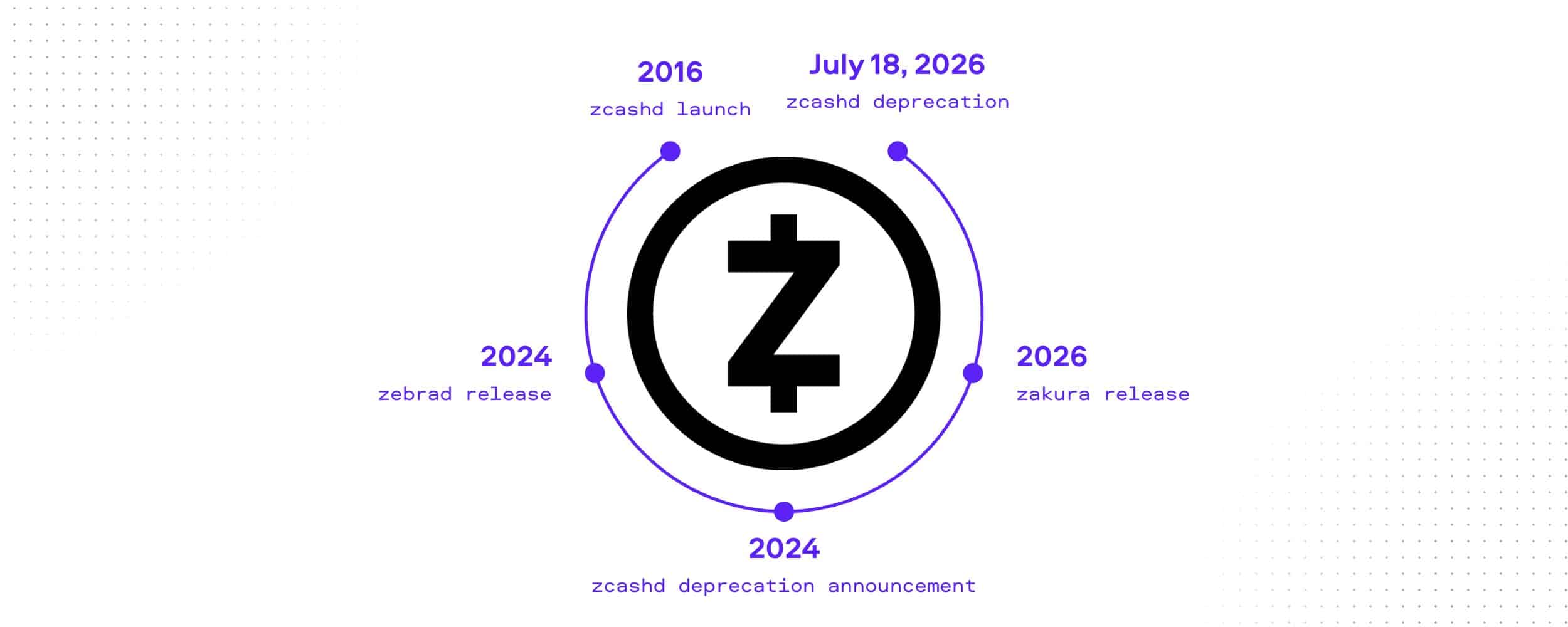
Zcash’s infrastructure has entered a new phase as the network completes its transition away from its original software implementation. That evolution took nearly a decade, beginning with zcashd’s 2016 launch before Zebra’s 2024 release introduced a Rust-based alternative.

After the 2024 deprecation notice, node operators had enough time to switch over before the planned retirement. On the 18th of July, zcashd reached end of support at block height 3417100.
Source: X

Meanwhile, Zakura completed the new node ecosystem. Rather than simply replacing legacy software, the transition strengthens maintainability, prepares the network for Ironwood, and reduces long-term operational risk.

Zcash’s adoption remains intact

Completing Zcash’s infrastructure transition did not remove the market’s biggest question. Instead, it shifted attention to whether users still trusted the network after the Orchard vulnerability. Early activity suggests that confidence largely held.

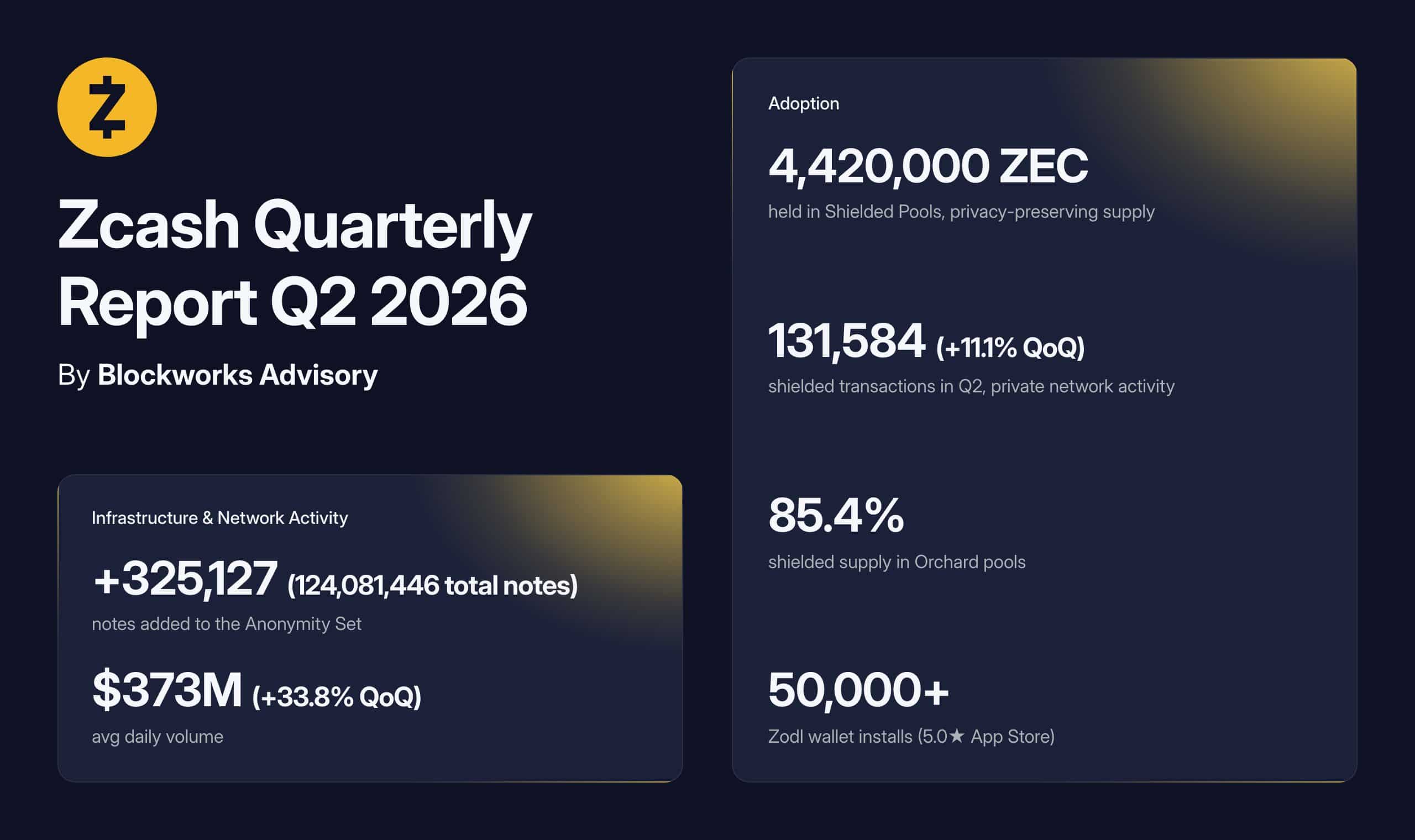
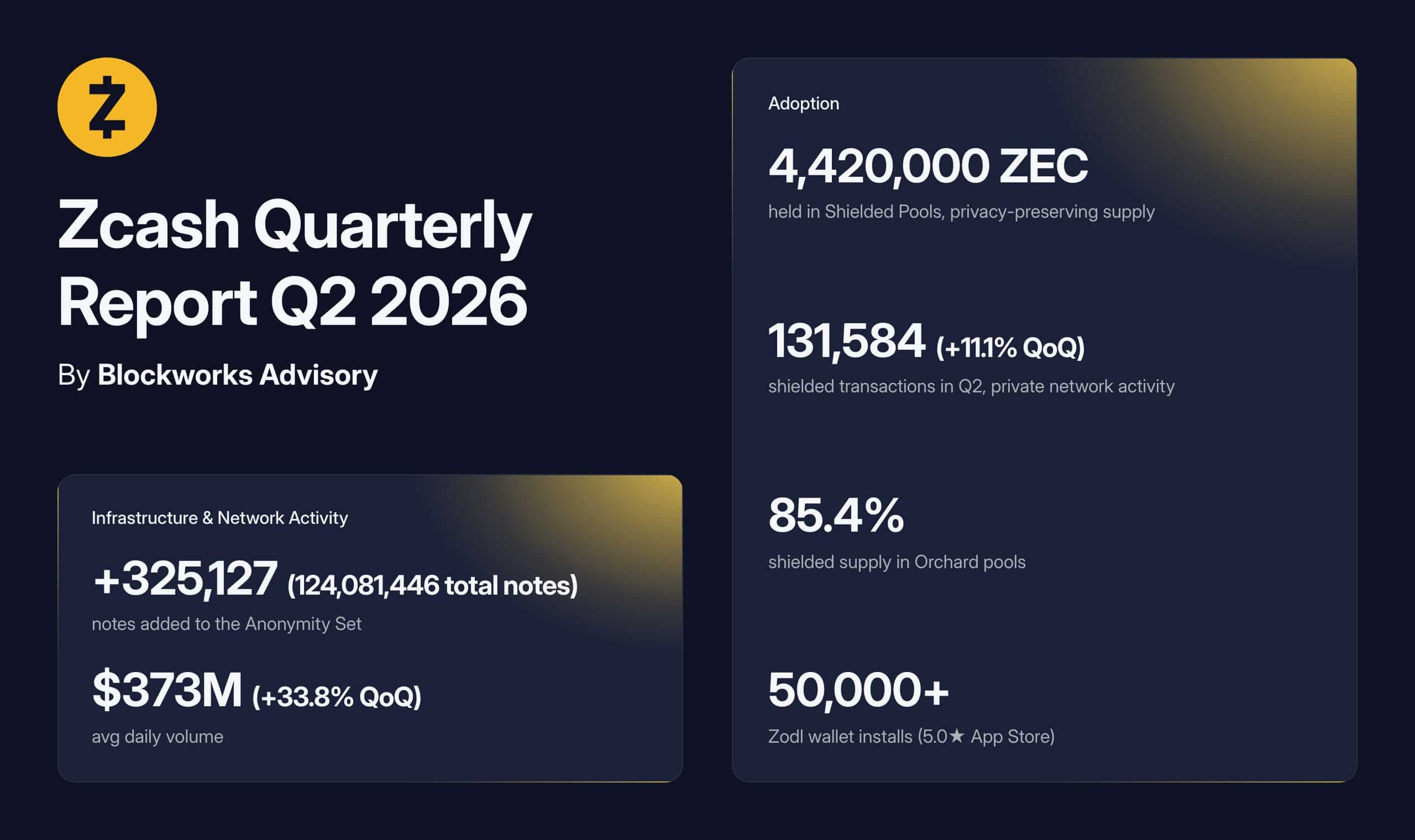
Although shielded balances declined 14% to 4.42 million ZEC, users continued relying on private transactions, which rose 11.1% QoQ to 131,584.
Source: Zcash on X

This trend became even more significant as the anonymity set for ZCash expanded by 325,127 units to 124.08 million.

This indicated an increase in participants using ZCash for privacy purposes. In addition, average daily trading volume increased by 33.8% QoQ to $373 million. This further reinforces that overall use of the network has been increasing.

Rather than reflecting weakening adoption, these trends point to cautious capital repositioning while confidence in Zcash’s privacy infrastructure remained intact.

Formal verification reinforces protocol integrity

Even resilient blockchain networks are ultimately judged by how they respond to critical security threats. Zcash faced such a test when researchers found a flaw in Orchard shielded pools that secured roughly 85% of shielded value.

But the flaw stayed contained because disclosure was coordinated, and developers were able to release an emergency fix within days. More importantly, this flaw allowed forgery inside Orchard rather than inflating the total supply of ZEC.

The turnstile mechanism prevented forged funds from leaving the pool other than legitimate deposits. Looking ahead, Ironwood strengthens this protection through formal verification and quantum recovery too.

Together these upgrades move Zcash from reactive fixes towards stronger assurances of long-term security and confidence within the ecosystem.


Final Summary

  • Zcash [ZEC] completed its migration to Zebra and Zakura, strengthening infrastructure while maintaining resilient network activity.
  • Zcash enters the Ironwood era with formal verification and quantum recovery, reinforcing long-term protocol security.


Трендові криптовалюти

Пов'язані питання

QWhat was the original software implementation of Zcash that has now been retired?

AThe original software implementation was zcashd, which was launched in 2016 and reached end of support on July 18th at block height 3417100.

QWhat are the two new software components mentioned that complete Zcash's node ecosystem?

AThe two new software components are Zebra, a Rust-based alternative released in 2024, and Zakura, which completed the new node ecosystem.

QDespite a 14% decline in shielded balances, what positive trends in network usage were observed?

APositive trends included an 11.1% quarterly increase in private transactions to 131,584, a significant expansion of the anonymity set by 325,127 units to 124.08 million, and a 33.8% QoQ increase in average daily trading volume to $373 million.

QWhat was the nature of the vulnerability found in the Orchard shielded pools, and how was it contained?

AThe vulnerability was a flaw that allowed forgery within the Orchard shielded pools. It was contained through coordinated disclosure, an emergency fix released within days, and the existing turnstile mechanism that prevented the forged funds from leaving the pool.

QWhat two key features does the upcoming Ironwood era introduce to strengthen Zcash's protocol?

AThe Ironwood era introduces formal verification and quantum recovery features to reinforce long-term protocol security and confidence.

Пов'язані матеріали

L2 'Recalibration': When L1 Becomes Its Own Rollup, What Is Ethereum's Endgame?

The article discusses the evolving relationship between Ethereum's Layer 1 (L1) and Layer 2 (L2) solutions, moving beyond the initial "L2 for scaling" model. As Ethereum L1 itself scales (increasing Gas Limit, statelessness, zkEVM), the unique value proposition of L2s shifts from merely providing cheap execution to offering differentiated features like application-specific optimization, privacy, and flexible governance. The piece explores three key themes: 1. **L2's New Role:** L2s are transitioning from a pure scaling technology to a spectrum of execution environments with varying degrees of security inheritance from Ethereum L1. 2. **Interoperability as State Trust:** Solving L2 fragmentation is less about cross-chain bridges and more about enabling faster, trust-minimized state verification between environments. This involves initiatives like faster L1 finality, intent-based architectures (Open Intents Framework), and native account abstraction. 3. **Blurring Layers:** With the potential integration of zk-proofs into L1 validation (making L1 akin to its own "Rollup") and the concept of "Native Rollups," the rigid boundary between L1 and L2 may fade. The future could be a unified system with multiple execution domains (for DeFi, gaming, privacy, etc.) sharing a common security, settlement, and state framework. In conclusion, Ethereum's goal is not to abandon L2s or re-centralize everything on L1, but to re-integrate the fragmented user experience—liquidity, accounts, applications—while preserving the scaling benefits of a multi-environment ecosystem. The endgame is a cohesive "one chain" feeling for users, powered by diverse but securely interconnected execution layers.

marsbit17 хв тому

L2 'Recalibration': When L1 Becomes Its Own Rollup, What Is Ethereum's Endgame?

marsbit17 хв тому

The Encryption Bill Clarity's Challenge: A Thorny Path of Bipartisan Compromise in the U.S.

U.S. lawmakers are attempting to advance the Clarity Act, a significant crypto market structure bill, but its path is fraught with partisan hurdles. The process has been rocky since January, when a prior bipartisan deal in the Senate Banking Committee was upended. A key compromise in May on "yield" issues allowed the bill to move forward in committee, but only with the conditional support of two Democratic senators, Angela Alsobrooks and Ruben Gallego. They emphasized that their final vote depends on reaching an agreement on ethics provisions for elected officials. Ultimately, the Senate Agriculture Committee passed its version along party lines without Democratic support. As Republicans push for a full Senate vote in July, the demand for strong ethics language has expanded beyond Democrats. Additional controversies surround provisions related to yields (aligning some Republicans with large banks) and developer protections (opposed by enforcement agencies). Core concerns about illicit finance and consumer protection remain central to the debate. Despite consensus on the need for legislation, achieving the necessary bipartisan compromise is proving difficult. While momentum exists—including recent meetings between senators and White House officials—a reconciled bill text faces skepticism. Senator Gallego has stated that without ethics terms acceptable to Democrats, they will not provide the needed votes. The immediate goals for the crypto community in Congress are unclear: a symbolic Senate vote before the August recess, eventual passage into law by 2026, or forging a final compromise framework. The arduous, vote-by-vote effort to build bipartisan support continues, mirroring the traditional legislative grind the industry must now navigate.

Foresight News1 год тому

The Encryption Bill Clarity's Challenge: A Thorny Path of Bipartisan Compromise in the U.S.

Foresight News1 год тому

Торгівля

Спот

Популярні статті

Як купити ERA

Ласкаво просимо до HTX.com! Ми зробили покупку Caldera (ERA) простою та зручною. Дотримуйтесь нашої покрокової інструкції, щоб розпочати свою криптовалютну подорож.Крок 1: Створіть обліковий запис на HTXВикористовуйте свою електронну пошту або номер телефону, щоб зареєструвати обліковий запис на HTX безплатно. Пройдіть безпроблемну реєстрацію й отримайте доступ до всіх функцій.ЗареєструватисьКрок 2: Перейдіть до розділу Купити крипту і виберіть спосіб оплатиКредитна/дебетова картка: використовуйте вашу картку Visa або Mastercard, щоб миттєво купити Caldera (ERA).Баланс: використовуйте кошти з балансу вашого рахунку HTX для безперешкодної торгівлі.Треті особи: ми додали популярні способи оплати, такі як Google Pay та Apple Pay, щоб підвищити зручність.P2P: Торгуйте безпосередньо з іншими користувачами на HTX.Позабіржова торгівля (OTC): ми пропонуємо індивідуальні послуги та конкурентні обмінні курси для трейдерів.Крок 3: Зберігайте свої Caldera (ERA)Після придбання Caldera (ERA) збережіть його у своєму обліковому записі на HTX. Крім того, ви можете відправити його в інше місце за допомогою блокчейн-переказу або використовувати його для торгівлі іншими криптовалютами.Крок 4: Торгівля Caldera (ERA)Легко торгуйте Caldera (ERA) на спотовому ринку HTX. Просто увійдіть до свого облікового запису, виберіть торгову пару, укладайте угоди та спостерігайте за ними в режимі реального часу. Ми пропонуємо зручний досвід як для початківців, так і для досвідчених трейдерів.

501 переглядів усьогоОпубліковано 2025.07.17Оновлено 2026.06.02

Як купити ERA

Обговорення

Ласкаво просимо до спільноти HTX. Тут ви можете бути в курсі останніх подій розвитку платформи та отримати доступ до професійної ринкової інформації. Нижче представлені думки користувачів щодо ціни ERA (ERA).

活动图片