Xiaomi to pre-install Sei crypto wallet on millions of phones in global rollout

cointelegraphОпубліковано о 2025-12-11Востаннє оновлено о 2025-12-11

Анотація

Sei Labs, the developer behind the Sei blockchain, has partnered with Xiaomi to pre-install a crypto wallet and discovery app on all Xiaomi smartphones sold outside mainland China and the U.S. The app will allow users to sign in with Google or Xiaomi accounts and includes a secure MPC wallet, access to crypto applications, and support for P2P and merchant payments. The rollout will begin in Europe, Latin America, Southeast Asia, and Africa. A $5 million fund will support mobile blockchain projects. The companies also plan to enable stablecoin payments for Xiaomi products, including phones and EVs, starting in Hong Kong and the EU by mid-2026. This move follows similar efforts by Solana Mobile, which has launched two Web3 smartphones, and Samsung’s integration of crypto features via Coinbase.

Sei Labs, the core development group behind the Sei blockchain, has reached a distribution deal with Xiaomi to pre-install a new crypto wallet and discovery app on all Xiaomi smartphones sold outside mainland China and the United States.

According to Thursday’s announcement, the app will let users sign in with their existing Google or Xiaomi IDs and will feature a multiparty computation wallet for security, access to popular crypto applications, and support for both peer-to-peer and merchant payments.

The rollout will start in Europe, Latin America, Southeast Asia and Africa. Sei Labs is also creating a $5 million program aimed at funding mobile projects that bring blockchain features to consumer devices.

The companies plan to add stablecoin payments across Xiaomi’s retail and online channels, allowing customers to purchase devices, including phones and electric vehicles, using assets like USDC (USDC), which is supported by Sei. Early launches are targeted for Hong Kong and the EU by mid-2026, with broader expansion to follow.
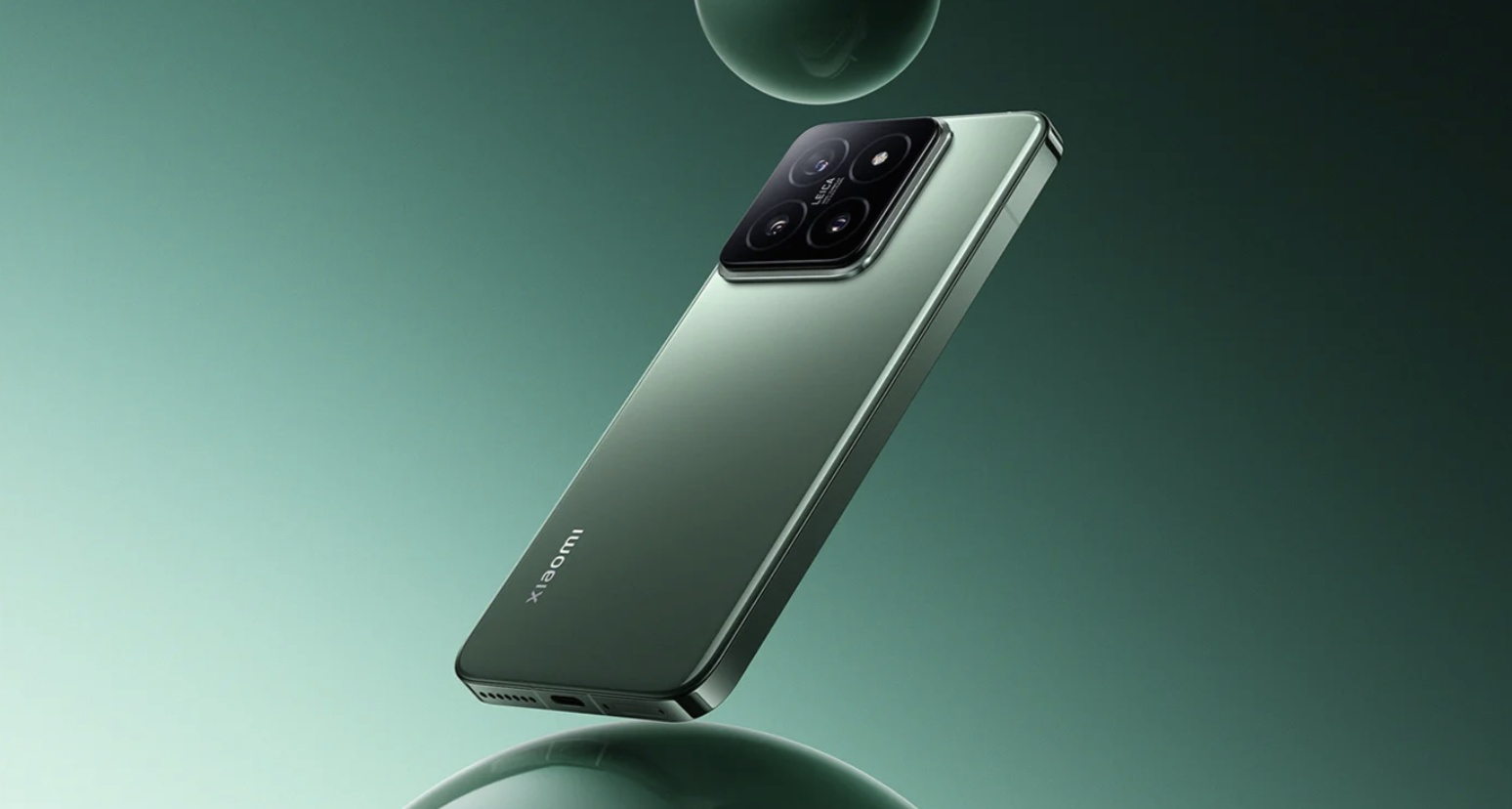
Xiaomi’s “Lens to Legend” smartphone. Source: Xiaomi

Sei, launched in 2023, is a high-speed layer-1 blockchain built for low-cost transactions. Xiaomi is a global electronics company that makes smartphones, smart-home devices, IoT hardware and electric vehicles. It was founded in 2010 and is based in Beijing.

Related: Chinese tech giants halt Hong Kong stablecoin plans amid Beijing concerns: FT

Solana’s push into smartphones

Sei Labs isn’t the first Web3 project to target smartphones as a gateway for mainstream crypto adoption.

The Solana Mobile, a subsidiary of Solana Labs, announced its first smartphone, the Saga, in June 2022 before beginning shipments the following year. In late 2023, sales surged when a BONK airdrop tied to each device briefly made the phone worth more in tokens than its retail price.

In August 2024, Solana began shipping its second-generation Seeker phone to users in over 50 countries after receiving more than 150,000 preorders. The device includes broad hardware upgrades, a built-in crypto wallet, a decentralized app store and an updated seed-vault system.
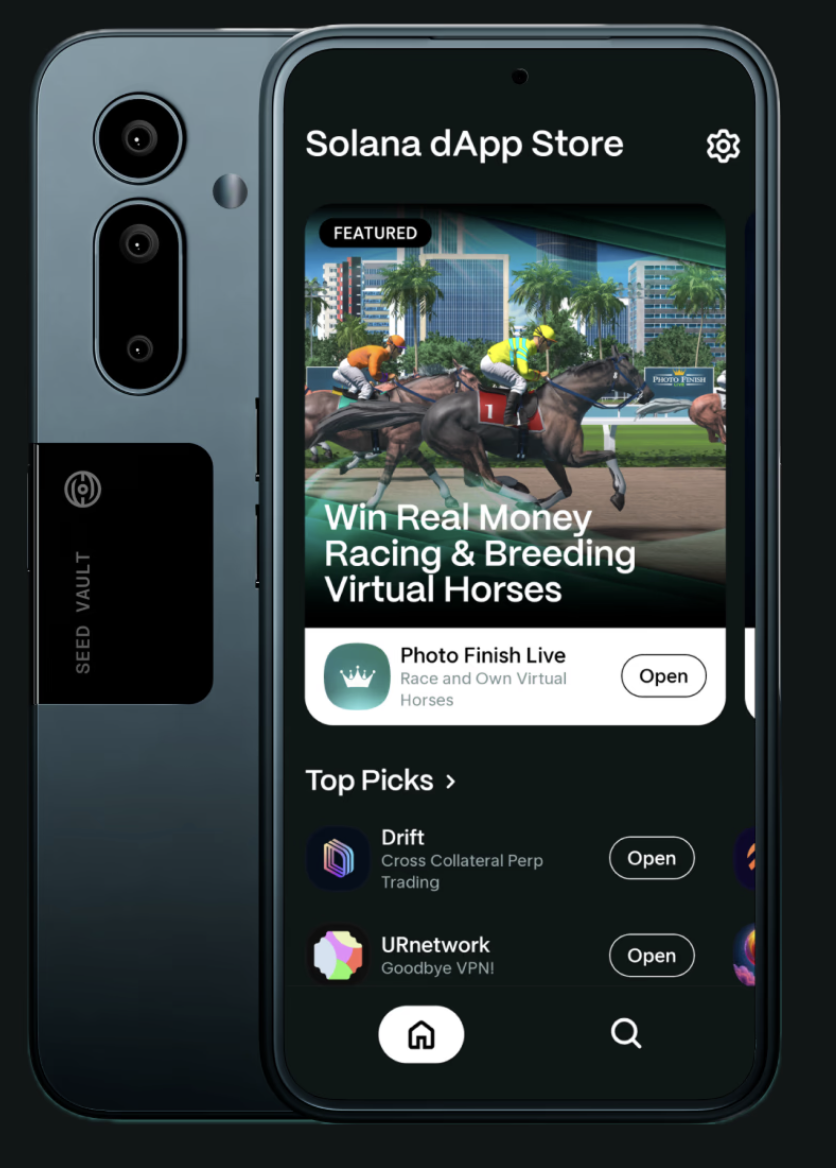
Source: Solana Mobile

On Dec. 3, Solana Mobile announced its plans to launch a native token, SKR, tied to its Seeker phone and broader mobile ecosystem in early 2026. The 10 billion-token supply will include large allocations for airdrops, growth incentives, liquidity and a community treasury, with portions also set aside for Solana Mobile and Solana Labs.

Samsung has also been expanding crypto features on its phones through a recent partnership with Coinbase. In October, the companies began allowing roughly 75 million US Galaxy users to buy crypto directly in Samsung Wallet, with plans to extend the integration to other markets.

Magazine: Meet the onchain crypto detectives fighting crime better than the cops


Пов'язані матеріали

KOL's Perspective: Why Is SOL Set to Rise from This Point?

**Summary: Why SOL is Positioned for Growth at This Level** The article argues that SOL is poised for an upward move from its current price point, citing several key factors. Primarily, SOL has just broken out of a 4-month consolidation phase. This breakout signals a return of risk appetite to the broader crypto market, as SOL is seen as a key indicator of overall crypto health. The token's ownership has reportedly shifted from short-term traders and tourists to long-term accumulators, leading to low volume. Any meaningful increase in trading activity could thus trigger significant upward momentum. Fundamental strengths include strong institutional adoption, integration with DeFi and RWAs (Real-World Assets), and the potential benefits from the Clarity Act. Despite its high volatility—having dropped 70% from its all-time high but still up 12x from its bear market low—SOL is highlighted as one of the few tokens from the last cycle to reach new highs. It boasts a robust ecosystem of applications, users, and protocols. Future catalysts include the expected influx of AI developers following the Miami Accelerate conference, which focused on AI on Solana. Furthermore, Solana is positioned as the premier chain for memecoin activity, a trend expected to continue and drive network usage and fees. The article concludes that recent price action reflects a healthy transfer to long-term holders, setting the stage for growth.

marsbit6 хв тому

KOL's Perspective: Why Is SOL Set to Rise from This Point?

marsbit6 хв тому

Those Pre-Bitcoin PoW Protocols Have Recently Been Reimplemented

This article details a recent surge in replicating pre-Bitcoin Proof-of-Work (PoW) protocols, specifically focusing on Hal Finney's 2004 RPOW (Reusable Proofs of Work). Within five days in May 2026, multiple independent builders in the Bitcoin/cypherpunk community launched projects inspired by this early electronic cash proposal. The initiative began with Fred Krueger's `rpow2.com`, a centralized but auditable system that replaced RPOW's original IBM 4758 hardware with Ed25519 signatures. Initially a faithful replica, it later adopted Bitcoin-like features (21M supply cap, difficulty adjustment) and a controversial 5.24% founder allocation. This sparked rapid forks, including `rpow4.com` which incorporated full Bitcoin parameters, a prediction market (`rpowmarket.com`), and a DEX (`rpow2swap.com`). Concurrently, Mike In Space created a prototype of Wei Dai's 1998 b-money proposal (`b-money.replit.app`), pushing the historical exploration even further back. The article contrasts these centralized, server-dependent experiments with Bitcoin's core innovation of decentralized, trustless consensus. It also highlights a parallel development: the `HASH` project on Ethereum, which uses smart contract hooks to enable a purely fair-launch, browser-mineable PoW token with 0% allocations to team or VCs. The collective activity is framed as a meme-driven, educational exploration of cypherpunk history rather than a serious financial movement, with all projects heavily disclaiming any investment value.

marsbit10 хв тому

Those Pre-Bitcoin PoW Protocols Have Recently Been Reimplemented

marsbit10 хв тому

South Korean Exchanges 'Battle' Regulators, Challenging the Boundaries of Enforcement and Legislation

South Korea's cryptocurrency industry is engaged in a rare, direct confrontation with regulators. The Financial Intelligence Unit (FIU), the primary anti-money laundering (AML) watchdog, has recently imposed heavy penalties on major exchanges like Upbit and Bithumb for alleged violations involving unregistered overseas VASPs and AML procedures. However, exchanges are now actively challenging these actions in court and through industry associations. In a significant shift, the Seoul Administrative Court ruled in favor of Upbit's operator, Dunamu, overturning part of an FIU-ordered business suspension. The court found the FIU's penalty criteria and justification insufficiently clear. Similarly, the court suspended the enforcement of a six-month business suspension against Bithumb pending a final ruling, citing potential irreversible harm to the exchange. Beyond legal battles, the industry is contesting proposed legislative amendments. The Digital Asset eXchange Alliance (DAXA) strongly opposes a draft rule that would mandate Suspicious Transaction Reports (STRs) for all crypto transfers over 10 million KRW (~$6,800). DAXA argues this "poison pill" clause violates legal principles and would overwhelm the STR system, increasing reports from 63,000 to an estimated 5.45 million annually for major exchanges, thereby crippling effective AML monitoring. This conflict highlights a structural tension in South Korea's crypto governance: comprehensive digital asset laws are still developing, while regulators rely heavily on AML enforcement. The industry's move from passive compliance to active legal and legislative challenges signifies a new phase, pressing for clearer rules and more proportionate enforcement. While short-term disputes may intensify, this clash could ultimately lead to a more mature and sustainable regulatory framework for South Korea's vibrant crypto market.

marsbit1 год тому

South Korean Exchanges 'Battle' Regulators, Challenging the Boundaries of Enforcement and Legislation

marsbit1 год тому

After 50x Storage Surge, Justin Sun Always Looks to the Next Decade

Sun Yuchen, known for his controversial stunts like a $30 million lunch with Warren Buffett (canceled due to a kidney stone) and eating a $6.2 million duct-taped banana, is often overshadowed by a significant fact: his decade-long track record of spotting major investment trends. In 2016, he famously advised young people to invest in Bitcoin, Nvidia, Tesla, and Tencent instead of buying property. A hypothetical $20,000 investment in Nvidia and Tesla from that list would now be worth over 50 million RMB. His latest major call was on November 6, 2025, predicting a "50x storage opportunity" tied to the AI boom, which materialized with Sandisk's stock surging nearly 50-fold by 2026. Looking ahead, Sun now focuses on the next frontier: Physical AI. He identifies four key areas: 1. **Embodied AI/Robotics**: He sees this reaching its "iPhone moment," with companies like UBTech and Galaxy General leading in commercialization. 2. **Drones**: Viewed as the first commercially viable form of Physical AI, revolutionizing sectors from warfare (e.g., AeroVironment's Switchblade) to logistics. 3. **Spatial Computing**: Beyond VR, it's about AI understanding physical space, a foundational technology for robotics and autonomous systems, exemplified by Apple's Vision Pro. 4. **Space Exploration**: After a 2025 suborbital flight with Blue Origin, Sun advocates for space as the ultimate frontier, discussing blockchain's potential role in space asset management and data transactions. His investment philosophy involves betting on entire, inevitable trends rather than single companies. For robotics, he sees Tesla (the body/manufacturer) and Nvidia (the brain/AI platform) as complementary plays. In defense drones, he highlights companies making tanks obsolete (AeroVironment) and those augmenting fighter jets (Kratos). For space, he participated in Blue Origin's flight and anticipates SpaceX's potential IPO to redefine the sector's valuation. Sun Yuchen's vision frames the next two decades not as a revolution in information flow (like the internet), but in the fundamental operation of the physical world through AI-powered robots, autonomous systems, and spatial intelligence, ultimately extending human and AI activity into space. While many still focus on conventional assets, he continues to look toward the next technological horizon.

marsbit2 год тому

After 50x Storage Surge, Justin Sun Always Looks to the Next Decade

marsbit2 год тому

Торгівля

Спот
Ф'ючерси

Популярні статті

Як купити SEI

Ласкаво просимо до HTX.com! Ми зробили покупку Sei Network (SEI) простою та зручною. Дотримуйтесь нашої покрокової інструкції, щоб розпочати свою криптовалютну подорож.Крок 1: Створіть обліковий запис на HTXВикористовуйте свою електронну пошту або номер телефону, щоб зареєструвати обліковий запис на HTX безплатно. Пройдіть безпроблемну реєстрацію й отримайте доступ до всіх функцій.ЗареєструватисьКрок 2: Перейдіть до розділу Купити крипту і виберіть спосіб оплатиКредитна/дебетова картка: використовуйте вашу картку Visa або Mastercard, щоб миттєво купити Sei Network (SEI).Баланс: використовуйте кошти з балансу вашого рахунку HTX для безперешкодної торгівлі.Треті особи: ми додали популярні способи оплати, такі як Google Pay та Apple Pay, щоб підвищити зручність.P2P: Торгуйте безпосередньо з іншими користувачами на HTX.Позабіржова торгівля (OTC): ми пропонуємо індивідуальні послуги та конкурентні обмінні курси для трейдерів.Крок 3: Зберігайте свої Sei Network (SEI)Після придбання Sei Network (SEI) збережіть його у своєму обліковому записі на HTX. Крім того, ви можете відправити його в інше місце за допомогою блокчейн-переказу або використовувати його для торгівлі іншими криптовалютами.Крок 4: Торгівля Sei Network (SEI)Легко торгуйте Sei Network (SEI) на спотовому ринку HTX. Просто увійдіть до свого облікового запису, виберіть торгову пару, укладайте угоди та спостерігайте за ними в режимі реального часу. Ми пропонуємо зручний досвід як для початківців, так і для досвідчених трейдерів.

105 переглядів усьогоОпубліковано 2024.12.11Оновлено 2025.03.21

Як купити SEI

Обговорення

Ласкаво просимо до спільноти HTX. Тут ви можете бути в курсі останніх подій розвитку платформи та отримати доступ до професійної ринкової інформації. Нижче представлені думки користувачів щодо ціни SEI (SEI).

活动图片













