Given the current macro setup, investors are closely tracking every signal coming from the Federal Reserve.
The logic is simple: the ongoing West Asia crisis shows no signs of de-escalation. Instead, geopolitical tensions continue to spill into energy markets, pushing oil prices back above the $100/barrel mark. Consequently, countries are being forced to consider targeted fiscal responses to stabilize their economies.
Within this environment, liquidity has become the central narrative. That’s why the Federal Reserve’s recent decision to inject $8 billion into the financial system is drawing increased attention from investors, particularly for crypto traders, where shifts in liquidity often translate directly into price action.
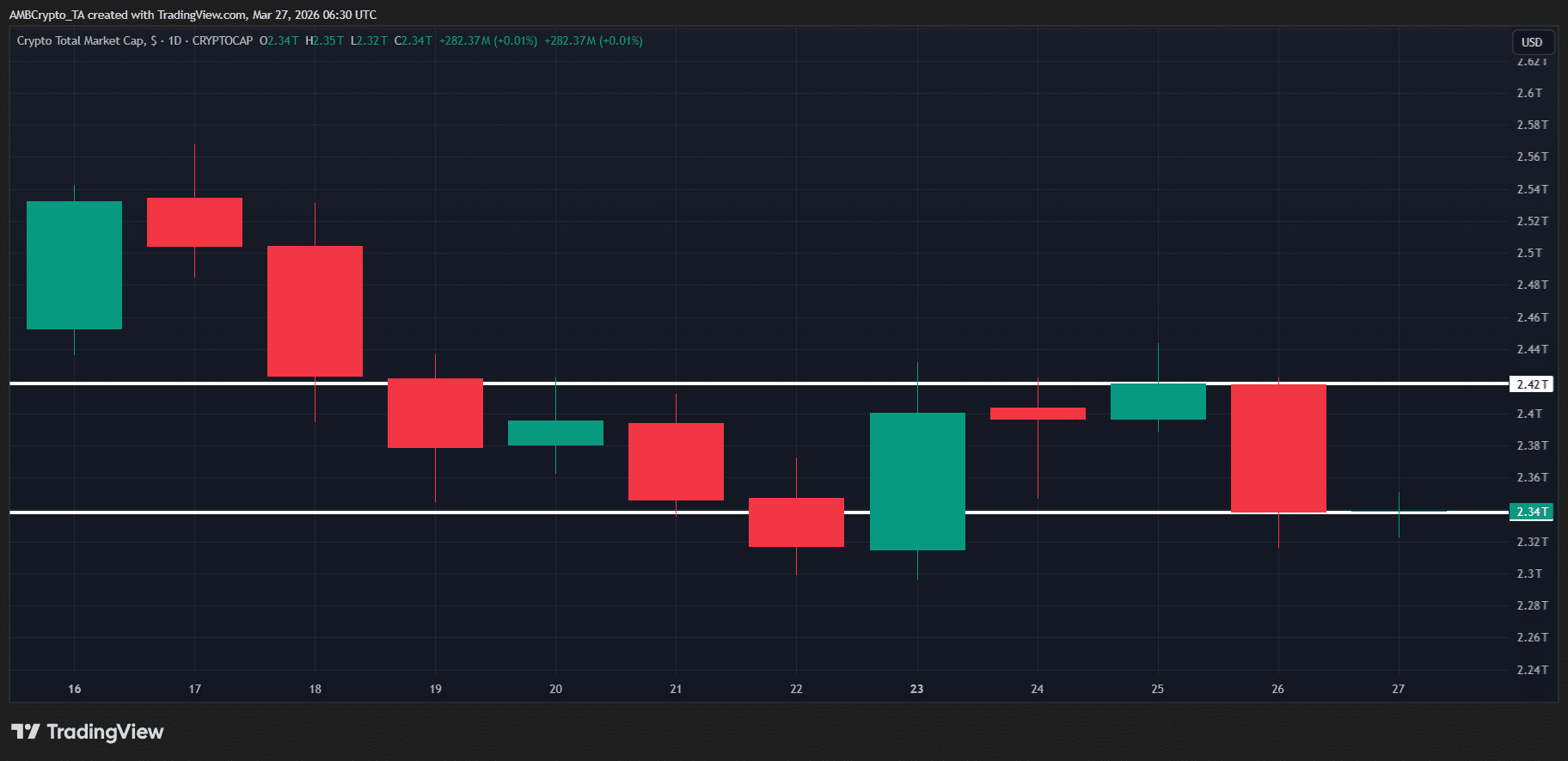
From a technical perspective, the timing looks increasingly relevant.
While the crypto market initially showed resilience when the conflict first escalated, momentum now appears to be fading. Patience seems to be thinning, with the TOTAL crypto market cap closing 3.4% lower on the 26th of March, marking one of the sharper weekly pullbacks and wiping out nearly $100 billion in value.
Against this backdrop, the Federal Reserve’s liquidity injection could provide short-term support. The bigger question, however, is whether it will be enough to stabilize market sentiment if the conflict continues to drag on, especially as geopolitical uncertainty pushes investors toward safer assets.
If it does, this intervention could evolve into a key catalyst shaping the current crypto cycle.
Crypto markets fear a 2022 repeat as investors rotate into safety
In the current macro setup, risk management has naturally become the dominant trading priority.
From a technical angle, this shift reflects investors rotating back into cash and low-risk positions instead of actively deploying capital into risk assets, as they wait for clearer macro signals before increasing exposure.
Notably, this caution is most visible in the bond market. Real yields on 10-year Treasuries have climbed to their highest levels in nearly a year, signaling tightening financial conditions. At the same time, renewed geopolitical tensions with Iran have pushed the 10-year Treasury yield up to around 4.43%, reinforcing the broader risk-off tone across markets.
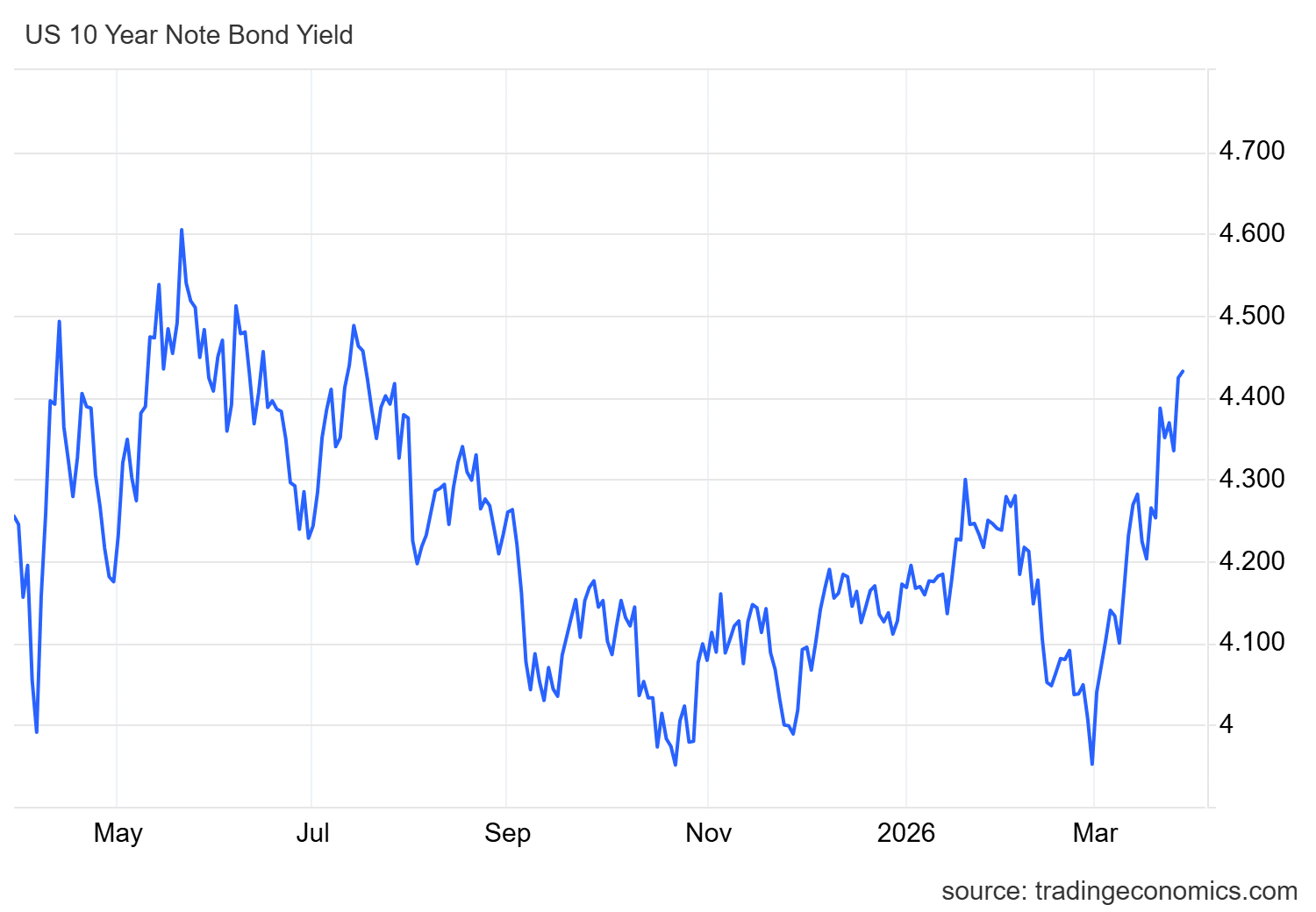
In essence, higher yields are pulling liquidity away from risk assets.
And it doesn’t stop there. JPMorgan has pointed out that the ongoing rotation of capital into safe havens like cash is starting to resemble the 2022 setup. Back then, the shift toward safety triggered crypto’s first major bear market, sending the total crypto market cap down 65%+ and wiping out roughly $1.4 trillion in value.
In this context, the Federal Reserve’s $8 billion liquidity injection doesn’t just fit the technical picture. Instead, it also aligns with the broader “fundamental” backdrop too. As investors grow more risk-averse, this liquidity could help relieve pressure on risk assets and slow the flow into safe havens, making it a key signal for the current crypto cycle.
Final Summary
- Rising yields and geopolitical tensions are driving capital toward safe havens, mirroring the 2022 cycle that triggered crypto’s first major bear market.
- The Fed’s $8 billion injection provides support, easing pressure on risk assets and acting as a key signal in the current macro cycle.






