Will the Continued Shutdown of the Strait of Hormuz Trigger an Oil and Gas Supply Crisis?

marsbitОпубліковано о 2026-05-08Востаннє оновлено о 2026-05-08

Анотація

The prolonged closure of the Strait of Hormuz, a critical global energy chokepoint, is evolving from a military conflict into a severe stress test for worldwide energy trade. Despite a ceasefire, transit remains minimal due to persistent threats from Iran, which uses drones, small boats, mines, and a new transit permit/fee system to effectively control the strait. Daily vessel traffic has plummeted from about 135 to under 10 ships, trapping over 1500 commercial vessels. The U.S. has initiated "Project Freedom" to escort ships, but Iran condemns it as a violation. The crisis is forcing a fundamental re-pricing of risk and cost for using this route, which normally carries about one-fifth of global oil and LNG supplies. Even if a political deal is reached, restoring full, trusted transit will be slow due to mine clearance needs, security concerns, and eroded market confidence. Major oil producers like Saudi Arabia are using alternative pipelines, but capacities are limited and routes are also vulnerable. Iran has signaled its intent to institutionalize control over the strait post-conflict, leveraging it as a geopolitical tool. The standoff underscores how Iran can paralyze this vital passage without a traditional navy, creating a lasting impact on global energy security and trade logistics.

Editor's Note: The crisis in the Strait of Hormuz is evolving from a military conflict into a stress test for global energy trade.

The key recent shift is that the ceasefire has not led to a genuine resumption of navigation. In early May, the United States announced the launch of "Project Freedom," attempting to guide stranded vessels away from the Persian Gulf; Iran, in turn, warned external warships not to enter the strait. Subsequently, the U.S. and Iran engaged in another round of clashes near the Strait of Hormuz, with the U.S. claiming it intercepted an Iranian attack on three U.S. naval vessels, and Iran accusing the U.S. of violating the ceasefire and attacking vessels and coastal areas. While former President Trump stated the ceasefire remained in effect, the market has already begun repricing the risks, with Brent crude prices briefly rising to around $101 per barrel.

Iran has demonstrated that, even without a traditionally strong navy, it can bring the world's most important energy artery to a near-standstill through the use of drones, small boats, the threat of mines, and mechanisms for passage permits and fees. For shipowners, insurers, and oil-producing nations, the question is no longer just "can we pass through," but "how much risk do we bear for each passage."

This means the cost of using the Strait of Hormuz is being repriced. Once considered an implicitly available piece of global energy infrastructure, it is now turning into a geopolitical bargaining chip in Iran's hands. Even if a future agreement is reached between the U.S. and Iran, a full restoration of shipping to pre-conflict levels is unlikely to happen immediately, because what has truly been damaged is not the waterway itself, but the market's trust in its safety.

Below is the original article:

No region in the world produces more oil and natural gas than the countries spanning the coast of the Persian Gulf. Most of that energy is exported by tankers navigating through the Strait of Hormuz—and that waterway has effectively been blocked for more than two months.

Since being attacked by the U.S. and Israel in late February, Iran has been restricting vessel transit through the strait. Iran refuses to reopen this vital shipping lane unless the U.S. lifts its maritime blockade on Iranian ports. Tensions escalated again in early May, nearly threatening the maintenance of the ceasefire agreement. Prior to this, former U.S. President Donald Trump announced that the U.S. would launch an operation called "Project Freedom" to guide stranded ships away from the Persian Gulf.

The economic impact of the Strait of Hormuz obstruction is accumulating worldwide. As prices for oil, natural gas, and other commodities rise, supplies are also tightening. Even if the U.S. and Iran eventually break the deadlock in peace talks and reach an agreement to lift the strait blockade, free navigation may not fully resume. Iran has already signaled its intent to use its de facto control over the Strait of Hormuz as a weapon it can wield against adversaries in the future.
How Did the War Affect the Strait of Hormuz?

How did the Iran war affect shipping in the Strait of Hormuz?

Following the outbreak of war on February 28, Iran intermittently attacked ships in and around the Persian Gulf, leading most shipowners to be unwilling to risk casualties, cargo loss, and vessel destruction by attempting to cross the Strait of Hormuz. The average number of vessels passing through the strait daily dropped from around 135 during peacetime to fewer than 10.

Meanwhile, Iran has continued to transport its own oil through the strait. It has also allowed some other vessels to pass, often via a corridor hugging the Iranian coastline; sometimes, Iran has demanded fees of up to $2 million from these vessels.
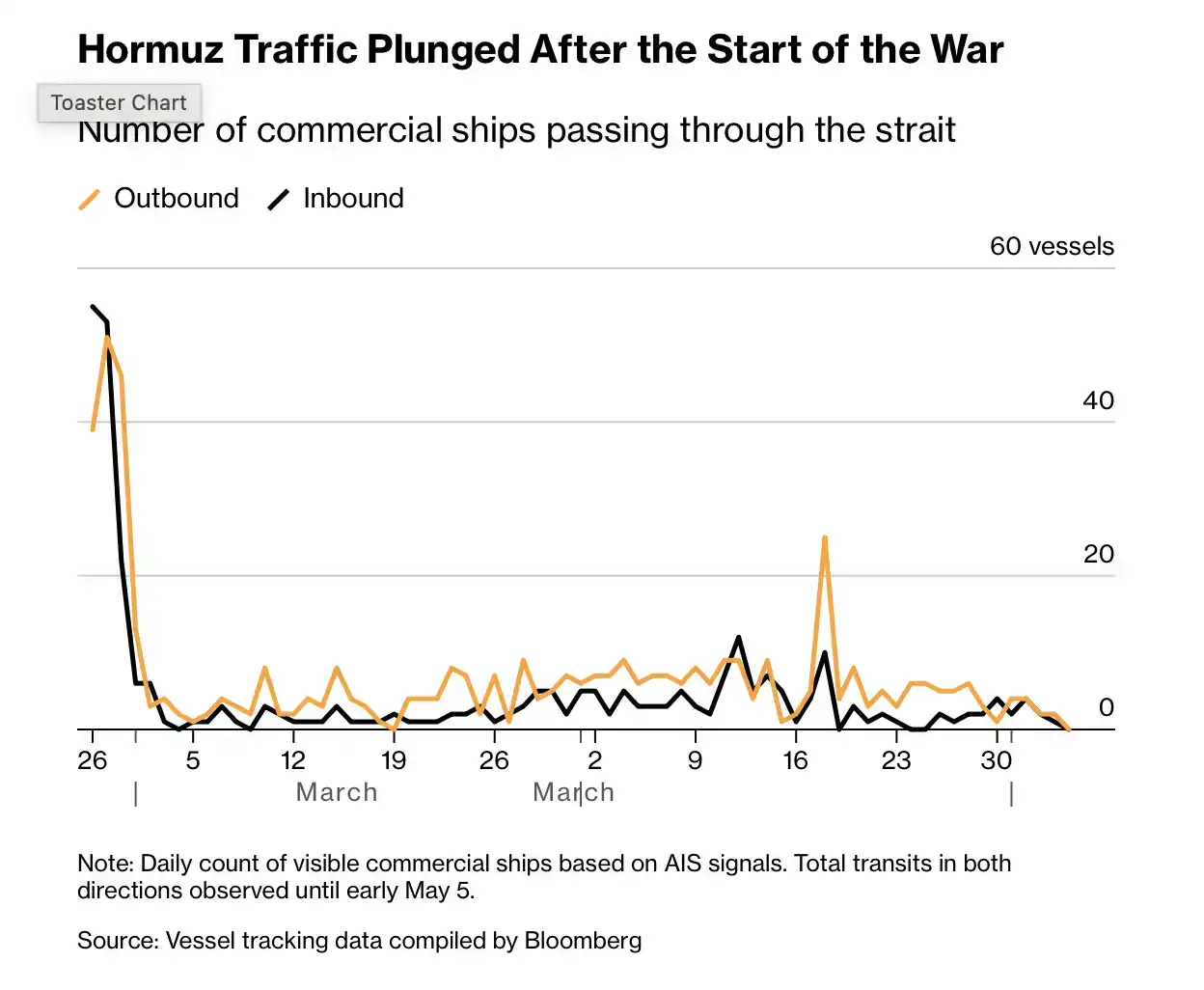
Even after the warring parties agreed to a ceasefire in early April, strait traffic remained nearly stagnant. Starting April 13, the U.S. began imposing a blockade on vessels that had called at Iranian ports or were bound for them, aiming to pressure Iranian oil exports and force the Iranian regime to restore the Strait of Hormuz to a "toll-free zone."

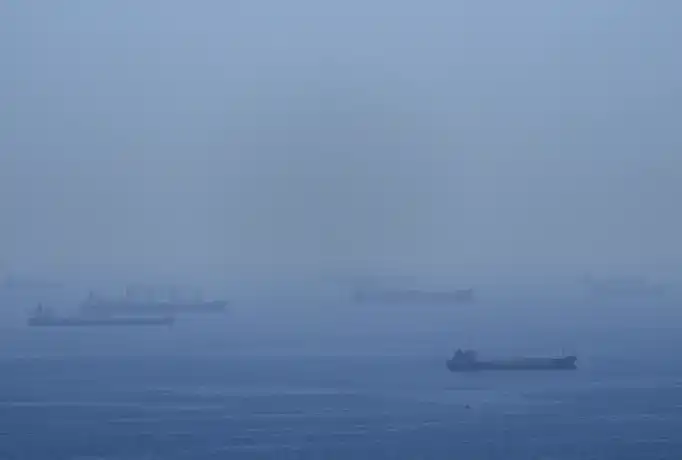
So far, Iran has successfully resisted the blockade pressure. According to Iran's semi-official Tasnim news agency, in early May, Iran even expanded the area over which it claims control in the Strait of Hormuz. As the stalemate persists, the U.S. military states that over 1,500 merchant vessels are now trapped in the Persian Gulf. With crude storage space exhausted, oil producers in the region have been forced to suspend most of their production.

What is needed to reopen the Strait of Hormuz?

Even if a peace agreement is reached, it is unlikely to immediately restore normal navigation through the Strait of Hormuz. Shipowners need assurance that the reopening is lasting and that passage is safe. One issue is the potential threat of mines. Iran has stated it has laid mines along the most commonly used routes within this narrow strait. Sweeping and clearing these explosives could take weeks.

Some vessel operators may be reluctant to sail through the Strait of Hormuz without military escorts. The U.S. Navy does not have enough ships to protect the more than 100 vessels that typically pass through the waterway daily, and the Trump administration has struggled to convince allies to immediately deploy their naval forces. The UK and France are leading consultations to form a multinational coalition to help restore shipping in the Strait of Hormuz once the conflict ceasefire holds.

Even if escort arrangements are finalized, clearing the backlog of vessels on both sides of the strait could take weeks. The narrowness of the Strait of Hormuz limits the number of ships that can be escorted at once and also makes convoyed vessels more vulnerable to attack.

Trump announced that, starting May 4, the U.S. would launch "Project Freedom" to guide neutral vessels out of the Persian Gulf. He did not elaborate on the operation's details, though U.S. Central Command stated it would provide military support, including deploying missile destroyers, aircraft, and drones. Iran labeled this move "Project Deadlock" and accused it of violating the ceasefire.

What does the Iran war mean for the long-term future of the Strait of Hormuz?

Shipowners, insurers, and clients have seen that for Iran, with minimal traditional naval power, rapidly bringing Strait of Hormuz transit to a halt was not difficult; restoring normal operations, however, is proving much harder.

If a U.S.-Iran peace agreement fails to eliminate the threat Iran poses to Hormuz shipping, the economic logic of this critical trade artery could change for years. The most cautious vessel operators may decide that transiting the strait under any circumstance is not worth the risk. Higher insurance premiums could also weaken the competitiveness of Gulf trade compared to other regions.

Iran has signaled its intent to continue exerting control over Strait of Hormuz transit and monetize its influence over this waterway, even after the war ends. Iran's parliament is advancing a bill to enshrine its sovereignty over the strait in domestic law and formally establish a fee system for vessel passage.
Energy Artery Being Repriced

Why is the Strait of Hormuz so important?

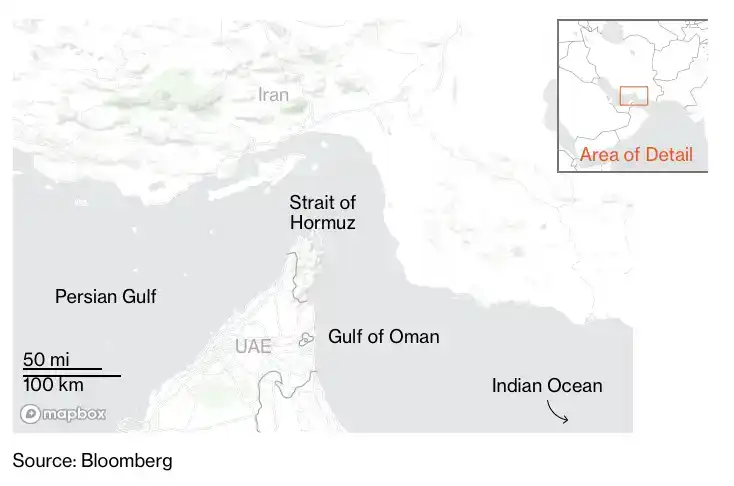
The Strait of Hormuz borders Iran to the north and the UAE and Oman to the south, connecting the Persian Gulf with the Indian Ocean. It stretches about 100 miles (161 km) long and is about 24 miles wide at its narrowest point. The two-way shipping lanes are each just 2 miles wide.

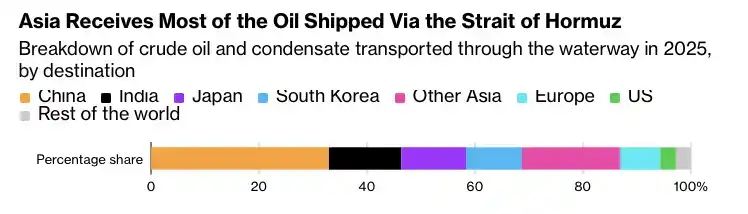
For energy markets, this strait is a vital artery, carrying about one-fifth of the world's oil and liquefied natural gas supply. Under normal circumstances, Saudi Arabia, Iraq, Iran, Kuwait, Bahrain, Qatar, and the UAE all export crude oil via the Strait of Hormuz, with the majority of cargoes destined for Asia.
Gulf countries also have numerous refineries producing significant volumes of diesel, jet fuel, naphtha—used in making plastics and gasoline—and other petroleum products, which are exported via the strait to global markets.

Beyond energy, the Strait of Hormuz is also a chokepoint for transporting products like aluminum, fertilizers, and even helium, which is used in semiconductor manufacturing.

Can oil-producing nations bypass the Strait of Hormuz?

Kuwait, Qatar, and Bahrain have no alternative maritime export routes.

Saudi Arabia, the largest shipper of oil through the Strait of Hormuz, has already diverted some crude via a pipeline extending west to the Red Sea port of Yanbu. Saudi Aramco plans to utilize the pipeline's full capacity of 7 million barrels per day, though only about 5 million barrels per day is available for export, with the remainder for domestic use.

But the Red Sea route is not without risk. Iran has already attacked a refinery in Yanbu and struck a pumping station on the East-West Pipeline; furthermore, the Iran-backed Houthi rebels in Yemen have threatened to resume attacks on vessels in the Red Sea.

The UAE can also bypass the Strait of Hormuz to some extent. However, its alternative capacity is limited, and the port of Fujairah has also been attacked by Iran. This port lies at the end of a pipeline linking UAE oilfields with the Gulf of Oman. Additionally, while Iraq is attempting to resume exports via Jordanian and Syrian ports, the transport volumes under consideration represent only a small fraction of its typical exports via the Strait of Hormuz.

Does Iran have the right to control the Strait of Hormuz?

Under the United Nations Convention on the Law of the Sea (UNCLOS), coastal states can exercise sovereignty over waters extending 12 nautical miles (about 14 miles) from their coastline, an area known as the territorial sea.

The Strait of Hormuz passes through the territorial seas of Iran and Oman. However, states must allow foreign vessels "innocent passage" within their territorial seas and must not hamper "innocent passage" or "transit passage" of foreign vessels through straits used for international navigation. The convention also stipulates that states may not levy charges on foreign vessels merely for passing through their territorial seas.

Although the Iranian government signed UNCLOS in 1982, the Iranian parliament has never ratified the treaty.


Пов'язані питання

QWhat is the core change in the geopolitical situation regarding the Strait of Hormuz, according to the article?

AThe core change is that the Strait of Hormuz is being re-priced from a piece of default, usable global infrastructure into a geopolitical lever under Iran's de facto control. It's no longer just a question of physical passage, but of risk and cost.

QAccording to the article, why would normal traffic not resume immediately even after a peace deal between the US and Iran?

ANormal traffic wouldn't resume immediately because the main issue is not just the physical blockade but the shattered market trust in the safety of the passage. Ship operators need assurances of lasting safety, and concerns like uncleared mines, lack of military escort, and high insurance costs would persist.

QHow did the daily traffic through the Strait of Hormuz change after the outbreak of war and during the ceasefire?

AAfter the war outbreak, daily traffic dropped from an average of about 135 vessels in peacetime to less than 10. During the subsequent ceasefire, maritime traffic remained almost at a standstill, with over 1,500 commercial ships reportedly trapped.

QWhat alternative route does Saudi Arabia primarily use to bypass the Strait of Hormuz, and what are its limitations?

ASaudi Arabia primarily reroutes oil through the Petroline pipeline to the Red Sea port of Yanbu. Its limitations include the pipeline's total capacity of 7 million barrels per day, with only about 5 million barrels available for export, and the route's exposure to risks from Iran and Houthi attacks.

QWhat is the legal basis, according to the article, that challenges Iran's right to control or charge fees for passage through the Strait of Hormuz?

AAccording to the United Nations Convention on the Law of the Sea (UNCLOS), which Iran signed in 1982 but never ratified, coastal states must allow 'innocent passage' or 'transit passage' in straits used for international navigation. The convention also states that countries cannot levy charges solely for the passage of foreign ships through their territorial waters.

Пов'язані матеріали

Fei-Fei Li's Team Clarifies the Concept of 'World Models', Sora Merely a Renderer

"World Models" has become a widely used yet confusing term in AI. To address this, a team led by Fei-Fei Li and World Labs proposed a functional taxonomy based on the Partially Observable Markov Decision Process framework. This taxonomy categorizes systems called "world models" into three distinct projections: Renderers, Simulators, and Planners. Renderers, like OpenAI's Sora and other video generation models, focus on producing photorealistic visual outputs for human perception. They prioritize visual fidelity over physical accuracy. Simulators, such as NVIDIA Omniverse, aim to compute precise future environmental states for computational tasks like engineering analysis or digital twins. Planners, like Vision-Language-Action models, take in observations and goals to output executable actions for robots or agents. The article clarifies that most current "world models," including Sora, are primarily Renderers. They generate convincing visuals but lack the core ability to simulate state transitions based on actions, a key requirement for a true world model in classic reinforcement learning definitions. This conceptual confusion has practical implications, leading to potential misalignment in technology selection, investment, and public understanding of AI capabilities. Clear categorization is crucial. It helps enterprises avoid costly mistakes (e.g., using a renderer for robot training), allows investors to accurately assess markets, and enables researchers to build comparable benchmarks. While future systems may integrate these functions, recognizing current boundaries is essential for honest assessment and progress.

marsbit56 хв тому

Fei-Fei Li's Team Clarifies the Concept of 'World Models', Sora Merely a Renderer

marsbit56 хв тому

Bloomberg Uncovered: How Do China's Wealthy Circumvent the Annual $50,000 Limit to Transfer Assets?

**Summary: How Wealthy Chinese Circumvent $50,000 Annual Foreign Exchange Limits** Despite China's strict capital controls, including an annual $50,000 per person foreign exchange quota, an estimated $150 billion in funds still leaves the country annually via various gray and underground channels. This report outlines the evolution of China's "capital wall" and the methods used to bypass it. **The Evolving Capital Controls:** * **Foundation (1994):** The system of "current account convertibility with strict capital account controls" was established. * **Quota Set (2007):** The $50,000 individual annual forex purchase limit was formalized. * **Crackdown Begins (2015-2017):** Following market volatility, enforcement tightened. Banks were required to scrutinize transactions, and channels like using UnionPay cards for Hong Kong insurance premiums or buying overseas property were blocked. * **Digital & Legal Upgrades (2024-2026):** Enhanced algorithms now flag suspicious patterns (e.g., "smurfing"). The Common Reporting Standard (CRS) provides Chinese tax authorities with data on citizens' offshore accounts. Unlicensed cross-border brokers have been targeted. **Five Primary Methods for Moving Capital:** 1. **Underground Banking / "Hawala" (Duiqiao):** The largest-scale method. No money crosses borders. Clients pay RMB to a domestic account; an overseas associate deposits equivalent foreign currency into the client's offshore account. Risks include high fees, account freezes, and legal penalties. 2. **"Smurfing" or "Ant Moving":** Using multiple individuals' $50,000 quotas to pool funds for one offshore recipient. Increasingly detected by anti-money laundering algorithms. 3. **Trade Invoice Manipulation:** Businesses over-invoice imports or under-invoice exports via offshore shell companies, creating a pretext to transfer excess funds abroad under the guise of trade. 4. **Channel Migration:** After a crackdown on internet brokers, funds flow toward more compliant but costly channels like major banks' cross-border wealth management services or Qualified Domestic Institutional Investor (QDII) quotas. 5. **Structural Arrangements:** High-net-worth individuals use complex, high-cost legal structures involving offshore trusts, insurance, and investment migration programs to transfer asset ownership. **Regulatory Response: Focusing on People, Not Just Money** The current strategy extends oversight from enterprises to **individual residents**. Tools like CRS allow retroactive visibility into offshore assets. Cryptocurrencies, once seen as a potential loophole, are now actively monitored and prosecuted as an illegal channel. The underlying driver remains: with significant wealth concentrated among millions of affluent households seeking diversification amid domestic economic shifts, the incentive to move assets offshore persists despite regulatory barriers.

marsbit1 год тому

Bloomberg Uncovered: How Do China's Wealthy Circumvent the Annual $50,000 Limit to Transfer Assets?

marsbit1 год тому

Торгівля

Спот
Ф'ючерси

Популярні статті

Як купити GAS

Ласкаво просимо до HTX.com! Ми зробили покупку GAS (GAS) простою та зручною. Дотримуйтесь нашої покрокової інструкції, щоб розпочати свою криптовалютну подорож.Крок 1: Створіть обліковий запис на HTXВикористовуйте свою електронну пошту або номер телефону, щоб зареєструвати обліковий запис на HTX безплатно. Пройдіть безпроблемну реєстрацію й отримайте доступ до всіх функцій.ЗареєструватисьКрок 2: Перейдіть до розділу Купити крипту і виберіть спосіб оплатиКредитна/дебетова картка: використовуйте вашу картку Visa або Mastercard, щоб миттєво купити GAS (GAS).Баланс: використовуйте кошти з балансу вашого рахунку HTX для безперешкодної торгівлі.Треті особи: ми додали популярні способи оплати, такі як Google Pay та Apple Pay, щоб підвищити зручність.P2P: Торгуйте безпосередньо з іншими користувачами на HTX.Позабіржова торгівля (OTC): ми пропонуємо індивідуальні послуги та конкурентні обмінні курси для трейдерів.Крок 3: Зберігайте свої GAS (GAS)Після придбання GAS (GAS) збережіть його у своєму обліковому записі на HTX. Крім того, ви можете відправити його в інше місце за допомогою блокчейн-переказу або використовувати його для торгівлі іншими криптовалютами.Крок 4: Торгівля GAS (GAS)Легко торгуйте GAS (GAS) на спотовому ринку HTX. Просто увійдіть до свого облікового запису, виберіть торгову пару, укладайте угоди та спостерігайте за ними в режимі реального часу. Ми пропонуємо зручний досвід як для початківців, так і для досвідчених трейдерів.

187 переглядів усьогоОпубліковано 2024.12.12Оновлено 2026.06.02

Як купити GAS

Обговорення

Ласкаво просимо до спільноти HTX. Тут ви можете бути в курсі останніх подій розвитку платформи та отримати доступ до професійної ринкової інформації. Нижче представлені думки користувачів щодо ціни GAS (GAS).

活动图片












