Why is HYPE Still Surging? Has it Peaked?

Odaily星球日报Опубліковано о 2026-05-20Востаннє оновлено о 2026-05-20

Анотація

The article analyzes the reasons behind the recent sharp rise of the HYPE token. It attributes the price surge to several key developments that are causing the market to re-evaluate Hyperliquid, transitioning its perception from just a high-performance perpetual DEX to a broader on-chain trading system. Major catalysts include the launch of HYPE ETFs by 21Shares (THYP) and Bitwise (BHYP), which are opening new compliant capital channels. Bitwise's plan to allocate 10% of BHYP's management fee revenue to buy and stake HYPE is seen as a potential source of sustained buying pressure. The return of USDC to the platform, facilitated by Coinbase and Circle, is projected to generate a new, stable revenue stream for Hyperliquid from reserve yields, estimated to potentially fund daily HYPE buybacks worth over $400,000. Furthermore, Hyperliquid is expanding into new areas like prediction markets with HIP-4 (which requires significant HYPE staking) and Real-World Assets (RWA), where its Open Interest has hit a record $2.6 billion. A potential U.S. SEC exemption for tokenized stock trading could further boost its RWA business. While these fundamentals strengthen HYPE's long-term value proposition, the article notes that short-term price action is currently influenced by a large-scale showdown between whale long and short positions exceeding $60 million, making near-term direction uncertain.

Original | Odaily Planet Daily(@OdailyChina)

Author | Asher(@Asher_ 0210)
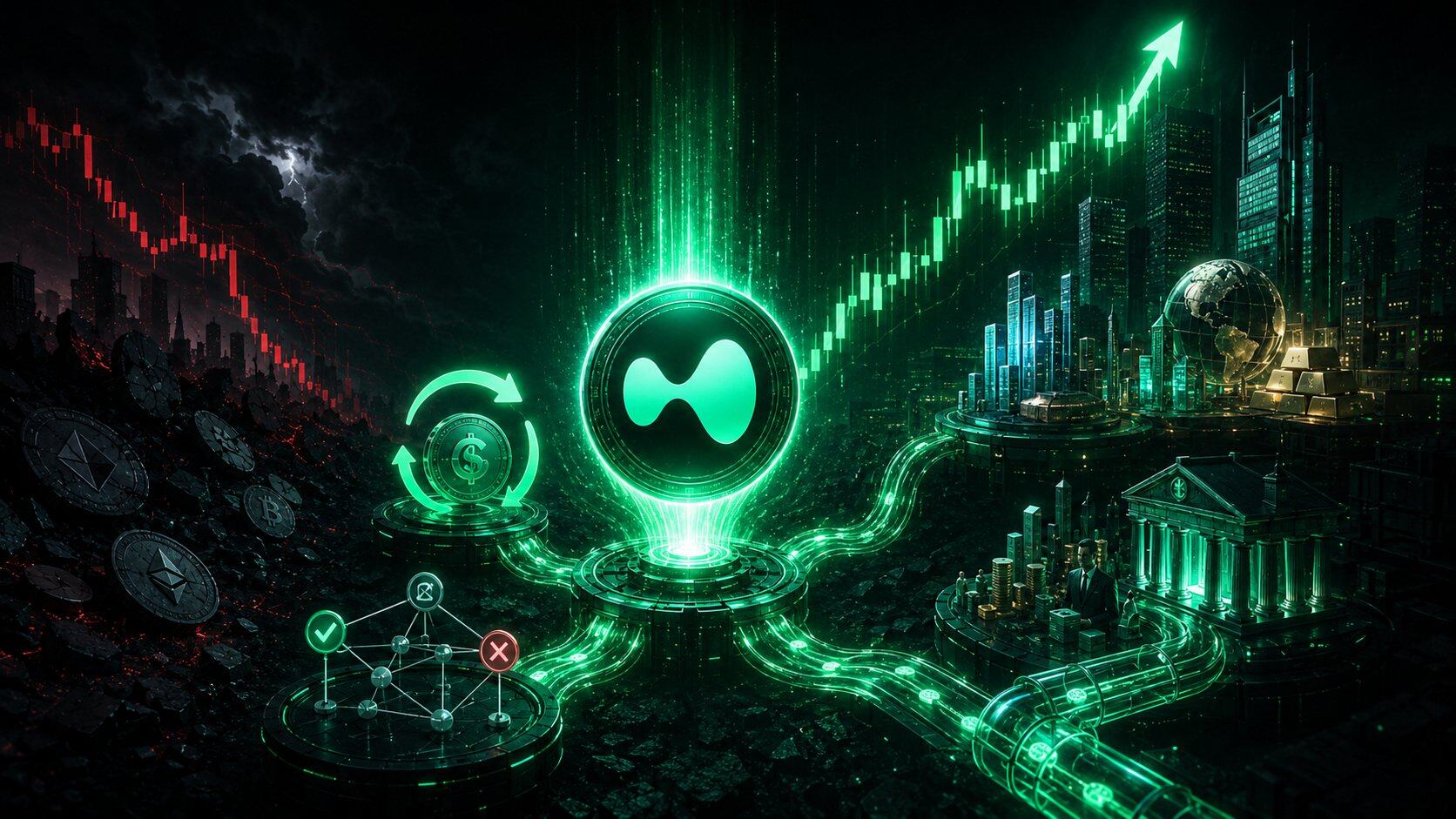
In the current crypto market landscape, if there's one altcoin that can still excite the market, it's probably HYPE.

Market data shows that the HYPE/BTC and HYPE/BNB exchange rates have continued to hit new all-time highs, with HYPE/BTC currently at 0.0006249 and HYPE/BNB at 0.075. This indicates that HYPE's strength is not merely following the market rebound but consistently outperforming mainstream crypto assets like BTC and BNB.
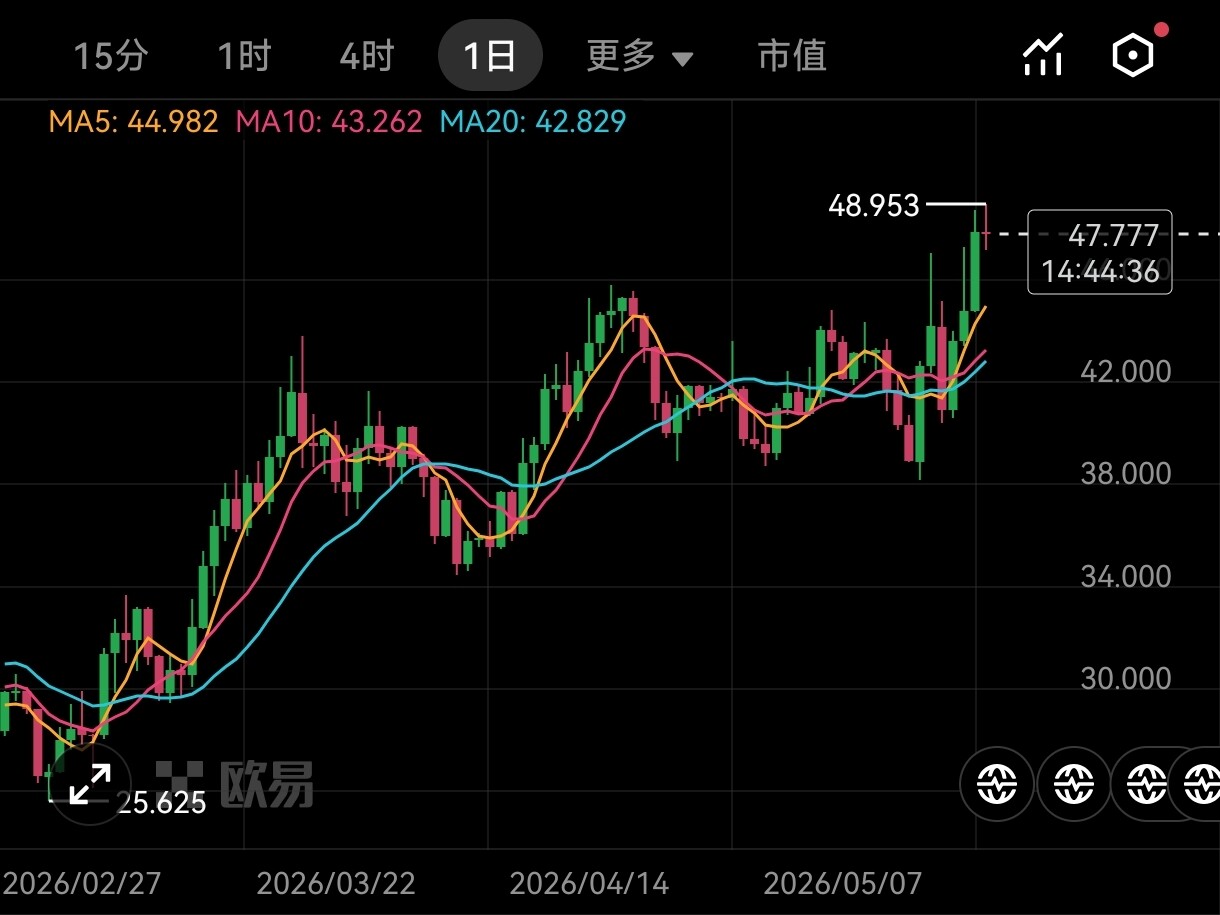
Previously, the public understanding of Hyperliquid was more limited to being a high-performance Perp DEX. However, capital is clearly no longer just buying a decentralized exchange platform token; it's betting that Hyperliquid can integrate more asset types, more liquidity, and more trading scenarios into the same on-chain trading system.

HYPE's price performance reflects the market reevaluating Hyperliquid's value.

In this article, Odaily Planet Daily will dissect the logic behind its rise through several key changes.

From THYP to BHYP: Compliant Buying Channels for HYPE Are Opening Up

The first external catalyst for HYPE's recent surge is the opening of ETF channels.

Currently, two asset management institutions have begun launching ETF products centered around Hyperliquid. On May 12, 21Shares listed the Hyperliquid ETF under the ticker THYP; on May 15, Bitwise listed the Hyperliquid ETF under the ticker BHYP. Data shows that as of May 18 EST, the total historical net inflow for 21Shares Hyperliquid ETF THYP reached $12.901 million; the total historical net inflow for Bitwise Hyperliquid ETF BHYP reached $2.0446 million.

More crucially, Bitwise did not stop at just issuing the ETF. Yesterday, Bitwise announced that it would use 10% of the management fee income from its BHYP Hyperliquid ETF to hold HYPE on its corporate balance sheet, and the related HYPE holdings will also be staked.

This transforms the ETF narrative from a mere product launch into a potential source of sustained buying pressure. The larger the ETF's scale and the higher its management fee income, the greater the theoretical amount Bitwise would allocate for acquiring HYPE. In the short term, this capital may not immediately dictate the price; but in the long run, it links ETF growth, the asset manager's income, and HYPE holdings together.

In other words, ETFs don't just bring HYPE one-time hype; they open a new funding channel. HYPE is starting to transition from a crypto-native asset into an on-chain trading platform token that traditional capital can also price.

USDC Returns to Hyperliquid: HYPE Gains Potential Daily Buying Pressure Exceeding $400k

The second reason for HYPE's recent rise is that with the return of USDC to Hyperliquid, the market has begun to recalculate the protocol's future stable revenue and whether this revenue can continue to flow towards HYPE buybacks.

According to an official Hyperliquid announcement, Coinbase will act as the fund deployer, Circle will be responsible for CCTP and native cross-chain infrastructure deployment, and both have committed to staking HYPE to activate AQAv2. This means the USDC return is not just a simple stablecoin integration, but a new mechanism established by Coinbase, Circle, and Hyperliquid around native USDC, cross-chain liquidity, and reserve yield distribution.

The key is that Coinbase will subsequently share the majority of USDC reserve yields with the Hyperliquid protocol. While the exact revenue split has not been officially disclosed, if referencing the previous USDH yield distribution mechanism, Hyperliquid could potentially receive about 90% of the reserve yields. Therefore, the market also interprets AQAv2 as a protocol revenue-sharing mechanism Hyperliquid established for USDC reserve yields.

Based on community calculations, assuming a $4.7 billion scale with a 3.8% annualized yield, USDC reserve yields correspond to approximately $160 million in annualized revenue, translating to potential daily HYPE buyback pressure of about $440,000. Once the AQAv2 interface is perfected and officially operational, Hyperliquid will no longer rely solely on trading fees for HYPE buybacks but may gain an additional, relatively stable source of cash flow.

This is where the USDC return truly impacts HYPE's pricing. Previously, the intensity of HYPE buybacks depended primarily on trading volume; the more active the trading, the higher the protocol revenue and buyback capacity. However, with the addition of USDC reserve yield buybacks, the source of buying pressure for HYPE is no longer solely dependent on trading fees but also on the amount of stablecoin liquidity Hyperliquid can attract and retain. In other words, trading fee buybacks represent platform trading activity, while USDC reserve yield buybacks represent the platform's ability to attract and retain capital. The market's repricing of HYPE may be precisely because it observes that HYPE's buyback story no longer relies solely on trading heat.

Hyperliquid Integrates HIP-4, Entering the Prediction Market Arena

Beyond RWA, Hyperliquid is also reaching into this year's hottest crypto sector—prediction markets.

On May 2, Hyperliquid launched HIP-4 Outcome Markets on its mainnet, initially offering intraday binary outcome contracts for BTC. Simply put, users can trade on whether the BTC price will be above a specified price at a certain point in time. Contract prices fluctuate between 0.001 and 0.999, reflecting the market's pricing of the event's probability; upon settlement, the contract pays out 1 if the event occurs and 0 if it does not.

Predictefy data shows that on the first day of HIP-4's launch, the trading volume for BTC price-related event contracts reached $6.15 million, placing Hyperliquid's volume in this specific market far ahead of competitors like Kalshi, Polymarket, and other prediction markets offering similar instruments.

For HYPE, the significance of HIP-4 is not just adding another product feature but connecting prediction markets to HYPE's staking, fee, and buyback mechanisms. According to the design, in the future, when deploying prediction events permissionlessly, market creators will need to stake 1 million HYPE, which is higher than the 500,000 HYPE required for deploying perpetual markets under HIP-3. Each staking slot can support rolling and periodic markets and can be reused after settlement. If issues like oracle manipulation, abnormal market states, or prolonged downtime occur, staked assets may be slashed.

Therefore, HIP-4 brings HYPE not just a simple prediction market concept boost but a more direct value-capture path. More permissionless deployment of prediction events means greater demand for HYPE staking, and more trading volume means more fee revenue, which ultimately feeds back into Hyperliquid's existing buyback logic.

RWA Open Interest Hits New Highs: Hyperliquid's Ceiling Isn't Just a Perp DEX

Beyond ETFs and USDC yield flows, RWA is pushing Hyperliquid's trading boundaries even further.

Data shows that the open interest size for RWA trading on the Hyperliquid platform has risen to $2.6 billion, setting a new all-time high and doubling compared to two months ago. This data indicates that Hyperliquid is no longer merely catering to trading demand for crypto assets like BTC, ETH, and SOL; real-world assets are also gaining scale within its on-chain trading system.

This is crucial for HYPE's valuation. If Hyperliquid were just a Perp DEX, its valuation anchors would primarily be the crypto cycle, trading volume, and fee revenue. But RWA opens up a different dimension: stocks, commodities, precious metals, Pre-IPO assets, etc., could all become subjects of 24/7 on-chain trading.

The significance of RWA for Hyperliquid isn't adding a few more trading pairs; it's pulling the platform out of the internal competition within the crypto market. Perp DEXs compete over who can capture more crypto trading volume, but RWA competition is about who can bring off-chain asset trading demand on-chain. If Hyperliquid can continue growing this market segment, HYPE's pricing will no longer just follow the crypto trading cycle but will begin to be tied to the much larger demand for real-world asset trading.

US SEC Plans to Propose Tokenized Stock Exemption, Adding Fuel to RWA Narrative

Potential US SEC regulatory easing for tokenized stocks is further raising Hyperliquid's long-term ceiling. According to reports, the US SEC is preparing to propose an innovation exemption for tokenized stock trading, allowing tokens tied to publicly traded company stocks to be traded on crypto platforms. Under certain circumstances, relevant platforms might not need full broker-dealer or exchange registration, and third-party-issued tokenized stocks might not even require consent from the listed company.

For Hyperliquid, this isn't about starting tokenized stock trading from scratch, but it adds a regulatory angle to the RWA direction it's already pursuing. On the Hyperliquid platform, trading for real-world assets like stocks and Pre-IPO assets is already gaining scale, and RWA open interest has also hit new highs. If US regulation genuinely opens an experimental window for tokenized stocks, this type of on-chain trading demand could be further amplified.

For Hyperliquid, the clearer the regulatory boundaries, the lower the resistance for real-world asset on-chain trading might become. Those best positioned to capture this incremental demand often aren't individual asset issuers but platforms capable of hosting order books, liquidity, and settlement. If tokenized stocks transition from a grey-area experiment to a compliant growth area, Hyperliquid's already-operating RWA business wouldn't just be an early attempt but could become the main battlefield in the next round of on-chain trading competition.

Fundamentals Continue to Strengthen, But Short-Term Enters a Bull-Bear Confrontation Zone

The logic behind HYPE's rise is becoming clearer. ETFs open channels for compliant capital, the USDC return brings potential incremental buyback pressure, and RWA, prediction markets, and tokenized stocks continue to expand Hyperliquid's trading boundaries. These changes all point in the same direction—Hyperliquid is no longer just a Perp DEX but is expanding into a larger on-chain trading system.

However, the validity of long-term logic doesn't guarantee a one-way short-term price rally. According to on-chain data, HYPE is currently witnessing a large-scale standoff between major whale long and short positions, with the TOP1 and TOP2 whales positioned as direct counterparties, with a total size exceeding $60 million. Bulls are betting on Hyperliquid's future growth potential, while bears are wagering on the pullback pressure after rapid short-term gains. As whale position sizes increase, HYPE's short-term price may no longer be determined solely by fundamentals but will also be influenced by factors like leverage liquidations, funding rates, and market sentiment.

Therefore, HYPE's short-term price movement is not easy to predict and will likely depend on which side of the whale confrontation is forced to exit first. However, when viewed over a longer horizon, HYPE's fundamentals remain compelling. Hyperliquid continues to expand tradable assets, capital entry points, and revenue streams, with HYPE playing an increasingly central role as a value carrier within the buyback, staking, and fee capture mechanisms.

Related Content

First-Day Trading Volume Crushes Polymarket: Hyperliquid Enters Prediction Markets with BTC Binary Options

Behind Coinbase's Acquisition of USDH: Hyperliquid's Strategic Choice

Пов'язані питання

QWhat are the two main external catalysts mentioned for HYPE's recent price increase?

AThe two main external catalysts are: 1) The opening of ETF channels with the launch of the THYP ETF by 21Shares and the BHYP ETF by Bitwise. 2) The return of USDC to Hyperliquid, establishing a new revenue-sharing mechanism with Coinbase and Circle.

QHow does the Bitwise Hyperliquid ETF (BHYP) potentially create a sustained buying pressure for HYPE?

ABitwise announced it will use 10% of the BHYP ETF's management fee income to purchase and stake HYPE on its corporate balance sheet. This means as the ETF grows and generates more fees, Bitwise will theoretically have more funds to buy HYPE, creating a potential continuous buy-side channel.

QAccording to the article, what is the estimated daily buy pressure for HYPE from the USDC reserve earnings (AQAv2) mechanism?

ABased on community estimates, the potential annual revenue from USDC reserves is around $160 million, which translates to an estimated daily buy pressure of approximately $440,000 for HYPE through protocol buybacks.

QWhat new market did Hyperliquid enter with HIP-4, and what is the HYPE staking requirement for creators on that platform?

AHyperliquid entered the prediction market with HIP-4 Outcome Markets. Creators wishing to deploy prediction events permissionlessly will need to stake 1 million HYPE, which is double the 500,000 HYPE required for deploying perpetual markets under HIP-3.

QWhat does the article suggest is the primary reason for the short-term price uncertainty of HYPE despite its strong fundamentals?

AThe short-term price uncertainty is attributed to large-scale whale positioning, where the top long and top short whale positions are acting as direct counterparties with a total size exceeding $60 million. This introduces volatility based on leverage, funding rates, and market sentiment, independent of the long-term fundamentals.

Пов'язані матеріали

Duan Yongping Opens Position in Circle: What Is He Betting On?

Duan Yongping, the renowned value investor known as the "Chinese Buffett," has made a surprising move by taking a $19 million position in Circle (CRCL), a leading regulated stablecoin issuer, via his H&H International investment vehicle. This signals a significant embrace of Web3 assets by traditional capital. The article analyzes Circle's recent strategic shift to diversify beyond its core model, where 99% of its 2024 revenue came from interest on USDC reserves. To transform from an "interest rate proxy" into an infrastructure platform, Circle has launched two major initiatives. First, it raised $222 million in a token presale for Arc, a new Layer-1 blockchain optimized for USDC-native finance. This move is seen as a defensive play to build a proprietary settlement rail and reduce its heavy reliance on a revenue-sharing agreement with Coinbase, which claimed over half of Circle's 2024 income. Second, Circle introduced the Circle Agent Stack, a developer toolkit for building AI agents that can transact with USDC, targeting the emerging field of nanopayments for autonomous AI activity. This is framed as an offensive strategy against competitors like Stripe. However, Circle's core business faces headwinds from falling interest rates and new U.S. regulations (the GENIUS Act) that could encourage banks to issue their own stablecoins. While new revenue streams from Arc and Agent Stack are growing, they currently constitute less than 6% of total revenue. The bullish thesis depends on successful execution of all three strategic pillars: USDC circulation growth, Arc adoption generating meaningful fees, and Agent Stack gaining early dominance. The bear case warns that structural pressures on the core business may outpace these new ventures' growth. The market currently prices CRCL cautiously, reflecting the high stakes of this transition.

marsbit9 хв тому

Duan Yongping Opens Position in Circle: What Is He Betting On?

marsbit9 хв тому

NVIDIA Earnings Countdown: Beating Expectations Is a Near Certainty, but Wall Street Is Most Concerned About These Five Questions

NVIDIA Earnings Countdown: Beating Expectations is a Given, but Wall Street Cares Most About These Five Issues The upcoming NVIDIA Q1 earnings report is expected to easily surpass the consensus revenue estimate of ~$78.7B. However, Wall Street's focus has shifted from the numbers themselves to five key strategic questions. **1. Shareholder Returns: Will "Frugality" Change?** Despite being the S&P 500's largest company, NVIDIA's shareholder returns (dividends + buybacks) averaged only 47% of its free cash flow from 2022-2025, far below the 80% peer average and its own historical norm. Its 0.02% dividend yield also lags the peer average of 0.89%. This low cash return, partly due to investments in AI ecosystem partners, is cited as a core reason for NVIDIA's valuation discount compared to other "Magnificent 7" stocks. Increasing returns could attract long-term income funds and be a catalyst. **2. Vera Rubin: The Next-Gen Chip Timeline** Analysts expect the next-generation Vera Rubin (R200) platform to ramp in the second half of 2026, following the current Blackwell series. It will use TSMC's 3nm process and share Blackwell Ultra's "Oberon" rack architecture, suggesting a smooth transition with limited gross margin impact. The market also awaits any update on NVIDIA's $1 trillion cumulative revenue forecast for 2025-2027. **3. Gross Margin: Can the 75% Level Hold?** Gross margin, a key valuation support, is expected to stabilize in the near term due to the shared architecture between Blackwell and Vera Rubin. The consensus sees it fluctuating between 74-75%. The main long-term pressure is the rising cost contribution of HBM memory. **4. AI Accelerator Market Forecast Update** The report anticipates the total AI accelerator market will reach ~$1.17 trillion by 2030, with NVIDIA maintaining a 68-70% share. The focus is on whether NVIDIA will update its forecast to include new growth drivers: LPU racks, its Vera CPU, and the Vera Rubin Ultra platform. **5. Competition: Are Threats from Google TPU/CPU Overstated?** The analysis disputes narratives that the rise of "Agentic AI" elevates CPU importance over GPU, threatening NVIDIA. It notes NVIDIA's own "Vera CPU" is competitive, and current Blackwell/TPU clusters already use a 1:2 CPU-to-GPU ratio, contrary to the "more CPUs needed" story. NVIDIA's dominance in AI accelerators is seen as secure. **Valuation Discount:** NVIDIA trades at a significant discount to Mag-7 peers: ~50% based on CY26/27 P/E (26x/19x vs. 49x/42x avg.) and over 66% based on EV/FCF. Bank of America maintains a "Buy" rating with a $320 price target.

marsbit12 хв тому

NVIDIA Earnings Countdown: Beating Expectations Is a Near Certainty, but Wall Street Is Most Concerned About These Five Questions

marsbit12 хв тому

Interlace: The World's Leading Agentic Payment and Stablecoin Infrastructure Platform, Building the Next-Generation Digital Financial Foundation

Interlace: A Leading Agentic Payment and Stablecoin Infrastructure Platform Interlace is a global stablecoin infrastructure platform bridging traditional and crypto finance. It addresses the fragmentation between crypto assets, global payments, and enterprise treasury management by integrating stablecoin payments, digital business banking, asset management, virtual card issuance, and AI payment capabilities into a unified global financial network. Key product pillars include: 1. **Next-Generation Payment Network**: Features **Agent Card** for AI agents (enabling autonomous spending with controls) and **Scan to Pay** for seamless stablecoin (USDT/USDC) to fiat payments via QR codes in emerging markets. 2. **Stablecoin Payment & Card Issuance**: Offers **Infinity Card** for corporate spend management, **CaaS (Card as a Service)** for embedded card issuance APIs, and **Infinity Launch** for turnkey white-label financial systems. 3. **Enterprise Accounts & Banking**: Provides **Business Accounts** for multi-currency management and **BaaS (Banking as a Service)** APIs for embedded global payments and banking capabilities. 4. **Crypto Finance Infrastructure**: Enables **On/Off Ramp** services for fiat-crypto conversions and ensures security with PCI DSS Level-1 certification, MPC wallets, and global compliance licenses. 5. **Integrated Financial Ecosystem**: Includes **Yield Treasury** for idle cash management and a full suite of APIs, serving over 12,000 businesses across 180+ countries. Interlace aims to make stablecoins viable for everyday payments and empower AI agents with secure spending, building the foundational infrastructure for the future of digital finance.

链捕手21 хв тому

Interlace: The World's Leading Agentic Payment and Stablecoin Infrastructure Platform, Building the Next-Generation Digital Financial Foundation

链捕手21 хв тому

Stanley Druckenmiller: From Soros' Comrade-in-Arms to the Godfather of Macro Investing—System, Disciples, and Latest Thoughts

Stanley Druckenmiller is a pivotal figure in global macro investing, renowned for his partnership with George Soros, his legendary fund Duquesne Capital, and a decades-long track record of near-30% annualized returns without a single annual loss. His methodology uniquely blends value, growth, macro, and trend investing. A key early experience was as a bank stock analyst, grounding him in both company fundamentals and macro forces. His most famous trade, shorting the British Pound in 1992, exemplified his approach: identifying unsustainable structural contradictions and concentrating capital on high-probability, high-payoff opportunities. The "Duquesne System" is built on four pillars: macro-directional analysis, concentrated bets on best ideas, rapid error correction, and acute awareness of liquidity. His famous phrase "Invest, then investigate" reflects a dynamic approach of entering a position based on a strong initial thesis and then adjusting based on market feedback. This differs fundamentally from Warren Buffett's focus on long-term intrinsic business value; Druckenmiller focuses on marginal changes, cycles, and capital allocation at inflection points. His influence extends through protégés like Scott Bessent (market execution) and Kevin Warsh (policy insight), representing the dual market-and-institutional understanding he embodies. He closed his flagship fund in 2010 at its peak, prioritizing flexibility and performance over asset-gathering. Recent moves highlight his core logic: reducing AI exposure as expectations became crowded while investing in copper, recognizing the underlying infrastructure and resource demands of the AI boom. He remains concerned about long-term US dollar purchasing power due to fiscal deficits and monetary policy. His core skill is judging risk/reward payoff, not just prediction accuracy. For ordinary investors, key lessons are to focus on marginal changes, align position size with conviction and risk, and seek second-order opportunities beneath surface-level narratives. Ultimately, Druckenmiller is a strategist who combines macro insight with price discipline, decisive action with rigorous risk management, succeeding by identifying major market mispricings, acting before full consensus, and exiting swiftly when proven wrong.

marsbit1 год тому

Stanley Druckenmiller: From Soros' Comrade-in-Arms to the Godfather of Macro Investing—System, Disciples, and Latest Thoughts

marsbit1 год тому

Торгівля

Спот
Ф'ючерси

Популярні статті

Як купити HYPE

Ласкаво просимо до HTX.com! Ми зробили покупку Hyperliquid (HYPE) простою та зручною. Дотримуйтесь нашої покрокової інструкції, щоб розпочати свою криптовалютну подорож.Крок 1: Створіть обліковий запис на HTXВикористовуйте свою електронну пошту або номер телефону, щоб зареєструвати обліковий запис на HTX безплатно. Пройдіть безпроблемну реєстрацію й отримайте доступ до всіх функцій.ЗареєструватисьКрок 2: Перейдіть до розділу Купити крипту і виберіть спосіб оплатиКредитна/дебетова картка: використовуйте вашу картку Visa або Mastercard, щоб миттєво купити Hyperliquid (HYPE).Баланс: використовуйте кошти з балансу вашого рахунку HTX для безперешкодної торгівлі.Треті особи: ми додали популярні способи оплати, такі як Google Pay та Apple Pay, щоб підвищити зручність.P2P: Торгуйте безпосередньо з іншими користувачами на HTX.Позабіржова торгівля (OTC): ми пропонуємо індивідуальні послуги та конкурентні обмінні курси для трейдерів.Крок 3: Зберігайте свої Hyperliquid (HYPE)Після придбання Hyperliquid (HYPE) збережіть його у своєму обліковому записі на HTX. Крім того, ви можете відправити його в інше місце за допомогою блокчейн-переказу або використовувати його для торгівлі іншими криптовалютами.Крок 4: Торгівля Hyperliquid (HYPE)Легко торгуйте Hyperliquid (HYPE) на спотовому ринку HTX. Просто увійдіть до свого облікового запису, виберіть торгову пару, укладайте угоди та спостерігайте за ними в режимі реального часу. Ми пропонуємо зручний досвід як для початківців, так і для досвідчених трейдерів.

239 переглядів усьогоОпубліковано 2024.12.11Оновлено 2026.04.28

Як купити HYPE

Обговорення

Ласкаво просимо до спільноти HTX. Тут ви можете бути в курсі останніх подій розвитку платформи та отримати доступ до професійної ринкової інформації. Нижче представлені думки користувачів щодо ціни HYPE (HYPE).

活动图片