Why Doesn't Stripe, Valued at $160 Billion, Go Public?

marsbitОпубліковано о 2026-03-11Востаннє оновлено о 2026-03-11

Анотація

Stripe, valued at $159 billion, and Plaid, valued at $8 billion, recently conducted tender offers, reflecting a structural shift in how companies access capital and provide liquidity. Instead of pursuing traditional IPOs, many high-value private companies are opting for secondary transactions. This trend is fueled by a booming private market, where assets have more than doubled to $22 trillion over 12 years, and companies now wait an average of 16 years to go public. New infrastructure layers like Forge and EquityZen facilitate these trades, while platforms like Robinhood’s Ventures Fund I are opening private market access to retail investors. However, risks include structural complexity, valuation opacity, and regulatory challenges. Despite a 2025 rebound in IPOs, many companies may continue favoring private liquidity due to abundant capital and fewer constraints.

In the past two weeks, payments giant Stripe announced a tender offer valuing the company at a staggering $159 billion.

At the same time, fintech infrastructure provider Plaid completed a tender offer with an $8 billion valuation.

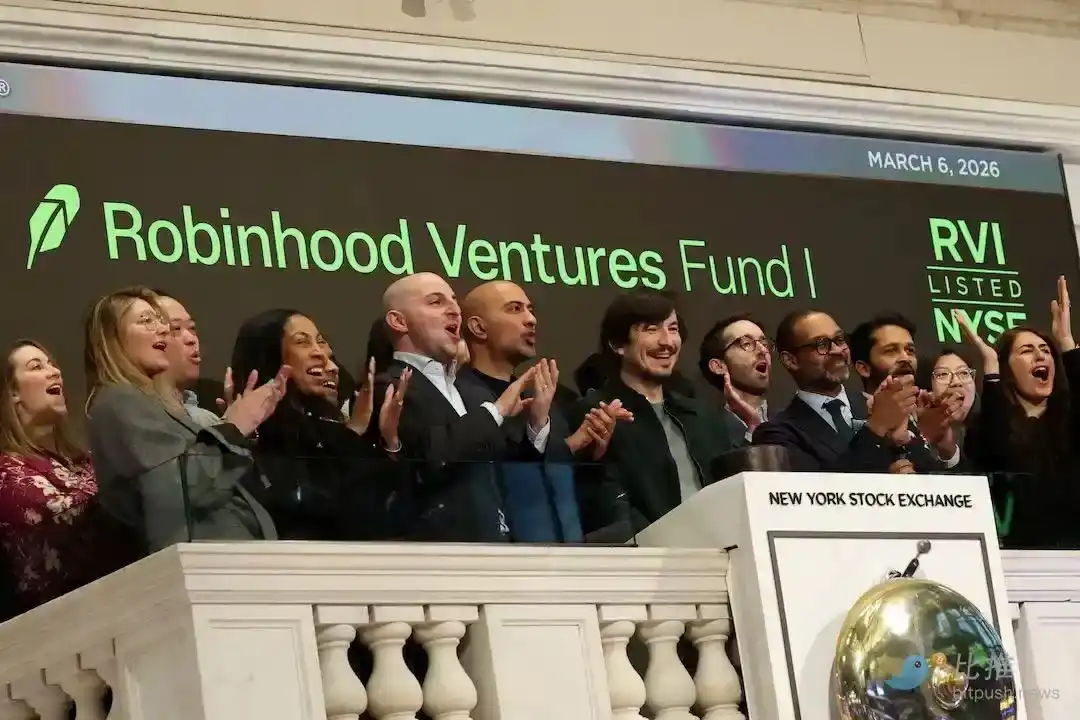
A few days later, Robinhood's Ventures Fund I listed on the New York Stock Exchange (NYSE), allowing retail investors direct access to a basket of private company equities.

These events are interconnected; they reflect a structural shift in how companies access capital, provide liquidity, and ultimately consider going public.

Why is that?

Let's start with Plaid.

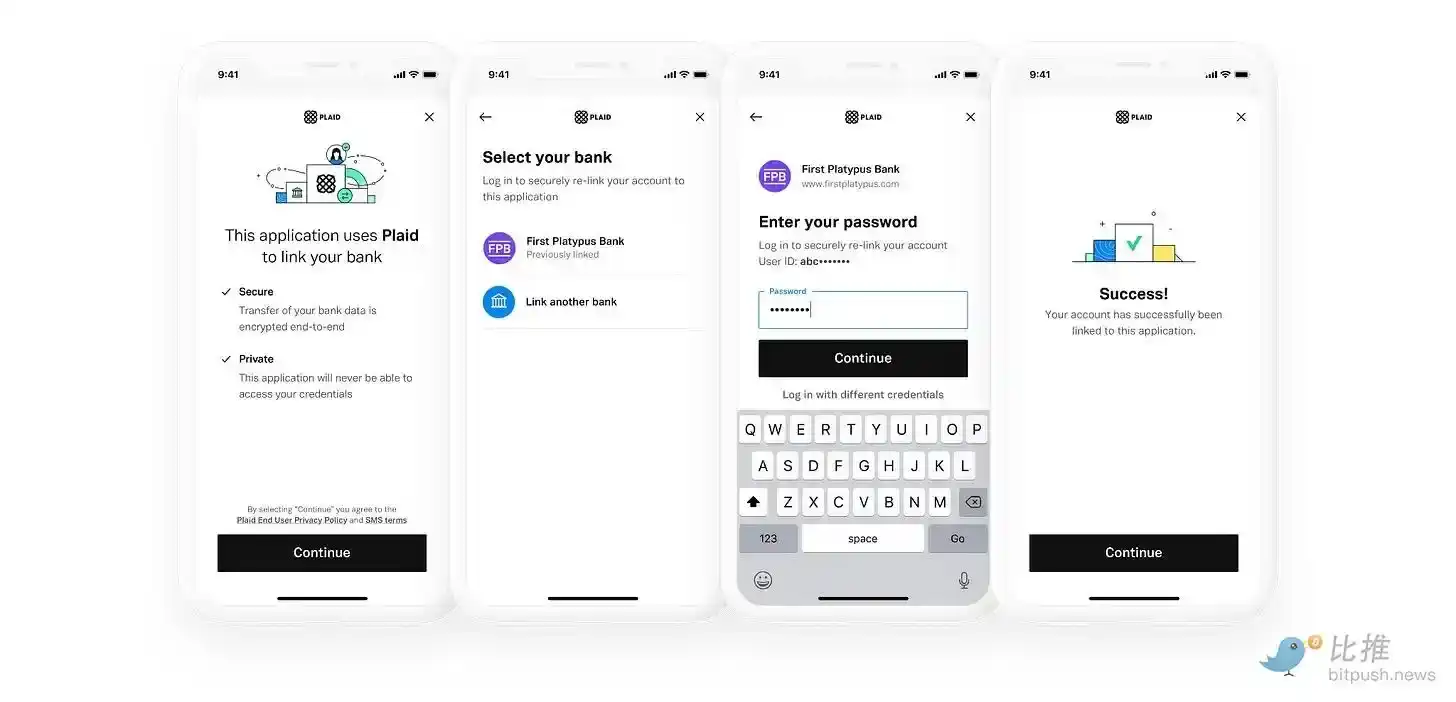
Founded in 2013, the company acts as an infrastructure layer connecting consumers' bank accounts to financial apps like Venmo, Robinhood, and Chime. Apps pay Plaid to let users seamlessly connect banks, verify credentials, and share account information. This is particularly valuable in the U.S., where regulations do not mandate banks to share information with third parties (unlike the UK's Open Banking and the EU's PSD2).

In fact, it's reported that half of all Americans have indirectly used Plaid's services through various financial apps. The company's valuation peaked at $13.4 billion in 2021, and it was once planned to be acquired by Visa for $5.3 billion, but regulators ultimately blocked the deal. After being repriced at $6.1 billion in April 2025, its latest $8 billion tender offer reflects a resurgence in momentum. Its revenue is projected to reach $430 million in 2025, with 20% of its new customers now being AI companies.
Meanwhile, Stripe is a payments behemoth founded in 2010 by brothers John and Patrick Collison.

Leveraging a decade of exponential e-commerce growth, the company recently reported stellar 2025 results. Total payment volume reached $1.9 trillion, a 34% year-over-year increase, equivalent to roughly 1.6% of global GDP. While revenue is undisclosed, sources estimate 2024 revenue to be at least $5 billion. Today, Stripe's revenue suite alone (including Stripe Billing, Invoicing, Tax, etc.) is on track to achieve $1 billion in annual recurring revenue (ARR).

Beyond payments, Stripe is actively positioning itself around cryptocurrency and agentic commerce, seeing them as catalysts for online consumption. It acquired stablecoin platform Bridge for $1.1 billion, bought wallet infrastructure provider Privy, and is building Tempo—an L1 blockchain focused on payments, currently being tested by Visa, Nubank, and Klarna. Its latest $159 billion tender offer price represents a 74% increase from last year.

A tender offer is a secondary transaction that allows new or existing investors to buy shares directly from employees and early shareholders. It provides liquidity without diluting the company's equity or incurring the regulatory and structural burdens of an IPO.

Stripe and Plaid are part of a larger trend: companies successfully bypassing public markets in favor of private transactions.

Anthropic is reportedly exploring a tender offer valuing it over $350 billion, while Revolut recently completed an employee share sale at a $75 billion valuation.

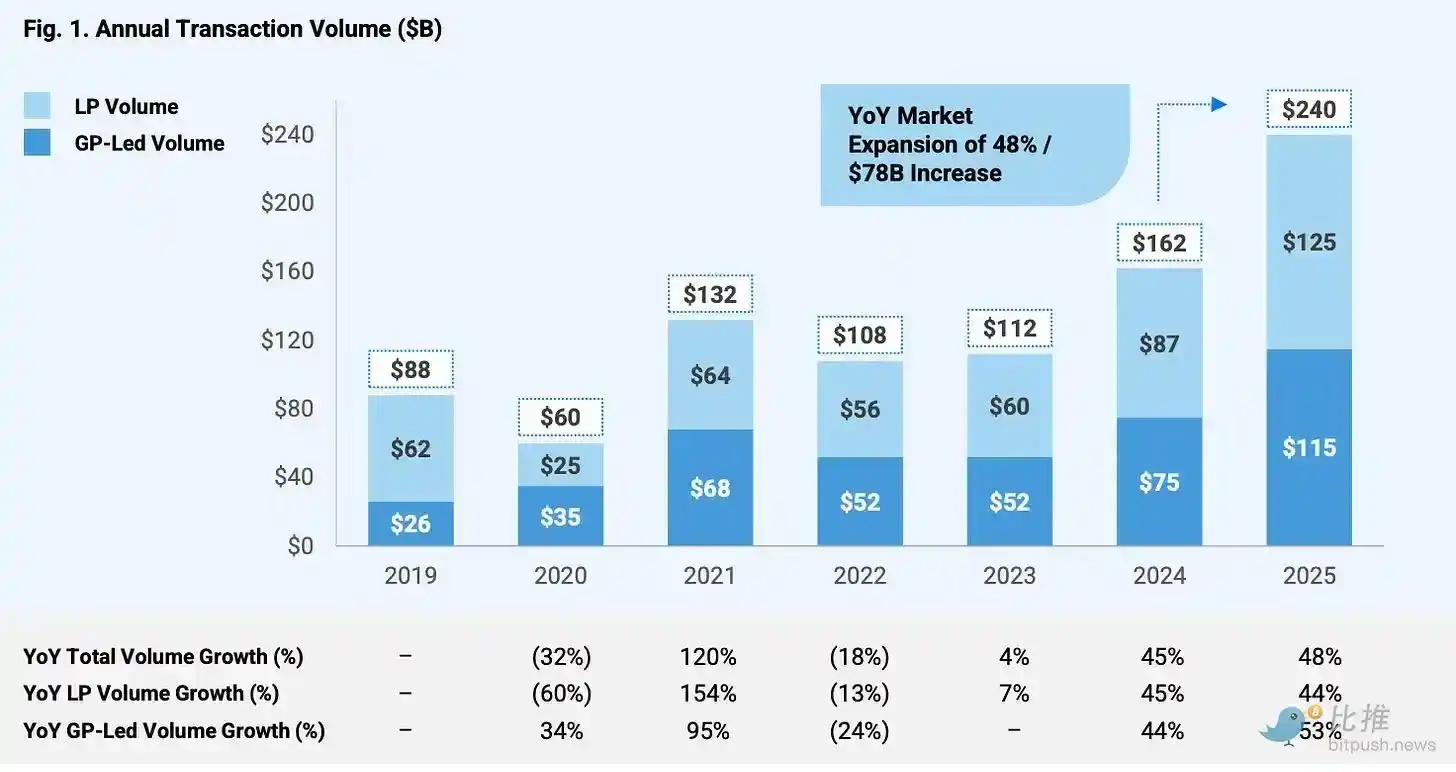
In 2025, private secondary market transactions surged to $240 billion, up from $162 billion in 2024. In comparison, global capital raised through traditional IPOs was about $140 billion.
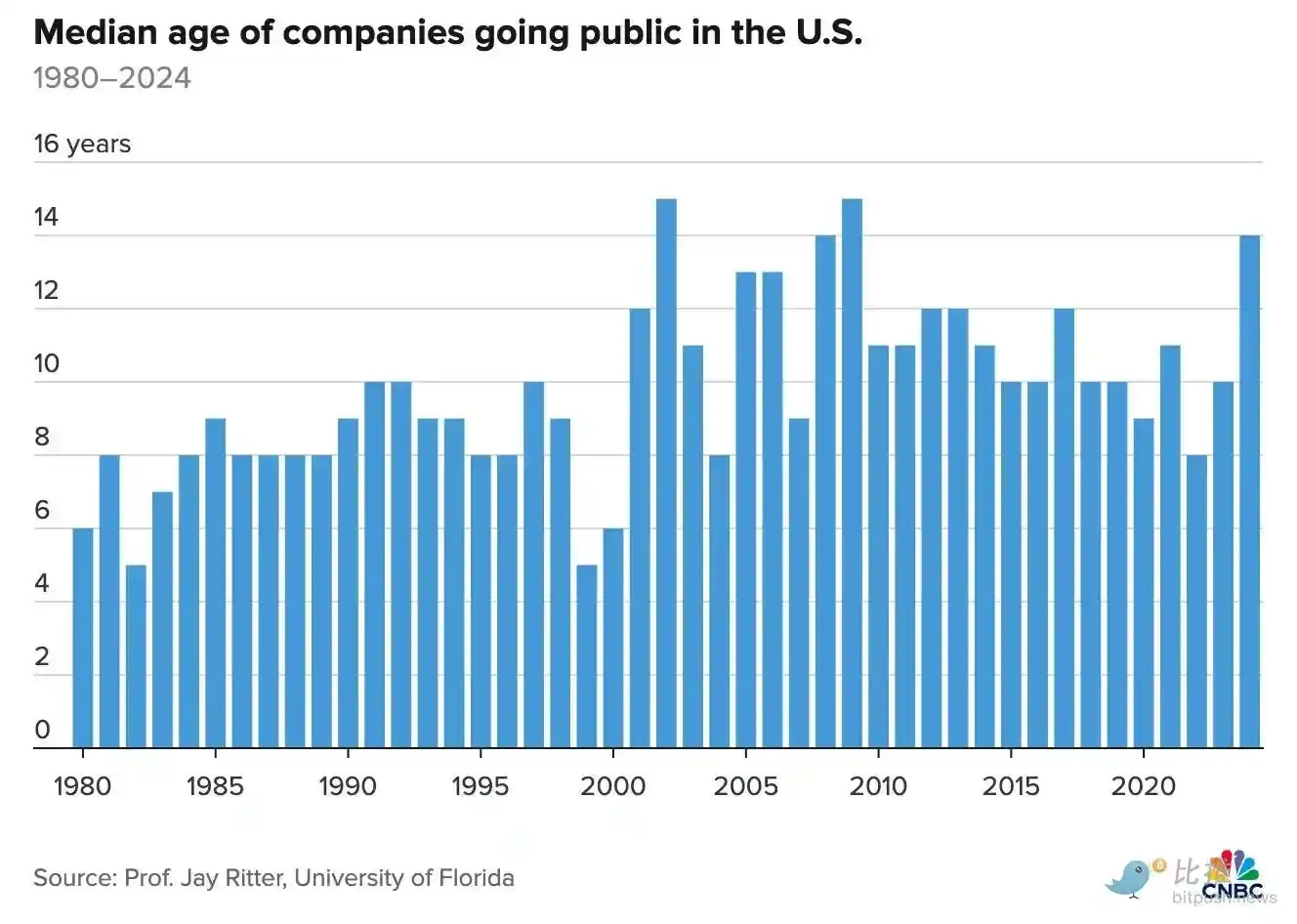
As private capital markets boom, the pace of companies entering public markets has slowed. Companies now wait an average of 16 years to go public, 33% longer than a decade ago. Over the past 12 years, total private market assets have more than doubled to $22 trillion. Some of the world's most valuable companies, including SpaceX and OpenAI, remain private, with valuations large enough to rival or exceed those of major public companies.
This has led to two key market developments:

First, the birth of a new capital market infrastructure layer. We recently analyzed the rise of platforms like Forge and EquityZen, which facilitate secondary trading of private company stock. Charles Schwab acquired Forge for $660 million in November, while Morgan Stanley acquired EquityZen in October (amount undisclosed).

Second, the opening of private markets to retail investors. Robinhood's newly formed Ventures Fund I listed on the NYSE last Friday, raising $658 million and holding shares in large private companies like Ramp, Stripe, and Revolut. This isn't the first; Destiny Tech100 listed in March 2024, offering a portfolio of 100 VC-backed companies, including SpaceX and OpenAI. But Robinhood can distribute directly to its 28 million users, and as with its performance in public stocks, it has a proven track record of popularizing asset classes historically reserved for institutional investors.
Beyond this, the Trump administration signed an executive order last summer paving the way for $8.7 trillion in 401(k) retirement accounts to invest in alternative assets like cryptocurrency and private markets.

We see these as major catalysts for further growth, but they also expose some hidden risks.

One is the structural complexity behind purchasing private stock. Brokers often bundle these stocks into their own special purpose vehicles (SPVs) and charge fees, and these SPVs sometimes hold positions in other vehicles. These overlapping counterparty risks and fees can obscure what assets investors actually own. The next macroeconomic downturn will be accompanied by the unraveling of SPV positions and ensuing litigation.

Then there's the issue of valuation transparency. Valuations of private companies are often anchored to the most recent funding round, which may only happen once or twice a year. This limits price discovery and creates a gap between the reported net asset value (NAV) and the price public markets are willing to pay.

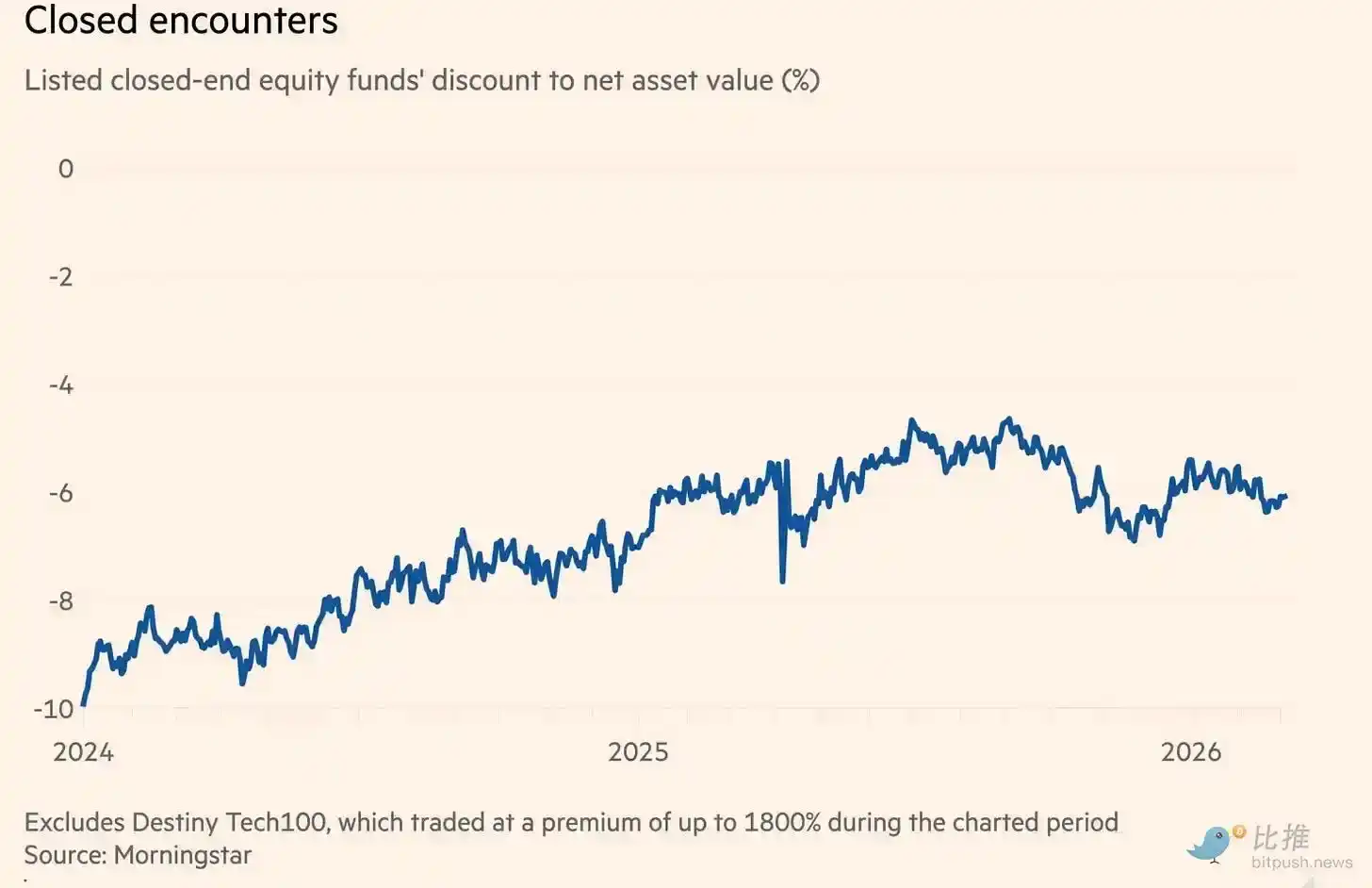
The Financial Times recently reported that Robinhood's Ventures Fund I fell 11% on its first day of trading. Meanwhile, Destiny Tech 100 once traded at nearly 20 times its NAV. This unpredictability is not ideal for retirement savings accounts.
Meanwhile, regulators are beginning to push for reforms to make public markets more attractive. SEC Commissioner Hester Peirce expressed concerns about private markets in a February speech: the pressure for companies to go public has diminished, but private markets lack equivalent price discovery, accessibility, and liquidity.

SEC Chairman Paul Atkins recently proposed a three-pillar plan to "make IPOs great again" (his words) by easing disclosure requirements and reforming securities litigation. Whether these reforms will materialize remains to be seen.

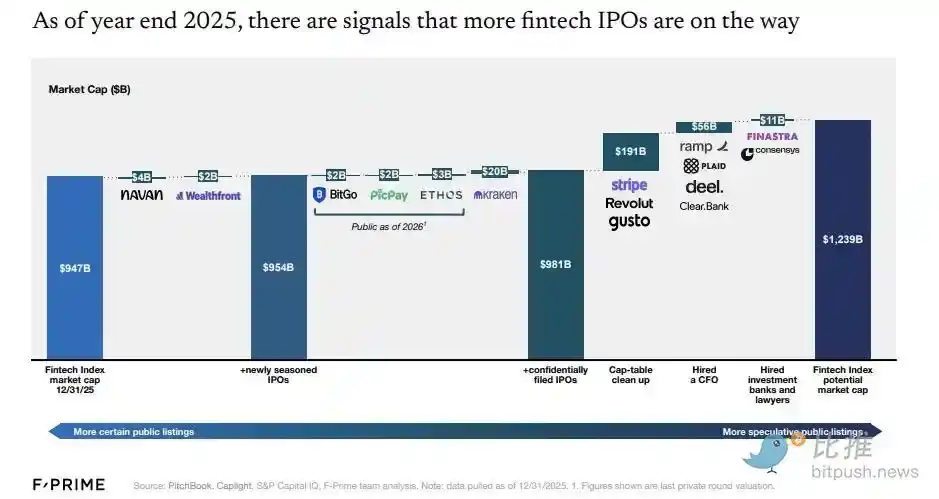
Private transactions aside, IPOs did see a significant rebound in 2025. Eleven VC-backed fintech companies, including Circle and Klarna, have gone public, with more on the way. Kraken and Bitgo have filed confidentially, while companies like Ramp and Gusto are preparing by cleaning up cap tables, hiring new CFOs, or engaging investment banks. F-Prime estimates the total market cap of fintech could grow from $947 billion to $1.2 trillion.
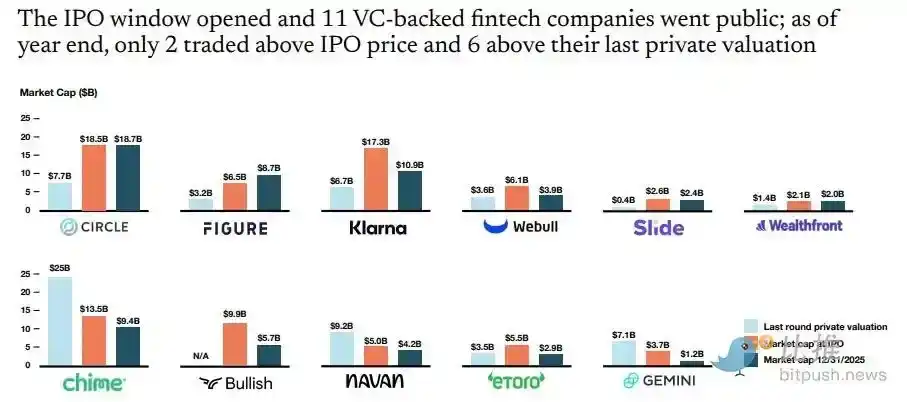
Whether these companies can get their desired price is another matter. By year-end, only 2 of the 11 companies were trading above their IPO price. Chime, once privately valued at $25 billion, went public at $13.5 billion. Klarna listed at $17.3 billion but ended the year at $10.9 billion.

With heightened geopolitical tensions and an uncertain macro outlook, companies still on the sidelines may find that the tender offer playbook is the path of least resistance. For now, at least, liquidity in private markets remains ample enough to absorb the supply of these unicorns.


Пов'язані питання

QWhat is a Tender Offer and why are companies like Stripe and Plaid using it instead of an IPO?

AA Tender Offer is a secondary transaction that allows new or existing investors to buy shares directly from employees and early shareholders. Companies like Stripe and Plaid use it because it provides liquidity without diluting the company's equity and avoids the regulatory and structural burdens of an Initial Public Offering (IPO).

QWhat are the key risks associated with investing in private company stocks through vehicles like SPVs, as mentioned in the article?

AThe key risks include structural complexity, where brokerages bundle stocks into Special Purpose Vehicles (SPVs) that charge fees and may hold positions in other instruments, creating overlapping counterparty risk. There is also a lack of valuation transparency, as private company valuations are infrequently updated, leading to a gap between reported Net Asset Value (NAV) and the price public markets are willing to pay.

QHow has the average time to IPO changed for companies, and what does this trend indicate about the private market?

AThe average time to IPO has increased to 16 years, which is 33% longer than a decade ago. This trend indicates a structural shift where companies are staying private for much longer, fueled by the abundance of capital and liquidity available in the private markets, which have more than doubled in size to $22 trillion over the past 12 years.

QWhat recent development has helped open up private market investments to retail investors, according to the article?

AA key development is the launch of funds like Robinhood's Ventures Fund I, which listed on the NYSE and allows retail investors to gain exposure to a basket of private company stocks. Additionally, a Trump administration executive order last summer paved the way for 401(k) retirement accounts to invest in alternative assets like private markets.

QDespite the rise of private market transactions, what evidence does the article provide that the IPO market is still active in 2025?

AThe article states that the IPO market saw a significant rebound in 2025, with 11 venture-backed fintech companies going public, including Circle and Klarna. Furthermore, other companies like Kraken, Bitgo, Ramp, and Gusto are preparing for potential public listings by cleaning up their cap tables, hiring new CFOs, or engaging investment banks.

Пов'язані матеріали

How Many Tokens Away Is Yang Zhilin from the 'Moon Chasing the Light'?

The article explores the intense competition between two leading Chinese AI companies, DeepSeek and Kimi (Moon Dark Side), and the mounting pressure on Yang Zhilin, the founder of Kimi. While DeepSeek re-emerged after 15 months of silence with its powerful V4 model—boasting 1.6 trillion parameters and low-cost, long-context capabilities—Kimi has been focusing on long-context processing and multi-agent systems with its K2.6 model. Yang faces a threefold challenge: technological rivalry, commercialization pressure, and investor expectations. Despite Kimi’s high valuation (reaching $18 billion), its revenue heavily relies on a single product with low paid conversion rates, while DeepSeek’s strategic silence and open-source influence have strengthened its market position and valuation prospects, now targeting over $20 billion. Both companies reflect broader trends in China’s AI ecosystem: Kimi aims for global influence through open-source contributions and agent-based advancements, while DeepSeek prioritizes foundational innovation and hardware independence, notably shifting to Huawei’s chips. Their competition is seen as vital for China’s AI progress, with the gap between top Chinese and U.S. models narrowing to just 2.7% on the Elo rating scale. Ultimately, the article argues that this rivalry, though anxiety-inducing for leaders like Zhilin, is essential for driving innovation and solidifying China’s role in the global AI landscape.

marsbit4 год тому

How Many Tokens Away Is Yang Zhilin from the 'Moon Chasing the Light'?

marsbit4 год тому

TechFlow Intelligence Bureau: ChatGPT Helps Amateur Mathematician Crack 60-Year-Old Problem, CFTC Sues New York Regulator Over Coinbase and Gemini

An amateur mathematician, with the assistance of ChatGPT, has solved a combinatorial mathematics puzzle originally proposed by Hungarian mathematician Paul Erdős in the 1960s. This marks another milestone in AI-aided mathematical research, demonstrating the evolving capabilities of large language models in formal reasoning. In other AI developments, OpenAI introduced a new privacy filter tool for enterprise API usage, automatically screening sensitive data. Meanwhile, the Qwen3.6-27B model achieved 100 tokens per second on a single RTX 5090 GPU using quantization, significantly lowering the cost barrier for local AI deployment. In crypto and Web3, the U.S. CFTC sued New York’s financial regulator, challenging its oversight of Coinbase and Gemini—a first-of-its-kind federal-state regulatory clash. Following a vulnerability, KelpDAO and major DeFi protocols established a recovery fund. Tether froze $344 million in assets linked to Iran’s central bank upon U.S. Treasury request, highlighting the centralized control risks in stablecoins. Separately, Litecoin underwent a 3-hour chain reorganization to undo a privacy-layer exploit. In the U.S., former President Trump invoked the Defense Production Act to address power grid bottlenecks affecting AI data centers and dismissed the entire National Science Board, raising concerns over research independence. A retail trader gained 250% on a $600k Intel options bet amid AI-related speculation. Xiaomi announced its first performance electric vehicle, targeting rivals like Tesla. Meanwhile, iPhone users reported devices automatically reinstalling a hidden app daily, suspected to be MDM-related. A Chinese securities report noted that A-share institutional crowding has reached its second-longest streak since 2007, signaling high valuations and potential style rotation. The day’s developments reflect a dual narrative: AI is enabling unprecedented individual breakthroughs, while centralized power structures—whether governmental or corporate—are becoming more assertive, underscoring that decentralization is as much a political-economic challenge as a technical one.

marsbit4 год тому

TechFlow Intelligence Bureau: ChatGPT Helps Amateur Mathematician Crack 60-Year-Old Problem, CFTC Sues New York Regulator Over Coinbase and Gemini

marsbit4 год тому

Торгівля

Спот
Ф'ючерси
活动图片