Why Base’s $15.2B trading boom raises questions about L2 tokens

ambcryptoОпубліковано о 2026-02-10Востаннє оновлено о 2026-02-10

Анотація

Base is shifting its focus from creator rewards and social features to prioritize trading, as evidenced by the shutdown of its Creator Rewards program and Farcaster-powered social feed. The program, which distributed around $450,000 to 17,000 creators over seven months, is being discontinued to allow the platform to concentrate on tradable assets. This strategic pivot raises questions about the potential role of a native Base token, especially since discussions about its launch have quieted recently. The network's strong performance suggests a token may not be necessary. Over the past 30 days, Base-linked DEXs processed $15.2 billion in trading volume, with Aerodrome Finance (AERO) leading much of the activity. The network has also generated $190.6 million in cumulative fees and revenue, demonstrating its ability to monetize usage directly without relying on a token for growth. Coinbase's recent Super Bowl ad further indicates a focus on brand building and streamlined priorities. With trading volume and fees effectively serving the function a token typically would, a native Base token appears optional rather than essential.

The Base app is dropping creator rewards and moving its focus on trading, which says a lot about where Coinbase sees traction today.

But that raises an important question. What role, if any, will a native Base token play, especially since talk of launching one has gone noticeably quiet in recent months?

Putting trading first

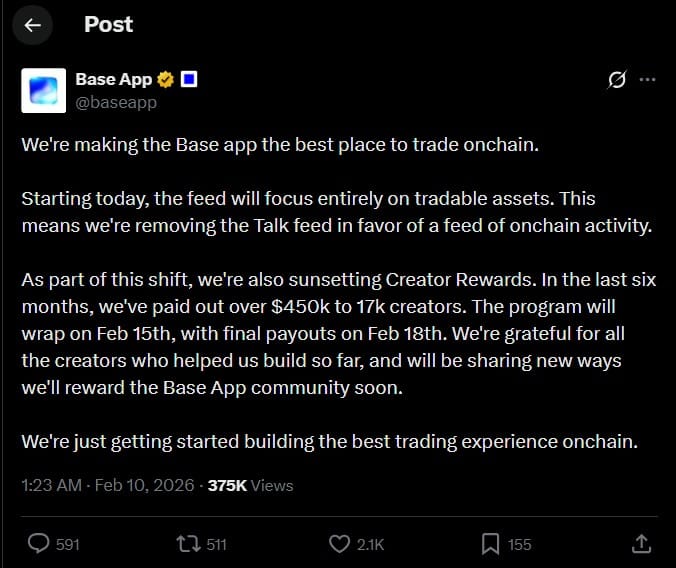
Coinbase is shutting down the app’s Creator Rewards program and its Farcaster-powered social feed, with its focus now on tradable assets. The Creator Rewards initiative, launched in July, was designed to encourage posts and engagement by paying users for activity.

In practice, the payouts were modest. Base says around $450,000 was shared among roughly 17,000 creators over seven months, averaging about $26 per person.

Source: X

According to creator Jesse Pollak, the decision came down to focus. As the app evolved, the team realized it worked best when it did fewer things well. He stated,

“…as we’ve rolled the app out, we’ve realized we need to do less, better. and by focusing on tradable assets, that’s exactly what we can do.”

The Creator Rewards program will officially end this week, with final payouts scheduled for the 18th of February. Pollak also noted that Base App was never an ideal home for Farcaster’s social feed, and expects most users to return to Farcaster’s native app.

Importantly, the changes do not affect Base’s Creator Coins feature, which remains active.

AMBCrypto previously reported that Coinbase was considering launching a native token called BASE, and that it was likely to happen this year. However, there’s not been much talk on that front since.

Do they really need a native token, though?

For now, it looks like they don’t.

Source: DeFiLlama

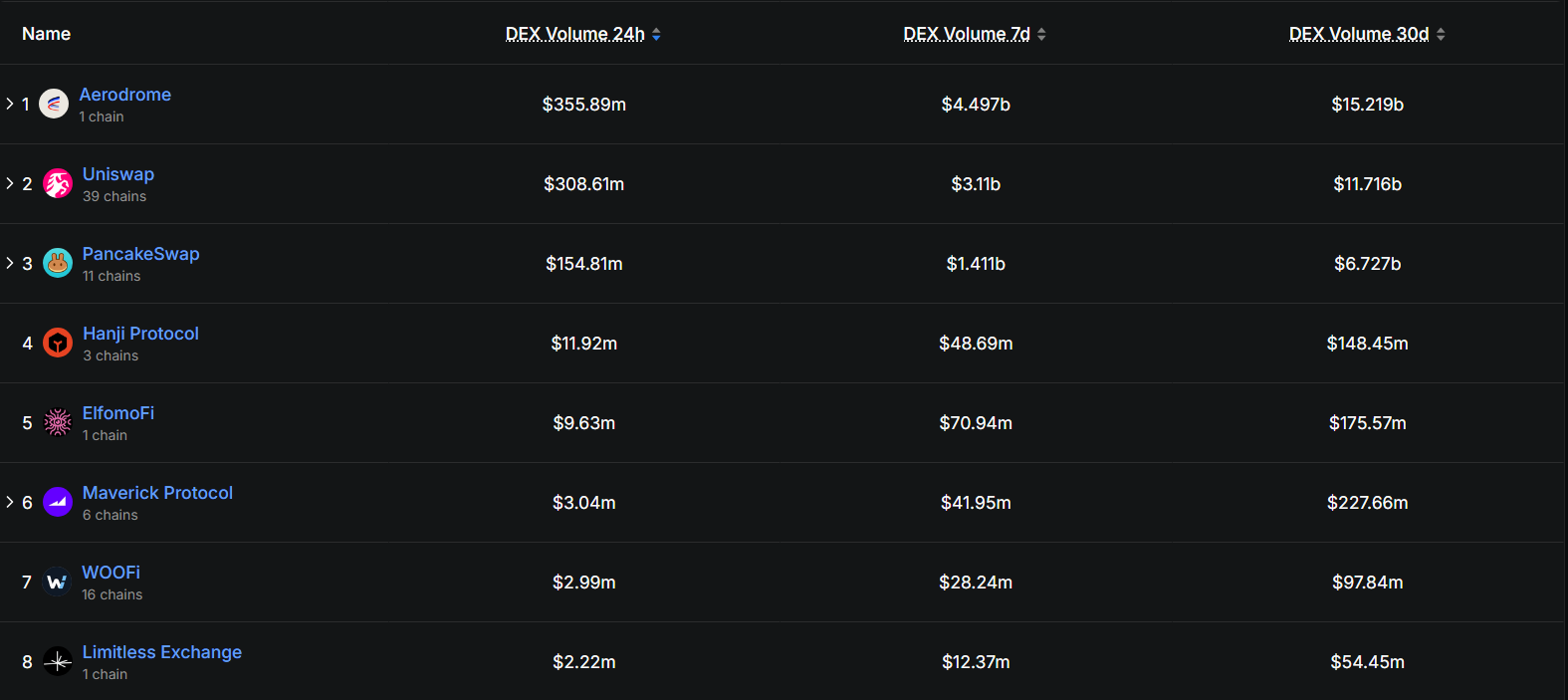
Over the past 30 days, Base-linked DEXs have processed $15.2 billion in trading volume, with Aerodrome Finance [AERO] alone accounting for the bulk of that activity. That puts them ahead of many multi-chain competitors.

Source: Token Terminal

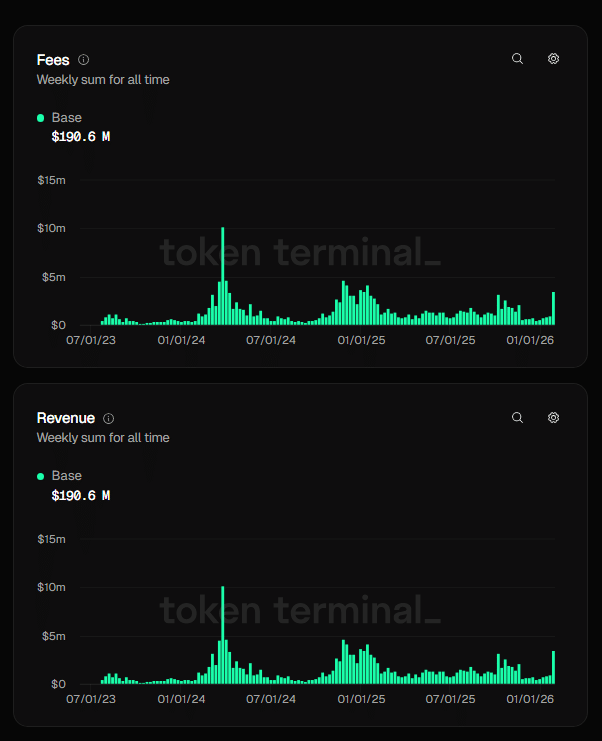
More importantly, the network is generating real money. Data per Token Terminal showed that Base has earned $190.6 million in cumulative fees and revenue to date, with steady weekly inflows.

Instead of relying on a token to bootstrap growth, Base is already monetizing usage directly.

Source: Twitter

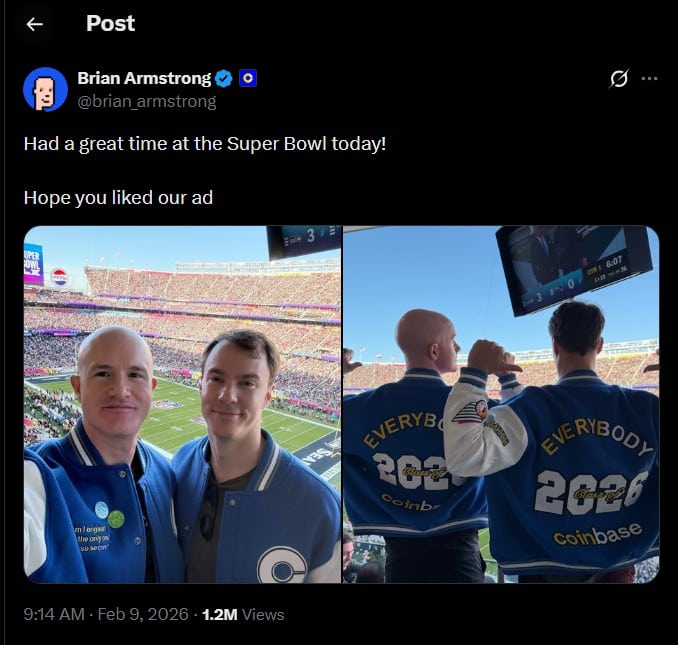
In more recent news, this year’s Super Bowl featured just one major crypto ad, and it was from Coinbase. The streamlining of priorities makes sense as Coinbase seemingly looks to build a bigger brand.


Final Thoughts

  • Base is prioritizing trading and revenue, with volume and fees doing the work a token usually would.
  • With growth already monetized, a native Base token looks optional rather than necessary.
Next: Cardano: Why CME’s ADA futures sparked 3% drop instead of a rally
Share
  • Share
  • Tweet

Пов'язані питання

QWhy is Base shutting down its Creator Rewards program and social feed?

ABase is shutting down these features to focus on doing fewer things well, specifically by concentrating on tradable assets, as the team realized the app works best with a more streamlined approach.

QHow much trading volume have Base-linked DEXs processed in the past 30 days?

ABase-linked DEXs have processed $15.2 billion in trading volume over the past 30 days, with Aerodrome Finance (AERO) accounting for the bulk of that activity.

QWhat is the current status of a potential native Base token launch?

ATalk of launching a native Base token has gone noticeably quiet in recent months, and with the network already generating significant revenue through fees, a token now seems optional rather than necessary.

QHow much revenue has Base generated from fees to date?

ABase has earned $190.6 million in cumulative fees and revenue to date, according to data from Token Terminal.

QWhat does Base's shift in focus and recent performance suggest about the need for a Layer 2 native token?

ABase's strong trading volume and revenue generation demonstrate that it can monetize usage directly without relying on a native token for growth, making a token launch appear optional rather than essential.

Пов'язані матеріали

The Largest IPO in History Ignites Heated Debate: Is SpaceX Worth $1.77 Trillion?

SpaceX's potential IPO is priced at $135 per share, aiming to raise $75 billion and valuing the company at approximately $1.77 trillion, which would make it the largest IPO in history. This valuation has sparked intense debate among investors. Bullish analysts, including major underwriters Goldman Sachs and Morgan Stanley, argue the valuation is justified by SpaceX's long-term potential. They see it not just as a rocket company but as a future leader in space infrastructure, with key growth drivers being Starlink satellite internet, low-cost rocket launches, and future AI-related ventures. They project revenues reaching hundreds of billions to trillions of dollars by 2030-2040. ARK Invest's model suggests a 2030 enterprise value could reach $2.5 trillion. Bearish analysts from independent research firms like Morningstar, PitchBook, and New Constructs contend the IPO price is excessively high, already pricing in unrealistic future growth. Using DCF and sum-of-the-parts models, they estimate fair value between $780 billion and $1.7 trillion, significantly below the IPO target. They highlight risks such as the speculative nature of AI projections, over-dependence on Elon Musk, high growth expectations, and corporate governance concerns. Trefis set a target price of just $79 per share. While both sides acknowledge SpaceX's unique position in commercial space, the core disagreement centers on whether the $135 share price offers a reasonable margin of safety or is overly optimistic. Despite the valuation controversy, reported strong demand for the IPO indicates significant market interest.

marsbit49 хв тому

The Largest IPO in History Ignites Heated Debate: Is SpaceX Worth $1.77 Trillion?

marsbit49 хв тому

After the Passage of the GENIUS Act and the CLARITY Act, What Is the Correct Architecture for On-Chain Yield?

The article discusses the evolution of on-chain credit, distinguishing three markets: overcollateralized crypto lending, unsecured lending (largely unsuccessful), and asset-backed credit (ABC). ABC, backed by identifiable real-world collateral with legal recourse, is identified as the fastest-growing category and the only one credibly addressing adverse selection—the core problem in credit where the riskiest borrowers self-select. Current growth in on-chain Real World Assets (RWAs), particularly tokenized private credit funds (e.g., Maple Finance, Centrifuge), is substantial but often merely "wraps" existing fund structures, inheriting their risks rather than solving adverse selection at the protocol level. The regulatory landscape is a key driver, with the US GENIUS Act (prohibiting stablecoin issuers from paying yield) and the proposed CLARITY Act (closing loopholes on indirect yield) set to redefine permissible yield-bearing products. This makes vaults (like ERC-4626) the critical architecture—they become the primary compliant vehicle for delivering yield, functioning as issuance, disclosure, distribution, and recovery mechanisms. The author's thesis is that the correct post-GENIUS/CLARITY architecture involves building ABC solutions where credit assessment, structure, and recovery are encoded directly into the smart contract vault layer, moving beyond mere tokenized fund wrappers to solve adverse selection fundamentally and ensure regulatory compliance.

Foresight News1 год тому

After the Passage of the GENIUS Act and the CLARITY Act, What Is the Correct Architecture for On-Chain Yield?

Foresight News1 год тому

TechFlow Intelligence Bureau: Anthropic's New Model Fable Sparks Controversy by Restricting Biosafety Research, US CPI Soars to 4.2%, a Three-Year High

**Summary of TechFlow Intelligence Report:** The newsletter covers several key tech and finance developments. In AI, Anthropic's new Fable model faced backlash for secretly limiting biomedical research capabilities and enforcing a 30-day data retention policy, prompting the company to promise more transparent adjustments. In a related story, Anthropic's founder revealed his departure from OpenAI was due to dishonesty from Sam Altman, not safety concerns. Meanwhile, OpenAI is considering significant price cuts to compete with Anthropic, potentially sparking a price war. In crypto/Web3, BlackRock filed a new amendment for a yield-generating Bitcoin ETF, while Bank of America's CEO warned that stablecoin yields could drain trillions from traditional banks. U.S. Senator Cynthia Lummis advocated for the U.S. to officially accumulate Bitcoin reserves. In hardware, Nvidia released the DiffusionGemma-2-6B image model optimized for efficient inference, and AMD promoted its unified memory architecture to challenge Nvidia's dominance. TSMC's CFO hinted at possible price increases due to soaring AI chip demand. A major legal ruling in Germany held Google legally responsible for inaccurate information generated by its AI Overviews feature. Google Chrome also moved to fully block ad-blocker workarounds like uBlock Origin. Macroeconomic headlines included U.S. CPI rising to 4.2% (a 3-year high) and Iran's complete closure of the Strait of Hormuz, raising oil price and inflation fears. South Korean markets saw continued volatility with massive foreign capital outflow. Other notable stories: Microsoft expanded its Copilot AI assistant "Mico" globally; a study found r/wallstreetbets users' stock picks outperformed Wall Street; a fully autonomous drone killed a human soldier for the first time, raising AI ethics concerns; and a Chinese hospital used brain-computer interface technology to help a blind person "see." The overarching theme connects debates over AI boundaries and responsibility (Anthropic's restrictions, Google's liability, lethal autonomous drones) with real-world economic and geopolitical turmoil (inflation, Strait of Hormuz closure, market instability), highlighting the tense interplay between technological advancement and global chaos.

marsbit1 год тому

TechFlow Intelligence Bureau: Anthropic's New Model Fable Sparks Controversy by Restricting Biosafety Research, US CPI Soars to 4.2%, a Three-Year High

marsbit1 год тому

Alibaba's Yet Another New Business Division: What Signal Does It Send?

Alibaba has established a new "Token Foundry" business unit, merging its Tongyi large model division and Future Life Lab. Led directly by Group CEO Wu Yongming, this marks the company's third significant AI organizational reshuffle in 2026, following the creation of the Alibaba Token Hub (ATH) and a Group Technology Committee. The move signals a strategic shift from consolidating AI resources to accelerating productization and commercialization. The "Token Foundry" name reflects Alibaba's ambition to become a foundational supplier in the AI era, focusing on model development and commercial application. Key teams, including those behind the high-performing HappyHorse video generation model, have been integrated into the new unit. Concurrently, Zhou Jingren, architect of the Qwen model series, has been appointed Group Chief Scientist to lead a new AI Future Research Institute, focusing on long-term technological breakthroughs like Agent capabilities. This restructuring creates a clear four-layer AI architecture within Alibaba: the research institute for frontier exploration, Token Foundry for core models and commercialization, MaaS for platform services, and business units like Qianwen (C端) and Wukong (B端) for end-user applications. The adjustments align with a global trend among tech giants like Google and Microsoft to centralize AI leadership under the CEO and deeply integrate research with business units. The urgency is driven by a narrowing competitive window. Alibaba has announced its AI business is now entering a commercialization phase, with AI-related revenue seeing triple-digit growth for eleven consecutive quarters. The company faces intense competition in the MaaS (Model-as-a-Service) sector from rivals like ByteDance and Tencent. The Token Foundry initiative represents Alibaba's effort to streamline execution and enhance competitiveness in this critical, fast-evolving landscape.

marsbit2 год тому

Alibaba's Yet Another New Business Division: What Signal Does It Send?

marsbit2 год тому

Торгівля

Спот
Ф'ючерси
活动图片