Why Aave’s $42B risk model faces its first real test after Chaos Labs’ exit

ambcryptoОпубліковано о 2026-04-07Востаннє оновлено о 2026-04-07

Анотація

Risk management is central to DeFi protocol performance, especially during volatile periods. Aave, with $42.34B in TVL and $16.55B in loans, relies on continuous risk model adjustments rather than fixed settings. External teams like Chaos Labs have historically updated liquidation thresholds, borrow limits, and collateral rules in response to market conditions. Chaos Labs’ recent exit signals strain in Aave’s risk framework as the protocol scales. Their departure reflects deeper misalignments in risk management strategy and comes despite their critical role in overseeing Aave’s growth from $5.2B to over $26B in TVL. The exit also highlights operational and financial challenges, as the engagement remained unprofitable even with a proposed $5M budget. Aave now faces its first major test in risk continuity. Responsibility shifts to internal teams and other providers like LlamaRisk, but questions remain about response speed and coordination—especially as Aave introduces greater complexity with V4. While systems are currently stable, any delay in adjustments could allow risks to accumulate. Market confidence may now depend less on past performance and more on how effectively Aave manages this transition.

Risk management in DeFi now plays a central role in how protocols perform, especially during volatile periods. As Q1 2026 ended, Aave [AAVE] managed about $42.34 billion in TVL and $16.55 billion in loans; it relies on continuous adjustments rather than fixed settings.


Source: Stani Kulechov on X

External teams like Chaos Labs update liquidation thresholds, borrow limits, and collateral rules as conditions change.

As these updates happen more often, the system responds faster to market stress. This improves stability and user confidence, although it also means protocols depend more on external risk models as complexity increases.
Chaos Labs exit signals strain in Aave’s risk model

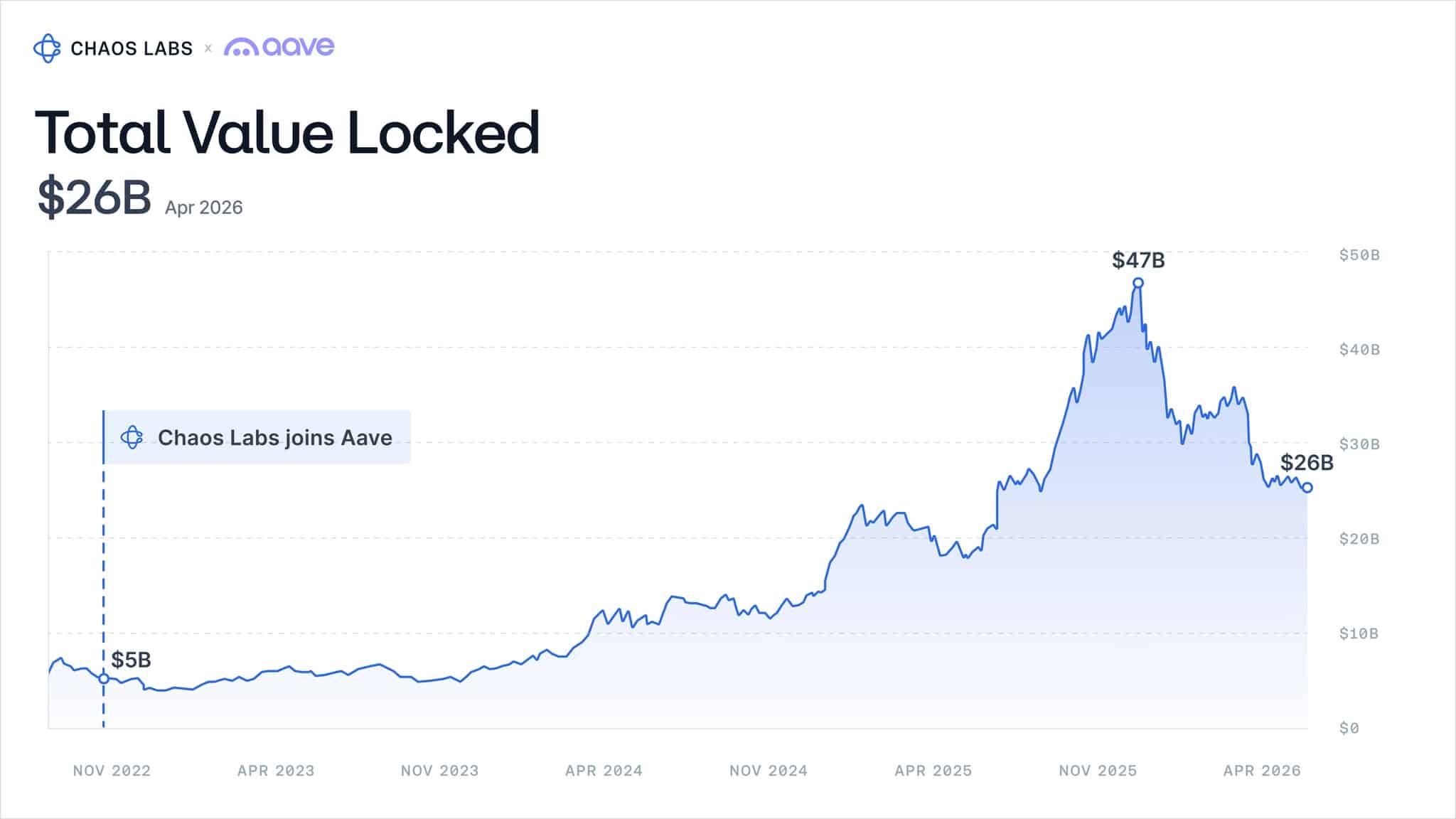
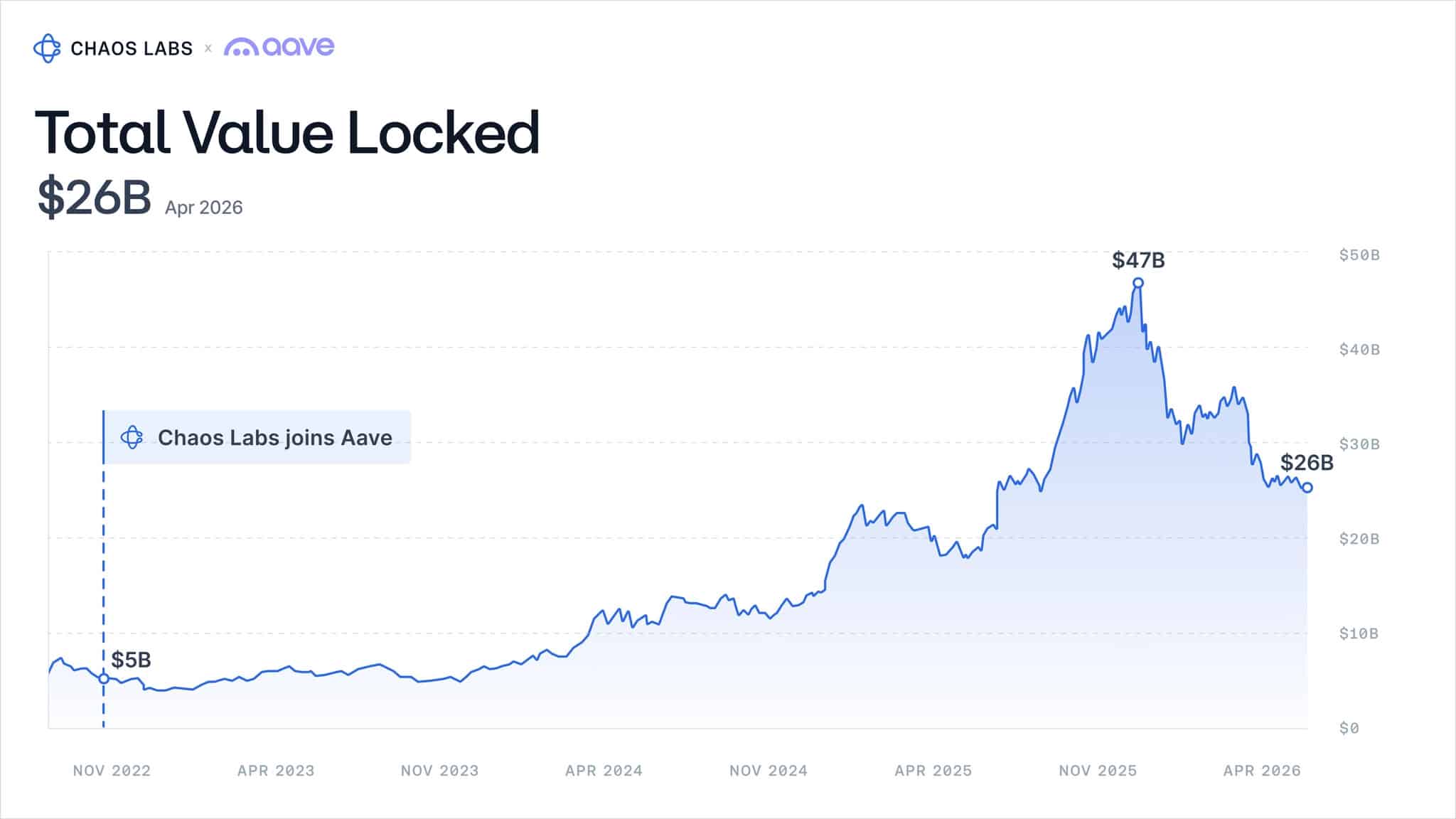
Chaos Labs’ exit signals more than a contributor change; it reflects growing strain in how Aave manages risk as it scales. For three years, Chaos Labs priced every loan while Aave’s TVL expanded from $5.2 billion to over $26 billion, processing $2.5 trillion in deposits and more than $2 billion in liquidations, according to Chaos Labs report.

Source: Governance. Aave.com

Yet, the exit was driven by deeper misalignment on how risk should be handled going forward. As core contributors left, workload and operational risk increased, while Aave V4 introduced greater complexity on an unfamiliar structure.

Stani Kulechov, founder and Aave’s CEO, applauded them in a post stating, “We also want to thank the entire Chaos Labs team for their contributions over the years, as they have helped bring the protocol we built into its current level of maturity.”

Consequently, the engagement remained loss-making despite a proposed $5 million budget. This shift suggests that as protocols grow, maintaining high-quality risk oversight becomes harder, which could affect long-term stability if demand outpaces control.

Aave’s risk continuity now faces its first real test

Aave now enters a critical transition as it absorbs the exit of a key risk contributor, shifting focus from performance to continuity.

With Chaos Labs gone, responsibility shifts to internal teams and providers like LlamaRisk, raising questions about response speed. Stani noted that “LlamaRisk already serves as a risk contributor to the Aave DAO and has deep familiarity with the protocol’s architecture and parameters. We support LlamaRisk increasing their budget to accommodate this additional workload and expanding their team as needed. “

As Aave expands toward V4, risk complexity increases, which places more pressure on coordination.

In the short term, systems remain stable; however, any slowdown in adjustments could allow risks to build gradually. This shift suggests that market confidence may now depend less on past performance and more on how effectively this transition is managed.


Final Summary

  • Aave stability relied on continuous risk updates, but Chaos Labs’ exit raises questions about maintaining the same responsiveness.
  • Aave now enters a transition where slower adjustments could increase risk, shifting focus from past performance to execution.

Пов'язані питання

QWhat was the total value locked (TVL) and loan amount managed by Aave as Q1 2026 ended?

AAave managed about $42.34 billion in TVL and $16.55 billion in loans as Q1 2026 ended.

QWhy did Chaos Labs exit from its role in Aave's risk management?

AChaos Labs' exit was driven by deeper misalignment on how risk should be handled going forward, increased workload and operational risk as core contributors left, and the introduction of greater complexity with Aave V4 on an unfamiliar structure. The engagement also remained loss-making despite a proposed $5 million budget.

QWhat are the potential risks for Aave following Chaos Labs' departure?

AFollowing Chaos Labs' exit, potential risks include slower response speeds in risk adjustments, which could allow risks to build gradually. There is also increased pressure on coordination as Aave expands toward V4, and market confidence may now depend more on how effectively the transition is managed rather than past performance.

QWho is taking over the risk management responsibilities for Aave after Chaos Labs' exit?

AResponsibility shifts to internal teams and providers like LlamaRisk, which already serves as a risk contributor to the Aave DAO and has deep familiarity with the protocol's architecture and parameters.

QHow did Aave's TVL grow during Chaos Labs' three-year contribution?

ADuring Chaos Labs' three-year contribution, Aave's TVL expanded from $5.2 billion to over $26 billion.

Пов'язані матеріали

Bitcoin Boom in Full Swing: Saylor's Latest Statement Fuels Buying Speculation

MicroStrategy's Executive Chairman Michael Saylor has fueled speculation about a new Bitcoin purchase by posting "Bitcoin Drive engaged" on August 2, accompanied by the company's customary purchase tracker. This aligns with his pattern of hinting at treasury changes ahead of weekly reports. The accompanying report showed MicroStrategy's Bitcoin holdings at 843,775 BTC, with an average cost of $75,653 per coin and an unrealized loss of -$10.58B. A similar signal preceded the company's July 27 announcement, strengthening expectations for a treasury update on Monday. However, MicroStrategy's real-time ledger reflects two recent Bitcoin sales totaling 3,588 BTC, reducing holdings from 847,363 BTC to the current 843,775 BTC. The company stated these sales funded preferred stock dividends and replenished its U.S. dollar reserve. Recent reports indicate the company made no Bitcoin purchases the week ending July 26 while increasing its dollar reserve to approximately $3.75B. The company faces financial headwinds after reporting an $8.33B operating loss for Q2 2026, including an $8.32B unrealized loss on its digital assets. Management may sell up to $1.25B more in Bitcoin to meet cash obligations. The expected Monday update will reveal if the "Bitcoin Drive" signal marks a return to accumulation as MicroStrategy balances its massive Bitcoin stash against growing cash commitments.

cryptonews.ru16 хв тому

Bitcoin Boom in Full Swing: Saylor's Latest Statement Fuels Buying Speculation

cryptonews.ru16 хв тому

Торгівля

Спот
活动图片





