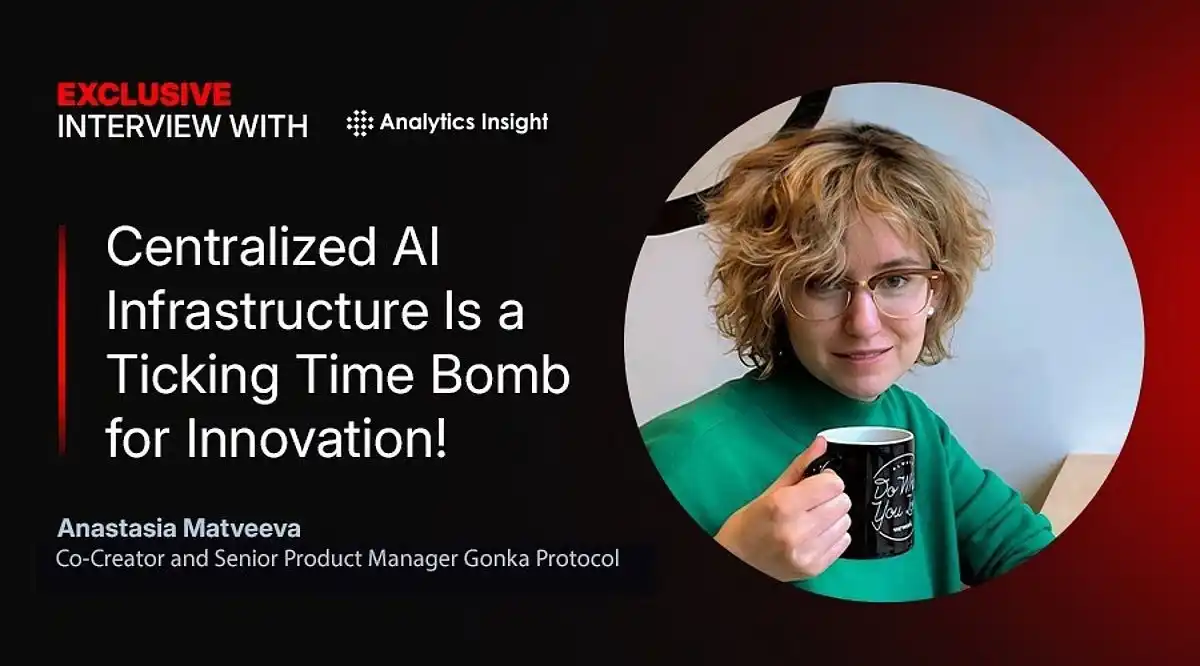
Who Controls Computing Power, Implicitly Controls the Future of AI: Anastasia, Co-founder of Gonka Protocol

marsbitОпубліковано о 2026-03-03Востаннє оновлено о 2026-03-03

Анотація

Who Controls Compute, Controls AI's Future: Gonka Protocol Co-Founder Anastasia The centralization of compute power, not just AI models, is the critical power node in AI's future, argues Anastasia Matveeva, co-founder of Gonka Protocol. While public debate focuses on models, true power lies in the underlying infrastructure—access to GPUs, power, and data center capacity. This centralization creates structural barriers to innovation, enforces a rent-extraction model, and introduces systemic fragility. Gonka is a permissionless global network designed to decentralize AI compute. It enables anyone to contribute or access GPU resources via a programmatic, open API. Key to its efficiency is an architecture that minimizes overhead, ensuring most compute is used for actual AI workloads (primarily inference) rather than network maintenance. Rewards and governance are tied to verified compute contribution, not capital stake. The protocol addresses scalability and accessibility by allowing participants of all sizes to join without permission, with influence proportional to their compute power. It supports the emerging AI agent economy with transparent, dynamic pricing and reliable, verifiable computation. While currently not optimized for strict data sovereignty, its decentralized design avoids data accumulation, and its governance allows for future evolution to meet regulatory demands. The urgency for such decentralized solutions is high to prevent a calcified AI future dominated b...

Core Summary: Training large models requires building or upgrading data centers. However, centralized infrastructure is now facing hard physical limits. To enhance infrastructure capabilities, AI is being used to create greater scale and intelligent output. Yet, control over computing power is becoming a critical power node in the AI industry. At this time, Gonka has emerged. The Gonka protocol is a permissionless global network that anyone can join, with requests routed programmatically among distributed participants. In an exclusive conversation with Analytics Insight, Anastasia Matveeva, Co-founder and Senior Product Manager of Gonka, discussed how they are innovating in the way computing power is accessed to build a more controllable and secure AI ecosystem.

Q: Public discussions about AI often focus on the centralization of models, but there is less attention on the centralization of computing power. Why is control over computing power becoming a critical power node in the AI industry? What risks does this concentration pose to innovation and the overall market?

A: Public discussions often focus on models because they are visible. But the real core of power lies deeper—at the computing power layer, which is the foundational layer that determines who can build, deploy, and scale AI systems.

Control over computing power is becoming critical due to economic and physical reasons. The main bottleneck for modern AI is no longer algorithms, but the ability to access GPUs, electricity, and data center capacity.

Training large models increasingly requires building or upgrading data centers. However, centralized infrastructure is encountering physical limits: energy density, cooling constraints, and the maximum power supply capacity a single location can handle. The industry is attempting extreme solutions—redesigning chips, cooling systems, and exploring new energy sources.

This concentration has systemic consequences.

First, it creates structural barriers to innovation. Access to computing power becomes a matter of infrastructure privilege, not competition based on capability. Small teams, independent researchers, and even entire regions are priced out, experimental space shrinks, and innovation becomes conservative.

Second, the centralization of computing power reinforces a "rent extraction" model. AI has the potential to create "abundance"—intelligence is essentially replicable—but when the underlying infrastructure is scarce and controlled, this abundance is artificially suppressed. The market shifts towards subscription models, lock-in effects, and pricing power, rather than cost reduction and broad accessibility.

Third, it introduces systemic fragility. When advanced computing power is concentrated in the hands of a few operators and locations, disruptions—regulatory, political, or physical—can ripple through the entire AI ecosystem. Dependence becomes structural, not optional.

More importantly, computing power is not neutral. Whoever controls computing power implicitly decides what is feasible, permissible, and economically sustainable. When this control is centralized, AI governance is formed by default, not by design.

The risk is not just monopoly, but a long-term distortion of AI's development trajectory: fewer builders, less application diversity, slower hardware innovation, and infrastructure unable to match the ambitions of next-generation models.

Therefore, computing power must be seen as foundational infrastructure—an architecture that can scale economically and physically, crucial for the future of AI.

Q: Many AI computing platforms—whether centralized or decentralized—claim to be efficient. What metrics truly matter when evaluating the efficiency of an AI computing system? Where do these models typically encounter practical limitations?

A: Computing efficiency is often used as a marketing concept. In reality, only a few specific metrics truly matter, covering user-side performance, provider operational efficiency, and the incentive structures governing both.

For users, efficiency means speed and cost transparency.

Speed refers to latency under real demand. Centralized hubs often have an advantage due to physical co-location. But if the blockchain acts only as a security layer and does not participate in the real-time execution path, decentralized architectures can achieve similar performance. As long as requests are processed off-chain, the protocol itself does not add latency.

Cost transparency is equally critical. While "cost per token" is a common KPI, model integrity often lacks transparency. In centralized environments, the product can be a black box. During peak periods, providers might adjust model configurations to maintain profits; these changes are often invisible but can affect output quality. True efficiency requires pricing to reflect consistent computational accuracy.

For providers, efficiency is a balance between GPU utilization and elasticity.

Centralized operators excel in utilization; GPUs in co-located environments can run near full capacity. But they lack elasticity, bearing idle costs during demand troughs.

Decentralized networks sacrifice some utilization for elasticity but must minimize consensus and verification overhead so that computing power can be reallocated across different workloads as demand changes.

Most critical is incentive design.

When rewards are tied to faster, cheaper, verifiable AI workloads, optimization becomes structural. Participants are incentivized to improve hardware efficiency, reduce latency, and experiment with specialized chips.

Conversely, if rewards or governance weight are primarily tied to capital holdings, the direction of optimization shifts away from infrastructure performance, and inefficiency becomes entrenched.

In Gonka, efficiency is embedded at the protocol layer: almost 100% of computing power is used for real AI workloads (primarily inference). Rewards and governance weight are based on measured computational contributions, not capital holdings.

True efficiency only emerges when the majority of computing power is used for real tasks, incentives reward verified contributions, and internal overhead does not grow uncontrollably with network scale.

Q: Is it possible for decentralized AI computing networks to dedicate most of their computing power to real AI workloads, rather than maintaining the network itself? What are the key architectural choices?

A: It is possible—but only if overhead is treated as a core architectural constraint, not an inevitable byproduct of decentralization.

Most decentralized computing networks use significant resources for maintaining consensus and security, not AI workloads. This is because productive work and security mechanisms are separated, leading to redundant computation.

To dedicate most computing power to real AI tasks, several key principles are needed:

First, security and measurement mechanisms must be "time-bound," not continuously running. Proof mechanisms should be concentrated in clear, short cycles, not constantly consuming resources. In Gonka, this is achieved through Sprints (structured, time-bound cycles). Outside these cycles, hardware resources are available for real AI workloads.

Second, reduce redundancy through selective and reputation-based dynamic adjustment of verification, rather than fully replicating verification for every task. New participants' work might be 100% verified; as reputation is established, the verification ratio can be reduced to about 1%. Overall verification computing power can be kept below about 10% while maintaining security.

Participants attempting to cheat do not receive rewards, making cheating economically irrational.

Third, rewards and governance weight must be tied to verified computational contributions, not capital holdings.

When consensus is lightweight, verification is adaptive, and incentives are aligned with productive computation, decentralized computing can truly serve practical workloads.

Q: Decentralized AI computing networks often emphasize open participation, but infrastructure requirements can create high barriers to entry. How can such systems scale while remaining accessible to participants with vastly different levels of computing power?

A: While decentralized networks aim to lower the barrier to entry for AI infrastructure, long-term survival also requires competing with centralized providers and meeting real-world demands. Hardware constraints ultimately boil down to a core requirement: the ability to host models that have genuine market demand.

To scale while maintaining accessibility, several principles are crucial.

First, permissionless infrastructure access. Any GPU owner—whether a single-device operator or a large data center—should be able to join the network without an approval process or centralized gatekeeping mechanism. This eliminates structural entry barriers.

Second, proportional rewards and influence based on verified computing power. In a model weighted by computing power, higher computational contributions naturally lead to a larger share of tasks, rewards, and governance weight. This does not make small participants completely equal to large ones—nor should it. The key is uniform rules: influence is determined by actual computational contribution, not by capital, delegation mechanisms, or financial leverage.

Third, the role of computing Pools. In systems with real infrastructure requirements, resource aggregation naturally emerges. Computing pools allow smaller participants to consolidate resources, reduce volatility, and participate in larger-scale workloads.

However, the architecture must avoid giving large computing pools structural advantages or incentivizing excessive concentration of influence. Pools should exist as coordination tools, not re-centralization mechanisms.

Ultimately, scaling a decentralized AI computing network should not mean raising the barrier to entry. It should mean increasing overall computing capacity while maintaining neutral, transparent, and consistent participation rules, and preserving the real economic value the network creates for users. Open access, proportional economic mechanisms, and controlled concentration levels determine whether a system remains decentralized as it grows.

Q: Why has the issue of decentralized AI computing become particularly urgent at this moment? If this problem is not solved in the coming years, what do you think the long-term consequences for the industry will be?

A: This urgency reflects AI's transition from an experimental phase to an infrastructure phase.

As mentioned, computing power has become a physical bottleneck. Scalability is increasingly constrained not just by capital, but by energy, power density, and data center limitations. Simultaneously, access to advanced GPUs and hyperscale infrastructure is influenced by long-term contracts, corporate consolidation, and national strategic priorities.

This combination deepens structural asymmetries. Those controlling large-scale infrastructure continue to consolidate their advantages, while entry barriers for small teams and emerging regions keep rising. The risk is not just market concentration, but the widening of a global computing power divide.

If this trend continues, innovation will depend more on infrastructure access than on ideas themselves. The AI market could solidify into a rent-based model where intelligence is accessed under conditions set by a few dominant providers.

Therefore, decentralized computing power is not an ideological debate. It is a response to visible structural constraints—and a choice that will shape the long-term architecture of the AI industry.

Q: AI agents are increasingly autonomously booking GPU resources. How does Gonka's architecture support seamless integration for a self-regulating AI computing economy?

A: The rise of agentized AI means systems are increasingly making autonomous decisions—including acquiring computational resources. In this model, computing power becomes a core asset in economic interactions among agents.

Such an ecosystem requires programmatic access, transparent economic mechanisms, and reliability.

First, integration must be seamless. Gonka provides an OpenAI-compatible API, enabling most AI agents to connect without changing their architecture or workflow.

Second, the computing economy must be transparent and system-driven. Pricing adjusts dynamically based on network load, not fixed by contracts. In the network's early stages, inference costs are designed to be significantly lower than centralized providers because participants are compensated not only through user fees but also through rewards from a Bitcoin-like issuance mechanism proportional to available computing capacity.

This structure allows AI agents operating within budgets to execute workloads efficiently. As the network evolves, pricing parameters will remain subject to community governance.

Third, reliability is reinforced at the protocol level. In centralized environments, reliability comes from certification and service level agreements. In decentralized infrastructure, reliability is supported by open-source code, third-party audits, and on-chain verifiable proofs of computational completion and network performance.

Together, these elements enable AI agents to request computing power and allocate budgets within a transparent framework. In this way, Gonka provides the infrastructural foundation for a self-regulating AI computing economy, allowing agents not only to execute tasks but also to optimize the resources they depend on dynamically.

Q: Regulatory uncertainty around decentralized technology is increasing. How is Gonka proactively addressing data sovereignty and AI governance compliance in a global fragmented market?

A: In the context of decentralized computing, the main challenge is balancing network openness with diverse and evolving jurisdictional requirements.

Gonka is a permissionless global network—anyone can join, and requests are routed programmatically among distributed participants. At this stage, users cannot deterministically control the geographic location where their requests are processed. For use cases with strict data residency or regional processing requirements, this may currently be a limitation.

However, from a privacy perspective, this architecture reduces data centralization. Each request is processed by a randomly selected participant and routed independently, preventing the accumulation of complete user histories. So far, this model has covered most practical use cases while allowing the network to scale.

As the network grows and market demands become clearer, the mechanism allows participants to propose and vote on architectural changes to support specific regulatory requirements. These changes might include: dedicated subnets with additional participation criteria, operational constraints for specific jurisdictions, or hardware-level guarantees for enterprise workloads, such as Trusted Execution Environments (TEEs).

Decentralization does not eliminate compliance obligations. It provides architectural flexibility. Gonka is designed to allow the network to evolve according to regulatory and market demands, rather than being locked into a single compliance model from the outset.


Трендові криптовалюти

Пов'язані питання

QWhy is control over computing power becoming a critical power node in the AI industry, and what risks does this centralization pose to innovation and the market?

AControl over computing power is critical because modern AI's main bottleneck is access to GPUs, electricity, and data center capacity, not algorithms. Centralized infrastructure faces physical limits like energy density and cooling constraints. This centralization creates structural barriers to innovation, consolidates a rent-extraction model, introduces systemic fragility, and risks long-term distortion of AI development by limiting builders, reducing application diversity, and slowing hardware innovation.

QWhat are the truly important metrics for evaluating the efficiency of an AI computing system, and where do these models typically encounter practical limitations?

AKey metrics include user-side performance (speed and cost transparency) and provider-side operational efficiency (GPU utilization and elasticity). Speed refers to latency under real demand, while cost transparency requires consistent computational accuracy. Practical limitations arise in maintaining high utilization without sacrificing elasticity, and ensuring incentives align with verifiable AI workload performance rather than capital holdings.

QHow can decentralized AI computing networks ensure that most computing power is used for real AI workloads rather than network maintenance, and what are the key architectural choices?

ABy treating overhead as a core architectural constraint, not an inevitable byproduct. Key principles include time-bound security and measurement mechanisms (e.g., structured cycles like Sprints), selective and reputation-based verification to reduce duplication, and aligning rewards and governance with verified computational contributions. This allows the majority of resources to be dedicated to actual AI tasks.

QWhy is the issue of decentralized AI computing power particularly urgent now, and what could be the long-term consequences for the industry if not addressed in the coming years?

AThe urgency stems from AI transitioning from experimentation to infrastructure phase, with computing power becoming a physical bottleneck. Without decentralization, structural asymmetries will deepen, innovation will depend more on infrastructure access than ideas, and the AI market may solidify into a rent-based model controlled by a few providers, widening global computing divides and stifling diversity and progress.

QHow does Gonka's architecture support the seamless integration of a self-regulating AI computing economy, especially with AI agents autonomously booking GPU resources?

AGonka offers OpenAI-compatible APIs for seamless integration, transparent and system-driven pricing that adjusts dynamically with network load, and protocol-enforced reliability through open-source code, third-party audits, and on-chain proofs. This allows AI agents to programmatically access computing resources, optimize budgets, and operate within a transparent economic framework, enabling a self-regulating economy.

Пов'язані матеріали

Must-Watch Events Next Week|CLARITY Act Could Face Senate Vote; SpaceX, Circle to Report Earnings (8.3-8.9)

**Summary: Key Events and Developments to Watch (August 3-9)** The upcoming week is marked by significant financial disclosures, key legislative deadlines, and notable product updates. **Major Financial Events:** Several companies are scheduled to release their Q2 2026 earnings. American Bitcoin (ABTC) will report on August 3, followed by SpaceX and Hut 8 Mining Corp. on August 4, and Circle on August 5. Notably, a significant portion of SpaceX shares (up to 12% of total shares) will be unlocked on August 6 following their earnings release. **Key Legislative Deadline:** The U.S. Senate faces an August 7 deadline to secure 60 votes for the CLARITY Act, a bipartisan bill aiming to establish a federal regulatory framework for cryptocurrencies. The Senate may hold a full vote on the bill during the week. **Economic Data:** The U.S. July Non-Farm Payrolls report will be released on August 7, providing crucial labor market data. **Technology & Product Updates:** * **Shutdowns:** DeFi portfolio tracker Zapper and wallet app Ctrl Wallet will cease operations on August 3. * **Upgrades:** LayerZero will deprecate its v1 relayers on August 3. XRP Ledger's new version 3.3.0, featuring five new functions, is expected next week. * **AI:** Elon Musk announced that the advanced Grok 4.6 AI model is set for release around August 7. * **Bitcoin:** The BIP-110 forced signaling for a potential Bitcoin network change is scheduled to begin around August 8. **Other Notable Events:** Chinese robotics firm Unitree Tech has set its preliminary price inquiry for its IPO for August 5. South Korean exchange Upbit will delist AQT and AERGO tokens on August 3.

marsbit49 хв тому

Must-Watch Events Next Week|CLARITY Act Could Face Senate Vote; SpaceX, Circle to Report Earnings (8.3-8.9)

marsbit49 хв тому

Stocks Are Plummeting More Sharply Than Cryptocurrencies. Where Has the Money Gone?

Stock Markets Plunge Deeper Than Cryptocurrencies: Where Did the Money Go? In late July, Seoul's Kospi index triggered circuit breakers for two consecutive days, plummeting over 40% from its June high. The collapse was led by heavyweight stocks like SK Hynix, whose record profits still disappointed investors, and devastating leveraged ETFs, with one major product losing over 83% of its value. This signaled a global, forced deleveraging targeting the most crowded trades. Interestingly, while stocks exhibited extreme volatility akin to crypto markets, Bitcoin rose nearly 15% in July after a prior steep drop. Analysis shows the money fleeing equities did not flow into Bitcoin. Instead, Bitcoin had already absorbed its sell-off in May-June, when U.S. spot Bitcoin ETFs saw historic outflows. The true safe-haven beneficiary was gold, whose price rose over 20% year-on-year, highlighting a decoupling between Bitcoin and gold as "digital gold." The sell-off was a targeted unwinding of leveraged positions in tech and semiconductors, accelerated by broker-dealer risk management and shifts in the AI narrative, including new competition from Chinese memory chipmakers. The retreat path was clear: from high-valuation tech stocks to cash and U.S. Treasuries, then to gold. For Bitcoin to attract sustained institutional inflows, conditions like eased global liquidity pressure, a "soft-landing" Fed rate cut, and U.S. regulatory clarity via legislation like the stalled CLARITY Act are needed. Currently, Bitcoin is not a safe haven but an already-cleared asset. Its low correlation with tech stocks, however, makes it a potential diversification play for institutional portfolios once the storm passes. The money isn't here yet, but the positioning is underway.

marsbit49 хв тому

Stocks Are Plummeting More Sharply Than Cryptocurrencies. Where Has the Money Gone?

marsbit49 хв тому

In Conversation with Ray Dalio: We Are Currently in an AI Bubble, with 1% of My Portfolio in Bitcoin

Ray Dalio, founder of Bridgewater Associates, warns in an interview that the current AI boom shows classic bubble characteristics, which could lead to significant economic downturns as seen in past cycles like 1929 or 2000. He explains that speculative enthusiasm, fueled by debt and overvaluation, often precedes a crash when rising rates or taxation force asset sales, causing widespread losses and recession. Dalio also outlines his "Big Cycle" theory, describing an approximate 80-year pattern where widening wealth gaps, massive government deficits, and shifting geopolitical power (like China's rise) create internal conflict and global instability. He emphasizes that we are in a late-cycle, transitional phase where traditional powers like the US and UK face decline. For personal wealth protection, Dalio advises diversification beyond cash into assets like stocks, bonds, real estate, and particularly gold, which he prefers over Bitcoin. While he holds about 1% of his portfolio in Bitcoin as a non-printable hard asset, he views gold as more secure from technological or governmental threats. Regarding AI's impact, Dalio believes it will disproportionately benefit capital owners, worsening inequality by replacing both physical and cognitive labor. He suggests that human intuition and emotional intelligence, combined with AI, will be key for future workers. On taxation, Dalio argues that wealth taxes are impractical and risk triggering asset sell-offs, reducing productive investment. He points to the UK as a cautionary example of debt, low productivity, and political strife. Geopolitically, Dalio foresees a more regionalized world, with the US showing weakness in prolonged conflicts like with Iran, akin to past imperial declines. The ideal outcome, he suggests, is coexisting powerful blocs (e.g., Americas, China-Asia Pacific) without major war.

marsbit4 год тому

In Conversation with Ray Dalio: We Are Currently in an AI Bubble, with 1% of My Portfolio in Bitcoin

marsbit4 год тому

Daily 7.2 Trillion KRW: Foreign Capital's Record Net Buying on Friday! Wall Street Says Headwinds for Korean Stock Fund Flows Have Subsided

South Korean stock market sees a dramatic shift in fund flows. On July 31, foreign investors made a record net purchase of approximately KRW 7.2 trillion in KOSPI stocks, marking a fundamental reversal from the persistent large-scale net outflows seen in previous months. This contributed to a significant narrowing of foreign net selling in July to KRW 9.8 trillion, down sharply from KRW 48.4 trillion in June and KRW 44.5 trillion in May. Simultaneously, domestic institutional pressure eased. South Korean pension funds and asset managers turned to a net buying position in July, purchasing KRW 1.0 trillion worth of KOSPI shares, contrasting with net sales in May and June. Market volatility is expected to be dampened by new financial regulations. Effective July 31, the Financial Services Commission tightened access for retail investors to single-stock leveraged ETFs by raising the minimum cash deposit requirement. Trading volumes for these products subsequently dropped to about 50% of their monthly average. Citigroup Research maintains its year-end KOSPI target of 10,000 points. The firm cites several supportive factors: the substantial easing of headwinds from capital outflows, a robust fundamental outlook for the semiconductor sector, historically low market valuations, strong economic fundamentals, and the potential for policy support from financial authorities if needed.

marsbit4 год тому

Daily 7.2 Trillion KRW: Foreign Capital's Record Net Buying on Friday! Wall Street Says Headwinds for Korean Stock Fund Flows Have Subsided

marsbit4 год тому

Торгівля

Спот

Популярні статті

Що таке GROK AI

Grok AI: Революція в розмовних технологіях ери Web3 Вступ У швидко змінюваному ландшафті штучного інтелекту Grok AI вирізняється як помітний проєкт, що поєднує сфери передових технологій та взаємодії з користувачами. Розроблений компанією xAI, яку очолює відомий підприємець Ілон Маск, Grok AI прагне переосмислити, як ми взаємодіємо зі штучним інтелектом. Оскільки рух Web3 продовжує процвітати, Grok AI має на меті використати потужність розмовного ШІ для відповіді на складні запитання, надаючи користувачам досвід, який є не лише інформативним, але й розважальним. Що таке Grok AI? Grok AI — це складний розмовний чат-бот, розроблений для динамічної взаємодії з користувачами. На відміну від багатьох традиційних систем ШІ, Grok AI охоплює ширший спектр запитів, включаючи ті, які зазвичай вважаються недоречними або виходять за межі стандартних відповідей. Основні цілі проєкту включають: Надійне міркування: Grok AI акцентує увагу на здоровому глузді, щоб надавати логічні відповіді на основі контекстуального розуміння. Масштабоване управління: Інтеграція допоміжних інструментів забезпечує моніторинг та оптимізацію взаємодій користувачів для покращення якості. Формальна верифікація: Безпека є пріоритетом; Grok AI впроваджує методи формальної верифікації для підвищення надійності своїх результатів. Розуміння довгого контексту: Модель ШІ відзначається здатністю зберігати та згадувати обширну історію розмов, що сприяє змістовним та контекстуально обізнаним дискусіям. Стійкість до атак: Зосереджуючись на покращенні своїх захистів від маніпульованих або зловмисних вхідних даних, Grok AI прагне зберегти цілісність взаємодій з користувачами. По суті, Grok AI — це не просто пристрій для отримання інформації; це занурюючий розмовний партнер, який заохочує динамічний діалог. Творець Grok AI Геній, що стоїть за Grok AI, — це ніхто інший, як Ілон Маск, особа, яка стала синонімом інновацій у різних сферах, включаючи автомобільну промисловість, космічні подорожі та технології. Під егідою xAI, компанії, що зосереджена на розвитку технологій ШІ на користь суспільства, бачення Маска прагне переосмислити розуміння взаємодій з ШІ. Лідерство та основоположна етика глибоко впливають на прагнення Маска розширити технологічні межі. Інвестори Grok AI Хоча конкретні деталі щодо інвесторів, які підтримують Grok AI, залишаються обмеженими, загальновідомо, що xAI, інкубатор проєкту, заснований і підтримується переважно самим Ілоном Маском. Попередні підприємства та активи Маска забезпечують надійну підтримку, що додатково зміцнює довіру до Grok AI та потенціал для зростання. Однак наразі інформація про додаткові інвестиційні фонди або організації, що підтримують Grok AI, не є доступною, що позначає область для потенційного майбутнього дослідження. Як працює Grok AI? Операційна механіка Grok AI є такою ж інноваційною, як і його концептуальна структура. Проєкт інтегрує кілька передових технологій, які сприяють його унікальним функціональним можливостям: Надійна інфраструктура: Grok AI побудований з використанням Kubernetes для оркестрації контейнерів, Rust для продуктивності та безпеки, і JAX для високопродуктивних числових обчислень. Ця трійка забезпечує ефективну роботу чат-бота, його масштабованість та швидке обслуговування користувачів. Доступ до знань у реальному часі: Однією з відмінних рис Grok AI є його здатність отримувати дані в реальному часі через платформу X — раніше відому як Twitter. Ця можливість надає ШІ доступ до останньої інформації, що дозволяє надавати своєчасні відповіді та рекомендації, які можуть бути пропущені іншими моделями ШІ. Два режими взаємодії: Grok AI пропонує користувачам вибір між “Розважальним режимом” та “Звичайним режимом”. Розважальний режим дозволяє більш ігровий та гумористичний стиль взаємодії, тоді як Звичайний режим зосереджується на наданні точних і правильних відповідей. Ця універсальність забезпечує індивідуальний досвід, що відповідає різним уподобанням користувачів. По суті, Grok AI поєднує продуктивність із залученням, створюючи досвід, який є одночасно збагачуючим і розважальним. Хронологія Grok AI Шлях Grok AI відзначений важливими етапами, які відображають його розвиток та етапи впровадження: Початковий розвиток: Фундаментальна фаза Grok AI тривала приблизно два місяці, протягом яких проводилося початкове навчання та налаштування моделі. Випуск бета-версії Grok-2: У значному досягненні була оголошена бета-версія Grok-2. Цей випуск представив дві версії чат-бота — Grok-2 та Grok-2 mini — кожна з яких оснащена можливостями для спілкування, кодування та міркування. Публічний доступ: Після бета-розробки Grok AI став доступним для користувачів платформи X. Ті, хто має акаунти, підтверджені номером телефону та активні принаймні сім днів, можуть отримати доступ до обмеженої версії, що робить технологію доступною для ширшої аудиторії. Ця хронологія відображає систематичний розвиток Grok AI від початку до публічної взаємодії, підкреслюючи його прагнення до постійного вдосконалення та взаємодії з користувачами. Ключові особливості Grok AI Grok AI охоплює кілька ключових особливостей, які сприяють його інноваційній ідентичності: Інтеграція знань у реальному часі: Доступ до актуальної та релевантної інформації відрізняє Grok AI від багатьох статичних моделей, забезпечуючи захоплюючий та точний досвід для користувачів. Універсальні стилі взаємодії: Пропонуючи різні режими взаємодії, Grok AI задовольняє різноманітні уподобання користувачів, запрошуючи до творчості та персоналізації у спілкуванні з ШІ. Передова технологічна основа: Використання Kubernetes, Rust та JAX надає проєкту надійну основу для забезпечення надійності та оптимальної продуктивності. Етичні міркування в дискурсі: Включення функції генерації зображень демонструє інноваційний дух проєкту. Однак це також піднімає етичні питання, пов'язані з авторським правом та поважним зображенням впізнаваних фігур — триваюча дискусія в спільноті ШІ. Висновок Як піонер у сфері розмовного ШІ, Grok AI втілює потенціал трансформаційних користувацьких досвідів в цифрову епоху. Розроблений компанією xAI та керований візією Ілона Маска, Grok AI інтегрує знання в реальному часі з передовими можливостями взаємодії. Він прагне розширити межі того, що може досягти штучний інтелект, зберігаючи при цьому акцент на етичних міркуваннях та безпеці користувачів. Grok AI не лише втілює технологічний прогрес, але й представляє нову парадигму спілкування в ландшафті Web3, обіцяючи залучити користувачів як глибокими знаннями, так і ігровою взаємодією. Оскільки проєкт продовжує розвиватися, він слугує свідченням того, що може досягти перетин технологій, творчості та людської взаємодії.

511 переглядів усьогоОпубліковано 2024.12.26Оновлено 2024.12.26

Що таке GROK AI

Що таке ERC AI

Euruka Tech: Огляд $erc ai та його амбіцій у Web3 Вступ У швидко змінюваному ландшафті технології блокчейн та децентралізованих додатків нові проекти з'являються часто, кожен з унікальними цілями та методологіями. Одним з таких проектів є Euruka Tech, який працює у широкій сфері криптовалют та Web3. Основна увага Euruka Tech, зокрема його токена $erc ai, зосереджена на представленні інноваційних рішень, розроблених для використання зростаючих можливостей децентралізованих технологій. Ця стаття має на меті надати всебічний огляд Euruka Tech, дослідження його цілей, функціональності, ідентичності його творця, потенційних інвесторів та його значення в ширшому контексті Web3. Що таке Euruka Tech, $erc ai? Euruka Tech характеризується як проект, який використовує інструменти та функціональність, що пропонуються середовищем Web3, зосереджуючи увагу на інтеграції штучного інтелекту у своїй діяльності. Хоча конкретні деталі про структуру проекту дещо неясні, він розроблений для покращення залучення користувачів та автоматизації процесів у крипто-просторі. Проект має на меті створити децентралізовану екосистему, яка не лише полегшує транзакції, але й включає прогностичні функції через штучний інтелект, звідси і назва його токена, $erc ai. Мета полягає в тому, щоб надати інтуїтивно зрозумілу платформу, яка сприяє розумнішим взаємодіям та ефективній обробці транзакцій у зростаючій сфері Web3. Хто є творцем Euruka Tech, $erc ai? На даний момент інформація про творця або засновницьку команду Euruka Tech залишається невизначеною та дещо непрозорою. Ця відсутність даних викликає занепокоєння, оскільки знання про бекграунд команди часто є важливим для встановлення довіри в секторі блокчейн. Тому ми класифікували цю інформацію як невідому, поки конкретні деталі не стануть доступними в публічному домені. Хто є інвесторами Euruka Tech, $erc ai? Аналогічно, ідентифікація інвесторів або організацій, які підтримують проект Euruka Tech, не надається через доступні дослідження. Аспект, який є критично важливим для потенційних зацікавлених сторін або користувачів, які розглядають можливість співпраці з Euruka Tech, - це впевненість, що походить від встановлених фінансових партнерств або підтримки від авторитетних інвестиційних компаній. Без розкриття інформації про інвестиційні зв'язки важко зробити всебічні висновки про фінансову безпеку або довговічність проекту. Відповідно до знайденої інформації, цей розділ також має статус невідомий. Як працює Euruka Tech, $erc ai? Незважаючи на відсутність детальних технічних специфікацій для Euruka Tech, важливо враховувати його інноваційні амбіції. Проект прагне використовувати обчислювальну потужність штучного інтелекту для автоматизації та покращення досвіду користувачів у середовищі криптовалют. Інтегруючи ШІ з технологією блокчейн, Euruka Tech має на меті надати такі функції, як автоматизовані угоди, оцінка ризиків та персоналізовані інтерфейси користувачів. Інноваційна суть Euruka Tech полягає в його меті створити безшовний зв'язок між користувачами та величезними можливостями, які пропонують децентралізовані мережі. Завдяки використанню алгоритмів машинного навчання та ШІ, він має на меті мінімізувати труднощі для нових користувачів і спростити транзакційні досвіди в рамках Web3. Ця симбіоз між ШІ та блокчейном підкреслює значення токена $erc ai, який виступає як міст між традиційними інтерфейсами користувачів та розвиненими можливостями децентралізованих технологій. Хронологія Euruka Tech, $erc ai На жаль, через обмежену інформацію про Euruka Tech ми не можемо представити детальну хронологію основних подій або досягнень у подорожі проекту. Ця хронологія, яка зазвичай є безцінною для відстеження еволюції проекту та розуміння його траєкторії зростання, наразі недоступна. Як тільки інформація про значні події, партнерства або функціональні доповнення стане очевидною, оновлення, безумовно, підвищать видимість Euruka Tech у крипто-сфері. Роз'яснення щодо інших проектів “Eureka” Варто зазначити, що кілька проектів та компаній мають схожу назву з “Eureka”. Дослідження виявило ініціативи, такі як AI-агент від NVIDIA Research, який зосереджується на навчанні роботів складним завданням за допомогою генеративних методів, а також Eureka Labs та Eureka AI, які покращують користувацький досвід в освіті та аналітиці обслуговування клієнтів відповідно. Однак ці проекти відрізняються від Euruka Tech і не повинні бути змішані з його цілями чи функціональністю. Висновок Euruka Tech, разом із його токеном $erc ai, представляє обіцяючого, але наразі невідомого гравця в ландшафті Web3. Хоча деталі про його творця та інвесторів залишаються невідомими, основна амбіція поєднання штучного інтелекту з технологією блокчейн є центром інтересу. Унікальні підходи проекту до сприяння залученню користувачів через передову автоматизацію можуть виділити його на фоні прогресу екосистеми Web3. Оскільки крипто-ринок продовжує еволюціонувати, зацікавлені сторони повинні уважно стежити за новинами, пов'язаними з Euruka Tech, оскільки розвиток задокументованих інновацій, партнерств або визначеного дорожньої карти може представити значні можливості в найближчому майбутньому. На даний момент ми чекаємо на більш суттєві інсайти, які можуть розкрити потенціал Euruka Tech та його позицію в конкурентному крипто-ландшафті.

484 переглядів усьогоОпубліковано 2025.01.02Оновлено 2025.01.02

Що таке ERC AI

Що таке DUOLINGO AI

DUOLINGO AI: Інтеграція вивчення мов з Web3 та інноваціями штучного інтелекту В епоху, коли технології змінюють освіту, інтеграція штучного інтелекту (ШІ) та блокчейн-мереж відкриває нові горизонти для вивчення мов. З'являється DUOLINGO AI та його асоційована криптовалюта, $DUOLINGO AI. Цей проект прагне об'єднати освітні можливості провідних платформ для вивчення мов з перевагами децентралізованих технологій Web3. У цій статті розглядаються ключові аспекти DUOLINGO AI, його цілі, технологічна структура, історичний розвиток та майбутній потенціал, зберігаючи чіткість між оригінальним освітнім ресурсом та цією незалежною криптовалютною ініціативою. Огляд DUOLINGO AI В основі DUOLINGO AI лежить прагнення створити децентралізоване середовище, де учні можуть отримувати криптографічні винагороди за досягнення освітніх етапів у мовній компетенції. Застосовуючи смарт-контракти, проект має на меті автоматизувати процеси перевірки навичок та розподілу токенів, дотримуючись принципів Web3, які підкреслюють прозорість та власність користувачів. Модель відрізняється від традиційних підходів до вивчення мов, акцентуючи увагу на структурі управління, що базується на спільноті, що дозволяє власникам токенів пропонувати поліпшення змісту курсів та розподілу винагород. Деякі з помітних цілей DUOLINGO AI включають: Гейміфіковане навчання: Проект інтегрує досягнення на блокчейні та невзаємозамінні токени (NFT), щоб представляти рівні мовної компетенції, сприяючи мотивації через захоплюючі цифрові винагороди. Децентралізоване створення контенту: Це відкриває можливості для викладачів та мовних ентузіастів вносити свої курси, сприяючи моделі розподілу доходів, яка вигідна всім учасникам. Персоналізація на основі ШІ: Використовуючи сучасні моделі машинного навчання, DUOLINGO AI персоналізує уроки, щоб адаптуватися до індивідуального прогресу навчання, подібно до адаптивних функцій, що є в усталених платформах. Творці проекту та управління Станом на квітень 2025 року команда, що стоїть за $DUOLINGO AI, залишається псевдонімною, що є поширеною практикою в децентралізованому криптовалютному середовищі. Ця анонімність має на меті сприяти колективному розвитку та залученню зацікавлених сторін, а не зосереджуватися на окремих розробниках. Смарт-контракт, розгорнутий на блокчейні Solana, зазначає адресу гаманця розробника, що свідчить про зобов'язання до прозорості щодо транзакцій, незважаючи на те, що особи творців залишаються невідомими. Згідно з його дорожньою картою, DUOLINGO AI прагне перетворитися на Децентралізовану Автономну Організацію (DAO). Ця структура управління дозволяє власникам токенів голосувати з важливих питань, таких як реалізація функцій та розподіл скарбниці. Ця модель узгоджується з етикою розширення прав і можливостей спільноти, що спостерігається в різних децентралізованих додатках, підкреслюючи важливість колективного прийняття рішень. Інвестори та стратегічні партнерства На даний момент немає публічно відомих інституційних інвесторів або венчурних капіталістів, пов'язаних з $DUOLINGO AI. Натомість ліквідність проекту в основному походить з децентралізованих бірж (DEX), що є різким контрастом до стратегій фінансування традиційних компаній у сфері освітніх технологій. Ця модель знизу вгору вказує на підхід, орієнтований на спільноту, що відображає зобов'язання проекту до децентралізації. У своєму білому документі DUOLINGO AI згадує про формування співпраці з неуточненими “блокчейн-освітніми платформами”, спрямованими на збагачення своїх курсів. Хоча конкретні партнерства ще не були розкриті, ці спільні зусилля натякають на стратегію поєднання інновацій блокчейну з освітніми ініціативами, розширюючи доступ та залучення користувачів у різноманітні навчальні напрямки. Технологічна архітектура Інтеграція ШІ DUOLINGO AI включає два основні компоненти на основі ШІ для покращення своїх освітніх пропозицій: Адаптивний навчальний двигун: Цей складний двигун навчається на основі взаємодій користувачів, подібно до власних моделей великих освітніх платформ. Він динамічно регулює складність уроків, щоб вирішувати конкретні проблеми учнів, зміцнюючи слабкі місця через цілеспрямовані вправи. Розмовні агенти: Використовуючи чат-боти на базі GPT-4, DUOLINGO AI надає платформу для користувачів, щоб брати участь у симульованих розмовах, сприяючи більш інтерактивному та практичному досвіду вивчення мови. Інфраструктура блокчейну Побудований на блокчейні Solana, $DUOLINGO AI використовує комплексну технологічну структуру, яка включає: Смарт-контракти для перевірки навичок: Ця функція автоматично нагороджує токенами користувачів, які успішно проходять тести на компетентність, підкріплюючи структуру стимулів для справжніх навчальних результатів. NFT значки: Ці цифрові токени позначають різні етапи, яких досягають учні, такі як завершення розділу курсу або оволодіння конкретними навичками, що дозволяє їм обмінюватися або демонструвати свої досягнення в цифровому форматі. Управління DAO: Члени спільноти, наділені токенами, можуть брати участь в управлінні, голосуючи за ключові пропозиції, що сприяє культурі участі, яка заохочує інновації в курсах та функціях платформи. Історичний хронологічний графік 2022–2023: Концептуалізація Основи DUOLINGO AI закладаються з створення білого документа, що підкреслює синергію між досягненнями ШІ у вивченні мов та децентралізованим потенціалом блокчейн-технологій. 2024: Бета-реліз Обмежений бета-реліз представляє пропозиції з популярних мов, винагороджуючи ранніх користувачів токенами в рамках стратегії залучення спільноти проекту. 2025: Перехід до DAO У квітні відбувається повний запуск основної мережі з обігом токенів, що спонукає обговорення в спільноті щодо можливих розширень на азійські мови та інші розробки курсів. Виклики та майбутні напрямки Технічні труднощі Незважаючи на свої амбітні цілі, DUOLINGO AI стикається з суттєвими викликами. Масштабованість залишається постійною проблемою, особливо в балансуванні витрат, пов'язаних із обробкою ШІ, та підтриманням чутливої, децентралізованої мережі. Крім того, забезпечення якості створення контенту та модерації в умовах децентралізованої пропозиції створює складнощі у підтримці освітніх стандартів. Стратегічні можливості Дивлячись у майбутнє, DUOLINGO AI має потенціал використовувати партнерства з мікрокреденційними академічними установами, надаючи блокчейн-верифіковані підтвердження мовних навичок. Крім того, розширення через різні блокчейни може дозволити проекту залучити ширші бази користувачів та додаткові екосистеми блокчейну, покращуючи його взаємодію та охоплення. Висновок DUOLINGO AI представляє інноваційне злиття штучного інтелекту та блокчейн-технологій, пропонуючи альтернативу, орієнтовану на спільноту, традиційним системам вивчення мов. Хоча його псевдонімна розробка та нова економічна модель несуть певні ризики, зобов'язання проекту до гейміфікованого навчання, персоналізованої освіти та децентралізованого управління освітлює шлях вперед для освітніх технологій у сфері Web3. Оскільки ШІ продовжує розвиватися, а екосистема блокчейну еволюціонує, ініціативи на кшталт DUOLINGO AI можуть переосмислити, як користувачі взаємодіють з мовною освітою, наділяючи спільноти та винагороджуючи залучення через інноваційні механізми навчання.

521 переглядів усьогоОпубліковано 2025.04.11Оновлено 2025.04.11

Що таке DUOLINGO AI

Обговорення

Ласкаво просимо до спільноти HTX. Тут ви можете бути в курсі останніх подій розвитку платформи та отримати доступ до професійної ринкової інформації. Нижче представлені думки користувачів щодо ціни AI (AI).

活动图片












