While Playing Every Day, I See These Innovations and Changes in Prediction Markets

Odaily星球日报Опубліковано о 2026-02-10Востаннє оновлено о 2026-02-10

Анотація

The article, titled "While Playing Daily, I See These Innovations and Changes in Prediction Markets," explores emerging trends in prediction markets beyond the dominant player, Polymarket. While Polymarket is noted for its strong liquidity and anticipated token airdrop, the author highlights that newer platforms are introducing features that offer clearer airdrop strategies through point systems, unlike Polymarket's current "blind farming" approach. Key innovations identified include: 1. **Earning on Position Holdings**: Platforms like predict.fun integrate with DeFi protocols (e.g., Venus Protocol) to allow users' locked funds to generate yield (3-5% APY) while waiting for event resolutions, turning idle capital into productive assets. 2. **Swipe-Based, Social-Feed Interface**: Some platforms adopt TikTok or Instagram-style swipe interactions (vertical or horizontal) to make browsing and participating in prediction markets more engaging and content-driven, aiming to transform them from low-frequency trading tools into high-frequency content consumption products. 3. **Community-Centric Event Markets**: Instead of replicating generic events, platforms like predict.fun are designing markets around crypto-native topics (e.g., Binance SAFU fund changes, CZ's tweet counts), enhancing community engagement and creating niche, culturally relevant content that fosters discussion and participation, particularly within Asian crypto communities. The article suggests that these innov...

Original | Odaily Planet Daily (@OdailyChina)

Author | Asher (@Asher_ 0210)

"Polymarket has such good liquidity. Besides farming points for potential token airdrops, why would I use other prediction market platforms?" This is a question I kept pondering while recently experiencing various prediction markets.

Indeed, the recent trademark application for "POLY" submitted by Blockratize, the parent company of Polymarket, during its token issuance plan, coupled with previous clear indications from Polymarket executives about plans to launch a native token and conduct an airdrop, has led to widespread market expectations that farming on Polymarket might be the next "big opportunity." However, unlike other emerging prediction markets, Polymarket currently lacks a clear points or task-based incentive system, making it difficult for users to dynamically adjust their "farming" strategies based on incentive feedback. To some extent, it remains in the hard mode of 'blind farming'.

In contrast, most of these emerging prediction market platforms have introduced points mechanisms, allowing users to have a clearer "path to an airdrop strategy" while participating in platform trading. Although many of these prediction market platforms are still in their early stages, often have bugs, and frequently draw criticism from community members, during the actual experience, one can indeed discover some differentiated highlights that are "distinct from Polymarket."

Below, I will introduce several highlights summarized from recent experiences with different prediction market platforms.

Highlight One: Position Funds No Longer "Lie Idle"; Prediction Positions Can Also Generate Continuous Returns

In traditional prediction markets (like Polymarket, Kalshi), after users buy YES/NO positions, the funds are typically locked until the event is settled. During this period, these funds cannot be used for other strategies nor generate any returns; they are essentially "idle funds" with significant opportunity cost.

predict.fun attempts to change this. The platform connects the collateral funds users employ for predictions to low-risk yield-generating strategies within the BNB Chain ecosystem, allowing positions to automatically generate stablecoin returns while held. According to an official announcement on January 8, 2026, predict.fun has partnered with Venus Protocol. Users' locked USDT collateral assets are automatically deposited into Venus's money markets to generate yield, thus continuously producing additional returns while waiting for the event outcome.

This means users' funds continue to "work" on-chain during the holding period, with common stablecoin annualized returns roughly in the 3%–5% range (depending on the underlying DeFi strategy and market conditions). More importantly, these returns are independent of the prediction outcome—regardless of whether the prediction ultimately succeeds or fails, the yield generated during the holding period can be claimed separately, adding an additional layer of passive income on top of the prediction profit or loss.

From a product mechanism perspective, this design transforms "dead money" in traditional prediction markets into "live money," making it one of predict.fun's most distinctive differentiating features currently. The platform has already opened the position yield claim function, allowing users to claim accumulated holding returns at a fixed time every Tuesday, giving long-term holdings a clearer compound return logic from a strategic perspective.
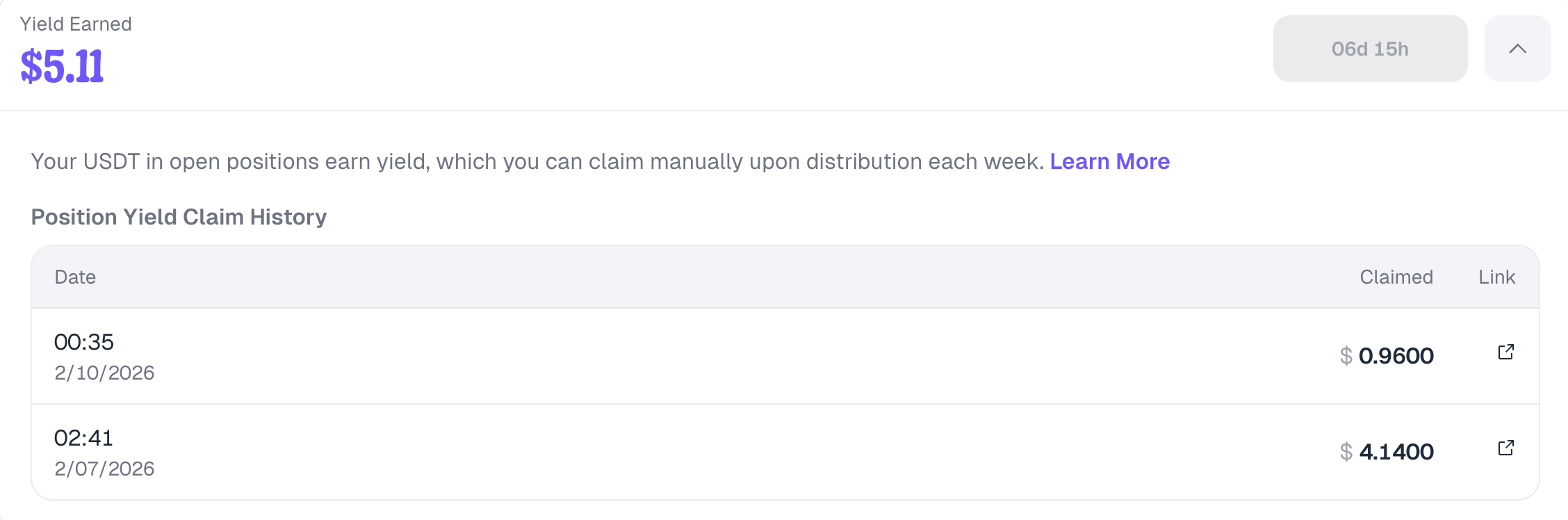
predict.fun Position Yield Claim Screenshot

Highlight Two: Short-Video Style Swiping Experience, Bringing Prediction Markets Closer to "Content Consumption Products"

Unlike the trading-terminal-like interface of traditional prediction markets, some emerging prediction market platforms are noticeably shifting their interaction design towards content platforms, attempting to lower the participation barrier and increase user dwell time. For example, on predict.fun's mobile interface, one screen corresponds to one prediction event. Users can quickly browse different markets by swiping up and down, an overall experience more akin to the information feed mode of short-video platforms. This design eliminates the need for users to actively search for events; instead, they naturally discover prediction topics of interest while continuously "scrolling through markets," significantly improving browsing efficiency and participation frequency.

Similarly, Probable employs a left-right swiping interaction, making the prediction experience closer to the information matching logic of social products. From a product perspective, the core of such designs is not merely UI optimization but an attempt to transform prediction markets from "low-frequency trading tools" into "high-frequency content consumption entry points."
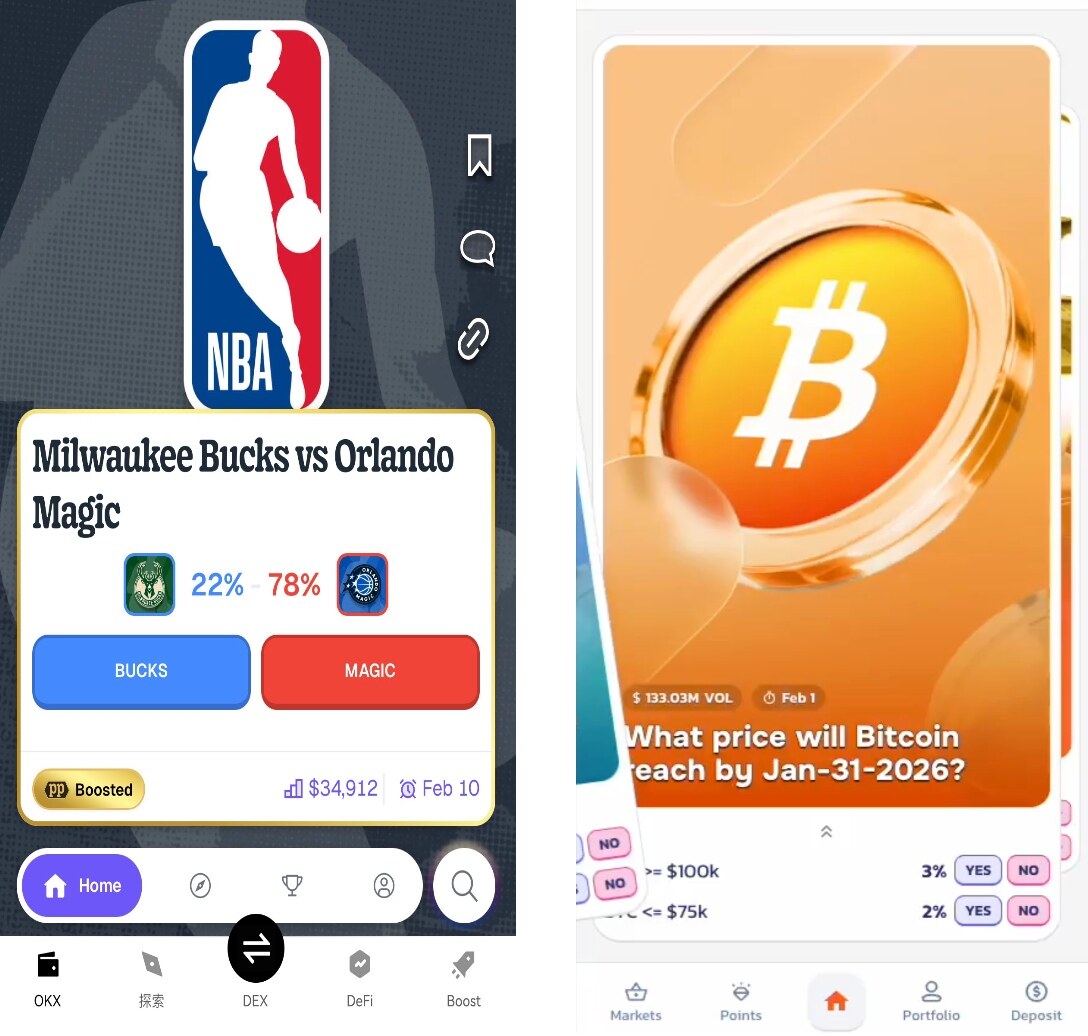
Schematic Diagram of Mobile Interaction Methods for Two Prediction Market Platforms (Left: predict.fun; Right: Probable)

predict.fun founder Dingaling also mentioned in a Space that he hopes to build prediction markets into a usage scenario similar to short-video apps—where users can place bets while browsing hot events and fun topics in their daily routine, further enhancing community engagement and user stickiness through features like comments and interactions.

From an experiential standpoint, this information flow-style interaction is itself a highly attractive product innovation. Compared to the traditional method of actively searching for markets, swiping to browse allows users to continuously "scroll through markets" in fragmented time, naturally generating participation behaviors while consuming content, making the prediction market experience more lightweight and fluid.

Highlight Three: "Exclusive Event Markets" Centered on Community Hotspots, Strengthening Localized Sense of Participation

Beyond product mechanisms and interaction experiences, some emerging prediction market platforms are also beginning to experiment with differentiated approaches in market content design. That is, instead of simply replicating generic events available on Polymarket or Kalshi, they are launching more niche "exclusive event markets"围绕 (centered around) topics with high attention within the crypto community. For example, prediction events on predict.fun related to Binance and community hotspots, such as "Changes in Bitcoin Balance of Binance SAFU Fund Wallet on March 1st" and "Number of CZ's Tweets Between February 7 and 14, 2026," are topics closer to the daily discussions of crypto users.
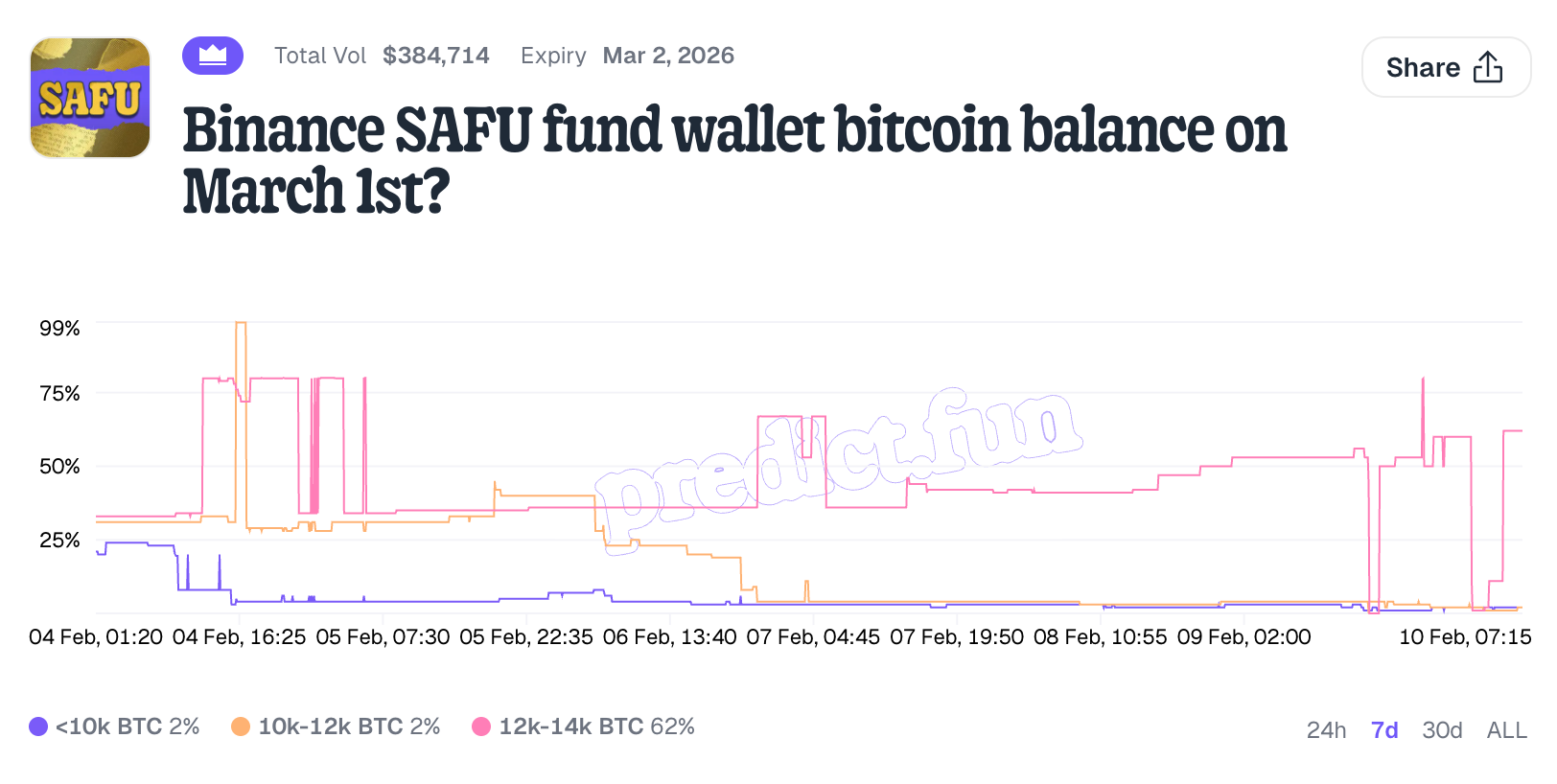
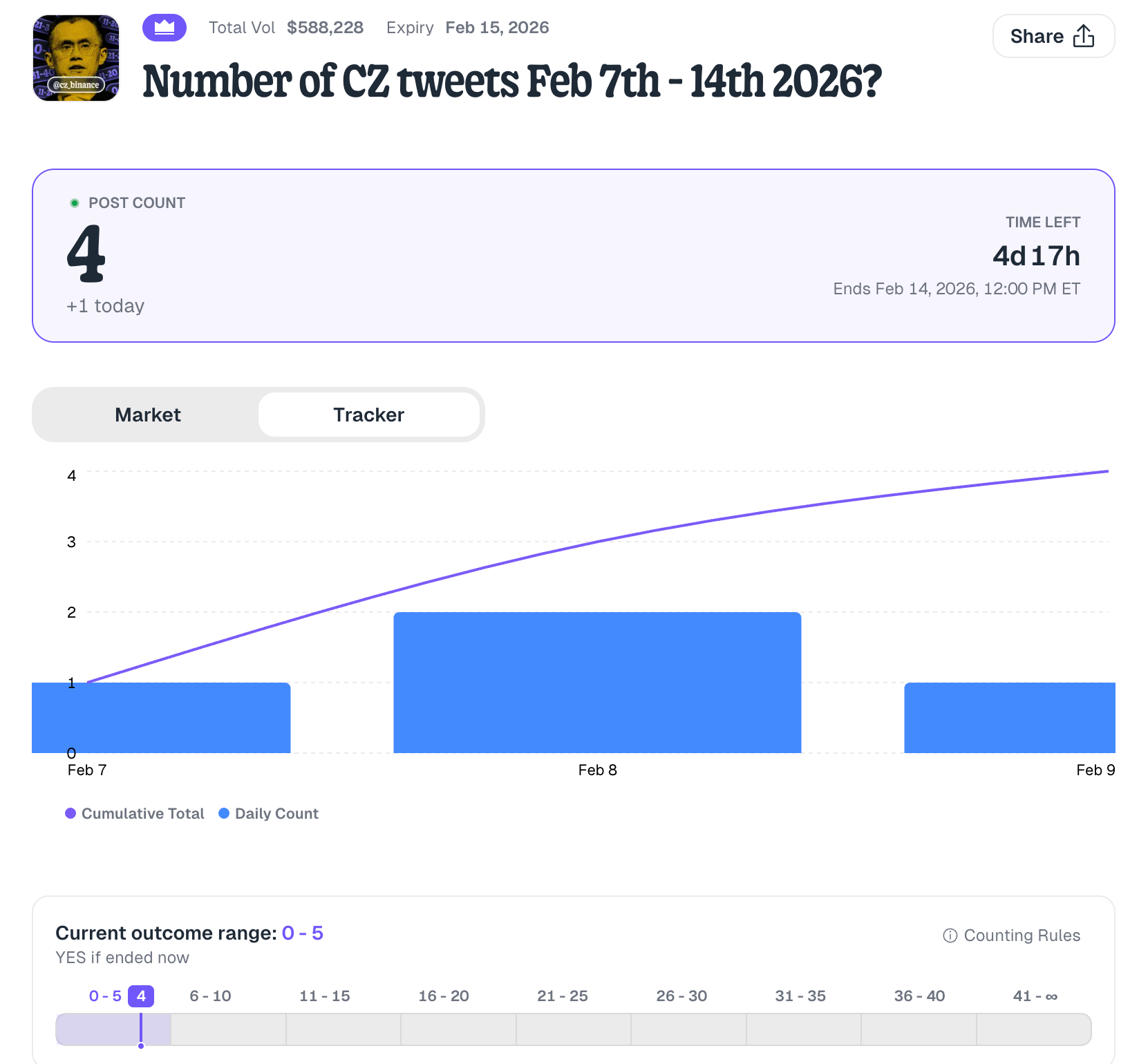
predict.fun Launches Exclusive Prediction Events

Compared to traditional macro events or generic political/sports markets, these community-centric prediction events are more likely to stimulate user discussion and dissemination, and更容易 (more easily) generate participation heat within specific user groups. From a platform operation perspective, the continuous launch of exclusive events essentially builds a content supply with platform characteristics, making the prediction market not just a "trading venue" but也逐渐 (gradually becoming) a gathering place for community hotspot sentiment and narratives.

From the aforementioned events, it's evident that predict.fun is consciously pursuing differentiation at the "event supply" level, rather than simply replicating markets already present on Polymarket or Kalshi. Designing prediction events around CZ, the Binance ecosystem, and community discussion hotspots makes it easier for the platform to achieve virality and participation within specific user groups. This content strategy is also becoming an important operational direction for some emerging prediction markets.

It is worth noting that a significant portion of the currently highly active emerging prediction markets originate from the BNB Chain ecosystem, and their user base is noticeably skewed towards the Asian community. In this context, community culture, subculture, and even participation behaviors with more "fan circle" characteristics are gradually becoming important factors influencing prediction market event design and dissemination. Against this backdrop, for emerging prediction market platforms, the Asian community culture formed around differentiated event design and the more "fan circle"-like participation behaviors are becoming a direction worthy of focused study. The related impacts will be further discussed in subsequent articles.

Related Content

The Underestimated Advantage of Prediction Markets: Counter-Cyclical, Anti-Volatility, Always Something to Play

Prediction Market Activity Hits Record High, Major Events Worth Noting in Top Projects Are All Here

Hot Sector, New Interaction Opportunities: Three Prediction Markets Favored by YZi Labs

Step-by-Step Guide to Participating in predict.fun, Backed by CZ

Пов'язані питання

QWhat is the main advantage of predict.fun over traditional prediction markets like Polymarket regarding locked funds?

APredict.fun allows users' locked collateral funds to earn yield through low-risk interest-bearing strategies on BNB Chain (e.g., via Venus Protocol), providing an additional 3%-5% APY during the prediction period, unlike traditional markets where funds remain idle.

QHow does predict.fun's mobile interface differ from traditional prediction market platforms in terms of user experience?

APredict.fun uses a vertical swiping interface similar to short-video platforms, allowing users to browse events quickly in a content-consumption style, making it more engaging and reducing participation barriers compared to traditional transaction-oriented interfaces.

QWhat type of exclusive event markets does predict.fun focus on to differentiate itself?

APredict.fun creates events around crypto community hotspots, such as Binance-related topics (e.g., changes in Binance SAFU fund BTC balance or CZ's tweet counts), which resonate more with Asian crypto users and enhance community engagement.

QWhy are some emerging prediction markets introducing point or task incentive mechanisms?

AThey provide users with a clearer 'airdrop strategy path' by offering feedback through积分 (points) or tasks, unlike Polymarket's current 'blind farming' mode without explicit incentives, helping users adjust their participation strategies dynamically.

QWhat collaboration did predict.fun announce on January 8, 2026, to enhance user earnings?

APredict.fun partnered with Venus Protocol to automatically deposit users' locked USDT collateral into Venus' money market, generating stablecoin yield during the prediction holding period.

Пов'язані матеріали

From South Korea to the United States: Blue-Collar Jobs Are Becoming Increasingly Popular, Thanks to AI

AI is reshaping the labor market's value proposition. The traditional four-year college degree is losing its appeal as a guaranteed career path, while skilled blue-collar trades like electricians, welders, and plumbers are experiencing historic demand and wage premiums. This shift is driven by dual pressures: AI's displacement of certain white-collar roles and a booming need for physical infrastructure and data center construction. Data confirms the trend. In the U.S., vocational school revenue surged, and a significant portion of recent layoffs are AI-related. Surveys show a majority of Gen Z adults plan to pursue blue-collar work, citing better job security against AI automation. Vocational education interest has exploded recently. Experts cite a psychological shift as younger generations seek tangible, AI-resistant careers and avoid high student debt. In many cases, salaries for skilled trades now match or exceed those requiring a bachelor's degree. In South Korea, semiconductor vocational high schools boast near-total employment, with graduates securing high-paying roles at companies like Samsung. The shortage is structural, exacerbated by a retiring baby boomer workforce and massive infrastructure projects. Companies like JPMorgan Chase, Meta, and Lowe's are investing heavily in training programs. However, overcoming historical stigma and a "perception gap" around trade careers remains a key challenge to closing the talent gap.

marsbit26 хв тому

From South Korea to the United States: Blue-Collar Jobs Are Becoming Increasingly Popular, Thanks to AI

marsbit26 хв тому

Qualcomm: AI Hype Subsides, When Will Smartphones Emerge from the Gloom?

Qualcomm reported its Q3 FY2026 results (ending June 2026), with revenue of $9.95B, down 4% YoY but above expectations. Gross margin declined to 53.1%, pressured by rising costs across manufacturing and memory. Key business segments showed mixed performance: Handset revenue fell 19.6% YoY to $5.09B, dragged by an 11% decline in non-Apple Android shipments and weaker high-end mix. Conversely, Automotive revenue surged 61% to $1.59B, and IoT grew 9% to $1.83B. Core operating profit dropped 41% YoY due to margin compression and higher expenses. Management's Q4 FY2026 guidance projects revenue of $9.7B-$10.5B, in line with consensus, but Non-GAAP EPS guidance of $2.05-$2.25 fell short of expectations. Amidst persistent weakness in its core handset market, Qualcomm is pursuing growth in AI, focusing on Edge AI (smartphones, PCs, automotive) and Data Center AI. Its data center strategy includes four pillars: AI accelerators (e.g., AI200), commercial CPUs (Dragonfly C1000), custom silicon, and connectivity solutions. While these initiatives initially boosted its stock, concerns over AI capital expenditure sustainability have since erased those gains. The company targets $5B in data center revenue for FY2027 and $15B for FY2029. The report concludes that with the traditional handset business still under pressure, the data center opportunity is currently viewed as a longer-term option, and a more conservative valuation based on core operations may be warranted until AI contributions materialize.

marsbit30 хв тому

Qualcomm: AI Hype Subsides, When Will Smartphones Emerge from the Gloom?

marsbit30 хв тому

From TPU to Self-Evolving Agents: How Jeff Dean Predicts the Next Step in AI

At the 2026 YC Startup School, Jeff Dean outlined his vision for AI's next phase, shifting focus from simply scaling models to building intelligent, autonomous systems. He believes AI's progress is no longer just about creating smarter models, but about integrating them into systems capable of long-term, iterative work, automated experimentation, and continuous learning. This evolution moves the competition from "who has the bigger model" to "who can best organize intelligence." Dean suggests AI capabilities are now comparable to a junior engineer, enabling the automation of complex workflows. However, the true challenge and opportunity lie in managing these AI "workers" at scale. He emphasizes the importance of **context engineering**—structuring tools, memory, and feedback loops—over raw model power. For startups, this means building deep expertise in niche domains where general models currently fail (near 0-1% success rates), leveraging proprietary data, specialized tools, and domain-specific evaluators. A recurring theme is re-examining fundamental constraints. Dean's past work, like moving Google's search index to memory or creating the TPU, stemmed from questioning outdated assumptions about hardware and cost. He sees similar inflection points today, particularly in **specialized inference hardware** to drastically reduce latency and energy consumption for real-time Agent operation. Notably, he points out that in modern AI systems, the dominant cost is often not computation but **data movement**. Reliable, long-running Agents require robust system design, borrowing concepts from distributed computing like checkpointing, state management, and parallel exploration to handle failures and maintain progress over days or weeks. As AI automates execution, the scarcest human skills will shift to **defining clear specifications**, **judging what problems are worth solving** (taste), and designing effective feedback loops. Ultimately, Dean's framework prioritizes understanding the problem deeply, identifying the true bottlenecks, and systematically building closed-loop systems where AI can not only perform tasks but also improve AI itself.

marsbit31 хв тому

From TPU to Self-Evolving Agents: How Jeff Dean Predicts the Next Step in AI

marsbit31 хв тому

Торгівля

Спот
活动图片





