When Silver Became a Meme Stock, Retail Investors Ultimately Caught the Falling Knife

marsbitОпубліковано о 2026-02-05Востаннє оновлено о 2026-02-05

Анотація

The article details the dramatic rise and crash of silver prices in early 2026, which saw a 40% plunge in three days after retail investors, inspired by the GameStop phenomenon, poured a record $1 billion into silver ETFs. The crash was triggered not by a change in Fed leadership, as initially reported, but by the CME raising margin requirements by 50%, forcing over-leveraged retail traders into a cascade of automatic liquidations. While散户 suffered significant losses, institutional players like JPMorgan capitalized on the chaos. They accessed emergency Fed liquidity unavailable to retail, executed profitable arbitrage on the discounted SLV ETF, and strategically bought physical silver at the bottom. The piece concludes that the event highlights the structural advantages institutions hold in an asymmetric market, where散户, attempting to challenge Wall Street, ultimately became the victims of a "mass grave" they helped create.

Author: Xu Chao, Wall Street News

"I lost an entire year's after-tax salary today."
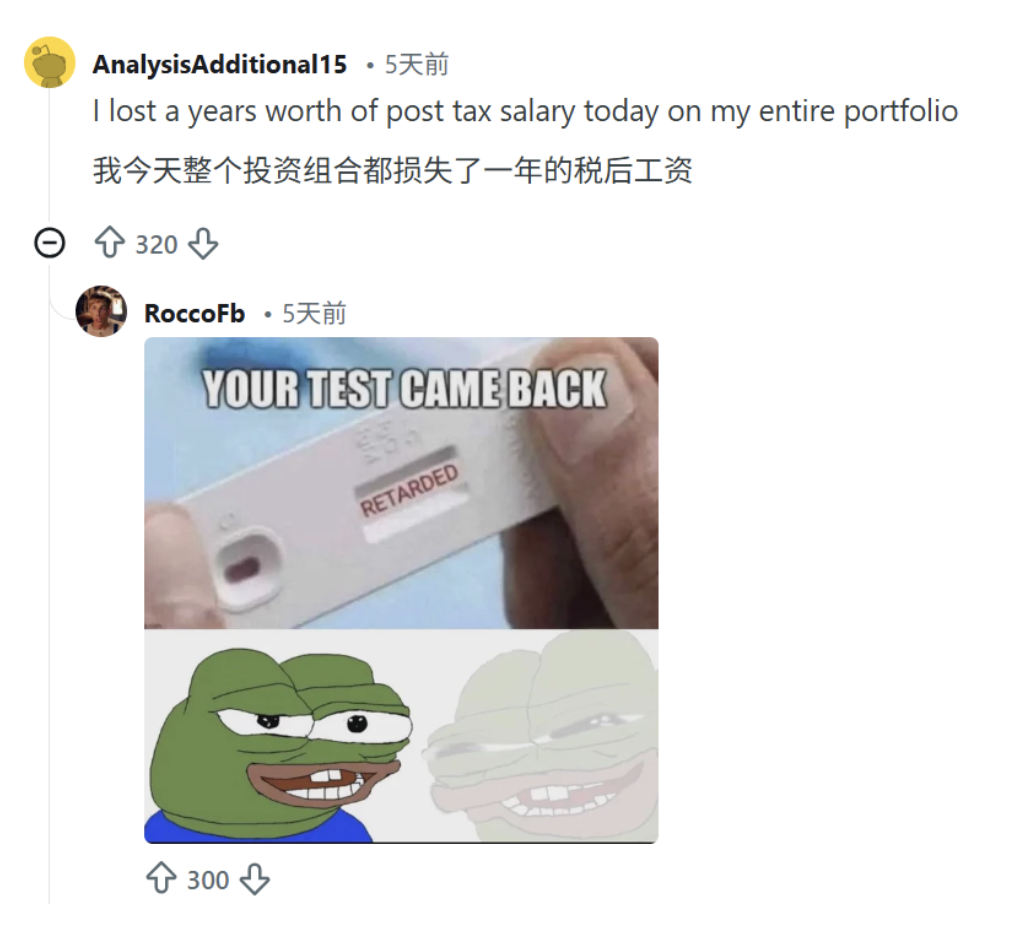
This was the desperate cry left by a Reddit user on the forum last Friday.

Just a few days ago, silver was seen as the "GameStop of 2026," a symbol of retail investors banding together to fight against Wall Street. Reddit forums were flooded with "Diamond Hands" memes, vowing to send silver to the moon.
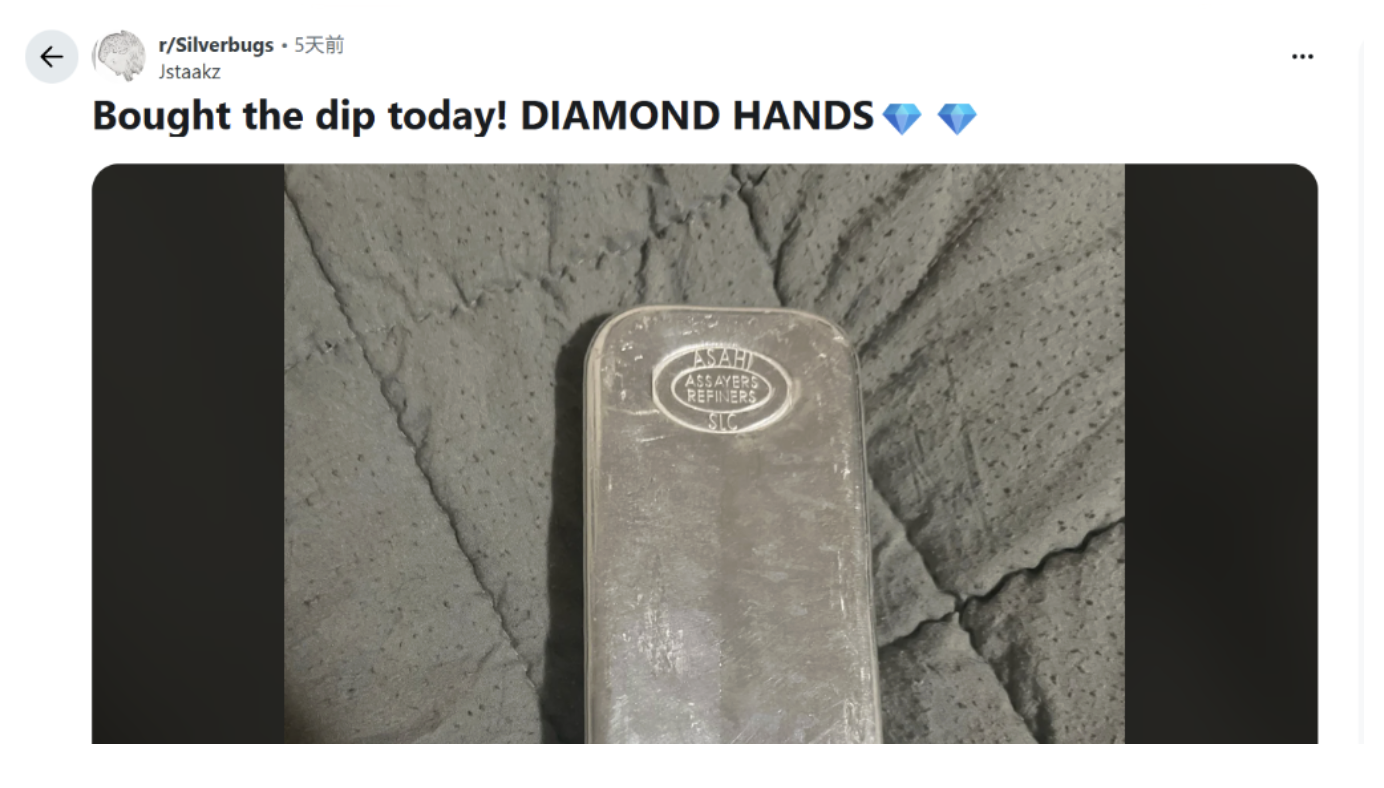
However, the狂欢 (carnival/euphoria) came to an abrupt halt within just three days.

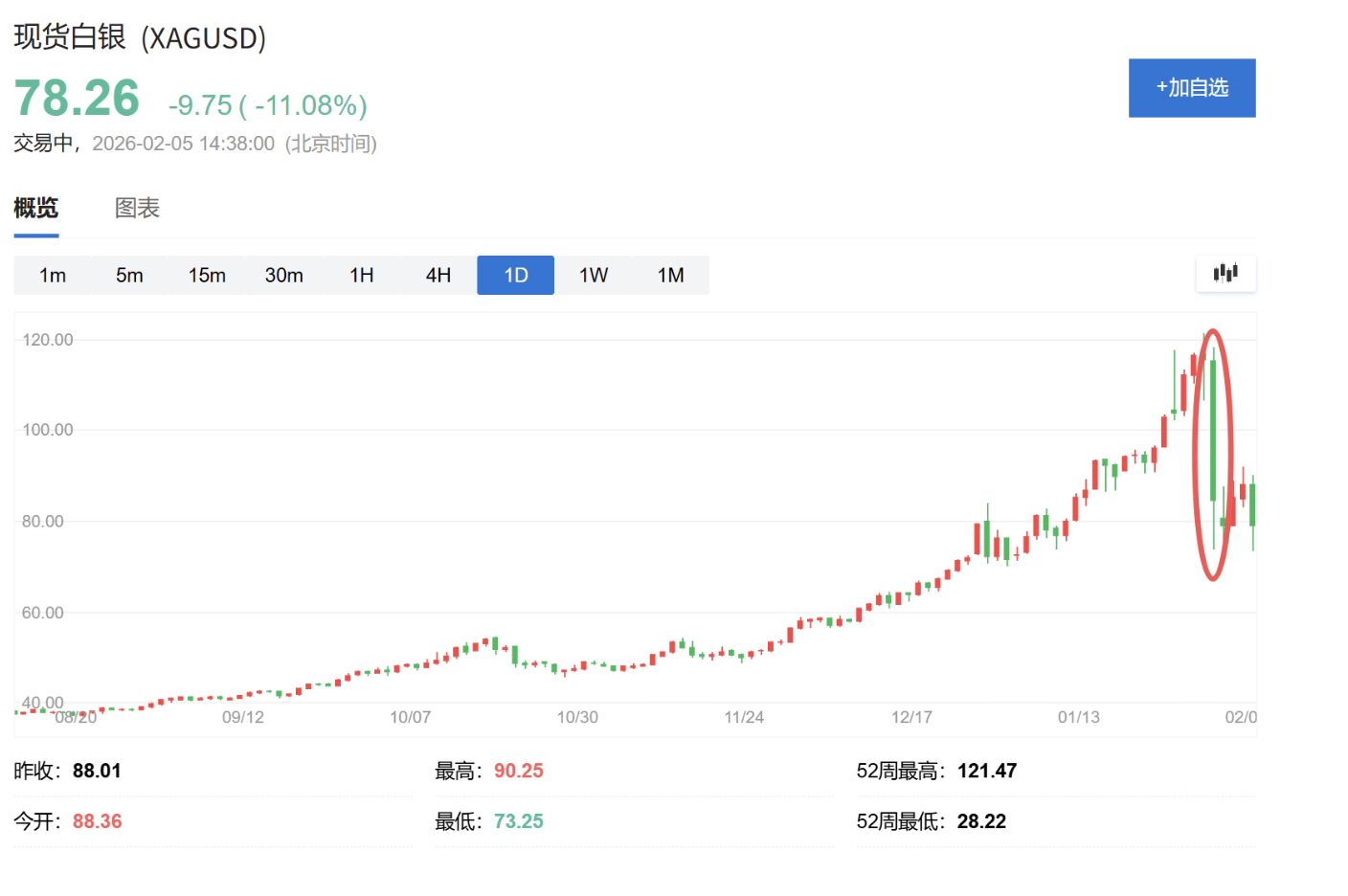
Silver prices plummeted in free fall from a high of over $120 per ounce, crashing 40% in three days, not only erasing recent gains but also leaving a terrifying cliff on the chart.

For retail investors who bought at the peak, this wasn't a correction; it was a massacre. The silver market, once承载着 (carrying/hosting) dreams of sudden wealth, has been turned into a "mass grave" where retail investors buried themselves.
How did this happen? While we were talking about a "short squeeze," Wall Street's giants had already opened their bloody maws.

The Crazy Casino: When Silver Became a "Meme Stock"

The silver market in January 2026 could no longer be described as rational.

According to VandaTrack data, individual investors poured a record $1 billion net into silver ETFs in January alone.

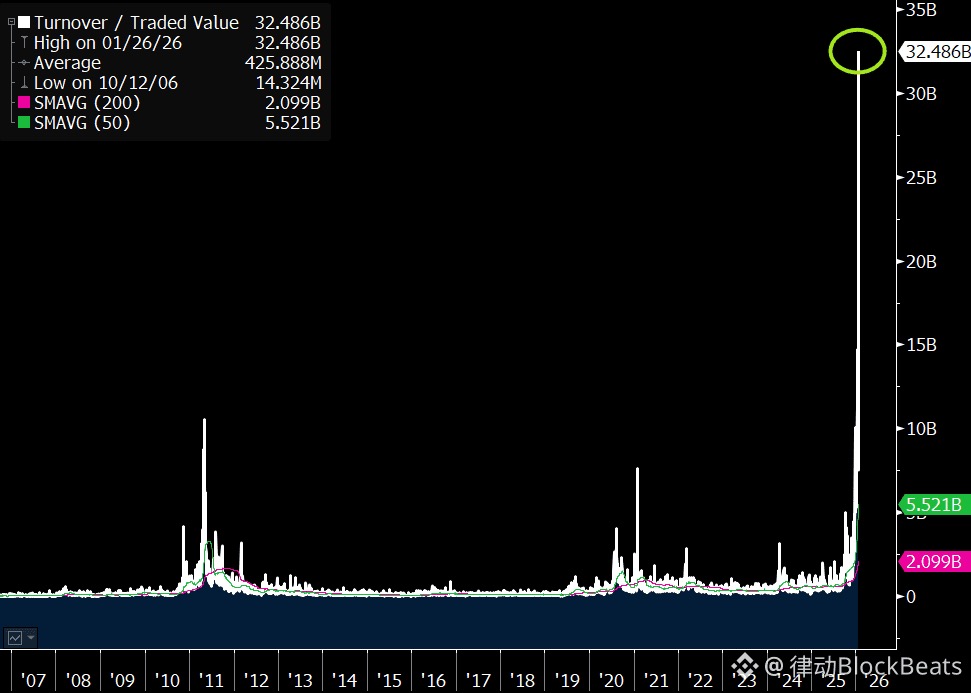
This狂热 (frenzy) peaked on January 26th—trading volume for the silver ETF (SLV) reached a staggering $39.4 billion, almost matching the S&P 500 ETF (SPY)'s $41.9 billion.

Remember, this is an ETF for a single metal; its popularity nearly rivaled that of the entire U.S. stock market.
StoneX market analyst Rhona O’Connell was blunt: "Silver is severely overvalued, caught in a self-fulfilling madness. It's behaving like Icarus, flying too close to the sun, and will eventually get burned."

Social media acted as an accelerant for this狂欢 (carnival/euphoria).

On Reddit's WallStreetBets and Silverbugs sections, posts about silver surged to 20 times the five-year average. Retail investors, like they did rushing into GameStop in 2021, flocked en masse into this notoriously volatile market, trying to drown out fundamentals with sheer capital.

Bull and Baird market strategist Michael Antonelli told CNBC helplessly: "Silver has completely become the GameStop of 2026. The price doubled in three months, completely detached from industrial demand fundamentals, purely a vertical climb built on retail money."

But they forgot silver has a nickname: "gold on steroids." It rises疯狂 (crazily), and falls even more ruthlessly.

Crash Truth: Who Pulled the Trigger?

On January 30th, the惨案 (disaster) occurred. Silver experienced an epic sell-off within hours.

Media and analysts quickly found a perfect scapegoat: Kevin Warsh's nomination as Fed Chair.
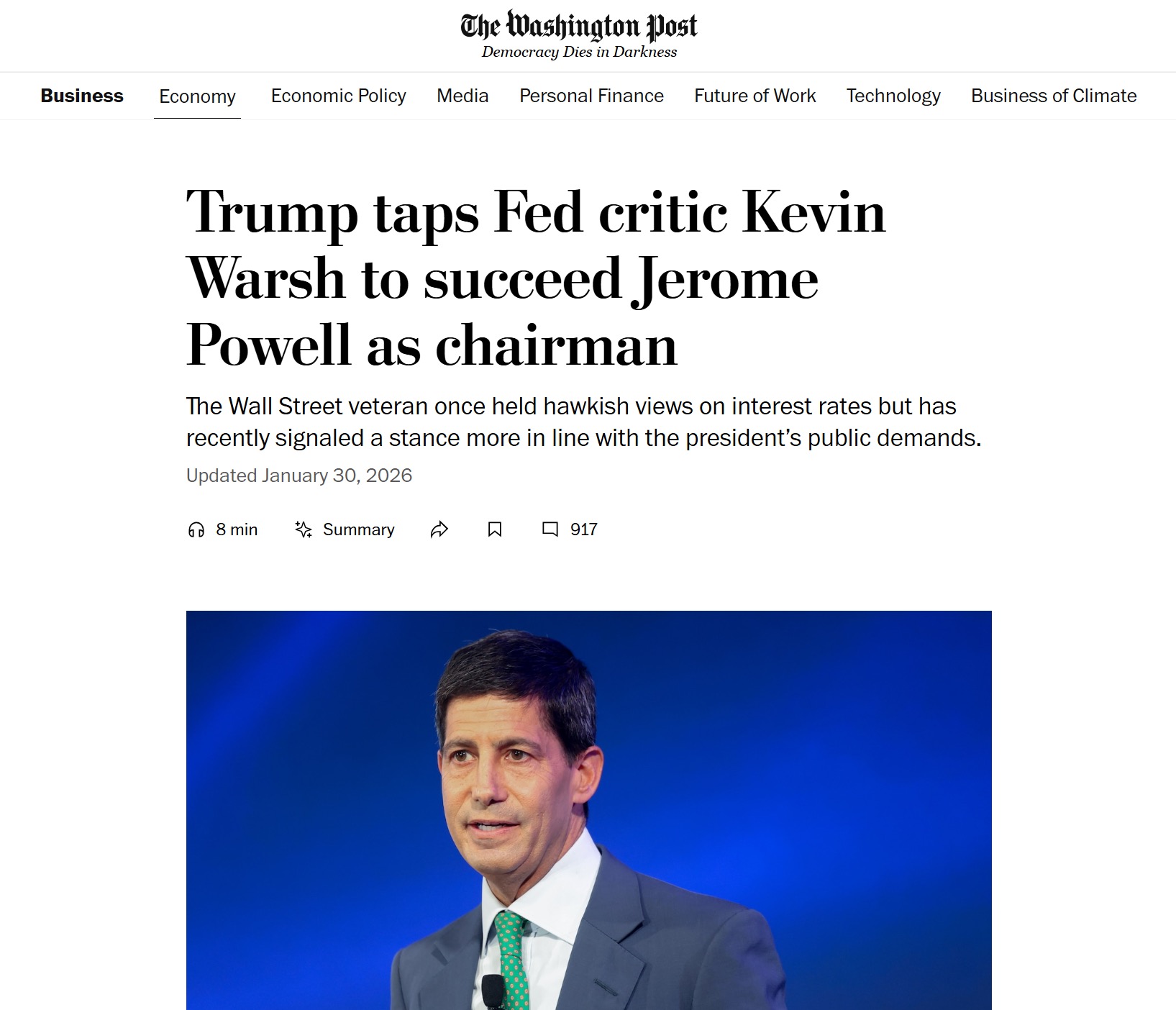
The market's reasoning seemed logical: Warsh is a hawk, implying rates will stay high, which is bearish for non-yielding precious metals.

But the truth often lies in the details.

Warsh's nomination was announced at 1:45 PM ET (1:45 AM Beijing Time on Feb 1st). However, silver's crash began as early as 10:30 AM on the 30th. In the three-plus hours before the news was public, silver prices had already plunged 27%.
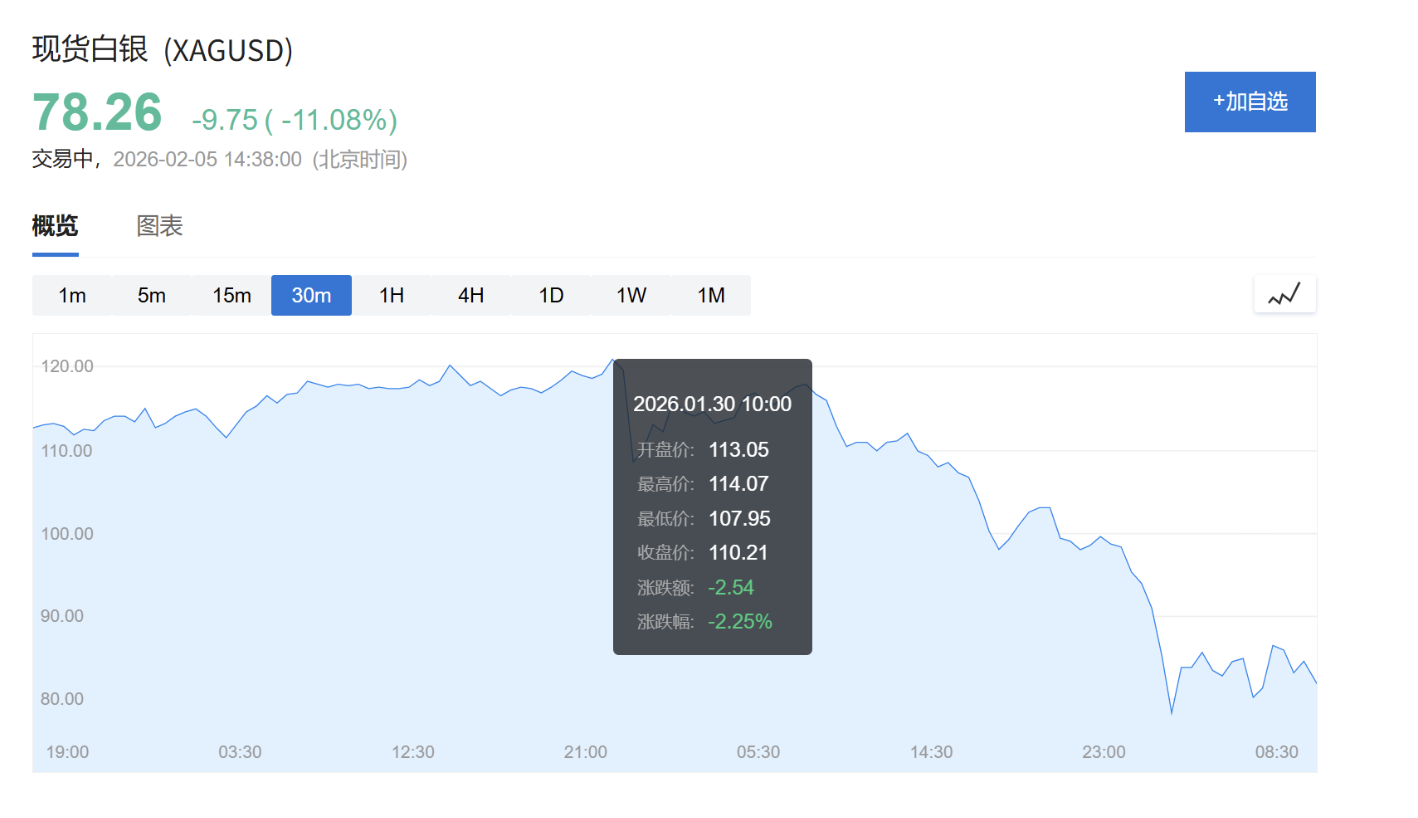
Blaming the Fed nomination was just a cover for the real "tool of slaughter"—margin requirements.

In reality, the true catalyst for this "mass grave" tragedy was a change in exchange rules. The Chicago Mercantile Exchange (CME) raised margin requirements for silver futures twice in the week before the crash, for a total increase of 50%.

What does this mean?

If you were a retail investor fully leveraged, your account previously only needed $22,000 to maintain the position. Suddenly, the exchange demanded you come up with $32,500. Can't produce the extra $10,500? Sorry, the system will automatically liquidate your position,不问价格 (regardless of price),不计成本 (regardless of cost).

This is why the crash was so rapid. Margin hikes triggered the first wave of forced liquidations, which caused prices to fall, which in turn triggered more people's liquidation thresholds. It's a vicious cycle, and retail investors are at the very bottom of this cycle.

An Asymmetric Game

While retail investors were wailing in the "mass grave," what were the institutions doing?

The answer might send a chill down your spine: They were waiting for retail sell-offs to buy low and profit. And this isn't illegal; it's a structural advantage built into the market's operation.

According to disclosures by columnist Luis Flavio Nunes, institutions, represented by JPMorgan, demonstrated textbook "profit-taking" methods during this crash:

Step 1: Access Emergency Liquidity.

While the exchange was raising margin requirements for retail investors, banking institutions were enjoying a "blood transfusion" from the Fed.

Data shows that on December 31st, banks borrowed a record $74.6 billion from the Fed's emergency lending window (SRF). This mechanism exists precisely to provide short-term liquidity to eligible financial institutions. Its design初衷 (original intention) is to prevent funding crises. But the reality is: Only specific institutions qualify to use this tool.
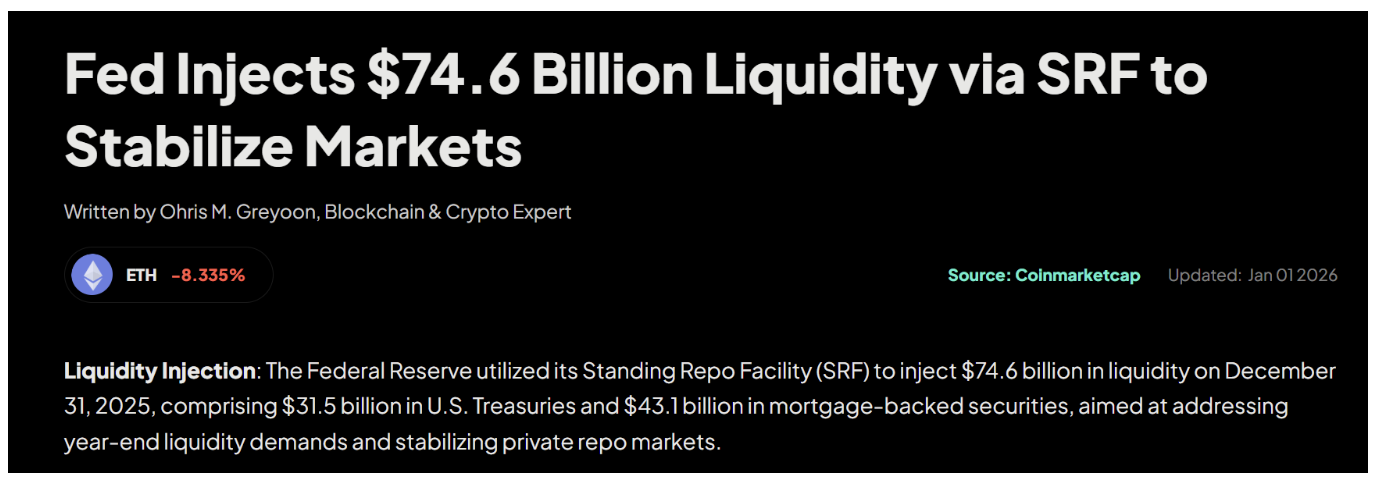

At the same time, the exchange raised silver margin requirements (by) 50% within a week. The Fed's emergency funding tool provides cash to eligible institutions at favorable rates. Retail investors have no access to equivalent channels of emergency central bank funding. This isn't favoritism. It's determined by the financial system's architecture: central banks lend to banks, not to individuals.

Step 2: Wait for the Market Chaos Caused by Margin Hikes.

The core mechanism of the silver crash lies in the difference in ability between retail and institutions to respond to increased margin requirements.

On December 26th and 30th, just before the crash, the CME raised margin requirements for silver trading by 50% in a short period. This meant a trader holding a position needed to immediately come up with 50% more cash.

For most retail investors, this sudden capital pressure directly triggered brokers' automatic liquidation mechanisms, forcing them to sell at any cost during the market plunge.

Meanwhile, institutions with access to Fed tools had more options.

They could draw on credit lines, obtain emergency loans, or quickly transfer funds between accounts. This doesn't prevent all liquidations, but it gives them more time and flexibility. Thus, retail positions were sold off during the panic, often at the worst prices. Institutional positions could be managed more strategically.

Step 3: Fully Utilize Authorized Participant Privileges for Arbitrage.

Take JPMorgan as an example. This bank plays a dual role in the silver market: they store all the physical silver for the largest silver fund (SLV), and they are also an "Authorized Participant," meaning they can create or destroy shares of that fund in large batches.

During the panic selling on January 30th, the SLV ETF's share price traded at an abnormal discount, falling to $64.50 per share, while the physical silver it represented was worth $79.53, a spread as high as 19%.

This provided huge arbitrage opportunities for institutions with "Authorized Participant" (AP) status through specific market mechanisms. Authorized Participants (a small group of large financial institutions) fully exploited this spread, buying ETF shares and redeeming them for higher-value physical silver.

Data shows approximately 51 million shares of SLV were redeemed that day, implying an arbitrage profit of about $765 million from this operation alone.

This operation helps maintain the link between the ETF price and its net asset value (NAV) and is a compliant market function, but it's a source of profit inaccessible to ordinary investors. Retail investors could see the discount but couldn't benefit from it due to lack of AP status.

Step 4: Strategic Positioning in Derivatives.

JPMorgan also held significant silver short positions, meaning they were betting on lower silver prices, or hedging other positions. As silver rose to $121 in late January, these positions were underwater.

The most ironic moment occurred at the price bottom. On January 30th, when retail investors were being forcibly liquidated at the low of $78.29 due to insufficient margin, JPMorgan stepped in. CME records show JPMorgan took over 633 contracts at this price, acquiring 3.1 million ounces of physical silver.

These crucial four steps happened almost on the same day. Did Wall Street orchestrate this series of events? This cannot be confirmed. But they were structurally positioned to benefit in multiple ways simultaneously: only institutions with their unique combination of roles and permissions could possibly do this.

"Silver is Always a Death Trap"

In this wave of行情 (market action/movement), countless retail investors like the Reddit user at the beginning of the article lost years of savings.

StoneX analyst Rhona O’Connell was right: "Silver is always a death trap."

Financial markets have never been a level playing field. When retail investors try to challenge the steel machine composed of algorithms, leverage, and rule-makers with "sentiment" and "memes," the outcome is often predetermined.

Silver is not GameStop either; it's a much more brutal arena than stocks.

Retail investors thought they were charging at Wall Street. Little did they know, they were unknowingly digging a huge "mass grave" with their own hands, then lining up to jump in.


Пов'язані питання

QWhat was the main reason behind the silver market crash in January 2026, according to the article?

AThe primary reason was the Chicago Mercantile Exchange (CME) raising the margin requirements for silver futures by 50% over a week, which triggered a cascade of forced liquidations among leveraged retail investors.

QHow did institutional players like JPMorgan benefit from the silver market crash?

AJPMorgan benefited by using its status as an authorized participant to arbitrage the price difference between the SLV ETF and physical silver, acquiring physical silver at a discount, and using emergency liquidity facilities to avoid forced selling while buying assets from distressed retail investors.

QWhat role did social media play in the silver market frenzy?

ASocial media platforms like Reddit's WallStreetBets and Silverbugs fueled the frenzy, with posts about silver surging to 20 times their five-year average, encouraging retail investors to pile into silver as a meme stock, similar to GameStop in 2021.

QWhy was the nomination of Kevin Warsh as Fed Chair not the actual cause of the crash?

AThe crash began three hours before the announcement of Warsh's nomination, with silver prices already down 27%, indicating that the margin requirement hikes were the true trigger, not the Fed news.

QWhat structural advantages do institutions have over retail investors in such market events?

AInstitutions have access to emergency liquidity facilities like the Fed's Standing Repo Facility, the ability to meet margin calls without immediate forced selling, and privileges such as authorized participant status for ETFs, allowing arbitrage opportunities unavailable to retail investors.

Пов'язані матеріали

Торгівля

Спот
Ф'ючерси

Популярні статті

Що таке MEME 2.0

Memecoin 2.0: Поява $MEME 2.0 у світі криптовалюти Вступ У постійно змінному ландшафті криптовалюти з'явився новий претендент. Memecoin 2.0, що символізується як $MEME 2.0, підносить концепцію мем-криптовалют на захоплюючий новий рівень. Як побічний продукт оригінального Memecoin, цей проєкт привернув увагу крипто-спільноти, змістивши акцент з типової фінансової вигоди на захоплюючий і розважальний досвід. Працюючи на блокчейні Ethereum, Memecoin 2.0 сміливо переосмислює залучення спільноти у криптосфері. Що таке Memecoin 2.0, $MEME 2.0? У своїй основі, Memecoin 2.0 є криптовалютним проєктом, який надає пріоритет спільнотному духу і розвагам, пов'язаним з мем-культурою. На відміну від звичайних криптовалют, які зосереджені на практичних випадках використання та матеріальних вигодах, Memecoin 2.0 вирізняється тим, що обіймає легшу сторону цифрової валюти. Цей проєкт існує без обіцянок утиліти, структурованої дорожньої карти чи фінансових повернень, зосереджуючи увагу на створенні яскравої спільноти навколо мемів та спільних розваг. Зробивши це, він використовує зростаючу тенденцію мем-культури у онлайн-пробі, що робить його унікальним гравцем у світі цифрових активів. Творець Memecoin 2.0, $MEME 2.0 Не зважаючи на численні дослідження витоків Memecoin 2.0, чітка особистість його творця залишається невідомою. Ця анонімність не є рідкістю у крипто-спільноті, де багато проєктів очолюються особами або групами, які надають перевагу залишатися за лаштунками. Відсутність публічно доступної інформації про творця може розглядатися як стратегічний крок, що ставить в центр уваги залучення спільноти, а не індивідуальної популярності у цій сфері. Інвестори Memecoin 2.0, $MEME 2.0 Інформації щодо інвесторів або фінансової підтримки Memecoin 2.0 замало. Відсутність деталей може свідчити про те, що проєкт є самофінансованим або що його увага до спільноти, а не традиційних інвестиційних структур, привабила інший тип підтримки. Оскільки світ мем-криптовалют зазвичай передбачає більше участі низового рівня, а не інституційних інвестицій, цей підхід узгоджується з етосом проєктів, що управляються спільнотою. Як працює Memecoin 2.0, $MEME 2.0? Memecoin 2.0 повністю працює на блокчейні Ethereum, використовуючи його потужні функції безпеки та масштабованості. Використовуючи сильні сторони Ethereum, Memecoin 2.0 може запропонувати безпечне середовище для взаємодії користувачів, забезпечуючи при цьому, що транзакції є ефективними та економічними. Одна з унікальних характеристик Memecoin 2.0 полягає в його структурі, що керується спільнотою. Цінність та популярність токена $MEME 2.0 походять з активної участі його користувачів, а не з вродженої утиліти. Ця концепція підкреслює акцент проєкту на розважальному аспекті криптовалюти, натякаючи на те, що сміх та залучення спільноти є справжніми валютами, що ведуть до його успіху. Крім того, проєкт вписується в ширшу екосистему мем-криптовалют, де цінність кожної мем-криптовалюти коливається залежно від культури, тенденцій і участі спільноти, а не традиційних економічних принципів. Хронологія Memecoin 2.0, $MEME 2.0 Щоб краще зрозуміти еволюцію та віхи Memecoin 2.0, ось хронологія, що підкреслює значні події в його історії: 2024: Зародження Memecoin 2.0 вважається відгалуженням оригінального Memecoin, яке встановлює себе в процвітаючому контексті мем-криптовалют, працюючи на блокчейні Ethereum. 13 липня 2024: Memecoin 2.0 офіційно позиціонує себе як мем-криптовалюта, орієнтована на спільноту, в мережі Ethereum, підкреслюючи свій підхід, зосереджений на розвагах, який запрошує користувачів брати участь у його розвитку. Ключові моменти про Memecoin 2.0, $MEME 2.0 Кілька критичних характеристик визначають Memecoin 2.0: Спільнотно-центричний підхід: Основною метою Memecoin 2.0 є створення веселого, захоплюючого досвіду для спільноти, використовуючи колективне задоволення, що випливає з меметичної культури. Побудовано на Ethereum: Робота на блокчейні Ethereum надає проєкту важливу інфраструктуру, що забезпечує безпеку та масштабованість. Відсутність утиліти або дорожньої карти: У вражаючому відході від традиційних криптовалют, Memecoin 2.0 не обіцяє жодних утилітарних функцій або фінансових повернень, підтверджуючи свою прихильність до участі спільноти та соціального залучення. Акцент на меметичній культурі: Обіймаючи гумористичні та культурні аспекти мем-періоду, Memecoin 2.0 надає платформу для користувачів для залучення до крипти офлайн та онлайн. Додатковий контекст: Значення мем-криптовалют Мем-криптовалюти з'явилися як окрема класифікація криптовалюти, часто керуючись гумором та легким підходом до торгівлі. Ці валюти, як правило, не мають значної утиліти або розробницьких дорожніх карт, залучаючи користувачів обіцянкою розваг, взаємодії в спільноті та культурної значущості. В рамках ширшої екосистеми криптовалют, мем-криптовалюти відновлюють важливість залучення спільноти, протистоячи лише прибутковим підходам. Проєкти, такі як Memecoin 2.0, відкривають еру, в якій розваги можуть гармонізувати з фінансовими прагненнями, перетворюючи блокчейн на ігровий майданчик для творчості та соціальної взаємодії. Висновок Memecoin 2.0, або $MEME 2.0, втілює нову хвилю криптовалюти, яка надає пріоритет залученню спільноти над жорсткими фінансовими структурами. Зосереджуючись на гуморі та соціальній взаємодії, він використовує захоплення навколо мем-культури. Працюючи на блокчейні Ethereum, Memecoin 2.0 використовує можливості технології, залишаючись непохитним у своїй прихильності до розважальної цінності цифрової валюти. Коли простір навколо криптовалют продовжує еволюціонувати, Memecoin 2.0 служить доказом того, що майбутнє цифрових активів може значною мірою залежати від спільних досвідів, сміху та надійних зв'язків у спільноті. У непередбачуваному світі крипто, можливо, радість може бути такою ж цінною, як і традиційний фінансовий прибуток.

110 переглядів усьогоОпубліковано 2024.04.04Оновлено 2024.12.03

Що таке MEME 2.0

Як купити MEME

Ласкаво просимо до HTX.com! Ми зробили покупку Memeland (MEME) простою та зручною. Дотримуйтесь нашої покрокової інструкції, щоб розпочати свою криптовалютну подорож.Крок 1: Створіть обліковий запис на HTXВикористовуйте свою електронну пошту або номер телефону, щоб зареєструвати обліковий запис на HTX безплатно. Пройдіть безпроблемну реєстрацію й отримайте доступ до всіх функцій.ЗареєструватисьКрок 2: Перейдіть до розділу Купити крипту і виберіть спосіб оплатиКредитна/дебетова картка: використовуйте вашу картку Visa або Mastercard, щоб миттєво купити Memeland (MEME).Баланс: використовуйте кошти з балансу вашого рахунку HTX для безперешкодної торгівлі.Треті особи: ми додали популярні способи оплати, такі як Google Pay та Apple Pay, щоб підвищити зручність.P2P: Торгуйте безпосередньо з іншими користувачами на HTX.Позабіржова торгівля (OTC): ми пропонуємо індивідуальні послуги та конкурентні обмінні курси для трейдерів.Крок 3: Зберігайте свої Memeland (MEME)Після придбання Memeland (MEME) збережіть його у своєму обліковому записі на HTX. Крім того, ви можете відправити його в інше місце за допомогою блокчейн-переказу або використовувати його для торгівлі іншими криптовалютами.Крок 4: Торгівля Memeland (MEME)Легко торгуйте Memeland (MEME) на спотовому ринку HTX. Просто увійдіть до свого облікового запису, виберіть торгову пару, укладайте угоди та спостерігайте за ними в режимі реального часу. Ми пропонуємо зручний досвід як для початківців, так і для досвідчених трейдерів.

292 переглядів усьогоОпубліковано 2024.12.12Оновлено 2025.03.21

Як купити MEME

Обговорення

Ласкаво просимо до спільноти HTX. Тут ви можете бути в курсі останніх подій розвитку платформи та отримати доступ до професійної ринкової інформації. Нижче представлені думки користувачів щодо ціни MEME (MEME).

活动图片