When 'Odysseus' Encounters the Algorithm

marsbitОпубліковано о 2026-08-10Востаннє оновлено о 2026-08-10

Анотація

Christopher Nolan's "Odyssey," a $250 million IMAX epic, premiered in July 2026, quickly grossing over $1 billion and setting box office and critical records. The film's production was defined by its physical scale: shooting across six countries with practical effects, custom-built IMAX cameras, and extensive use of film. Concurrently, the AI-generated film "Odysseus: The Fall," created by the independent studio Fountain0 for just $50,000, demonstrated the technical feasibility of AI in long-form filmmaking. This stark 5,000x cost difference highlights a broader industry conflict between traditional, experience-driven production and algorithmic efficiency. While the AI film achieved technical success, it revealed current limitations, such as unstable long shots, inconsistent characters, and a lack of nuanced emotional performance. More importantly, its infinite, low-cost nature lacks the scarcity and immersive "event" status that fuels the theatrical premium for films like Nolan's. The market strongly favored the traditional model's brand security, physical assets, and premium theatrical experience. The analysis suggests AI will not replace auteurs like Nolan but will significantly disrupt mid-tier productions and technical, labor-intensive roles (e.g., pre-visualization, VFX). This could erode the career pathways for future directors. Paradoxically, as AI content proliferates, the perceived value of "handcrafted," physically-shot cinema may rise, akin to artisanal goods. ...

By | Wan Dian Research

Athena's owl takes flight at dusk, while Nolan's camera roars at noon.

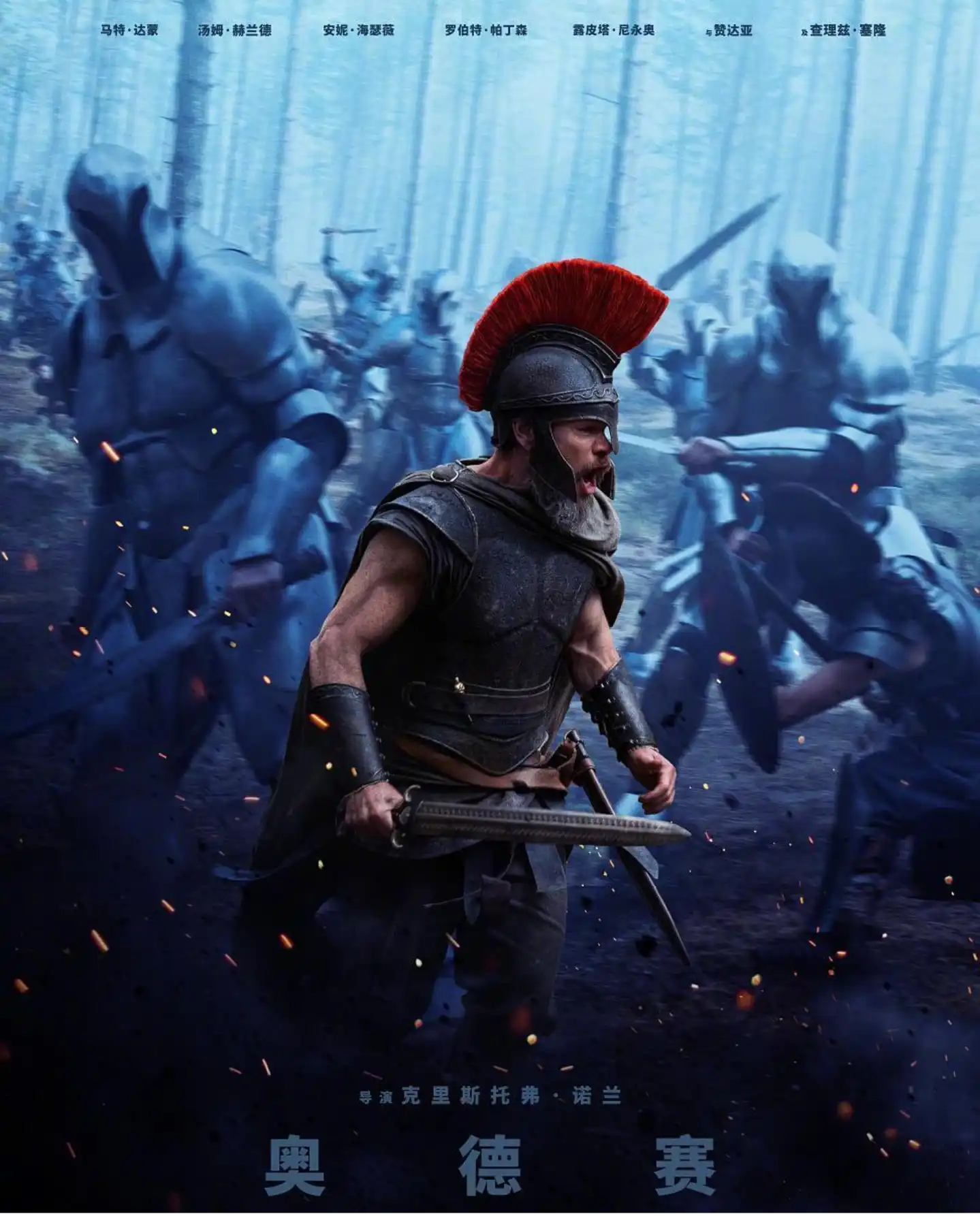
On July 17, 2026, Christopher Nolan's "Odyssey" was released in cinemas worldwide. As of August 9, this epic film with a budget of $250 million and a runtime of 172 minutes has grossed over $1.008 billion globally, becoming the director's second-highest-grossing work, second only to "The Dark Knight Rises." It opened with a global weekend box office of $264 million, setting a new personal record for Nolan. It holds a 98% fresh rating on Rotten Tomatoes and a 99% audience score, both Nolan's highest career scores. In mainland China, the film had not yet officially premiered (scheduled for August 14), but advance screenings and pre-sales had already generated over 60 million yuan. Showings with only 0.4% of the screenings accounted for over 17% of the box office, with IMAX screenings in first-tier cities reaching a 94% occupancy rate. Industry insiders predict the final box office will land between $1.2 and $1.5 billion.
Meanwhile, another version of Odysseus was quietly setting sail in the digital world. Independent studio Fountain0 released a 135-minute feature film titled "Odysseus: The Fall," with a total cost of only $50,000, generated 100% by artificial intelligence. A team of 12 people completed it in three months, with zero live-action filming, zero studio use, and zero large crew. Almost simultaneously, Elon Musk announced on the X platform that his AI platform Grok Imagine would produce an AI-generated "Odyssey" feature film "faithful to Homer's original" by the end of the year.

A 5000-fold cost difference, same subject matter, same release window. This is not just a clash of artistic genres, but a divergence in industrial philosophy. However, delving deeper into Hollywood's balance sheets reveals that Christopher Nolan's $250 million is not a consumptive "expense," but a "leveraged investment" that moves the entire industry—securing exclusive IMAX agreements, long-tail home video rights, and copyright library value for the next half-century.

In contrast, while AI's $50,000 is cheap, its training datasets exist in legal gray areas, and the generated footage cannot claim strong copyright protection. "Low cost" without property barriers is, in the eyes of capital markets, precisely a liability lacking a moat.

Nolan's filming method is almost a deliberate provocation to efficiency-first proponents.

A 91-day shoot spanned six countries: Morocco, Greece, Italy, Iceland, Scotland, and the United States. The film used over 640 kilometers (over 2.1 million feet) of IMAX film—enough to stretch from Toronto to New York—and produced 5,300 costumes. For this film, IMAX spent two years developing its first new film camera in 25 years, named "Kelly" in honor of the late Chief Quality Officer David Kelly and his wife. The camera uses carbon fiber components (sourced from Formula 1 racing) and for the first time enables IMAX film to capture dialogue and close-up shots—previously, the immense operating noise of IMAX cameras made any dialogue scene impossible.

The Cyclops scene was not CGI. The crew built a 60-foot-tall practical animatronic puppet in Greece's Psychro Cave, combining mechanical effects and string-puppet techniques. The six-headed sea monster and massive whirlpool were also filmed practically—manned speedboats circled to create a physical water vortex, providing real-time dynamic references for the visual effects team. Actors wore bronze armor while submerged in 9°C seawater. As Matt Damon put it, "This is absolutely the biggest movie I've ever made in my career. It feels like it was made the way they would have 100 years ago, just with IMAX this time."

Independent studio Fountain0's working method belongs to another civilization.

They used large language models to generate the script and video diffusion models to render the visuals. Algorithms replaced the director, cinematographer, art director, lighting technicians, and even the entire post-production team. No morning meetings, no weather delays, no actor scheduling conflicts, no workers' compensation insurance. The total cost of $50,000 is roughly equivalent to a single day's catering expenses on Nolan's set. The film rents for $9.99 per view. It proves for the first time that generating a full-length narrative film with AI is technically feasible.

The capital markets have already cast their preliminary vote.

Nolan's "Odyssey" has grossed $257 million from IMAX screenings, accounting for nearly a quarter of its global total. IMAX's stock price surged 6.61% on August 3, breaking the $50 barrier for the first time to hit a record high; it's up 37.99% year-to-date and has doubled over the past 12 months. Thanks to this film, Universal Pictures became the first film studio in 2026 to surpass $4 billion in global box office. With a $20 million advance plus 20% of the box office gross, Nolan stands to earn between $75 million and $100 million personally.

Meanwhile, Fountain0's AI feature film garnered about 1.2 million views in its first week on streaming platforms. Converted to a subscription model, this translates to direct revenue of less than $1 million. Musk's Grok Imagine version has yet to materialize, and the capital markets have reacted tepidly—Tesla's stock price showed no significant movement, and xAI's valuation hasn't been repriced as a result.

The market favors a certain narrative.

Nolan spent two decades, over ten films, and a cumulative global box office exceeding $6 billion to build a predictable brand for investors. Securing a top-tier Hollywood deal of a "$20 million advance plus 20% of the box office" as a director is extremely rare in industry history. AI filmmaking, however, has yet to establish any sustainable business model. There is no director brand premium, no theatrical window, no IMAX exclusive revenue share, no peripheral merchandise chain. It remains in the ambiguous zone between "tech demo" and "complete product." More crucially, Nolan's seemingly "inefficient" practical filming method is, in essence, a "physical performance bond" delivered to investors. In an industry with an extremely high failure rate, footage shot on film is a definite physical asset. In contrast, AI's generation of a perfect shot depends on a probability-based lottery; this black-box unpredictability would be seen as a potential budget black hole and delay bomb in production audits.

The most honest answer to whether AI can replace traditional filmmaking currently is: it depends on how you define "replace."

First, look at AI's limitations. A frame-by-frame analysis of Fountain0's final product reveals no single shot lasting longer than three seconds. The high-frequency cuts are not an avant-garde editing style but a passive compromise of the technology—current mainstream AI video models cannot support long, stable single-shot generation; the longer a shot lingers, the more obvious the loss of detail becomes. Character consistency across scenes cannot be guaranteed; the same character may appear with different facial contours in different shots. Physical simulation remains superficial, with stiff, jerky body movements lacking force logic and natural texture. The deeper constraint lies in "visual entropy": the human brain is extremely sensitive to instantaneous changes in micro-expressions, and great performances often involve actors' extreme deviations from biological randomness. However, current diffusion models are essentially about "averaging probabilities"; algorithms, for stability, automatically avoid those low-probability moments of brilliance—this condemns AI to long-term mediocrity above the mean in the core domain of emotional close-ups. These are structural issues that might be resolved through iteration in the next three to five years.

But the deeper challenge lies in the consumption experience. All 70mm film screenings at London's BFI IMAX until September 10 are sold out. Some flew halfway across the world from Atlanta, others drove 12 hours to watch a midnight screening before catching an early flight back. IMAX CEO Richard Gelfond said, "In New York, you have to wait until September to get a ticket for a 70mm showing; it's almost become a luxury brand." People are paying not just the ticket price but also their time, travel, and attention. These investments themselves become part of the experience—scarcity creates a sense of ritual, and ritual creates a premium. It's more than just ritual. In the era of infinite supply on streaming platforms, "the physical expenditure of being present" is evolving into a new marker of class distinction. This "embodied cognition" generated by physical presence creates physiological memories that no digital algorithm can encode—the social sharing value it generates has long surpassed the price of the movie ticket itself.

AI-generated content is inherently an infinite supply. As long as the servers are on, it can generate Odysseus forever, the Cyclops forever, any shot forever. But infinite supply destroys scarcity, and scarcity is precisely the foundation of the entertainment industry's premium pricing. When algorithms make images as free and limitless as air, people are instead willing to pay more for a real silver screen.

This is not to say AI will be without impact. On the contrary, its efficiency advantages will profoundly transform the middle and later stages of the film and television industry chain.

Pre-visualization (Previs) already uses AI to generate storyboards and dynamic previews; background filling, scene extensions, and dynamic fixes in post-production VFX are increasingly handled by algorithms; virtual production technology combining game engines with AI, as seen in series like "The Mandalorian," has significantly reduced location costs. These applications don't compete for the "director" title but are eroding the profit margins of repetitive, labor-intensive segments in the traditional film industry.

Oxford University economist Carl Benedikt Frey offers a noteworthy observation: technological replacement is never all or nothing; it tends to replace "tasks that can be codified," not entire professions.

AI can replace background artists, but it's difficult to replace the person who decides "why shoot this shot." It can optimize production cost structures, but it struggles to create a new narrative paradigm. Nolan's choice to shoot dialogue scenes on IMAX film—seemingly absurd from an efficiency standpoint—is precisely this "irrational" choice that creates unique value distinct from streaming content. In a content market dominated by algorithm recommendations and short-video formats, this distinction itself becomes a scarce resource.

But a colder point must be added: AI may not replace Nolan at the finish line, but it will block Nolan's apprentices at the starting line. When producers can use AI to generate "good enough" previews for medium-budget genre films, young directors who traditionally gained experience through $50-$100 million practical shooting projects will find it extremely difficult to secure budgets for green-screen shoots. AI isn't replacing masters at the endpoint; it's draining the soil for new masters to grow at the source. When the future holds only Nolan's "handcrafted luxury goods" and AI's "infinite fast-fashion products," the middle ground of cinema as a popular art will severely erode.

Interestingly, AI might reinforce the value of figures like Nolan in another dimension.

When AI-generated feature films become cheap and common, "live-action filming" itself may gain a premium label akin to "handmade." Just as after the Industrial Revolution, handmade goods didn't disappear but instead found a new market position as "artisan." Those elements irreplicable by algorithms—an actor's gaze, the light on a real set, the serendipity created by a group of people in the same physical space—might become even more precious as AI imagery proliferates.

Odysseus wandered the sea for ten years before returning home. Today's film and television industry is also adrift.

One path leads toward the infinite convenience of algorithm generation, the other toward the finite scarcity of film and giant screens. Nolan chose the latter, and the market affirmed it with $1 billion. But this is not the final verdict. AI video models are iterating monthly—perhaps in three years, an AI-generated Odysseus will have consistent facial features, realistic physics, and single-shot narratives lasting two hours. When that happens, will Nolan-style film epics become even more expensive due to increased scarcity, or will they become expensive nostalgia?

If we are honest enough, we must admit the essence of this confrontation is the incommensurability between the "logic of efficiency" and the "logic of experience." Algorithms pursue the "optimal solution"—producing the visual stimuli most aligned with audience expectations within the shortest computational power. Nolan pursues the "unique solution"—that soul-stirring moment possible only on that screen, at that instant, with that specific film grain.

While industrial capital frantically chases the certainty of algorithms, they overlook a brutal truth: humans are willing to pay a premium for "unexpected surprises" but will only pay cheap subscription fees for "precise conformity to expectations." Odysseus rejected the immortality and ease offered by Calypso, choosing instead the thorns and risks of the journey home. This is perhaps the oldest metaphor for the current predicament of film and television: what we ultimately choose are always the difficult voyages that make us truly feel "alive," not the smooth algorithmic path to nothingness.


Трендові криптовалюти

Пов'язані питання

QWhat are the key differences in cost, production methods, and market performance between Christopher Nolan's 'Odyssey' and the AI-generated 'Odysseus: The Fall'?

AChristopher Nolan's 'Odyssey' had a budget of $250 million, involved a 91-day live-action shoot across six countries, used 640 km of IMAX film, and utilized elaborate practical effects like a 60-foot animatronic cyclops. As of August 9th, 2026, its global box office exceeded $1.008 billion. In contrast, 'Odysseus: The Fall' by Fountain0 cost only $50,000, was produced in three months by a 12-person team using AI models for the script and visuals with zero live-action filming. It earned an estimated less than $1 million in its first week through streaming rentals.

QAccording to the article, what are the main technological and artistic limitations of current AI-generated feature-length films?

ACurrent AI films face several key limitations: 1) No single shot can last longer than three seconds due to model instability; 2) Inconsistent character appearance across different scenes; 3) Stiff and illogical physical movements and animations; 4) An inability to capture nuanced, low-probability emotional expressions (like great acting moments), as diffusion models inherently average towards probabilistic stability, leading to visual mediocrity. These are considered structural issues that may take 3-5 years to potentially resolve.

QHow does the article contrast the 'efficiency logic' of AI with the 'experience logic' of traditional filmmaking like Nolan's?

AThe article contrasts 'efficiency logic'—where AI aims to produce the most expected visual stimuli with minimal computational power—with 'experience logic'—exemplified by Nolan's pursuit of a 'unique solution' that creates soul-stirring moments achievable only through specific mediums (like IMAX film), locations, and moments. It argues that while capital chases algorithmic certainty, humans are willing to pay a premium for the 'unexpected surprise' and embodied experience (scarce, ritualistic, physically demanding) that traditional filmmaking can offer, as opposed to the cheap subscription fee for algorithmically precise, infinitely reproducible content.

QWhat is the article's argument about how AI might impact the future ecosystem for filmmakers, particularly newcomers?

AThe article argues that AI may not replace master filmmakers like Nolan at the peak of their careers, but it risks 'draining the soil' for the growth of new masters. If studios can use AI to generate 'good enough' previews for mid-budget genre films, it will become extremely difficult for young directors to secure the $50-100 million budgets needed for live-action projects to gain crucial experience. This could lead to a polarized ecosystem with only Nolan-like 'handcrafted luxury' at one end and AI's 'infinite fast-fashion' at the other, causing the middle ground of film as a popular art form to severely erode.

QIn what ways does the article suggest AI could paradoxically strengthen the value of traditional, live-action filmmaking?

AThe article suggests that as AI-generated content becomes cheap and ubiquitous, 'live-action filmmaking' itself could gain a premium label, similar to 'artisan' or 'handcrafted' goods after the Industrial Revolution. Elements that algorithms cannot replicate—such as an actor's gaze, natural lighting on location, and the spontaneous creativity of a group of people sharing a physical space—may become more珍贵 and valued precisely because of the flood of AI imagery, creating a new market distinction based on authenticity and human craft.

Пов'язані матеріали

From $1.6 Billion to a 30-Story Fall: The Final Fate of an Algorithmic Stablecoin Operator

From $1.6 Billion to a 30-Story Fall: The Final Outcome of a Stablecoin "Whale" On August 7, 2026, Chinese-Canadian crypto investor Harry Yeh (founder of Quantum Fintech Group) was found dead outside a luxury apartment in Asunción, Paraguay, having reportedly fallen from the 30th floor. The scene, where he was found naked and covered in a black plastic bag with his apartment in disarray, prompted an investigation exploring accident, suicide, and homicide. Yeh was a notable early investor in the crypto space, entering in 2013. His major moment came in late 2021 when he took over the troubled algorithmic stablecoin project Tomb Finance on Fantom. Through leveraged tactics and promotion, he drove its Total Value Locked (TVL) to a peak of $1.6 billion in January 2022, though the project's tokens later collapsed. He subsequently promoted LIF3, positioning it as an improved successor. Publicly, Yeh maintained a high-profile image, showcasing a lavish lifestyle on social media. His death adds to a series of non-normal deaths among high-net-worth crypto participants in recent years, including the founders of failed exchange Thodex and other investors. The incident underscores the extreme volatility and potential personal risks within the cryptocurrency industry, highlighting the need for greater emphasis on off-chain security and mental health. The investigation into his death remains ongoing.

marsbit4 хв тому

From $1.6 Billion to a 30-Story Fall: The Final Fate of an Algorithmic Stablecoin Operator

marsbit4 хв тому

Understanding Crypto Payment Cards in 5 Charts: Stablecoins Move from On-Chain to Real-World Spending

5 Charts to Understand Crypto Payment Cards: Stablecoins Move from On-Chain to Real-World Spending Stablecoins are increasingly used for everyday purchases through crypto payment cards, a sector now processing over $750 million monthly. These cards allow users to spend cryptocurrencies at any merchant accepting traditional card networks, with the crypto (primarily stablecoins) instantly converted to fiat currency at checkout. Merchants receive standard payments. Users don't necessarily need a bank account. Some products require holding stablecoins with the issuer, while others work directly with self-custody wallets. These cards provide global access to USD-denominated services. Data shows monthly transaction volume reached $759 million in July 2026, a 2.5x increase from $306 million a year prior, with nearly 9 million transactions that month. The average transaction value is about $86. Initially concentrated on Gnosis Chain (home to Gnosis Pay, the first Visa card linked to a self-custody wallet), transaction volume has diversified across blockchains. As of July, Optimism leads with 29%, followed by Solana and Base at 19% each, while Gnosis Chain has fallen to 2%. Euro-pegged stablecoins, once dominant (88% in early 2024), now represent only 2% of volume. Dollar-pegged stablecoins USDC and USDT now lead, accounting for 58% and 26% of transactions respectively. While still small compared to traditional card networks, the sector is growing rapidly. It leverages existing infrastructure, with nearly all covered products operating on the Visa network. Regulatory developments like the GENIUS Act have contributed to this acceleration.

marsbit5 хв тому

Understanding Crypto Payment Cards in 5 Charts: Stablecoins Move from On-Chain to Real-World Spending

marsbit5 хв тому

Wall Street 'Conspiracy Theory': Did Powell Deliberately Push Up Long-Term U.S. Treasury Yields?

Bank of America refutes market speculation that Federal Reserve Chair Warsh deliberately pushed up long-term U.S. Treasury yields via press conferences to tighten financial conditions. Their report argues such action contradicts the Fed's established policy framework and would lack FOMC support. According to the report, some market participants interpreted the post-July FOMC meeting rise in long-end yields and inflation breakevens as a deliberate strategy by Warsh to combat inflation by tightening financial conditions. Analysts Mark Cabana and Aditya Bhave directly reject this, stating the FOMC's core policy tool remains the federal funds rate, as outlined in its long-term strategy statements. They emphasize Warsh cannot unilaterally alter the Fed's operational approach, which would require full FOMC consensus—a high bar. The analysis highlights the Fed's precise control over overnight rates versus its limited, indirect influence on long-term yields, which operate through policy expectations and the hard-to-manage term premium channel. The recent sharp move in long-end rates serves as a reminder of the risks of operating outside the Fed's direct control. The report concludes the FOMC is unlikely to abandon its proven, controllable tools for unverified methods, dismissing the "four-dimensional chess" theory of long-rate manipulation as market overinterpretation.

marsbit55 хв тому

Wall Street 'Conspiracy Theory': Did Powell Deliberately Push Up Long-Term U.S. Treasury Yields?

marsbit55 хв тому

Торгівля

Спот

Популярні статті

Що таке $S$

Розуміння SPERO: Комплексний огляд Вступ до SPERO Оскільки ландшафт інновацій продовжує еволюціонувати, виникнення технологій web3 та криптовалютних проектів відіграє ключову роль у формуванні цифрового майбутнього. Один з проектів, який привернув увагу в цій динамічній сфері, — це SPERO, позначений як SPERO,$$s$. Ця стаття має на меті зібрати та представити детальну інформацію про SPERO, щоб допомогти ентузіастам та інвесторам зрозуміти його основи, цілі та інновації в рамках web3 та крипто-сектору. Що таке SPERO,$$s$? SPERO,$$s$ — це унікальний проект у криптопросторі, який прагне використати принципи децентралізації та технології блокчейн для створення екосистеми, що сприяє залученню, корисності та фінансовій інклюзії. Проект розроблений для полегшення взаємодії між користувачами новими способами, надаючи їм інноваційні фінансові рішення та послуги. У своїй основі SPERO,$$s$ прагне надати можливості індивідам, забезпечуючи інструменти та платформи, які покращують користувацький досвід у криптовалютному просторі. Це включає в себе можливість більш гнучких методів транзакцій, сприяння ініціативам, що підтримуються спільнотою, та створення шляхів для фінансових можливостей через децентралізовані додатки (dApps). Основна концепція SPERO,$$s$ обертається навколо інклюзивності, прагнучи зменшити розриви в традиційній фінансовій системі, використовуючи переваги технології блокчейн. Хто є творцем SPERO,$$s$? Особистість творця SPERO,$$s$ залишається дещо невідомою, оскільки є обмежені публічно доступні ресурси, що надають детальну інформацію про його засновників. Ця відсутність прозорості може бути наслідком зобов'язання проекту до децентралізації — етики, яку багато проектів web3 поділяють, ставлячи колективні внески вище за індивідуальне визнання. Зосереджуючи обговорення навколо спільноти та її колективних цілей, SPERO,$$s$ втілює суть наділення без виділення конкретних осіб. Таким чином, розуміння етики та місії SPERO є більш важливим, ніж ідентифікація єдиного творця. Хто є інвесторами SPERO,$$s$? SPERO,$$s$ підтримується різноманітними інвесторами, починаючи від венчурних капіталістів до ангельських інвесторів, які прагнуть сприяти інноваціям у крипто-секторі. Зосередження цих інвесторів зазвичай узгоджується з місією SPERO — пріоритет надається проектам, які обіцяють технологічний прогрес у суспільстві, фінансову інклюзію та децентралізоване управління. Ці інвесторські фонди зазвичай зацікавлені в проектах, які не лише пропонують інноваційні продукти, але й позитивно впливають на спільноту блокчейн та її екосистеми. Підтримка з боку цих інвесторів підкріплює SPERO,$$s$ як значного конкурента в швидко змінюваній сфері крипто-проектів. Як працює SPERO,$$s$? SPERO,$$s$ використовує багатогранну структуру, яка відрізняє його від традиційних криптовалютних проектів. Ось деякі ключові особливості, які підкреслюють його унікальність та інноваційність: Децентралізоване управління: SPERO,$$s$ інтегрує моделі децентралізованого управління, надаючи користувачам можливість активно брати участь у процесах прийняття рішень щодо майбутнього проекту. Цей підхід сприяє відчуттю власності та відповідальності серед членів спільноти. Корисність токена: SPERO,$$s$ використовує свій власний криптовалютний токен, розроблений для виконання різних функцій в екосистемі. Ці токени дозволяють здійснювати транзакції, отримувати винагороди та полегшувати послуги, що пропонуються на платформі, підвищуючи загальну залученість та корисність. Шарова архітектура: Технічна архітектура SPERO,$$s$ підтримує модульність та масштабованість, що дозволяє безперешкодно інтегрувати додаткові функції та додатки в міру розвитку проекту. Ця адаптивність є надзвичайно важливою для збереження актуальності в постійно змінюваному крипто-ландшафті. Залучення спільноти: Проект підкреслює ініціативи, що підтримуються спільнотою, використовуючи механізми, які стимулюють співпрацю та зворотний зв'язок. Підтримуючи сильну спільноту, SPERO,$$s$ може краще задовольняти потреби користувачів та адаптуватися до ринкових тенденцій. Фокус на інклюзію: Пропонуючи низькі комісії за транзакції та зручні інтерфейси, SPERO,$$s$ прагне залучити різноманітну базу користувачів, включаючи осіб, які раніше не брали участі в крипто-просторі. Це зобов'язання до інклюзії узгоджується з його загальною місією наділення через доступність. Хронологія SPERO,$$s$ Розуміння історії проекту надає важливі уявлення про його розвиток та етапи. Нижче наведено пропоновану хронологію, що відображає значні події в еволюції SPERO,$$s$: Етап концептуалізації та ідеації: Початкові ідеї, що стали основою SPERO,$$s$, були сформовані, тісно пов'язані з принципами децентралізації та фокусом на спільноті в індустрії блокчейн. Запуск білого паперу проекту: Після концептуального етапу був випущений комплексний білий папір, що детально описує бачення, цілі та технологічну інфраструктуру SPERO,$$s$, щоб залучити інтерес та зворотний зв'язок від спільноти. Створення спільноти та ранні залучення: Активні зусилля були спрямовані на створення спільноти ранніх прихильників та потенційних інвесторів, що полегшило обговорення цілей проекту та отримання підтримки. Подія генерації токенів: SPERO,$$s$ провів подію генерації токенів (TGE) для розподілу своїх рідних токенів серед ранніх прихильників та встановлення початкової ліквідності в екосистемі. Запуск початкового dApp: Перший децентралізований додаток (dApp), пов'язаний з SPERO,$$s$, став доступним, дозволяючи користувачам взаємодіяти з основними функціями платформи. Постійний розвиток та партнерства: Безперервні оновлення та вдосконалення пропозицій проекту, включаючи стратегічні партнерства з іншими учасниками блокчейн-простору, сформували SPERO,$$s$ у конкурентоспроможного та еволюціонуючого гравця на крипто-ринку. Висновок SPERO,$$s$ є свідченням потенціалу web3 та криптовалют для революціонізації фінансових систем та наділення індивідів. Завдяки зобов'язанню до децентралізованого управління, залучення спільноти та інноваційно спроектованих функцій, він прокладає шлях до більш інклюзивного фінансового ландшафту. Як і з будь-якими інвестиціями в швидко змінюваному крипто-просторі, потенційним інвесторам та користувачам рекомендується ретельно досліджувати та обдумано взаємодіяти з поточними подіями в SPERO,$$s$. Проект демонструє інноваційний дух крипто-індустрії, запрошуючи до подальшого дослідження його численних можливостей. Хоча подорож SPERO,$$s$ ще триває, його основні принципи можуть справді вплинути на майбутнє того, як ми взаємодіємо з технологією, фінансами та один з одним у взаємопов'язаних цифрових екосистемах.

275 переглядів усьогоОпубліковано 2024.12.17Оновлено 2024.12.17

Що таке $S$

Що таке AGENT S

Агент S: Майбутнє автономної взаємодії в Web3 Вступ У постійно змінюваному ландшафті Web3 та криптовалюти інновації постійно переосмислюють, як люди взаємодіють з цифровими платформами. Один з таких новаторських проектів, Агент S, обіцяє революціонізувати взаємодію людини з комп'ютером через свою відкриту агентну структуру. Прокладаючи шлях для автономних взаємодій, Агент S прагне спростити складні завдання, пропонуючи трансформаційні застосування в штучному інтелекті (ШІ). Це детальне дослідження заглиблюється в складності проекту, його унікальні особливості та наслідки для сфери криптовалюти. Що таке Агент S? Агент S є революційною відкритою агентною структурою, спеціально розробленою для вирішення трьох основних викликів в автоматизації комп'ютерних завдань: Набуття специфічних знань у галузі: Структура інтелектуально навчається з різних зовнішніх джерел знань та внутрішнього досвіду. Цей подвійний підхід дозволяє їй створити багатий репозиторій специфічних знань у галузі, покращуючи її продуктивність у виконанні завдань. Планування на довгих горизонтах завдань: Агент S використовує планування з підкріпленням досвіду, стратегічний підхід, який полегшує ефективний розподіл та виконання складних завдань. Ця функція значно підвищує її здатність ефективно та результативно управляти кількома підзавданнями. Обробка динамічних, неоднорідних інтерфейсів: Проект представляє Інтерфейс Агент-Комп'ютер (ACI), інноваційне рішення, яке покращує взаємодію між агентами та користувачами. Використовуючи багатомодальні великі мовні моделі (MLLMs), Агент S може безперешкодно орієнтуватися та маніпулювати різноманітними графічними інтерфейсами користувача. Завдяки цим новаторським функціям Агент S надає надійну структуру, яка вирішує складнощі, пов'язані з автоматизацією людської взаємодії з машинами, прокладаючи шлях для численних застосувань у ШІ та за його межами. Хто є творцем Агент S? Хоча концепція Агент S є фундаментально новаторською, конкретна інформація про його творця залишається невідомою. Творець наразі невідомий, що підкреслює або початкову стадію проекту, або стратегічний вибір зберегти засновників у таємниці. Незважаючи на анонімність, акцент залишається на можливостях та потенціалі структури. Хто є інвесторами Агент S? Оскільки Агент S є відносно новим у криптографічній екосистемі, детальна інформація про його інвесторів та фінансових спонсорів не задокументована. Відсутність публічно доступних відомостей про інвестиційні фонди або організації, що підтримують проект, викликає питання щодо його фінансової структури та дорожньої карти розвитку. Розуміння підтримки є критично важливим для оцінки стійкості проекту та потенційного впливу на ринок. Як працює Агент S? В основі Агент S лежить передова технологія, яка дозволяє йому ефективно функціонувати в різних умовах. Його операційна модель побудована навколо кількох ключових функцій: Взаємодія з комп'ютером, подібна до людської: Структура пропонує розширене планування ШІ, прагнучи зробити взаємодії з комп'ютерами більш інтуїтивними. Імітуючи людську поведінку при виконанні завдань, вона обіцяє підвищити досвід користувачів. Наративна пам'ять: Використовується для використання високорівневого досвіду, Агент S використовує наративну пам'ять для відстеження історій завдань, тим самим покращуючи свої процеси прийняття рішень. Епізодична пам'ять: Ця функція надає користувачам покрокові інструкції, дозволяючи структурі пропонувати контекстуальну підтримку в міру виконання завдань. Підтримка OpenACI: Завдяки можливості працювати локально, Агент S дозволяє користувачам зберігати контроль над своїми взаємодіями та робочими процесами, узгоджуючи з децентралізованою етикою Web3. Легка інтеграція з зовнішніми API: Його універсальність і сумісність з різними платформами ШІ забезпечують те, що Агент S може безперешкодно вписатися в існуючі технологічні екосистеми, роблячи його привабливим вибором для розробників та організацій. Ці функціональні можливості колективно сприяють унікальному положенню Агент S у крипто-просторі, оскільки він автоматизує складні, багатоступеневі завдання з мінімальним втручанням людини. У міру розвитку проекту його потенційні застосування в Web3 можуть переосмислити, як відбуваються цифрові взаємодії. Хронологія Агент S Розробка та етапи Агент S можуть бути узагальнені в хронології, яка підкреслює його значні події: 27 вересня 2024 року: Концепція Агент S була представлена в комплексній науковій статті під назвою “Відкрита агентна структура, яка використовує комп'ютери як людина”, що демонструє основи проекту. 10 жовтня 2024 року: Наукова стаття була опублікована на arXiv, пропонуючи детальне дослідження структури та її оцінки продуктивності на основі бенчмарку OSWorld. 12 жовтня 2024 року: Було випущено відеопрезентацію, що надає візуальне уявлення про можливості та особливості Агент S, ще більше залучаючи потенційних користувачів та інвесторів. Ці маркери в хронології не лише ілюструють прогрес Агент S, але й вказують на його прихильність до прозорості та залучення громади. Ключові моменти про Агент S У міру розвитку структури Агент S кілька ключових характеристик виділяються, підкреслюючи її новаторський характер та потенціал: Інноваційна структура: Розроблена для забезпечення інтуїтивного використання комп'ютерів, подібного до людської взаємодії, Агент S пропонує новий підхід до автоматизації завдань. Автономна взаємодія: Здатність автономно взаємодіяти з комп'ютерами через GUI означає стрибок до більш інтелектуальних та ефективних обчислювальних рішень. Автоматизація складних завдань: Завдяки своїй надійній методології він може автоматизувати складні, багатоступеневі завдання, роблячи процеси швидшими та менш схильними до помилок. Безперервне вдосконалення: Механізми навчання дозволяють Агенту S покращуватися на основі минулого досвіду, постійно підвищуючи свою продуктивність та ефективність. Універсальність: Його адаптивність до різних операційних середовищ, таких як OSWorld та WindowsAgentArena, забезпечує його здатність служити широкому спектру застосувань. Оскільки Агент S займає своє місце в ландшафті Web3 та криптовалюти, його потенціал покращити можливості взаємодії та автоматизувати процеси означає значний прогрес у технологіях ШІ. Завдяки своїй інноваційній структурі Агент S є прикладом майбутнього цифрових взаємодій, обіцяючи більш безперешкодний та ефективний досвід для користувачів у різних галузях. Висновок Агент S представляє собою сміливий крок вперед у поєднанні ШІ та Web3, з можливістю переосмислити, як ми взаємодіємо з технологією. Хоча проект все ще на ранніх стадіях, можливості для його застосування є величезними та переконливими. Завдяки своїй комплексній структурі, що вирішує критичні виклики, Агент S прагне вивести автономні взаємодії на передній план цифрового досвіду. У міру того, як ми заглиблюємося в сфери криптовалюти та децентралізації, проекти, подібні до Агент S, безсумнівно, відіграватимуть ключову роль у формуванні майбутнього технологій та співпраці людини з комп'ютером.

886 переглядів усьогоОпубліковано 2025.01.14Оновлено 2025.01.14

Що таке AGENT S

Як купити S

Ласкаво просимо до HTX.com! Ми зробили покупку Sonic (S) простою та зручною. Дотримуйтесь нашої покрокової інструкції, щоб розпочати свою криптовалютну подорож.Крок 1: Створіть обліковий запис на HTXВикористовуйте свою електронну пошту або номер телефону, щоб зареєструвати обліковий запис на HTX безплатно. Пройдіть безпроблемну реєстрацію й отримайте доступ до всіх функцій.ЗареєструватисьКрок 2: Перейдіть до розділу Купити крипту і виберіть спосіб оплатиКредитна/дебетова картка: використовуйте вашу картку Visa або Mastercard, щоб миттєво купити Sonic (S).Баланс: використовуйте кошти з балансу вашого рахунку HTX для безперешкодної торгівлі.Треті особи: ми додали популярні способи оплати, такі як Google Pay та Apple Pay, щоб підвищити зручність.P2P: Торгуйте безпосередньо з іншими користувачами на HTX.Позабіржова торгівля (OTC): ми пропонуємо індивідуальні послуги та конкурентні обмінні курси для трейдерів.Крок 3: Зберігайте свої Sonic (S)Після придбання Sonic (S) збережіть його у своєму обліковому записі на HTX. Крім того, ви можете відправити його в інше місце за допомогою блокчейн-переказу або використовувати його для торгівлі іншими криптовалютами.Крок 4: Торгівля Sonic (S)Легко торгуйте Sonic (S) на спотовому ринку HTX. Просто увійдіть до свого облікового запису, виберіть торгову пару, укладайте угоди та спостерігайте за ними в режимі реального часу. Ми пропонуємо зручний досвід як для початківців, так і для досвідчених трейдерів.

1.9k переглядів усьогоОпубліковано 2025.01.15Оновлено 2026.06.02

Як купити S

Обговорення

Ласкаво просимо до спільноти HTX. Тут ви можете бути в курсі останніх подій розвитку платформи та отримати доступ до професійної ринкової інформації. Нижче представлені думки користувачів щодо ціни S (S).

活动图片