When DeFi Enters the "Exchange Era": The Ambition and Boundaries of Hyperliquid

比推Опубліковано о 2026-02-25Востаннє оновлено о 2026-02-25

Анотація

Hyperliquid is a specialized Layer 1 blockchain designed to bring a centralized exchange-like experience to on-chain perpetual contract trading. It places order books, matching, execution, and liquidation primarily on-chain while achieving performance and usability comparable to major CEXs. Its native token, HYPE, captures value from trading fees and embodies a hybrid narrative of both exchange and blockchain utility. Key innovations include the HLP (Hyperliquid Liquidity Provider) mechanism, which incentivizes liquidity provision and supports market-making activities. However, Hyperliquid faces challenges including decentralization trade-offs, systemic risks from derivatives, potential HLP user misunderstandings, and future regulatory pressures. It represents a significant shift in DeFi towards exchange-grade usability but remains a high-risk, complex financial experiment.

Author: Climber, CryptoPulse Labs

Original Title: In-Depth Analysis of Hyperliquid: The King of On-Chain Perpetuals—Pushing DeFi into the "Exchange Era"


Over the past few years, DeFi has given birth to countless trading products, but few projects have truly managed to bring professional trading on-chain. To some extent, Hyperliquid has changed this landscape.

It didn't just build a perpetual DEX on Ethereum; instead, it created a Layer1 blockchain specifically for trading. It places order books, matching, execution, and liquidation as much as possible on-chain, while refining the user experience to a level close to that of centralized exchanges. As a result, a massive market that originally belonged to CEXs—perpetual contracts—is finally being genuinely disrupted by on-chain forces.

Hyperliquid is regarded as the king of on-chain perpetuals, but it also faces controversy over risk control, degree of decentralization, and systemic risks. Does it represent the next leap forward for DeFi, or is it a more complex risk experiment? This article will dissect Hyperliquid's true strengths and weaknesses along three main lines: product logic, token value, and potential risks.

I. Hyperliquid: Making On-Chain Perpetuals "As User-Friendly as an Exchange"

If we view the history of DeFi as a single narrative, a harsh truth emerges: most on-chain financial products fail not because of their ideas, but because of their user experience.
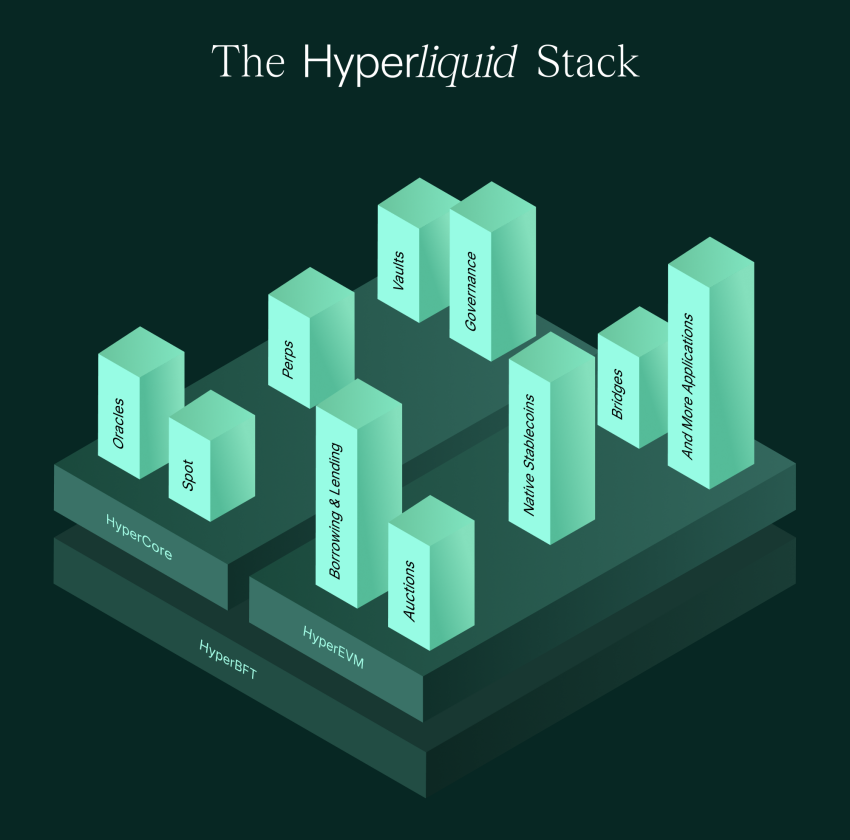
On-chain lending, DEX swaps, yield aggregators—these are naturally better suited for slow, low-frequency operations. Users can accept slower confirmations, higher slippage, and more expensive fees.

But perpetual contracts are entirely different. They are a classic high-frequency financial product. Traders demand millisecond-level responsiveness, stable liquidity depth, smooth order placement and cancellation, and a system that doesn't crash during extreme market conditions.

This is where Hyperliquid's core value lies. It is arguably the first platform to offer ordinary users an on-chain order book perpetual contract experience that approaches the level of CEXs.

First-time users of Hyperliquid experience a strong illusion. It doesn't feel like DeFi; it feels more like Binance or OKX. The interface, order placement logic, market depth, and execution speed all approach the experience range of centralized exchanges.

More importantly, this isn't achieved by sacrificing transparency. Instead, it places key actions like order book management, matching, execution, and liquidation on-chain as much as possible, making the trading process verifiable. This is also why Hyperliquid suddenly gained prominence between 2024 and 2026.

The derivatives market is the largest cash flow entry point in the crypto world. The majority of CEX fee revenue comes from contract trading, and DeFi has long lacked products that can meet this demand.

Historically, the mainstream approaches for on-chain perpetual contracts were either the AMM model, like GMX, which relies on liquidity pools for pricing, or the order book model with off-chain matching, which results in a fragmented experience and compromised decentralization.

The problem with AMMs is their lack of friendliness to professional traders. Depth, pricing, and slippage are often unsatisfactory for large positions. The problem with off-chain matching is insufficient transparency, as users always suspect the platform of operating in a black box.

Thus, Hyperliquid chose the most radical path: if the on-chain environment struggles to handle the high-frequency nature of order books, then build a blockchain specifically designed for trading.

It treats the exchange as the primary purpose of the blockchain, rather than forcing a trading application onto a general-purpose chain.

Beyond user experience, another thing Hyperliquid got right is successfully solving the classic challenge of order book DEXs—liquidity.

Hyperliquid's HLP (Hyperliquid Liquidity Provider) mechanism essentially productizes market-making capabilities. It allows users to deposit funds into a market-making pool, where the system executes market-making strategies, sharing fee revenue and spread profits with the platform.

This means the platform's liquidity no longer relies entirely on external market makers but forms an endogenous cycle. Higher trading volume leads to more fees, which strengthens market-making profits. More capital is incentivized to enter, improving depth and user experience, which in turn drives further volume growth.

Therefore, Hyperliquid's rise is no mystery. It is essentially a rare product-driven project in the DeFi world, built up by real traders.

II. Behind the HYPE Hype—The Equity Narrative of an On-Chain Exchange

Discussing Hyperliquid inevitably involves HYPE. Many people's understanding of HYPE stops at "just another platform token." But if viewed solely through the lens of a platform token, its valuation logic appears quite ordinary.

So HYPE is more like a hybrid asset. It simultaneously carries the value capture expectations of a trading platform and the network effect expectations of a native public chain asset, primarily backed by derivatives trading.
Derivatives are the engine of the crypto world. The spot market is more about buying and selling assets, while the contract market is a continuous fee-collecting casino—higher trading frequency, more stable fee income, and stronger user stickiness.

CEX dominance largely stems from perpetual contracts. Hyperliquid's significance lies in it being the first to show the market that contract trading doesn't have to be provided solely by centralized exchanges. As long as the experience is good enough, the depth is strong enough, and the liquidation is stable enough, on-chain platforms can also meet large-scale perpetual contract trading demand.

This opens up the market imagination for HYPE. If Hyperliquid captures a larger share of the on-chain perpetuals market, it could become a "Binance on-chain" entity, and HYPE would naturally be analogized to an asset like BNB.

But Hyperliquid isn't content with being just a perpetuals platform. Its push for HyperEVM in 2025-2026 indicates its ambition to expand from an exchange to an on-chain financial ecosystem.

The significance of EVM compatibility is simple: it can attract Ethereum ecosystem developers, allowing various DeFi Lego blocks to be built on the Hyperliquid chain.

The exchange provides traffic and capital; the ecosystem provides applications and stickiness. This is the most successful path CEXs have taken over the past decade: use trading as the entry point, then use the ecosystem to widen the moat. Hyperliquid is now moving this path on-chain.

Furthermore, Hyperliquid's dissemination style is more "crypto purist," emphasizing the product, traders, and community drive. Consequently, its user base includes a large number of professional traders and high-frequency players, not just retail users looking to farm airdrops.

This user structure sends a strong signal: this is not a fake prosperity built on subsidies, but a real, sustainable trading venue. This sense of authenticity feels particularly valuable after experiencing so many bubble projects.

III. Hyperliquid's Dilemmas: The Decentralization Contradiction, Systemic Risk, HLP Mechanism, and Regulation

If you only look at Hyperliquid's growth curve, many might think the king of on-chain perpetuals has arrived. But in reality, Hyperliquid's controversies are very focused, primarily stemming from contradictions inherent in its business model.

The biggest contradiction is the issue of decentralization. Hyperliquid is often called the "Binance on-chain." This phrase is both praise and criticism. The praise lies in its极致 (ultimate) user experience; the criticism lies in its behavior sometimes resembling a centralized platform more, such as in risk control, account bans, and address restrictions.

Hyperliquid currently follows a pragmatic middle path. To ensure the stability of the trading system and reduce attacks and abnormal fund flows, it may employ stronger risk control measures.

The problem is, the stronger the risk control, the more it resembles a CEX. The more it resembles a CEX, the more its decentralization narrative is weakened. This contradiction won't disappear; it will only become more acute as the platform scales. Because the larger the trading volume and influence, the more risk management it requires, and the more external pressure it will face to take responsibility.

The second risk comes from the derivatives system itself. Perpetual contracts are highly complex financial products where systemic risk always exists. Examples include extreme market conditions, cascading liquidations, insufficient insurance funds, bad debt, and failure of forced reduction mechanisms. A problem in any one link could trigger a crisis of confidence.

Hyperliquid's challenge is to maintain on-chain transparency while ensuring reliable liquidation during extreme行情 (market conditions).

CEXs have many "off-chain means" to put out fires during black swan events, such as suspending trading, adjusting risk controls, forced position reduction, and temporary rule changes.

On-chain systems find this harder to do. They require stronger mechanism design and greater resilience under pressure. Has Hyperliquid truly undergone sufficient extreme stress tests? This is a question that demands caution.

The third risk comes from HLP. Many new users see HLP and mistakenly think it's a "stable yield pool." But in fact, it's more like a market-making fund.

Its收益 (profits) come from fee sharing and market-making spreads, but its risks come from the counterparty advantage of traders and one-sided impacts during extreme markets. Market making is never a risk-free business; it's a professional field. The essence of HLP is entrusting your funds to the system for market making, while you bear the risk of being "harvested by skilled traders."

In a bull market, high trading volume and plentiful fees make HLP's returns look attractive. But in certain market conditions, it can also experience significant drawdowns. For ordinary users, the biggest risk isn't the loss itself, but misunderstanding the risk and treating it as low-risk wealth management.

The final risk is the collision with regulation and the real world. Derivatives are a heavily regulated area in traditional finance, and perpetual contracts are particularly sensitive products in many countries.

As an on-chain platform, Hyperliquid might operate in a gray area in the short term. But when it grows large enough to enter the mainstream spotlight, regulatory pressure is almost inevitable.

Conclusion

Hyperliquid is not a myth; it is a symbol of DeFi entering the "exchange era."

Hyperliquid is important not because it made some token pump, but because it proves one thing: on-chain derivatives don't have to remain forever in the "usable but not user-friendly" stage. They can achieve an experience close to centralized exchanges and attract real traders to migrate.

But from an investment perspective, the platform remains a high-risk derivatives system. It still faces decentralization controversies, and it still needs to confront extreme market conditions and regulatory reality as it scales.

If the past DeFi era belonged to protocols, then what Hyperliquid represents is the era where DeFi goes to market. It is not the endpoint, but it might be a turning point.


Twitter:https://twitter.com/BitpushNewsCN

Bitpush TG Discussion Group:https://t.me/BitPushCommunity

Bitpush TG Subscription: https://t.me/bitpush

Original Link:https://www.bitpush.news/articles/7614336

Трендові криптовалюти

Пов'язані питання

QWhat is Hyperliquid and how does it aim to change the DeFi landscape?

AHyperliquid is a Layer 1 blockchain specifically built for trading, designed to bring a near-centralized exchange (CEX) experience to on-chain perpetual contracts. It places order books, matching, execution, and liquidation primarily on-chain, aiming to capture the massive derivatives market traditionally dominated by CEXs by offering superior user experience and transparency.

QWhat mechanism does Hyperliquid use to solve the liquidity problem common in order book DEXs?

AHyperliquid employs the HLP (Hyperliquid Liquidity Provider) mechanism, which productizes market-making capabilities. It allows users to deposit funds into a market-making pool where the system executes strategies, enabling users to share in the platform's fee and spread revenue, thus creating an endogenous liquidity cycle that improves with increased trading volume.

QHow does the HYPE token function beyond being a typical platform token?

AThe HYPE token is a hybrid asset that captures value from both the trading platform and the network effects of its native blockchain. It is likened to 'equity' in a chain-based exchange, with its valuation tied to the growth of on-chain perpetual contract trading and the expansion of the Hyperliquid ecosystem, including its HyperEVM compatibility for broader DeFi application development.

QWhat are the main controversies or risks associated with Hyperliquid?

AKey controversies include its pragmatic approach to decentralization, which involves centralized-like risk management practices such as address restrictions; systemic risks inherent in complex perpetual contracts, such as cascading liquidations during extreme volatility; the potential misunderstanding of HLP's risks as a low-yield product rather than a market-making fund; and impending regulatory scrutiny as the platform scales.

QWhy is Hyperliquid considered a sign of DeFi entering the 'exchange era'?

AHyperliquid signifies the 'exchange era' of DeFi by demonstrating that on-chain derivatives can achieve a user experience comparable to centralized exchanges, attracting real traders. It moves beyond the protocol-focused DeFi of the past, focusing on market-driven growth, ecosystem expansion, and capturing value from high-frequency financial products like perpetual contracts.

Пов'язані матеріали

STAR 50 Soars 10.73%, Why Did A-Shares Stage a "V-Shaped Reversal"?

After a prolonged decline, the Chinese A-share market staged a strong rally on July 21. The STAR 50 index surged 10.73%, its largest single-day gain in nearly a year, leading a broad-based "V-shaped" reversal. The Shanghai Composite Index rose 1.79%, the Shenzhen Component Index gained 4.81%, and the ChiNext Index jumped 7.05%. Total market turnover reached 2.97 trillion yuan, an increase of 256.1 billion yuan from the previous session, with over 3,100 stocks advancing. The semiconductor sector spearheaded the rebound, with related ETFs posting significant gains. Analysts attribute the surge to three converging factors. First, coordinated capital inflows from "national team" institutions, insurance funds, listed company buybacks, and fund house self-purchases have bolstered market liquidity and confidence. Second, supportive policy signals, including commitments from regulators to ensure stable market operations, provided a favorable backdrop. Third, a stabilization and recovery in overseas markets, notably South Korea, created a positive external environment. Institutions suggest the most severe panic selling phase for the tech sector has likely passed, following a significant digestion of crowded positions and leveraged funds. While short-term volatility may persist, the medium to long-term outlook remains underpinned by enduring trends like AI computing demand expansion and semiconductor localization. The market's focus now shifts to the sustainability of supportive fund flows, earnings reports, and upcoming catalysts from the global AI industry chain.

marsbit18 хв тому

STAR 50 Soars 10.73%, Why Did A-Shares Stage a "V-Shaped Reversal"?

marsbit18 хв тому

U.S. Tech Momentum Stocks Post Largest Single-Day Gain Ever, But Is the Plunge Over?

US tech momentum stocks staged a sharp rebound on Tuesday (July 21st). Morgan Stanley's TMT Momentum Factor surged over 12%, marking its largest single-day gain on record, exceeding even peaks from the 2000 dot-com bubble. Key momentum indices from Goldman Sachs also posted their strongest daily performances in years. The rally was led by semiconductors, with the Philadelphia Semiconductor Index jumping 4.6%. This rebound followed three consecutive down days and a cumulative 33% plunge in momentum stocks, one of the steepest drawdowns since the dot-com era. Analysts attribute the surge largely to a short squeeze. Heavy selling had pushed high-beta momentum stocks into deeply oversold territory, forcing many short sellers, particularly in Asia, to cover their positions, creating a self-reinforcing buying spiral. However, the rebound's internals appear weak. Trading volume was notably low, and advancing stocks still lagged decliners on the S&P 500, indicating a narrow, concentrated rally rather than broad market participation. Diverging views emerge on the outlook. BTIG warns the bounce has hit key resistance and recommends selling into strength, citing extreme volatility and historical parallels to past market tops. Conversely, Goldman Sachs and UBS believe the momentum unwind is nearing its end, suggesting it may be time to gradually add exposure, as positioning has been significantly reduced. They caution, however, that high volatility warrants a measured approach, potentially using defined-risk strategies. The upcoming earnings season, particularly reports from major tech firms like Alphabet, is seen as a critical test for the rally's sustainability. Simultaneously, bond markets flashed a warning, with yields rising partly due to spiking oil prices. Analysts note that if long-term Treasury yields break decisively higher, it could pose a significant headwind for equities, especially growth stocks.

marsbit26 хв тому

U.S. Tech Momentum Stocks Post Largest Single-Day Gain Ever, But Is the Plunge Over?

marsbit26 хв тому

U.S. Tech Momentum Stocks Record Largest Single-Day Gain Ever, but Has the Rout Ended?

U.S. tech momentum stocks staged a dramatic rebound on Tuesday, July 21st. Key momentum indices like the Morgan Stanley TMT Momentum Factor and Goldman Sachs' High Beta Momentum Long Index posted historic or near-historic single-day gains, fueled largely by semiconductor stocks. This sharp rally followed a severe three-day sell-off that saw momentum stocks plunge 33%, marking one of the steepest pullbacks since the dot-com bubble. Analysts attribute the bounce primarily to a short squeeze, as forced covering from over-leveraged traders, particularly in Asia, created a buying spiral. However, the rally's health is questioned due to weak market breadth—overall trading volume was low, and decliners outnumbered advancers in the S&P 500 despite the index's gain—suggesting a narrow, concentrated surge rather than broad recovery. Opinions on the sustainability diverge. BTIG strategists warn the rebound has hit key resistance levels, citing extreme volatility and historic stock dispersion as signs of an ongoing broader correction, and recommend selling into strength. Conversely, Goldman Sachs and UBS view the aggressive momentum unwinding as nearing its end, noting reduced positioning and a lack of new fundamental catalysts. They suggest the sell-off presents a selective opportunity to add exposure, albeit cautiously and gradually using defined-risk strategies. The immediate trajectory hinges on the ongoing earnings season, with market focus on Alphabet's capital expenditure guidance for AI investment clarity. Meanwhile, bond markets present a risk, with rising Treasury yields—potentially heading toward 5.5%—and widening credit spreads for mega-cap tech companies posing a threat to equity valuations. The combination of technical factors, earnings results, and macro conditions leaves the durability of the rebound in doubt.

链捕手28 хв тому

U.S. Tech Momentum Stocks Record Largest Single-Day Gain Ever, but Has the Rout Ended?

链捕手28 хв тому

Long-Divided Must Unite, Long-United Must Divide: When L1 Becomes Its Own Rollup, What Is Ethereum's Endgame?

"The Inevitable Cycle: When L1 Becomes Its Own Rollup – What is Ethereum's Endgame?" For years, the Ethereum community grappled with concerns that L2s were fragmenting the ecosystem and eroding L1's value. While L2s provided cheaper execution, they also splintered liquidity and the unified user experience of a single chain. This has prompted a fundamental reassessment of the relationship between L1 and L2. Ethereum's roadmap is evolving. The "Scale" initiative merges L1 and L2 expansion into a holistic framework. L1 itself is advancing with higher gas limits, statelessness, and zkEVM verification, no longer content to be just a low-throughput settlement layer. Consequently, the primary value proposition of L2s is shifting from merely providing cheap blockspace to offering L1 cannot easily provide: application-specific optimizations, privacy features, and flexible governance models. L2s are becoming a spectrum of execution environments with varying degrees of security inheritance from Ethereum. A critical challenge in this multi-chain future is interoperability. The vision is to make Ethereum "feel like one chain again." This relies on advancements in native account abstraction (like EIP-7702) and intent-based architectures (Open Intents Framework), where users declare desired outcomes, and solvers handle the complex cross-chain execution. Furthermore, shortening Ethereum's finality time from minutes to seconds is crucial, as it underpins trust between chains for bridges, stablecoins, and cross-chain applications. Perhaps the most provocative idea is that Ethereum L1 itself could become a form of "its own Rollup." As zkEVM and proof systems mature, high-performance nodes could execute transactions and generate validity proofs. Regular validators would then verify these proofs instead of re-executing all transactions. This blurs the traditional L1/L2 hierarchy, making "Rollup" more of a general execution-verification architecture. Native Rollup aims to integrate L2 validation more directly into the Ethereum protocol, allowing L2s to inherit L1's security more fully and move away from reliance on security councils. In the end, L2s are not destined to replace L1 or be made obsolete by it. The likely future is a unified system where diverse execution environments—each optimized for specific use cases like DeFi, gaming, or privacy—coexist. They will share a common foundation of security, liquidity, and verifiable state, seamlessly connected to restore a cohesive user experience. The next phase for Ethereum is not just about scaling through separation, but about intelligently reintegrating what was separated back into a coherent whole.

链捕手44 хв тому

Long-Divided Must Unite, Long-United Must Divide: When L1 Becomes Its Own Rollup, What Is Ethereum's Endgame?

链捕手44 хв тому

Торгівля

Спот

Популярні статті

Як купити ERA

Ласкаво просимо до HTX.com! Ми зробили покупку Caldera (ERA) простою та зручною. Дотримуйтесь нашої покрокової інструкції, щоб розпочати свою криптовалютну подорож.Крок 1: Створіть обліковий запис на HTXВикористовуйте свою електронну пошту або номер телефону, щоб зареєструвати обліковий запис на HTX безплатно. Пройдіть безпроблемну реєстрацію й отримайте доступ до всіх функцій.ЗареєструватисьКрок 2: Перейдіть до розділу Купити крипту і виберіть спосіб оплатиКредитна/дебетова картка: використовуйте вашу картку Visa або Mastercard, щоб миттєво купити Caldera (ERA).Баланс: використовуйте кошти з балансу вашого рахунку HTX для безперешкодної торгівлі.Треті особи: ми додали популярні способи оплати, такі як Google Pay та Apple Pay, щоб підвищити зручність.P2P: Торгуйте безпосередньо з іншими користувачами на HTX.Позабіржова торгівля (OTC): ми пропонуємо індивідуальні послуги та конкурентні обмінні курси для трейдерів.Крок 3: Зберігайте свої Caldera (ERA)Після придбання Caldera (ERA) збережіть його у своєму обліковому записі на HTX. Крім того, ви можете відправити його в інше місце за допомогою блокчейн-переказу або використовувати його для торгівлі іншими криптовалютами.Крок 4: Торгівля Caldera (ERA)Легко торгуйте Caldera (ERA) на спотовому ринку HTX. Просто увійдіть до свого облікового запису, виберіть торгову пару, укладайте угоди та спостерігайте за ними в режимі реального часу. Ми пропонуємо зручний досвід як для початківців, так і для досвідчених трейдерів.

501 переглядів усьогоОпубліковано 2025.07.17Оновлено 2026.06.02

Як купити ERA

Обговорення

Ласкаво просимо до спільноти HTX. Тут ви можете бути в курсі останніх подій розвитку платформи та отримати доступ до професійної ринкової інформації. Нижче представлені думки користувачів щодо ціни ERA (ERA).

活动图片













