When Bitcoin Miners Take to Space

marsbitОпубліковано о 2026-04-01Востаннє оновлено о 2026-04-01

Анотація

SpaceX is reportedly preparing for a historic IPO with a target of $1.75 trillion, while simultaneously advancing plans to deploy AI data centers in orbit, leveraging space’s vacuum for cooling and solar energy for power. This has sparked interest in whether Bitcoin mining—also energy-intensive and dependent on computing hardware—could also move to space. The core idea involves placing mining ASICs on the back of solar panels in orbit, using abundant solar energy to power mining operations. Heat dissipation in vacuum, a key challenge, is manageable through thermal radiation, and communication with mining pools is feasible with low latency via low Earth orbit satellites. However, the economics remain prohibitive. Launch costs, currently around $2,720 per kilogram via Falcon 9, make mining payloads financially unviable. Estimates suggest that with current technology, the payback period would exceed 100 years. SpaceX’s Starship may eventually reduce launch costs below $200/kg, making space mining more feasible. Companies like Starcloud—backed by NVIDIA and top VCs—are already testing orbit-based computing, including AI and planned Bitcoin mining experiments. Others, like SpaceChain and Cryptosat, focus on secure blockchain nodes and cryptographic services in space rather than mining. While orbital mining is not yet economically competitive with terrestrial operations, it represents a long-term vision for radically reducing energy costs and expanding the infrastructure of dec...

According to multiple media reports, Musk's space exploration company SpaceX will soon submit an IPO prospectus to the U.S. Securities and Exchange Commission (SEC), targeting a valuation of $1.75 trillion and an expected financing scale exceeding $75 billion. If successful, this would be the largest IPO in human history, far surpassing the record of $29.4 billion set by Saudi Aramco in 2019, and it will also be the most watched IPO this year.

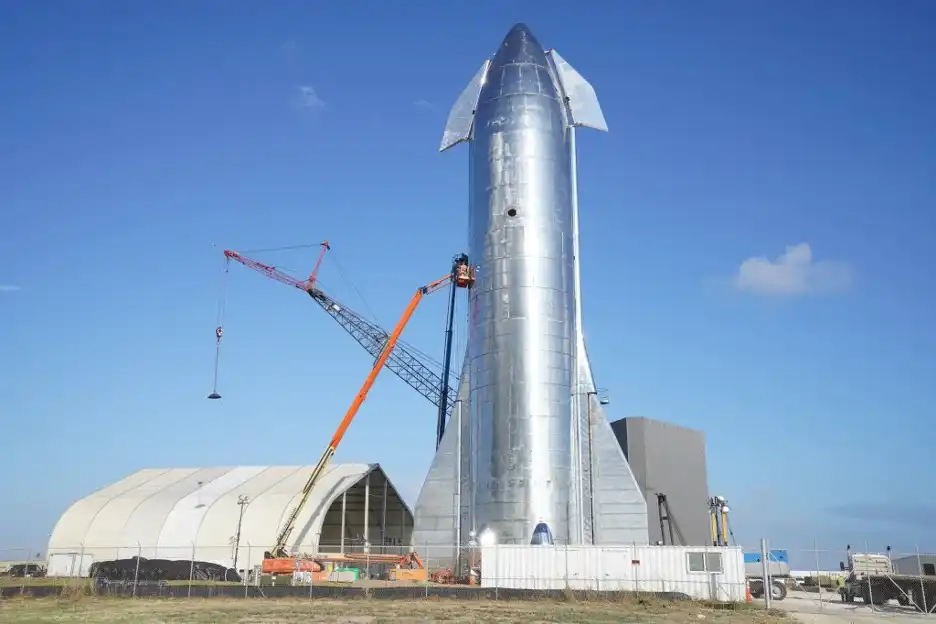
Interestingly, in February 2026, SpaceX suddenly acquired xAI, another AI company under Musk, and incorporated the "Orbital Data Center" into its core strategy: utilizing the vacuum of space for heat dissipation and continuous solar power supply to send AI computing power into low Earth orbit. Musk believes that, in the long run, space-based AI is the only way to achieve scalable development.

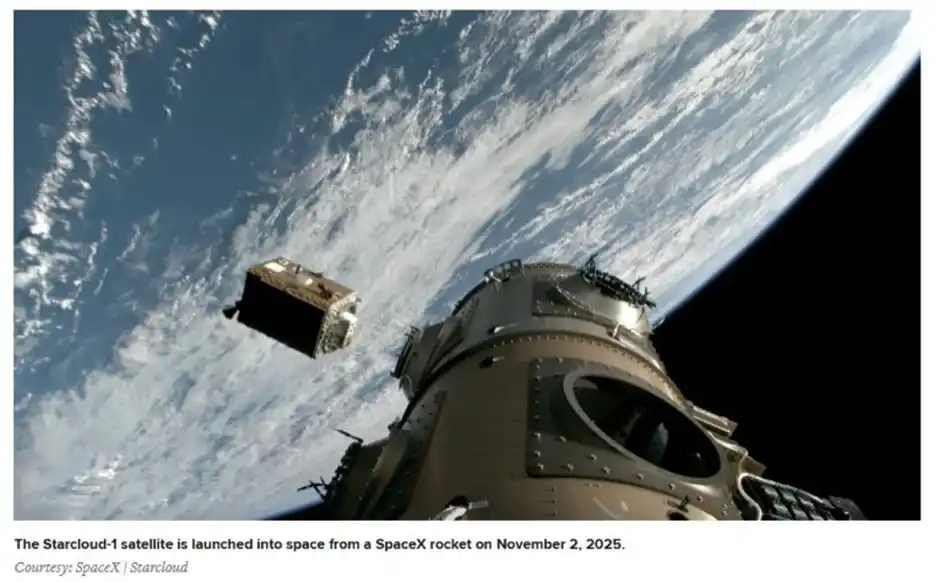
At the same time, NVIDIA is also actively exploring this direction. It has invested in the orbital data center startup Starcloud, which successfully sent an NVIDIA H100 GPU into orbit in November 2025, completing the first-ever training and inference of an AI large language model in space.
As SpaceX sends AI computing power into space, many are also beginning to wonder: since Bitcoin mining also relies on computing chips and can utilize solar power, could it also be moved to space? However, this issue is far more complex than most people imagine.

A Satellite, a Solar Panel, a Miner

Mining is a competitive mathematical calculation. Millions of miners worldwide operate simultaneously, competing to be the first to solve a specific hash value, with the successful one receiving the Bitcoin reward for the current block. This process is called Proof of Work, and its cost is a massive amount of electricity. The continuous power consumption of the global Bitcoin network is approximately 20 gigawatts, equivalent to the total industrial electricity consumption of a medium-sized country. Miners' profit margins are largely determined by electricity prices; once electricity prices rise, profit margins are compressed.

The endless sunlight in space directly addresses the core cost variable of Bitcoin mining: electricity.

In Earth's orbit, solar radiation intensity is about 1,380 watts per square meter, six times the average level on the ground, and is unaffected by clouds, day/night cycles, or seasons. In specific geosynchronous orbits, satellites can receive near-continuous sunlight and generate power persistently. Attaching a miner to the back of a solar panel and sending it into orbit to mine forever is the underlying logic of space mining.

Bitcoin core developer Peter Todd published a technical analysis in December 2024, pushing this idea from concept to an engineering blueprint. He proposed the concept of a "flat-panel miner": installing ASIC chips directly on the back of a solar panel, with the front facing the sun to generate power and the chips on the back consuming electricity to mine, with the entire structure radiating waste heat in both directions.
Space heat dissipation is a counterintuitive challenge. On Earth, chip heat can be carried away by air convection; but in the vacuum of space, with no air, heat can only be dissipated through radiation. Todd's calculations show that, without additional cooling devices, the thermal equilibrium temperature of this structure in orbit is about 59°C, well within the normal operating range of the chips. If the temperature is considered too high, simply tilting the entire panel slightly relative to the sun to reduce the illuminated area can further improve heat dissipation.

Communication is surprisingly simple as well. The communication between miners and mining pools essentially involves receiving new block headers and submitting computation results, generating about 10MB of data per day, less than the data consumed by streaming a single song. Communication latency in low Earth orbit (500 to 1,000 km above Earth) ranges from 4 to 30 milliseconds, resulting in a stale block rate (i.e., submitting outdated computation results) of less than 0.01%, on par with the vast majority of ground-based miners, with no substantial difference. In fact, Blockstream began using geosynchronous satellites to broadcast the entire Bitcoin blockchain globally as early as 2017, proving that the combination of satellites and blockchain has never been an unsolved problem.

So, if it's physically feasible and the engineering framework is viable, why isn't it widespread? The reason is the high cost of rocket transportation.

The Uneconomical Math

Using SpaceX's Falcon 9 rocket to send cargo to low Earth orbit currently costs about $2,720 per kilogram.

Peter Todd estimated that a complete 20-kilowatt space mining system, including solar panels, heat radiators, ASIC chip arrays, structural supports, and communication modules, weighs about 1,600 to 2,200 kilograms. At current prices, the launch cost alone would be as high as $4.3 million to $6 million.

How much computing power can this system contribute daily, and how many coins can it mine? Researcher Nick Moran provided the answer: daily revenue is about $92.7, equivalent to roughly $34,000 per year. The payback period exceeds 100 years.

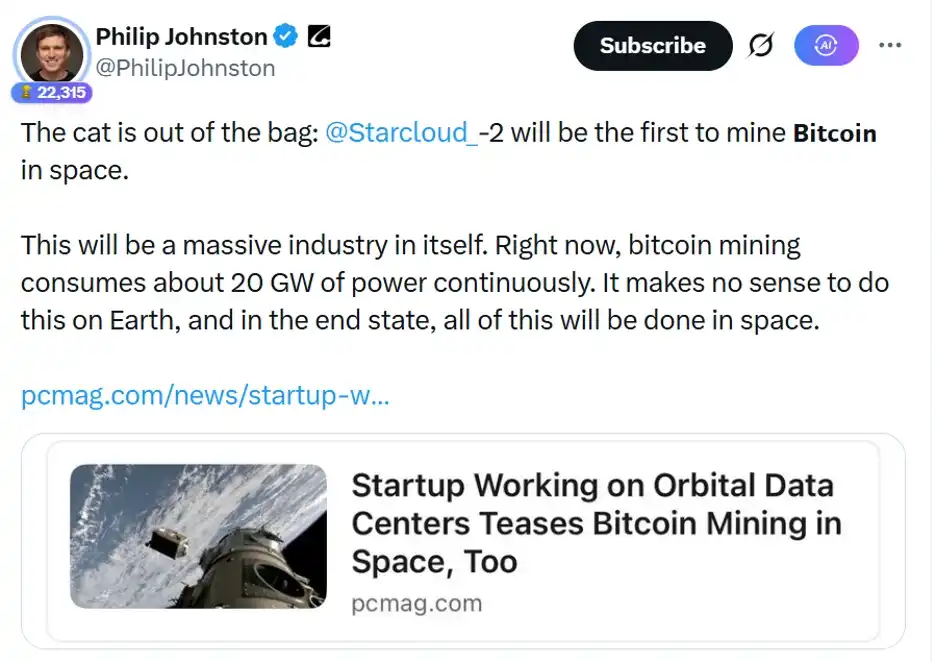
Starcloud's CEO Philip Johnston calculated that launch costs must drop below $200 per kilogram for space mining to have basic commercial logic. This means the cost needs to decrease by another 13.

SpaceX's Starship is widely considered the key to achieving this leap. The fully reusable Starship could theoretically reduce the launch cost per kilogram to below $100 or even lower, which is one of the underlying assumptions for the viability of the orbital data center in SpaceX's current IPO vision. However, when this cost curve will materialize, and whether it will, remains an open variable.
Another challenge is the automatic adjustment of Bitcoin's network-wide mining difficulty. The Bitcoin protocol calculates the total network hash rate every two weeks and automatically adjusts the mining difficulty to maintain a block time of approximately 10 minutes. In other words, if a large number of space miners enter the market and the total network hash rate increases significantly, the mining difficulty will rise accordingly, synchronously compressing the profits of all miners, including those in orbit.

Some Are Always Busy Searching for Treasure

Despite this, a number of startups are actively pushing forward with this endeavor.

Starcloud, formerly Lumen Orbit, is currently the company closest to actual implementation and the most important case study in the entire field. Founded in 2024 and headquartered in Redmond, Washington, it is backed by NFX, Y Combinator, a16z's angel fund, Sequoia Capital's angel fund, and NVIDIA. Total funding is approximately $200 million. The company's CTO worked at Airbus Defense and Space for ten years, and the lead engineer previously worked on the Starlink project at SpaceX.

In November 2025, Starcloud successfully sent its first satellite, carrying an NVIDIA H100 GPU, into orbit, ran Google's Gemma language model in space, and sent the first-ever message generated by AI in orbit to Earth. In March 2026, Starcloud announced that its second satellite would carry both Bitcoin ASIC chips and NVIDIA's latest-generation Blackwell GPU, aiming to become the first organization to mine a Bitcoin in space. Additionally, the company has applied to the U.S. Federal Communications Commission (FCC) for a constellation plan deploying up to 88,000 satellites, with a long-term vision of building a total of 5 gigawatts of computing power infrastructure in orbit.
SpaceChain is an OG player in this field, co-founded by former Bitcoin core developer Jeff Garzik and Zheng Zhong. Since 2017, SpaceChain has launched at least seven blockchain payloads to satellites and the International Space Station. In June 2020, Garzik completed the first-ever Bitcoin transaction in space from an orbit 400 km above Earth, for an amount of 0.0099 BTC, using SpaceChain's multisignature wallet node installed on the space station. SpaceChain's core focus is on orbital secure nodes for blockchain transactions, not active mining: locking private keys in space where no hacker or government on Earth can physically access them.

Cryptosat, founded by two Stanford PhDs, currently operates three satellites in orbit, primarily providing tamper-resistant orbital cryptography services. In 2023, Cryptosat participated in the largest trusted setup ceremony in Ethereum's history (KZG Ceremony), generating partial random number parameters through orbital nodes, institutionally ensuring that these parameters could not be controlled by any single ground-based entity. It explores another possibility for space blockchain: not mining, but making the entire crypto-economic system more resistant to attack.

From Orbit to Market: What This Means for the Mining Industry

For currently operating Bitcoin mining companies, space mining does not pose an immediate competitive threat in the short term. However, the fact that numerous startups continue to attempt it indicates that the significant cost reduction potential it represents still holds great attraction and imaginative space for the industry. This also reflects, from a side perspective, the structural cost pressures facing the entire industry.

After the 2024 halving, the network-wide hash rate and difficulty continue to hit record highs, with energy costs accounting for 70% to 90% of total operating expenses. In this context, whoever can obtain clean electricity at the lowest cost and most stably has the deepest moat. Hydroelectric, wind, and associated natural gas resources in the United States, the Middle East, and Africa are becoming the core drivers of a new wave of mining mergers, acquisitions, and site selection.

The logic of space mining is an ultimate extrapolation of this trend: if cheap electricity on the ground will eventually narrow due to competitive demand, then go to where energy is most abundant—the cosmos.

Of course, if the Starcloud-2 satellite manages to mine the first Bitcoin in 2026, it would be equivalent to a grain of sand falling into the ocean compared to the global total hash rate of over 900 exahashes per second (EH/s). But symbolic significance itself has penetrating power. Just like that 0.0099 BTC space transaction in 2020, its value lies not in the amount but in proving that it can be done.

From SpaceX's IPO narrative to NVIDIA's orbital computing power布局, to Starcloud's ASIC satellite plan, an outline is emerging: the cosmos is becoming the competitive arena for the next generation of computing infrastructure. AI computing power led the way, and Bitcoin computing power is following closely behind.

On that day, the global digital network connecting every corner of the Earth, as described in Satoshi Nakamoto's whitepaper, could also break free from Earth and float in the universe, seeking new opportunities.

Пов'язані питання

QWhat is the core concept behind space-based Bitcoin mining as described in the article?

AThe core concept is to place Bitcoin mining hardware, specifically ASIC chips, on solar panels in Earth's orbit. This setup uses the abundant and constant solar energy in space for power, while the vacuum environment aids in radiating heat away from the mining equipment.

QWhat is the single biggest economic challenge preventing the widespread adoption of space-based Bitcoin mining?

AThe single biggest economic challenge is the extremely high cost of rocket launches to transport the mining equipment into orbit, currently around $2,720 per kilogram using a Falcon 9 rocket, making the payback period over 100 years.

QWhich company, backed by NVIDIA, is a key player in testing both AI and Bitcoin mining operations in space?

AStarcloud (formerly Lumen Orbit) is the company backed by NVIDIA. It successfully sent an NVIDIA H100 GPU into orbit in 2025 and announced plans for a second satellite to carry both Bitcoin ASIC chips and a Blackwell GPU.

QHow does the Bitcoin network's difficulty adjustment mechanism impact the potential profitability of space-based miners?

AThe Bitcoin protocol automatically adjusts the mining difficulty every two weeks based on the total network hashrate. If many space-based miners come online and significantly increase the total hashrate, the difficulty will rise, compressing profit margins for all miners, including those in space.

QBesides mining, what other two applications of blockchain technology in space are mentioned in the article?

AThe two other applications are: 1) Operating secure, tamper-proof orbital nodes for transactions and wallet storage (e.g., SpaceChain's multi-signature wallet on the ISS). 2) Providing trusted setup ceremonies and cryptographic services to enhance the security of crypto-economic systems (e.g., Cryptosat's role in Ethereum's KZG Ceremony).

Пов'язані матеріали

Торгівля

Спот
Ф'ючерси

Популярні статті

Що таке BITCOIN

Розуміння HarryPotterObamaSonic10Inu (ERC-20) та його позиції у крипто-просторі Останніми роками ринок криптовалют спостерігав за зростанням популярності мем-коінів, які привертають інтерес не тільки трейдерів, але й тих, хто шукає спілкування та розважальну цінність. Серед цих унікальних токенів є HarryPotterObamaSonic10Inu (ERC-20), інтригуючий проект, що поєднує культурні посилання з тканинами криптовалюти. Ця стаття досліджує ключові аспекти HarryPotterObamaSonic10Inu, вивчаючи його механізми, спільноту та його взаємодію з ширшим крипто-ландшафтом. Що таке HarryPotterObamaSonic10Inu (ERC-20)? Як випливає з його назви, HarryPotterObamaSonic10Inu є мем-коіном, побудованим на блокчейні Ethereum, класифікованим за стандартом ERC-20. На відміну від традиційних криптовалют, які можуть підкреслювати практичну корисність або інвестиційний потенціал, цей токен процвітає завдяки розважальній цінності та силі своєї спільноти. Проект спрямований на створення середовища, де зацікавлені користувачі можуть об'єднуватися, ділитися ідеями та брати участь у заходах, натхненних різноманітними культурними явищами. Однією з примітних особливостей HarryPotterObamaSonic10Inu є нульовий податок на транзакції. Цей привабливий елемент має на меті заохочувати торгівлю та участь у спільноті, позбавлену додаткових витрат, які можуть відлякувати дрібних трейдерів. Загальна пропозиція монет становить один мільярд токенів, що позначає намір підтримувати суттєву циркуляцію в межах спільноти. Творець HarryPotterObamaSonic10Inu (ERC-20) Походження HarryPotterObamaSonic10Inu дещо окутане таємницею; деталі про творця залишаються невідомими. Розвиток цього токена позбавлений впізнаваної команди або чіткої стратегії, що не є рідкістю в секторі мем-коінів. Натомість проект виник органічно, а його розвиток значною мірою залежить від ентузіазму та участі його спільноти. Інвестори HarryPotterObamaSonic10Inu (ERC-20) Щодо зовнішніх інвестицій та підтримки, HarryPotterObamaSonic10Inu також залишається невизначеним. Токен не зазначає жодних відомих інвестиційних фондів або значної організаційної підтримки. Натомість життєва сила проекту полягає в його базовій спільноті, яка інформує про його зростання та стійкість через колективні дії та залученість у крипто-просторі. Як працює HarryPotterObamaSonic10Inu (ERC-20)? Як мем-коін, HarryPotterObamaSonic10Inu функціонує передусім поза традиційними рамками, що часто регулюють вартість активів. Є кілька відмінних аспектів, що визначають, як працює проект: Транзакції без податку: Завдяки відсутності податкових зборів на транзакції, користувачі можуть вільно купувати та продавати токен, не турбуючись про приховані витрати. Залучення спільноти: Проект процвітає завдяки взаємодії спільноти, використовуючи соціальні медіа для створення шуму та сприяння залученню. Обговорення, обмін контентом та залученість є ключовими елементами, що допомагають розширити його охоплення та зміцнити лояльність серед прихильників. Відсутність практичної корисності: Слід зазначити, що HarryPotterObamaSonic10Inu не пропонує конкретної корисності в рамках фінансової екосистеми. Натомість він класифікується як токен, що призначений в основному для розваги та спільнотних активностей. Культурне посилання: Токен кмітливо вплітає елементи популярної культури, щоб привернути інтерес, зв'язуючи з ентузіастами мемів та крипто-стежками. HarryPotterObamaSonic10Inu ілюструє, як мем-коіни функціонують інакше, ніж традиційні криптовалютні проекти, увійшовши на ринок як інноваційні соціальні конструкти, а не утилітарні активи. Хронологія HarryPotterObamaSonic10Inu (ERC-20) Історія HarryPotterObamaSonic10Inu відзначена кількома значними етапами: Створення: Токен виник з вірусного мему, захопивши уяву багатьох крипто-ентузіастів. Конкретні дати створення недоступні, що підкреслює його органічний розвиток. Лістинг на біржах: HarryPotterObamaSonic10Inu з'явився на різних біржах, дозволяючи зручніший доступ і торгівлю спільноти. Ініціативи залучення спільноти: Ведення діяльності, спрямованої на покращення взаємодії спільноти, включаючи конкурси, кампанії в соціальних мережах та створення контенту від фанатів та прихильників. Плани на майбутнє: Дорожня карта проекту включає запуск колекції NFT, мерчандайзинг та електронну комерцію, пов'язану з його культурними темами, що далі залучає спільноту та намагається додати більше вимірів до його екосистеми. Ключові моменти про HarryPotterObamaSonic10Inu (ERC-20) Спільнотний підхід: Проект надає пріоритет колективному внеску та креативності, забезпечуючи, щоб участь користувачів була в центрі його розвитку. Класифікація як мем-коін: Це є його епігенез розважальної криптовалюти, що відрізняється від традиційних інвестиційних інструментів. Жодного прямого відношення до Bitcoin: Незважаючи на схожість у назві, HarryPotterObamaSonic10Inu є відмінним і не має жодного зв’язку з Bitcoin або іншими усталеними криптовалютами. Зосередженість на співпраці: HarryPotterObamaSonic10Inu створено для того, щоб надати простір для співпраці та обміну історіями серед його власників, забезпечуючи шлях для творчості та спільного зв'язку. Перспективи на майбутнє: Амбіція розширитися за межі початкової концепції в NFT та мерчандайз відкриває шлях для проекту потенційно потрапити в більш мейнстрімні сфери цифрової культури. Оскільки мем-коіни продовжують захоплювати уяву спільноти криптовалют, HarryPotterObamaSonic10Inu (ERC-20) вирізняється своїми культурними зв'язками та орієнтованим на спільноту підходом. Хоча він може не відповідати типовій моделі утилітарного токена, його суть полягає в радощах і товариськості, що підтримуються серед його прихильників, підкреслюючи еволюційну природу криптовалют в усе більш цифрову епоху. Оскільки проект продовжує розвиватися, важливо спостерігати за тим, як динаміка спільноти вплине на його траєкторію в постійно змінюваному ландшафті технології блокчейн.

1.7k переглядів усьогоОпубліковано 2024.04.01Оновлено 2024.12.03

Що таке BITCOIN

Як купити BTC

Ласкаво просимо до HTX.com! Ми зробили покупку Bitcoin (BTC) простою та зручною. Дотримуйтесь нашої покрокової інструкції, щоб розпочати свою криптовалютну подорож.Крок 1: Створіть обліковий запис на HTXВикористовуйте свою електронну пошту або номер телефону, щоб зареєструвати обліковий запис на HTX безплатно. Пройдіть безпроблемну реєстрацію й отримайте доступ до всіх функцій.ЗареєструватисьКрок 2: Перейдіть до розділу Купити крипту і виберіть спосіб оплатиКредитна/дебетова картка: використовуйте вашу картку Visa або Mastercard, щоб миттєво купити Bitcoin (BTC).Баланс: використовуйте кошти з балансу вашого рахунку HTX для безперешкодної торгівлі.Треті особи: ми додали популярні способи оплати, такі як Google Pay та Apple Pay, щоб підвищити зручність.P2P: Торгуйте безпосередньо з іншими користувачами на HTX.Позабіржова торгівля (OTC): ми пропонуємо індивідуальні послуги та конкурентні обмінні курси для трейдерів.Крок 3: Зберігайте свої Bitcoin (BTC)Після придбання Bitcoin (BTC) збережіть його у своєму обліковому записі на HTX. Крім того, ви можете відправити його в інше місце за допомогою блокчейн-переказу або використовувати його для торгівлі іншими криптовалютами.Крок 4: Торгівля Bitcoin (BTC)Легко торгуйте Bitcoin (BTC) на спотовому ринку HTX. Просто увійдіть до свого облікового запису, виберіть торгову пару, укладайте угоди та спостерігайте за ними в режимі реального часу. Ми пропонуємо зручний досвід як для початківців, так і для досвідчених трейдерів.

4.2k переглядів усьогоОпубліковано 2024.12.12Оновлено 2025.03.21

Як купити BTC

Що таке $BITCOIN

ЦИФРОВЕ ЗОЛОТО ($BITCOIN): Комплексний аналіз Вступ до ЦИФРОВОГО ЗОЛОТА ($BITCOIN) ЦИФРОВЕ ЗОЛОТО ($BITCOIN) — це проект на основі блокчейну, що працює в мережі Solana, який має на меті поєднати характеристики традиційних дорогоцінних металів з інноваціями децентралізованих технологій. Хоча він має таку ж назву, як і Bitcoin, який часто називають “цифровим золотом” через його сприйняття як засобу збереження вартості, ЦИФРОВЕ ЗОЛОТО є окремим токеном, розробленим для створення унікальної екосистеми в ландшафті Web3. Його мета — позиціонувати себе як життєздатний альтернативний цифровий актив, хоча деталі щодо його застосувань і функціональностей все ще розробляються. Що таке ЦИФРОВЕ ЗОЛОТО ($BITCOIN)? ЦИФРОВЕ ЗОЛОТО ($BITCOIN) — це токен криптовалюти, спеціально розроблений для використання в блокчейні Solana. На відміну від Bitcoin, який виконує широко визнану роль зберігання вартості, цей токен, здається, зосереджується на більш широких застосуваннях і характеристиках. Помітні аспекти включають: Інфраструктура блокчейну: Токен побудований на блокчейні Solana, відомому своєю здатністю обробляти швидкі та низьковартісні транзакції. Динаміка постачання: ЦИФРОВЕ ЗОЛОТО має максимальне постачання, обмежене 100 квадрильйонами токенів (100P $BITCOIN), хоча деталі щодо його обігового постачання наразі не розголошуються. Утиліта: Хоча точні функціональності не викладені, є вказівки на те, що токен може бути використаний для різних застосувань, потенційно пов'язаних з децентралізованими додатками (dApps) або стратегіями токенізації активів. Хто є творцем ЦИФРОВОГО ЗОЛОТА ($BITCOIN)? На даний момент особа творців і команди розробників, що стоять за ЦИФРОВИМ ЗОЛОТОМ ($BITCOIN), залишається невідомою. Ця ситуація є типовою для багатьох інноваційних проектів у сфері блокчейну, особливо тих, що пов'язані з децентралізованими фінансами та феноменом мем-коінів. Хоча така анонімність може сприяти культурі, орієнтованій на спільноту, вона посилює занепокоєння щодо управління та підзвітності. Хто є інвесторами ЦИФРОВОГО ЗОЛОТА ($BITCOIN)? Доступна інформація вказує на те, що ЦИФРОВЕ ЗОЛОТО ($BITCOIN) не має жодних відомих інституційних спонсорів або помітних венчурних капіталовкладень. Проект, здається, працює за моделлю “рівний до рівного”, зосереджуючись на підтримці та прийнятті спільноти, а не на традиційних шляхах фінансування. Його активність і ліквідність переважно розташовані на децентралізованих біржах (DEX), таких як PumpSwap, а не на встановлених централізованих торгових платформах, що ще більше підкреслює його підхід знизу вгору. Як працює ЦИФРОВЕ ЗОЛОТО ($BITCOIN) Операційні механізми ЦИФРОВОГО ЗОЛОТА ($BITCOIN) можна детальніше розглянути на основі його дизайну блокчейну та характеристик мережі: Механізм консенсусу: Використовуючи унікальний proof-of-history (PoH) Solana в поєднанні з моделлю proof-of-stake (PoS), проект забезпечує ефективну валідацію транзакцій, що сприяє високій продуктивності мережі. Токеноміка: Хоча конкретні дефляційні механізми не були детально описані, велике максимальне постачання токенів вказує на те, що воно може задовольняти мікротранзакції або нішеві випадки використання, які ще потрібно визначити. Інтероперабельність: Існує потенціал для інтеграції з більш широкою екосистемою Solana, включаючи різні платформи децентралізованих фінансів (DeFi). Однак деталі щодо конкретних інтеграцій залишаються невизначеними. Хронологія ключових подій Ось хронологія, яка підкреслює значні віхи, пов'язані з ЦИФРОВИМ ЗОЛОТОМ ($BITCOIN): 2023: Початкове розгортання токена відбувається на блокчейні Solana, позначене його адресою контракту. 2024: ЦИФРОВЕ ЗОЛОТО набуває видимості, оскільки стає доступним для торгівлі на децентралізованих біржах, таких як PumpSwap, що дозволяє користувачам торгувати ним проти SOL. 2025: Проект спостерігає спорадичну торгову активність і потенційний інтерес до ініціатив, очолюваних спільнотою, хоча на даний момент не зафіксовано жодних значних партнерств або технічних досягнень. Критичний аналіз Сильні сторони Масштабованість: Основна інфраструктура Solana підтримує високі обсяги транзакцій, що може підвищити утиліту $BITCOIN у різних сценаріях транзакцій. Доступність: Потенційно низька торгова ціна за токен може привабити роздрібних інвесторів, сприяючи більш широкій участі завдяки можливостям дробового володіння. Ризики Відсутність прозорості: Відсутність публічно відомих спонсорів, розробників або процесу аудиту може викликати скептицизм щодо стійкості та надійності проекту. Волатильність ринку: Торгова активність сильно залежить від спекулятивної поведінки, що може призвести до значної волатильності цін і невизначеності для інвесторів. Висновок ЦИФРОВЕ ЗОЛОТО ($BITCOIN) постає як цікавій, але неоднозначний проект у швидко розвиваючійся екосистемі Solana. Хоча він намагається використати наратив “цифрового золота”, його відхід від встановленої ролі Bitcoin як засобу збереження вартості підкреслює необхідність чіткішого розмежування його передбачуваної утиліти та структури управління. Майбутнє прийняття та адаптація, ймовірно, залежатиме від вирішення поточної непрозорості та більш чіткого визначення його операційних та економічних стратегій. Примітка: Цей звіт охоплює синтезовану інформацію, доступну станом на жовтень 2023 року, і можуть відбутися події, що виходять за межі дослідницького періоду.

75 переглядів усьогоОпубліковано 2025.05.13Оновлено 2025.05.13

Що таке $BITCOIN

Обговорення

Ласкаво просимо до спільноти HTX. Тут ви можете бути в курсі останніх подій розвитку платформи та отримати доступ до професійної ринкової інформації. Нижче представлені думки користувачів щодо ціни BTC (BTC).

活动图片