Written by: Eric, Foresight News
Throughout 2025, Hyperliquid has been an unavoidable topic. This perpetual contract platform, launched with the founder Jeff's own funds instead of VC investment, successfully made perp DEX an independent track. At its peak, its daily trading volume exceeded 10% of Binance's contract trading volume and accounted for over 70% of the total trading volume of perp DEXs.
Regarding the question, "What exactly is so good about Hyperliquid?" opinions vary. Reasons such as good liquidity, many large players, and an experience close to CEX have been mentioned in various interpretations. But upon closer thought, these so-called "reasons" are actually "results." Hyperliquid did not cause a sensation in the market from its birth but gradually became known after more than a year of operation.
In view of this, the author interviewed several users of Hyperliquid and other perp DEXs to uncover the real reasons why perp DEXs truly threatened CEXs for the first time. The following content is organized and expressed from the first-person perspective of the interviewees:
Interviewee A (Web3 practitioner, researcher): Hyperliquid can't really be considered a DEX
I started using on-chain contract products back in the days of dYdX and Perpetual Protocol. Looking back now, early contract products were actually very concerned about decentralization, so they tried to execute as much of the mechanism on-chain as possible. But this geek spirit came at the cost of product experience. The infrastructure wasn't perfect back then, and a high proportion of on-chain execution caused many problems.
These problems, such as failed transactions, being sandwiched, high Gas fees, weren't a big deal for spot trading or staking. With applications just starting to flourish, everyone's tolerance was quite high. But for perp, it was somewhat unacceptable. This kind of leveraged trading, when the chain is congested, you can't add margin, can't liquidate positions, can't stop loss—it's really frustrating.
dYdX was popular for a while in late 2021, which also sparked a lot of discussion about DEXs replacing CEXs, largely because it improved the transaction speed issue through L2. But unfortunately, I think dYdX came out too early. If it had waited a bit longer, the result might have been different.
Later, GMX gained attention due to its mechanism innovation. I personally believe GMX has achieved the ultimate in pure on-chain logic. The idea of having the protocol's own vault act as the counterparty for users is currently the optimal solution. But the core problem is that GMX can't handle large players. A single profitable trade by a large player could cause the vault to suffer huge losses. But regardless, GMX is an attempt worth remembering in history.
The founder of Hyperliquid used to run a trading company. I think his most impressive insight was seeing the essence of what users expect: not decentralization, but transparency. Hyperliquid's chain is not decentralized at all, but all transactions are verifiable. This transparency is actually the core of users' expectation for "decentralization." Hyperliquid is essentially a CEX, except that Binance, OK, etc., settle on the cloud, while Hyper settles on the chain. There's no fundamental difference.
Hyperliquid's advantage is its product capability. It didn't纠结 (struggle) with the issue of decentralization at all; everything revolved around the product user experience. For someone like me who is more inclined towards Web3 products, if the user experience gap is small, I still prefer DEX over CEX. At least my money is under my control, and all transactions can be verified on the chain, which is more reassuring.
Interviewee B (Hyperliquid die-hard fan): Can't make money on CEX, why not choose DEX?
I have no particular beliefs. My only purpose in Web3 is to make money. I play whatever makes money.
If you're like me, obsessed with trading coins every day, you'll know that since 2024, trading has become hellishly difficult. I used to play on CEXs too, both spot and contracts. Overall, I was profitable. But since 2024, CEXs became unplayable. Everything is a one-wave move. Shorting altcoins with contracts still gets you occasional explosive pumps. I could clearly feel that in the last cycle everyone made money together; in this cycle, the exchanges started "acting inhuman," harvesting relentlessly. It's unplayable.

I got involved with Hyperliquid after the token launch. I was very upset about missing out on one of the largest airdrops in history, so I FOMO bought HYPE. After calming down, I actually regretted it. Generally, generous airdrops lead to a long period of selling pressure. But later, Hyperliquid started some kind of listing auction. Some projects that couldn't afford to list on CEXs thought Hyperliquid's community atmosphere was good, plus the buzz from the airdrop, so they tried listing on Hyper.
Many projects found the results quite good after listing, and its reputation grew slowly. More and more people bought HYPE to participate in the listing auctions, so HYPE kept rising. Many projects listed on Hyper that weren't on CEXs also rose quite well. You know, chatting in the community, I found many people who never played contracts before started playing contracts on Hyperliquid because they made a lot of money on HYPE. Then, many of the projects listed early made them even more money.
I had experience with contracts before, but Hyperliquid's wave truly made many people who originally didn't play contracts "fall in love" with playing contracts through wealth effect. It has a group of "die-hard fans."

I don't know if HYPE was really pulled up by the market or by the team itself, but I really made a lot of money. If you ask me why I play on Hyperliquid, the biggest reason I can think of is the wealth effect. I feel like CEXs made a huge strategic misjudgment this cycle. I don't know if it was for trading volume data or something else. Either list VC coins and have one or two skyrocketing tokens, or lower yourself and list memes early. Now, it's neither here nor there, unwilling to spend money to pump,白白 giving away market share.
Honestly, I don't think the user base of perp DEXs can compare to CEXs. But if CEXs hadn't screwed up, the term "perp DEX" might not even exist.
Interviewee C (Airdrop farming specialist): Projects with cash flow and revenue are worth farming
The first perp DEX I farmed was dYdX. The airdrop was quite generous back then. But when airdrops became homework that project teams had to do, it became increasingly difficult.
In recent years, often you can't get big results from farming because "airdrops" themselves have changed. The airdrop amounts are small, and the rules are sometimes strange. Many project teams with no money pretend to be generous with large airdrops, but a lot of it ends up in their own pockets through rat trading. If you specialize in airdrop farming, you'll find that in the past two years, many new addresses suddenly appear a few days or ten days before the snapshot, interacting疯狂 according to rules that were only announced later. This is clearly rat trading.
I missed the Hyperliquid airdrop. But I think there are two reasons why Hyperliquid's airdrop was generous: First, the founder himself is wealthy, so he has a bigger vision, knowing to grow the pie and share the money; second, Hyper itself can generate actual revenue, so it doesn't need to survive by selling tokens, hence the airdrop was naturally generous.
Perp DEXs and prediction markets have real transaction fee income. Even without issuing tokens, they can live well. There's no need to ruin their reputation by being stingy with airdrops. After understanding this, I now consider whether a project has continuous revenue when choosing.
We airdrop farmers need to minimize losses. So the trading volume isn't actually doing contracts; it's essentially going long on one perp DEX and short on another to hedge, losing only a little in fees and spreads. And often, it's limit orders, so for real traders, we are providing liquidity. So now, looking at perp DEX trading volume, Hyperliquid isn't necessarily first every day.
From what I understand, Hyperliquid actually attracts many foreign users. There aren't many domestic users, which might be why it didn't attract much attention from Chinese users initially. (Author's note: Another interviewee familiar with overseas communities mentioned that derivative products are partially restricted by regulations in Western exchanges, so Western users tend to prefer on-chain products when choosing derivative products. But previous perp DEXs didn't have good experience. Hyperliquid is the first widely recognized product, so it attracted a large number of Western users, especially large players who are somewhat obsessed with "on-chain." Hyperliquid's Discord has over 10,000 users, with only over 600 Chinese users.)
Lastly, Hyperliquid's referral rewards are very high. For many trading influencers, if there's a perp DEX with an experience not much different from CEX, higher referral commissions, and because it's an on-chain product, it can't明目张胆 (openly) eat customer losses, their followers' acceptance is very high.
Interviewee D (Executive of a certain project): Couldn't avoid playing contracts this cycle
I started接触 (getting involved with) blockchain in 2016, but until 2024, I never played contracts. The long-standing consensus was "spot不怕 (spot is safe)," so I basically only played spot. But after meme tokens became popular,很多东西都不一样了 (many things changed).
Meme tokens completely changed many logics from the previous cycle. Liquidity all went there. Except for Bitcoin, including Ethereum, liquidity almost dried up. So from late 2024, "spot也怕了 (spot is also scary)."
I also participated in meme trading. After memes became popular, naturally I thought of investing in SOL. Since meme trading is done on on-chain platforms, I naturally looked for an on-chain platform (i.e., Hyperliquid) to go 5x long on SOL. As long as memes continued to be hot, SOL's rise was almost certain.
It was my first time using leverage for trading, but I later found that using leverage this cycle was almost unavoidable. A few years ago, the overall leverage ratio of the industry might have been 0.5x, 0.8x. If you did spot (i.e., 1x), you were actually leveraged relative to the industry average. But this cycle, on one hand, there's the high volatility of memes; on the other hand, insufficient liquidity of other tokens led many people to use recursive loans to add leverage. The industry's overall leverage ratio might have reached 2x, 3x. Simply doing spot actually underperforms, so you must add leverage.
I have a relatively larger capital size. Lighter even approached me early on hoping I would试用 (try it out). But I'm not actually a degen. My contract trading is adding leverage on certain events. I remember deeply that for a period, many tokens kept rising after listing on Hyperliquid and started falling after major CEXs announced they would list them. My operation back then was simple: go long after listing on Hyperliquid, then go short after listing on CEX.
Another point: Hyperliquid has an independent community culture. This culture leads many in the Hyperliquid community to blindly oppose CEXs. These people will insist on shorting tokens listed on CEXs. So you'll find something很有意思 (very interesting): the funding rates for many tokens on CEXs and on Hyperliquid are two extremes. This is simply giving away money. I believe a considerable portion of the positions on Hyperliquid are actually for arbitrage.
The above 4 interviewees are relatively representative. The views of other interviewees are basically included. To summarize, the reasons for the rise of perp DEXs represented by Hyperliquid in this cycle can be divided into internal and external factors.
Internal factors are what Hyperliquid itself did right. Hyperliquid founder Jeff founded the market maker and high-frequency trading company Chameleon Trading in early 2020, accumulating rich experience in trading and market making, and of course, considerable wealth. This allowed Hyperliquid's development to never be constrained by VCs, cycles, or even the market. Coupled with the team's product design hitting the balance between user demand for "experience" and "transparency," Hyperliquid had a perfect start.
Afterwards, Hyperliquid targeted foreign users, providing a new choice for investors restricted from using derivative products and large players fond of on-chain products. Later community operations, airdrops, auction listing mechanisms, etc., all衔接 (connected) smoothly. The generous airdrop and the token's continuous rise brought it loyal fans and an independent "HYPE culture," also attracting the attention of流量 (traffic-bearing) investors like James who lost hundreds of millions. As users and trading volume increased, more market makers joined, slowly pushing the platform to the top spot among perp DEXs. On January 27, Jeff tweeted that the liquidity of the Bitcoin contract market on Hyperliquid had surpassed that of Binance.
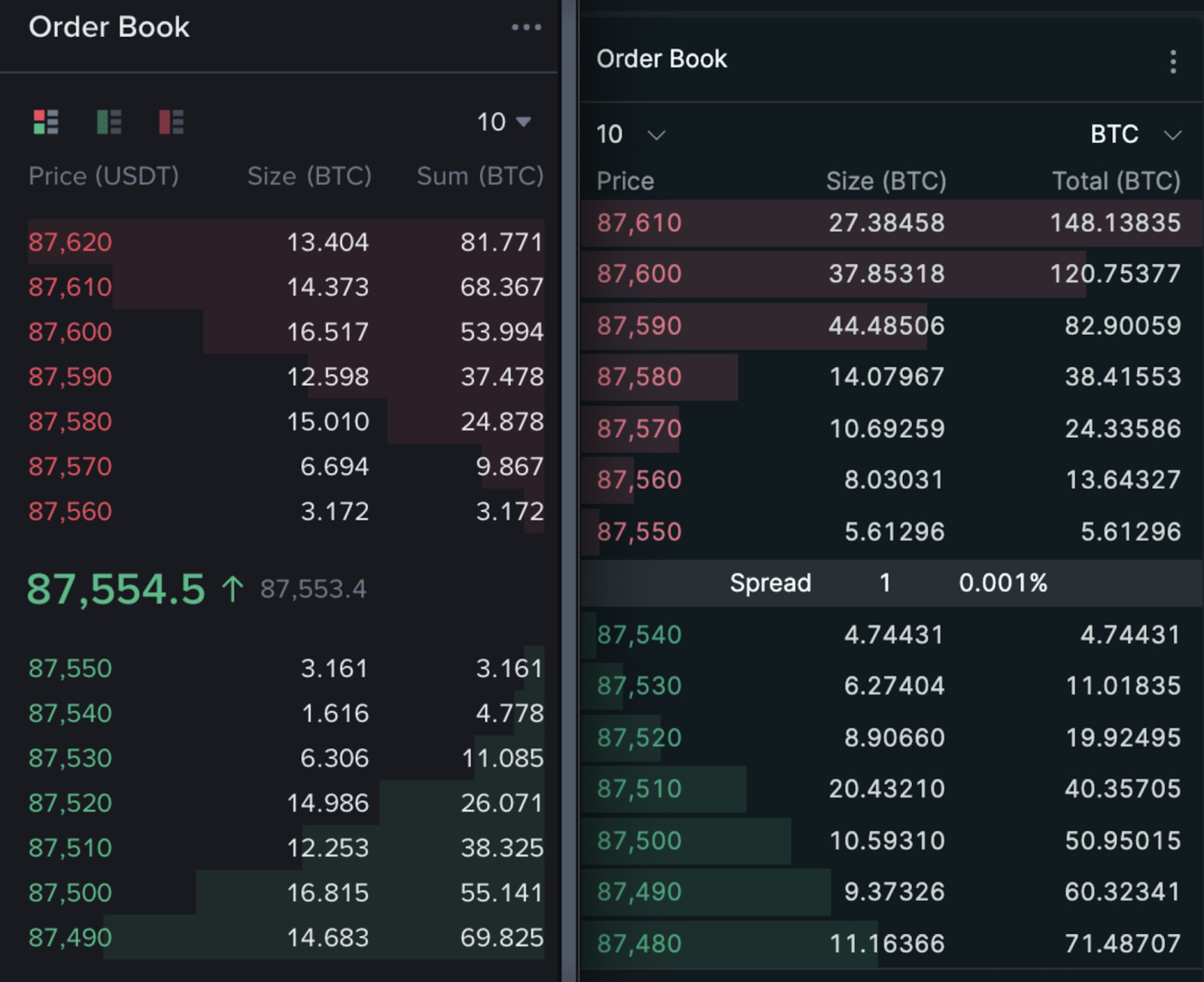
With地利 (favorable terrain) and人和 (harmony among people), Hyperliquid's success also relied on天时 (right timing). Many interviewees mentioned the same view: "Trading on CEXs doesn't make money this cycle." What is contrasted with "Hyperliquid doing well" is actually CEXs doing poorly. Whether it's the choice of listings or the creation of wealth effects, CEXs did indeed perform worse than some on-chain products this cycle.
After multiple blows from "rat trading" and "listing即巅峰 (listing is the peak)," users gradually lost confidence. Many exchanges attributed it to factors of the industry and the cycle itself, but the emergence of Hyperliquid slapped everyone in the face. Like timely concern during a breakup, it easily made迷茫 (confused) users defect. Actually, users know it's not entirely the CEXs' fault. Perhaps the CEXs also tried their best, but the results fell far short of users' expectations.
The conclusion is clear: choosing perp DEXs is not wishful thinking; it's a不得已而为之 (last resort). The prosperity of on-chain trading this cycle can be said to be exchanges handing users over. Many people who only traded spot were forced to choose memes and contracts because there was no profit to be made, and then倾向于 (leaned towards) on-chain products due to flexibility and transparency.
From this perspective, the decision of some exchanges to扶持 (support) new perp DEXs hoping to compete with Hyperliquid is无异于 (no different from) telling the market: We already don't know how to make CEXs better.