Wall Street Bets Big on RWA: BlackRock, Franklin Templeton, Morgan Stanley Are Moving Financial Markets On-Chain

marsbitОпубліковано о 2026-05-14Востаннє оновлено о 2026-05-14

Анотація

Wall Street is fully embracing Real World Assets (RWA), with giants like BlackRock, Franklin Templeton, and JPMorgan Chase actively moving traditional financial markets onto the blockchain. The global RWA market has now surpassed $30 billion. BlackRock continues to expand its tokenization efforts, recently filing a new structure with the SEC that integrates blockchain-based fund shares directly into the regulated U.S. fund registry system, bridging the gap between on-chain and traditional finance. Its BUIDL fund, launched with Securitize, has grown to approximately $2.3 billion in assets. Franklin Templeton has partnered with Kraken's parent company to explore tokenizing traditional financial products, including stocks and yield-generating instruments. This shift highlights traditional finance's growing acceptance of blockchain as a core component of the future financial system, not just a niche market. JPMorgan Chase is advancing its on-chain dollar liquidity system by filing for a second tokenized money market fund (JLTXX) on Ethereum. This move aims to create a complete on-chain USD ecosystem where digital dollars can earn yield, moving beyond simple stablecoin payments. The trend signals a broader shift in crypto from speculative assets to building new financial infrastructure. RWA tokenization is enhancing efficiency through real-time settlement, transparency, and 24/7 global markets, positioning blockchain for a foundational role in the future of global finance.

Author: Climber, CryptoPulse Labs

In recent years, the crypto industry has experienced multiple waves of trends such as DeFi, NFTs, and Meme coins. However, what truly prompted Wall Street's large-scale entry was not the highly volatile crypto assets, but RWA (Real World Assets). Currently, the global RWA market size has exceeded $30 billion.

In recent days, traditional financial giants like BlackRock, Franklin Templeton, and JPMorgan Chase have made successive moves, ranging from tokenized funds and on-chain money market products to tokenized stocks and on-chain yield tools. Wall Street is gradually moving traditional financial markets onto the blockchain.

The true significance behind this is not merely about launching a few on-chain products; it more closely resembles a foundational structural upgrade of the global financial system.

I. BlackRock's Continued Expansion: On-Chain Funds Begin to Integrate with the Traditional Financial System

In this wave of tokenization, BlackRock's moves remain the most closely watched.

On May 12th, BlackRock once again filed a new application with the U.S. SEC for a tokenized fund structure, continuing to choose the digital asset platform Securitize to provide on-chain infrastructure support.
The most significant focus this time is not just putting a fund on-chain, but the formal integration of on-chain assets with the traditional financial regulatory system.

According to the latest structure, the ownership records of on-chain fund shares will be integrated with regulated transfer agent systems and investor admission frameworks.

This means that fund shares held by users on-chain in the future will no longer be just data on the blockchain but will be able to directly enter the U.S. regulated fund registration system.

In the past, many traditional institutions, while interested in blockchain, remained concerned about how on-chain assets could meet regulatory requirements. Now, BlackRock is attempting to directly incorporate on-chain assets into the traditional financial framework, indicating that the institutional wall between on-chain finance and traditional finance is being slowly dismantled.

In fact, BlackRock has long been laying the groundwork in the tokenization market.

As early as 2024, BlackRock's BUIDL fund, launched in partnership with Securitize, became one of the most successful tokenized product cases in the entire industry. Its asset size has now grown to approximately $2.3 billion and serves as an important symbol of institutional entry into on-chain finance.

Many used to think tokenization was just a repackaging. However, what Wall Street truly values is the financial efficiency brought by blockchain.

The traditional financial market involves numerous intermediaries, from banks and brokerages to clearing institutions, each layer representing time costs and fees. Blockchain's greatest advantage is its ability to enable real-time settlement, transparent record-keeping, and 24/7 circulation on a global scale.

For large asset management institutions, if funds, bonds, and money market products can all be tokenized in the future, the operational efficiency of the entire financial market could be fundamentally rewritten.

II. Franklin Templeton Partners with Kraken: Accelerated Implementation of Tokenized Stocks and On-Chain Yield Products

Besides BlackRock, Franklin Templeton's recent moves are also noteworthy.

Recently, Franklin Templeton announced a partnership with Payward, the parent company of the crypto exchange Kraken, to jointly explore opportunities for on-chain tokenization of traditional financial products.
This collaboration covers a wide range of areas, including tokenized stocks, compliant custody, actively managed yield products, and institutional-grade crypto liquidity services.

The most critical point is that the two parties are researching launching on-chain versions of Franklin Templeton's financial products. In other words, some traditional funds, yield products, and even securities may circulate directly in the form of on-chain tokens in the future.

This represents a very clear industry shift: previously, it was the crypto industry actively approaching traditional finance, but now traditional finance is also actively moving toward the crypto market.

Especially Kraken's recent tokenized stock business, xStocks, has validated market demand. Data shows that cumulative trading volume for this business has exceeded $30 billion since its launch last year.

This indicates that the global market's demand for on-chain securities trading is not merely conceptual but genuinely exists.

This is because traditional securities markets have many issues, such as fixed trading hours, complex cross-border investments, and long settlement cycles. The greatest advantage of tokenized stocks is enabling securities to circulate in real-time and be traded globally on-chain, similar to stablecoins.

Meanwhile, Franklin Templeton itself is one of the traditional asset managers most actively embracing the crypto industry. Currently, it has launched multiple crypto ETF products, issued the tokenized money market fund BENJI, and partnered with Ondo Finance to develop on-chain financial products.

From these actions, it's clear that more and more traditional financial institutions no longer view blockchain as a fringe market but are beginning to see it as an important component of the future financial system.

III. JPMorgan Chase Advances On-Chain Money Market Funds: An On-Chain Dollar System Is Taking Shape

Compared to BlackRock and Franklin Templeton, JPMorgan Chase's approach leans more toward building an on-chain dollar liquidity system.

On May 12th, JPMorgan Chase filed paperwork for the JPMorgan OnChain Liquidity-Token Money Market Fund (ticker: JLTXX), planning to launch a second tokenized money market fund.
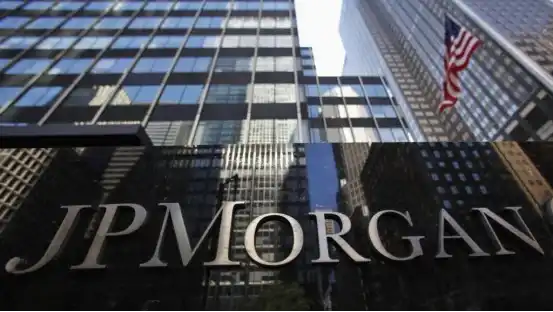
This fund will issue digital tokens on the Ethereum blockchain, with the underlying assets primarily consisting of U.S. Treasuries and repurchase agreements.

This type of product is particularly noteworthy because money market funds are essentially akin to institutional versions of stablecoins.

They are backed by high-liquidity, low-risk assets like cash and U.S. Treasuries while also offering some yield. Now, more institutions are attempting to move these assets on-chain.

The reason is quite simple.

Stablecoins solve the payment problem, but on-chain money market funds solve the yield problem.

In the past, large amounts of on-chain dollar capital could only sit in stablecoin accounts, making it difficult to earn stable returns. But if users can directly invest their on-chain dollars into tokenized money market funds in the future, the entire on-chain dollar financial system will form a complete closed loop.

This is also why more traditional banks are beginning to pay attention to on-chain finance. They are realizing that blockchain is not just a type of encryption technology but may become a new type of settlement network for the future global financial system.

Over the past year, tokenized U.S. Treasuries have become one of the fastest-growing sectors in the entire RWA market. JPMorgan Chase's continued advancement of on-chain money market funds also signifies that large banks are beginning to formally participate in building the on-chain dollar system.

Conclusion

Looking back over the past few years in the crypto industry, one can see that the entire market is undergoing very noticeable changes.

In the early days, the industry discussed more about blockchain performance, DeFi mining, NFT hype, and Meme coin speculation. Now, more capital and institutions are focusing on on-chain U.S. Treasuries, tokenized funds, on-chain securities, and institutional-grade financial infrastructure.

This means the crypto industry is gradually shifting from a high-risk speculative market toward building a new type of financial system. And RWA is becoming one of the most important narratives in this phase.


Пов'язані питання

QWhat is RWA and why is it attracting significant interest from Wall Street institutions like BlackRock, Franklin Templeton, and J.P. Morgan?

ARWA stands for Real World Assets, referring to the tokenization of traditional financial assets like funds, bonds, and stocks on a blockchain. Wall Street institutions are attracted to RWA because it offers the potential for increased financial efficiency, including real-time global settlement, transparent record-keeping, 24/7 liquidity, and reduced reliance on intermediaries, which can lower costs and time delays.

QAccording to the article, what is the key innovation in BlackRock's recent SEC filing for a tokenized fund structure?

AThe key innovation is that the ownership records of the on-chain fund shares will be integrated with regulated transfer agent systems and investor eligibility frameworks. This means on-chain holdings are no longer just blockchain data but are directly incorporated into the U.S. regulated fund registration system, helping to bridge the gap between on-chain finance and traditional regulatory frameworks.

QWhat specific areas are Franklin Templeton and Kraken exploring in their partnership, and what does this signify for the industry?

AFranklin Templeton and Kraken are exploring tokenized stocks, compliant custody, actively managed yield products, and institutional-grade crypto liquidity services. This signifies a shift where traditional finance is actively moving towards the crypto market, rather than crypto trying to fit into traditional finance. It shows that on-chain securities trading is seen as having real demand and potential.

QHow does J.P. Morgan's on-chain money market fund (JLTXX) differ in focus from the products launched by BlackRock and Franklin Templeton?

AJ.P. Morgan's on-chain money market fund focuses more on building the on-chain U.S. dollar liquidity system. While BlackRock's fund integrates ownership with traditional systems and Franklin Templeton explores tokenized stocks, J.P. Morgan's product addresses the yield problem for on-chain dollars, allowing them to earn returns on assets like U.S. Treasuries, thereby helping to create a complete on-chain dollar financial ecosystem.

QWhat broader trend does the article suggest is happening in the crypto industry, with RWA as a key driver?

AThe article suggests the crypto industry is evolving from a high-risk, speculative market focused on areas like DeFi yield farming, NFTs, and memecoins, towards building a new type of financial system infrastructure. RWA is a key driver in this shift, representing a move towards tokenized real-world financial instruments like government bonds, funds, and securities, which are attracting institutional capital and participation.

Пов'язані матеріали

The Shutdown of Claude Mythos Revealed the True Cost of Renting AI to Me

The sudden shutdown of Claude Mythos this week starkly highlights a critical, often overlooked risk for founders: when your core capability relies entirely on someone else's platform, your fate is not in your own hands. The key question becomes: who truly owns the intelligence your product depends on? For years, the debate around open-source models focused on cost. Now, the evidence is clear: fine-tuned open-source models can achieve frontier-level quality for specific, mission-critical tasks at a fraction of the cost. However, the deeper issue is control. Relying on a third-party API is like renting; it works until the landlord changes the rules, raises the rent, or asks you to leave—as Mythos experienced. The lesson is not to stop using frontier models—they are incredible infrastructure. The goal is ownership. Ownership means starting with a powerful open-source model and shaping it around what makes your company unique: your data, workflows, domain expertise, and definition of "good." Over time, the model becomes less generic and more reflective of your business, creating durable value. The optimistic conclusion is that AI's future doesn't hinge on one superior model. There is no single frontier. The frontier includes proprietary models, models fine-tuned on company-specific knowledge, specialized models for narrow problems, and intelligent routers orchestrating model ensembles. The most interesting development is not models getting smarter, but intelligence becoming increasingly customizable. The winning companies will be those that transform intelligence into a unique, owned asset. Looking ahead, the vision is not one model dominating all, but many teams owning the part of the frontier that matters most to them.

marsbit24 хв тому

The Shutdown of Claude Mythos Revealed the True Cost of Renting AI to Me

marsbit24 хв тому

Tiger Research: U.S. Strategic Bitcoin Reserve - Should the Market Be Happy or Disappointed?

Tiger Research analyzes the evolution of U.S. legislative efforts regarding a strategic Bitcoin reserve, concluding the market impact is limited in the short term but potentially positive long-term. The core event was a March 2025 executive order by former President Trump, which designated confiscated Bitcoin as a strategic reserve and promised not to sell existing holdings (approx. 190k BTC). As it contained no mandate to purchase new Bitcoin, the market reacted negatively, with prices dropping 5.7%. Legislative history shows a significant retreat from initial ambitions. The 2024 "BITCOIN Act" proposed mandatory purchases of 1 million BTC over five years. Reintroduced in 2025, it stalled due to high fiscal costs, concerns over dollar hegemony, and opposition from the Treasury Secretary. The current frontrunner, the 2026 "American Retirement and Monetary Advancement (ARMA) Act," is a compromise. It lacks any purchase requirement, instead focusing on consolidating existing government-held Bitcoin and legally prohibiting its sale for at least 20 years. While ARMA has higher passage odds due to bipartisan support and no purchase mandate, its immediate market effect is neutral. It eliminates potential government selling pressure but creates no new demand. The long-term significance is that formally establishing Bitcoin as a national reserve asset in law could later reignite debates on mandatory purchases. Therefore, the path to a government buyer is longer than initially priced by the market, but the directional narrative remains intact.

marsbit27 хв тому

Tiger Research: U.S. Strategic Bitcoin Reserve - Should the Market Be Happy or Disappointed?

marsbit27 хв тому

US Stock Market Trend (June 16): SpaceX Rises 42% in Two Days, New Fed Chairman Takes Office Today

**U.S. Stocks Trend (June 16): SpaceX Soars 42% in Two Days, New Fed Chair Takes Office Today** Markets surged on Monday following former President Trump's social media announcement of a completed U.S.-Iran deal to reopen the Strait of Hormuz, pending a June 19 signing. The news triggered a broad risk-on rally: oil prices crashed, tech stocks soared, bond yields fell, and defensive sectors lagged. **Market Performance:** The Nasdaq jumped 3.07%, led by semiconductor stocks like Micron (+9.2%). The S&P 500 gained 1.65%, and the Dow rose 0.92% to a record high. However, the Russell 2000 small-cap index underperformed (+0.72%). SpaceX continued its hot streak, rising another 5% pre-market after disclosures of large buys by an Australian billionaire and Cathie Wood's ARK. Boeing also rallied on the transportation optimism. Conversely, energy stocks like Chevron fell over 3% on the oil price plunge, with other defensive sectors also selling off. The day's action showed a clear rotation of funds from energy/defensive plays into AI and tech narratives. **Macro & Outlook:** The VIX fear index fell 8.37%. Treasury yields declined, and WTI crude dropped over 5%. Attention now shifts to a packed schedule: the Bank of Japan is widely expected to hike rates to 1.0% on Tuesday. The Fed's June meeting concludes Wednesday, marking new Chair Wash's debut. While rates are expected to hold, his tone on stubborn inflation and the "dot plot" will be crucial for gauging the 2024 rate path. The formal Iran deal signing is set for Friday. **Trend Perspective:** While the peace deal is a genuine positive, Monday's explosive rally may have gotten ahead of itself, pricing in a swift resolution to inflation concerns. The shortened trading week faces a triple test: BoJ tightening, the Fed's policy stance, and deal implementation details. Tech and semiconductors, which led the surge, remain vulnerable to any disappointment from these key events. The real price discovery begins with the central banks' communications this week.

marsbit48 хв тому

US Stock Market Trend (June 16): SpaceX Rises 42% in Two Days, New Fed Chairman Takes Office Today

marsbit48 хв тому

Торгівля

Спот
Ф'ючерси
活动图片