Wake Up! Stop Trying to Catch the Falling Knife: The Harsh Truth Behind the $26 Billion Crypto Liquidation

Odaily星球日报Опубліковано о 2026-02-06Востаннє оновлено о 2026-02-06

Анотація

In a sharp market downturn, Bitcoin plunged nearly 20% to $60,000, with over $2.6 billion in crypto liquidations within 24 hours. While many attribute the crash to factors like tech stock declines or hawkish policy expectations, the author argues the core issue is deeper: a structural shortage of global financial capital. The shift is driven by the AI capital expenditure cycle, which initially acted as incremental stimulus but is now draining liquidity. Unlike the capital-light Web 2.0 and SaaS models that fueled the last bull market, AI requires massive upfront investment. When "dry powder" (idle capital) is exhausted, funds for AI spending must be pulled from elsewhere—sparking a "convex competition" for capital. This leads to a repricing of assets based on utility and raises the cost of capital. Speculative, long-duration assets like crypto are hit hardest, while cash-generating assets benefit. The author compares liquidity to water in a bathtub: when demand exceeds supply, assets sink. Even deep-pocketed investors like Saudi Arabia and SoftBank may need to sell holdings to fund commitments, triggering cascading sell-offs. The conclusion: this isn’t a time for aggressive long positions. Defensive strategies, selective holdings, and patience are advised until clearer opportunities emerge.

Author | @plur_daddy

Compiled | Odaily Planet Daily (@OdailyChina)

Translator | DingDang (@XiaMiPP)

Editor's Note: Gold and silver both plummeted, U.S. stocks fell across the board, and the cryptocurrency market was even more brutal, with over $26 billion liquidated in 24 hours. Bitcoin once flash-crashed to the $60,000 mark, plummeting nearly 20% in a single day; from its high of $126,000 in October last year, the price of BTC has been halved. What's even more frightening is that the market showed almost no significant resistance.

Everyone is frantically searching for reasons: U.S. tech stocks dragged down crypto market; Trump's nomination of Warsh sparked hawkish expectations; the strong dollar, poor employment data... These explanations sound reasonable. But in the view of the author of this article, they are more superficial than the core of the problem. The real underlying reason is: Money in the world is becoming insufficient. The massive AI capital expenditure cycle itself is shifting from "injecting liquidity" to "draining liquidity," leading to a substantial shortage of global financial capital. The following is the author's original text, which will deconstruct step by step how this mechanism operates.

We are experiencing a paradigm shift in the market, due to a shortage of financial capital caused by the AI capital expenditure cycle. This has profound implications for asset prices, as capital has been excessively abundant for a very long time. The Web 2.0 and SaaS paradigm that drove the market boom of the 2010s was essentially a extremely capital-light business model, which allowed a large amount of excess capital to flow into various speculative assets.

Yesterday, while discussing the market landscape, I had an "aha moment." I believe this is the most differentiated article I've written in a long time. Below, I will deconstruct, layer by layer, how all of this operates.

There is actually a highly similar mechanism between AI capital expenditure and government fiscal stimulus, which helps us understand the underlying logic.

In fiscal stimulus, the government issues treasury bonds, so the private sector absorbs the duration risk; then the government gets the cash and spends it. This cash circulates in the real economy and creates a multiplier effect. The net impact on financial asset prices is positive, precisely because of this multiplier effect.

In AI capital expenditure, mega-cap tech companies either issue bonds or sell treasury bonds (or other assets), again the private sector absorbs the duration risk; then these companies get the cash and put it to use. This cash also circulates in the real economy and creates a multiplier effect. Ultimately, the net impact on financial asset prices is still positive.

As long as these funds come from the "dry powder" (idle, unused capital) within the economic system, this process runs smoothly. It worked very well, almost "lifting all boats." In the past few years, this has been the dominant paradigm—AI capital expenditure acted like an incremental stimulus policy, injecting adrenaline into the economy and markets.

The problem is: Once the dry powder is exhausted, every dollar flowing into AI capital expenditure must be pulled from somewhere else. This triggers a convex battle for capital. When capital becomes scarce, the market is forced to reassess: where is the "most useful" place to deploy capital? Simultaneously, the cost of capital (i.e., the market-determined interest rate) rises.

Let me emphasize again: When money becomes scarce, a "knockout tournament" occurs among assets. The most speculative assets suffer disproportionate losses—just as they disproportionately benefited when capital was extremely abundant but lacked productive uses. In this sense, AI capital expenditure actually plays a role of "reverse QE," bringing negative portfolio rebalancing effects.

Fiscal stimulus typically doesn't face this problem because the Fed often ultimately becomes the absorber of duration risk, thus avoiding "crowding out" other uses of capital.

The "money" mentioned here can be used interchangeably with "liquidity." But the word "liquidity" is confusing because it has different meanings in different contexts.

Let me use an analogy: Money or liquidity is like water. You need the water level in the bathtub to be high enough for the financial assets (those floating rubber ducks) to all rise together. There are several ways to do this:

  • You can increase the total amount of water (rate cuts / QE)
  • You can unclog the inlet pipes (operations like the current RRP (Reverse Repo Program)/RMP (Reserve Management Purchases) "plumbing work")
  • Or you can reduce the speed at which water drains from the bathtub.

Discussions about liquidity in the economy almost always focus on the money supply. But in fact, the demand for money is equally important. The problem we are facing now is: Demand is too high, leading to significant crowding-out effects.

Media reports suggest that the world's "deepest pockets"—Saudi Arabia and SoftBank—are basically tapped out. The whole world has been gorging on assets for the past decade and is now "stuffed." Let's look specifically at what this means.

Suppose Sam Altman (founder of OpenAI) reaches out to them, asking them to fulfill their previous commitments. Unlike in previous periods when they still had dry powder, now they must first sell something to free up money for him. So, hypothetically, what would they sell?

They would look at their investment portfolios and pick the assets they have the least confidence in: sell some underperforming Bitcoin; sell some SaaS software assets facing disruption risk; redeem funds from hedge funds with long-term poor performance. And these hedge funds, to meet redemptions, must sell assets. Asset prices fall, confidence weakens, the availability of margin tightens, triggering passive selling in more places. These effects cascade and amplify through the financial markets.

Worse still, Trump chose Warsh. This is particularly problematic because he believes the current problem is too much money, when in fact, we are facing the opposite problem. This is why the pace of these market changes has noticeably accelerated since he was selected.

I have been trying to understand: Why have memory chip manufacturers like DRAM / HBM / NAND (e.g., SNDK, MU) performed far better than other stocks. Sure, the underlying product prices are indeed soaring. But more importantly, these companies are now and will be in the near future in a state of supernormal profits—even though it's clear their profits are cyclical and will eventually fall back. When the cost of capital rises, the discount rate increases accordingly. The result is: Speculative assets with longer duration, reliant on future expectations, get hit, while assets with near-term cash flows benefit relatively.

In such an environment, crypto assets naturally get "decimated," as they are the frontline probes for changes in conditions. This is also why the market feels like it's "falling endlessly."

Highly speculative retail momentum stocks can hardly hold any gains, and even sectors with improving fundamentals are struggling hard.

As demand for money exceeds supply, sovereign bond and credit interest rates are both rising.

This is not a time to be complacently extremely long. This is a stage for defense, being extremely picky with holdings, and seriously managing risk. I am not telling you to sell everything; this article is not a trading directive. You should treat it as a contextual framework to help you understand what is happening.

I personally sold gold and silver near the highs, and most of my positions are now in cash. I'm in no hurry to buy anything. I believe that if you are patient enough, extremely rare opportunities will emerge this year.

Finally, thanks to the brilliant friends in the group chat who helped me thoroughly discuss these issues, including @AlexCorrino, @chumbawamba22, @Wild_Randomness.


Пов'язані питання

QAccording to the article, what is the core reason behind the recent massive liquidation in the cryptocurrency market?

AThe core reason is a global financial capital shortage caused by the AI capital expenditure cycle shifting from injecting liquidity to draining liquidity, leading to a scarcity of capital and forcing a reevaluation of where capital is most useful.

QHow does the AI capital expenditure cycle differ from government fiscal stimulus in terms of impact on financial assets?

AGovernment fiscal stimulus often has the Federal Reserve as the ultimate absorber of duration risk, avoiding a 'crowding-out effect' on other capital uses, whereas AI capital expenditure can act as 'reverse QE' with negative portfolio rebalancing effects once dry powder is exhausted.

QWhat role do 'dry powder' (idle capital) and its exhaustion play in the current market paradigm shift?

AAs long as dry powder is available, AI capital expenditure functions like incremental stimulus, boosting the economy and markets. Once it is exhausted, every dollar flowing into AI capex must be pulled from elsewhere, triggering a convex battle for capital and a reassessment of the most useful investments.

QWhy are highly speculative assets like cryptocurrencies particularly vulnerable in the current environment?

AThey are the front-line probes for changes in liquidity conditions. When capital becomes scarce and costs rise, long-duration, speculative assets reliant on future expectations are disproportionately hit, while assets with near-term cash flows benefit relatively.

QWhat investment strategy does the author recommend based on the analysis provided?

A

Пов'язані матеріали

Morgan Stanley Digital Asset Head: Bitcoin Reaching $1M Would Not Be Surprising, But a Real Catalyst Might Require a Crisis That Shatters the Old System

Summary: In a podcast interview, Morgan Stanley's Head of Digital Asset Strategy, Amy Oldenburg, discusses Bitcoin's potential and institutional adoption. She argues Bitcoin's next major surge might require a catalyst—a crisis that shatters the traditional financial system, after which Bitcoin could emerge as the only intact asset. While she sees a $1 million price as possible within five years, she expects slower, more stable growth. Oldenburg traces Bitcoin's logic to her experience in emerging markets, where decentralized mobile money (like M-Pesa) provided critical financial security where traditional banks failed. She notes that early Bitcoin adopters often came from international finance, seeking alternatives to centralized systems. Regarding institutions, she explains that Morgan Stanley, as a bank holding company, faces stricter regulatory hurdles than pure asset managers like BlackRock. While client demand drove their Bitcoin ETP launch (MSBT), which set a firm record, most financial advisors remain hesitant due to Bitcoin's recent price stagnation and volatility. She identifies an education gap as a major barrier, with many advisors and clients not understanding the differences between various crypto assets or between holding spot Bitcoin versus an ETP. Oldenburg also discusses the tension between Bitcoin's cypherpunk, self-custody ethos and the convenience of centralized financial products, acknowledging the value of both approaches. She concludes that the digital asset space is still in its early stages, with a long journey ahead involving more complex products and technologies.

marsbit1 хв тому

Morgan Stanley Digital Asset Head: Bitcoin Reaching $1M Would Not Be Surprising, But a Real Catalyst Might Require a Crisis That Shatters the Old System

marsbit1 хв тому

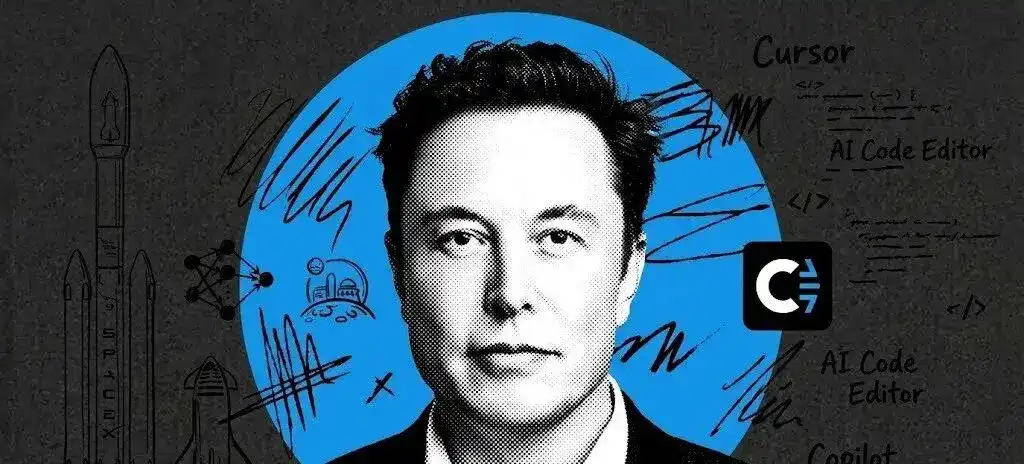
Cursor: Why Did It Board Elon Musk's Rocket?

SpaceX announced its first major acquisition after its historic IPO: a $60 billion all-stock deal to acquire AI programming startup Cursor (parent company Anysphere). Cursor is a popular AI coding assistant that allows developers to switch between models from OpenAI, Anthropic, Google, and others. Founded in 2022 by MIT graduates including CEO Michael Truell, Cursor saw explosive revenue growth, reaching a $4 billion annualized run rate by early 2026. However, its market share had declined as key supplier Anthropic launched its own competing product, Claude Code. Facing dependency risks, Cursor decided to build its own AI model, Composer, but lacked the necessary computing power. In April 2026, Cursor and SpaceX revealed a partnership and an option agreement: SpaceX could acquire Cursor for $60 billion post-IPO, or pay a breakup fee and provide substantial computing resources. After SpaceX's successful IPO, it exercised the option. The deal gives Cursor access to SpaceX's massive "Colossus" supercomputer, while SpaceX gains Cursor's strong foothold among elite software engineers to boost its AI capabilities, as Musk's xAI model Grok lags in programming. The acquisition aligns with SpaceX's broader AI and orbital data center ambitions, as Musk targets $1 trillion in revenue by 2030. For Truell, who once aimed to build an enduring independent company, joining SpaceX represents a monumental bet on an unprecedented scale.

marsbit2 хв тому

Cursor: Why Did It Board Elon Musk's Rocket?

marsbit2 хв тому

Wintermute Market Weekly: Iran War Ends, Inflation Meets Expectations, BTC Rebounds to Lower 60ks But Don’t Rush to Buy the Dip

**Wintermute Market Weekly: BTC Rebounds to $60K Lows, But Caution Advised** This week saw a broad market rebound, primarily driven by two converging factors: a US CPI inflation reading that met expectations (4.2% YoY) and former President Trump's announcement of a deal to end the Iran conflict. The latter triggered a sharp drop in oil prices, reducing geopolitical risk premiums and easing inflation fears. Consequently, risk assets like equities and cryptocurrencies rallied, with Bitcoin recovering from lows around $60,000 to close the week up 1.9%, while altcoins gained 3.1%. Despite the price bounce, the underlying liquidity picture for crypto remains weak. Key funding channels—stablecoin flows, ETF inflows, and Digital Asset Treasury (DAT) activity—show no signs of structural improvement. ETF outflows recently hit a record streak, and DAT assets have declined significantly. The rally from $60K to $83K earlier is now viewed as a bear-market rally that has failed. The current environment is characterized by low directional conviction and choppy, range-bound trading, likely persisting into summer. The report advises caution against aggressively buying the dip. While the $60K area offers attractive long-term risk/reward, a sustained bull run requires a visible turnaround in capital inflows, which hasn't materialized. The upcoming FOMC meeting and Powell's commentary, alongside the formal Iran deal signing, are noted as near-term catalysts. The core takeaway is to watch fund flows rather than price action and avoid being whipsawed by volatility before clear signs of institutional or retail capital returning emerge.

marsbit16 хв тому

Wintermute Market Weekly: Iran War Ends, Inflation Meets Expectations, BTC Rebounds to Lower 60ks But Don’t Rush to Buy the Dip

marsbit16 хв тому

Торгівля

Спот
Ф'ючерси
活动图片