Vietnam Begins 5-Year Crypto Licensing Pilot To Regulate Exchanges

bitcoinistОпубліковано о 2026-01-22Востаннє оновлено о 2026-01-22

Анотація

Vietnam has launched a five-year pilot program to license and regulate cryptocurrency exchanges, moving the sector from a legal "gray area" into a formal framework. The Ministry of Finance began accepting applications under new rules requiring exchanges to meet strict capital and operational criteria. These include a minimum charter capital of ~$380 million, with significant institutional ownership, and specific staffing and experience requirements for executives and technical personnel. Major financial and tech firms have already announced partnerships and preparations to enter the newly regulated market.

Vietnam has launched a pilot program to license cryptocurrency exchanges, aiming to bring the rapidly growing market into a formal legal framework after years of regulatory uncertainty.

Vietnam’s Crypto Licensing Pilot Begins

On Tuesday, Vietnam began its pilot licensing regime to officially regulate crypto trading platforms in the country for the first time, in an effort to gradually move the sector from the shadows into a properly supervised framework under the local financial authorities.

According to local reports, the Ministry of Finance issued Decision No. 96/QD-BTC on January 20, introducing procedures necessary for the implementation of Government Resolution No. 05/2025/NQ-CP.

The three new administrative procedures cover the issuance, modification, and revocation of licenses for entities operating crypto asset trading platforms. The Ministry announced that it began accepting applications from businesses seeking to offer crypto asset trading services.

For context, the country’s cryptocurrency market lacked a clear legal framework, existing in an unsupervised, “gray area.” Last year, the National Assembly passed the “Law on Digital Technology Industry,” which took effect on January 1, 2026, to create a foundation for authorities to develop suitable management policies.

In September, Vietnam’s Deputy Prime Minister Ho Duc Phoc signed Government Resolution No. 05/2025/NQ-CP, allowing a five-year pilot program for the issuance and trading of crypto assets.

As reported by Bitcoinist, under Resolution No. 05, organizations seeking to provide services for crypto trading markets must be registered with the financial authorities and fully comply with a strict set of rules, including a minimum contributed charter capital of VND10 trillion, worth around $380.66 million.

Notably, at least 65% of the charter capital must be held by institutional investors, with more than 35% contributed by at least two institutions such as commercial banks, securities companies, fund management companies, insurance companies, or technology enterprises.

The general director must have at least two years of experience in finance, while the CTO must have at least five years of experience in information technology. Moreover, firms must hire at least 10 technology staff with cybersecurity certificates and at least 10 staff with securities practice certificates working in other departments.

Financial Institutions Dive Into Digital Assets

Following the issuance of Resolution No. 05, major financial players, including securities companies and banking institutions, have announced their intention to participate in the pilot and enter the sector, noted the report.

In June, two SSI’s subsidiaries, SSI Digital Technology JSC and SSI Asset Management Company Limited, signed Memorandums of Understanding with Tether, U2U Network, and Amazon Web Services to develop a digital financial ecosystem in Vietnam based on blockchain and cloud computing platforms.

In addition, VIX Securities contributed capital to establish the VIX Crypto Asset Exchange and partnered with tech giant FPT Corp. to prepare its technology infrastructure.

Meanwhile, the banking sector saw MBBank enter a technical cooperation agreement with Dunamu, the operator of the Korean exchange Upbit, to establish a crypto exchange in Vietnam while jointly developing the legal framework and investor protection mechanisms.

Techcombank also established the Techcom Crypto Asset Exchange with a charter capital of several hundred billion VND. Similarly, VPBank stated it is fully prepared to begin operations as soon as it receives regulatory approval.
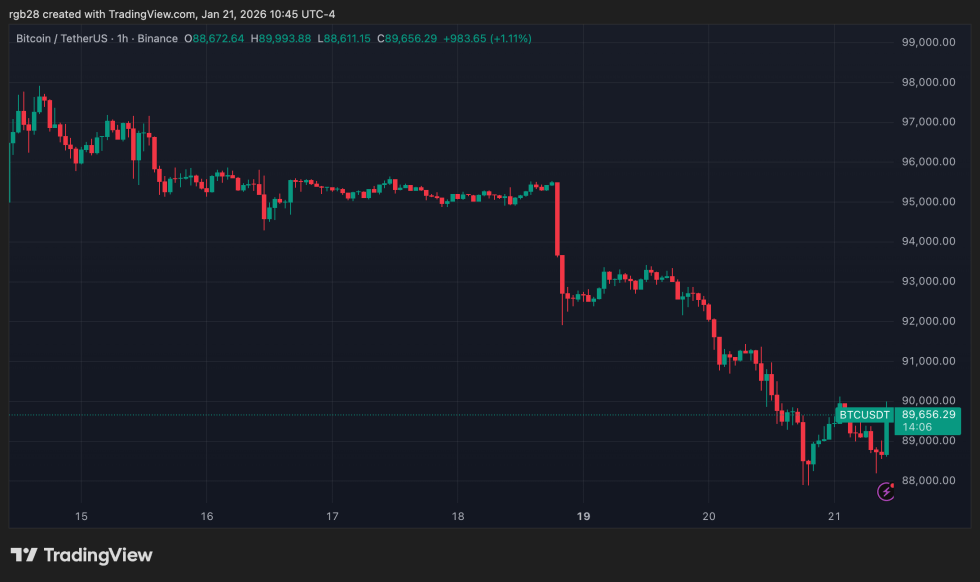
Bitcoin (BTC) trades at $89,656 in the one-week chart. Source: BTCCUSDT on TradingView


Пов'язані питання

QWhat is the main purpose of Vietnam's new pilot program for cryptocurrency exchanges?

AThe main purpose is to bring the rapidly growing cryptocurrency market into a formal legal framework and regulate crypto trading platforms under the supervision of local financial authorities, moving the sector out of its previous unregulated 'gray area'.

QWhat is the minimum charter capital requirement for an organization to provide crypto trading services under Resolution No. 05?

AThe minimum charter capital requirement is VND10 trillion, which is worth approximately $380.66 million.

QWhat are the key experience requirements for the leadership of a licensed crypto exchange in Vietnam?

AThe general director must have at least two years of experience in finance, and the Chief Technology Officer (CTO) must have at least five years of experience in information technology.

QWhich major financial institutions have announced plans to participate in Vietnam's crypto pilot program?

AMajor players include SSI's subsidiaries (SSI Digital Technology JSC and SSI Asset Management Company Limited), VIX Securities, MBBank, Techcombank, and VPBank, which have partnered with companies like Tether, U2U Network, Amazon Web Services, FPT Corp., and Dunamu.

QWhat law created the foundation for Vietnam to develop management policies for the digital technology industry, including cryptocurrencies?

AThe 'Law on Digital Technology Industry' was passed by the National Assembly last year and took effect on January 1, 2026, creating the foundation for authorities to develop suitable management policies.

Пов'язані матеріали

Anthropic's IPO Launch: Commercial Miracle or Valuation Bubble?

Anthropic has confidentially filed for an IPO, led by Morgan Stanley and Goldman Sachs, potentially going public by October. Following its latest $650 billion funding round, its pre-IPO valuation stands at $965 billion, with projections reaching up to $2 trillion at listing, which would make it the highest-valued private company ever. The article, written by Fu Sheng, addresses skepticism that this represents an AI bubble akin to the 2000 dot-com crash. It argues the current situation differs fundamentally. Unlike the internet bubble era, which relied on speculative narratives with little revenue, Anthropic's valuation is backed by unprecedented, measurable financial performance. Key data points include: * **Revenue Growth:** ARR skyrocketed from $10 billion in early 2025 to $470 billion by May 2026, targeting $100 billion by year-end—a growth curve unmatched in business history. * **Profitability:** It achieved operating profitability in Q2 2026 with an estimated $5.6 billion profit. * **Efficiency:** With ~3,000 employees and ~$470 billion ARR, its revenue per employee exceeds $10 million. Products like Claude Code, launched less than a year ago, already generate $25 billion in annualized revenue. * **Enterprise Adoption:** It boasts a strong enterprise client base, with 8 of the Fortune 10 and over 1,000 large firms spending over $1 million annually on Claude. The valuation is framed using a traditional SaaS model (e.g., a 10x Price-to-Sales multiple on $100 billion revenue). The author contends the core question for analysts has shifted from "How big could this be?" to "How much is it earning and will earn next quarter?" The discussion extends beyond Anthropic to a broader paradigm shift: the transition from a "carbon-based" to a "silicon-based" economy. Companies are increasingly prioritizing investment in compute and AI capabilities over human resources, as these directly scale productivity and competitive advantage. Anthropic's IPO is thus positioned not just as a corporate milestone, but as a price anchor for this new economic era.

链捕手2 год тому

Anthropic's IPO Launch: Commercial Miracle or Valuation Bubble?

链捕手2 год тому

Near Returns to the AI Stage: Transformation into a Public Chain Due to 'Payroll Difficulties,' Agent and Privacy Emerge as New Growth Narratives

NEAR Returns to AI Origins: From Payroll Struggles to Blockchain, Now Focusing on AI Agents and Privacy NEAR Protocol's journey began not with grand blockchain ambitions, but from a practical hurdle: its AI startup founders, including Transformer paper co-author Illia Polosukhin, couldn't efficiently pay international developers in 2017. This led them to pivot and build a high-performance, scalable blockchain. After years navigating various crypto narratives like sharding and cross-chain interoperability, NEAR is now leveraging its AI roots to re-enter the AI arena. A key driver is its "NEAR Intents" layer, which abstracts complex cross-chain transactions. Users simply state their goal (e.g., swap BTC for ETH), and a solver network finds the optimal route. This system has processed over $20B in cross-chain volume, generating significant fee revenue. A major growth area is private transactions via "Confidential Intents/Swaps," which hide trade details until settlement to protect against MEV and front-running. Remarkably, private swaps recently accounted for over 40% of NEAR's transaction volume, highlighting strong demand but also potential regulatory scrutiny. With its AI-founder pedigree, NEAR is positioning itself at the intersection of blockchain, AI agents, and privacy, aiming to become infrastructure for the emerging agent economy while navigating the challenges of its rapid adoption.

marsbit4 год тому

Near Returns to the AI Stage: Transformation into a Public Chain Due to 'Payroll Difficulties,' Agent and Privacy Emerge as New Growth Narratives

marsbit4 год тому

Торгівля

Спот
Ф'ючерси
活动图片




