U.S. Treasury moves forward with GENIUS Act – New rules protect stablecoin issuers

ambcryptoОпубліковано о 2026-04-09Востаннє оновлено о 2026-04-09

Анотація

The U.S. Treasury, through FinCEN and OFAC, has proposed a new rule under the GENIUS Act (signed into law in July 2025) that treats permitted payment stablecoin issuers similarly to banks under the Bank Secrecy Act. This aims to combat money laundering, terrorist financing, and sanctions evasion by imposing anti-money laundering obligations on issuers. The rule is designed to protect national security without hindering innovation in the payment system. This action follows multiple cases of illicit stablecoin use, including seizures of millions of dollars linked to scams and criminal activities. Treasury Secretary Scott Bessent stated the proposal strengthens U.S. leadership in digital finance while safeguarding the financial system.

As the crypto market braces for the passage of the CLARITY Act, a new rule under the GENIUS Act has come to the limelight.

In a joint proposal, the U.S. Department of the Treasury’s Financial Crimes Enforcement Network (FinCEN) and the Office of Foreign Assets Control (OFAC) brought a rule that treats payment stablecoin issuers similarly to banks.
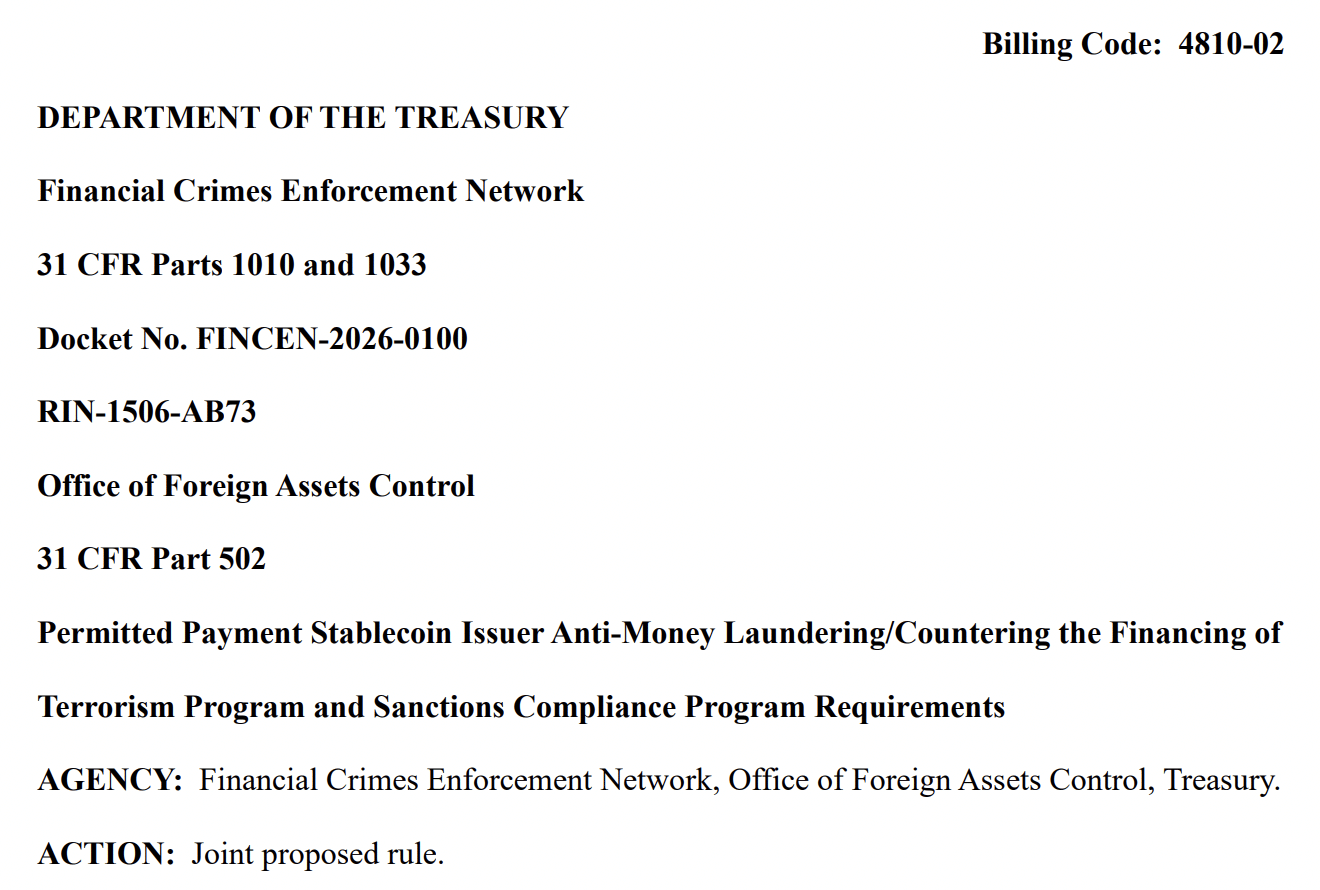
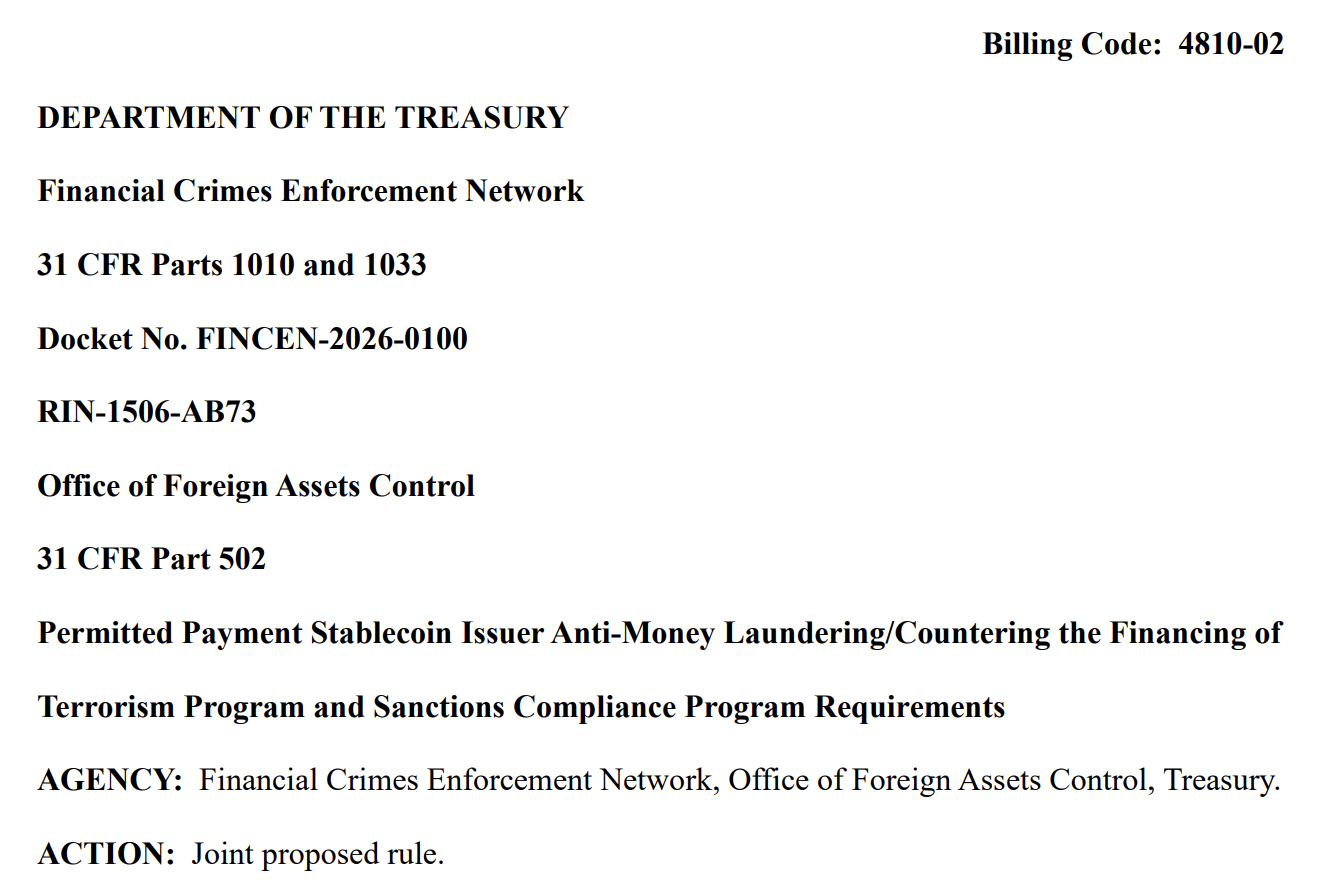
Source: www.fincen.gov

This was in the context of money laundering, terrorist financing, and sanction evasion.

For perspective, this proposed rule is part of the GENIUS Act, which was signed into law by U.S. President Donald Trump in July 2025.

What prompted the Treasury to come up with such a proposal?

Regulators believe payment stablecoin issuers can evolve the payment system in the U.S. However, given the scale and size of the financial system of the country, illicit actors find it easy to “jeopardize U.S. national security.”

Therefore, to combat such illicit financial risks, the rule ensures that permitted payment stablecoin issuers (PPSIs) are treated like financial institutions for purposes of the Bank Secrecy Act (BSA).

Needless to say, this would automatically impose the anti-money laundering (AML) obligations, which were earlier just for BSA.

Additionally, the proposal is also designed to be “fit for purpose, assist law enforcement, and minimize unnecessary burden.” That being said, all this is a part of the broader plan to “modernize BSA requirements” with consistent efforts from FinCEN.

Treasury Scott Bessent weighs in

Applauding such changes made under the U.S. President Donald Trump’s administration, Treasury Secretary Scott Bessent noted,

President Trump is strengthening American leadership in digital financial technology.

He further added,

This proposal will protect the U.S. financial system from national security threats without hindering American companies’ ability to forge ahead in the payment stablecoin ecosystem.

Illicit activities that targeted stablecoin in 2025 and before

This comes as the stablecoins had already been a center of target for many years. For instance, in June 2025, U.S. federal authorities seized $225.3 million worth of Tether’s USDT linked to the aforementioned scams.

Additionally, in July 2025, approximately $2 million worth of digital assets was unsealed by the DOJ, linked to a Palestine-based money exchange business. In November 2024, too, $5.5 million in stablecoins were seized from a drug trafficking operation.

Chainalysis’s recent report further confirmed these metrics, highlighting how in 2025 stablecoins accounted for “84% of all illicit transaction volume.”
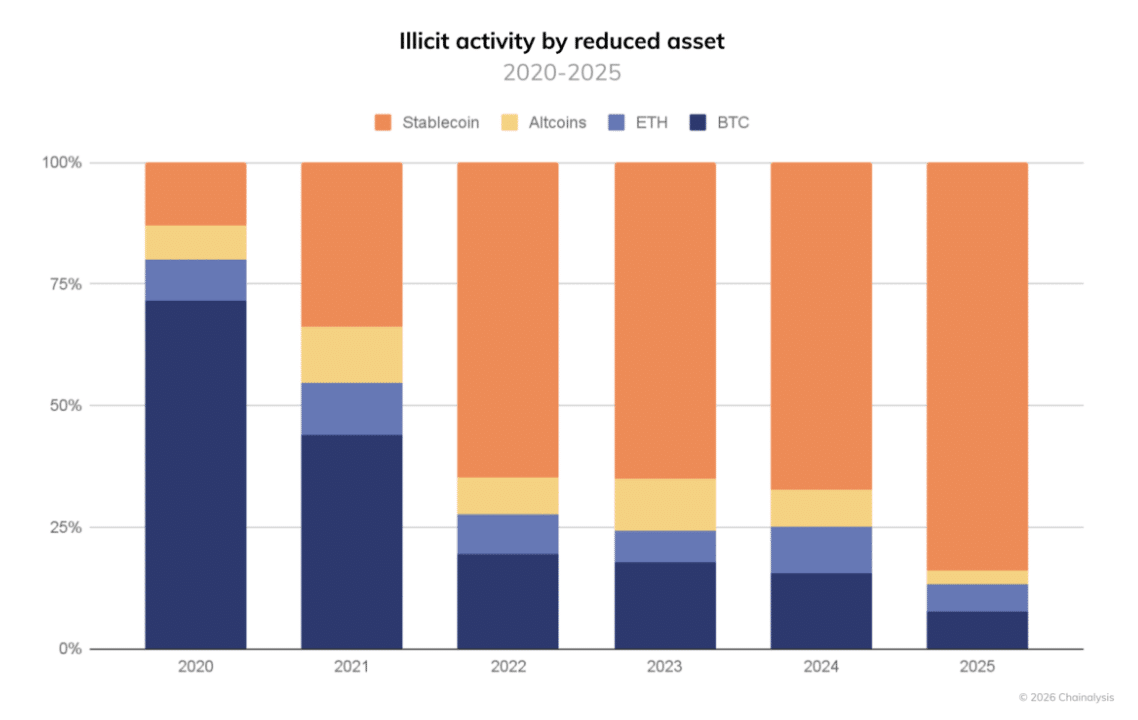
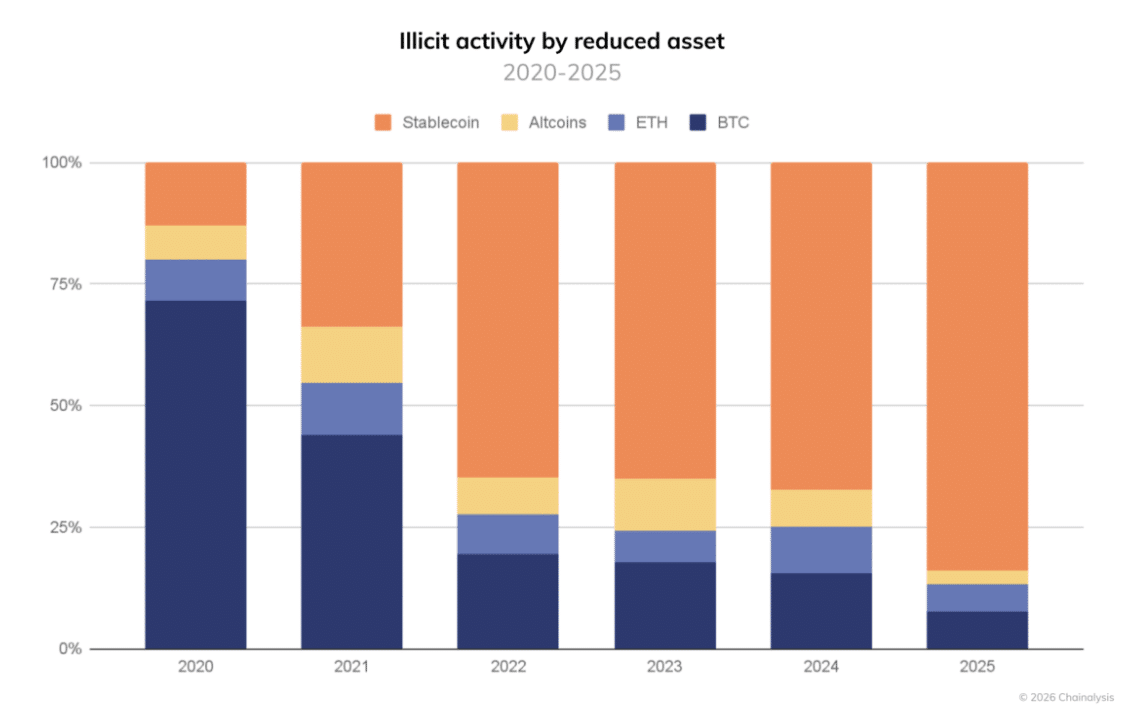
Source: Chainalysis

Final Summary

  • The joint efforts to bring in a proposed rule to address illicit activities in the stablecoin market underline the importance of the GENIUS Act passed in July 2025.
  • With millions being seized and confiscated by the DOJ, this was an alarming rule that should be passed for better crypto innovation in the U.S.


Пов'язані питання

QWhat is the main purpose of the new rule proposed under the GENIUS Act?

AThe new rule treats payment stablecoin issuers similarly to banks for purposes of the Bank Secrecy Act, imposing anti-money laundering obligations to combat illicit financial risks like money laundering, terrorist financing, and sanction evasion.

QWhich U.S. government agencies jointly proposed the new rule for stablecoin issuers?

AThe Financial Crimes Enforcement Network (FinCEN) and the Office of Foreign Assets Control (OFAC) jointly proposed the rule.

QAccording to Treasury Secretary Scott Bessent, how will this proposal benefit the U.S. financial system?

AScott Bessent stated that the proposal will protect the U.S. financial system from national security threats without hindering American companies' ability to innovate in the payment stablecoin ecosystem.

QWhat percentage of illicit transaction volume did stablecoins account for in 2025 according to Chainalysis?

AStablecoins accounted for 84% of all illicit transaction volume in 2025 according to Chainalysis's report.

QWhen was the GENIUS Act signed into law and by whom?

AThe GENIUS Act was signed into law by U.S. President Donald Trump in July 2025.

Пов'язані матеріали

In Conversation with Ray Dalio: We Are Currently in an AI Bubble, with 1% of My Portfolio in Bitcoin

Ray Dalio, founder of Bridgewater Associates, warns in an interview that the current AI boom shows classic bubble characteristics, which could lead to significant economic downturns as seen in past cycles like 1929 or 2000. He explains that speculative enthusiasm, fueled by debt and overvaluation, often precedes a crash when rising rates or taxation force asset sales, causing widespread losses and recession. Dalio also outlines his "Big Cycle" theory, describing an approximate 80-year pattern where widening wealth gaps, massive government deficits, and shifting geopolitical power (like China's rise) create internal conflict and global instability. He emphasizes that we are in a late-cycle, transitional phase where traditional powers like the US and UK face decline. For personal wealth protection, Dalio advises diversification beyond cash into assets like stocks, bonds, real estate, and particularly gold, which he prefers over Bitcoin. While he holds about 1% of his portfolio in Bitcoin as a non-printable hard asset, he views gold as more secure from technological or governmental threats. Regarding AI's impact, Dalio believes it will disproportionately benefit capital owners, worsening inequality by replacing both physical and cognitive labor. He suggests that human intuition and emotional intelligence, combined with AI, will be key for future workers. On taxation, Dalio argues that wealth taxes are impractical and risk triggering asset sell-offs, reducing productive investment. He points to the UK as a cautionary example of debt, low productivity, and political strife. Geopolitically, Dalio foresees a more regionalized world, with the US showing weakness in prolonged conflicts like with Iran, akin to past imperial declines. The ideal outcome, he suggests, is coexisting powerful blocs (e.g., Americas, China-Asia Pacific) without major war.

marsbit2 год тому

In Conversation with Ray Dalio: We Are Currently in an AI Bubble, with 1% of My Portfolio in Bitcoin

marsbit2 год тому

Daily 7.2 Trillion KRW: Foreign Capital's Record Net Buying on Friday! Wall Street Says Headwinds for Korean Stock Fund Flows Have Subsided

South Korean stock market sees a dramatic shift in fund flows. On July 31, foreign investors made a record net purchase of approximately KRW 7.2 trillion in KOSPI stocks, marking a fundamental reversal from the persistent large-scale net outflows seen in previous months. This contributed to a significant narrowing of foreign net selling in July to KRW 9.8 trillion, down sharply from KRW 48.4 trillion in June and KRW 44.5 trillion in May. Simultaneously, domestic institutional pressure eased. South Korean pension funds and asset managers turned to a net buying position in July, purchasing KRW 1.0 trillion worth of KOSPI shares, contrasting with net sales in May and June. Market volatility is expected to be dampened by new financial regulations. Effective July 31, the Financial Services Commission tightened access for retail investors to single-stock leveraged ETFs by raising the minimum cash deposit requirement. Trading volumes for these products subsequently dropped to about 50% of their monthly average. Citigroup Research maintains its year-end KOSPI target of 10,000 points. The firm cites several supportive factors: the substantial easing of headwinds from capital outflows, a robust fundamental outlook for the semiconductor sector, historically low market valuations, strong economic fundamentals, and the potential for policy support from financial authorities if needed.

marsbit2 год тому

Daily 7.2 Trillion KRW: Foreign Capital's Record Net Buying on Friday! Wall Street Says Headwinds for Korean Stock Fund Flows Have Subsided

marsbit2 год тому

Thanks to Dice Rolls, Bitcoin Keys Are Stored Offline, But Not Everyone Will Do It

The article discusses using dice rolls to generate secure Bitcoin wallet seeds, providing entropy independent of potentially flawed hardware random number generators. It explains that each fair dice roll offers about 2.585 bits of entropy, with around 50 rolls needed for a standard 12-word seed phrase and 99+ recommended for higher security. This method gained attention after a vulnerability was revealed in some Coldcard hardware wallets, where a faulty firmware RNG (dating back to 2021) compromised generated keys. The analysis notes that while a dice-generated main seed was safe from this specific flaw, other Coldcard functions (like creating paper wallets, backup keys, or passwords) could still be vulnerable if they used the defective RNG. The piece argues that while dice-based entropy is technically robust, the manual process is error-prone, tedious, and unrealistic for most new users, who might make mistakes in recording or inputting rolls. It concludes that while manual entropy generation should remain an option for advanced users, the long-term goal is to develop reliable, user-friendly hardware and software that securely generates randomness without requiring specialized knowledge. Coldcard users are advised to check their firmware version and replace any secondary secrets (like paper wallet keys) created with vulnerable devices, while also considering multi-signature setups with devices from different manufacturers for added security.

cryptonews.ru8 год тому

Thanks to Dice Rolls, Bitcoin Keys Are Stored Offline, But Not Everyone Will Do It

cryptonews.ru8 год тому

Торгівля

Спот
活动图片




