US Stock Market Trend (June 16): SpaceX Rises 42% in Two Days, New Fed Chairman Takes Office Today

marsbitОпубліковано о 2026-06-16Востаннє оновлено о 2026-06-16

Анотація

**U.S. Stocks Trend (June 16): SpaceX Soars 42% in Two Days, New Fed Chair Takes Office Today** Markets surged on Monday following former President Trump's social media announcement of a completed U.S.-Iran deal to reopen the Strait of Hormuz, pending a June 19 signing. The news triggered a broad risk-on rally: oil prices crashed, tech stocks soared, bond yields fell, and defensive sectors lagged. **Market Performance:** The Nasdaq jumped 3.07%, led by semiconductor stocks like Micron (+9.2%). The S&P 500 gained 1.65%, and the Dow rose 0.92% to a record high. However, the Russell 2000 small-cap index underperformed (+0.72%). SpaceX continued its hot streak, rising another 5% pre-market after disclosures of large buys by an Australian billionaire and Cathie Wood's ARK. Boeing also rallied on the transportation optimism. Conversely, energy stocks like Chevron fell over 3% on the oil price plunge, with other defensive sectors also selling off. The day's action showed a clear rotation of funds from energy/defensive plays into AI and tech narratives. **Macro & Outlook:** The VIX fear index fell 8.37%. Treasury yields declined, and WTI crude dropped over 5%. Attention now shifts to a packed schedule: the Bank of Japan is widely expected to hike rates to 1.0% on Tuesday. The Fed's June meeting concludes Wednesday, marking new Chair Wash's debut. While rates are expected to hold, his tone on stubborn inflation and the "dot plot" will be crucial for gauging the 2024 rate path. The ...

Author: Trend Research
On Monday, Washington set Wall Street alight with a social media post. Trump announced late Sunday night that a US-Iran deal "has been completed," with both sides reaching a 60-day agreement to reopen the Strait of Hormuz, scheduled to be signed in Switzerland on June 19. This Middle East news pressed all the buttons: oil prices collapsed, tech stocks soared, bond yields fell, and defensive sectors were left behind alone. The market didn't wait for the signing; it priced in all the good news upfront.

Market Performance

The Dow Jones closed up 469 points (+0.92%) at 51,671 points, hitting a new record high. The S&P 500 rose 1.65% to 7,554 points, and the Nasdaq surged 3.07% to 26,684 points, marking its best single-day performance since March 31. However, the small-cap Russell 2000 only gained 0.72% to 2,965 points, lagging behind on a broadly positive day. While all indices were in the green, the winners were far more concentrated than the index names suggested, with Technology and Consumer Discretionary leading the gains, while Energy and defensive sectors were outsiders in this feast. Beneath the surface, money is quietly changing teams.

Chip stocks led the charge, spearheaded by Micron. Micron skyrocketed 9.2% in a single day, driving the Philadelphia Semiconductor Index up 4.5% to a record high. Even NVIDIA, which had been sluggish recently, closed up 3%. Chip stocks are the highest-beta proxy for AI demand; once geopolitical risks eased and discount rates fell, they rebounded the fastest. The US-Iran deal didn't change any balance sheet but managed to add hundreds of billions in market value back to the entire sector with a single piece of news.

SpaceX (SPCX) was another major theme. Gina Rinehart, Australia's richest person and a mining magnate, was revealed to have built a position worth over $1 billion. The news sent the stock up over 5% pre-market to $169.48. On the same day, Cathie Wood's ARK also disclosed purchases exceeding $500 million. The heat from its 19% surge on its IPO debut last week hadn't faded, and institutional investors' collective rush to buy this largest-ever IPO at a moment of peace and positive news is itself a clear snapshot of risk appetite returning.

Within the Dow, Boeing led the components with a 4.66% surge. The reopening of Hormuz means potential repair in global shipping and commercial aviation demand, placing this company, plagued by safety and production issues in recent years, on the side of good news for a change.

In contrast to the tech stock frenzy was the bleeding in the energy sector. Chevron fell 3.60%, Merck dropped 3.37%, and Verizon declined 2.06%. The oil price crash directly dragged down energy stocks, while defensive sectors like healthcare and telecoms also saw selling. Money flowed out of these slow-moving variables and rushed straight towards AI.

Tech and small caps leading, traditional defensives and energy closing down - this was the clearest capital logic on Monday. On the S&P 500, 299 constituents rose, led by Technology, Consumer Discretionary, and Industrials. The energy sector was collectively sold off as oil prices plummeted, with capital from the old economy being herded in batches towards the AI narrative. The market is betting on whether the narrative of "loosening inflation, a pivot in rates" can be passed on, rather than simply a retreat of risk-off sentiment. In other words, what unfolded this day was a clear directional migration. Funds flowed out of defensive and resource sectors like energy, healthcare, and telecoms, concentrating into semiconductors and the AI supply chain, rather than a broadly distributed, evenly spread rally. The underperformance of small caps also confirms that preference remains firmly locked onto large-cap tech.

Macro & Outlook

The VIX fear index closed at 16.20, down 8.37% for the day, returning near pre-war average levels, with sentiment clearly relaxing from weeks of tension. The 10-year US Treasury yield fell over 2 basis points to 4.459%, and the 2-year yield dropped over 3 basis points to 4.054%. The peace deal reopened the imagination of slowing inflation, drawing bond buyers. WTI crude oil settled around $80.30 per barrel, falling over 5% in a single day to its lowest since mid-March, marking the most dramatic asset volatility of the day and the source of this round of loosening inflation expectations. Gold futures rose 2.81% to $4,357, and BTC gained about 2% from Sunday to $65,710. A weaker dollar combined with returning risk appetite made precious metals and crypto marginal beneficiaries of this geopolitical thaw.

The celebration won't last long, with two central bank meetings landing back-to-back this week. The Bank of Japan's June 15-16 meeting results will be announced Tuesday. The market is almost uniformly betting on a 25 basis point hike, raising the policy rate from 0.75% to 1.0%, with about 94% of economists expecting this move. This would be the BOJ's first hike since last December, with the focus shifting to the pace and endpoint of subsequent tightening.

The Federal Reserve's June 16-17 meeting will be the debut for new Chairman Warsh. Maintaining the 3.50% to 3.75% range is the consensus. The real focus is on how he characterizes the 4.2% inflation rate, which touched a three-year high in May, and whether the dot plot completely shuts the window for rate cuts this year. This relates to the entire market repricing of the interest rate path for the second half of the year. With two meetings back-to-back and the market closed Friday for the Juneteenth holiday, all pricing must be compressed into four trading days.

Trend Perspective

The peace deal is real positive news, but the market is trading a 3%-up Nasdaq day as if "the inflation problem is solved," moving too fast. The real test is that this shortened trading week has to cram three major events into four days: the BOJ's likely hike to 1.0% on Tuesday, tightening the world's last source of cheap liquidity; Warsh's FOMC on Wednesday presenting a directional divergence of global monetary policy (one tightening, one holding); and the Hormuz signing on Friday moving the "deal is done" expectation into textual details. Chip stocks, having just rebounded from early-month plunges with valuations stretched tight again, are the most vulnerable link among these three events. Any disappointment could hit them hardest. Monday's broad rally feels more like an advance payment of optimism for this intensive price discovery. The real accounting begins with the BOJ's statement on Tuesday and Warsh's press conference on Wednesday. Watch the nuance in the wording, not just the rate decision itself.

Пов'язані питання

QWhat were the main reasons behind the Nasdaq's strong performance of 3.07% on the day discussed in the article?

AThe Nasdaq's surge was primarily driven by the announced U.S.-Iran agreement to reopen the Strait of Hormuz, which reduced geopolitical risk and led to lower discount rates. This boosted high-beta sectors like tech and semiconductors. Specifically, chip stocks (e.g., Micron up 9.2%) and AI-related plays saw massive inflows as money rotated out of defensive and energy sectors into tech narratives.

QWhich specific stock or event was highlighted as a clear indicator of returning risk appetite in the market?

AThe significant institutional buying in SpaceX (SPCX) was highlighted as a clear indicator. Following its recent IPO, Australian mining billionaire Gina Rinehart was disclosed to have built a position worth over $1 billion, and Cathie Wood's ARK Invest bought over $500 million. This aggressive buying on a geopolitical peace catalyst signaled a sharp return of risk appetite.

QAccording to the article, what is the key concern for the market following the initial rally, and what are the imminent events that pose a test?

AThe key concern is that the market rallied too aggressively, pricing in a 'solved inflation' narrative prematurely. The imminent tests are three major events packed into a short trading week: 1) The Bank of Japan's expected rate hike to 1.0% on Tuesday, 2) New Fed Chair Wash's first FOMC meeting and press conference on Wednesday, and 3) The formal signing of the Strait of Hormuz agreement on Friday. The article suggests chip stocks are particularly vulnerable to any disappointment from these events.

QWhat was the contrasting performance between different market sectors, and what does this indicate about fund flows?

AThere was a stark contrast: Technology, consumer discretionary, and industrials led the gains (e.g., Philadelphia Semiconductor Index up 4.5%), while energy (Chevron down 3.60%), healthcare, and telecom sectors declined. This indicates a clear 'rotation' or 'directional migration' of funds. Money flowed out of traditional defensive, resource, and slow-growth sectors and was concentrated into semiconductor and AI-related growth narratives, rather than a broad-based rally.

QWhat were the significant movements in key macroeconomic indicators (like oil, bonds, VIX) mentioned, and what triggered them?

AThe trigger was the U.S.-Iran agreement news. Key movements included: WTI crude oil prices plummeting over 5% to around $80.30/barrel (a 3-month low). The 10-year and 2-year Treasury yields fell by 2+ and 3+ basis points respectively. The VIX fear index dropped 8.37% to 16.20. Gold and Bitcoin rose (~2.8% and ~2% respectively). These moves reflected collapsing geopolitical risk premia, lower inflation expectations, a softer dollar, and returning risk appetite.

Пов'язані матеріали

Do Robots Also Need Encrypted Wallets? Stablecoin Giant Tether Bets on German Company NEURA Robotics

Do Robots Need Crypto Wallets? Stablecoin Giant Tether Bets on German Firm NEURA Robotics German robotics company NEURA Robotics has secured up to $1.4 billion in what is claimed to be the largest-ever funding round in the full-stack robotics industry, valuing the company at $7 billion. The Series C round attracted major investors like Tether, Qualcomm, Amazon, NVIDIA, Bosch, and the European Investment Bank. NEURA, founded in 2019, initially focused on AI-powered collaborative robots (cobots) for industrial automation, later expanding to autonomous mobile robots, service robots, and humanoid robots. Its core strategy is evolving from a hardware manufacturer to the operator of "Neuraverse," a platform designed to enable different robots to share learned experiences and data, creating network effects. A key, crypto-focused aspect of this investment is Tether's involvement. Tether plans to integrate its open-source Wallet Development Kit (WDK) into NEURA's robot platforms. This would embed self-custody wallet functionality, allowing robots to autonomously handle payments and settlements for tasks under pre-set rules—envisioning use cases in logistics or Robotics-as-a-Service (RaaS) models. This move could position stablecoins and crypto wallets as potential "machine payment infrastructure." Additionally, the partnership will see Tether's QVAC (QuantumVerse Automatic Computer) edge-AI framework tested and deployed within Neuraverse. This aims to enable low-latency, offline-capable AI decision-making directly on robots, reducing reliance on cloud computing for critical, time-sensitive operations. The investment underscores Tether's broader ambition to expand beyond being just a stablecoin issuer into AI, energy, and digital infrastructure, with NEURA's robotics network serving as a testbed for merging crypto-based financial layers with edge-based intelligence for the future of automation.

marsbit14 хв тому

Do Robots Also Need Encrypted Wallets? Stablecoin Giant Tether Bets on German Company NEURA Robotics

marsbit14 хв тому

AMD Launches Compact AI Host, Directly Challenging NVIDIA DGX Spark

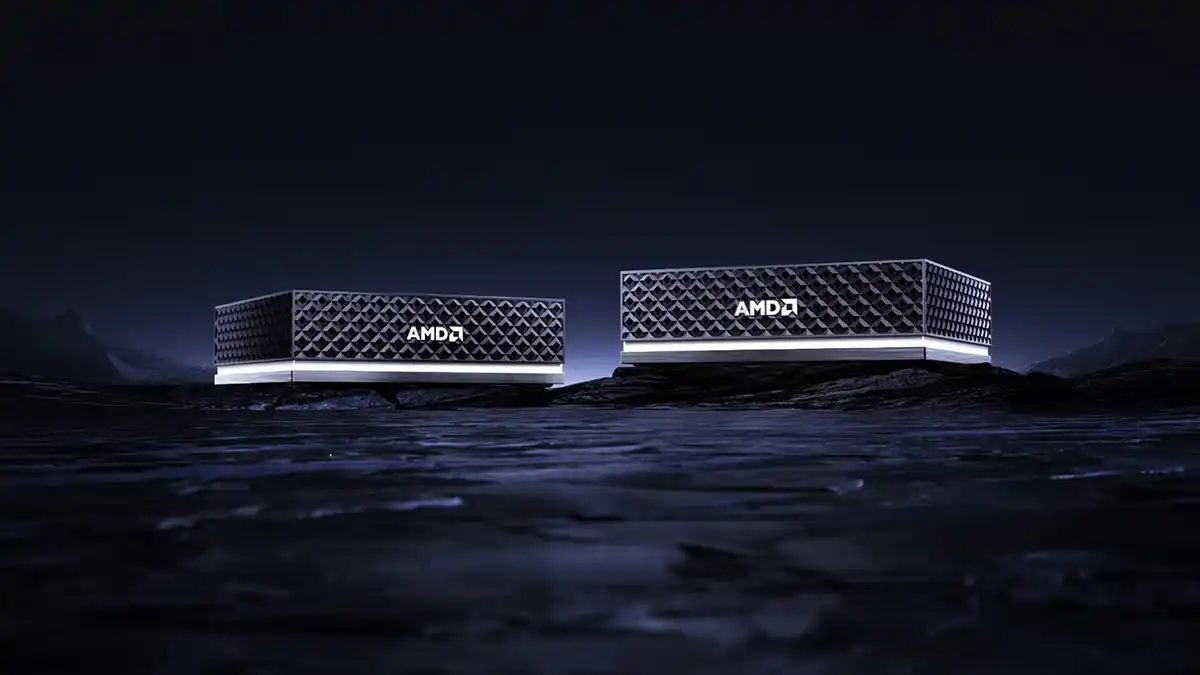
In June 2026, AMD announced the Ryzen AI Halo, a compact AI developer desktop to rival NVIDIA's DGX Spark. Both feature 128GB unified memory for running 200B+ parameter models locally. Priced from $2,949 to $3,999, AMD undercuts NVIDIA's $3,999+ DGX Spark. The core divergence lies in architecture and philosophy. Ryzen AI Halo uses an x86-based Ryzen AI Max+ 395 APU (CPU+GPU+NPU), runs standard Windows/Linux, and emphasizes general-purpose PC flexibility. DGX Spark uses an ARM-based Grace Blackwell Superchip, runs a custom DGX OS, and includes a high-speed ConnectX-7 NIC for cluster prototyping, anchoring it to NVIDIA's full-stack CUDA ecosystem. AMD's ROCm software has improved, with simpler installation and support for major frameworks, but still lags behind CUDA's 17-year maturity in community support and cutting-edge library availability. AMD's broader strategy focuses on becoming a viable second-source supplier. Key moves include acquiring design capabilities via ZT Systems (while outsourcing manufacturing) and securing two major 6GW GPU supply deals with OpenAI and Meta in late 2025/early 2026. These contracts validate AMD's role in diversifying the AI supply chain, rather than outright beating NVIDIA. NVIDIA counters with a tightly integrated stack from desktop (DGX Spark) to data center, emphasizing seamless scalability and enterprise software subscriptions (AI Enterprise). In summary, Ryzen AI Halo represents AMD's pragmatic path: offering a cost-effective, open-ecosystem alternative for developers wary of vendor lock-in, while its large data center contracts aim to capture share from customers seeking a second GPU supplier. The choice boils down to a familiar, flexible PC environment with potential software gaps (AMD) versus a premium, optimized, but locked-in ecosystem (NVIDIA).

marsbit14 хв тому

AMD Launches Compact AI Host, Directly Challenging NVIDIA DGX Spark

marsbit14 хв тому

Sharplink CEO: One Million Ethereum Developers, Who Can Compete?

Etherean Ecosystem: One Million Developers and a Formidable Moat The Ethereum network has surpassed a significant milestone: over one million unique lifetime developers, with approximately 232,000 active in the past year. This vast and growing talent pool is Ethereum's core advantage, far more critical than transient metrics like speed or transaction fees. The central question is not which blockchain is fastest, but where the best builders choose to build long-term. Ethereum's answer lies in a decade-long accumulation of infrastructure, standards, tools, liquidity, and collaborative culture that is exceptionally difficult to replicate. It has become the default operating system for programmable finance. This massive developer base is actively working on complex, high-risk challenges that deepen Ethereum's strategic moat: * **Glamsterdam Upgrade (2026):** Focused on core protocol scalability (ePBS, parallel execution) while preserving core values like credible neutrality. * **Synchronous Composability:** Aims to make numerous Rollups interoperate like a single chain, directly addressing fragmentation concerns. * **Quantum Resistance:** Ethereum leads mainstream ecosystems in coordinated preparation for post-quantum cryptography, with a targeted migration plan around 2029. This developer advantage is self-reinforcing, fueled by: * **Deep Composability:** Applications interact like interoperable financial Lego bricks via shared standards (e.g., EVM, Solidity). * **Credible Neutrality:** Secured by over 900,000 validators, making it trusted by major institutions. * **Modularity:** Rollups (Base, Arbitrium, etc.) expand, rather than fracture, the ecosystem into a tightly connected modular internet economy. * **Culture:** Attracts top-tier researchers and standard-setters who guide the entire industry. In essence, while other chains generate activity, Ethereum is consolidating as the trusted, long-term coordination layer for internet-native finance. Its future is being built now by the architects of the next-generation financial infrastructure.

Odaily星球日报1 год тому

Sharplink CEO: One Million Ethereum Developers, Who Can Compete?

Odaily星球日报1 год тому

Ethereum Reaches the Milestone of One Million Developers, Sharplink CEO Delves Deep into Ethereum's Future Possibilities

Ethereum Surpasses One Million Developers Milestone: A Look at Its Unshakeable Dominance and Future Joseph Chalom, CEO of Sharplink, reflects on his recent Asia trip where he engaged deeply with Ethereum developers and ecosystem leaders. The most striking takeaway was not just the industry's vibrancy, but the rigorous, long-term vision of local builders. This context brings to life a pivotal statistic: Ethereum has now surpassed one million cumulative developers (1,012,824), with approximately 232,000 remaining active in the past year—a talent pool unmatched by any other crypto ecosystem. The critical question isn't which blockchain is fastest, but where top developers choose to build long-term. Ethereum's answer is unequivocal. Its decade-long lead stems from a unique convergence of technology, institutional culture, economic systems, and composability, cementing its role as the foundational operating system for programmable finance. This massive developer base is tackling the industry's hardest problems, continuously strengthening Ethereum's moat. Key initiatives include: * **The Glamsterdam Upgrade (planned 2026):** Introducing ePBS and Block-level Access Lists for parallel execution and higher throughput while preserving core values like credible neutrality and fair MEV distribution. * **Synchronous Composability:** Projects are working to enable atomic transactions across dozens of Rollups, making them function as one unified chain and eliminating ecosystem fragmentation. * **Post-Quantum Security:** Ethereum is far ahead in preparing for quantum computing threats, with a dedicated foundation working group and testnets targeting a full migration by ~2029—a crucial factor for institutional adoption. Beyond developers, Ethereum's core network effects are its unparalleled composability and unified standards (like EVM and Solidity), which create a powerful flywheel: more developers → better tools → greater liquidity → more institutional participation. Its other decisive advantages include credible neutrality (over 900k validators), a secure modular architecture with interconnected Rollups, and a deeply entrenched culture shaped by top-tier researchers. Ultimately, there's a vast difference between generating short-term activity and becoming the trusted, long-term coordination layer for global native finance. Major institutions prioritize security, trust, and liquidity—areas where Ethereum holds dominant mindshare. The industry's trajectory shows resources consolidating around unified standards, deep liquidity, and developer consensus. After meeting the builders in Seoul and Hong Kong, Chalom is more convinced than ever: Ethereum's unshakeable future is being built right now.

Foresight News1 год тому

Ethereum Reaches the Milestone of One Million Developers, Sharplink CEO Delves Deep into Ethereum's Future Possibilities

Foresight News1 год тому

Saylor's Latest Long Read: Bitcoin is Not Money, It's Digital Capital, and Money is Built Upon It

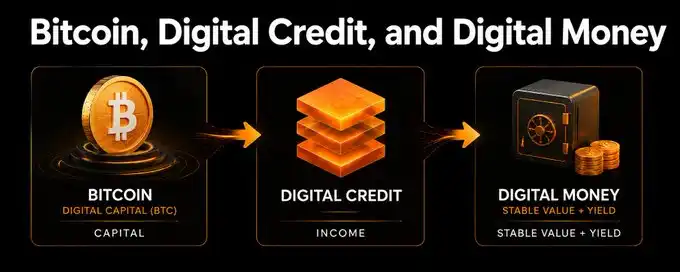
Michael Saylor presents his "Digital Asset Stack" theory, positioning Bitcoin as the foundational layer of digital capital. He argues Bitcoin itself should remain unchanged—no staking, inflation, or protocol alterations. Instead, a five-layer financial architecture should be built atop it: Digital Capital (BTC), Digital Credit (e.g., yield instruments like STRC), Digital Currency (stable, yield-bearing instruments pegged to fiat), Digital Yield (leveraged/structured products), and Digital Equity (e.g., MSTR stock, absorbing residual volatility). Saylor asserts this stack transforms Bitcoin's high-volatility, high-energy capital into tailored products: stable currencies for payments/savings, yield instruments for income seekers, and equity for growth investors. This approach meets diverse needs—corporate treasuries, banks, retirees, emerging market users—without compromising Bitcoin's core properties (scarcity, decentralization). The "killer use case" is rebuilding global money, credit, and capital markets on Bitcoin, bridging the fiat world with a superior digital asset foundation. The system leverages traditional finance principles (risk layering, structured products) while using Bitcoin as the ultimate collateral. This expands Bitcoin's utility, drives adoption, and offers a better monetary experience: digital, yield-bearing, stable-value tools for everyday use.

marsbit1 год тому

Saylor's Latest Long Read: Bitcoin is Not Money, It's Digital Capital, and Money is Built Upon It

marsbit1 год тому

Торгівля

Спот
Ф'ючерси
活动图片