US Senate Tucks CBDC Ban Into Housing Bill, Sets 2030 Deadline

bitcoinistОпубліковано о 2026-03-03Востаннє оновлено о 2026-03-03

Анотація

The US Senate has included a ban on the Federal Reserve issuing a central bank digital currency (CBDC) in a housing affordability bill. The amendment, part of the 21st Century ROAD to Housing Act, prohibits the Fed from directly or indirectly offering a retail digital dollar to the public. The ban is broad, covering any digital asset functioning as a CBDC, regardless of its name. However, it includes an exception for open, permissionless, and private digital currencies that offer cash-like privacy. The prohibition is set to expire on December 31, 2030, unless Congress renews it. This move reinforces the Fed's existing position that it would not issue a digital currency without explicit congressional approval.

The US Senate has moved to block the Federal Reserve from ever putting a government-issued digital dollar (CBDC) into Americans’ hands — at least for now. The ban is part of a sweeping housing affordability package and comes with an expiration date attached.

A Housing Bill With A Hidden Twist

The 21st Century ROAD to Housing Act is mostly about making homes more affordable. But buried in Title X of the bill is a standalone amendment to the Federal Reserve Act that has nothing to do with mortgages or rent.

It targets central bank digital currency — a government-issued, digital form of the US dollar. According to reports, Banking Committee Chairman Tim Scott and Ranking Member Elizabeth Warren released the bill text together ahead of a Senate vote, an unusual pairing given how differently the two lawmakers have historically approached financial regulation.
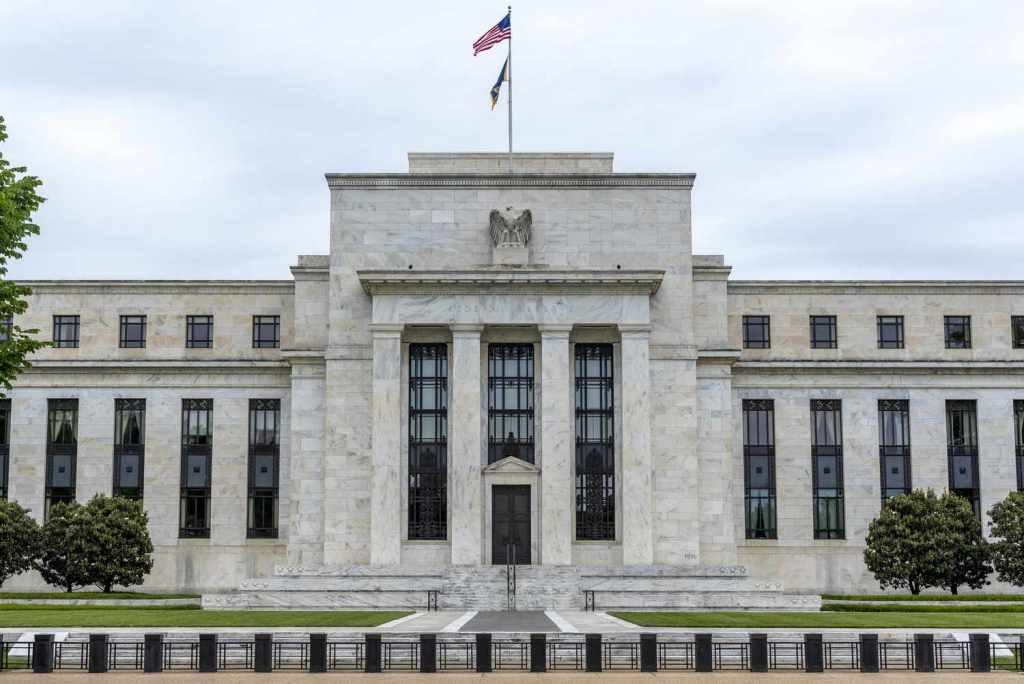
The US Federal Reserve. Image: Richard Sharrocks/Getty Images

The prohibition is sweeping in scope. It bars the Fed from issuing a retail digital dollar not just on its own, but also through banks and other financial middlemen.

Reports say the bill even covers any digital asset that functions like a central bank digital currency under a different name — closing off potential workarounds before they can be tried.

What Counts As A CBDC

The bill spells out exactly what it is targeting. A central bank digital currency, or commonly known as CBDC, under the proposed law, is a dollar-denominated digital asset that is a direct liability of the Federal Reserve and is broadly available to regular consumers.

That definition draws a firm line between a government-issued digital dollar and private-sector options like stablecoins or crypto assets.

BTCUSD trading at $66,673 on the 24-hour chart: TradingView

There is, however, one carved-out exception. Any digital currency that is open, permissionless, and private — and that offers the same privacy protections as physical cash — would not be blocked by the ban.

Reports note this exception appears designed to ensure that private innovation in digital payments is not accidentally swept up in legislation aimed solely at the government.

CBDC: The Clock Is Already Running

The CBDC ban is not meant to last forever. Under the bill’s own terms, the prohibition expires on December 31, 2030. Unless Congress acts again before then, the door to a retail digital dollar reopens automatically.

This sunset clause signals that lawmakers are not permanently opposed to the idea — they just want more time before anything moves forward.

The Federal Reserve has already said publicly that it would not issue a digital dollar without clear authorization from Congress.

So in practical terms, the bill reinforces a position the central bank has already taken. Still, getting that stance written into law carries real weight.

Featured image from The Daily Economy, chart from TradingView

Пов'язані питання

QWhat is the main purpose of the 21st Century ROAD to Housing Act, and what unrelated amendment does it contain?

AThe main purpose of the 21st Century ROAD to Housing Act is to make homes more affordable. Buried within it is an unrelated standalone amendment to the Federal Reserve Act that bans the issuance of a retail central bank digital currency (CBDC).

QWho were the two key lawmakers from opposing sides that released the bill text together, and why is this pairing considered unusual?

ABanking Committee Chairman Tim Scott and Ranking Member Elizabeth Warren released the bill text together. This is an unusual pairing because the two lawmakers have historically approached financial regulation very differently.

QAccording to the bill's definition, what specific characteristics make a digital asset a CBDC that would be banned?

AAccording to the bill, a CBDC is a dollar-denominated digital asset that is a direct liability of the Federal Reserve and is broadly available to regular consumers.

QWhat is the one type of digital currency that is explicitly exempted from the ban and why?

AThe ban exempts any digital currency that is open, permissionless, and private, and that offers the same privacy protections as physical cash. This exception is designed to ensure private innovation in digital payments is not accidentally restricted by legislation aimed solely at the government.

QWhen does the CBDC ban expire, and what does this sunset clause indicate about lawmakers' stance?

AThe CBDC ban expires on December 31, 2030. This sunset clause indicates that lawmakers are not permanently opposed to the idea of a digital dollar but want more time before anything moves forward.

Пов'язані матеріали

OpenAI Post-Training Engineer Weng Jiayi Proposes a New Paradigm Hypothesis for Agentic AI

OpenAI engineer Weng Jiayi's "Heuristic Learning" experiments propose a new paradigm for Agentic AI, suggesting that intelligent agents can improve not just by training neural networks, but also by autonomously writing and refining code based on environmental feedback. In the experiment, a coding agent (powered by Codex) was tasked with developing and maintaining a programmatic strategy for the Atari game Breakout. Starting from a basic prompt, the agent iteratively wrote code, ran the game, analyzed logs and video replays to identify failures, and then modified the code. Through this engineering loop of "code-run-debug-update," it evolved a pure Python heuristic strategy that achieved a perfect score of 864 in Breakout and performed competitively with deep reinforcement learning (RL) algorithms in MuJoCo control tasks like Ant and HalfCheetah. This approach, termed Heuristic Learning (HL), contrasts with Deep RL. In HL, experience is captured in readable, modifiable code, tests, logs, and configurations—a software system—rather than being encoded solely into opaque neural network weights. This offers potential advantages in explainability, auditability for safety-critical applications, easier integration of regression tests to combat catastrophic forgetting, and more efficient sample use in early learning stages, as demonstrated in broader tests on 57 Atari games. However, the blog acknowledges clear limitations. Programmatic strategies struggle with tasks requiring long-horizon planning or complex perception (e.g., Montezuma's Revenge), areas where neural networks excel. The future vision is a hybrid architecture: specialized neural networks for fast perception (System 1), HL systems for rules, safety, and local recovery (also System 1), and LLM agents providing high-level feedback and learning from the HL system's data (System 2). The core proposition is that in the era of capable coding agents, a significant portion of an AI's learned experience could be maintained as an auditable, evolving software system.

marsbit30 хв тому

OpenAI Post-Training Engineer Weng Jiayi Proposes a New Paradigm Hypothesis for Agentic AI

marsbit30 хв тому

Your Claude Will Dream Tonight, Don't Disturb It

This article explores the recent phenomenon of AI companies increasingly using anthropomorphic language—like "thinking," "memory," "hallucination," and now "dreaming"—to describe machine learning processes. Focusing on Anthropic's newly announced "Dreaming" feature for its Claude Agent platform, the piece explains that this function is essentially an automated, offline batch processing of an agent's operational logs. It analyzes past task sessions to identify patterns, optimize future actions, and consolidate learnings into a persistent memory system, akin to a form of reinforcement learning and self-correction. The article draws parallels to similar features in other AI agent systems like Hermes Agent and OpenClaw, which also implement mechanisms for reviewing historical data, extracting reusable "skills," and strengthening long-term memory. It notes a key difference from human dreaming: these AI "dreams" still consume computational resources and user tokens. Further context is provided by discussing the technical challenges of managing AI "memory" or context, highlighting the computational expense of large context windows and innovations like Subquadratic's new model claiming drastically longer contexts. The core critique argues that this strategic use of human-centric vocabulary does more than market products; it subtly reshapes user perception. By framing algorithms with terms associated with consciousness, companies blur the line between tool and autonomous entity. This linguistic shift can influence user expectations, tolerance for errors, and even perceptions of responsibility when systems fail, potentially diverting scrutiny from the companies and engineers behind the technology. The article concludes by speculating that terms like "daydreaming" for predictive task simulation might be next, continuing this trend of embedding the idea of an "inner life" into computational processes.

marsbit31 хв тому

Your Claude Will Dream Tonight, Don't Disturb It

marsbit31 хв тому

Торгівля

Спот
Ф'ючерси

Популярні статті

Як купити BAN

Ласкаво просимо до HTX.com! Ми зробили покупку Comedian (BAN) простою та зручною. Дотримуйтесь нашої покрокової інструкції, щоб розпочати свою криптовалютну подорож.Крок 1: Створіть обліковий запис на HTXВикористовуйте свою електронну пошту або номер телефону, щоб зареєструвати обліковий запис на HTX безплатно. Пройдіть безпроблемну реєстрацію й отримайте доступ до всіх функцій.ЗареєструватисьКрок 2: Перейдіть до розділу Купити крипту і виберіть спосіб оплатиКредитна/дебетова картка: використовуйте вашу картку Visa або Mastercard, щоб миттєво купити Comedian (BAN).Баланс: використовуйте кошти з балансу вашого рахунку HTX для безперешкодної торгівлі.Треті особи: ми додали популярні способи оплати, такі як Google Pay та Apple Pay, щоб підвищити зручність.P2P: Торгуйте безпосередньо з іншими користувачами на HTX.Позабіржова торгівля (OTC): ми пропонуємо індивідуальні послуги та конкурентні обмінні курси для трейдерів.Крок 3: Зберігайте свої Comedian (BAN)Після придбання Comedian (BAN) збережіть його у своєму обліковому записі на HTX. Крім того, ви можете відправити його в інше місце за допомогою блокчейн-переказу або використовувати його для торгівлі іншими криптовалютами.Крок 4: Торгівля Comedian (BAN)Легко торгуйте Comedian (BAN) на спотовому ринку HTX. Просто увійдіть до свого облікового запису, виберіть торгову пару, укладайте угоди та спостерігайте за ними в режимі реального часу. Ми пропонуємо зручний досвід як для початківців, так і для досвідчених трейдерів.

450 переглядів усьогоОпубліковано 2024.12.11Оновлено 2025.03.21

Як купити BAN

Обговорення

Ласкаво просимо до спільноти HTX. Тут ви можете бути в курсі останніх подій розвитку платформи та отримати доступ до професійної ринкової інформації. Нижче представлені думки користувачів щодо ціни BAN (BAN).

活动图片