US SEC and CFTC Jointly "Unbind": Crypto Assets Are "Digital Commodities" Not "Securities"

Odaily星球日报Опубліковано о 2026-03-18Востаннє оновлено о 2026-03-18

Анотація

The U.S. SEC and CFTC have jointly issued new interpretive guidance clarifying that most crypto assets are not securities. Instead, they are classified as digital commodities, digital collectibles, digital tools, or stablecoins—provided stablecoin issuers do not pay interest. Only tokenized assets that represent traditional financial instruments are considered securities. Key classifications include: - Digital commodities (e.g., Bitcoin, Ethereum) are non-securities whose value derives from utility and market dynamics. - Digital collectibles (e.g., NFTs, meme coins) are for collection or use. - Digital tools (e.g., membership tokens, credentials) serve functional purposes. - Stablecoins are non-securities if they do not pay yields. The guidance also states that DeFi mining, staking, wrapped assets, and airdrops generally do not constitute securities offerings—unless airdrops require active effort (creating an investment contract risk). Notably, a token initially sold as a security can later be reclassified as a non-security if it becomes decentralized or gains utility. This clarity is expected to benefit crypto IPOs (e.g., exchanges like OKX and Kraken), DeFi protocols, and prediction markets like Polymarket by reducing regulatory uncertainty and attracting institutional liquidity. However, increased regulatory alignment may reduce innovation in gray areas and raise compliance costs. Overall, the move signals tighter integration with mainstream finance, potentially ensurin...

Original|Odaily Planet Daily (@OdailyChina)

Author|Wenser(@wenser 2010)
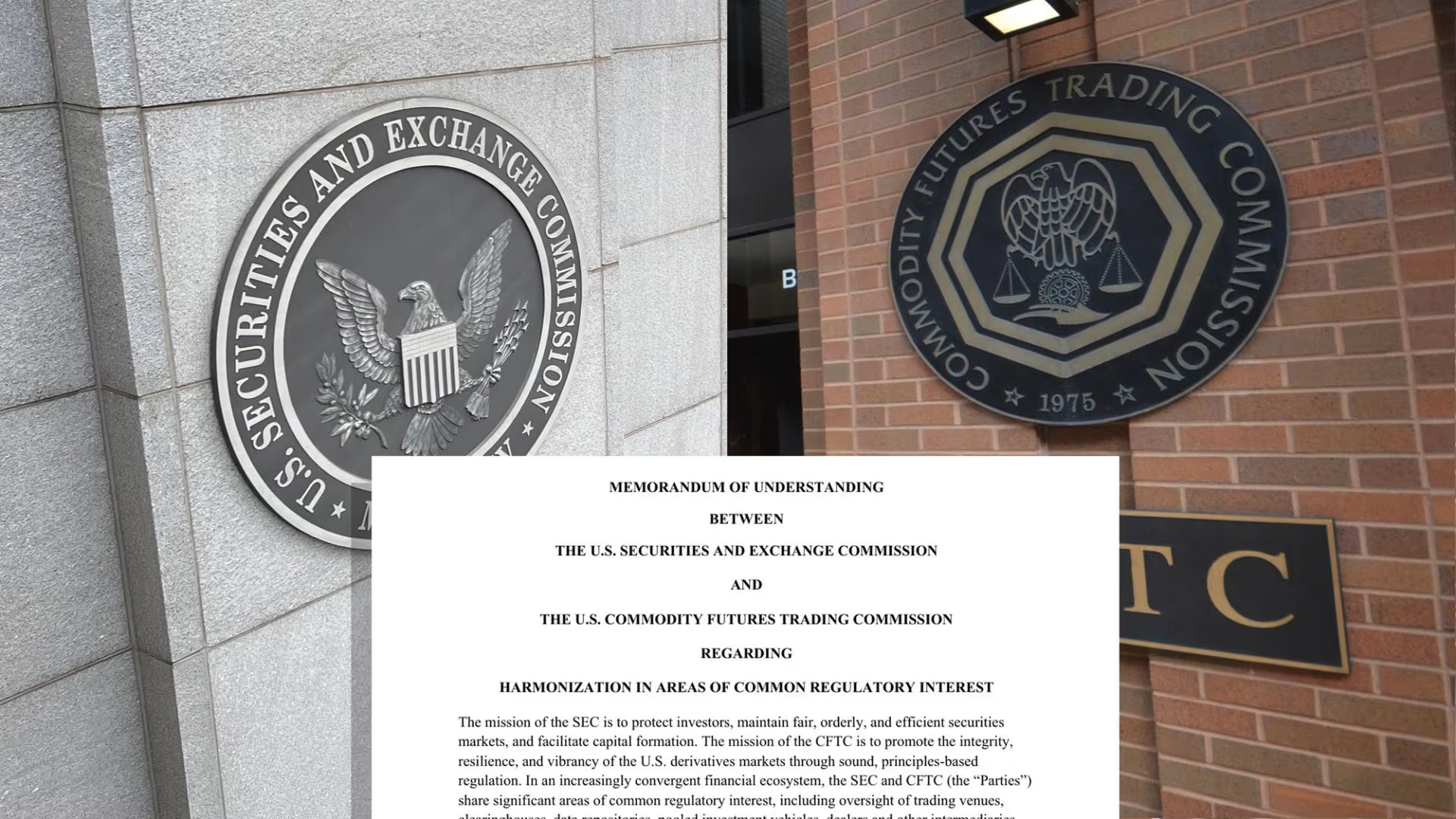
On March 17 local time, the U.S. SEC released its 30th press release this year. In this explanatory document of less than 1,000 words, SEC Chairman Paul Atkins and CFTC Chairman Michael Salinger jointly removed the tight constraint that has been placed on the entire crypto industry for the first time: most crypto assets are not securities but are classified as "digital commodities, digital collectibles, digital tools, stablecoins."

On March 11 this year, the two agencies jointly signed a Memorandum of Understanding (MOU), indicating that they would "clarify product definitions through joint interpretations and rulemaking, and develop modern clearing, margin, and collateral frameworks," among other measures. Now, it appears that this latest explanatory document is the best proof of the two agencies联手 (joining forces) to loosen restrictions on the cryptocurrency market.

It can be foreseen that the impact of this document clarifying the classification of crypto assets goes far beyond this. Subsequent intensive crypto IPOs, airdrops, DeFi mining, staking, and wrapped assets will all usher in new development opportunities. As for whether behind this seemingly convenient door lies an influx of institutional liquidity, countless retail investors, or the hidden scythe of the regulatory machine, perhaps only time will tell.

Detailed Analysis of the 5 Classifications in the SEC Explanatory Document: Most Crypto Assets Are Not Securities

According to the "Fact Sheet" document released by the U.S. SEC, it provides clear regulations for the classification of 5 types of crypto assets:

  • Digital Commodities — Non-Securities — Their value is intrinsically linked to the programmed operation of a "functional" crypto system and supply-demand dynamics, rather than arising from the expectation of profits from the core managerial efforts of others.
  • Digital Collectibles — Non-Securities — Designed specifically for collection or use, they may represent or convey rights to digital expressions or references of artwork, music, videos, trading cards, game items, or internet memes, characters, current events, trends, etc.
  • Digital Tools — Non-Securities — Crypto assets with practical functions, such as memberships, tickets, vouchers, property deeds, or identity identifiers.
  • Stablecoins — Stablecoins meeting the definition of the "GENIUS Act" are non-securities, and stablecoin issuers are explicitly prohibited from paying interest or returns to holders in any form (cash, tokens, or other consideration).
  • Digital Securities (or "Tokenized Securities") — Are Securities — Financial instruments listed in the definition of "security" presented or represented in the form of crypto assets, whose ownership records are maintained wholly or partly on one or more crypto networks.

In the subsequent more detailed 68-page explanatory document, the U.S. SEC also provided its own definitions for airdrops, DeFi mining, staking, and wrapped assets:

  • DeFi Mining (Protocol Mining): Does not constitute a securities offering. (Odaily Planet Daily Note: There is no structure relying on profits from the core managerial efforts of others.)
  • Staking: Does not constitute a securities offering. (Odaily Planet Daily Note: If the underlying asset is a digital security, or a non-security asset but has been incorporated into an investment contract, the staking certificate is then classified as a security.)
  • Wrapped Assets: Are not securities. (Odaily Planet Daily Note: The custodian of wrapped assets must not misappropriate the underlying assets, and cannot transfer, lend, stake, re-stake, or use them for any other purpose.)
  • Airdropped Assets: Are not securities. (Odaily Planet Daily Note: If the issuer proactively announces an airdrop plan and requires users to complete specific tasks to receive the airdrop, creating a clear consideration relationship through active labor in exchange for assets, it may constitute an investment contract risk.)

Simply put, what are not considered securities (stocks) include: Digital commodities, like gold and oil, are tangible things that can be used, with prices determined by market supply and demand. Bitcoin and Ethereum fall into this category; Digital collectibles, like stamp collecting or buying paintings, are for collection or appreciation. Popular online NFT images, game items (including Meme coins) belong to this category; Digital tools, like membership cards, tickets, qualifications, are obtained for use, not for speculation; Stablecoins. Like digital "shopping vouchers," specifically used for payment, with stable value and no volatility. But there is a hard rule: Issuers cannot pay interest to holders. Once interest is paid, the nature changes and it might be considered a stock.

Digital securities, these are essentially stocks, just digitally repackaged, so they remain within the scope of stocks.

Mining, using computers to help the network keep accounts and earn coins, is not issuing stocks; Staking, locking up coins to help maintain network security and earn some rewards, is not issuing stocks. But if the locked coins are inherently stock-like, that's a different story. Wrapping, converting one coin into a form usable on another network, like changing change, is not issuing stocks. Airdrops, platforms giving away coins for free, are not issuing stocks. But if the platform requires you to complete tasks first, then it becomes more like an "employment relationship," and the nature might be different.

It is worth noting that the document acknowledges for the first time that an "investment contract" can be terminated. This also means that even if a token was initially issued through financing (ICO), as long as it later achieves decentralization or acquires utility attributes, it can cease to be considered a security.

Although these are currently still at the "explanatory document" level and not yet specific statutory law条文 (legal provisions), they have initially clarified the previously chaotic crypto asset classification system, providing some evidential support for future regulation and enforcement. Subsequently, the potential impact of this document may bring market benefits in the following aspects.

Non-Security Classification for Crypto Assets Released, 3 Potential Benefits May Drive Market Recovery

Currently, the explanatory document jointly issued by the U.S. SEC and CFTC seems more like a "New Crypto Development Manifesto," which will directly promote the explosive development of prediction markets, crypto IPOs, and DeFi protocols.

New Interpretation Clears Obstacles for Polymarket Airdrop, Crypto IPOs and Token Launches to Proceed Together

After the release of the latest U.S. SEC crypto asset interpretation, crypto KOL @harrysew posted that this framework might "give the green light" to the POLY token launch and airdrop, significantly reducing regulatory uncertainty. On one hand, Polymarket can leverage its real-time data prediction function, with the POLY token becoming a utility token; on the other hand, mining, staking, and wrapping assets can also proceed smoothly, further expanding the application scenarios of the POLY token.

Thereby, Polymarket is expected to grow from an "illegal gambling den" previously denounced by local regulators into a "global truth machine" that predicts the future and verifies the direction of event development.

New Interpretation Facilitates Crypto Exchange IPOs in the US, Platform Tokens No Longer Negative Assets

For exchanges like OKX and Kraken that aspire to conduct crypto IPOs in the U.S. stock market, this explanatory document is like receiving a pillow when drowsy.

Previously, exchanges were often limited by their资产负债表 (balance sheet) constraints, unable to clearly define and conduct compliant audits on包括 (including) platform tokens and assets held by the platform, because they feared regulators would label "cryptocurrencies as stocks."

Now, with this explanatory document, the audit obstacles before an IPO have been swept away at once, and the former platform tokens are no longer obstacles in front of the IPO.

New Interpretation Benefits DeFi Protocol Development, Massive Liquidity May Pour In

For many DeFi protocols, this explanatory document is also a "get-out-of-jail-free card."

Previously, many DeFi protocols, including Uniswap, have received "regulatory subpoenas" from the U.S. SEC. Now, staking, wrapped assets, and spot holdings are explicitly not securities. In view of this, various institutional funds can also enter and use DeFi protocols in a compliant, large-capacity manner.

Of course, regarding liquidity mining, governance tokens promising returns, and yield aggregation protocols, asset management giants like BlackRock and Fidelity still cannot seamlessly enter.

Conclusion: The Era of Crypto Wild West Ends, Market Accelerates into the "Great Co-optation Era"

Of course, just like the two sides of a coin, as the legal boundaries defined by the U.S. SEC and CFTC become clearer, the "ambiguity红利 (dividends)" and "gray areas" within the cryptocurrency industry will also face清算 (liquidation/settling accounts) simultaneously. To some extent, the crypto industry, like the banking and credit industries before it, is gradually being co-opted by the regulatory system and compliance framework. New crypto projects need to invest more human and material resources in regulatory compliance, airdrop distribution, staking design, etc., which to some extent will also affect crypto innovation.

But无论如何 (in any case), for the current liquidity-starved crypto market, every detailed explanation from regulators is an invitation ticket to the mainstream financial field. Although the ideal of decentralization is moving further away from us, more importantly, the connection between the crypto industry and the mainstream population is becoming closer, so its vitality and living conditions can be guaranteed to a certain extent.

Between disappearing in silent high pressure and living with restrictions, I think most people would choose the latter.


Пов'язані питання

QWhat are the five categories of crypto assets defined by the U.S. SEC in the interpretive document, and which ones are classified as non-securities?

AThe five categories are: 1. Digital commodities (non-security), 2. Digital collectibles (non-security), 3. Digital tools (non-security), 4. Stablecoins (non-security, if compliant with the GENIUS Act), and 5. Digital securities (security).

QAccording to the SEC's interpretation, under what condition can a token that was initially issued through an ICO no longer be considered a security?

AA token can cease to be considered a security if it later achieves decentralization or gains utility/functional attributes, effectively terminating its 'investment contract' status.

QHow does the new SEC-CFTC framework potentially benefit DeFi protocols like Uniswap?

AThe framework clarifies that activities like staking, holding spot assets, and wrapped assets are not securities, reducing regulatory uncertainty and potentially allowing institutional capital to enter DeFi protocols in a compliant manner.

QWhat specific restriction does the SEC place on stablecoin issuers to maintain their non-security classification?

AStablecoin issuers are explicitly prohibited from paying any form of interest or yield (cash, tokens, or other consideration) to holders; doing so could change its classification to a security.

QWhat major obstacle for crypto exchanges seeking a U.S. IPO does this new interpretive document help remove?

AIt helps remove the auditing obstacle related to classifying assets like exchange tokens (platform tokens) on their balance sheets, as these tokens can now be clearly defined as non-securities (e.g., digital commodities or tools), facilitating the IPO process.

Пов'язані матеріали

7 Months After the Collapse of Huiwang, Southeast Asia's Escrow Platforms Undergo a Major Reshuffle

Following the collapse of Huione Pay—dubbed the "Alipay of Southeast Asia"—seven months ago, the region's underground financial guarantee platform sector is undergoing a significant reshuffle. This power vacuum has been swiftly filled by emerging platforms such as XinBi, Tiger/Navigator, JinBei (renamed JinBo), Dali/Tiancheng, and FullyLight. These platforms, operating largely via Telegram and offering services like escrow for illicit transactions, have absorbed the vast user base and markets left behind by Huione. While positioning themselves as "trust intermediaries," their primary clientele consists of networks involved in online scams, money laundering, illegal gambling, and even human trafficking. For instance, the Tiger/Navigator platform explicitly provides "escrow" services for kidnapping-for-ransom operations ("强押车交易"). Data underscores the immense scale: Huione alone processed over $103 billion in cryptocurrency payments and facilitated over $31 billion through its escrow market before its downfall, linking it to Cambodia's notorious Prince Group. Since its collapse, competitors have seen explosive growth. For example, the XinBi platform has accumulated over $1.6 billion in total USDT revenue, while platforms like NewPay, OkPay (under Dali), and FullyLight Wallet collectively processed over $4.8 billion in USDT in a single year. This ecosystem thrives in regions like Cambodia and Myanmar, where regulatory gaps allow these platforms to act as critical financial infrastructure for sprawling cybercrime industries, from scam compounds to online casinos. The article concludes that the moniker "Southeast Asian Alipay" is a misnomer, obscuring the platforms' fundamental role in enabling serious criminal enterprises rather than representing legitimate financial innovation.

Odaily星球日报25 хв тому

7 Months After the Collapse of Huiwang, Southeast Asia's Escrow Platforms Undergo a Major Reshuffle

Odaily星球日报25 хв тому

The Changing Landscape: What Are Crypto VCs Experiencing?

Title: The Shifting Landscape of Crypto Venture Capital The era of dedicated crypto venture capital funds is undergoing a significant transformation. Once essential for navigating the sector's complexity and high risk, these specialized funds are now facing an identity crisis as the market matures. This shift mirrors historical patterns in other specialized investment classes like cleantech and SPACs, where initial information advantages dissipate as technologies become mainstream and integrated into existing industry frameworks. The article argues that crypto is reaching a critical inflection point, transitioning from a "building phase" to an "integration phase." Major players like Stripe, BlackRock, and Visa now engage with crypto not for its novel mechanics but as a foundational financial infrastructure. Their needs—regulatory compliance, banking partnerships, distribution channels—align with traditional fintech, a domain easily understood by large, generalist funds like Sequoia and Founders Fund. This evolution creates a "barbell effect" within the VC landscape. On one end are massive, diversified platforms that can incorporate crypto as one vertical among many. On the other are small, nimble funds focused on niche, experimental projects. The middle ground—medium-sized dedicated crypto funds—is being squeezed out. Their typical fund size makes it impossible to generate sufficient returns solely from early-stage crypto bets, yet they cannot compete with giants for later-stage deals. Consequently, leading crypto-native firms like Paradigm and Framework Ventures are expanding into AI, robotics, and other sectors, driven partly by LP pressure for better returns amid a broader VC DPI crisis. Others, like Dragonfly and a16z, have narrowed their crypto focus predominantly to financial infrastructure like stablecoins, reframing the sector's core narrative. For crypto entrepreneurs, this consolidation presents challenges. While generalist funds offer larger checks and broader resources, crypto projects now compete fiercely with AI for attention and capital within these firms. Furthermore, the long-term, non-commercial foundational work that built the ecosystem—funded by dedicated crypto VCs—is less likely to attract generalist capital focused on direct returns. The conclusion is that "crypto investor" as a standalone category is becoming obsolete, akin to "internet investor." Crypto is becoming a baseline infrastructure layer. The future will see a barbell structure: large-scale growth financing handled by generalist funds, while pioneering, speculative projects are funded by small, specialized vehicles. The dedicated crypto funds of the 2017-2021 boom, which incubated core infrastructure, are giving way to this new, bifurcated reality.

Foresight News42 хв тому

The Changing Landscape: What Are Crypto VCs Experiencing?

Foresight News42 хв тому

As Consensus Accelerates, What Are Young Investors Betting On?

Title: As Consensus Forms Faster, What Are Young Investors Betting On? In the rapid evolution of tech investment, a new generation of young investors is navigating a landscape where AI, robotics, commercial aerospace, and quantum computing are advancing simultaneously. Traditional investment logic based on financial models is giving way to a need for deep technical understanding and the ability to act before industry consensus forms. An analysis of trends from the "WAIC FUTURE TECH" list of young investment leaders reveals key shifts in focus. The first major trend is the movement of AI from the digital screen into the physical world. Investment is shifting from large language models and chatbots towards embodied AI, robotics, AI hardware, and edge computing. While demonstrations generate excitement, the real challenge lies in achieving scalable, reliable, and cost-effective delivery in complex real-world environments like factories and logistics. Success depends not just on algorithms but on the integration of sensors, actuators, and control systems. Second, the competitive focus for large models is moving beyond raw capability toward building an "intelligence flywheel." The goal is to create self-reinforcing systems where user interaction generates data, improving the model, which in turn enhances the user experience and attracts more engagement. Companies that successfully embed AI into workflows to create these closed-loop systems can build lasting value that isn't easily erased by the next model upgrade. Third, facing a potential bottleneck in high-quality human-generated data, investors are looking at new underlying technologies. Reinforcement learning and self-play, as demonstrated by AlphaGo Zero, offer paths for AI to generate its own experience. Scientific foundation models, which aim to build general AI capabilities for fields like life sciences and materials discovery, represent a non-consensus direction that could unlock new frontiers of knowledge and data. Finally, in deep-tech areas like quantum computing, commercial aerospace, and space-based infrastructure, patient capital is essential. These fields have long, uncertain development and validation cycles involving complex engineering, supply chains, and regulations. Investment here requires a long-term view, focusing on foundational team capabilities and the eventual emergence of market demand, even if commercial returns are distant. Collectively, these trends illustrate how young investors are adapting to a new era. They are learning to make earlier, technically-informed judgments, balance hype with real-world viability, and provide the patient capital needed to build the deep-tech foundations of the future.

marsbit1 год тому

As Consensus Accelerates, What Are Young Investors Betting On?

marsbit1 год тому

Торгівля

Спот
活动图片




