US Media Reveals the Inside Story of Sora's Shutdown: Losing Millions Daily, User Base Halved, and Facing Talent Poaching from Competitors

marsbitОпубліковано о 2026-03-30Востаннє оновлено о 2026-03-30

Анотація

OpenAI has abruptly shut down its Sora video-generation tool, a project once hailed as the next consumer AI frontier after ChatGPT. Initially launched with high expectations, including a major partnership with Disney, Sora allowed users to insert themselves into various video scenes. However, it quickly became a significant financial drain, reportedly losing about $1 million daily. Its user base peaked at roughly one million before halving, and it consumed excessive computational resources needed for OpenAI's core priorities, such as its upcoming "Spud" AI model and enterprise productivity tools. Facing stiff competition from rivals like Anthropic and a strategic shift towards AI agents and coding tools ahead of its IPO, OpenAI decided to reallocate resources. Key researchers behind Sora were also targeted in a Silicon Valley talent war, with Meta's CEO personally attempting to recruit them. The shutdown shocked Disney, which had planned to invest $1 billion and use Sora across its operations. The deal has now collapsed, and Disney is exploring other AI partnerships. OpenAI will focus its efforts on robotics and other long-term projects.

Earlier this month, when OpenAI CEO Sam Altman arrived in Los Angeles to attend Vanity Fair's post-Oscars party, his company was just weeks away from licensing the Sora video generation tool to major Hollywood studios.

Following the massive success of ChatGPT, Sora was hyped as the next consumer-facing AI frontier. This simple app allowed users to place themselves and their friends into various video scenes, whether dribbling like the Harlem Globetrotters or engaging in a lightsaber duel with the Star Wars character Darth Vader.

Then-Disney CEO Bob Iger was also optimistic about its prospects, agreeing to invest $1 billion in OpenAI and allowing characters from the studio's Marvel, Pixar Animation, and other properties to appear in Sora-generated videos. Equally important, amid widespread industry concerns about AI's threat to creative work, he lent the emerging technology the valuable seal of approval from Disney.

Computational Burden

However, OpenAI suddenly decided to shut down Sora.

Disney executives were shocked, many of them learning of the decision less than an hour before it was announced. What they didn't know was that Sora had quietly become a major burden for OpenAI in the months following its launch, especially as the startup was tightening its business focus ahead of its initial public offering (IPO).

At the time, OpenAI was just weeks away from completing a new AI model codenamed "Spud" and needed to free up more computational resources to support the coding tools and enterprise products running on that model. AI chips are the most precious resource for any top research lab, and at OpenAI, Sora was consuming too many of them.

Moreover, Sora was not yet profitable, and every user who "stitched" themselves into a WWII newsreel or a Hollywood chase scene was consuming finite computing resources.

Strategic Miscalculation

Today, Sora looks like a costly strategic miscalculation, and the key employees who led the project are at the center of the AI talent war sweeping Silicon Valley.

Altman described the decision to shut down Sora as a difficult but necessary sacrifice for the company to achieve its larger goals. In a memo to employees, he wrote that he was encouraged to see everyone willing to make "tough trade-offs" for the company's benefit.
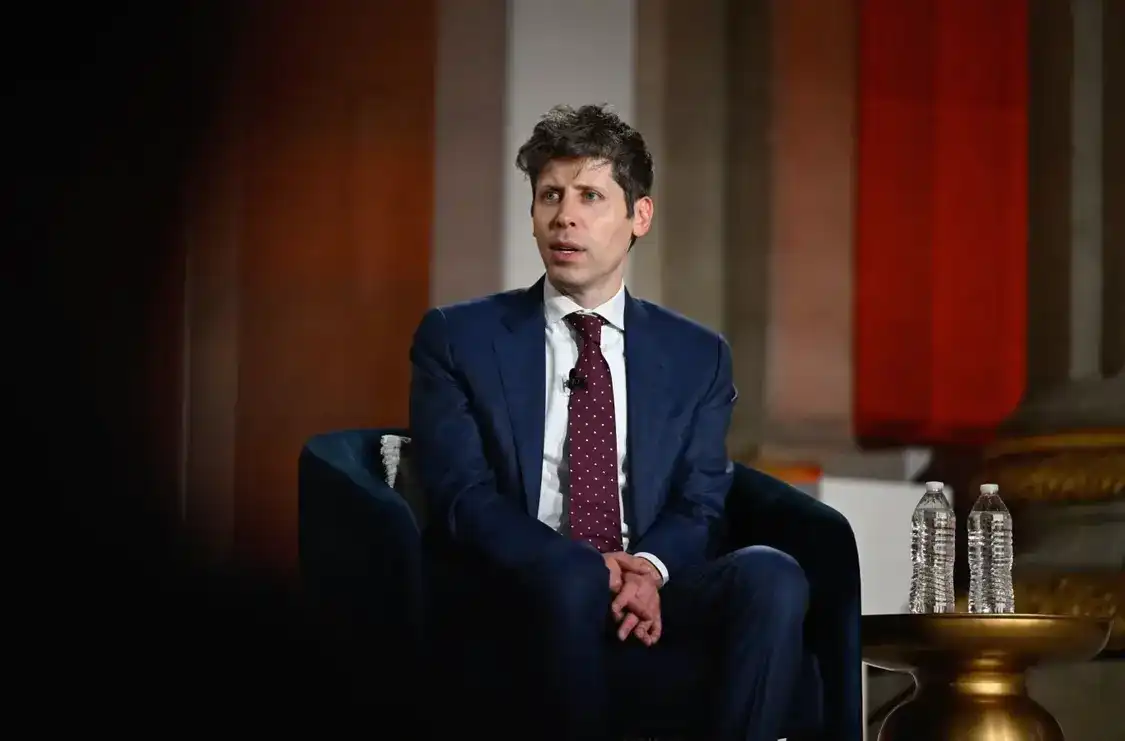
Altman

The decision marked a stunning conclusion to a project Altman had once pinned high hopes on. He had dreamed of using Sora to position OpenAI as the creative pioneer of the AI era and bring in substantial new revenue streams for the company.

Two years ago, OpenAI first showcased Sora to the world, presenting dreamlike landscapes generated by the technology, reminiscent of Hayao Miyazaki's fantasy worlds or the surrealist paintings of Salvador Dalí. When OpenAI launched the standalone Sora app for consumers last September, Altman compared it to the company's initial release of ChatGPT.

However, the app never became as popular as its developers envisioned. It was more akin to low-quality AI-generated content than an AI creative marvel. By the end of last year, its usage had plateaued.

Shortly after its launch, the global user base peaked at around 1 million but never reached that level again. According to data from AI research firm Similarweb, user numbers dropped below 500,000 in the following months.

A person familiar with the matter revealed that Sora was losing approximately $1 million per day. As OpenAI tightened its purse strings ahead of the IPO, company executives began scrutinizing Sora more strictly, and the results were not to their satisfaction.

At the time, OpenAI's research team was about to begin training a new model designed to power video generation features for ChatGPT. Unlike language models that learn from text, video models need to understand the entire dynamic world, making their creation significantly more expensive. After carefully calculating the required costs, OpenAI decided to cancel Sora.

OpenAI plans to shift its focus to a new type of "super app" it is building, which will integrate so-called AI agent tools capable of autonomously performing tasks for users, such as writing software, analyzing data, and booking travel. These productivity-focused products are gradually gaining widespread adoption in the labor market, and OpenAI currently lags behind competitor Anthropic in the race for this market, posing a threat to its leading position in the AI competition.

Altman told employees that the Sora team would next focus on longer-term strategic initiatives like robotics.

An OpenAI spokesperson said the company is rigorously prioritizing computational resources based on the areas that can deliver the greatest long-term economic value. She stated: "This careful focus on where we deploy compute allows us to achieve growth, accelerate innovation, and serve businesses and developers more efficiently."

Zuckerberg's Talent Poaching

Sora was the brainchild of Tim Brooks and Bill Peebles. The two researchers became close friends while pursuing their PhDs at UC Berkeley. They joined OpenAI in early 2023 with the goal of building models capable of simulating the physical world by generating high-quality video from text.

Sora was part of OpenAI's World Simulations team, led by Aditya Ramesh. This department operated independently from OpenAI's core research team, which builds the large language models powering ChatGPT.

Last spring, Meta CEO Mark Zuckerberg launched a full-scale talent war against OpenAI, personally contacting dozens of OpenAI's top researchers with lucrative compensation packages to lure them to his new AI lab. One of his targets was Peebles, who received an offer and briefly considered joining Meta.

According to people familiar with the matter, OpenAI managed to retain Peebles by giving him a raise. Shortly thereafter, his responsibilities on the Sora project expanded. Peebles oversaw the training of a new version of the video generation model and the development of the Sora consumer app.

Disney's AI Dream

Despite Sora's daily losses of $1 million, OpenAI had tried to find a viable path for it. Last December, it announced a multi-year agreement with Disney, securing licensing rights to use over 200 characters from the entertainment giant's film library. As part of the deal, Disney agreed to become a major customer of OpenAI and invest $1 billion in it.

Iger, in an interview with CNBC, said the deal gave Disney an opportunity to participate in the rapid development of AI and new forms of media entertainment. Altman said he hoped the collaboration would offer users a new way to engage in creative expression with AI.
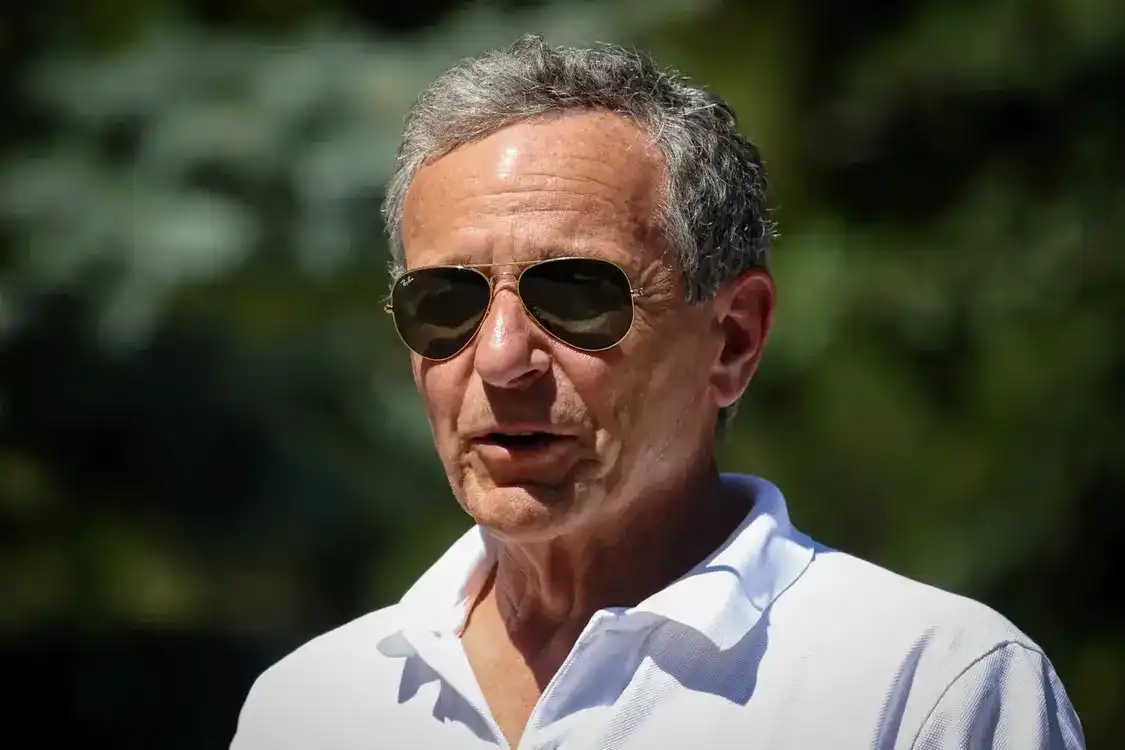
Then-Disney CEO Iger

For Disney, the deal demonstrated a viable business model for AI licensing around its intellectual property. Just a day before announcing the agreement with OpenAI, Disney had sent a cease-and-desist letter to Google, accusing the tech giant of "massive copyright infringement of Disney's works."

Cloud Service Solution

In February, Iger said on an earnings call that short videos generated by Sora would soon appear on the Disney+ streaming platform, which was preparing to launch a vertical video feed. According to people familiar with the matter, Disney was also in talks with OpenAI about using ChatGPT company-wide.

In recent weeks, OpenAI began piloting an enterprise version of Sora, allowing companies like Disney to use the tool with security guarantees. Disney had expected to roll out this tool as early as this spring. It would have allowed select Disney executives to use Sora for everything from marketing campaign design to special effects production, without OpenAI having access to their work.

However, OpenAI was already considering how to withdraw from the Sora project. The gap with competitor Anthropic widened further. Anthropic's recent technical progress reignited concerns that AI could replace traditional software and services, briefly causing a dip in software stocks. OpenAI realized it needed to devote more resources to building these so-called productivity tools and began deprioritizing certain areas.

After initially planning to continue offering video generation features through ChatGPT, the company ultimately decided to shut down Sora completely.

Disney's planned $1 billion investment in OpenAI ultimately did not materialize, and the relationship between the two is effectively stalled.

According to a person familiar with the matter, under new CEO Josh D'Amaro, Disney is actively discussing the application of other AI tools with more than a dozen partners.

Real-time Information Push

Disney said in a statement: "As the emerging AI field develops rapidly, we respect OpenAI's decision to exit the video generation business and realign its priorities. We appreciate the constructive collaboration between our teams and the lessons learned from it."

On Sora's X account, its team posted a message reminiscent of a digital obituary: "To everyone who ever created, shared, and built a community around Sora: thank you."


Пов'язані питання

QWhat were the main reasons behind OpenAI's decision to shut down Sora?

AOpenAI shut down Sora primarily due to its excessive consumption of limited and expensive AI computing resources (chips), its failure to become profitable (reportedly losing about $1 million daily), and a strategic shift in company priorities. The resources were needed for the upcoming 'Spud' AI model, coding tools, and enterprise products, especially as OpenAI focused on its IPO preparation and fell behind competitors like Anthropic in productivity-focused AI agent tools.

QHow did the user base of the Sora consumer app perform after its launch?

AThe Sora consumer app initially reached a peak of around 1 million users shortly after its launch. However, its user base subsequently declined and never reached that peak again, dropping to under 500,000 users in the following months, according to data from AI research firm Similarweb.

QWhat was the significance of the deal between OpenAI and Disney regarding Sora?

AThe deal was significant as it involved Disney investment of $1 billion in OpenAI and granted OpenAI a license to use over 200 characters from Disney's film library (including Marvel and Pixar) for Sora-generated videos. It was seen as a major endorsement from a creative industry leader and an attempt to establish a viable business model for AI-generated content. However, the investment ultimately did not materialize after Sora was shut down.

QWho were the key researchers behind the Sora project, and what external challenge did they face?

AThe Sora project was the brainchild of researchers Tim Brooks and Bill Peebles. A key external challenge was a talent war from Meta CEO Mark Zuckerberg, who personally contacted dozens of OpenAI's top researchers, including Peebles, offering lucrative compensation to join Meta's AI lab. OpenAI managed to retain Peebles by giving him a raise.

QWhat is OpenAI's new strategic focus after shutting down the Sora project?

AOpenAI is shifting its strategic focus towards developing a new 'super app' that integrates AI agent tools capable of autonomously performing tasks for users, such as writing code, analyzing data, and booking travel. The company is also prioritizing resources for its upcoming 'Spud' AI model and enterprise products, areas where it feels it is lagging behind competitors and which offer greater long-term economic value.

Пов'язані матеріали

South Korean Exchanges 'Battle' Regulators, Challenging the Boundaries of Enforcement and Legislation

South Korea's cryptocurrency industry is engaged in a rare, direct confrontation with regulators. The Financial Intelligence Unit (FIU), the primary anti-money laundering (AML) watchdog, has recently imposed heavy penalties on major exchanges like Upbit and Bithumb for alleged violations involving unregistered overseas VASPs and AML procedures. However, exchanges are now actively challenging these actions in court and through industry associations. In a significant shift, the Seoul Administrative Court ruled in favor of Upbit's operator, Dunamu, overturning part of an FIU-ordered business suspension. The court found the FIU's penalty criteria and justification insufficiently clear. Similarly, the court suspended the enforcement of a six-month business suspension against Bithumb pending a final ruling, citing potential irreversible harm to the exchange. Beyond legal battles, the industry is contesting proposed legislative amendments. The Digital Asset eXchange Alliance (DAXA) strongly opposes a draft rule that would mandate Suspicious Transaction Reports (STRs) for all crypto transfers over 10 million KRW (~$6,800). DAXA argues this "poison pill" clause violates legal principles and would overwhelm the STR system, increasing reports from 63,000 to an estimated 5.45 million annually for major exchanges, thereby crippling effective AML monitoring. This conflict highlights a structural tension in South Korea's crypto governance: comprehensive digital asset laws are still developing, while regulators rely heavily on AML enforcement. The industry's move from passive compliance to active legal and legislative challenges signifies a new phase, pressing for clearer rules and more proportionate enforcement. While short-term disputes may intensify, this clash could ultimately lead to a more mature and sustainable regulatory framework for South Korea's vibrant crypto market.

marsbit39 хв тому

South Korean Exchanges 'Battle' Regulators, Challenging the Boundaries of Enforcement and Legislation

marsbit39 хв тому

After 50x Storage Surge, Justin Sun Always Looks to the Next Decade

Sun Yuchen, known for his controversial stunts like a $30 million lunch with Warren Buffett (canceled due to a kidney stone) and eating a $6.2 million duct-taped banana, is often overshadowed by a significant fact: his decade-long track record of spotting major investment trends. In 2016, he famously advised young people to invest in Bitcoin, Nvidia, Tesla, and Tencent instead of buying property. A hypothetical $20,000 investment in Nvidia and Tesla from that list would now be worth over 50 million RMB. His latest major call was on November 6, 2025, predicting a "50x storage opportunity" tied to the AI boom, which materialized with Sandisk's stock surging nearly 50-fold by 2026. Looking ahead, Sun now focuses on the next frontier: Physical AI. He identifies four key areas: 1. **Embodied AI/Robotics**: He sees this reaching its "iPhone moment," with companies like UBTech and Galaxy General leading in commercialization. 2. **Drones**: Viewed as the first commercially viable form of Physical AI, revolutionizing sectors from warfare (e.g., AeroVironment's Switchblade) to logistics. 3. **Spatial Computing**: Beyond VR, it's about AI understanding physical space, a foundational technology for robotics and autonomous systems, exemplified by Apple's Vision Pro. 4. **Space Exploration**: After a 2025 suborbital flight with Blue Origin, Sun advocates for space as the ultimate frontier, discussing blockchain's potential role in space asset management and data transactions. His investment philosophy involves betting on entire, inevitable trends rather than single companies. For robotics, he sees Tesla (the body/manufacturer) and Nvidia (the brain/AI platform) as complementary plays. In defense drones, he highlights companies making tanks obsolete (AeroVironment) and those augmenting fighter jets (Kratos). For space, he participated in Blue Origin's flight and anticipates SpaceX's potential IPO to redefine the sector's valuation. Sun Yuchen's vision frames the next two decades not as a revolution in information flow (like the internet), but in the fundamental operation of the physical world through AI-powered robots, autonomous systems, and spatial intelligence, ultimately extending human and AI activity into space. While many still focus on conventional assets, he continues to look toward the next technological horizon.

marsbit1 год тому

After 50x Storage Surge, Justin Sun Always Looks to the Next Decade

marsbit1 год тому

The Billionaires Behind the Most Expensive Midterm Election in History

"The Most Expensive Midterm Elections and Their Billionaire Backers" This analysis details the unprecedented scale of spending in the 2026 midterm elections, highlighting the key billionaire donors shaping the political landscape. Jeff Yass, founder of Susquehanna International Group, has contributed over $81 million, ranking third among individual donors behind George Soros ($102.6M) and Elon Musk ($84.8M). Yass is a major donor to Trump's MAGA Inc. and supports school choice and various candidates. Overall, federal committees have raised over $4.7 billion this cycle, with political ad spending projected to reach $10.8 billion. Republican-aligned groups are significantly out-raising their Democratic counterparts. "Dark money" from undisclosed sources continues to grow. The core stakes involve control of Congress and policy direction for Trump's final term. Donors are also motivated by specific issues: Sergey Brin and Chris Larsen are funding opposition to a proposed California wealth tax and supporting crypto-friendly policies. Other top donors include OpenAI's Greg Brockman and his wife Anna ($50M total to MAGA Inc. and an AI-focused PAC), Richard Uihlein ($45.3M to conservative causes), venture capitalists Marc Andreessen and Ben Horowitz (each over $44M to crypto/AI PACs and MAGA Inc.), Miriam Adelson ($42.6M to GOP leadership PACs), Paul Singer ($33.9M), and Diane Hendricks ($25.8M to MAGA Inc.). The article notes that the peak fundraising period is still ahead, with major primaries approaching.

marsbit1 год тому

The Billionaires Behind the Most Expensive Midterm Election in History

marsbit1 год тому

The Largest IPO in History Is Approaching, Surpassing SpaceX, 28 Years of AI Self-Iteration, Countdown to Intelligence Explosion

"Anthropic Nears Trillion-Dollar IPO, Fueled by Explosive Growth and 2028 'Intelligence Explosion' Warning Anthropic is considering a deal valuing the AI company near $1 trillion, potentially leading to one of the largest IPOs ever and surpassing SpaceX. Its revenue has skyrocketed, with Annual Recurring Revenue (ARR) reaching $45 billion in May 2026—a 500% increase in just five months. This vertical growth curve is attributed to its key products, Claude Code and Cowork, dominating AI coding and enterprise collaboration. Beyond commercial success, co-founder Jack Clark issued a pivotal warning in an interview: there is a greater than 50% chance that by the end of 2028, AI systems will achieve recursive self-improvement—the ability to autonomously build a 'better version' of themselves, initiating an 'intelligence explosion.' This prophecy underpins the company's astronomical valuation, as the market prices in the potential for transformative and disruptive AI. Further signaling its ambition, Anthropic formed a $1.5 billion joint venture with Goldman Sachs and Blackstone, aiming to disrupt traditional consulting firms like McKinsey by deploying Claude AI for complex strategic work. This move tests AI's capacity to replace high-level cognitive labor, a precursor to its predicted autonomous evolution. The narrative presents a dual future: unprecedented economic opportunity alongside significant risks like economic restructuring and security threats. Anthropic's meteoric rise and Clark's 2028 prediction frame the coming years as a countdown to a potential technological singularity."

marsbit1 год тому

The Largest IPO in History Is Approaching, Surpassing SpaceX, 28 Years of AI Self-Iteration, Countdown to Intelligence Explosion

marsbit1 год тому

Торгівля

Спот
Ф'ючерси
活动图片




