US-EU Tariff War Wipes Billions — Start of Crypto Winter 2026?

ccn.comОпубліковано о 2026-01-19Востаннє оновлено о 2026-01-19

Анотація

In mid-January 2026, U.S. President Donald Trump announced new tariffs on eight European nations, starting at 10% and potentially rising to 25% by June unless Denmark negotiates the sale of Greenland. This triggered a sharp crypto market sell-off, wiping billions in value. Bitcoin fell from near $97,000 to below $93,000, while altcoins saw deeper losses of 9–20%. Over $871 million in leveraged positions were liquidated. Analysts are divided on whether this marks the start of a prolonged "crypto winter" or is a temporary macro shock. Some point to historical post-halving weakness and fading institutional optimism, suggesting Bitcoin could drop to $67,000–$75,000. Others argue growing institutional adoption and Bitcoin’s "digital gold" role may cushion a deeper downturn. The event highlighted crypto’s sensitivity to geopolitical risk and leveraged market fragility. Recovery remains uncertain as trade tensions and regulatory delays persist.

Key Takeaways

  • U.S.–EU tariff threats tied to Greenland triggered a sharp risk-off move, wiping billions from crypto markets.
  • Bitcoin slid below $93,000 as leveraged positions unraveled and altcoins suffered deeper losses.
  • Analysts remain divided on whether this signals the start of a “crypto winter” or a temporary macro-driven shock.

The crypto market entered 2026 with optimism still lingering from late last year. That confidence didn’t last long.

Over the weekend, a sudden surge in geopolitical tension sent shockwaves through global markets, triggering the first major crypto flash crash of the year.

Billions of dollars were wiped out in a matter of hours as leveraged positions unraveled, with altcoins bearing the brunt of the damage.

At the center of the sell-off was a familiar catalyst: trade-war fears sparked by fresh tariff threats from United States President Donald Trump.

Try Our Recommended Crypto Exchanges
Sponsored
Disclosure
We sometimes use affiliate links in our content, when clicking on those we might receive a commission at no extra cost to you. By using this website you agree to our terms and conditions and privacy policy.
"}' data-trk="68df7fd8872238d510dfbf06" href="https://clicks.pipaffiliates.com/c?c=1104900&l=en&p=1" rel="nofollow" target="_blank">
XM.com"}' data-trk="68df7fd8872238d510dfbf06" href="https://clicks.pipaffiliates.com/c?c=1104900&l=en&p=1" rel="nofollow" target="_blank">

XM.com

promotions
Get 100% Bonus up to $100 on your first Deposit."}' data-trk="68df7fd8872238d510dfbf06" href="https://clicks.pipaffiliates.com/c?c=1104900&l=en&p=1" rel="nofollow" target="_blank"> Get 100% Bonus up to $100 on your first Deposit.
Coins
28
  • Bitcoin
  • Ethereum
  • Ripple
  • Solana
  • Dogecoin
  • Cardano
  • Litecoin
  • Stellar
  • Bitcoin Cash
  • Avalanche
  • Shiba Inu
  • Polkadot
  • Chainlink
  • Enjin Coin
  • Polygon Ecosystem Token
  • SushiSwap
  • Ethereum Classic
  • Uniswap
  • Filecoin
  • Axie Infinity
  • Aave
  • Algorand
  • Tezos
  • Synthetix
  • The Sandbox
  • The Graph
  • Internet Computer
  • Basic Attention Token
  • APEcoin
  • Arbitrum
  • NEAR Protocol
  • Storj
  • Cosmos
No result
Claim Offer
"}' data-trk="6899b9831836d97539c51aa6" href="https://www.bitunix.com/" rel="nofollow" target="_blank">
Bitunix"}' data-trk="6899b9831836d97539c51aa6" href="https://www.bitunix.com/" rel="nofollow" target="_blank">

Bitunix

promotions
Receive up to $100,000 worth of exclusive gifts for newcomers upon registration."}' data-trk="6899b9831836d97539c51aa6" href="https://www.bitunix.com/" rel="nofollow" target="_blank"> Receive up to $100,000 worth of exclusive gifts for newcomers upon registration.
Coins
151
  • Bitcoin
  • Ethereum
  • Tether
  • USD Coin
  • Solana
  • Ripple
  • Dogecoin
  • Cardano
  • Toncoin
  • Shiba Inu
  • Avalanche
  • TRON
  • Chainlink
  • Polygon Matic
  • Polkadot
  • Wrapped Bitcoin
  • Litecoin
  • Dai
  • NEAR Protocol
  • Bitcoin Cash
  • Stellar
  • Cosmos
  • Filecoin
  • Ethereum Classic
  • Aptos
  • Hedera Hashgraph
  • Immutable
  • Optimism
  • Arbitrum
  • VeChain
  • The Sandbox
  • Decentraland
  • Axie Infinity
  • Injective Protocol
  • Render
  • The Graph
  • Maker
  • Aave
  • Chiliz
  • Helium
  • PAX Gold
  • Compound
  • Lido DAO Token
  • Sui
  • Conflux Network
  • Lido Staked ETH
  • OKB
  • Uniswap
  • Pepe
  • Ondo
  • Mantle
  • First Digital USD
  • XDC Network
  • Artificial Superintelligence Alliance
  • Jupiter
  • Quant
  • Worldcoin
  • Bonk
  • Tether Gold
  • JITO
  • JasmyCoin
  • Core
  • Floki Inu
  • Ethereum Name Service
  • SushiSwap
  • 1inch Network
  • Tezos
  • Algorand
  • Flow
  • Trust Wallet Token
  • Curve DAO Token
  • MultiversX
  • Basic Attention Token
  • Enjin Coin
  • Ethena
  • Ethena Staked USDe
  • Audius
  • Alchemy Pay
  • Arkham
  • API3
  • Bounce Token
  • Altlayer
  • Aergo
  • Amp
  • Aevo
  • Ankr
  • Axelar
  • Alpaca Finance
  • Blur
  • Biconomy
  • Tranchess
  • Celer Network
  • Shentu
  • Civic
  • Convex Finance
  • Cartesi
  • Cyber
  • COTI
  • DIA
  • dYdX
  • ether.fi
  • FLUX
  • Ampleforth
  • Golem
  • Holo
  • Illuvium
  • JUST
  • Livepeer
  • Memecoin
  • Manta Network
  • Treasure
  • Mask Network
  • Origin Protocol
  • ORDI
  • Ontology
  • Phala Network
  • Pendle
  • Portal
  • Pyth Network
  • ConstitutionDAO
  • iExec RLC
  • Reserve Rights
  • Ravencoin
  • Storj
  • Status
  • Spell Token
  • Sun (New)
  • SuperVerse
  • Tellor
  • LayerZero
  • Scroll
  • Usual
  • Eigenlayer
  • Hamster Kombat
  • Catizen
  • Berachain
  • KAITO
  • Pudgy Penguins
  • Solayer
  • Bio Protocol
  • ChainGPT
  • Cookie DAO
  • Solv Protocol
  • Movement
  • DeXe
  • Nexo
  • Hyperliquid
  • STEPN
  • Synthetix
  • Neo
  • APEcoin
  • Gala
  • Internet Computer
  • Pi Network
  • IoTex
  • Build'N'Build
No result
Claim Offer
"}' data-trk="67adf8d4f12aaec7e4808bf5" href="https://bonus.bitget.com/CCN12" rel="nofollow" target="_blank">
Bitget"}' data-trk="67adf8d4f12aaec7e4808bf5" href="https://bonus.bitget.com/CCN12" rel="nofollow" target="_blank">

Bitget

promotions
New user rewards up to 6,200 USDT."}' data-trk="67adf8d4f12aaec7e4808bf5" href="https://bonus.bitget.com/CCN12" rel="nofollow" target="_blank"> New user rewards up to 6,200 USDT.
Coins
88
  • Bitcoin
  • Ethereum
  • Tether
  • Litecoin
  • Bitcoin Cash
  • TRON
  • Ripple
  • Cardano
  • Binance USD
  • USD Coin
  • Polkadot
  • Shiba Inu
  • Basic Attention Token
  • Qtum
  • Ethereum Classic
  • Chainlink
  • Solana
  • Polygon Matic
  • Cosmos
  • Wrapped Bitcoin
  • PancakeSwap
  • The Sandbox
  • Storj
  • iExec RLC
  • Bancor
  • Uniswap
  • Enjin Coin
  • 1inch Network
  • Chiliz
  • Aave
  • Synthetix
  • Maker
  • Compound
  • Theta Network
  • Celo
  • Curve DAO Token
  • Decentraland
  • JUST
  • Axie Infinity
  • Gala
  • Internet Computer
  • The Graph
  • Filecoin
  • dYdX
  • Mask Network
  • Lido DAO Token
  • Reserve Rights
  • Chromia
  • Ankr
  • Ocean Protocol
  • Adventure Gold
  • Origin Protocol
  • Celer Network
  • NKN
  • Bitget Token
  • Alchemix
  • Immutable
  • Ethereum Name Service
  • Avalanche
  • Zilliqa
  • JasmyCoin
  • Toncoin
  • Convex Finance
  • Spell Token
  • Holo
  • Render Token
  • SushiSwap
  • MetisDAO
  • Audius
  • Illuvium
  • ARPA Chain
  • Osmosis
  • Fantom
  • Neo
  • Arweave
  • Algorand
  • Kusama
  • XDC Network
  • APEcoin
  • MultiversX
  • THORChain
  • NEAR Protocol
  • Nexo
  • Amp
  • Livepeer
  • PAX Gold
  • TrueUSD
  • BitTorrent
  • Golem
  • FLUX
  • Helium
  • Dai
  • Build'N'Build
No result
Claim Offer
Explore All Offers

Tariff Threats Spark a Market Rout

In mid-January 2026, President Trump announced plans to impose a new round of tariffs on imports from eight European countries — Denmark, Norway, Sweden, France, Germany, the United Kingdom, the Netherlands, and Finland — beginning Feb. 1.

The proposed tariffs would start at 10% and rise to 25% by June 1, unless Denmark agrees to negotiate the potential U.S. purchase of Greenland.

Markets reacted swiftly. Between Jan. 18 and 19, crypto prices fell sharply as traders moved to de-risk.

Bitcoin (BTC) slid from recent highs near $97,000 to below $93,000, briefly erasing billions in market capitalization.

Altcoins fared even worse. Excluding Ethereum, many major tokens posted losses ranging from 9% to more than 20% over 24 hours, pushing several assets to new monthly lows.

The broader crypto market cap dropped toward $3.13 trillion as risk-off sentiment spread.

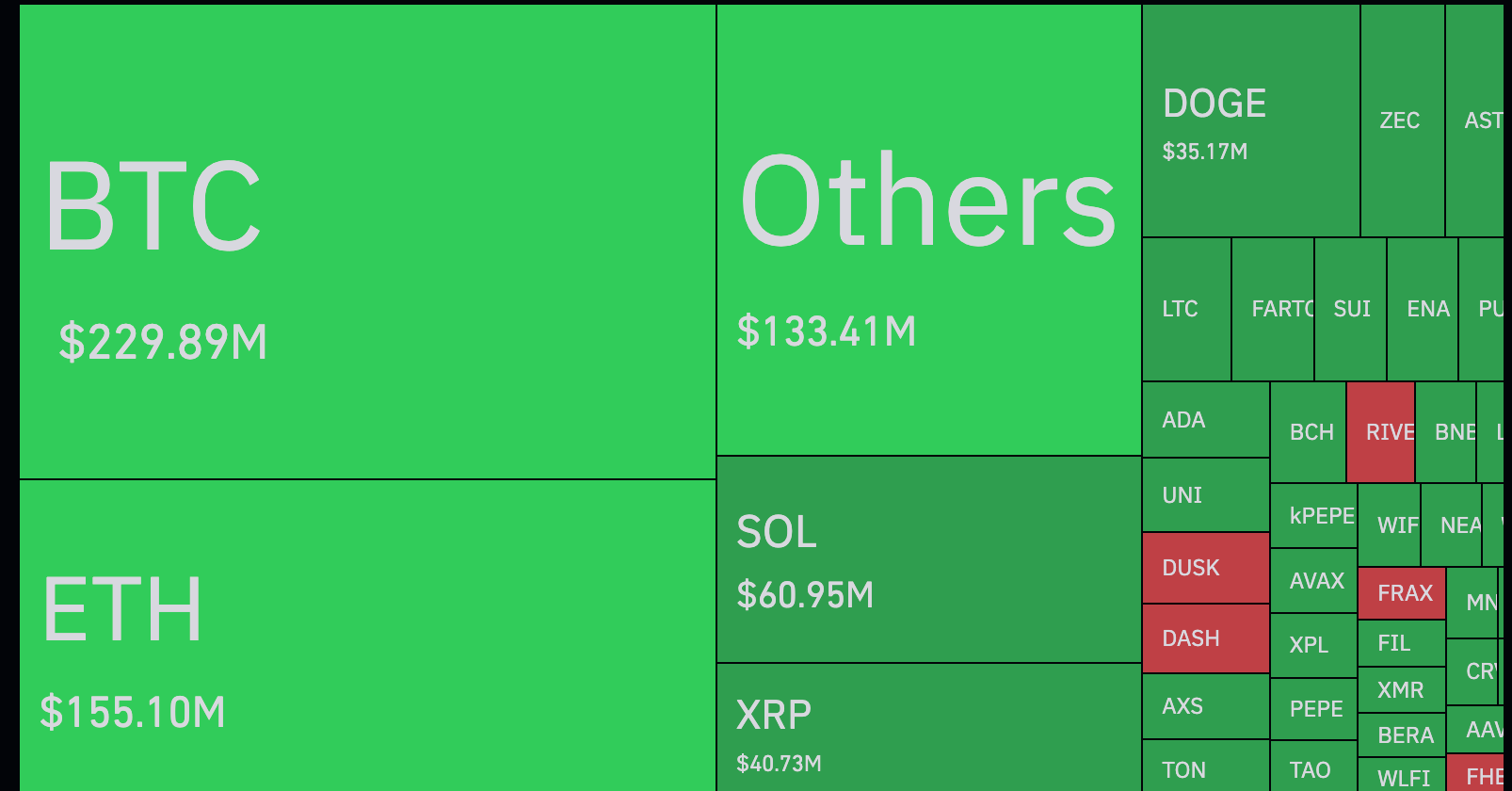
Data from CoinGlass shows more than $871 million in liquidations during the sell-off.

Bitcoin long positions accounted for roughly $229 million, while altcoin traders absorbed the bulk of the damage, with about $641 million wiped out as positions were forcibly closed.

Crypto liquidation heatmap. Source: Coinglass.

Analysts pointed to a mix of macro uncertainty and existing market fragility.

Trade tensions revived fears of a prolonged economic slowdown, while crypto’s tendency to correlate with equities during periods of stress amplified the sell-off.

Ongoing delays in U.S. crypto market structure legislation and cooling institutional inflows added further pressure.

By Monday morning, Bitcoin and Ethereum had clawed back nearly half of their losses. Altcoins, however, struggled to recover.

Temporary Shock or Start of Crypto Winter 2026?

The sharp pullback has revived a question that has hovered over the market since late 2025: Is crypto heading into another prolonged winter?

January has already delivered echoes of last year’s tariff-driven volatility, which culminated in the October crash that wiped trillions from global crypto valuations.

Now, with many assets still below their 2025 highs, renewed trade wars and rising geopolitical tensions have reignited fears of a “crypto winter” in 2026.

Bearish analysts point to familiar warning signs. Post-halving years have historically brought weaker performance, and several tailwinds from 2025.

Making matters worse, Trump-related optimism and expectations of looser financial conditions have begun to fade.

If macro pressure persists, some see Bitcoin revisiting the $67,000–$75,000 range in a slower, more institutionally driven downturn.

Others remain unconvinced that a prolonged winter is imminent.

Supporters of the bullish case argue that the traditional four-year cycle is losing relevance as institutional participation deepens.

They point to Bitcoin’s growing role as a form of “digital gold,” supported by ETF inflows and more resilient on-chain activity than in previous cycles.

For now, the U.S.–EU tariff dispute appears to have acted as a trigger rather than a root cause. ‘

The market’s reaction was sharp, but it was amplified by existing caution and leverage rather than a collapse in fundamentals.

Whether this flash crash marks the start of a longer downturn or simply another episode of macro-driven volatility may become clearer in the weeks ahead — especially as trade negotiations, monetary policy expectations, and regulatory developments continue to unfold.


Top Picks for Bitcoin
  • Best Exchanges for Bitcoin Get A Great Offer When You Join These Exchanges
  • Buy Bitcoin Fast & Easy How To Buy Bitcoin With a Credit Card Now
  • Best Online Casinos for Bitcoin See Our Picks for the Best Crypto Gambling Sites

Пов'язані питання

QWhat was the main geopolitical event that caused the crypto market crash in January 2026?

AThe main event was U.S. President Donald Trump's announcement of plans to impose new tariffs, starting at 10% and rising to 25% by June 1, on imports from eight European countries, contingent on Denmark's refusal to negotiate the potential U.S. purchase of Greenland.

QHow much value was liquidated from the crypto market during the sell-off, and which segment suffered the most?

AOver $871 million was liquidated during the sell-off. Altcoin traders absorbed the bulk of the damage, with about $641 million wiped out, while Bitcoin long positions accounted for roughly $229 million.

QWhat was Bitcoin's price movement during the crash, and what level did it briefly fall below?

ABitcoin slid from recent highs near $97,000 to below $93,000, briefly erasing billions in market capitalization.

QAccording to the article, what are the two opposing views among analysts regarding the market's future?

AAnalysts are divided. Some believe the crash could signal the start of a prolonged 'crypto winter,' citing historical post-halving weakness and fading macro tailwinds. Others argue the traditional cycle is less relevant due to deeper institutional participation, viewing Bitcoin as 'digital gold' supported by ETF inflows.

QWhich specific European countries were targeted by the proposed U.S. tariffs mentioned in the article?

AThe eight European countries targeted were Denmark, Norway, Sweden, France, Germany, the United Kingdom, the Netherlands, and Finland.

Пов'язані матеріали

Agent Race Ends, Super Workbench Takes Over

The era of fragmented AI agents is ending. Over the past month, China's tech giants—Tencent, Alibaba, and ByteDance—have simultaneously shifted strategy: instead of launching new, standalone AI agents, they are consolidating their various agent projects into unified "super workbenches." Tencent integrated its QClaw teams into WorkBuddy, a strategic product hailed as a potential third flagship after QQ and WeChat. Alibaba is merging its QoderWork, Wukong, and MuleRun agents into a new "Qianwen Office" platform under DingTalk's leadership. ByteDance rebranded its TRAE SOLO coding agent to TRAE Work, signaling a broader focus on workflow collaboration. This convergence marks a pivotal industry consensus. The initial exploration phase, where companies rapidly built numerous overlapping agents for different scenarios, proved costly and inefficient. With open-source tools eroding technical barriers, competition has shifted from agent creation to resource consolidation and cost control. Historically, platform wars are won not by creating more products, but by simplifying them—as seen with browsers unifying web access and super-apps consolidating services. Now, the "super workbench" aims to become the unified AI entry point for work. This reflects a deeper market realization: the primary audience for AI is no longer just programmers (a market in the tens of millions) but all knowledge workers (a market of billions). The real opportunity lies in augmenting everyday tasks—managing emails, documents, data, and meetings—across the entire workday. The core battleground is becoming control over the primary AI entry point that employees use daily. Tencent's WorkBuddy leverages WeChat and Tencent Docs; Alibaba's Qianwen Office taps into DingTalk's organizational data; ByteDance's TRAE Work integrates with Feishu's workflows. Whoever owns this "super workbench" gains strategic control over orchestrating enterprise data and APIs. This shift is redefining enterprise software. Traditional SaaS applications, valued for their user interfaces, will recede into the background. Their core functionalities will be exposed as standardized "Skills" or APIs for the super workbench's agents to invoke. Software value will shift from selling user seats to charging based on API calls and outcomes delivered. The evolution of agents is moving through clear stages: first as novel standalone products, then as consolidated primary work entry points, and finally as pervasive, invisible capabilities embedded into the digital fabric. The recent moves by major tech firms signal the transition from the first stage into the second, accelerating toward the third. In the end, the most successful agent technology may become invisible—like electricity or the HTTP protocol—a fundamental, unnamed infrastructure powering work itself.

marsbit18 хв тому

Agent Race Ends, Super Workbench Takes Over

marsbit18 хв тому

Michael Saylor: 110 Reasons to Oppose BIP-110

Michael Saylor presents 110 arguments against Bitcoin Improvement Proposal (BIP) 110, a soft fork aimed at restricting certain non-monetary data storage uses (like inscriptions) on the Bitcoin blockchain. He acknowledges the proponents' valid concerns—such as node costs, fee pressure, and preserving Bitcoin's monetary focus—but fundamentally disagrees with the proposed solution. Saylor argues that BIP 110 represents a dangerous precedent of using consensus rules to enforce value judgments on transaction validity, moving away from Bitcoin's core principles of neutrality and permissionless innovation. His key objections are organized into eleven categories: 1) It violates neutrality and hard consensus by banning currently valid transactions. 2) It fails to meet the high burden of proof required for a consensus change, lacking concrete data on the alleged crisis. 3) Its seven bundled technical restrictions are overly broad, targeting generic script functionalities and blocking future upgrade paths. 4) It sacrifices compatibility and future optionality by closing off designed upgrade hooks. 5) Its temporary rules add significant complexity (grandfathering, expiry states) without sufficient justification. 6) The economic and security impacts, particularly on miner revenue and fee markets, are uncertain and unmodeled. 7) Superior, market-based tools (fee markets, relay/mining policies) already exist to manage blockchain load. 8) It stifles innovation by creating a chilling effect for developers. 9) Its modified activation mechanism (55% threshold, forced signaling) is aggressive and risks network splits. 10) The precedent it sets—using consensus to suppress disliked but legal uses—is more dangerous than the problem it aims to solve. 11) A better path exists: improving measurements, refining resource-based policies, and allowing market forces to work. Saylor concludes that Bitcoin's strength lies in its neutral rules, open markets, and hard consensus. Changing these foundational elements to target specific use cases is an unnecessary and risky "iatrogenic" intervention. He advocates for guarding Bitcoin's neutrality rather than acting as its redeemer.

marsbit34 хв тому

Michael Saylor: 110 Reasons to Oppose BIP-110

marsbit34 хв тому

Торгівля

Спот
活动图片