US Charges Trio In Brutal Crypto Wrench Attack Campaign

bitcoinistОпубліковано о 2026-05-13Востаннє оновлено о 2026-05-13

Анотація

A federal grand jury in San Francisco has indicted three men from Tennessee—Elijah Armstrong, Nino Chindavanh, and Jayden Rucker—on charges including conspiracy to commit robbery and kidnapping. The group is accused of carrying out a series of violent "wrench attacks" across California between November and December last year. Posing as delivery drivers to gain entry into victims' homes, they used threats and physical violence to force the victims to surrender their cryptocurrency seed phrases, stealing at least $6.5 million. Authorities highlight that such violent crimes targeting crypto owners are becoming more common, exploiting the public visibility of on-chain wealth. The case underscores a critical vulnerability in digital asset security, as seed phrases obtained under duress grant irreversible control over wallets.

A federal grand jury in San Francisco has indicted three Tennessee men on charges that include conspiracy to commit robbery and kidnapping after prosecutors say the group carried out a series of wrench attacks — crimes where victims are physically threatened or harmed to force them to hand over crypto — stealing at least $6.5 million from victims across California.

A Violent Scheme With A Simple Disguise

Elijah Armstrong, Nino Chindavanh, and Jayden Rucker allegedly posed as delivery drivers to get inside their targets’ homes. Once in, they used threats of violence to force victims to hand over their crypto seed phrases — the recovery keys that grant full access to a digital wallet.

According to the Justice Department, the attacks took place between November 22 and December 31 last year across the Los Angeles area and the San Francisco Bay Area. Prosecutors identified at least four people targeted during that period.

One victim was forced to transfer $6.5 million in cryptocurrency to a wallet controlled by the group. That figure represents the bulk of what prosecutors say was stolen during the entire campaign.

BTCUSD now trading at $80,649. Chart: TradingView

Craig Missakian, the US Attorney for the Northern District of California, did not mince words. “These individuals, as alleged, terrorized their victims in the hopes of stealing vast sums of cryptocurrency,” he said in a statement Monday. “The scheme was not only sophisticated, it was brazen, violent, and dangerous.”

Physical Attacks On Crypto Owners Are Rising

The three men were arrested in December. Armstrong and Rucker are scheduled to appear in court Tuesday. Chindavanh is set to appear June 26. All three face charges of conspiracy to commit robbery, conspiracy to commit kidnapping, attempted robbery, and attempted kidnapping.

Reports from blockchain intelligence firm TRM Labs indicate that attacks like these have grown more common because personal data is easier than ever to find online.
Crypto wrench attacks are turning digital wealth into a real-world target.
 Image: Yahoo News

The public nature of crypto wealth — visible on-chain to anyone who knows where to look — combined with the perceived anonymity of transactions has made holders attractive targets for criminals willing to use force.

The California cases are not isolated. French authorities charged 88 people in April in connection with similar attacks on cryptocurrency owners in that country.

Seed Phrases And The Limits Of Digital Security

Physical attacks of this kind expose a gap that no encryption can fix. A seed phrase, once spoken under duress, hands over complete control of a wallet with no way to reverse a transfer after the fact. The indictment, filed in federal court in San Francisco, was unsealed Monday.

Featured image from Pexels, chart from TradingView

Пов'язані питання

QWhat specific charges were the three Tennessee men indicted for?

AThey were indicted on charges of conspiracy to commit robbery, conspiracy to commit kidnapping, attempted robbery, and attempted kidnapping.

QWhat was the total amount of cryptocurrency prosecutors say was stolen from the primary victim?

AProsecutors say at least $6.5 million in cryptocurrency was transferred by one victim to a wallet controlled by the group.

QAccording to the article, how did the suspects gain access to their victims' homes?

AThey allegedly posed as delivery drivers to get inside their targets' homes.

QWhat critical piece of information did the attackers force their victims to hand over to access the crypto wallets?

AThey forced victims to hand over their crypto seed phrases, which are the recovery keys that grant full access to a digital wallet.

QWhat is one reason, mentioned in the article from TRM Labs, for the rise in physical attacks against crypto owners?

AReports indicate such attacks have grown more common because personal data is easier than ever to find online, and the public nature of on-chain crypto wealth makes holders attractive targets.

Пов'язані матеріали

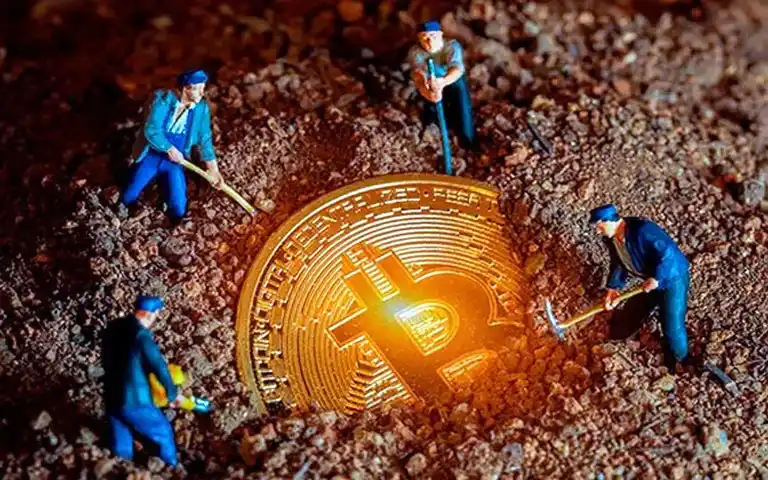
Bitcoin Mining Farms Are Becoming AI Factories

Bitcoin mines are transforming into AI factories. This shift is driven by the convergence of three key assets from the previous crypto cycle: infrastructure, talent, and capital. Crypto mining companies like Crusoe, CoreWeave, and Bitdeer are repurposing their core competency—securing power, land, and grid connections in remote locations—to build data centers for AI clients. These firms are signing multi-billion dollar, long-term contracts with companies like Anthropic, AWS, and Microsoft, as AI's demand for reliable, high-capacity compute surpasses the profitability of Bitcoin mining. Simultaneously, crypto entrepreneurs and engineers are applying their skills to new AI ventures. Examples include OpenSea's co-founder launching OpenRouter (an AI model aggregator), and former Coinbase engineers building Fal.ai (a generative media infrastructure platform). Their experience in building scalable, global software networks translates effectively to the AI space. Furthermore, capital accumulated during the crypto boom is now fueling AI. Figures like Jed McCaleb (co-founder of Ripple) funded Voltage Park, a large-scale GPU cloud provider. Notably, some crypto investments, like FTX's early bets on Anthropic and Cursor, have generated astronomical paper returns, demonstrating how high-risk crypto capital flowed into AI before it became mainstream. The transition is not just about repurposing hardware, but about redirecting critical resources—power infrastructure, distributed systems expertise, and venture funding—to the next technological frontier: artificial intelligence.

链捕手1 год тому

Bitcoin Mining Farms Are Becoming AI Factories

链捕手1 год тому

Morpho Launches Fixed-Rate Product Midnight: Lenders and Borrowers Set Their Own Rates, Ending the Era of Interest Rate Models

Morpho Launches Fixed-Rate Product Midnight: Lenders and Borrowers Set Their Own Rates, Ending the Era of Algorithmic Interest Models On-chain lending has grown to $60 billion but remains minuscule compared to traditional finance's $200 trillion annual credit volume. Morpho identifies the lack of fixed rates and maturity dates as key bottlenecks. Institutions need predictability, not the passive floating rates set by algorithmic models. Midnight allows lenders and borrowers to directly quote rates, set terms, and become price makers, not takers. Fixed-rate lending is now viable due to cheaper, faster blockchains and the entry of institutions demanding control and certainty over returns, costs, and duration. Morpho Blue previously gave users control over risk; Midnight adds control over interest rates. Past attempts at on-chain fixed-rate lending failed primarily because they were built on top of floating-rate pools (creating unpredictability) or lacked sufficient active participants. Midnight avoids these pitfalls as a standalone primitive with fixed rates at its core, built upon Morpho Blue's existing large and active user base. Midnight offers distinct value: institutions gain predictable term structures and full control; fintech companies can offer tailored fixed-rate products; lenders/borrowers achieve predictability and efficiency; and curators can now differentiate by configuring both risk and interest rates. Morpho Midnight is not a replacement for Morpho Blue. The Morpho network will now feature two complementary market structures: floating-rate/open-term (Blue) for flexibility and fixed-rate/fixed-term (Midnight) for predictability. Liquidity can flow between them. The launch will be gradual, prioritizing security. Initially, it will support direct lending on Base network with one trading pair (cbBTC/USDC) and limited maturity dates. Advanced features like auto-rollovers will be introduced later.

marsbit1 год тому

Morpho Launches Fixed-Rate Product Midnight: Lenders and Borrowers Set Their Own Rates, Ending the Era of Interest Rate Models

marsbit1 год тому

Торгівля

Спот
活动图片