Understanding x402 and MPP: Two Approaches to Agent Payments

marsbitОпубліковано о 2026-03-22Востаннє оновлено о 2026-03-22

Анотація

Stripe's MPP and x402 represent two competing approaches to enabling machine-to-machine payments, both leveraging the long-dormant HTTP 402 status code ("Payment Required"). x402, led by Coinbase, is a minimalist protocol that embeds payment directly into HTTP requests. It requires no accounts, API keys, or intermediaries. A server returns a 402 response with payment details; the client pays on-chain and resubmits the request with a proof. It's open-source, chain-agnostic (currently supporting Base, Polygon, Solana), and designed for open, permissionless systems. However, current usage is low, with small microtransactions. MPP, developed by Stripe and Tempo, is a full-stack solution built for high-frequency agent transactions. Its core innovation is sessions, allowing an agent to pre-authorize a spending limit and make numerous micro-payments within it without repeated on-chain transactions. It runs on the Tempo blockchain, optimized for high throughput and sub-second confirmations. Crucially, it integrates with Stripe's existing compliance, risk, and fiat infrastructure, including support for credit cards via Shared Payment Tokens (SPTs). While x402 offers simplicity and decentralization, MPP provides scalability and enterprise-grade features. Stripe supports both, aiming to capture agent payment flows regardless of the underlying protocol. The ecosystem is still experimental, but major players like Google, Visa, and Anthropic are involved. The choice depends on the use ...

Original Title: Stripe's MPP vs. x402: What Actually Happened Today
Original Author: Nick Sawinyh,defiprime.com
Compiled by: Peggy,Blockbeats

Editor's Note: Regarding the question of how agents should pay, x402 and MPP present two almost opposite approaches.

x402 takes a minimalist protocol approach: embedding payment directly into HTTP requests, achieving pay-per-request in the simplest way. No accounts, no intermediaries, more like the open, permissionless design of the early internet, suitable for long-tail developers and decentralized scenarios.

MPP is a maximalist system approach: addressing high-frequency transactions, risk control, and fiat integration through sessions, streaming payments, and a compliance framework. It doesn't pursue purity but prioritizes meeting real-world business needs, making it more suitable for enterprise-level and large-scale applications.

The difference between the two is essentially two solutions to the same problem: whether to make payment part of the protocol or a layer of the system.

Therefore, they are not entirely competitive but rather distributed across different segments: x402 covers the long-tail needs of the open network, while MPP handles high-frequency and commercial traffic. In an yet-to-be-formed Agent economy, this divergence is perhaps inevitable.

Below is the original text:

The HTTP status code 402 has been waiting for a use case since it was defined in the HTTP/1.1 specification in the late 1990s. It means Payment Required. The original idea was to embed payment capabilities into the protocol layer of the Web, allowing machines to purchase resources as easily as requesting a webpage.

But this vision largely did not materialize. Over the years, this status code has only occasionally appeared in edge cases, such as Shopify's rate-limiting responses or Apple Mobile Me's billing errors, but no one ever truly built the micro-payment future it hinted at. Instead, credit cards, subscription paywalls, and API Key mechanisms took over, systems essentially designed for humans with manual operation.

Today, two competing implementations of this future emerged, both announced on the same day. Next, I want to梳理 what they are, their differences, and why Stripe is betting on both paths simultaneously.

x402: The Simpler Solution
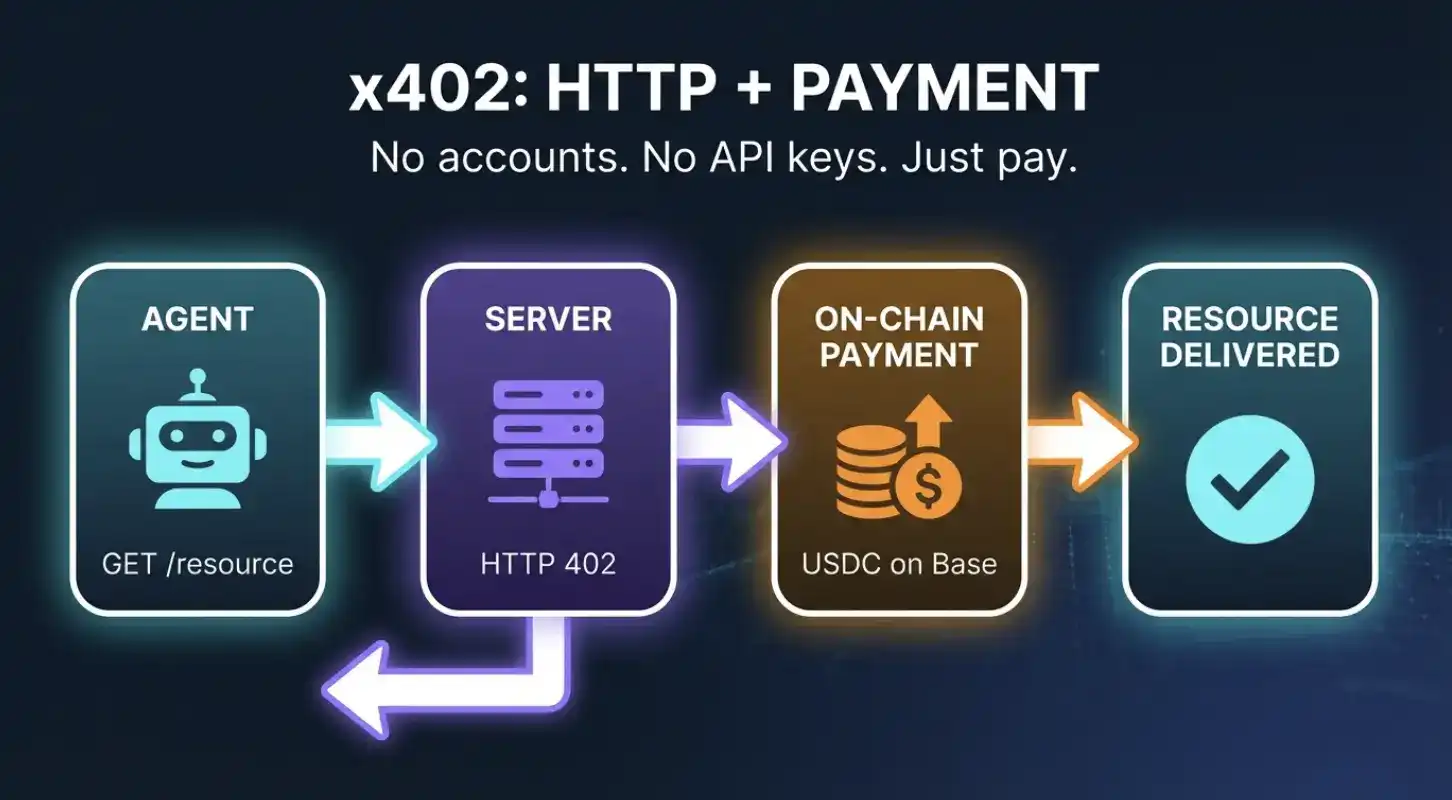
Coinbase officially launched x402 in May 2025. Its core idea is almost radically minimalist. A client requests a resource; the server returns HTTP 402, informing the client: how much to pay, which token to use, and on which chain to complete the payment. The client completes the payment on-chain, attaches the payment proof to the re-initiated request, and the server delivers the resource.

It's that simple. No account system, no API Key, no subscription mechanism. Just one HTTP request round trip, with a payment inserted in the middle.

Stripe now provides native support for x402 in its payment system, allowing merchants to receive such payments directly through their existing backend. However,本质上, x402 is still a protocol led by Coinbase, governed by the x402 Foundation co-founded by Coinbase and Cloudflare in September 2025. The protocol is fully open source (Apache 2.0 license) and provides multi-language SDKs like TypeScript, Go, and Python.

In terms of support, Coinbase's official documentation shows current support for ERC-20 payments on Base, Polygon, and Solana. Meanwhile, the ecosystem is exploring expansion to other chains like Avalanche, Sui, and Near, but maturity varies.

Looking at adoption data, it gets slightly more complex. Coinbase states that x402 has processed over 50 million transactions through its Agentic Wallet infrastructure. Sounds impressive, but according to CoinDesk on March 11th, citing Artemis on-chain analysis data: daily transaction volume is about 131,000, total amount about $28,000, average payment per transaction is only about $0.20, and about half of them seem more like testing or gamification rather than real commercial transactions.

But this might not be a bad thing. Because this protocol is designed for a market that doesn't truly exist yet—a world where AI agents make micro-payments (even below 1 cent) for API calls and data queries. And the services serving this market are just beginning to emerge.

For example, Google's Agentic Payments Protocol (AP2, part of the A2A framework) has integrated x402; Lowe's Innovation Labs demonstrated a demo where an AI agent can complete the entire process from product discovery, research to placing an order in one flow. Also, World (initiated by Sam Altman) released AgentKit this week, adding human identity verification capabilities to x402 wallets.

The core assumption is: if you make payments as lightweight as HTTP requests, use cases will naturally emerge. Whether this holds true remains to be seen.

MPP: The Full-Stack Solution

Stripe and Tempo have chosen a different path. The Machine Payments Protocol (MPP) was released today alongside the Tempo mainnet launch. Unlike x402, which is a lightweight wrapper on existing blockchains, MPP is specifically designed for the scenario of high-frequency trading agents.

Its core mechanism is sessions. Instead of initiating an on-chain transaction for every resource request, an agent can pre-authorize a spending limit and then make continuous micro-payments within that limit. If you are an AI that needs to query thousands of sources per hour, you absolutely do not want to sign and broadcast an on-chain transaction each time, and sessions are designed to solve this problem.

The Tempo chain is also built around this need. It supports tens of thousands of transactions per second, has sub-second confirmation times, and has no native gas token. Users can pay fees directly with stablecoins, eliminating the hassle of having to buy some random token just to make a transfer.

Another component worth understanding is: Stripe's Agentic Commerce Suite includes Shared Payment Tokens (SPTs). This is not part of MPP itself, but an extension mechanism from Stripe that can work with it. SPTs allow an agent to securely pass a user's bank card or wallet credentials to a merchant without exposing the real data. These credentials are single-use and time-limited, essentially a programmable, self-destructing authorization. In practice, this means an agent paying via MPP can use either USDC on Tempo or the user's linked Visa card, or even a combination of both.

According to the Tempo mainnet launch blog, its partners include Anthropic, DoorDash, Mastercard, Nubank, OpenAI, Ramp, Revolut, Shopify, Standard Chartered, and Visa. The Block reported that the MPP launch payment directory already includes over 100 services, including Alchemy, Dune Analytics, Merit Systems, and Parallel Web Systems. Matt Huang, co-founder of Tempo and Paradigm, told Fortune in an interview that this field is still in its early stages, and MPP is designed to eventually scale to environments beyond Tempo.

Why Stripe Supports Both

If you are already integrated with Stripe, the most practical answer is: you don't need to choose between them.

Stripe supports x402 and MPP through two separate integration paths, rather than abstracting them into a unified interface. For x402, its documentation mainly covers the process of generating deposit addresses, monitoring the chain, and settling funds into Stripe accounts—you are responsible for returning the 402 response, while the underlying crypto payment infrastructure is handled by Stripe. Currently supports USDC on Base, with more to come. For MPP, merchants can use the same PaymentIntents API to receive session-based streaming payments.

Stripe's Agentic Commerce Suite, released in December 2025, is built on these two payment rails. Merchants simply upload their product catalog, select the AI agents they want to connect with, and Stripe handles product discovery, checkout flow, fraud prevention, and tax processing. Currently used by URBN, Etsy, Coach, Kate Spade, and Ashley Furniture, with platforms like Wix, WooCommerce, BigCommerce, Squarespace, and commercetools already integrated.

The strategy is actually quite clear: control the abstraction layer and let the underlying protocols compete freely.

Comparison

Macroscopically, these two protocols are doing the same thing: enabling machines to pay for resources via HTTP. But the real differences lie in the details.

x402 (Led by Coinbase) vs MPP (Stripe + Tempo)

Standardization
x402: Fully open source (Apache 2.0), promoted by the x402 Foundation with multi-party participation (Coinbase, Cloudflare, Visa, Google).
MPP: Open standard, jointly defined by Stripe and Tempo, part of the Stripe Agentic Commerce Suite.

HTTP Mechanism
x402: Revives HTTP 402, initiates requests via PAYMENT-REQUIRED header, uses PAYMENT-SIGNATURE for retry.
MPP: Also uses a challenge-response mechanism, but employs the Payment HTTP Authentication Scheme (IETF draft), binding challenge ID via HMAC.

Payment Rails
x402: Designed to be chain-agnostic, currently supported on Base, Polygon, Solana, exploration ongoing for other chains.
MPP: Based on the Tempo blockchain—an L1 optimized for payments, supporting 10k+ TPS, sub-second confirmation, no native gas token; long-term goal is cross-chain compatibility.

Payment Methods
x402: Pure stablecoins, fully on-chain.
MPP: Supports USDC on Tempo + SPT (Stripe's mechanism), enabling crypto-fiat hybrid (card, wallet, BNPL).

Settlement
x402: On-chain settlement (~200ms to several seconds), validation and settlement handled by facilitators like Coinbase.
MPP: Tempo sub-second confirmation, Stripe automatically credits accounts and handles compliance.

Merchant Integration
x402: Open-source middleware (Express, Hono, Next.js, etc.), can self-host or use a facilitator.
MPP: Direct integration with Stripe's PaymentIntents API, risk control, tax, refunds, reporting all built-in.

Core Innovation
x402: Extreme simplicity, no vendor lock-in,类似支付领域的 Unix 哲学 (like the Unix philosophy for payments).
MPP: High throughput + fiat integration,实现流式支付、微支付聚合 (enables streaming payments, micro-payment aggregation) via session, and programmable spending control based on SPT.

Key Partners
x402: Coinbase, Cloudflare, Google (A2A/AP2), Visa, World, Anthropic (MCP).
MPP: Stripe, Visa, Lightspark, Anthropic, DoorDash, Mastercard, OpenAI, Shopify, Revolut, Standard Chartered.

x402 is more like your首选方案 when building open systems: indie developer APIs, decentralized data markets, or any service that doesn't want to rely on a payment processor. Its spec can be written in a whitepaper, integration just requires middleware and a wallet address. This purity is attractive—though the纯加密的限制 (purely crypto limitation) also means its audience is narrower.

MPP is a completely different paradigm. If your agent needs to make hundreds or even thousands of transactions in one session without going on-chain each time, then it's the more reasonable choice. The session mechanism keeps most interactions off-chain until final settlement; Stripe's compliance system handles risk and taxes; and the hybrid model with SPT allows agents to go beyond stablecoins and directly call the user's payment methods. It's less elegant but closer to reality.

Interestingly, they are not entirely competitive. x402 covers long-tail open scenarios, MPP covers enterprise-level high-frequency traffic. Stripe's strategy is also clear: don't bet on a single protocol, but ensure that no matter which path wins, funds ultimately flow into Stripe's account system.

Reality Check: Where Are We Actually At Now?

Honestly, there is almost no real scaled transaction volume yet.

According to Coinbase's x402 launch information, early partners include Hyperbolic (GPU inference payment) and Anthropic (MCP protocol integration). Stripe's blog mentions agent scenarios paying per API call (e.g., CoinGecko). Tempo's launch directory has 100+ services. Cloudflare's Agents SDK natively supports x402, and some small projects on Base L2 are also trying to use x402 as a payment gateway.

But overall: transaction volume is small, merchant count is limited, most activity is still in the experimental stage.

This is not surprising. Any new payment infrastructure is like this early on. So-called partner lists sometimes have a big gap between signing a letter of intent and being in production, and these announcements usually don't特别区分.

What's more值得关注 is the heavyweight players behind the infrastructure. Stripe processed $1.9 trillion in payments in 2025, with total volume growing 34% year-over-year. Meanwhile, Coinbase, Cloudflare, Visa, Google, and Tempo's entire partner network have entered the field.

In other words, the rails are laid. The only question left is: In 2026, will AI agents really need to transact on these rails at scale? Or is this more like laying fiber optics in 1998—demand isn't here yet, but infrastructure comes first.

Which One Should You Choose?

If you are building an open, permissionless system—x402 is the more natural choice. No platform registration, no payment processor integration, just import middleware, bind a wallet, and start receiving payments. The cost is handling compliance, risk control, and fiat settlement yourself.

If you are already within the Stripe ecosystem and want to接入 agent traffic—MPP is more suitable. Sessions, streaming payments, crypto+fiat hybrid, and a full compliance system are essentially more like a configuration upgrade than a system重构.

If you only care about one thing: no matter which protocol the agent uses, I can get paid. Then the answer is simply: use Stripe. It supports both.

HTTP 402 has finally found its use. It just took about 27 years.

Пов'язані питання

QWhat is the core difference between x402 and MPP in terms of their approach to agent payments?

Ax402 follows a protocol-minimalist approach, embedding payment directly into HTTP requests with no accounts or intermediaries, ideal for open, permissionless, and long-tail decentralized scenarios. MPP is a full-stack, system-maximalist solution that uses sessions, streaming payments, and a compliance framework to handle high-frequency transactions and fiat integration, prioritizing real-world commercial needs and enterprise-scale applications.

QHow does the x402 protocol work in a simple transaction flow?

AA client requests a resource. The server returns an HTTP 402 status code, specifying the required payment amount, token, and blockchain. The client completes the payment on-chain, attaches the payment credential to a new request, and the server then delivers the resource. There are no accounts, API keys, or subscriptions.

QWhat key innovation does MPP introduce to solve the problem of high-frequency agent transactions?

AMPP introduces the concept of 'sessions.' Instead of initiating a separate on-chain transaction for every resource request, an agent can pre-authorize a spending limit and then perform numerous micro-payments within that session off-chain, only settling finally on-chain. This enables high throughput and sub-second confirmations.

QWhy is Stripe supporting both the x402 and MPP protocols simultaneously?

AStripe's strategy is to control the abstraction layer and let the underlying protocols compete. By offering separate integration paths for both x402 and MPP, they ensure that regardless of which protocol gains traction for different use cases (open web vs. enterprise), the funds ultimately flow into Stripe's account system and compliance framework.

QWhat is the current state of adoption and transaction volume for these agent payment protocols?

AAs of the article's information, adoption is still in its early experimental phase. x402 handles around 131,000 daily transactions with a total value of approximately $28,000, many of which are tests. MPP launched with a directory of over 100 services. While infrastructure from major players is in place, widespread,规模化 commercial transactions from AI agents are not yet a reality.

Пов'язані матеріали

How Many Tokens Away Is Yang Zhilin from the 'Moon Chasing the Light'?

The article explores the intense competition between two leading Chinese AI companies, DeepSeek and Kimi (Moon Dark Side), and the mounting pressure on Yang Zhilin, the founder of Kimi. While DeepSeek re-emerged after 15 months of silence with its powerful V4 model—boasting 1.6 trillion parameters and low-cost, long-context capabilities—Kimi has been focusing on long-context processing and multi-agent systems with its K2.6 model. Yang faces a threefold challenge: technological rivalry, commercialization pressure, and investor expectations. Despite Kimi’s high valuation (reaching $18 billion), its revenue heavily relies on a single product with low paid conversion rates, while DeepSeek’s strategic silence and open-source influence have strengthened its market position and valuation prospects, now targeting over $20 billion. Both companies reflect broader trends in China’s AI ecosystem: Kimi aims for global influence through open-source contributions and agent-based advancements, while DeepSeek prioritizes foundational innovation and hardware independence, notably shifting to Huawei’s chips. Their competition is seen as vital for China’s AI progress, with the gap between top Chinese and U.S. models narrowing to just 2.7% on the Elo rating scale. Ultimately, the article argues that this rivalry, though anxiety-inducing for leaders like Zhilin, is essential for driving innovation and solidifying China’s role in the global AI landscape.

marsbit6 год тому

How Many Tokens Away Is Yang Zhilin from the 'Moon Chasing the Light'?

marsbit6 год тому

TechFlow Intelligence Bureau: ChatGPT Helps Amateur Mathematician Crack 60-Year-Old Problem, CFTC Sues New York Regulator Over Coinbase and Gemini

An amateur mathematician, with the assistance of ChatGPT, has solved a combinatorial mathematics puzzle originally proposed by Hungarian mathematician Paul Erdős in the 1960s. This marks another milestone in AI-aided mathematical research, demonstrating the evolving capabilities of large language models in formal reasoning. In other AI developments, OpenAI introduced a new privacy filter tool for enterprise API usage, automatically screening sensitive data. Meanwhile, the Qwen3.6-27B model achieved 100 tokens per second on a single RTX 5090 GPU using quantization, significantly lowering the cost barrier for local AI deployment. In crypto and Web3, the U.S. CFTC sued New York’s financial regulator, challenging its oversight of Coinbase and Gemini—a first-of-its-kind federal-state regulatory clash. Following a vulnerability, KelpDAO and major DeFi protocols established a recovery fund. Tether froze $344 million in assets linked to Iran’s central bank upon U.S. Treasury request, highlighting the centralized control risks in stablecoins. Separately, Litecoin underwent a 3-hour chain reorganization to undo a privacy-layer exploit. In the U.S., former President Trump invoked the Defense Production Act to address power grid bottlenecks affecting AI data centers and dismissed the entire National Science Board, raising concerns over research independence. A retail trader gained 250% on a $600k Intel options bet amid AI-related speculation. Xiaomi announced its first performance electric vehicle, targeting rivals like Tesla. Meanwhile, iPhone users reported devices automatically reinstalling a hidden app daily, suspected to be MDM-related. A Chinese securities report noted that A-share institutional crowding has reached its second-longest streak since 2007, signaling high valuations and potential style rotation. The day’s developments reflect a dual narrative: AI is enabling unprecedented individual breakthroughs, while centralized power structures—whether governmental or corporate—are becoming more assertive, underscoring that decentralization is as much a political-economic challenge as a technical one.

marsbit6 год тому

TechFlow Intelligence Bureau: ChatGPT Helps Amateur Mathematician Crack 60-Year-Old Problem, CFTC Sues New York Regulator Over Coinbase and Gemini

marsbit6 год тому

Торгівля

Спот
Ф'ючерси

Популярні статті

Що таке $S$

Розуміння SPERO: Комплексний огляд Вступ до SPERO Оскільки ландшафт інновацій продовжує еволюціонувати, виникнення технологій web3 та криптовалютних проектів відіграє ключову роль у формуванні цифрового майбутнього. Один з проектів, який привернув увагу в цій динамічній сфері, — це SPERO, позначений як SPERO,$$s$. Ця стаття має на меті зібрати та представити детальну інформацію про SPERO, щоб допомогти ентузіастам та інвесторам зрозуміти його основи, цілі та інновації в рамках web3 та крипто-сектору. Що таке SPERO,$$s$? SPERO,$$s$ — це унікальний проект у криптопросторі, який прагне використати принципи децентралізації та технології блокчейн для створення екосистеми, що сприяє залученню, корисності та фінансовій інклюзії. Проект розроблений для полегшення взаємодії між користувачами новими способами, надаючи їм інноваційні фінансові рішення та послуги. У своїй основі SPERO,$$s$ прагне надати можливості індивідам, забезпечуючи інструменти та платформи, які покращують користувацький досвід у криптовалютному просторі. Це включає в себе можливість більш гнучких методів транзакцій, сприяння ініціативам, що підтримуються спільнотою, та створення шляхів для фінансових можливостей через децентралізовані додатки (dApps). Основна концепція SPERO,$$s$ обертається навколо інклюзивності, прагнучи зменшити розриви в традиційній фінансовій системі, використовуючи переваги технології блокчейн. Хто є творцем SPERO,$$s$? Особистість творця SPERO,$$s$ залишається дещо невідомою, оскільки є обмежені публічно доступні ресурси, що надають детальну інформацію про його засновників. Ця відсутність прозорості може бути наслідком зобов'язання проекту до децентралізації — етики, яку багато проектів web3 поділяють, ставлячи колективні внески вище за індивідуальне визнання. Зосереджуючи обговорення навколо спільноти та її колективних цілей, SPERO,$$s$ втілює суть наділення без виділення конкретних осіб. Таким чином, розуміння етики та місії SPERO є більш важливим, ніж ідентифікація єдиного творця. Хто є інвесторами SPERO,$$s$? SPERO,$$s$ підтримується різноманітними інвесторами, починаючи від венчурних капіталістів до ангельських інвесторів, які прагнуть сприяти інноваціям у крипто-секторі. Зосередження цих інвесторів зазвичай узгоджується з місією SPERO — пріоритет надається проектам, які обіцяють технологічний прогрес у суспільстві, фінансову інклюзію та децентралізоване управління. Ці інвесторські фонди зазвичай зацікавлені в проектах, які не лише пропонують інноваційні продукти, але й позитивно впливають на спільноту блокчейн та її екосистеми. Підтримка з боку цих інвесторів підкріплює SPERO,$$s$ як значного конкурента в швидко змінюваній сфері крипто-проектів. Як працює SPERO,$$s$? SPERO,$$s$ використовує багатогранну структуру, яка відрізняє його від традиційних криптовалютних проектів. Ось деякі ключові особливості, які підкреслюють його унікальність та інноваційність: Децентралізоване управління: SPERO,$$s$ інтегрує моделі децентралізованого управління, надаючи користувачам можливість активно брати участь у процесах прийняття рішень щодо майбутнього проекту. Цей підхід сприяє відчуттю власності та відповідальності серед членів спільноти. Корисність токена: SPERO,$$s$ використовує свій власний криптовалютний токен, розроблений для виконання різних функцій в екосистемі. Ці токени дозволяють здійснювати транзакції, отримувати винагороди та полегшувати послуги, що пропонуються на платформі, підвищуючи загальну залученість та корисність. Шарова архітектура: Технічна архітектура SPERO,$$s$ підтримує модульність та масштабованість, що дозволяє безперешкодно інтегрувати додаткові функції та додатки в міру розвитку проекту. Ця адаптивність є надзвичайно важливою для збереження актуальності в постійно змінюваному крипто-ландшафті. Залучення спільноти: Проект підкреслює ініціативи, що підтримуються спільнотою, використовуючи механізми, які стимулюють співпрацю та зворотний зв'язок. Підтримуючи сильну спільноту, SPERO,$$s$ може краще задовольняти потреби користувачів та адаптуватися до ринкових тенденцій. Фокус на інклюзію: Пропонуючи низькі комісії за транзакції та зручні інтерфейси, SPERO,$$s$ прагне залучити різноманітну базу користувачів, включаючи осіб, які раніше не брали участі в крипто-просторі. Це зобов'язання до інклюзії узгоджується з його загальною місією наділення через доступність. Хронологія SPERO,$$s$ Розуміння історії проекту надає важливі уявлення про його розвиток та етапи. Нижче наведено пропоновану хронологію, що відображає значні події в еволюції SPERO,$$s$: Етап концептуалізації та ідеації: Початкові ідеї, що стали основою SPERO,$$s$, були сформовані, тісно пов'язані з принципами децентралізації та фокусом на спільноті в індустрії блокчейн. Запуск білого паперу проекту: Після концептуального етапу був випущений комплексний білий папір, що детально описує бачення, цілі та технологічну інфраструктуру SPERO,$$s$, щоб залучити інтерес та зворотний зв'язок від спільноти. Створення спільноти та ранні залучення: Активні зусилля були спрямовані на створення спільноти ранніх прихильників та потенційних інвесторів, що полегшило обговорення цілей проекту та отримання підтримки. Подія генерації токенів: SPERO,$$s$ провів подію генерації токенів (TGE) для розподілу своїх рідних токенів серед ранніх прихильників та встановлення початкової ліквідності в екосистемі. Запуск початкового dApp: Перший децентралізований додаток (dApp), пов'язаний з SPERO,$$s$, став доступним, дозволяючи користувачам взаємодіяти з основними функціями платформи. Постійний розвиток та партнерства: Безперервні оновлення та вдосконалення пропозицій проекту, включаючи стратегічні партнерства з іншими учасниками блокчейн-простору, сформували SPERO,$$s$ у конкурентоспроможного та еволюціонуючого гравця на крипто-ринку. Висновок SPERO,$$s$ є свідченням потенціалу web3 та криптовалют для революціонізації фінансових систем та наділення індивідів. Завдяки зобов'язанню до децентралізованого управління, залучення спільноти та інноваційно спроектованих функцій, він прокладає шлях до більш інклюзивного фінансового ландшафту. Як і з будь-якими інвестиціями в швидко змінюваному крипто-просторі, потенційним інвесторам та користувачам рекомендується ретельно досліджувати та обдумано взаємодіяти з поточними подіями в SPERO,$$s$. Проект демонструє інноваційний дух крипто-індустрії, запрошуючи до подальшого дослідження його численних можливостей. Хоча подорож SPERO,$$s$ ще триває, його основні принципи можуть справді вплинути на майбутнє того, як ми взаємодіємо з технологією, фінансами та один з одним у взаємопов'язаних цифрових екосистемах.

73 переглядів усьогоОпубліковано 2024.12.17Оновлено 2024.12.17

Що таке $S$

Що таке AGENT S

Агент S: Майбутнє автономної взаємодії в Web3 Вступ У постійно змінюваному ландшафті Web3 та криптовалюти інновації постійно переосмислюють, як люди взаємодіють з цифровими платформами. Один з таких новаторських проектів, Агент S, обіцяє революціонізувати взаємодію людини з комп'ютером через свою відкриту агентну структуру. Прокладаючи шлях для автономних взаємодій, Агент S прагне спростити складні завдання, пропонуючи трансформаційні застосування в штучному інтелекті (ШІ). Це детальне дослідження заглиблюється в складності проекту, його унікальні особливості та наслідки для сфери криптовалюти. Що таке Агент S? Агент S є революційною відкритою агентною структурою, спеціально розробленою для вирішення трьох основних викликів в автоматизації комп'ютерних завдань: Набуття специфічних знань у галузі: Структура інтелектуально навчається з різних зовнішніх джерел знань та внутрішнього досвіду. Цей подвійний підхід дозволяє їй створити багатий репозиторій специфічних знань у галузі, покращуючи її продуктивність у виконанні завдань. Планування на довгих горизонтах завдань: Агент S використовує планування з підкріпленням досвіду, стратегічний підхід, який полегшує ефективний розподіл та виконання складних завдань. Ця функція значно підвищує її здатність ефективно та результативно управляти кількома підзавданнями. Обробка динамічних, неоднорідних інтерфейсів: Проект представляє Інтерфейс Агент-Комп'ютер (ACI), інноваційне рішення, яке покращує взаємодію між агентами та користувачами. Використовуючи багатомодальні великі мовні моделі (MLLMs), Агент S може безперешкодно орієнтуватися та маніпулювати різноманітними графічними інтерфейсами користувача. Завдяки цим новаторським функціям Агент S надає надійну структуру, яка вирішує складнощі, пов'язані з автоматизацією людської взаємодії з машинами, прокладаючи шлях для численних застосувань у ШІ та за його межами. Хто є творцем Агент S? Хоча концепція Агент S є фундаментально новаторською, конкретна інформація про його творця залишається невідомою. Творець наразі невідомий, що підкреслює або початкову стадію проекту, або стратегічний вибір зберегти засновників у таємниці. Незважаючи на анонімність, акцент залишається на можливостях та потенціалі структури. Хто є інвесторами Агент S? Оскільки Агент S є відносно новим у криптографічній екосистемі, детальна інформація про його інвесторів та фінансових спонсорів не задокументована. Відсутність публічно доступних відомостей про інвестиційні фонди або організації, що підтримують проект, викликає питання щодо його фінансової структури та дорожньої карти розвитку. Розуміння підтримки є критично важливим для оцінки стійкості проекту та потенційного впливу на ринок. Як працює Агент S? В основі Агент S лежить передова технологія, яка дозволяє йому ефективно функціонувати в різних умовах. Його операційна модель побудована навколо кількох ключових функцій: Взаємодія з комп'ютером, подібна до людської: Структура пропонує розширене планування ШІ, прагнучи зробити взаємодії з комп'ютерами більш інтуїтивними. Імітуючи людську поведінку при виконанні завдань, вона обіцяє підвищити досвід користувачів. Наративна пам'ять: Використовується для використання високорівневого досвіду, Агент S використовує наративну пам'ять для відстеження історій завдань, тим самим покращуючи свої процеси прийняття рішень. Епізодична пам'ять: Ця функція надає користувачам покрокові інструкції, дозволяючи структурі пропонувати контекстуальну підтримку в міру виконання завдань. Підтримка OpenACI: Завдяки можливості працювати локально, Агент S дозволяє користувачам зберігати контроль над своїми взаємодіями та робочими процесами, узгоджуючи з децентралізованою етикою Web3. Легка інтеграція з зовнішніми API: Його універсальність і сумісність з різними платформами ШІ забезпечують те, що Агент S може безперешкодно вписатися в існуючі технологічні екосистеми, роблячи його привабливим вибором для розробників та організацій. Ці функціональні можливості колективно сприяють унікальному положенню Агент S у крипто-просторі, оскільки він автоматизує складні, багатоступеневі завдання з мінімальним втручанням людини. У міру розвитку проекту його потенційні застосування в Web3 можуть переосмислити, як відбуваються цифрові взаємодії. Хронологія Агент S Розробка та етапи Агент S можуть бути узагальнені в хронології, яка підкреслює його значні події: 27 вересня 2024 року: Концепція Агент S була представлена в комплексній науковій статті під назвою “Відкрита агентна структура, яка використовує комп'ютери як людина”, що демонструє основи проекту. 10 жовтня 2024 року: Наукова стаття була опублікована на arXiv, пропонуючи детальне дослідження структури та її оцінки продуктивності на основі бенчмарку OSWorld. 12 жовтня 2024 року: Було випущено відеопрезентацію, що надає візуальне уявлення про можливості та особливості Агент S, ще більше залучаючи потенційних користувачів та інвесторів. Ці маркери в хронології не лише ілюструють прогрес Агент S, але й вказують на його прихильність до прозорості та залучення громади. Ключові моменти про Агент S У міру розвитку структури Агент S кілька ключових характеристик виділяються, підкреслюючи її новаторський характер та потенціал: Інноваційна структура: Розроблена для забезпечення інтуїтивного використання комп'ютерів, подібного до людської взаємодії, Агент S пропонує новий підхід до автоматизації завдань. Автономна взаємодія: Здатність автономно взаємодіяти з комп'ютерами через GUI означає стрибок до більш інтелектуальних та ефективних обчислювальних рішень. Автоматизація складних завдань: Завдяки своїй надійній методології він може автоматизувати складні, багатоступеневі завдання, роблячи процеси швидшими та менш схильними до помилок. Безперервне вдосконалення: Механізми навчання дозволяють Агенту S покращуватися на основі минулого досвіду, постійно підвищуючи свою продуктивність та ефективність. Універсальність: Його адаптивність до різних операційних середовищ, таких як OSWorld та WindowsAgentArena, забезпечує його здатність служити широкому спектру застосувань. Оскільки Агент S займає своє місце в ландшафті Web3 та криптовалюти, його потенціал покращити можливості взаємодії та автоматизувати процеси означає значний прогрес у технологіях ШІ. Завдяки своїй інноваційній структурі Агент S є прикладом майбутнього цифрових взаємодій, обіцяючи більш безперешкодний та ефективний досвід для користувачів у різних галузях. Висновок Агент S представляє собою сміливий крок вперед у поєднанні ШІ та Web3, з можливістю переосмислити, як ми взаємодіємо з технологією. Хоча проект все ще на ранніх стадіях, можливості для його застосування є величезними та переконливими. Завдяки своїй комплексній структурі, що вирішує критичні виклики, Агент S прагне вивести автономні взаємодії на передній план цифрового досвіду. У міру того, як ми заглиблюємося в сфери криптовалюти та децентралізації, проекти, подібні до Агент S, безсумнівно, відіграватимуть ключову роль у формуванні майбутнього технологій та співпраці людини з комп'ютером.

539 переглядів усьогоОпубліковано 2025.01.14Оновлено 2025.01.14

Що таке AGENT S

Як купити S

Ласкаво просимо до HTX.com! Ми зробили покупку Sonic (S) простою та зручною. Дотримуйтесь нашої покрокової інструкції, щоб розпочати свою криптовалютну подорож.Крок 1: Створіть обліковий запис на HTXВикористовуйте свою електронну пошту або номер телефону, щоб зареєструвати обліковий запис на HTX безплатно. Пройдіть безпроблемну реєстрацію й отримайте доступ до всіх функцій.ЗареєструватисьКрок 2: Перейдіть до розділу Купити крипту і виберіть спосіб оплатиКредитна/дебетова картка: використовуйте вашу картку Visa або Mastercard, щоб миттєво купити Sonic (S).Баланс: використовуйте кошти з балансу вашого рахунку HTX для безперешкодної торгівлі.Треті особи: ми додали популярні способи оплати, такі як Google Pay та Apple Pay, щоб підвищити зручність.P2P: Торгуйте безпосередньо з іншими користувачами на HTX.Позабіржова торгівля (OTC): ми пропонуємо індивідуальні послуги та конкурентні обмінні курси для трейдерів.Крок 3: Зберігайте свої Sonic (S)Після придбання Sonic (S) збережіть його у своєму обліковому записі на HTX. Крім того, ви можете відправити його в інше місце за допомогою блокчейн-переказу або використовувати його для торгівлі іншими криптовалютами.Крок 4: Торгівля Sonic (S)Легко торгуйте Sonic (S) на спотовому ринку HTX. Просто увійдіть до свого облікового запису, виберіть торгову пару, укладайте угоди та спостерігайте за ними в режимі реального часу. Ми пропонуємо зручний досвід як для початківців, так і для досвідчених трейдерів.

1.3k переглядів усьогоОпубліковано 2025.01.15Оновлено 2025.03.21

Як купити S

Обговорення

Ласкаво просимо до спільноти HTX. Тут ви можете бути в курсі останніх подій розвитку платформи та отримати доступ до професійної ринкової інформації. Нижче представлені думки користувачів щодо ціни S (S).

活动图片














