Under Political Pressure, Is the Federal Reserve Still Independent?

marsbitОпубліковано о 2026-04-21Востаннє оновлено о 2026-04-21

Анотація

Amidst political pressure from former President Trump and congressional scrutiny, Kevin Warsh, nominated as Federal Reserve chair, argued that public comments from elected officials on interest rates do not fundamentally threaten the Fed’s operational independence. Instead, he emphasized that the real risk to the Fed’s autonomy lies in its failure to control inflation, which could erode public trust. Warsh also cautioned against the Fed overstepping into fiscal or social policy domains beyond its mandate. His remarks come as the Fed faces external pressures, including a Justice Department investigation into a renovation project and persistent inflation above the 2% target, exacerbated by rising energy prices. Warsh stressed that the Fed’s focus on its core mission—price stability—is essential to maintaining its credibility and independence.

Editor's Note: At the confirmation hearing of the Senate Banking Committee, Kevin Warsh systematically articulated his understanding of the Federal Reserve's role and independence for the first time.

This hearing, while seemingly focused on interest rates and inflation, essentially pointed to a more core question: against the backdrop of escalating political pressure, how exactly are the boundaries of central bank independence defined, and can they be consistently maintained?

This discussion occurs within a highly intertwined reality. On one hand, Trump has repeatedly publicly pressured the Fed to cut interest rates and criticized the incumbent Chairman Jerome Powell with strong language; on the other hand, the U.S. Department of Justice's investigation into the Fed headquarters' $2.5 billion renovation project is seen by Powell as an indirect form of pressure. At the congressional level, Republican Senator Thom Tillis directly linked this investigation to personnel appointments, explicitly stating that he would block the nomination from proceeding to a full Senate vote until the investigation is concluded. Monetary policy, regulatory investigations, and political appointments are converging and amplifying at this juncture.

The macroeconomic environment offers no buffer either. Post-pandemic inflation once rose above 7% and currently remains significantly higher than the 2% policy objective; coupled with the Iran conflict driving up energy prices, price pressures may continue to rise in the coming months. With inflation not yet effectively subdued, the divergence over "whether to cut rates" quickly transformed from a technical discussion into a political issue.

In this context, Warsh's statements present a more realistic framework: on one hand, he "cools down" the public interventions from the President and Congress, arguing that expressing views on interest rates itself does not constitute a substantive erosion of independence; on the other hand, he points to the real risk being the Federal Reserve itself—if it fails to fulfill its core duty of controlling inflation, public trust will be weakened, and independence will lose its foundation.

Thus, the meaning of "central bank independence" is undergoing a subtle shift: it is no longer just an abstract principle at the institutional design level, but closer to a results-oriented credibility mechanism. Independence does not exist naturally; rather, it is continuously tested and reshaped under the triple pressures of inflation, politics, and the market.

The following is the original text:
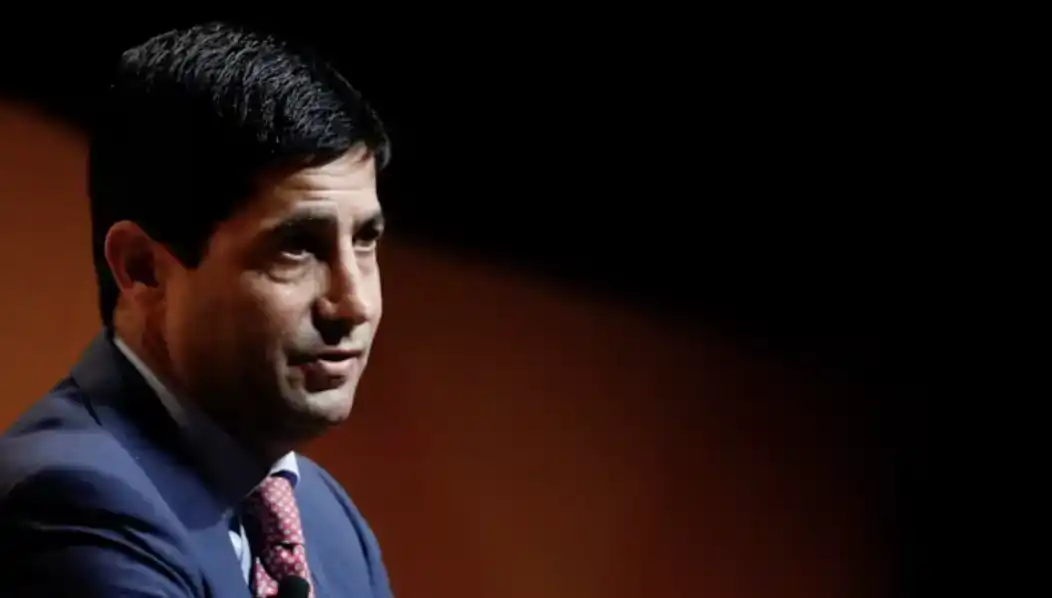
The candidate nominated by Trump for Federal Reserve Chair will tell Congress that the independence of the U.S. interest rate-setting body is "not particularly threatened" when politicians call for the central bank to adjust borrowing costs.

Kevin Warsh will state in his opening remarks to the powerful Senate Banking Committee on Tuesday: "I do not believe the operational independence of monetary policy is particularly threatened when elected officials — whether the president, senators or members of Congress — express their views on interest rates."

According to prepared remarks seen by the Financial Times, he will tell senators that "central bank officials must be strong enough to listen to diverse views from all sides," while also being "humble enough to be open to new ideas and new economic developments."

These comments come as Trump has repeatedly called for the Fed to cut interest rates. The U.S. President has called the incumbent Fed Chair Jerome Powell a "dope" and an "idiot," accusing him of failing to follow orders.

Powell has stated that the current U.S. Department of Justice investigation into a $2.5 billion renovation project at the Fed headquarters is a pretext to pressure the interest-rate setting body into lowering borrowing costs.

Republican Senator Thom Tillis of North Carolina, a member of the banking committee which reviews the Fed chair appointment, said he would block Warsh's nomination from proceeding to a full Senate vote until the investigation into Powell is concluded.

Warsh could succeed Powell as early as May 16th. He will make clear that the Fed's independence in setting interest rates is "vital" and key to controlling inflation.

However, the former Fed governor will also call for the Fed to "stick to its knitting," arguing that the central bank undermines its own independence when it "strays into fiscal and social policy realms for which it has neither mandate nor expertise."

"The Fed should not be a universal agency of the U.S. government, nor serve as the court of appeals for issues that should be debated and decided in other venues," he will say. The 56-year-old candidate will also spend considerable time outlining his qualifications for the role, telling lawmakers he would bring "the experience of an insider and the questioning spirit of an outsider," citing his education at Stanford University, his career on Wall Street, and his previous experience as a Fed governor.

Warsh also pointed out that "independence" is at its highest when conducting monetary policy, but this degree of independence does not apply to other functions the Fed undertakes under its congressional mandate. He told the committee: "In the management of public funds... or in bank regulation and prudential policy... and in matters involving international finance, Fed officials should not be accorded the same special deference."

The Fed plays a major role in bank regulation, but it already works with the U.S. Treasury and other regulators in setting regulatory rules and overseeing risks in the financial system.

Warsh also told senators that when the Fed fails in its duty to control inflation, it is actually undermining its own independence. He argued that this causes the public to "lose confidence in our system of economic governance, and thereby question whether monetary policy independence is as important as advertised."

After the COVID-19 pandemic, inflation rose to multi-decade highs, exceeding 7% in 2022. Inflation remains above the Fed's 2% target, and price pressures are expected to rise further in the coming months due to the Iran war driving up energy prices.

Warsh said: "The mission Congress has given the Fed is to ensure price stability — no excuses, no ambiguity, no arguing or obfuscating." He will also emphasize: "Inflation is a choice, and the Fed must be held accountable for it."


Пов'язані питання

QWhat is the core issue regarding the Federal Reserve's independence as discussed in the article?

AThe core issue is defining the boundaries of central bank independence and whether it can be sustained amid increasing political pressure, including public criticism from former President Trump, a Justice Department investigation, and congressional actions linking confirmations to ongoing probes.

QHow does Kevin Warsh view public expressions of opinion on interest rates by elected officials?

AKevin Warsh does not see such expressions as a particular threat to the operational independence of monetary policy, stating that Fed officials should be firm enough to listen to diverse views while remaining open to new ideas.

QWhat does the article identify as the real risk to the Federal Reserve's independence?

AThe real risk is the Fed's potential failure to fulfill its core mandate of controlling inflation, which would undermine public trust and erode the foundation of its independence.

QHow has political pressure manifested against the Federal Reserve and Chair Jerome Powell?

APolitical pressure includes public demands for rate cuts and harsh rhetoric from Trump, a Justice Department investigation into a Fed renovation project viewed as indirect pressure, and a senator blocking a nomination pending the investigation's conclusion.

QWhat is the current macroeconomic context affecting the debate over Fed independence?

AInflation remains above the 2% target after peaking over 7% post-pandemic, with energy price increases due to conflict in Iran potentially pushing prices higher, turning the 'whether to cut rates' debate into a political issue.

Пов'язані матеріали

U.S. Government Bans Foreign Nationals from Using Fable 5, Anthropic Issues Rebuttal

U.S. Government Bans Foreign Access to Fable 5, Anthropic Issues Rebuttal On June 12th, the U.S. government ordered AI company Anthropic to immediately suspend all foreign access—including foreign nationals within the U.S. and Anthropic's own foreign employees—to its newly released Fable 5 and Mythos 5 AI models, citing national security concerns. This forced Anthropic to temporarily disable access to both models for all users globally, as it cannot technically differentiate user nationality at scale. The models, released just three days prior, represent Anthropic's highest public capability tier. Fable 5 is the first publicly available model from the advanced "Mythos" family, while Mythos 5 is a less-restricted version for approved cybersecurity and critical infrastructure partners. The government's directive was reportedly triggered by claims from another company that it could "jailbreak" Mythos 5, raising alarm within the Trump administration. Anthropic, in a detailed public statement, strongly challenged this rationale. The company argues the demonstrated "jailbreak" is a narrow, non-generalized technique that merely involves identifying minor, known software vulnerabilities—a capability common to other publicly available models like OpenAI's GPT-5.5 and routinely used by cybersecurity defenders. Anthropic stated it has complied with the order but disagrees with the government's standard, warning that applying it industry-wide would halt all new frontier model deployments. The company criticized the lack of a transparent, fact-based legal process and expressed confidence the situation stems from a misunderstanding. It is working to restore access and will release more technical details within 24 hours. Other Anthropic models remain unaffected.

链捕手16 хв тому

U.S. Government Bans Foreign Nationals from Using Fable 5, Anthropic Issues Rebuttal

链捕手16 хв тому

The Revelation from the Raydium Theft Incident: New DeFi Vulnerabilities Lurking in Forgotten Old Contracts

**Raydium Exploit Reveals DeFi's Hidden Risk: Forgotten "Zombie" Contracts** A recent attack on Raydium's deprecated V3 AMM pools resulted in a loss of approximately $1.34 million. The hacker exploited pools that were no longer supported by Raydium's current UI or SDK but remained fully functional and accessible on-chain. This incident highlights a critical, often overlooked category of risk in DeFi: inactive or legacy smart contracts that projects fail to properly decommission. Since March 2025, there have been at least 8 publicly reported attacks targeting such abandoned contracts, with total losses around $10.8 million. Including older pools and deprecated features, the count rises to 10 incidents with roughly $22.5 million in losses. These "zombie contracts" represent a lifecycle management failure rather than a code vulnerability, yet they are typically misclassified under general "code bug" categories in security reports, masking the true scale of the problem. The root cause is that projects often merely document a contract as "deprecated" without taking essential technical steps to secure it: withdrawing remaining assets, disabling external call functions, and implementing ongoing monitoring. These forgotten, under-monitored components become prime targets for attackers. To address this, the industry needs to recognize "zombie contracts" as a distinct risk category and establish standardized decommissioning protocols. Essential steps should include: 1) a formal retirement announcement, 2) removal of all front-end integrations, 3) withdrawal of locked assets, 4) disabling key contract functions, 5) ongoing security monitoring, 6) clear user communication, and 7) a post-mortem analysis. The value of a DeFi project lies not only in its current TVL but also in the security of its historical codebase, which has now become a new attack surface.

Foresight News2 год тому

The Revelation from the Raydium Theft Incident: New DeFi Vulnerabilities Lurking in Forgotten Old Contracts

Foresight News2 год тому

Robots Begin to 'Consume Data': The Hidden Production Chain from Indian Data Factories to Billion-Dollar Humanoid Robots

Robots have started to 'consume data,' driving the formation of a new industrial supply chain focused on producing training data for embodied AI. Unlike large language models, which are trained on vast internet text corpora, embodied AI models face a 'data desert' in the physical world. This has created a massive demand for first-person perspective video data (Ego Data), captured by workers wearing cameras in places like Indian garment factories. Companies like Neocambrian AI are establishing 'data factories' where workers perform standardized tasks (e.g., sorting clothes, kitchen organization) to generate thousands of hours of video. Research, such as NVIDIA's EgoScale, demonstrates that scaling this human demonstration data predictably improves robot performance, particularly for dexterous manipulation. This has validated a training path combining large-scale human data for pre-training with smaller amounts of robot-specific data for fine-tuning. The value of different data types varies significantly, forming a 'data pyramid.' The base consists of low-cost, large-scale internet and Ego Data. Higher layers include more expensive motion-capture data (e.g., from data gloves), simulation/synthetic data, and the most costly and scarce layer: real robot teleoperation data. This demand has spawned a layered ecosystem of data suppliers: low-cost data factories, motion capture and alignment specialists, robot-native teleoperation service providers, simulation data companies, and platforms aiming for data standardization. Robot companies themselves are adopting a 'layered procurement' strategy: outsourcing generic Ego Data while building in-house capabilities for robot-specific adaptation data and the critical deployment/failure data generated in real-world applications. The industry is shifting focus from hardware and basic mobility to the data pipelines required for general-purpose capability. While parallels exist to data labeling companies like Scale AI in the LLM boom, the physical complexity of robot data—involving action success ambiguity and sim-to-real gaps—requires more integrated solutions for data collection, annotation, and a continuous feedback loop. The race is on to build the data engines that will teach robots to operate reliably in the unstructured real world.

marsbit4 год тому

Robots Begin to 'Consume Data': The Hidden Production Chain from Indian Data Factories to Billion-Dollar Humanoid Robots

marsbit4 год тому

Торгівля

Спот
Ф'ючерси
活动图片




